

By Solution Type (Energy-Efficient Materials, Renewable Energy Systems, Low Carbon HVAC Systems, Smart Building & Energy Management Systems, Green Building Services, Others), By Co......nstruction Type (New Construction, Building Retrofit & Renovation), By Application (Residential, Commercial, Industrial, Institutional), and others Read more
- Buildings, Construction, Metals & Mining
- Jul 2026
- 340
- PDF, Excel, PPT
Low Carbon Building Market Key Takeaways
- The low carbon building market size was valued at around USD 725 billion in 2025 and is projected to grow from USD 809 billion in 2026 to USD 1563 billion by 2032, exhibiting a CAGR of 11.60 % during 2026-2032.
- Europe is expected to dominate the global market, accounting for approximately 39% share in 2026.
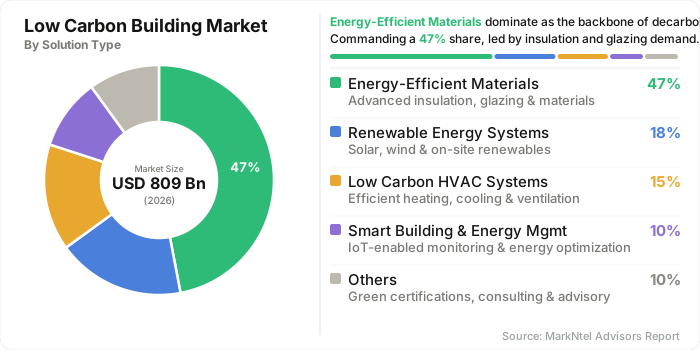
- By solution type, energy-efficient materials held the largest market share of approximately 47% in 2026.
- By application, commercial buildings accounted for nearly 51% of the global market in 2026
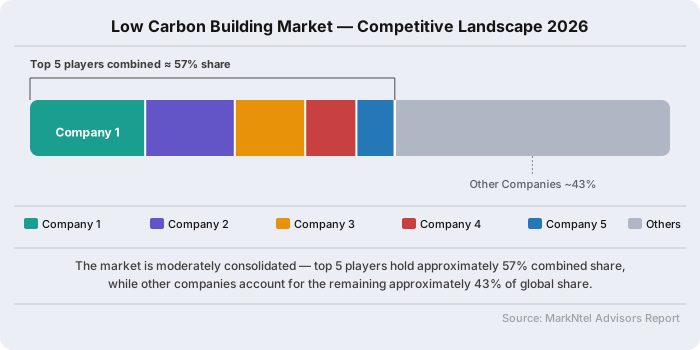
- The industry is moderately consolidated, with the top five players collectively accounting for approximately 57% market share.
Low Carbon Building Market Size and Outlook
Valued at USD 725 billion in 2025, the Low Carbon Building market is forecast to grow substantially, reaching USD 1563 billion by 2032 from USD 809 billion in 2026. This growth reflects a projected CAGR of approximately 11.60% throughout the 2026–2032 forecast period.
The transition toward sustainable construction has accelerated as governments and developers increasingly prioritize energy-efficient and climate-resilient infrastructure. According to the United Nations Environment Programme (UNEP), the buildings and construction sector accounted for 37% of global energy- and process-related CO₂ emissions in 2024, emphasizing the need for building decarbonization. As a result, the adoption of sustainable materials, renewable energy systems, and smart building technologies continues to expand worldwide.
Growing investment across end-user sectors is further supporting market expansion. Commercial buildings remain the largest source of demand as businesses develop energy-efficient offices, retail spaces, logistics facilities, and data centers to achieve sustainability goals and lower operating costs. Meanwhile, residential construction is benefiting from energy-efficient housing initiatives, while industrial and institutional buildings are increasingly integrating advanced HVAC systems and intelligent energy management technologies to improve operational efficiency and reduce lifecycle emissions.
This positive outlook is reinforced by evolving regulatory frameworks that promote higher building performance standards and sustainable construction practices. In 2025, the European Commission issued implementation guidance for the revised Energy Performance of Buildings Directive (EPBD) to accelerate the deployment of net-zero buildings before the 2026 implementation deadline. Similar building energy codes, green procurement policies, and retrofit incentive programs across major economies continue to encourage investment in low-carbon construction and modernization.
Supported by these developments, the market is expected to maintain steady growth over the coming years. Manufacturers and solution providers continue expanding portfolios of sustainable construction materials, intelligent building management platforms, high-efficiency HVAC systems, and digital energy solutions to address evolving environmental requirements. According to the United Nations Environment Programme (UNEP), annual investment in building energy efficiency must exceed USD 5.9 trillion by 2030, creating significant long-term opportunities for the low carbon building market.
Low Carbon Building Market Key Indicators
- The International Energy Agency (IEA) estimates that buildings account for around 30% of global energy demand, making energy-efficient construction and building retrofits a strategic priority for governments and developers. This continues to accelerate investments in low-carbon building materials, smart energy management systems, and high-efficiency HVAC technologies.
- The United Nations Environment Programme (UNEP) reports that the buildings and construction sector accounts for nearly 50% of global material extraction, reinforcing the need for circular construction practices, sustainable materials, and resource-efficient building design to reduce environmental impacts and support market expansion.
- The International Finance Corporation (IFC) estimates that emerging markets represent a USD 24.7 trillion green building investment opportunity by 2030, driven by rapid urbanization and growing demand for sustainable infrastructure. This is expected to accelerate the adoption of low-carbon building solutions across developing economies.
- The World Green Building Council's Advancing Net Zero programme is being implemented by 35 Green Building Councils worldwide, supporting the development of net-zero building frameworks, whole-life carbon roadmaps, and industry collaboration to accelerate building decarbonization.
- The U.S. Department of Energy's Better Buildings Initiative partners with organizations representing 13% of total U.S. commercial building space to improve energy efficiency, reduce emissions, and accelerate the adoption of advanced building technologies, supporting the growth of low-carbon buildings.
Low Carbon Building Market Scope
| Category | Segments |
|---|---|
| By Solution Type | Energy-Efficient Materials, Renewable Energy Systems, Low Carbon HVAC Systems, Smart Building & Energy Management Systems, Green Building Services, Others |
| By Construction Type | New Construction, Building Retrofit & Renovation |
| By Application | Residential, Commercial, Industrial, Institutional |
Low Carbon Building Market Growth Drivers
Stringent Building Decarbonization Policies and Net-Zero Commitments Driving Demand for Low Carbon Buildings
Building decarbonization has become a central priority for governments seeking to reduce emissions from one of the world's most energy-intensive sectors. As countries strengthen climate commitments, stricter building energy codes, minimum energy performance standards, and financial incentives are encouraging the adoption of low carbon construction practices. This policy shift is accelerating investments in sustainable construction materials, renewable energy systems, high-efficiency HVAC technologies, and building energy management systems, enabling developers to reduce lifecycle emissions while improving building performance across residential, commercial, industrial, and institutional projects.
Governments are reinforcing this transition through long-term climate legislation and targeted building policies. The European Climate Law legally commits the European Union to achieving climate neutrality by 2050, while the revised Energy Performance of Buildings Directive (EPBD) accelerates the deployment of zero-emission buildings and large-scale renovation of existing building stock. Beyond Europe, the United States has introduced the Federal Building Performance Standard and expanded support for low-carbon construction materials through the Inflation Reduction Act, while Canada continues implementing its Green Buildings Strategy. Japan and Australia are also strengthening national building energy efficiency standards to encourage sustainable construction.
As regulatory frameworks continue to evolve, private-sector investment is further reinforcing market expansion. Commercial developers and institutional organizations are increasingly investing in low carbon buildings to improve energy efficiency, reduce lifecycle emissions, and enhance long-term asset value. Supported by expanding green finance and increasingly stringent environmental regulations, demand for low carbon building solutions is expected to remain strong throughout the forecast period.
Recent Trends
Growing Adoption of Heat Pumps and Building Electrification
Building electrification is becoming a defining trend as heat pumps increasingly replace fossil-fuel-based heating systems across residential, commercial, and institutional developments. According to the International Energy Agency (IEA), global heat pump sales increased by 27% between 2020 and 2024, while the technology could meet nearly 40% of space heating demand in key regions by 2035. As adoption continues to grow, low carbon HVAC systems are becoming an integral part of energy-efficient buildings, helping reduce operational emissions while improving long-term energy performance.
This transition is already reshaping construction activity across major economies. The International Energy Agency reported that heat pumps outsold gas furnaces in the United States for the fourth consecutive year in 2025, while European sales rebounded by 11%, marking the first annual increase since 2022. Germany also recorded heat pump sales surpassing gas boilers for the first time, reflecting the accelerating shift toward electrified heating technologies.
As adoption continues to expand, developers are increasingly integrating heat pumps with smart controls, high-performance building envelopes, and on-site renewable energy systems to maximize energy efficiency and reduce carbon emissions. Supported by evolving building energy efficiency regulations and growing demand for sustainable construction, electrified heating technologies are expected to become a standard feature of future building projects, creating long-term opportunities across the construction value chain.
Low Carbon Building Market Opportunities and Challenges
High Upfront Costs Creating Opportunities for Green Finance Solutions
High upfront costs remain a major barrier to the wider adoption of low carbon buildings, as investments in energy-efficient technologies, building electrification, and sustainable construction materials increase initial project expenditures. Although these solutions deliver long-term energy savings and lower operating costs, the higher capital requirements can discourage adoption, particularly among smaller developers and projects involving building retrofit solutions. To address this challenge, governments, financial institutions, and private investors are expanding green building financing mechanisms to improve access to capital and support sustainable construction.
This expanding financial ecosystem is creating new opportunities across the construction sector. The World Bank reported that labeled sustainable bond issuance reached USD 1.1 trillion in 2024, raising cumulative issuance to USD 6.2 trillion, with buildings among the leading use-of-proceeds categories. The International Finance Corporation (IFC) also found that green-certified borrowers experience around 32% lower default rates, strengthening lender confidence and supporting the growth of green mortgages and sustainability-linked financing. As sustainable finance continues to expand, it is expected to improve project feasibility, reduce investment barriers, and accelerate the adoption of low carbon buildings.
Segmentation Insights
Demand for High-Performance Building Envelopes and Low-Embodied-Carbon Materials Sustains the Leadership of Energy-Efficient Materials
Improving building performance begins with the materials used to construct the building envelope, making energy-efficient materials the foundation of low carbon development. Holding 47% of the solution-type segment, advanced insulation, glazing, and high-performance building envelopes reduce energy demand before renewable energy systems or advanced building technologies are incorporated. As governments strengthen building energy codes and developers prioritize lifecycle efficiency, these materials continue to witness strong demand across both new construction and retrofit projects.
Beyond lowering operational energy use, material selection has become equally important for reducing embodied carbon throughout a building's lifecycle. The UN Environment Programme attributes 18% of global building-related emissions to cement and steel production, encouraging wider adoption of low-embodied-carbon materials. Meanwhile, Environmental Product Declarations (EPDs) and Buy Clean procurement policies are increasingly influencing material specifications by rewarding verified low-carbon products. The growing emphasis on whole-life carbon assessment is further reinforcing their role as core elements of sustainable building design. Based on solution type, the market is segmented into:
- Energy-Efficient Materials
- Renewable Energy Systems
- Low Carbon HVAC Systems
- Smart Building & Energy Management Systems
- Green Building Services
- Others
Corporate Net-Zero Commitments and ESG-Focused Real Estate Investments Sustain Commercial Leadership
Large commercial real estate portfolios are at the forefront of building decarbonization, positioning the commercial sector as the largest application segment with a 51% market share. Offices, retail centers, healthcare facilities, educational campuses, and mixed-use developments are increasingly adopting energy-efficient technologies, electrified building systems, and sustainable construction practices to reduce operating costs and achieve corporate ESG targets. Strong access to institutional capital and portfolio-scale renovation programs further supports investment in commercial green buildings.
The pace of this transition is increasingly reflected in the expansion of Green Building Certification and performance-based regulations. The U.S. Green Building Council reported that 392 office projects, covering nearly 63 million square feet, achieved LEED certification in the United States during 2025. At the same time, regulations such as New York City's Local Law 97 continue to accelerate retrofit activity by imposing carbon emission limits on large commercial buildings. Combined with rising tenant expectations for sustainable workplaces and stricter corporate ESG commitments, these developments continue to reinforce commercial buildings as the primary source of demand for low carbon building solutions. Based on application, the market is segmented into:
- Commercial
- Residential
- Industrial
- Institutional
Low Carbon Building Market Geographical Outlook
A strong policy-driven approach toward building decarbonization has positioned Europe as the largest regional market, accounting for 39% of global revenue. The European Commission's recast Energy Performance of Buildings Directive (EU/2024/1275) requires all new public buildings to be zero-emission from 2028 and all new buildings from 2030, encouraging wider adoption of energy-efficient materials, electrified building systems, and sustainable construction practices. Supported by clear regulatory direction and long-term climate objectives, developers and property owners continue to accelerate investments in low carbon building technologies across both new construction and renovation projects.
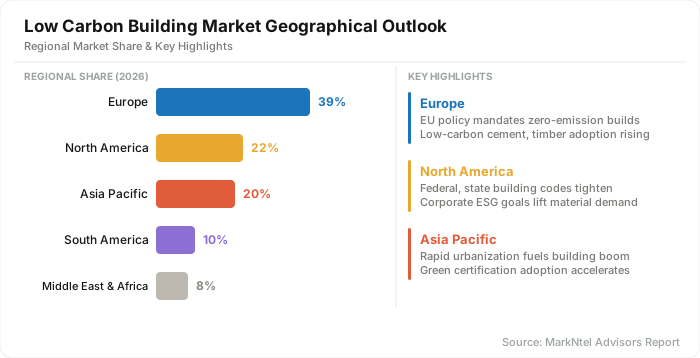
The region's extensive renovation strategy is further reinforcing this market leadership by generating sustained demand for building upgrades. Under the revised EPBD, member states must renovate 16% of the worst-performing non-residential buildings by 2030, increasing to 26% by 2033, while implementing National Building Renovation Plans to modernize existing building stock. Complementing these efforts, the Renovation Wave Strategy continues to promote large-scale building modernization across Europe, driving greater adoption of energy-efficient materials, retrofit solutions, and advanced building technologies while strengthening the region's leadership in sustainable construction.
Low Carbon Building Market Competitive Analysis
The global low carbon building industry is moderately consolidated, with competition focused on sustainable construction technologies, low-carbon materials, energy-efficient building systems, smart building automation, and integrated decarbonization solutions. Leading companies are expanding through strategic partnerships, technology innovation, and green infrastructure investments. Collectively, Skanska AB, VINCI SA, Bouygues Construction SA, Turner Construction Company, and other major players account for approximately 57% of the global market revenue.
Key Companies in the Low Carbon Building Market
- Skanska AB
- VINCI SA
- Bouygues Construction SA
- Turner Construction Company
- Lendlease Corporation Limited
- Balfour Beatty plc
- Compagnie de Saint-Gobain S.A.
- Holcim Ltd.
- Kingspan Group plc
- Schneider Electric SE
- Johnson Controls International plc
- Siemens AG
- Honeywell International Inc.
- Daikin Industries, Ltd.
- Carrier Global Corporation
- Others
Low Carbon Building Industry News and Recent Developments
January 2025: Bouygues Construction Partners with Ecocem to Advance Low-Carbon Cement Technology
Bouygues Construction partnered with Ecocem to evaluate ACT (Advanced Cement Technology), an innovative low-carbon cement designed to significantly reduce embodied carbon compared with conventional cement. The collaboration aims to accelerate the adoption of lower-carbon concrete solutions for commercial buildings, infrastructure projects, and other large-scale construction developments.
Impact Analysis: The partnership strengthens Bouygues Construction's sustainable building capabilities while accelerating the commercialization of low-carbon cement technologies. It supports growing demand for lower-embodied-carbon construction materials, helps developers meet evolving building decarbonization requirements, and advances the transition toward more sustainable construction practices.
September 2025: Saint-Gobain Opens Carbon-Free Plasterboard Manufacturing Plant in Québec
Saint-Gobain inaugurated its first carbon-free plasterboard manufacturing plant in Québec, Canada, powered entirely by renewable electricity and utilizing advanced electrification technologies to eliminate direct fossil-fuel emissions during production. The facility establishes a new benchmark for low-carbon building material manufacturing while supporting the company's global decarbonization strategy.
Impact Analysis: The investment strengthens Saint-Gobain's portfolio of sustainable building materials and demonstrates the commercial viability of carbon-free manufacturing. It is expected to accelerate the adoption of low-embodied-carbon construction materials, helping developers reduce lifecycle emissions and comply with increasingly stringent building decarbonization requirements.
- Market Segmentation
- Introduction
- Product Definition
- Research Process
- Assumptions
- Executive Summary
- Global Low Carbon Building Market Policies, Regulations, and Product Standards
- Global Low Carbon Building Market Trends & Developments
- Global Low Carbon Building Market Dynamics
- Growth Factors
- Challenges
- Global Low Carbon Building Market Hotspot & Opportunities
- Global Low Carbon Building Market Outlook, 2022-2032
- Market Size & Outlook
- By Revenues (USD Million)
- Market Segmentation & Outlook
- By Solution Type- Market Size & Forecast 2022-2032, USD Million
- Energy-Efficient Materials
- Renewable Energy Systems
- Low Carbon HVAC Systems
- Smart Building & Energy Management Systems
- Green Building Services
- Others
- By Construction Type- Market Size & Forecast 2022-2032, USD Million
- New Construction
- Building Retrofit & Renovation
- By Application- Market Size & Forecast 2022-2032, USD Million
- Residential
- Commercial
- Industrial
- Institutional
- By Region
- North America
- South America
- Europe
- Middle East and Africa
- Asia Pacific
- By Company
- Competition Characteristics
- Market Share & Analysis
- By Solution Type- Market Size & Forecast 2022-2032, USD Million
- Market Size & Outlook
- North America Low Carbon Building Market Outlook, 2022-2032
- Market Size & Outlook
- By Revenues (USD Million)
- Market Segmentation & Outlook
- By Solution Type- Market Size & Forecast 2022-2032, USD Million
- By Construction Type- Market Size & Forecast 2022-2032, USD Million
- By Application- Market Size & Forecast 2022-2032, USD Million
- By Country
- The US
- Canada
- Mexico
- The US Low Carbon Building Market Outlook, 2022-2032
- Market Size & Outlook
- By Revenues (USD Million)
- Market Segmentation & Outlook
- By Solution Type- Market Size & Forecast 2022-2032, USD Million
- By Construction Type- Market Size & Forecast 2022-2032, USD Million
- By Application- Market Size & Forecast 2022-2032, USD Million
- Market Size & Outlook
- Canada Low Carbon Building Market Outlook, 2022-2032
- Market Size & Outlook
- By Revenues (USD Million)
- Market Segmentation & Outlook
- By Solution Type- Market Size & Forecast 2022-2032, USD Million
- By Construction Type- Market Size & Forecast 2022-2032, USD Million
- By Application- Market Size & Forecast 2022-2032, USD Million
- Market Size & Outlook
- Mexico Low Carbon Building Market Outlook, 2022-2032
- Market Size & Outlook
- By Revenues (USD Million)
- Market Segmentation & Outlook
- By Solution Type- Market Size & Forecast 2022-2032, USD Million
- By Construction Type- Market Size & Forecast 2022-2032, USD Million
- By Application- Market Size & Forecast 2022-2032, USD Million
- Market Size & Outlook
- Market Size & Outlook
- South America Low Carbon Building Market Outlook, 2022-2032
- Market Size & Outlook
- By Revenues (USD Million)
- Market Segmentation & Outlook
- By Solution Type- Market Size & Forecast 2022-2032, USD Million
- By Construction Type- Market Size & Forecast 2022-2032, USD Million
- By Application- Market Size & Forecast 2022-2032, USD Million
- By Country
- Brazil
- Argentina
- Chile
- Colombia
- Peru
- Ecuador
- Rest of South America
- Brazil Low Carbon Building Market Outlook, 2022-2032
- Market Size & Outlook
- By Revenues (USD Million)
- Market Segmentation & Outlook
- By Solution Type- Market Size & Forecast 2022-2032, USD Million
- By Construction Type- Market Size & Forecast 2022-2032, USD Million
- By Application- Market Size & Forecast 2022-2032, USD Million
- Market Size & Outlook
- Argentina Low Carbon Building Market Outlook, 2022-2032
- Market Size & Outlook
- By Revenues (USD Million)
- Market Segmentation & Outlook
- By Solution Type- Market Size & Forecast 2022-2032, USD Million
- By Construction Type- Market Size & Forecast 2022-2032, USD Million
- By Application- Market Size & Forecast 2022-2032, USD Million
- Market Size & Outlook
- Chile Low Carbon Building Market Outlook, 2022-2032
- Market Size & Outlook
- By Revenues (USD Million)
- Market Segmentation & Outlook
- By Solution Type- Market Size & Forecast 2022-2032, USD Million
- By Construction Type- Market Size & Forecast 2022-2032, USD Million
- By Application- Market Size & Forecast 2022-2032, USD Million
- Market Size & Outlook
- Colombia Low Carbon Building Market Outlook, 2022-2032
- Market Size & Outlook
- By Revenues (USD Million)
- Market Segmentation & Outlook
- By Solution Type- Market Size & Forecast 2022-2032, USD Million
- By Construction Type- Market Size & Forecast 2022-2032, USD Million
- By Application- Market Size & Forecast 2022-2032, USD Million
- Market Size & Outlook
- Peru Low Carbon Building Market Outlook, 2022-2032
- Market Size & Outlook
- By Revenues (USD Million)
- Market Segmentation & Outlook
- By Solution Type- Market Size & Forecast 2022-2032, USD Million
- By Construction Type- Market Size & Forecast 2022-2032, USD Million
- By Application- Market Size & Forecast 2022-2032, USD Million
- Market Size & Outlook
- Ecuador Low Carbon Building Market Outlook, 2022-2032
- Market Size & Outlook
- By Revenues (USD Million)
- Market Segmentation & Outlook
- By Solution Type- Market Size & Forecast 2022-2032, USD Million
- By Construction Type- Market Size & Forecast 2022-2032, USD Million
- By Application- Market Size & Forecast 2022-2032, USD Million
- Market Size & Outlook
- Market Size & Outlook
- Europe Low Carbon Building Market Outlook, 2022-2032
- Market Size & Outlook
- By Revenues (USD Million)
- Market Segmentation & Outlook
- By Solution Type- Market Size & Forecast 2022-2032, USD Million
- By Construction Type- Market Size & Forecast 2022-2032, USD Million
- By Application- Market Size & Forecast 2022-2032, USD Million
- By Country
- The UK
- Germany
- France
- Italy
- Spain
- Russia
- Nordic
- Benelux
- Rest of Europe
- The UK Low Carbon Building Market Outlook, 2022-2032
- Market Size & Outlook
- By Revenues (USD Million)
- Market Segmentation & Outlook
- By Solution Type- Market Size & Forecast 2022-2032, USD Million
- By Construction Type- Market Size & Forecast 2022-2032, USD Million
- By Application- Market Size & Forecast 2022-2032, USD Million
- Market Size & Outlook
- Germany Low Carbon Building Market Outlook, 2022-2032
- Market Size & Outlook
- By Revenues (USD Million)
- Market Segmentation & Outlook
- By Solution Type- Market Size & Forecast 2022-2032, USD Million
- By Construction Type- Market Size & Forecast 2022-2032, USD Million
- By Application- Market Size & Forecast 2022-2032, USD Million
- Market Size & Outlook
- France Low Carbon Building Market Outlook, 2022-2032
- Market Size & Outlook
- By Revenues (USD Million)
- Market Segmentation & Outlook
- By Solution Type- Market Size & Forecast 2022-2032, USD Million
- By Construction Type- Market Size & Forecast 2022-2032, USD Million
- By Application- Market Size & Forecast 2022-2032, USD Million
- Market Size & Outlook
- Italy Low Carbon Building Market Outlook, 2022-2032
- Market Size & Outlook
- By Revenues (USD Million)
- Market Segmentation & Outlook
- By Solution Type- Market Size & Forecast 2022-2032, USD Million
- By Construction Type- Market Size & Forecast 2022-2032, USD Million
- By Application- Market Size & Forecast 2022-2032, USD Million
- Market Size & Outlook
- Spain Low Carbon Building Market Outlook, 2022-2032
- Market Size & Outlook
- By Revenues (USD Million)
- Market Segmentation & Outlook
- By Solution Type- Market Size & Forecast 2022-2032, USD Million
- By Construction Type- Market Size & Forecast 2022-2032, USD Million
- By Application- Market Size & Forecast 2022-2032, USD Million
- Market Size & Outlook
- Russia Low Carbon Building Market Outlook, 2022-2032
- Market Size & Outlook
- By Revenues (USD Million)
- Market Segmentation & Outlook
- By Solution Type- Market Size & Forecast 2022-2032, USD Million
- By Construction Type- Market Size & Forecast 2022-2032, USD Million
- By Application- Market Size & Forecast 2022-2032, USD Million
- Market Size & Outlook
- Nordic Low Carbon Building Market Outlook, 2022-2032
- Market Size & Outlook
- By Revenues (USD Million)
- Market Segmentation & Outlook
- By Solution Type- Market Size & Forecast 2022-2032, USD Million
- By Construction Type- Market Size & Forecast 2022-2032, USD Million
- By Application- Market Size & Forecast 2022-2032, USD Million
- Market Size & Outlook
- Benelux Low Carbon Building Market Outlook, 2022-2032
- Market Size & Outlook
- By Revenues (USD Million)
- Market Segmentation & Outlook
- By Solution Type- Market Size & Forecast 2022-2032, USD Million
- By Construction Type- Market Size & Forecast 2022-2032, USD Million
- By Application- Market Size & Forecast 2022-2032, USD Million
- Market Size & Outlook
- Market Size & Outlook
- Middle East and Africa Low Carbon Building Market Outlook, 2022-2032
- Market Size & Outlook
- By Revenues (USD Million)
- Market Segmentation & Outlook
- By Solution Type- Market Size & Forecast 2022-2032, USD Million
- By Construction Type- Market Size & Forecast 2022-2032, USD Million
- By Application- Market Size & Forecast 2022-2032, USD Million
- By Country
- Saudi Arabia
- The UAE
- Egypt
- Qatar
- Kuwait
- Oman
- South Africa
- Nigeria
- Saudi Arabia Low Carbon Building Market Outlook, 2022-2032
- Market Size & Outlook
- By Revenues (USD Million)
- Market Segmentation & Outlook
- By Solution Type- Market Size & Forecast 2022-2032, USD Million
- By Construction Type- Market Size & Forecast 2022-2032, USD Million
- By Application- Market Size & Forecast 2022-2032, USD Million
- Market Size & Outlook
- The UAE Low Carbon Building Market Outlook, 2022-2032
- Market Size & Outlook
- By Revenues (USD Million)
- Market Segmentation & Outlook
- By Solution Type- Market Size & Forecast 2022-2032, USD Million
- By Construction Type- Market Size & Forecast 2022-2032, USD Million
- By Application- Market Size & Forecast 2022-2032, USD Million
- Market Size & Outlook
- Egypt Low Carbon Building Market Outlook, 2022-2032
- Market Size & Outlook
- By Revenues (USD Million)
- Market Segmentation & Outlook
- By Solution Type- Market Size & Forecast 2022-2032, USD Million
- By Construction Type- Market Size & Forecast 2022-2032, USD Million
- By Application- Market Size & Forecast 2022-2032, USD Million
- Market Size & Outlook
- Qatar Low Carbon Building Market Outlook, 2022-2032
- Market Size & Outlook
- By Revenues (USD Million)
- Market Segmentation & Outlook
- By Solution Type- Market Size & Forecast 2022-2032, USD Million
- By Construction Type- Market Size & Forecast 2022-2032, USD Million
- By Application- Market Size & Forecast 2022-2032, USD Million
- Market Size & Outlook
- Kuwait Low Carbon Building Market Outlook, 2022-2032
- Market Size & Outlook
- By Revenues (USD Million)
- Market Segmentation & Outlook
- By Solution Type- Market Size & Forecast 2022-2032, USD Million
- By Construction Type- Market Size & Forecast 2022-2032, USD Million
- By Application- Market Size & Forecast 2022-2032, USD Million
- Market Size & Outlook
- Oman Low Carbon Building Market Outlook, 2022-2032
- Market Size & Outlook
- By Revenues (USD Million)
- Market Segmentation & Outlook
- By Solution Type- Market Size & Forecast 2022-2032, USD Million
- By Construction Type- Market Size & Forecast 2022-2032, USD Million
- By Application- Market Size & Forecast 2022-2032, USD Million
- Market Size & Outlook
- South Africa Low Carbon Building Market Outlook, 2022-2032
- Market Size & Outlook
- By Revenues (USD Million)
- Market Segmentation & Outlook
- By Solution Type- Market Size & Forecast 2022-2032, USD Million
- By Construction Type- Market Size & Forecast 2022-2032, USD Million
- By Application- Market Size & Forecast 2022-2032, USD Million
- Market Size & Outlook
- Nigeria Low Carbon Building Market Outlook, 2022-2032
- Market Size & Outlook
- By Revenues (USD Million)
- Market Segmentation & Outlook
- By Solution Type- Market Size & Forecast 2022-2032, USD Million
- By Construction Type- Market Size & Forecast 2022-2032, USD Million
- By Application- Market Size & Forecast 2022-2032, USD Million
- Market Size & Outlook
- Market Size & Outlook
- Asia Pacific Low Carbon Building Market Outlook, 2022-2032
- Market Size & Outlook
- By Revenues (USD Million)
- Market Segmentation & Outlook
- By Solution Type- Market Size & Forecast 2022-2032, USD Million
- By Construction Type- Market Size & Forecast 2022-2032, USD Million
- By Application- Market Size & Forecast 2022-2032, USD Million
- By Country
- China
- Japan
- India
- South Korea
- Australia & New Zealand
- Indonesia
- Thailand
- Vietnam
- Rest of Asia-Pacific
- China Low Carbon Building Market Outlook, 2022-2032
- Market Size & Outlook
- By Revenues (USD Million)
- Market Segmentation & Outlook
- By Solution Type- Market Size & Forecast 2022-2032, USD Million
- By Construction Type- Market Size & Forecast 2022-2032, USD Million
- By Application- Market Size & Forecast 2022-2032, USD Million
- Market Size & Outlook
- Japan Low Carbon Building Market Outlook, 2022-2032
- Market Size & Outlook
- By Revenues (USD Million)
- Market Segmentation & Outlook
- By Solution Type- Market Size & Forecast 2022-2032, USD Million
- By Construction Type- Market Size & Forecast 2022-2032, USD Million
- By Application- Market Size & Forecast 2022-2032, USD Million
- Market Size & Outlook
- India Low Carbon Building Market Outlook, 2022-2032
- Market Size & Outlook
- By Revenues (USD Million)
- Market Segmentation & Outlook
- By Solution Type- Market Size & Forecast 2022-2032, USD Million
- By Construction Type- Market Size & Forecast 2022-2032, USD Million
- By Application- Market Size & Forecast 2022-2032, USD Million
- Market Size & Outlook
- South Korea Low Carbon Building Market Outlook, 2022-2032
- Market Size & Outlook
- By Revenues (USD Million)
- Market Segmentation & Outlook
- By Solution Type- Market Size & Forecast 2022-2032, USD Million
- By Construction Type- Market Size & Forecast 2022-2032, USD Million
- By Application- Market Size & Forecast 2022-2032, USD Million
- Market Size & Outlook
- Australia & New Zealand Low Carbon Building Market Outlook, 2022-2032
- Market Size & Outlook
- By Revenues (USD Million)
- Market Segmentation & Outlook
- By Solution Type- Market Size & Forecast 2022-2032, USD Million
- By Construction Type- Market Size & Forecast 2022-2032, USD Million
- By Application- Market Size & Forecast 2022-2032, USD Million
- Market Size & Outlook
- Indonesia Low Carbon Building Market Outlook, 2022-2032
- Market Size & Outlook
- By Revenues (USD Million)
- Market Segmentation & Outlook
- By Solution Type- Market Size & Forecast 2022-2032, USD Million
- By Construction Type- Market Size & Forecast 2022-2032, USD Million
- By Application- Market Size & Forecast 2022-2032, USD Million
- Market Size & Outlook
- Thailand Low Carbon Building Market Outlook, 2022-2032
- Market Size & Outlook
- By Revenues (USD Million)
- Market Segmentation & Outlook
- By Solution Type- Market Size & Forecast 2022-2032, USD Million
- By Construction Type- Market Size & Forecast 2022-2032, USD Million
- By Application- Market Size & Forecast 2022-2032, USD Million
- Market Size & Outlook
- Vietnam Low Carbon Building Market Outlook, 2022-2032
- Market Size & Outlook
- By Revenues (USD Million)
- Market Segmentation & Outlook
- By Solution Type- Market Size & Forecast 2022-2032, USD Million
- By Construction Type- Market Size & Forecast 2022-2032, USD Million
- By Application- Market Size & Forecast 2022-2032, USD Million
- Market Size & Outlook
- Market Size & Outlook
- Global Low Carbon Building Market Key Strategic Imperatives for Success & Growth
- Competitive Outlook
- Company Profiles
- Skanska AB
- Business Description
- Product Portfolio
- Collaborations & Alliances
- Recent Developments
- Financial Details
- Others
- VINCI SA
- Business Description
- Product Portfolio
- Collaborations & Alliances
- Recent Developments
- Financial Details
- Others
- Bouygues Construction SA
- Business Description
- Product Portfolio
- Collaborations & Alliances
- Recent Developments
- Financial Details
- Others
- Turner Construction Company
- Business Description
- Product Portfolio
- Collaborations & Alliances
- Recent Developments
- Financial Details
- Others
- Lendlease Corporation Limited
- Business Description
- Product Portfolio
- Collaborations & Alliances
- Recent Developments
- Financial Details
- Others
- Balfour Beatty plc
- Business Description
- Product Portfolio
- Collaborations & Alliances
- Recent Developments
- Financial Details
- Others
- Compagnie de Saint-Gobain S.A.
- Business Description
- Product Portfolio
- Collaborations & Alliances
- Recent Developments
- Financial Details
- Others
- Holcim Ltd.
- Business Description
- Product Portfolio
- Collaborations & Alliances
- Recent Developments
- Financial Details
- Others
- Kingspan Group plc
- Business Description
- Product Portfolio
- Collaborations & Alliances
- Recent Developments
- Financial Details
- Others
- Schneider Electric SE
- Business Description
- Product Portfolio
- Collaborations & Alliances
- Recent Developments
- Financial Details
- Others
- Johnson Controls International plc
- Business Description
- Product Portfolio
- Collaborations & Alliances
- Recent Developments
- Financial Details
- Others
- Siemens AG
- Business Description
- Product Portfolio
- Collaborations & Alliances
- Recent Developments
- Financial Details
- Others
- Honeywell International Inc.
- Business Description
- Product Portfolio
- Collaborations & Alliances
- Recent Developments
- Financial Details
- Others
- Daikin Industries, Ltd.
- Business Description
- Product Portfolio
- Collaborations & Alliances
- Recent Developments
- Financial Details
- Others
- Carrier Global Corporation
- Business Description
- Product Portfolio
- Collaborations & Alliances
- Recent Developments
- Financial Details
- Others
- Skanska AB
- Company Profiles
- Disclaimer

MarkNtel Advisors follows a robust and iterative research methodology designed to ensure maximum accuracy and minimize deviation in market estimates and forecasts. Our approach combines both bottom-up and top-down techniques to effectively segment and quantify various aspects of the market. A consistent feature across all our research reports is data triangulation, which examines the market from three distinct perspectives to validate findings. Key components of our research process include:
1. Scope & Research Design At the outset, MarkNtel Advisors define the research objectives and formulate pertinent questions. This phase involves determining the type of research—qualitative or quantitative—and designing a methodology that outlines data collection methods, target demographics, and analytical tools. They also establish timelines and budgets to ensure the research aligns with client goals.
2. Sample Selection and Data Collection In this stage, the firm identifies the target audience and determines the appropriate sample size to ensure representativeness. They employ various sampling methods, such as random or stratified sampling, based on the research objectives. Data collection is carried out using tools like surveys, interviews, and observations, ensuring the gathered data is reliable and relevant.
3. Data Analysis and Validation Once data is collected, MarkNtel Advisors undertake a rigorous analysis process. This includes cleaning the data to remove inconsistencies, employing statistical software for quantitative analysis, and thematic analysis for qualitative data. Validation steps are taken to ensure the accuracy and reliability of the findings, minimizing biases and errors.

4. Data Forecast and FinalizationThe final phase involves forecasting future market trends based on the analyzed data. MarkNtel Advisors utilize predictive modeling and time series analysis to anticipate market behaviors. The insights are then compiled into comprehensive reports, featuring visual aids like charts and graphs, and include strategic recommendations to inform client decision-making
FILL THE FORM TO INQUIRE BEFORE BUYING THIS REPORT
We offer flexible licensing options to cater to varying organizational needs. Choose the pricing pack that best suits your requirements:
Buy Now Talk to our Consultant
 Request Customization