

UK Fresh Fruits & Vegetables Market Research Report Forecast: (2026-2032)
By Product Type (Fruits, Vegetables), By Type (Organic, Inorganic), By Application (Household, Commercial), By Distribution Channel (Online, Offline), and others ... Read more
- Food & Beverages
- Jul 2026
- Pages 140
- Report Format: PDF, Excel, PPT
UK Fresh Fruits & Vegetables Market
Projected 8.76% CAGR from 2026 to 2032
Study Period
2026-2032
Market Size (2026)
USD 32 Billion
Market Size (2032)
USD 48 Billion
Base Year
2025
Projected CAGR
8.76%
Leading Segments
By Product Type: Fruits
UK Fresh Fruits & Vegetables Market Key Takeaways
- The United Kingdom fresh fruits & vegetables market size was valued at USD 29 billion in 2025 and is projected to grow from USD 32 billion in 2026 to USD 48 billion by 2032.
- The industry is projected to reflect sustained growth at a steady CAGR of 8.76% during 2026-2032.
- England holds the largest share of about 54% in 2026.
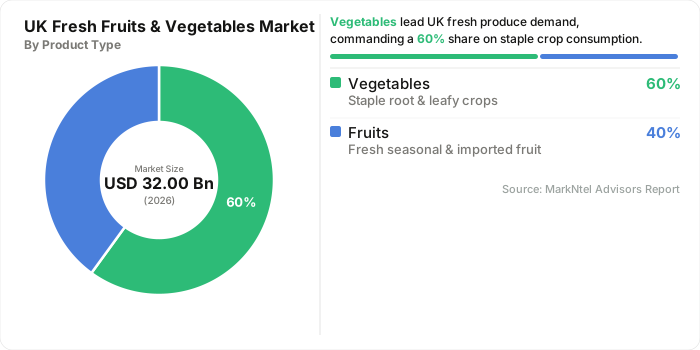
- By product type, vegetables hold a significant share of about 60% in 2026.
- By distribution channel, the offline channel seized a significant share of about 70% in 2026.
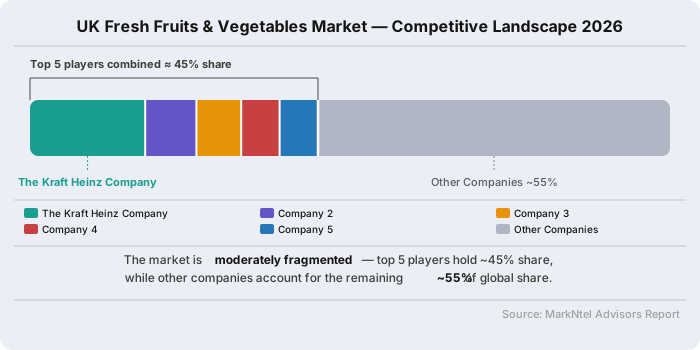
- The industry is highly consolidated. However, the top five players collectively account for nearly 4% share.
UK Fresh Fruits & Vegetables Market Size and Outlook
The fresh fruits & vegetables market size in the United Kingdom was valued at USD 29 billion in 2025 and is projected to grow from USD 32 billion in 2026 to USD 48 billion by 2032. Along with this, the market is estimated to grow at a CAGR of around 8.76% during the forecast period, i.e., 2026-32, supported by targeted public investment and innovation-led horticultural growth. In 2024, the UK government outlined a Horticulture Resilience and Growth framework, with funding expected to scale to approximately USD 101 million per year from 2026, aimed at improving productivity through automation, infrastructure upgrades, and technology adoption in horticultural businesses. In addition, around USD 19 million has been allocated to Genetic Improvement Networks, focusing on developing climate-resilient fruit and vegetable varieties to strengthen long-term supply stability
These initiatives align with a broader national strategy to reduce import dependence and strengthen local food systems. Government policy updates in 2024 also emphasize unlocking private investment in controlled-environment agriculture and modern farming systems to improve domestic output efficiency.
In terms of production performance, the UK vegetable output stood at approximately 2.4 million tonnes in 2024, while fruit production reached around 579 thousand tonnes, reflecting steady but constrained domestic supply capacity relative to demand. This reinforces continued reliance on imports for year-round availability, especially for high-demand categories such as berries, citrus, and tomatoes.
At the same time, seasonal and locally sourced produce continues to gain traction, supported by retail strategies that prioritize UK-grown fruits and vegetables during peak harvest periods. This shift is driven by consumer preference for freshness, traceability, and sustainability.
Overall, the UK fresh produce market is expected to grow steadily, with future expansion shaped by policy-backed investment, genetic innovation, and local sourcing growth, rather than large-scale changes in consumption demand.
UK Fresh Fruits & Vegetables Market Key Indicators
- The production-to-supply ratio in 2024 highlights the UK’s continued dependence on imported fresh produce. Domestic production accounted for around 53% of total vegetable supply, showing a slight decline from previous years and reflecting long-term structural limitations in self-sufficiency. For fruits, domestic output covered only about 15% of total supply in 2024, indicating near-total reliance on imports. This persistent gap is driven by climatic constraints, seasonality, and strong consumer demand for year-round and exotic varieties, reinforcing the UK’s vulnerability to global supply chain conditions and external market disruptions.
- Volatile Real Household Disposable Income (RHDI) directly affects UK fresh fruits and vegetables demand by shaping affordability. According to ONS, RHDI per head rose 1.9% in Q4 2024, fell 1.0% in Q1 2025, and recovered 0.2% in Q2 2025, showing unstable purchasing power. During stronger income quarters, households increase spending on fresh produce, especially premium and organic categories. However, income contractions reduce discretionary food spending, shifting demand toward discounted retailers.
- The UK fresh fruits and vegetables market is characterised by a persistent structural trade deficit, making it the most import-dependent food category. In 2025, imports of fruit and vegetables reached approximately USD 19.1 billion, rising 4% year-on-year in real terms, while total UK food, feed, and drink imports increased to about USD 86.0 billion (+6%), according to DEFRA’s UK Trade in Food, Feed and Drink 2025 Provisional report. In 2024, vegetable imports were valued at USD 4.06 billion (2.2 million tonnes) and fruit imports at USD 5.84 billion (3.3 million tonnes). Meanwhile, exports remained extremely low at only USD 121 million for vegetables and USD 93 million for fruit, highlighting a deep structural imbalance and continued reliance on global supply chains for fresh produce security.
UK Fresh Fruits & Vegetables Market Scope
| Category | Segments |
|---|---|
| By Product Type | Fruits, Vegetables |
| By Type | Organic, Inorganic |
| By Application | Household, Commercial |
| By Distribution Channel | Online, Offline |
UK Fresh Fruits & Vegetables Market Growth Drivers
Rising Health Awareness
Rising health awareness is a primary demand driver of the UK fresh fruits and vegetables market, strongly reinforced by government health policy and worsening dietary-health indicators. The UK Government’s National Diet and Nutrition Survey (2024 update) shows that average fruit and vegetable intake remains critically low at 2.9 portions per day in 2024, well below the NHS-recommended 400g (5 portions) guideline aimed at reducing risks of cardiovascular disease and cancer. Despite decades of public health campaigns, only 11% of adults met the 5-a-day target in 2024 in Scotland, the lowest recorded level in the series.
This persistent gap between recommended and actual intake is increasingly shaping consumer behaviour, with rising demand for ready-to-eat salads, fresh-cut vegetables, and fruit snack packs across UK supermarkets. NHS-backed initiatives such as “5 A Day” and food prescription pilots are reinforcing behavioural change.
Looking ahead, the UK government’s long-term food strategy and preventive healthcare agenda are expected to expand “food as medicine” programs, integrate fruit and vegetable prescriptions into chronic disease management, and strengthen school and workplace nutrition standards, further embedding fresh produce into daily consumption patterns.
Rising health consciousness is structurally increasing demand for fruits and vegetables in the UK. As dietary gaps remain significant, policy-driven health interventions and preventive nutrition programs will continue to accelerate market growth and sustain long-term consumption expansion.
Recent Trends
Rise of Vertical Farming as a Key Production Trend in the Fresh Produce Supply
The rise of vertical farming is emerging as a key trend in the UK fresh fruits and vegetables market, driven by the need for sustainable, climate-resilient, and high-quality food production. A major development is the launch of vertically farmed salad leaves by Marks & Spencer in 2026, grown in fully controlled indoor environments using advanced robotics and precision farming systems.
These salads are produced using vertical farming techniques that significantly reduce environmental impact, using up to 96% less water and around 97% less fertilizer compared to traditional field-grown salads, while completely eliminating pesticide use. The controlled environment allows precise regulation of temperature, light, and nutrients, ensuring consistent quality throughout the year and reducing dependency on seasonal weather conditions. The products are also designed for improved freshness, with the leaves staying fresh for up to five days longer than conventional salad bags, improving shelf life and reducing household food waste.
Vertical farming is becoming a mainstream retail innovation in the UK fresh produce sector. By improving sustainability, freshness, and supply reliability, it is strengthening long-term growth and transforming traditional fruit and vegetable supply systems.
UK Fresh Fruits & Vegetables Market Opportunities and Challenges
Import Dependency as a Structural Challenge Driving Domestic Production Expansion in the United Kingdom
The UK fresh fruits and vegetables market faces a key structural challenge of high import dependency, particularly for fruit categories such as bananas, citrus fruits, grapes, and tropical produce that cannot be grown at scale domestically. According to the UK Government’s DEFRA Food Trade Statistics 2024, the UK imported approximately USD 82–84 billion worth of total food, feed, and drink in 2024, with fruits and vegetables alone accounting for about USD 18–19 billion, making it the largest imported food category.
Within vegetables and fruit imports, volumes reached over 2.1 million tonnes in 2024, reflecting strong reliance on external supply chains. This dependency exposes the market to risks such as global freight disruptions, Brexit-related border costs, and currency fluctuations, leading to import value growth of around 7–9% year-on-year in 2024 due to rising logistics and input costs.
This challenge of import dependency in the UK fresh fruits and vegetables market is creating a strong opportunity for domestic production expansion and import substitution, particularly in vegetables and protected horticulture. According to the UK Government’s Horticulture Statistics 2025, the UK produced approximately 2.4 million tonnes of vegetables in 2024, with home production contributing around 53% of total vegetable supply, highlighting the significant role of domestic output in meeting national demand.
The report also shows that protected vegetable production (such as crops grown in greenhouses and polytunnels) continues to support stable year-round supply, especially for tomatoes, lettuce, and cucumbers, reducing reliance on imports during off-season periods. This rising domestic contribution reflects growing investment in controlled cultivation systems aimed at improving yield efficiency and supply resilience.
Segmentation Insights
Vegetables Lead the Industry as Dominant Product Type in the UK
Vegetables hold nearly 60% share of the UK fresh fruits and vegetables market revenue due to their essential role in the daily British diet and strong integration across both retail and foodservice channels. Staples such as potatoes, tomatoes, onions, carrots, and leafy greens are consumed regularly in home cooking, packaged meals, and institutional catering, ensuring consistent year-round demand. Unlike many fruits, vegetables have a higher share of domestically produced supply in the UK, which supports stable availability and reduces reliance on imports for key categories.
According to DEFRA horticulture statistics, vegetables form the backbone of UK horticultural output, reinforcing their dominance in market value terms. Additionally, vegetables are widely used in processed and convenience foods, including ready meals, soups, and salads, further expanding their consumption base. Their relatively lower price volatility compared to imported fruits also contributes to steady household purchasing patterns. Growing health awareness and government-backed dietary guidance, such as the NHS “5 A Day” campaign, further strengthen vegetable consumption, making them a core component of preventive diets and ensuring their continued dominance in the UK fresh produce market. Based on product type, the scope has been segmented into
- Fruits
- Apple
- Banana
- Cherries
- Cranberries/Blueberries
- Grapefuit
- Grapes
- Kiwi Fruit
- Lemon & Limes
- Oranges, Mandarins & Tangerines
- Peaches
- Pears /Quinces
- Pineapple
- Plums/Sloes
- Strawberries
- Others
- Vegetables
- Cauliflowers & Broccoli
- Onion
- Tomatoes
- Carrot
- Grapefruit
- Cucumber
- Others
Offline Retail Continues to Dominate Fresh Fruits and Vegetables Distribution in the UK
Offline channels hold the dominant position in the UK fresh fruits and vegetables market, accounting for an estimated 70% of total sales due to their strong physical retail presence, consumer trust, and established supply chain networks. Supermarkets and hypermarkets such as Tesco, Sainsbury’s, Asda, and Morrisons play a central role by offering a wide variety of fresh produce under one roof, supported by efficient cold-chain logistics that ensure year-round availability and quality. These stores remain the primary destination for weekly grocery shopping, allowing consumers to personally inspect freshness, which is especially important for perishable items like fruits and vegetables.
Additionally, competitive pricing, promotional offers, and private-label products enhance affordability and customer retention. Offline grocery stores and convenience outlets further support daily and impulse purchases, strengthening overall channel dominance. Despite the growth of online grocery platforms, many consumers still prefer in-store selection for fresh produce quality assurance. As a result, offline retail continues to lead the market, driven by accessibility, reliability, and strong consumer purchasing habits across the UK. Based on distribution channel, the market is categorized into
- Online
- Offline
- Supermarkets and Hypermarkets
- Grocery Stores
- Others
UK Fresh Fruits & Vegetables Market Geographical Outlook
England accounts for approximately 54% of total fresh fruits and vegetables demand in the UK, making it the largest regional market due to its dense population concentration, strong retail penetration, and highly urbanized consumption base. Major cities such as London, Birmingham, Manchester, and Leeds act as primary demand hubs where daily grocery consumption is dominated by supermarkets like Tesco, Sainsbury’s, Asda, and Morrisons. For instance, Greater London alone represents one of the most significant fresh produce consumption zones in Europe, driven by its diverse population and high preference for fresh salads, berries, citrus fruits, and organic vegetables.
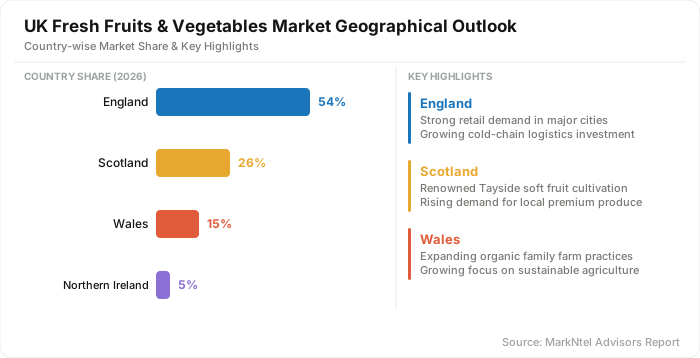
England also benefits from advanced logistics and cold-chain infrastructure, particularly around distribution centres in the South East, which ensures rapid replenishment of perishable goods across retail stores. Additionally, high-income urban households and widespread adoption of health-driven diets, supported by NHS “5 A Day” guidelines, further strengthen demand. Cities such as Manchester and Birmingham also show strong consumption of convenience-ready fruits and vegetables due to busy urban lifestyles. As a result, England remains the dominant consumption engine of the UK fresh produce market, accounting for the majority share of national demand.
UK Fresh Fruits & Vegetables Market Competitive Analysis
The UK fresh fruits and vegetables market is moderately fragmented, with a mix of multinational suppliers, European cooperatives, and domestic distributors collectively accounting for a significant share of the organized supply chain. The top five participants account for approximately 45% share of the organized UK fresh produce import and distribution network, reflecting strong consolidation among key global suppliers serving UK retailers. Key participants include Dole UK Limited, Keelings UK Group Limited, Driscoll's UK Group Limited, Naturipe Farms, LLC, BelOrta Coöperatieve Veiling CV, and others.
Major Companies in the UK Fresh Fruits & Vegetables Industry
- Dole UK Limited
- Keelings UK Group Limited
- Driscoll's UK Group Limited
- Naturipe Farms, LLC
- BelOrta Coöperatieve Veiling CV
- Mirak Group Limited
- Göknur Gıda Maddeleri Enerji İmalat İthalat İhracat Ticaret ve Sanayi A.Ş.
- Frutas Garrido S.L.
- Fresca Group Limited
- FESA (UK) Limited
- Others
UK Fresh Fruits & Vegetables Industry News and Recent Developments:
-
Co-op Expands UK Vertically Farmed Salad Distribution
Co-op began stocking farmed salad from GrowUp Farms vertically across hundreds of UK stores, marking wider retail adoption of controlled-environment agriculture. The salad is grown indoors in Kent without pesticides and supports a year-round UK supply. The rollout highlights increasing supermarket reliance on local vertical farming for leafy greens.
Impact Analysis: The expansion of GrowUp Farms’ vertically farmed salad across Co-op stores strengthens the commercial viability of controlled-environment agriculture in the UK fresh produce market. It reduces dependence on imports and seasonal supply fluctuations while improving product consistency and shelf life. This also encourages wider retailer adoption of local vertical farming, supporting supply chain resilience and increasing consumer access to pesticide-free, sustainably grown leafy greens year-round.
-
Marks & Spencer Introduces Next-Gen Salad innovation
Marks & Spencer launched new salad products in 2026 grown in fully controlled vertical farming systems. The products use robotics, nutrient-controlled substrates, and pesticide-free production methods to deliver longer-lasting fresh produce.
Impact Analysis: Marks & Spencer’s launch of advanced vertically farmed salad products accelerates mainstream acceptance of high-tech fresh produce in UK retail. It enhances differentiation through longer shelf life, reduced environmental impact, and improved freshness. The use of automation and controlled inputs improves production efficiency and quality consistency. This strengthens premium positioning in fresh salads while supporting the shift toward sustainable, climate-resilient food systems in the UK market.
Frequently Asked Questions
- Market Segmentation
- Introduction
- Product Definition
- Research Process
- Assumptions
- Executive Summary
- UK Fresh Fruits & Vegetables Market Policies, Regulations, and Product Standards
- UK Fresh Fruits & Vegetables Market Production Trend 2022-2032
- UK Fresh Fruits & Vegetables Market Production Trend By Type of Product
- Fruits
- Apple
- Banana
- Cherries
- Cranberries/Blueberries
- Grapefuit
- Grapes
- Kiwi Fruit
- Lemon & Limes
- Oranges, Mandarins & Tangerines
- Peaches
- Pears /Quinces
- Pineapple
- Plums/Sloes
- Strawberries
- Others
- Vegetables
- Cauliflowers & Broccoli
- Onion
- Tomatoes
- Carrot
- Cucumber
- Others
- Fruits
- Company-Wise Production Plants and Statistics
- Installed Production Capacity
- Actual Production
- Planned Production Target
- UK Fresh Fruits & Vegetables Market Production Trend By Type of Product
- UK Fresh Fruits & Vegetables Market Pricing Analysis 2022-2032
- UK Fresh Fruits & Vegetables Market Pricing Trend (USD/Tons) 2022-2032
- UK Fresh Fruits & Vegetables Market Pricing Trend (USD/Tons) By Regions 2022-2032
- England
- Scotland
- Wales
- Northern Ireland
- UK Fresh Fruits & Vegetables Market Pricing Trend (USD/Tons) By Product Type 2022-2032
- Fruits
- Apple
- Banana
- Cherries
- Cranberries/Blueberries
- Grapefuit
- Grapes
- Kiwi Fruit
- Lemon & Limes
- Oranges, Mandarins & Tangerines
- Peaches
- Pears /Quinces
- Pineapple
- Plums/Sloes
- Strawberries
- Others
- Vegetables
- Cauliflowers & Broccoli
- Onion
- Tomatoes
- Carrot
- Cucumber
- Others
- Fruits
- UK Fresh Fruits & Vegetables Market Trends & Developments
- UK Fresh Fruits & Vegetables Market Dynamics
- Growth Factors
- Challenges
- UK Fresh Fruits & Vegetables Market Hotspot & Opportunities
- UK Fresh Fruits and Vegetables Market Supply Chain Analysis
- UK Fresh Fruits & Vegetables Market Outlook, 2022-2032F
- Market Size & Outlook
- By Revenues (USD Million)
- By Quantity Sold (Thousand Tons)
- Market Segmentation & Outlook
- By Product Type- Market Size & Forecast 2022-2032, USD Million & Thousand Tons
- Fruits
- Apple
- Banana
- Cherries
- Cranberries/Blueberries
- Grapefuit
- Grapes
- Kiwi Fruit
- Lemon & Limes
- Oranges, Mandarins & Tangerines
- Peaches
- Pears /Quinces
- Pineapple
- Plums/Sloes
- Strawberries
- Others
- Vegetables
- Cauliflowers & Broccoli
- Onion
- Tomatoes
- Carrot
- Cucumber
- Others
- Fruits
- By Type- Market Size & Forecast 2022-2032, USD Million & Thousand Tons
- Organic
- Inorganic
- By Application- Market Size & Forecast 2022-2032, USD Million & Thousand Tons
- Household
- Commercial
- By Distribution Channel- Market Size & Forecast 2022-2032, USD Million & Thousand Tons
- Online
- Offline
- Supermarkets and Hypermarkets
- Grocery Stores
- Others
- By Region- Market Size & Forecast 2022-2032, USD Million & Thousand Tons
- England
- Scotland
- Wales
- Northern Ireland
- By Company
- Competition Characteristics
- Market Segmentation & Analysis
- By Product Type- Market Size & Forecast 2022-2032, USD Million & Thousand Tons
- Market Size & Outlook
- UK Fresh Fruits Market Outlook, 2022-2032
- Market Size & Outlook
- By Revenues (USD Million)
- By Quantity Sold (Thousand Tons)
- Market Segmentation & Outlook
- By Type- Market Size & Forecast 2022-2032, USD Million & Thousand Tons
- By Application- Market Size & Forecast 2022-2032, USD Million & Thousand Tons
- By Distribution Channel- Market Size & Forecast 2022-2032, USD Million & Thousand Tons
- By Region- Market Size & Forecast 2022-2032, USD Million & Thousand Tons
- Market Size & Outlook
- UK Fresh Vegetables Market Outlook, 2022-2032
- Market Size & Outlook
- By Revenues (USD Million)
- By Quantity Sold (Thousand Tons)
- Market Segmentation & Outlook
- By Type- Market Size & Forecast 2022-2032, USD Million & Thousand Tons
- By Application- Market Size & Forecast 2022-2032, USD Million & Thousand Tons
- By Distribution Channel- Market Size & Forecast 2022-2032, USD Million & Thousand Tons
- By Region- Market Size & Forecast 2022-2032, USD Million & Thousand Tons
- Market Size & Outlook
- UK Fresh Fruits & Vegetables Market Key Strategic Imperatives for Success & Growth
- Competitive Outlook
- Company Profiles
- DOLE UK LIMITED
- Business Description
- Product Portfolio
- Collaborations & Alliances
- Recent Developments
- Financial Details
- Others
- KEELINGS UK GROUP LIMITED
- Business Description
- Product Portfolio
- Collaborations & Alliances
- Recent Developments
- Financial Details
- Others
- DRISCOLL'S UK GROUP LIMITED
- Business Description
- Product Portfolio
- Collaborations & Alliances
- Recent Developments
- Financial Details
- Others
- NATURIPE FARMS LLC
- Business Description
- Product Portfolio
- Collaborations & Alliances
- Recent Developments
- Financial Details
- Others
- BELORTA COÖPERATIEVE VEILING CV
- Business Description
- Product Portfolio
- Collaborations & Alliances
- Recent Developments
- Financial Details
- Others
- MIRAK GROUP LIMITED
- Business Description
- Product Portfolio
- Collaborations & Alliances
- Recent Developments
- Financial Details
- Others
- GÖKNUR GIDA MADDELERİ ENERJİ İMALAT İTHALAT İHRACAT TİCARET VE SANAYİ ANONİM ŞİRKETİ
- Business Description
- Product Portfolio
- Collaborations & Alliances
- Recent Developments
- Financial Details
- Others
- FRUTAS GARRIDO S.L.
- Business Description
- Product Portfolio
- Collaborations & Alliances
- Recent Developments
- Financial Details
- Others
- FRESCA GROUP LIMITED
- Business Description
- Product Portfolio
- Collaborations & Alliances
- Recent Developments
- Financial Details
- Others
- FESA (UK) LIMITED
- Business Description
- Product Portfolio
- Collaborations & Alliances
- Recent Developments
- Financial Details
- Others
- DOLE UK LIMITED
- Company Profiles
- Disclaimer
MarkNtel Advisors follows a robust and iterative research methodology designed to ensure maximum accuracy and minimize deviation in market estimates and forecasts. Our approach combines both bottom-up and top-down techniques to effectively segment and quantify various aspects of the market. A consistent feature across all our research reports is data triangulation, which examines the market from three distinct perspectives to validate findings. Key components of our research process include:
1. Scope & Research Design At the outset, MarkNtel Advisors define the research objectives and formulate pertinent questions. This phase involves determining the type of research—qualitative or quantitative—and designing a methodology that outlines data collection methods, target demographics, and analytical tools. They also establish timelines and budgets to ensure the research aligns with client goals.
2. Sample Selection and Data Collection In this stage, the firm identifies the target audience and determines the appropriate sample size to ensure representativeness. They employ various sampling methods, such as random or stratified sampling, based on the research objectives. Data collection is carried out using tools like surveys, interviews, and observations, ensuring the gathered data is reliable and relevant.
3. Data Analysis and Validation Once data is collected, MarkNtel Advisors undertake a rigorous analysis process. This includes cleaning the data to remove inconsistencies, employing statistical software for quantitative analysis, and thematic analysis for qualitative data. Validation steps are taken to ensure the accuracy and reliability of the findings, minimizing biases and errors.

4. Data Forecast and FinalizationThe final phase involves forecasting future market trends based on the analyzed data. MarkNtel Advisors utilize predictive modeling and time series analysis to anticipate market behaviors. The insights are then compiled into comprehensive reports, featuring visual aids like charts and graphs, and include strategic recommendations to inform client decision-making
We offer flexible licensing options to cater to varying organizational needs. Choose the pricing pack that best suits your requirements:
Buy Now Inquire Before Buying
 Request Customization
 Talk to our Consultant







