

UAE Electric Vehicle Market Research Report: Forecast (2026-2032)
By Vehicle Type (Passenger Cars, Commercial Vehicles, Medium & Heavy Commercial Vehicles, Two Wheelers, Three Wheelers), By Propulsion Type (Battery Electric Vehicle (BEV), Hybrid ... Electric Vehicle (HEV), Fuel-cell electric vehicles), By Charging Type (AC Charging, DC Fast Charging, Ultra-Fast / High-Power Charging), By Range (Less than 200 km, 200–400 km, Above 400 km), By Battery Type (Lithium-Ion Battery, Lithium Iron Phosphate (LFP), Nickel Manganese Cobalt (NMC), Solid-State Battery, Nickel Metal Hydride (NiMH)), and others Read more
- Automotive
- Jul 2026
- Pages 140
- Report Format: PDF, Excel, PPT
UAE Electric Vehicle Market
Projected 31.92 % CAGR from 2026 to 2032
Study Period
2026-2032
Market Size (2026)
USD 2.20 Billion
Market Size (2032)
USD 4.66 Billion
Base Year
2025
Projected CAGR
31.92 %
Leading Segments
By Propulsion Type: Battery Electric Vehicle (BEV)
UAE Electric Vehicle Market Key Takeaways
- The UAE electric vehicle market size was valued at around USD 2.42 Billion in 2025 and is projected to grow from USD 2.20 Billion in 2026 to USD 4.66 Billion by 2032, exhibiting a CAGR of 31.92% during 2026-2032.
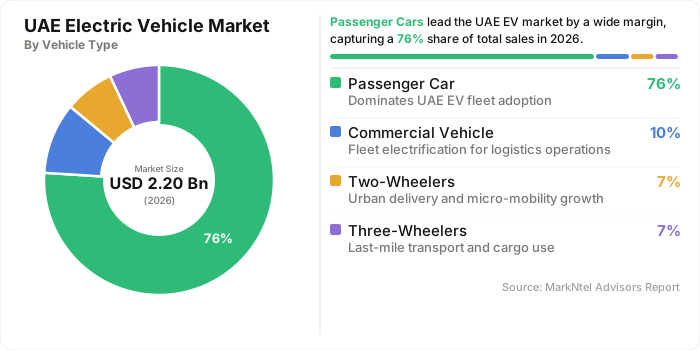
- By vehicle type, passenger cars are anticipated to hold approximately 76% of the market share in 2026
- By propulsion type, battery electric vehicles are projected to account for approximately 69% of the market share in 2026
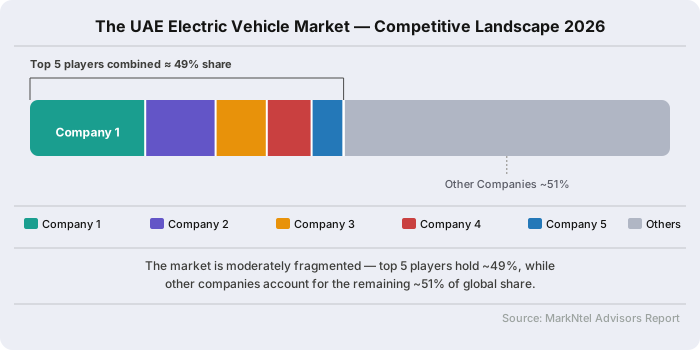
- The industry remains moderately consolidated, with top five players collectively account for approximately 49.0% market share.
UAE Electric Vehicle Market Size and Outlook
The electric vehicle market size in the UAE was valued at 2.42 Billion in 2025 and is projected to grow from USD 2.20 Billion in 2026 to USD 4.66 Billion by 2032. Along with this, the market is estimated to grow at a CAGR of around 31.92 % during the forecast period, i.e., 2026-32.
The adoption of EV in the UAE is increasingly shaped by the emirate's booming delivery economy, where same-day and instant-order expectations are pushing last-mile fleets toward electrification. Dubai's Roads and Transport Authority reported that the commercial transport sector grew more than 40% in 2025, with licensed companies rising from 12,100 to 16,917 and registered vehicles surpassing 500,000 units, a 25% increase, contributing over USD 2.29 billion annually to the emirate's economy. Much of this expansion stems from surging demand for app-based delivery services, a trend that is directly widening the electric vehicle market's commercial base as operators shift toward electric bikes and light vehicles for faster, lower-cost fulfilment.
Reinforcing this shift, RTA signed a partnership agreement to establish a dedicated network of battery-swapping stations for delivery bikes across Dubai, reducing rider downtime and accelerating the transition to low-emission last-mile mobility. This infrastructure investment positions electric two-wheelers as the backbone of the UAE's quick commerce boom rather than a peripheral trend. Complementing this momentum, the Abu Dhabi Government's Digital Strategy 2025-2027 is projected to contribute over USD 6.53 billion to the emirate's GDP by 2027, reflecting the broader digital and logistics transformation feeding electric mobility demand nationwide. Together, these developments suggest the UAE electric vehicle market's growth will increasingly be driven not only by passenger and luxury segments but by a fast-expanding delivery and logistics ecosystem, positioning the sector for diversified, resilient growth through 2032.
UAE Electric Vehicle Market Key Indicators
- As of July 2025, Dubai Electricity and Water Authority (DEWA) operated more than 1,270 EV Green charging points across Dubai under its Green Charger Initiative. The continuous expansion of public charging infrastructure improves charging accessibility, reduces range anxiety, and encourages greater adoption of electric vehicles by private consumers and commercial fleet operators across the UAE.
- In January 2026, the Abu Dhabi Department of Energy launched the Barq network, deploying over 50 ultra-fast EV chargers with capacities of up to 360 kW across Abu Dhabi, Al Ain, and Al Dhafra. The expansion of ultra-fast charging infrastructure enhances long-distance EV usability, strengthens consumer confidence, and supports higher electric vehicle penetration throughout the UAE.
- The UAE Energy Strategy 2050 targets tripling renewable energy capacity to 14 GW by 2030 while increasing clean energy's contribution to the national energy mix. Greater renewable electricity generation enhances the environmental benefits of electric vehicles and supports long-term demand for zero-emission transportation across the UAE.
- The UAE's Net Zero by 2050 Strategic Initiative commits the country to achieving net-zero greenhouse gas emissions by 2050, supported by sustainable transport and clean mobility policies. Long-term decarbonization policies encourage investment in EV infrastructure, accelerate fleet electrification, and create a supportive regulatory environment for electric vehicle adoption.
- The Roads and Transport Authority (RTA) announced the Dubai International Electric Vehicle Exhibition & Conference 2026, bringing together more than 300 exhibitors and 10,000 industry participants. The event promotes collaboration among automakers, technology providers, charging companies, and policymakers, accelerating innovation and strengthening the UAE's electric mobility ecosystem.
UAE Electric Vehicle Market Scope
| Category | Segments |
|---|---|
| By Vehicle Type | Passenger Cars, Commercial Vehicles, Medium & Heavy Commercial Vehicles, Two Wheelers, Three Wheelers |
| By Propulsion Type | Battery Electric Vehicle (BEV), Hybrid Electric Vehicle (HEV), Fuel-cell electric vehicles |
| By Charging Type | AC Charging, DC Fast Charging, Ultra-Fast / High-Power Charging |
| By Range | Less than 200 km, 200–400 km, Above 400 km |
| By Battery Type | Lithium-Ion Battery, Lithium Iron Phosphate (LFP), Nickel Manganese Cobalt (NMC), Solid-State Battery, Nickel Metal Hydride (NiMH |
UAE Electric Vehicle Market Growth Drivers
Government-Led Investments in Charging Infrastructure and Sustainable Mobility Driving Electric Vehicle Adoption
Government-led investments in sustainable transportation infrastructure continue to be one of the strongest growth drivers for the UAE electric vehicle market. National and emirate-level initiatives are focused on expanding public charging networks, supporting clean mobility, and reducing transport-related carbon emissions in line with the UAE Net Zero 2050 Strategic Initiative. Continuous deployment of charging infrastructure by government entities, utilities, and energy companies is improving charging accessibility and convenience for both individual consumers and commercial fleet operators. These investments are creating a supportive ecosystem for electric vehicle ownership while encouraging global automakers to strengthen their presence and expand their product portfolios in the UAE market.
A notable example is the January 2026 launch of the 'Barq' ultra-fast charging network by the Abu Dhabi Department of Energy in collaboration with TAQA Distribution. The first phase includes more than 50 ultra-fast chargers rated at up to 360 kW across Abu Dhabi, Al Ain, and Al Dhafra, significantly reducing charging time and enhancing accessibility for EV users. The initiative demonstrates the government's continued commitment to accelerating electric mobility through infrastructure development, thereby supporting higher EV adoption, strengthening consumer confidence, and driving long-term market growth.
Recent Trends
Artificial Intelligence and Intelligent Connected Technologies Enhancing Electric Vehicle User Experience
Artificial intelligence is becoming a defining trend in the UAE electric vehicle market as automakers increasingly integrate AI-powered driver assistance, intelligent cockpit systems, predictive navigation, voice-enabled controls, and over-the-air software updates into new electric models. UAE consumers are demonstrating growing preference for connected vehicles that offer enhanced safety, personalized driving experiences, and seamless digital connectivity. The country's advanced digital infrastructure, smart city initiatives, and focus on intelligent mobility are encouraging manufacturers to introduce AI-enabled electric vehicles, positioning technology as a key competitive differentiator alongside battery range and charging performance. This evolution is accelerating the transition from conventional electric vehicles to software-defined and intelligent mobility solutions.
A notable example is the February 2025 launch of the Deepal S07 in the UAE by Al Tayer Motors, featuring an AI-powered intelligent cockpit, advanced voice recognition, adaptive driver assistance systems, and an integrated smart connectivity platform. The model combines AI-enabled driving technologies with battery electric mobility, demonstrating manufacturers' increasing focus on intelligent user experiences tailored to digitally connected consumers. Such launches are accelerating the adoption of AI-driven electric vehicles in the UAE, encouraging innovation across the automotive sector and strengthening the country's position as a regional hub for advanced sustainable mobility technologies.
UAE Electric Vehicle Market Opportunities and Challenges
Import Dependency Challenges the UAE Electric Vehicle Market, Fueling a National Push for Domestic Manufacturing
The UAE electric vehicle market remains heavily reliant on imported vehicles and components, as domestic EV manufacturing capacity is still in its early stages. This exposes automakers, dealers, and consumers to global supply chain volatility, including shipping costs, tariff shifts, and disruptions affecting battery cells and semiconductors sourced internationally. Without a stronger local production base, the electric vehicle market's growth trajectory stays vulnerable to external shocks outside the UAE's direct control, limiting long-term cost stability and pricing predictability for both manufacturers and buyers.
Addressing this, the Ministry of Industry and Advanced Technology secured USD 4.90 billion in industrial financing commitments at Make it in the Emirates 2026, part of its Operation 300bn strategy targeting USD 81.69 billion in industrial GDP contribution by 2031. The National In-Country Value Program is pursuing localization of over 5,000 products, including automotive components. This financing and localization push strengthens the UAE electric vehicle market's manufacturing base, reducing import reliance over time.
Segmentation Insights
Passenger Cars Holding Approximately 76% Market Share Due to Rising Consumer Demand and Expanding EV Ecosystem
Passenger cars are estimated to account for approximately 76% of the UAE electric vehicle market in 2026, driven by growing consumer acceptance of electric mobility, expanding charging infrastructure, and supportive government initiatives promoting sustainable transportation. Compared with commercial vehicles, passenger EVs offer a wider range of models across economy, premium, and luxury segments, making them more attractive to individual buyers. Continuous investments in public charging stations by utilities, fuel retailers, and private operators have improved charging accessibility, while the presence of global automotive brands has strengthened product availability and consumer confidence. These factors continue to reinforce passenger cars as the largest vehicle type segment in the UAE electric vehicle industry.
Further momentum is supported by new product introductions that expand consumer choice and accelerate EV adoption. In November 2025, Al-Futtaim Electric Mobility officially launched the BYD Sealion 7 in the UAE, introducing a premium all-electric SUV equipped with the latest Blade Battery technology, extended driving range, and intelligent driver assistance features. The launch strengthened BYD's growing product portfolio in the UAE and reflected increasing manufacturer investment in the country's rapidly evolving electric mobility landscape. Such developments enhance competition, broaden model availability, and support sustained growth of the passenger car segment as consumers increasingly transition toward battery electric vehicles. Based on the type of vehicle the market is bifurcated into:
- Passenger car
- Commercial vehicle
- Two – wheelers
- Three- wheelers
Battery Electric Vehicles (BEVs) Holding Approximately 69% Market Share Driven by Expanding Model Availability and Charging Network
Battery Electric Vehicles (BEVs) are estimated to account for approximately 69% of the UAE electric vehicle industry in 2026, supported by expanding charging infrastructure, a growing portfolio of long-range electric models, and increasing consumer preference for zero-emission mobility. Compared with hybrid and plug-in hybrid vehicles, BEVs align more closely with the UAE's long-term sustainability objectives and investments in clean transportation infrastructure. Automakers continue to prioritize the UAE for introducing new battery electric models, while utilities and fuel retailers are expanding public charging networks to improve charging convenience and reduce range anxiety. These factors continue to strengthen BEVs as the dominant propulsion type across the UAE electric vehicle market.
The segment's leadership is further reinforced by continuous product launches that broaden consumer choice across multiple price segments. In May 2025, Chevrolet officially launched the all-electric Equinox EV in the UAE, introducing a new midsize electric SUV equipped with GM's Ultium battery platform, advanced driver assistance technologies, and integrated OnStar connectivity. The launch expanded the availability of mainstream battery electric SUVs within the country and demonstrated manufacturers' increasing commitment to the UAE's evolving EV ecosystem. Such developments enhance product accessibility, stimulate competition among global automakers, and support sustained growth of the battery electric vehicle segment across the UAE. Based on the propulsion type, the market is further divided into:
- Battery Electric Vehicle (BEV)
- Hybrid Electric Vehicle (HEV)
- Fuel-cell electric vehicles
UAE Electric Vehicle Market Competitive Landscape
Tesla, BYD, BMW AG, Mercedes-Benz Group AG, and Hyundai Motor Company collectively account for an estimated of the UAE electric vehicle industry in 2026. Their strong product portfolios, expanding dealership networks, and growing EV offerings support market leadership. However, competition from Kia, Nissan, Renault, Porsche, Toyota, smart, VOYAH, and other EV brands operating in the UAE maintains a moderately consolidated market structure.
Key Companies in UAE Electric Vehicle Market
- Tesla, Inc.
- BYD Company Ltd.
- BMW AG
- Mercedes-Benz Group AG
- Hyundai Motor Company
- Kia Corporation
- Nissan Motor Co., Ltd.
- Renault Group
- Porsche AG
- Toyota Motor Corporation
- Others
UAE Electric Vehicle Industry News and Recent Developments
February 2026: AITO Launches the AITO 9 Luxury Electric SUV in the UAE
Huawei-backed AITO, in partnership with Abu Dhabi-based Performance Plus Motors, officially entered the UAE market by introducing the AITO 9 luxury intelligent SUV. The launch marked the brand's first expansion outside China, with vehicles arriving at Dubai Port and customer test drives commencing immediately. Performance Plus Motors will manage vehicle sales, deliveries, and after-sales support across the UAE.
Impact Analysis: The launch expands competition in the premium electric SUV segment while reinforcing the UAE's position as a strategic entry point for international EV manufacturers. The addition of another premium EV brand broadens consumer choice and strengthens the country's rapidly evolving electric mobility ecosystem.
February 2026: smart UAE Introduces the All-Electric smart #5 SUV
smart UAE officially launched the smart #5, the company's largest all-electric SUV, expanding its battery-electric portfolio in the UAE. The model features an 800-volt architecture, fast-charging capability, and advanced intelligent driving technologies, targeting the growing premium SUV market.
Impact Analysis: The launch strengthens competition in the premium midsize electric SUV category and demonstrates automakers' increasing confidence in UAE EV demand. A broader range of premium electric vehicles supports higher consumer adoption and market diversification.
January 2026: Tesla Begins Deliveries of the Refreshed Model Y (Juniper) in the UAE
Tesla started deliveries of the refreshed Model Y (Juniper) in the UAE, featuring updated exterior styling, improved cabin technology, enhanced efficiency, and longer driving range. The refreshed SUV became available through Tesla's official UAE sales network during early 2026.
Impact Analysis: The updated Model Y strengthens Tesla's competitive position within the UAE's premium EV segment while encouraging replacement demand from existing EV owners. Product upgrades also increase competitive pressure on other global manufacturers operating in the UAE.
January 2026: Porsche UAE Launches the New Macan Electric
Porsche officially introduced the fully electric Macan to UAE customers through Porsche Centre Dubai and the Northern Emirates. Built on Porsche's Premium Platform Electric (PPE), the SUV offers ultra-fast charging, long-range capability, and high-performance electric powertrains for the luxury SUV market.
Impact Analysis: The Macan Electric expands Porsche's electric portfolio in the UAE and increases premium EV options for luxury buyers. The launch reflects the growing shift of luxury automotive brands toward full electrification within the region.
2026: VOYAH Confirms Launch of Passion L and Taishan for the UAE Market
VOYAH announced that its Passion L premium electric sedan and Taishan SUV will be introduced in the UAE during 2026 as part of its regional expansion strategy. The company identified the UAE as a priority market for intelligent premium electric mobility.
Impact Analysis: The planned introduction of two premium electric models demonstrates increasing investment by Chinese EV manufacturers in the UAE. New model availability will intensify competition within the premium segment and further diversify consumer options as EV adoption accelerates.
Frequently Asked Questions
- Market Segmentation
- Introduction
- Product Definition
- Research Process
- Assumptions
- Executive Summary
- UAE Electric Vehicle Production (Thousand Units) Trend 2022-2032
- UAE Electric Vehicle Production (Thousand Units) Trend by Type of Vehicle
- Passenger Cars
- Commercial Vehicles
- Two-Wheelers
- Three-Wheelers
- Company Wise Production Plants and Statistics
- Installed Production Capacity
- Actual Production
- Planned Production Target
- UAE Electric Vehicle Production (Thousand Units) Trend by Type of Vehicle
- UAE Electric Vehicle Supply Chain Data Analysis 2022-2032
- UAE Electric Vehicle Import and Export Data Analysis 2022-2032
- UAE Electric Vehicle Market Policies, Regulations, and Product Standards
- UAE Electric Vehicle Market Trends & Developments
- UAE Electric Vehicle Market Dynamics
- Growth Factors
- Challenges
- UAE Electric Vehicle Market Hotspot & Opportunities
- UAE Electric Vehicle Market Outlook, 2022-2032
- Market Size & Outlook
- By Revenues (USD Million)
- By Unit Sold (Thousand Units)
- Market Share & Outlook
- By Vehicle Type- Market Size & Forecast 2022-2032, USD Million & Thousand
- Passenger Cars
- Sedan
- Hatchback
- SUV
- Commercial Vehicles
- Light Commercial Vehicles
- Electric Light Trucks
- Electric Minivans
- Medium & Heavy Commercial Vehicles
- Electric Trucks Electric Bus
- Two Wheelers
- Scooters
- Motorcycles
- Moped
- Three Wheelers
- Passenger Carrier
- Load Carrier
- Passenger Cars
- By Propulsion Type- Market Size & Forecast 2022-2032, USD Million & Thousand
- Battery Electric Vehicle (BEV)
- Hybrid Electric Vehicle (HEV)
- Fuel-cell electric vehicles
- By Charging Type- Market Size & Forecast 2022-2032, USD Million & Thousand
- AC Charging
- DC Fast Charging
- Ultra-Fast / High-Power Charging
- By Range- Market Size & Forecast 2022-2032, USD Million & Thousand
- Less than 200 km
- 200–400 km
- Above 400 km
- By Battery Type- Market Size & Forecast 2022-2032, USD Million & Thousand
- Lithium-Ion Battery
- Lithium Iron Phosphate (LFP)
- Nickel Manganese Cobalt (NMC)
- Solid-State Battery
- Nickel Metal Hydride (NiMH)
- By Region- Market Size & Forecast 2022-2032, USD Million & Thousand
- Dubai
- Al Ain & Abu Dhabi
- Sharjah & Northern Emirates
- By Company
- Competition Characteristics
- Market Share & Analysis
- By Vehicle Type- Market Size & Forecast 2022-2032, USD Million & Thousand
- Market Size & Outlook
- UAE Electric Passenger Cars Market Outlook, 2022-2032
- Market Size & Outlook
- By Revenues (USD Million)
- By Unit Sold (Thousand Units)
- Market Share & Outlook
- By Propulsion Type- Market Size & Forecast 2022-2032, USD Million & Thousand
- By Charging Type- Market Size & Forecast 2022-2032, USD Million & Thousand
- By Range- Market Size & Forecast 2022-2032, USD Million & Thousand
- By End User- Market Size & Forecast 2022-2032, USD Million & Thousand
- By Battery Type- Market Size & Forecast 2022-2032, USD Million & Thousand
- By Region- Market Size & Forecast 2022-2032, USD Million & Thousand
- Market Size & Outlook
- UAE Electric Commercial Vehicles Market Outlook, 2022-2032
- Market Size & Outlook
- By Revenues (USD Million)
- By Unit Sold (Thousand Units)
- Market Share & Outlook
- By Propulsion Type- Market Size & Forecast 2022-2032, USD Million & Thousand
- By Charging Type- Market Size & Forecast 2022-2032, USD Million & Thousand
- By Range- Market Size & Forecast 2022-2032, USD Million & Thousand
- By End User- Market Size & Forecast 2022-2032, USD Million & Thousand
- By Battery Type- Market Size & Forecast 2022-2032, USD Million & Thousand
- By Region- Market Size & Forecast 2022-2032, USD Million & Thousand
- Market Size & Outlook
- UAE Electric Two Wheelers Market Outlook, 2022-2032
- Market Size & Outlook
- By Revenues (USD Million)
- By Unit Sold (Thousand Units)
- Market Share & Outlook
- By Propulsion Type- Market Size & Forecast 2022-2032, USD Million & Thousand
- By Charging Type- Market Size & Forecast 2022-2032, USD Million & Thousand
- By Range- Market Size & Forecast 2022-2032, USD Million & Thousand
- By End User- Market Size & Forecast 2022-2032, USD Million & Thousand
- By Battery Type- Market Size & Forecast 2022-2032, USD Million & Thousand
- By Region- Market Size & Forecast 2022-2032, USD Million & Thousand
- Market Size & Outlook
- UAE Electric Three Wheelers Market Outlook, 2022-2032
- Market Size & Outlook
- By Revenues (USD Million)
- By Unit Sold (Thousand Units)
- Market Share & Outlook
- By Propulsion Type- Market Size & Forecast 2022-2032, USD Million & Thousand
- By Charging Type- Market Size & Forecast 2022-2032, USD Million & Thousand
- By Range- Market Size & Forecast 2022-2032, USD Million & Thousand
- By End User- Market Size & Forecast 2022-2032, USD Million & Thousand
- By Battery Type- Market Size & Forecast 2022-2032, USD Million & Thousand
- By Region- Market Size & Forecast 2022-2032, USD Million & Thousand
- Market Size & Outlook
- UAE Electric Vehicle Market Key Strategic Imperatives for Success & Growth
- Competitive Outlook
- Company Profiles
- Tesla, Inc.
- Business Description
- Product Portfolio
- Collaborations & Alliances
- Recent Developments
- Financial Details
- Others
- BYD Company Ltd.
- Business Description
- Product Portfolio
- Collaborations & Alliances
- Recent Developments
- Financial Details
- Others
- BMW AG
- Business Description
- Product Portfolio
- Collaborations & Alliances
- Recent Developments
- Financial Details
- Others
- Mercedes-Benz Group AG
- Business Description
- Product Portfolio
- Collaborations & Alliances
- Recent Developments
- Financial Details
- Others
- Hyundai Motor Company
- Business Description
- Product Portfolio
- Collaborations & Alliances
- Recent Developments
- Financial Details
- Others
- Kia Corporation
- Business Description
- Product Portfolio
- Collaborations & Alliances
- Recent Developments
- Financial Details
- Others
- Nissan Motor Co., Ltd.
- Business Description
- Product Portfolio
- Collaborations & Alliances
- Recent Developments
- Financial Details
- Others
- Renault Group
- Business Description
- Product Portfolio
- Collaborations & Alliances
- Recent Developments
- Financial Details
- Others
- Porsche AG
- Business Description
- Product Portfolio
- Collaborations & Alliances
- Recent Developments
- Financial Details
- Others
- Toyota Motor Corporation
- Business Description
- Product Portfolio
- Collaborations & Alliances
- Recent Developments
- Financial Details
- Others
- Others
- Tesla, Inc.
- Company Profiles
- Disclaimer
MarkNtel Advisors follows a robust and iterative research methodology designed to ensure maximum accuracy and minimize deviation in market estimates and forecasts. Our approach combines both bottom-up and top-down techniques to effectively segment and quantify various aspects of the market. A consistent feature across all our research reports is data triangulation, which examines the market from three distinct perspectives to validate findings. Key components of our research process include:
1. Scope & Research Design At the outset, MarkNtel Advisors define the research objectives and formulate pertinent questions. This phase involves determining the type of research—qualitative or quantitative—and designing a methodology that outlines data collection methods, target demographics, and analytical tools. They also establish timelines and budgets to ensure the research aligns with client goals.
2. Sample Selection and Data Collection In this stage, the firm identifies the target audience and determines the appropriate sample size to ensure representativeness. They employ various sampling methods, such as random or stratified sampling, based on the research objectives. Data collection is carried out using tools like surveys, interviews, and observations, ensuring the gathered data is reliable and relevant.
3. Data Analysis and Validation Once data is collected, MarkNtel Advisors undertake a rigorous analysis process. This includes cleaning the data to remove inconsistencies, employing statistical software for quantitative analysis, and thematic analysis for qualitative data. Validation steps are taken to ensure the accuracy and reliability of the findings, minimizing biases and errors.

4. Data Forecast and FinalizationThe final phase involves forecasting future market trends based on the analyzed data. MarkNtel Advisors utilize predictive modeling and time series analysis to anticipate market behaviors. The insights are then compiled into comprehensive reports, featuring visual aids like charts and graphs, and include strategic recommendations to inform client decision-making
We offer flexible licensing options to cater to varying organizational needs. Choose the pricing pack that best suits your requirements:
Buy Now Inquire Before Buying
 Request Customization
 Talk to our Consultant







