

Global Luxury Cars Market Research Report: Forecast (2026-2032)
By Vehicle Type (Hatchbacks, Sedans, Sports Utility Vehicles (SUVs), Multi-purpose Vehicles (MPVs)), By Drive Type (IC Engine, Electric Vehicle), By Vehicle Class (Entry-level Luxu ... ry, Mid-level Luxury, Ultra-luxury / Exotic), By Engine Capacity (Up to 3,000 cc, Above 3,000 cc), and others Read more
- Automotive
- May 2026
- Pages 198
- Report Format: PDF, Excel, PPT
Global Luxury Cars Market
Projected 6.38% CAGR from 2026 to 2032
Study Period
2026-2032
Market Size (2026)
USD 837 Billion
Market Size (2032)
USD 1213 Billion
Largest Region
Asia-Pacific
Projected CAGR
6.38%
Leading Segments
By Drive Type: ICE
Global Luxury Cars Market Key Takeaways
- Global luxury cars market size was valued at USD 811 billion in 2025 and is projected to grow from USD 837 billion in 2026 to USD 1213 billion by 2032.
- The market is projected to register a CAGR of 6.38% during the forecast period.
- Asia-Pacific holds the largest share of about 38% in 2026.
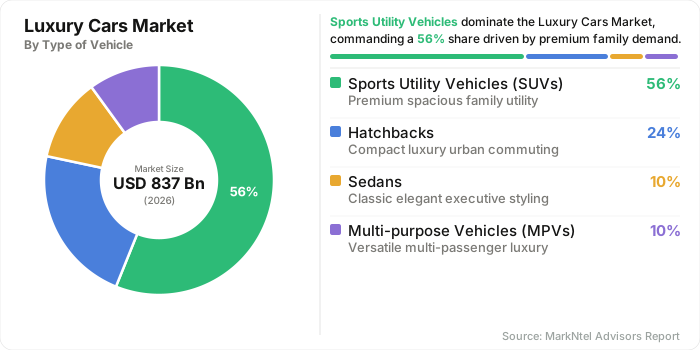
- By vehicle type, the Sports Utility Vehicles (SUVs) holds a significant share of about 56% in 2026.
- By drive type, the ICE segment seized a significant share of about 65% in 2026.
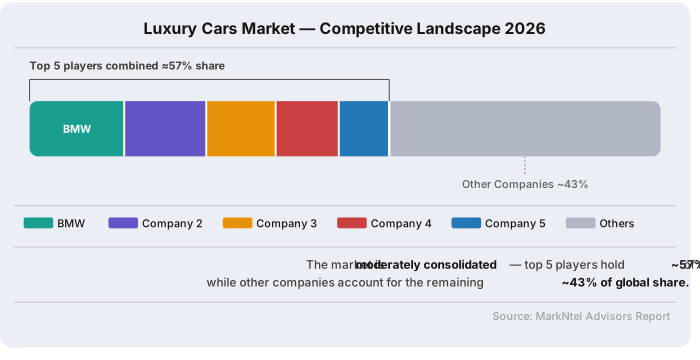
- The industry is moderately fragmented. However, the top five players collectively account for nearly 57% share.
Global Luxury Cars Market Size and Outlook
The luxury cars market is estimated to grow at a CAGR of around 6.38% during the forecast period, i.e., 2026-32, supported by a rising number of high-net-worth individuals and sustained expansion in disposable income across key economies. Increasing wealth concentration, particularly in urban regions, is strengthening demand for premium SUVs and electric luxury vehicles. At the same time, flexible financing options, leasing structures, and subscription-based ownership models are improving accessibility, enabling broader participation in high-value automotive ownership and supporting long-term market expansion.
This expanding affluent consumer base is significantly benefiting leading luxury automakers. Established players such as Ferrari N.V. and Rolls-Royce Motor Cars are experiencing strong demand driven by personalization and long order visibility. Ferrari reported revenues of approximately USD 7.8 billion in 2024, supported by strong customization-led sales and a confirmed order pipeline extending into 2026. In parallel, Rolls-Royce announced a USD 380 million investment to expand its Goodwood facility in 2025, aimed at meeting rising demand for bespoke and next-generation luxury vehicles.
The market is also being reshaped by rapid technological and mobility transitions. Electrification, AI-enabled driving systems, connected vehicle ecosystems, and software-defined vehicle architectures are increasingly defining product strategies across premium segments. Luxury SUVs continue to gain strong traction, while subscription-based mobility models are emerging as a key distribution channel. For instance, AMP launched India’s first luxury EV subscription platform, offering access to premium electric models from BMW, Mercedes-Benz, Audi, Volvo, and BYD without ownership commitments.
In addition, electric vehicle adoption is extending beyond ultra-luxury segments into more accessible premium categories. Kia Corporation’s introduction of the Carens Clavis EV reflects this shift, combining family-oriented design with electric mobility efficiency to target broader urban demand. This indicates a widening democratization of electric luxury and premium mobility solutions across emerging markets.
Furthermore, the luxury cars market is undergoing a structural transformation driven by rising global wealth, electrification, and evolving ownership preferences. The convergence of affluent demand, technological innovation, and flexible mobility models is expected to sustain strong growth momentum, with the market projected to increase from USD 837 billion in 2026 to USD 1,213 billion by 2032, reinforcing long-term premiumization across the global automotive industry.
Global Luxury Cars Market Key Indicators
- Global electric vehicle adoption has reached a structural inflection point, with sales surpassing 17 million units in 2024 and accounting for over 20% of total global car sales. This reflects accelerating mainstream acceptance of EVs, driven by rapid electrification in China, expanding infrastructure, and growing policy support across major automotive markets.
- China has emerged as the dominant force in global electric mobility, accounting for more than 70% of worldwide EV production and over 60% of global sales in 2025. The country’s rapid scale-up is supported by strong domestic demand, with EV penetration surpassing 50% of total vehicle sales, reflecting deep structural adoption across passenger and commercial segments. This reinforces China’s central role in shaping global EV supply chains and pricing dynamics.
- According to the World Bank (2024), the global urban population accounts for approximately 57% of the total world population, reflecting a continued shift toward urbanization across both developed and emerging economies. This rising urban concentration is strengthening demand for infrastructure, mobility, and premium consumption markets, supporting long-term growth in urban-driven industries such as automotive and luxury goods.
- Malaysia electric vehicle market continues to expand gradually, with EVs accounting for nearly 4% of new car sales in 2024, up from less than 2% in 2023, according to the IEA Global EV Outlook 2025. Growth has been supported by tax exemptions on imported EVs and rising availability of affordable Chinese models. However, penetration remains relatively moderate compared to regional peers, indicating early-stage market development.
Global Luxury Cars Market Scope
| Category | Segments |
|---|---|
| By Vehicle Type | Hatchbacks, Sedans, Sports Utility Vehicles (SUVs), Multi-purpose Vehicles (MPVs |
| By Drive Type | IC Engine, Electric Vehicle |
| By Vehicle Class | Entry-level Luxury, Mid-level Luxury, Ultra-luxury / Exotic |
| By Engine Capacity | Up to 3,000 cc, Above 3,000 cc |
Global Luxury Cars Market Growth Drivers
High-Net-Worth Population
The sustained expansion of global high-net-worth individuals is emerging as a key structural driver for premium consumption markets. As per the 2025 UBS Global Wealth Report, the global population of USD millionaires increased by over 684,000 in 2024, with the United States alone contributing approximately 379,000 new millionaires, representing close to 40% of total global growth. This rapid accumulation of wealth is significantly enhancing discretionary spending capacity, particularly across luxury mobility and high-end lifestyle categories.
A major structural shift is also evident in the “Everyday Millionaire” segment, comprising individuals with USD 1–5 million in investable assets, which has expanded to nearly 52 million globally. Collectively, this group controls approximately USD 107 trillion in wealth, representing a powerful consumption base for luxury automotive brands. This segment is increasingly prioritizing premium SUVs, electrified luxury models, and high customization features.
Moreover, rising wealth concentration is further accelerating purchase cycles and strengthening demand for high-end vehicles across global markets. Increasing liquidity among newly created millionaires is driving preference for bespoke designs and advanced mobility technologies. This sustained growth in affluent populations continues to reinforce long-term demand visibility for luxury automakers, supporting structural expansion of the global luxury cars industry.
Recent Trends
Modular EV Platforms and Premium Electric SUV Expansion
The global automotive industry is witnessing a strong shift toward electric SUV electrification opportunity and modular electric vehicle architectures, where manufacturers are increasingly focusing on scalable EV platforms that support multiple body styles, extended range capabilities, and advanced connected mobility features. This transition is being driven by rising demand for emerging market premium vehicle demand as consumers prioritize performance-oriented, technology-rich, and sustainable mobility solutions. Automakers are also investing in software-enabled vehicle ecosystems and flexible design platforms that reduce development cycles while improving efficiency across electric passenger vehicle segments.
A recent example of this trend is the launch of the XEV 9S by Mahindra & Mahindra, a dedicated battery electric 7-seater SUV developed on the INGLO platform. The model is positioned for premium EV buyers and integrates advanced connected features, spacious cabin architecture, and a long-range capability of approximately 679 km (claimed). This development reflects India’s growing shift toward modular EV ecosystems and strengthens the broader transition toward scalable electric mobility platforms in high-growth automotive markets.
Overall, the trend highlights the rapid expansion of EV platform standardization, supported by advancements in battery systems, intelligent vehicle connectivity, and next-generation mobility architecture. Automakers are increasingly aligning product strategies with scalable electrification frameworks, enabling faster adoption across premium SUV segments and accelerating global EV penetration.
Global Luxury Cars Industry Opportunities and Challenges
High Cost of Advanced Autonomous and Luxury Technology Integration Driving Subscription-Based Mobility Opportunities
The rising integration of advanced autonomous driving systems, AI-enabled infotainment, and premium electrification technologies is significantly increasing development and ownership costs in the luxury cars market. Features such as hands-free driving, LiDAR-based sensing, high-performance computing units, and continuous software upgrades require substantial investment, making luxury vehicles more expensive across their lifecycle. This cost escalation limits affordability and slows traditional ownership adoption, particularly in urban and emerging premium markets where price sensitivity remains high despite growing demand for advanced mobility experiences.
This challenge is creating strong opportunities for subscription-based luxury mobility and premium vehicle leasing ecosystems, where consumers can access high-end vehicles equipped with advanced autonomous technologies without bearing full ownership costs. A recent example is the 2026 Chevrolet Suburban and Tahoe models, which feature hands-free driving capability through GM’s Super Cruise system, enabling drivers to experience advanced semi-autonomous mobility features within a controlled operational framework.
As a result, automakers are increasingly bundling autonomous features, maintenance, insurance, and software updates into subscription and leasing models, shifting the industry toward flexible, usage-based luxury mobility. This transition enhances accessibility while supporting recurring revenue streams for manufacturers and accelerating the adoption of intelligent vehicle ecosystems globally.
Segmentation Insights
Sports Utility Vehicles (SUVs) Lead Luxury Car Demand
Sports Utility Vehicles hold the dominant position in the luxury cars market with approximately 56% share, driven by evolving consumer preferences toward comfort, space, and an elevated driving experience. Increasing urbanization and rising disposable incomes have strengthened demand for premium SUVs across global markets. Brands such as Mercedes-Benz, BMW, Audi, and Range Rover continue to expand their SUV portfolios to capture this demand. SUVs offer superior road presence, versatility, and adaptability across varied driving conditions, making them highly suitable for both city and long-distance travel.
In addition, the growing shift toward electric luxury SUVs is further accelerating segment dominance, as manufacturers introduce high-performance EV variants with advanced connectivity and autonomous features. This combination of practicality and premium appeal continues to position SUVs as the most preferred vehicle body type in the luxury automotive landscape globally. Based on vehicle type, the scope has been segmented into
- Hatchbacks
- Sedans
- Sports Utility Vehicles (SUVs)
- Multi-purpose Vehicles (MPVs)
Internal Combustion Engine Segment Dominates Market
Internal Combustion Engine vehicles continue to dominate the luxury cars market with approximately 65% share, supported by strong legacy demand, established fueling infrastructure, and high-performance driving characteristics. ICE vehicles remain particularly popular in ultra-luxury and sports car segments, where engine sound, acceleration, and driving dynamics are key value propositions. In many emerging economies, limited EV charging infrastructure and higher upfront costs of electric vehicles further reinforce ICE preference. Luxury automakers such as Ferrari, Lamborghini, and Rolls-Royce continue to maintain strong ICE offerings alongside gradual electrification strategies.
Additionally, ICE platforms still provide greater range flexibility and refueling convenience, making them attractive for long-distance and performance-oriented users. However, while ICE remains dominant today, its share is expected to gradually decline as electrification, hybrid adoption, and regulatory emission standards continue to reshape the automotive industry. The key drive type mapped in the study involves:
- IC Engine
- Electric Vehicle
Global Luxury Cars Market Geographical Outlook
The Asia-Pacific region dominates the global luxury cars industry with approximately 38% share, supported by rapid wealth creation, expanding high-net-worth populations, and strong urban luxury consumption. Major economies such as China, Japan, South Korea, and India are witnessing rising demand for premium vehicles, particularly luxury SUVs and electric models. Increasing disposable income, rapid urbanization, and strong status-driven purchasing behaviour are further strengthening luxury vehicle adoption across Tier-1 cities. China remains the largest contributor, supported by a well-established premium dealership network and accelerating electrification trends.
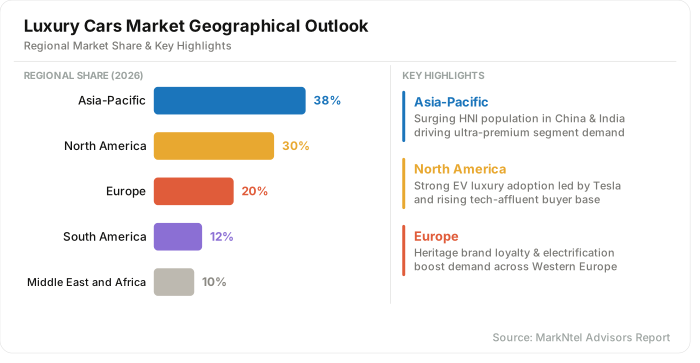
The regional dominance is further reinforced by aggressive product innovation and premiumization strategies from both global and domestic manufacturers. A recent example is the rapid expansion of China high-end electric SUV segment, highlighted by BYD’s upgraded Denza N9 premium SUV, positioned to compete with established European luxury brands through advanced software integration, long-range capability, and fast-charging architecture. This reflects a demand hub but also a production base for next-generation luxury EVs. Additionally, strong EV infrastructure development and supportive government policies in China and South Korea continue to accelerate luxury electrification, making the region the central growth engine of the global luxury cars market.
Global Luxury Cars Industry Competitive Analysis
The global luxury cars market is moderately consolidated, with leading premium automotive groups holding strong dominance across key regions. The top five companies, including Mercedes-Benz Group AG, BMW AG, Volkswagen Group, Toyota Motor Corporation, and Tesla Inc., collectively account for approximately 57% of the total market share. This reflects a brand-driven competitive structure supported by strong global distribution networks, high product differentiation, and significant barriers to entry in the premium and ultra-luxury segments.
Major Companies in Luxury Cars Market
- Mercedes-Benz Group AG
- BMW AG
- Volkswagen Group
- Toyota Motor Corporation
- Jaguar Land Rover Automotive PLC
- Stellantis NV
- Tesla Inc.
- Volvo Car Group
- Hyundai Motor Group
- Geely Holding Group
- Ferrari N.V.
- Rolls-Royce Motor Cars
- Aston Martin Lagonda
- Lucid Group
- BYD Company
- Others
Global Luxury Cars Industry News and Recent Developments
-
September 2025: BMW Begins Series Production of the All-New BMW iX3, Marking the Start of the Neue Klasse Era
BMW Group has officially commenced series production of the all-new BMW iX3 at its Debrecen plant in Hungary, making it the first model under the Neue Klasse architecture. The electric SUV introduces next-generation design, 800V platform technology, and enhanced digital systems, with production ramp-up planned through 2025 and global market rollout beginning in 2026.
Impact Analysis: The start of iX3 production strengthens BMW’s position in the premium EV segment and accelerates its electrification roadmap. As the first Neue Klasse model, it sets the technological foundation for around 40 future models, enhancing scalability across BMW’s portfolio. The advanced EV platform improves efficiency, charging speed, and range competitiveness, intensifying competition with Tesla and Mercedes-Benz in the luxury EV space while reinforcing BMW’s shift toward software-driven, high-margin electric mobility.
-
February 2026: Rolls-Royce Accelerates Bespoke Luxury Strategy as Ultra-Rich Demand Strengthens While EV Enthusiasm Moderates
Rolls-Royce is increasingly focusing on highly customized luxury vehicles for ultra-wealthy clients as demand for electric vehicles shows signs of softening in the premium segment. The company is prioritizing bespoke craftsmanship, limited-edition models, and personalization-led offerings over mass EV expansion. This strategic shift reflects changing customer preferences, where exclusivity and individuality outweigh standard electrification trends.
Impact Analysis: The shift reinforces Rolls-Royce’s positioning as a pure ultra-luxury brand rather than a volume-driven EV competitor. Rising demand for bespoke models supports higher margins, stronger pricing power, and longer order pipelines, while reducing dependence on uncertain EV uptake among wealthy buyers. However, reduced EV enthusiasm may slow long-term electrification alignment compared to peers like Bentley and Ferrari, intensifying strategic divergence within the ultra-luxury automotive segment.
Frequently Asked Questions
- Market Segmentation
- Introduction
- Product Definition
- Research Process
- Assumptions
- Executive Summary
- Global Luxury Cars Market Policies, Regulations, and Product Standards
- Global Luxury Cars Market Trends & Developments
- Global Luxury Cars Market Dynamics
- Growth Factors
- Challenges
- Global Luxury Cars Market Hotspot & Opportunities
- Global Luxury Cars Market Outlook, 2022-2032F
- Market Size & Outlook
- By Revenues (USD Million)
- Market Share & Analysis
- By Vehicle Type- Market Size & Forecast 2022-2032, USD Million
- Hatchbacks
- Sedans
- Sports Utility Vehicles (SUVs)
- Multi-purpose Vehicles (MPVs)
- By Drive Type- Market Size & Forecast 2022-2032, USD Million
- IC Engine
- Electric Vehicle
- By Vehicle Class- Market Size & Forecast 2022-2032, USD Million
- Entry-level Luxury
- Mid-level Luxury
- Ultra-luxury / Exotic
- By Engine Capacity- Market Size & Forecast 2022-2032, USD Million
- Up to 3,000 cc
- Above 3,000 cc
- By Region
- North America
- South America
- Europe
- Middle East and Africa
- Asia Pacific
- By Company
- Competition Characteristics
- Market Share & Analysis
- By Vehicle Type- Market Size & Forecast 2022-2032, USD Million
- Market Size & Outlook
- North America Luxury Cars Market Outlook, 2022-2032F
- Market Size & Outlook
- By Revenues (USD Million)
- Market Share & Analysis
- By Vehicle Type- Market Size & Forecast 2022-2032, USD Million
- By Drive Type- Market Size & Forecast 2022-2032, USD Million
- By Vehicle Class- Market Size & Forecast 2022-2032, USD Million
- By Engine Capacity- Market Size & Forecast 2022-2032, USD Million
- By Country
- The US
- Canada
- Mexico
- The US Luxury Cars Market Outlook, 2022-2032F
- Market Size & Outlook
- By Revenues (USD Million)
- Market Share & Analysis
- By Vehicle Type- Market Size & Forecast 2022-2032, USD Million
- By Drive Type- Market Size & Forecast 2022-2032, USD Million
- By Vehicle Class- Market Size & Forecast 2022-2032, USD Million
- By Engine Capacity- Market Size & Forecast 2022-2032, USD Million
- Market Size & Outlook
- Canada Luxury Cars Market Outlook, 2022-2032F
- Market Size & Outlook
- By Revenues (USD Million)
- Market Share & Analysis
- By Vehicle Type- Market Size & Forecast 2022-2032, USD Million
- By Drive Type- Market Size & Forecast 2022-2032, USD Million
- By Vehicle Class- Market Size & Forecast 2022-2032, USD Million
- By Engine Capacity- Market Size & Forecast 2022-2032, USD Million
- Market Size & Outlook
- Market Size & Outlook
- South America Luxury Cars Market Outlook, 2022-2032F
- Market Size & Outlook
- By Revenues (USD Million)
- Market Share & Analysis
- By Vehicle Type- Market Size & Forecast 2022-2032, USD Million
- By Drive Type- Market Size & Forecast 2022-2032, USD Million
- By Vehicle Class- Market Size & Forecast 2022-2032, USD Million
- By Engine Capacity- Market Size & Forecast 2022-2032, USD Million
- By Country
- Brazil
- Argentina
- Chile
- Colombia
- Rest of South America
- Brazil Luxury Cars Market Outlook, 2022-2032F
- Market Size & Outlook
- By Revenues (USD Million)
- Market Share & Analysis
- By Vehicle Type- Market Size & Forecast 2022-2032, USD Million
- By Drive Type- Market Size & Forecast 2022-2032, USD Million
- By Vehicle Class- Market Size & Forecast 2022-2032, USD Million
- By Engine Capacity- Market Size & Forecast 2022-2032, USD Million
- Market Size & Outlook
- Argentina Luxury Cars Market Outlook, 2022-2032F
- Market Size & Outlook
- By Revenues (USD Million)
- Market Share & Analysis
- By Vehicle Type- Market Size & Forecast 2022-2032, USD Million
- By Drive Type- Market Size & Forecast 2022-2032, USD Million
- By Vehicle Class- Market Size & Forecast 2022-2032, USD Million
- By Engine Capacity- Market Size & Forecast 2022-2032, USD Million
- Market Size & Outlook
- Chile Luxury Cars Market Outlook, 2022-2032F
- Market Size & Outlook
- By Revenues (USD Million)
- Market Share & Analysis
- By Vehicle Type- Market Size & Forecast 2022-2032, USD Million
- By Drive Type- Market Size & Forecast 2022-2032, USD Million
- By Vehicle Class- Market Size & Forecast 2022-2032, USD Million
- By Engine Capacity- Market Size & Forecast 2022-2032, USD Million
- Market Size & Outlook
- Colombia Luxury Cars Market Outlook, 2022-2032F
- Market Size & Outlook
- By Revenues (USD Million)
- Market Share & Analysis
- By Vehicle Type- Market Size & Forecast 2022-2032, USD Million
- By Drive Type- Market Size & Forecast 2022-2032, USD Million
- By Vehicle Class- Market Size & Forecast 2022-2032, USD Million
- By Engine Capacity- Market Size & Forecast 2022-2032, USD Million
- Market Size & Outlook
- Market Size & Outlook
- Europe Luxury Cars Market Outlook, 2022-2032F
- Market Size & Outlook
- By Revenues (USD Million)
- Market Share & Analysis
- By Vehicle Type- Market Size & Forecast 2022-2032, USD Million
- By Drive Type- Market Size & Forecast 2022-2032, USD Million
- By Vehicle Class- Market Size & Forecast 2022-2032, USD Million
- By Engine Capacity- Market Size & Forecast 2022-2032, USD Million
- By Country
- The UK
- Germany
- France
- Italy
- Spain
- Russia
- Sweden
- Poland
- The Netherlands
- Rest of Europe
- The UK Luxury Cars Market Outlook, 2022-2032F
- Market Size & Outlook
- By Revenues (USD Million)
- Market Share & Analysis
- By Vehicle Type- Market Size & Forecast 2022-2032, USD Million
- By Drive Type- Market Size & Forecast 2022-2032, USD Million
- By Vehicle Class- Market Size & Forecast 2022-2032, USD Million
- By Engine Capacity- Market Size & Forecast 2022-2032, USD Million
- Market Size & Outlook
- Germany Luxury Cars Market Outlook, 2022-2032F
- Market Size & Outlook
- By Revenues (USD Million)
- Market Share & Analysis
- By Vehicle Type- Market Size & Forecast 2022-2032, USD Million
- By Drive Type- Market Size & Forecast 2022-2032, USD Million
- By Vehicle Class- Market Size & Forecast 2022-2032, USD Million
- By Engine Capacity- Market Size & Forecast 2022-2032, USD Million
- Market Size & Outlook
- France Luxury Cars Market Outlook, 2022-2032F
- Market Size & Outlook
- By Revenues (USD Million)
- Market Share & Analysis
- By Vehicle Type- Market Size & Forecast 2022-2032, USD Million
- By Drive Type- Market Size & Forecast 2022-2032, USD Million
- By Vehicle Class- Market Size & Forecast 2022-2032, USD Million
- By Engine Capacity- Market Size & Forecast 2022-2032, USD Million
- Market Size & Outlook
- Italy Luxury Cars Market Outlook, 2022-2032F
- Market Size & Outlook
- By Revenues (USD Million)
- Market Share & Analysis
- By Vehicle Type- Market Size & Forecast 2022-2032, USD Million
- By Drive Type- Market Size & Forecast 2022-2032, USD Million
- By Vehicle Class- Market Size & Forecast 2022-2032, USD Million
- By Engine Capacity- Market Size & Forecast 2022-2032, USD Million
- Market Size & Outlook
- Spain Luxury Cars Market Outlook, 2022-2032F
- Market Size & Outlook
- By Revenues (USD Million)
- Market Share & Analysis
- By Vehicle Type- Market Size & Forecast 2022-2032, USD Million
- By Drive Type- Market Size & Forecast 2022-2032, USD Million
- By Vehicle Class- Market Size & Forecast 2022-2032, USD Million
- By Engine Capacity- Market Size & Forecast 2022-2032, USD Million
- Market Size & Outlook
- Russia Luxury Cars Market Outlook, 2022-2032F
- Market Size & Outlook
- By Revenues (USD Million)
- Market Share & Analysis
- By Vehicle Type- Market Size & Forecast 2022-2032, USD Million
- By Drive Type- Market Size & Forecast 2022-2032, USD Million
- By Vehicle Class- Market Size & Forecast 2022-2032, USD Million
- By Engine Capacity- Market Size & Forecast 2022-2032, USD Million
- Market Size & Outlook
- Sweden Luxury Cars Market Outlook, 2022-2032F
- Market Size & Outlook
- By Revenues (USD Million)
- Market Share & Analysis
- By Vehicle Type- Market Size & Forecast 2022-2032, USD Million
- By Drive Type- Market Size & Forecast 2022-2032, USD Million
- By Vehicle Class- Market Size & Forecast 2022-2032, USD Million
- By Engine Capacity- Market Size & Forecast 2022-2032, USD Million
- Market Size & Outlook
- Poland Luxury Cars Market Outlook, 2022-2032F
- Market Size & Outlook
- By Revenues (USD Million)
- Market Share & Analysis
- By Vehicle Type- Market Size & Forecast 2022-2032, USD Million
- By Drive Type- Market Size & Forecast 2022-2032, USD Million
- By Vehicle Class- Market Size & Forecast 2022-2032, USD Million
- By Engine Capacity- Market Size & Forecast 2022-2032, USD Million
- Market Size & Outlook
- The Netherlands Luxury Cars Market Outlook, 2022-2032F
- Market Size & Outlook
- By Revenues (USD Million)
- Market Share & Analysis
- By Vehicle Type- Market Size & Forecast 2022-2032, USD Million
- By Drive Type- Market Size & Forecast 2022-2032, USD Million
- By Vehicle Class- Market Size & Forecast 2022-2032, USD Million
- By Engine Capacity- Market Size & Forecast 2022-2032, USD Million
- Market Size & Outlook
- Market Size & Outlook
- Middle East and Africa Luxury Cars Market Outlook, 2022-2032F
- Market Size & Outlook
- By Revenues (USD Million)
- Market Share & Analysis
- By Vehicle Type- Market Size & Forecast 2022-2032, USD Million
- By Drive Type- Market Size & Forecast 2022-2032, USD Million
- By Vehicle Class- Market Size & Forecast 2022-2032, USD Million
- By Engine Capacity- Market Size & Forecast 2022-2032, USD Million
- By Country
- Saudi Arabia
- UAE
- Qatar
- Kuwait
- Oman
- South Africa
- Egypt
- Rest of the Middle East & Africa
- Saudi Arabia Luxury Cars Market Outlook, 2022-2032F
- Market Size & Outlook
- By Revenues (USD Million)
- Market Share & Analysis
- By Vehicle Type- Market Size & Forecast 2022-2032, USD Million
- By Drive Type- Market Size & Forecast 2022-2032, USD Million
- By Vehicle Class- Market Size & Forecast 2022-2032, USD Million
- By Engine Capacity- Market Size & Forecast 2022-2032, USD Million
- Market Size & Outlook
- UAE Luxury Cars Market Outlook, 2022-2032F
- Market Size & Outlook
- By Revenues (USD Million)
- Market Share & Analysis
- By Vehicle Type- Market Size & Forecast 2022-2032, USD Million
- By Drive Type- Market Size & Forecast 2022-2032, USD Million
- By Vehicle Class- Market Size & Forecast 2022-2032, USD Million
- By Engine Capacity- Market Size & Forecast 2022-2032, USD Million
- Market Size & Outlook
- Qatar Luxury Cars Market Outlook, 2022-2032F
- Market Size & Outlook
- By Revenues (USD Million)
- Market Share & Analysis
- By Vehicle Type- Market Size & Forecast 2022-2032, USD Million
- By Drive Type- Market Size & Forecast 2022-2032, USD Million
- By Vehicle Class- Market Size & Forecast 2022-2032, USD Million
- By Engine Capacity- Market Size & Forecast 2022-2032, USD Million
- Market Size & Outlook
- Kuwait Luxury Cars Market Outlook, 2022-2032F
- Market Size & Outlook
- By Revenues (USD Million)
- Market Share & Analysis
- By Vehicle Type- Market Size & Forecast 2022-2032, USD Million
- By Drive Type- Market Size & Forecast 2022-2032, USD Million
- By Vehicle Class- Market Size & Forecast 2022-2032, USD Million
- By Engine Capacity- Market Size & Forecast 2022-2032, USD Million
- Market Size & Outlook
- Oman Luxury Cars Market Outlook, 2022-2032F
- Market Size & Outlook
- By Revenues (USD Million)
- Market Share & Analysis
- By Vehicle Type- Market Size & Forecast 2022-2032, USD Million
- By Drive Type- Market Size & Forecast 2022-2032, USD Million
- By Vehicle Class- Market Size & Forecast 2022-2032, USD Million
- By Engine Capacity- Market Size & Forecast 2022-2032, USD Million
- Market Size & Outlook
- South Africa Luxury Cars Market Outlook, 2022-2032F
- Market Size & Outlook
- By Revenues (USD Million)
- Market Share & Analysis
- By Vehicle Type- Market Size & Forecast 2022-2032, USD Million
- By Drive Type- Market Size & Forecast 2022-2032, USD Million
- By Vehicle Class- Market Size & Forecast 2022-2032, USD Million
- By Engine Capacity- Market Size & Forecast 2022-2032, USD Million
- Market Size & Outlook
- Egypt Luxury Cars Market Outlook, 2022-2032F
- Market Size & Outlook
- By Revenues (USD Million)
- Market Share & Analysis
- By Vehicle Type- Market Size & Forecast 2022-2032, USD Million
- By Drive Type- Market Size & Forecast 2022-2032, USD Million
- By Vehicle Class- Market Size & Forecast 2022-2032, USD Million
- By Engine Capacity- Market Size & Forecast 2022-2032, USD Million
- Market Size & Outlook
- Market Size & Outlook
- Asia Pacific Luxury Cars Market Outlook, 2022-2032F
- Market Size & Outlook
- By Revenues (USD Million)
- Market Share & Analysis
- By Vehicle Type- Market Size & Forecast 2022-2032, USD Million
- By Drive Type- Market Size & Forecast 2022-2032, USD Million
- By Vehicle Class- Market Size & Forecast 2022-2032, USD Million
- By Engine Capacity- Market Size & Forecast 2022-2032, USD Million
- By Country
- China
- Japan
- India
- South Korea
- Australia
- Southeast Asia
- Rest of Asia-Pacific
- China Luxury Cars Market Outlook, 2022-2032F
- Market Size & Outlook
- By Revenues (USD Million)
- Market Share & Analysis
- By Vehicle Type- Market Size & Forecast 2022-2032, USD Million
- By Drive Type- Market Size & Forecast 2022-2032, USD Million
- By Vehicle Class- Market Size & Forecast 2022-2032, USD Million
- By Engine Capacity- Market Size & Forecast 2022-2032, USD Million
- Market Size & Outlook
- Japan Luxury Cars Market Outlook, 2022-2032F
- Market Size & Outlook
- By Revenues (USD Million)
- Market Share & Analysis
- By Vehicle Type- Market Size & Forecast 2022-2032, USD Million
- By Drive Type- Market Size & Forecast 2022-2032, USD Million
- By Vehicle Class- Market Size & Forecast 2022-2032, USD Million
- By Engine Capacity- Market Size & Forecast 2022-2032, USD Million
- Market Size & Outlook
- India Luxury Cars Market Outlook, 2022-2032F
- Market Size & Outlook
- By Revenues (USD Million)
- Market Share & Analysis
- By Vehicle Type- Market Size & Forecast 2022-2032, USD Million
- By Drive Type- Market Size & Forecast 2022-2032, USD Million
- By Vehicle Class- Market Size & Forecast 2022-2032, USD Million
- By Engine Capacity- Market Size & Forecast 2022-2032, USD Million
- Market Size & Outlook
- South Korea Luxury Cars Market Outlook, 2022-2032F
- Market Size & Outlook
- By Revenues (USD Million)
- Market Share & Analysis
- By Vehicle Type- Market Size & Forecast 2022-2032, USD Million
- By Drive Type- Market Size & Forecast 2022-2032, USD Million
- By Vehicle Class- Market Size & Forecast 2022-2032, USD Million
- By Engine Capacity- Market Size & Forecast 2022-2032, USD Million
- Market Size & Outlook
- Australia Luxury Cars Market Outlook, 2022-2032F
- Market Size & Outlook
- By Revenues (USD Million)
- Market Share & Analysis
- By Vehicle Type- Market Size & Forecast 2022-2032, USD Million
- By Drive Type- Market Size & Forecast 2022-2032, USD Million
- By Vehicle Class- Market Size & Forecast 2022-2032, USD Million
- By Engine Capacity- Market Size & Forecast 2022-2032, USD Million
- Market Size & Outlook
- Southeast Asia Luxury Cars Market Outlook, 2022-2032F
- Market Size & Outlook
- By Revenues (USD Million)
- Market Share & Analysis
- By Vehicle Type- Market Size & Forecast 2022-2032, USD Million
- By Drive Type- Market Size & Forecast 2022-2032, USD Million
- By Vehicle Class- Market Size & Forecast 2022-2032, USD Million
- By Engine Capacity- Market Size & Forecast 2022-2032, USD Million
- Market Size & Outlook
- Market Size & Outlook
- Global Luxury Cars Market Key Strategic Imperatives for Success & Growth
- Competitive Outlook
- Company Profiles
- Mercedes-Benz Group AG
- Business Description
- Product Portfolio
- Collaborations & Alliances
- Recent Developments
- Financial Details
- Others
- BMW AG
- Business Description
- Product Portfolio
- Collaborations & Alliances
- Recent Developments
- Financial Details
- Others
- Volkswagen Group
- Business Description
- Product Portfolio
- Collaborations & Alliances
- Recent Developments
- Financial Details
- Others
- Toyota Motor Corporation
- Business Description
- Product Portfolio
- Collaborations & Alliances
- Recent Developments
- Financial Details
- Others
- Jaguar Land Rover Automotive PLC
- Business Description
- Product Portfolio
- Collaborations & Alliances
- Recent Developments
- Financial Details
- Others
- Stellantis NV
- Business Description
- Product Portfolio
- Collaborations & Alliances
- Recent Developments
- Financial Details
- Others
- Tesla Inc.
- Business Description
- Product Portfolio
- Collaborations & Alliances
- Recent Developments
- Financial Details
- Others
- Volvo Car Group
- Business Description
- Product Portfolio
- Collaborations & Alliances
- Recent Developments
- Financial Details
- Others
- Hyundai Motor Group
- Business Description
- Product Portfolio
- Collaborations & Alliances
- Recent Developments
- Financial Details
- Others
- Geely Holding Group
- Business Description
- Product Portfolio
- Collaborations & Alliances
- Recent Developments
- Financial Details
- Others
- Ferrari N.V.
- Business Description
- Product Portfolio
- Collaborations & Alliances
- Recent Developments
- Financial Details
- Others
- Rolls-Royce Motor Cars
- Business Description
- Product Portfolio
- Collaborations & Alliances
- Recent Developments
- Financial Details
- Others
- Aston Martin Lagonda
- Business Description
- Product Portfolio
- Collaborations & Alliances
- Recent Developments
- Financial Details
- Others
- Lucid Group
- Business Description
- Product Portfolio
- Collaborations & Alliances
- Recent Developments
- Financial Details
- Others
- BYD Company
- Business Description
- Product Portfolio
- Collaborations & Alliances
- Recent Developments
- Financial Details
- Others
- Mercedes-Benz Group AG
- Company Profiles
- Disclaimer
MarkNtel Advisors follows a robust and iterative research methodology designed to ensure maximum accuracy and minimize deviation in market estimates and forecasts. Our approach combines both bottom-up and top-down techniques to effectively segment and quantify various aspects of the market. A consistent feature across all our research reports is data triangulation, which examines the market from three distinct perspectives to validate findings. Key components of our research process include:
1. Scope & Research Design At the outset, MarkNtel Advisors define the research objectives and formulate pertinent questions. This phase involves determining the type of research—qualitative or quantitative—and designing a methodology that outlines data collection methods, target demographics, and analytical tools. They also establish timelines and budgets to ensure the research aligns with client goals.
2. Sample Selection and Data Collection In this stage, the firm identifies the target audience and determines the appropriate sample size to ensure representativeness. They employ various sampling methods, such as random or stratified sampling, based on the research objectives. Data collection is carried out using tools like surveys, interviews, and observations, ensuring the gathered data is reliable and relevant.
3. Data Analysis and Validation Once data is collected, MarkNtel Advisors undertake a rigorous analysis process. This includes cleaning the data to remove inconsistencies, employing statistical software for quantitative analysis, and thematic analysis for qualitative data. Validation steps are taken to ensure the accuracy and reliability of the findings, minimizing biases and errors.

4. Data Forecast and FinalizationThe final phase involves forecasting future market trends based on the analyzed data. MarkNtel Advisors utilize predictive modeling and time series analysis to anticipate market behaviors. The insights are then compiled into comprehensive reports, featuring visual aids like charts and graphs, and include strategic recommendations to inform client decision-making
We offer flexible licensing options to cater to varying organizational needs. Choose the pricing pack that best suits your requirements:
Buy Now Inquire Before Buying
 Request Customization
 Talk to our Consultant







