

Sri Lanka Tire Market Research Report: Forecast (2026–2032)
By Type of Vehicle (Passenger Car, Light Commercial Vehicle, Medium and Heavy Commercial Vehicles, Off the Road (OTR), Two Wheelers), By Demand Category (OEM, Aftermarket, By Type ... of Tire, Radial, Bias), By Sales Channel (Direct Sales, Exclusive Outlets & Multi-brand Stores, Online), By Price Category (Budget, Economy, Premium), By Tire Size (Tire Size 1, Tire Size 2, Tire Size 3, Tire Size 4, Tire Size 5), and others Read more
- Tire
- Jul 2026
- Pages 140
- Report Format: PDF, Excel, PPT
Sri Lanka Tire Market
Projected 3.99% CAGR from 2026 to 2032
Study Period
2026-2032
Market Size (2026)
USD 0.34 Billion
Market Size (2032)
USD 0.43 Billion
Base Year
2025
Projected CAGR
3.99%
Leading Segments
By Tire Type: Radial Tire
Sri Lanka Tire Market Key Takeaways
- The Sri Lanka Tire Market was valued at USD 0.32 billion in 2025 and is projected to grow from USD 0.34 billion in 2026 to USD 0.43 billion by 2032.
- The industry is projected to witness steady growth at a CAGR of 3.99% during 2026–2032.
- Replacement demand remains the largest demand category, accounting for approximately 80% of the market.
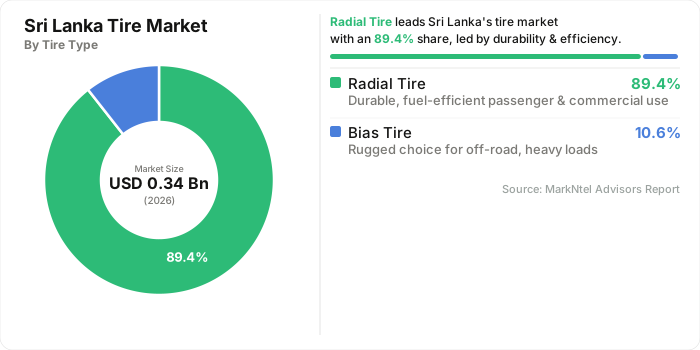
- Radial Tires dominate the market with an estimated 89.4% share in 2026.
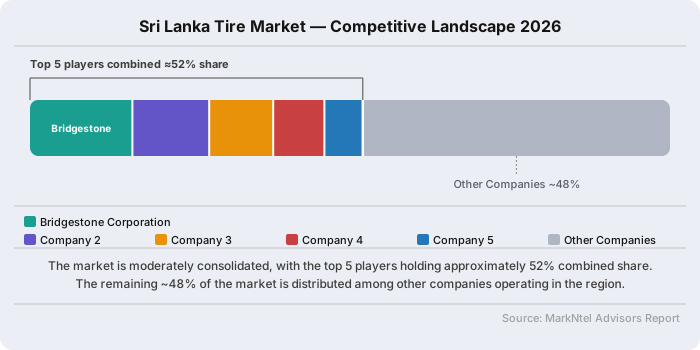
- The market is moderately consolidated, with the top 5 companies collectively accounting for approximately 52% of the market in 2026.
Sri Lanka Tire Market Size & Outlook
The Sri Lanka Tire Market was valued at USD 0.32 billion in 2025 and is projected to reach USD 0.34 billion in 2026, before expanding to USD 0.43 billion by 2032, registering a CAGR of 3.99% during the forecast period.
Market growth is being supported by improving economic activity, gradual recovery in vehicle imports, and sustained replacement demand from an expanding active vehicle fleet. These factors continue to create a stable consumption environment across both passenger and commercial vehicle tire categories.
The market is primarily driven by replacement demand, supported by continued additions to Sri Lanka’s active vehicle fleet. According to the Department of Motor Traffic (DMT), the country recorded 223,423 motorcycle registrations, 55,338 car registrations, and 13,850 three-wheelers in 2025. The steady inflow of newly registered vehicles is expanding the installed base, requiring future tire replacement, strengthening the Sri Lanka replacement tire market while creating sustained demand across passenger and two-wheeler tire categories over the forecast period.
The country’s strong rubber ecosystem continues to support long-term industrial development and downstream value addition. According to UN Comtrade/World Integrated Trade Solution (World Bank), Sri Lanka's exports of technically specified natural rubber totaled approximately USD 1.51 million in 2024, underscoring Sri Lanka’s presence in the global rubber trade. Coupled with ongoing manufacturing investments by companies such as CEAT Kelani and Continental, this export capability is strengthening the Sri Lanka tire manufacturing industry and enhancing domestic processing capacity to support higher-value tire production and export competitiveness.
Looking ahead, the market outlook remains positive as industrial modernization, logistics expansion, and vehicle fleet renewal continue to reshape Tire demand patterns. Government support for rubber value addition, coupled with increasing adoption of radial Tires and premium replacement products, is expected to enhance product mix and market value. These structural developments are gradually improving Sri Lanka automotive tire demand, enabling manufacturers and distributors to capitalize on rising mobility requirements while strengthening long-term market resilience.
Sri Lanka Tire Market Key Indicators
- According to the Central Bank of Sri Lanka and external sector data, vehicle imports in early 2026 exceeded USD 800 million, with over 215,000 vehicles imported, including a major share of motorcycles and passenger vehicles. This strong post-restriction recovery is rapidly expanding the vehicle parc, directly boosting OEM tire demand while creating a larger installed base that will support long-term replacement tire growth across all major vehicle segments.
- According to Asian Development Bank (ADB) transport assessments, Sri Lanka’s mobility system is highly road-dependent, with nearly 98% of transport activity occurring via road networks. This structural dependence ensures sustained tire demand across passenger and freight movement, while also increasing tire wear rates due to congestion-heavy urban traffic conditions, reinforcing steady aftermarket replacement cycles.
- According to the Department of Motor Traffic (DMT), Sri Lanka’s total registered vehicle population increased from approximately 8.45 million units in 2024 to around 8.81 million units in 2025. This steady expansion of the national vehicle parc directly strengthens structural Tire demand, as higher vehicle density increases both OEM fitment requirements and long-term replacement tire consumption across passenger, two-wheeler, and commercial vehicle segments.
- According to the Central Bank of Sri Lanka (CBSL) and Sri Lanka Customs external sector data, electric vehicles accounted for around 10% of total passenger vehicle imports in 2025, while hybrid vehicles contributed an additional 29% share. This rising penetration of electrified powertrains is reshaping the passenger vehicle mix, influencing tire demand patterns through higher curb weight, different torque profiles, and increased demand for low rolling resistance and high-durability tire specifications across OEM and replacement channels.
Sri Lanka Tire Market Scope
| Category | Segments |
|---|---|
| By Type of Vehicle | Passenger Car, Light Commercial Vehicle, Medium and Heavy Commercial Vehicles, Off the Road (OTR), Two Wheelers |
| By Demand Category | OEM, Aftermarket, |
| By Type | Radial, Bias |
| By Sales Channel | Direct Sales, Exclusive Outlets & Multi-brand Stores, Online |
| By Price Category | Budget, Economy, Premium), By Tire Size (Tire Size 1, Tire Size 2, Tire Size 3, Tire Size 4, Tire Size 5 |
Sri Lanka Tire Market Growth Drivers
Expanding Two-Wheeler Fleet
The two-wheeler fleet expansion remains a core structural driver of Sri Lanka’s tire market, supported by sustained growth in motorcycle ownership across urban and semi-urban regions. According to the Department of Motor Traffic (DMT), the total motorcycle population increased to over 5.17 million units in 2025, up from approximately 4.92 million units in 2024. This rising fleet size is significantly amplifying replacement tire demand, as motorcycles typically experience faster tread wear cycles due to high-frequency commuting patterns and road condition variability.
According to DMT registration trends, new motorcycle registrations surged to 254,817 units in 2025 compared to 65,289 units in 2024, reflecting a strong recovery in entry-level mobility demand. This sharp increase is expanding the active usage base, which in turn is accelerating Tire consumption intensity across daily transport networks. Consequently, rising motorcycle penetration is reinforcing sustained demand pressure within the replacement tire ecosystem, while also strengthening urban mobility consumption patterns across densely populated regions.
Recent Trends
Shift Toward High-Performance & EV-Compatible Tires
A clear structural trend in Sri Lanka’s Tire market is the gradual upgrading of Tire specifications driven by changes in the passenger vehicle mix and evolving mobility requirements. According to Sri Lanka Customs and CBSL external sector vehicle import composition data for 2025, hybrid and electric vehicles together accounted for around 40% of passenger vehicle inflows. This transition is increasing demand for Tires capable of handling higher torque delivery, greater vehicle weight, and more frequent stop-start urban usage, which is steadily accelerating EV-ready tire specifications adoption across new vehicle segments.
In parallel, the premium and semi-premium vehicle segment is shaping replacement preferences toward more engineered tire solutions designed for efficiency and safety. According to the Board of Investment (BOI), expansion of automotive servicing activity within industrial zones is supporting wider availability of specialized tire fitments in urban markets. This is gradually reinforcing the adoption of high-durability radial Tires, while also strengthening demand for performance-oriented Tires in replacement cycles across metropolitan transport corridors.
Sri Lanka Tire Market Opportunities and Challenges
Import Dependency Drives Domestic Value Chain Expansion
A key structural challenge in the Sri Lanka tire market is its high dependency on imported synthetic rubber, carbon black, and Tire-grade chemical inputs, which continues to expose manufacturers to global price volatility and foreign exchange pressure. According to Sri Lanka Customs external trade structure (2024–2025), a significant proportion of Tire manufacturing inputs is sourced from international markets, limiting cost stability across OEM production and replacement Tire channels. This sustained import reliance reinforces vulnerability in input pricing and constrains scalable local manufacturing expansion under fluctuating global commodity cycles.
At the same time, this dependency is creating a strong opportunity to deepen domestic rubber utilization and value addition within the supply chain. According to FAOSTAT (2024), Sri Lanka’s natural rubber production stood at approximately 69.3 thousand metric tons. This reflects an under-optimized domestic rubber base that can be better integrated into industrial applications like tire manufacturing, gradually strengthening Sri Lanka tire manufacturing, rubber supply chain efficiency, and supporting long-term Sri Lanka replacement tire market resilience through reduced exposure to imported input volatility.
Segmentation Insights
Radial Tire Adoption Strengthens Sri Lanka’s Mobility Landscape
The radial tire segment leads the Sri Lanka tire industry, accounting for approximately 89.4% of total demand in 2026. According to Sri Lanka Customs vehicle composition trends (2024–2025), the rising share of passenger cars, hybrid vehicles, and light commercial imports has significantly strengthened radial fitment across OEM and replacement channels. In addition, according to CBSL transport sector data, Port of Colombo container handling reached approximately 8.3 million TEUs in 2025, reflecting 6.5% year-on-year growth, which signals stronger logistics and freight movement activity that directly supports higher utilization of radial Tires in transport operations.
The segment’s dominance is reinforced by its operational advantages, including longer tread life, improved load-bearing capacity, and better fuel efficiency compared to bias construction. These characteristics align well with increasing freight movement intensity and growing urban congestion levels, where durability and performance consistency are critical. As a result, expanding port-driven trade activity and transport intensity continue to reinforce structural demand for radial formats, also supporting sustained replacement cycles across commercial and passenger usage patterns. Based on tire type, the market is segmented into:
- Radial Tire
- Bias Tire
Replacement Demand Drives Aftermarket Dominance in Sri Lanka Tire Market
The aftermarket segment represents the dominant share of the Sri Lanka tire market, accounting for an estimated 80% in 2026, driven by continuous replacement requirements from a large and actively utilized vehicle fleet. According to CBSL transport sector indicators, rising freight movement and sustained logistics activity through key trade corridors continue to increase vehicle utilization intensity across commercial and passenger transport networks. This higher operational usage directly accelerates tire wear cycles, creating steady and recurring replacement demand throughout the year.
The segment’s strength is further supported by usage-driven deterioration patterns, where road conditions, congestion levels, and long-distance travel frequency contribute to faster tread depletion. These factors collectively ensure frequent tire change intervals across the active fleet base, maintaining consistent consumption momentum in the market. As a result, aftermarket demand remains structurally resilient and closely linked to overall mobility intensity rather than new vehicle inflows. Based on demand type, the industry is segmented into:
- OEM
- Aftermarket
Sri Lanka Tire Market Competitive Analysis
The Sri Lanka tire market is moderately consolidated, with the top 5 companies collectively accounting for 52% market share in 2026, driven by a mix of global brands and regional distributors competing across replacement and OEM channels. Key players such as Bridgestone, Michelin, CEAT, and Apollo maintain strong presence through distribution networks and import-based supply models. Market competition is primarily shaped by pricing sensitivity, product durability, and availability, with aftermarket dominance intensifying rivalry in retail and fleet servicing channels across urban and semi-urban regions.
Major Companies in the Sri Lanka Tire Industry
- Bridgestone Corporation
- CEAT Kelani Holdings
- Global Rubber Industries (GRI)
- Goodyear Tire & Rubber Company
- Michelin Group
- Continental AG
- DSI Tires
- Yokohama Rubber Company Limited
- Hankook Tire Co., Ltd.
- Apollo Tires
Sri Lanka Industry News and Recent Developments
February 2024 Continental Expands Specialty Tire Production Capacity in Sri Lanka
Continental announced plans to strengthen its specialty Tire production footprint in Sri Lanka through an estimated EUR 13 million investment over three years, aimed at enhancing local pre-production and manufacturing capabilities. The initiative is focused on improving supply chain efficiency and expanding the company’s presence in the specialty and off-road Tire segment within the region.
Impact Analysis: This investment is expected to deepen Sri Lanka’s role as a strategic production base for specialty Tires, supporting higher value-added manufacturing and improving export competitiveness. It also reinforces technology transfer in pre-production processes, strengthening the local industrial ecosystem and supporting supply chain integration across premium Tire categories.
July 2024 GRI Recognized for Sustainability Leadership in Specialty Tire Manufacturing
Global Rubber Industries (GRI) received the Gold Award for Resource-Efficient and Cleaner Production at the Green Industry Awards, recognizing its advancements in sustainable manufacturing practices and operational efficiency in specialty Tire production.
Impact Analysis: The recognition highlights increasing industry focus on sustainable manufacturing standards and resource optimization. It strengthens GRI’s positioning in global specialty Tire markets and reinforces Sri Lanka’s reputation as an emerging hub for environmentally efficient industrial rubber production, supporting long-term export competitiveness.
December 2024 CEAT Finalizes Acquisition of Michelin’s Sri Lanka Manufacturing Assets
CEAT announced the acquisition of Michelin’s Midigama Tire plant and Casting Products Division in Sri Lanka, along with the integration of the Camso brand portfolio. The acquisition significantly expands CEAT’s manufacturing capacity and strengthens its presence in the specialty and off-highway Tire segments.
Impact Analysis: This transaction marks a major consolidation in Sri Lanka’s Tire manufacturing landscape, positioning CEAT as the dominant local producer. It enhances production scale, improves export-oriented capabilities, and strengthens backward integration with global supply chains. The development is expected to significantly reshape competitive dynamics in both OEM and aftermarket Tire segments.
Frequently Asked Questions
- Market Segmentation
- Research Scope
- Research Methodology
- Definitions and Assumptions
- Executive Summary
- Sri Lanka Tire Market Pricing Analysis
- Sri Lanka Tire Market Policies, Regulations, and Standards
- Sri Lanka Tire Market Dynamics
- Growth Factors
- Challenges
- Trends
- Opportunities
- Sri Lanka Tire Market Statistics, 2022-2032F
- Market Size & Growth Outlook
- By Revenues (USD Million)
- By Unit Sold (Thousand Units)
- Market Segmentation & Growth Outlook
- By Type of Vehicle- Market Size & Forecast 2022-2032, USD Million & Thousand Units
- Passenger Car
- Light Commercial Vehicle
- Medium and Heavy Commercial Vehicles
- Off the Road (OTR)
- Two Wheelers
- By Demand Category- Market Size & Forecast 2022-2032, USD Million & Thousand Units
- OEM
- Aftermarket
- By Type of Tire- Market Size & Forecast 2022-2032, USD Million & Thousand Units
- Radial
- Bias
- By Sales Channel- Market Size & Forecast 2022-2032, USD Million & Thousand Units
- Direct Sales
- Exclusive Outlets & Multi-brand Stores
- Online
- By Price Category- Market Size & Forecast 2022-2032, USD Million & Thousand Units
- Budget
- Economy
- Premium
- By Tire Size- Market Size & Forecast 2022-2032, USD Million & Thousand Units
- Tire Size 1
- Tire Size 2
- Tire Size 3
- Tire Size 4
- Tire Size 5
- By Company
- Competition Characteristics
- Volume Shares
- By Type of Vehicle- Market Size & Forecast 2022-2032, USD Million & Thousand Units
- Market Size & Growth Outlook
- Sri Lanka Passenger Car Tire Market Statistics, 2022-2032F
- Market Size & Growth Outlook
- By Revenues (USD Million)
- By Unit Sold (Thousand Units)
- Market Segmentation & Growth Outlook
- By Type of Vehicle- Market Size & Forecast 2022-2032, USD Million & Thousand Units
- Hatchback
- Sedan
- SUV
- By Demand Category- Market Size & Forecast 2022-2032, USD Million & Thousand Units
- By Type of Tire- Market Size & Forecast 2022-2032, USD Million & Thousand Units
- By Sales Channel- Market Size & Forecast 2022-2032, USD Million & Thousand Units
- By Price Category- Market Size & Forecast 2022-2032, USD Million & Thousand Units
- By Tire Size- Market Size & Forecast 2022-2032, USD Million & Thousand Units
- By Type of Vehicle- Market Size & Forecast 2022-2032, USD Million & Thousand Units
- Market Size & Growth Outlook
- Sri Lanka Light Commercial Vehicle Tire Market Statistics, 2022-2032F
- Market Size & Growth Outlook
- By Revenues (USD Million)
- By Unit Sold (Thousand Units)
- Market Segmentation & Growth Outlook
- By Type of Vehicle- Market Size & Forecast 2022-2032, USD Million & Thousand Units
- Light Trucks
- Light Buses
- Pick-up Trucks and Vans
- By Demand Category- Market Size & Forecast 2022-2032, USD Million & Thousand Units
- By Type of Tire- Market Size & Forecast 2022-2032, USD Million & Thousand Units
- By Sales Channel- Market Size & Forecast 2022-2032, USD Million & Thousand Units
- By Price Category- Market Size & Forecast 2022-2032, USD Million & Thousand Units
- By Tire Size- Market Size & Forecast 2022-2032, USD Million & Thousand Units
- By Type of Vehicle- Market Size & Forecast 2022-2032, USD Million & Thousand Units
- Market Size & Growth Outlook
- Sri Lanka Medium and Heavy Commercial Vehicle Tire Market Statistics, 2022-2032F
- Market Size & Growth Outlook
- By Revenues (USD Million)
- By Unit Sold (Thousand Units)
- Market Segmentation & Growth Outlook
- By Type of Vehicle- Market Size & Forecast 2022-2032, USD Million & Thousand Units
- Buses
- Trucks
- By Demand Category- Market Size & Forecast 2022-2032, USD Million & Thousand Units
- By Type of Tire- Market Size & Forecast 2022-2032, USD Million & Thousand Units
- By Sales Channel- Market Size & Forecast 2022-2032, USD Million & Thousand Units
- By Price Category- Market Size & Forecast 2022-2032, USD Million & Thousand Units
- By Tire Size- Market Size & Forecast 2022-2032, USD Million & Thousand Units
- By Type of Vehicle- Market Size & Forecast 2022-2032, USD Million & Thousand Units
- Market Size & Growth Outlook
- Sri Lanka Two-Wheeler Tire Market Statistics, 2022-2032F
- Market Size & Growth Outlook
- By Revenues (USD Million)
- By Unit Sold (Thousand Units)
- Market Segmentation & Growth Outlook
- By Type of Vehicle- Market Size & Forecast 2022-2032, USD Million & Thousand Units
- Scooters and Mopeds
- Motorcycles
- By Demand Category- Market Size & Forecast 2022-2032, USD Million & Thousand Units
- By Type of Tire- Market Size & Forecast 2022-2032, USD Million & Thousand Units
- By Sales Channel- Market Size & Forecast 2022-2032, USD Million & Thousand Units
- By Price Category- Market Size & Forecast 2022-2032, USD Million & Thousand Units
- By Tire Size- Market Size & Forecast 2022-2032, USD Million & Thousand Units
- By Type of Vehicle- Market Size & Forecast 2022-2032, USD Million & Thousand Units
- Market Size & Growth Outlook
- Sri Lanka OTR Vehicle Tire Market Statistics, 2022-2032F
- Market Size & Growth Outlook
- By Revenues (USD Million)
- By Unit Sold (Thousand Units)
- Market Segmentation & Growth Outlook
- By Type of Vehicle- Market Size & Forecast 2022-2032, USD Million & Thousand Units
- Earthmoving Equipment
- Agricultural Vehicles
- Material Handling Vehicles
- By Demand Category- Market Size & Forecast 2022-2032, USD Million & Thousand Units
- By Type of Tire- Market Size & Forecast 2022-2032, USD Million & Thousand Units
- By Sales Channel- Market Size & Forecast 2022-2032, USD Million & Thousand Units
- By Price Category- Market Size & Forecast 2022-2032, USD Million & Thousand Units
- By Tire Size- Market Size & Forecast 2022-2032, USD Million & Thousand Units
- By Company
- By Type of Vehicle- Market Size & Forecast 2022-2032, USD Million & Thousand Units
- Market Size & Growth Outlook
- Sri Lanka Tire Market Key Strategic Imperatives for Success & Growth
- Competition Outlook
- Company Profiles
- Bridgestone Corporation
- Business Description
- Type Portfolio
- Strategic Alliances or Partnerships
- Recent Developments
- Financial Details
- Others
- CEAT Kelani Holdings
- Business Description
- Type Portfolio
- Strategic Alliances or Partnerships
- Recent Developments
- Financial Details
- Others
- Global Rubber Industries (GRI)
- Business Description
- Type Portfolio
- Strategic Alliances or Partnerships
- Recent Developments
- Financial Details
- Others
- Goodyear Tire & Rubber Company
- Business Description
- Type Portfolio
- Strategic Alliances or Partnerships
- Recent Developments
- Financial Details
- Others
- Michelin Group
- Business Description
- Type Portfolio
- Strategic Alliances or Partnerships
- Recent Developments
- Financial Details
- Others
- Continental AG
- Business Description
- Type Portfolio
- Strategic Alliances or Partnerships
- Recent Developments
- Financial Details
- Others
- DSI Tyres
- Business Description
- Type Portfolio
- Strategic Alliances or Partnerships
- Recent Developments
- Financial Details
- Others
- Yokohama Rubber Company Limited
- Business Description
- Type Portfolio
- Strategic Alliances or Partnerships
- Recent Developments
- Financial Details
- Others
- Hankook Tire Co., Ltd.
- Business Description
- Type Portfolio
- Strategic Alliances or Partnerships
- Recent Developments
- Financial Details
- Others
- Apollo Tyres
- Business Description
- Type Portfolio
- Strategic Alliances or Partnerships
- Recent Developments
- Financial Details
- Others
- Others
- Bridgestone Corporation
- Company Profiles
- Disclaimer
MarkNtel Advisors follows a robust and iterative research methodology designed to ensure maximum accuracy and minimize deviation in market estimates and forecasts. Our approach combines both bottom-up and top-down techniques to effectively segment and quantify various aspects of the market. A consistent feature across all our research reports is data triangulation, which examines the market from three distinct perspectives to validate findings. Key components of our research process include:
1. Scope & Research Design At the outset, MarkNtel Advisors define the research objectives and formulate pertinent questions. This phase involves determining the type of research—qualitative or quantitative—and designing a methodology that outlines data collection methods, target demographics, and analytical tools. They also establish timelines and budgets to ensure the research aligns with client goals.
2. Sample Selection and Data Collection In this stage, the firm identifies the target audience and determines the appropriate sample size to ensure representativeness. They employ various sampling methods, such as random or stratified sampling, based on the research objectives. Data collection is carried out using tools like surveys, interviews, and observations, ensuring the gathered data is reliable and relevant.
3. Data Analysis and Validation Once data is collected, MarkNtel Advisors undertake a rigorous analysis process. This includes cleaning the data to remove inconsistencies, employing statistical software for quantitative analysis, and thematic analysis for qualitative data. Validation steps are taken to ensure the accuracy and reliability of the findings, minimizing biases and errors.

4. Data Forecast and FinalizationThe final phase involves forecasting future market trends based on the analyzed data. MarkNtel Advisors utilize predictive modeling and time series analysis to anticipate market behaviors. The insights are then compiled into comprehensive reports, featuring visual aids like charts and graphs, and include strategic recommendations to inform client decision-making
We offer flexible licensing options to cater to varying organizational needs. Choose the pricing pack that best suits your requirements:
Buy Now Inquire Before Buying
 Request Customization
 Talk to our Consultant







