

Global Electric Vehicle Charging Infrastructure Market Research Report: Forecast (2026-2032)
By Charger Type (Wall Mounted, Pedestal Mounted, Roof Mounted), By Vehicle Type (Passenger Cars, Light Commercial Vehicles, Medium & Heavy Commercial Vehicles), By Location (Reside ... ntial, Commercial), By Power Output (Upto 50kW, 50.1kW-300kW, Above 300kW), and others Read more
- Automotive
- Jun 2026
- Pages 320
- Report Format: PDF, Excel, PPT
Global Electric Vehicle Charging Infrastructure Market
Projected 18.12% CAGR from 2026 to 2032
Study Period
2026-2032
Market Size (2026)
USD 33.32 Billion
Market Size (2032)
USD 90.5 Billion
Largest Region
Asia-Pacific
Projected CAGR
18.12%
Leading Segments
By Location: Residential
Global Electric Vehicle Charging Infrastructure Market Key Takeaways
- Global electric vehicle charging infrastructure market size was valued at USD 28.21 billion in 2025 and is projected to grow from USD 33.32 billion in 2026 to USD 90.5 billion by 2032.
- The industry is projected to reflect sustain growth at a steady CAGR of 18.12% during 2026-2032.
- Asia-Pacific holds the largest share of about 55% in 2026.
- Based on location, commercial holds a significant share of about 56% in 2026.
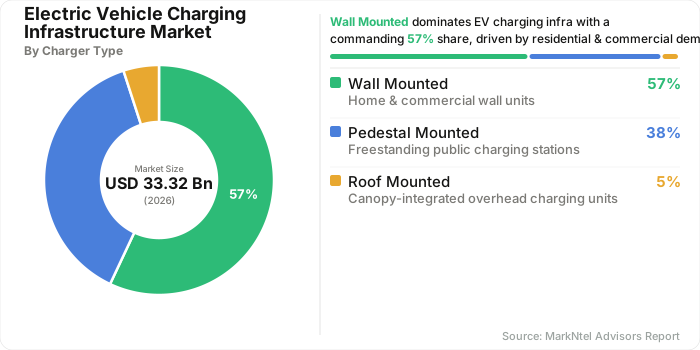
- By charger type, wall mounted seized a significant share of about 57% in 2026.
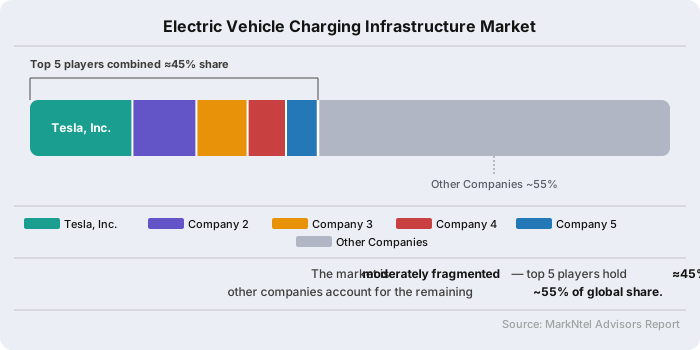
- The industry is moderately fragmented. However, the top five players collectively account for nearly 45% share.
Global Electric Vehicle Charging Infrastructure Market Size and Outlook
The global electric vehicle charging infrastructure market is estimated to grow at a CAGR of around 18.12% during the forecast period, i.e., 2026-32.
The market is witnessing strong expansion with increasing emphasis on destination charging, fleet electrification, and integrated mobility ecosystems. Airports, shopping malls, hotels, residential complexes, and parking operators are increasingly deploying EV charging stations to improve customer convenience.
Additionally, India is rapidly expanding EV charging infrastructure through fuel retail networks. In 2025, over 27,000 charging points were installed at petrol pumps nationwide under government-supported programs, marking a shift toward converting fuel stations into integrated charging hubs. Moreover, broader initiatives are strengthening public charging deployment across highways, cities, and commercial areas to enhance nationwide electric vehicle mobility and long-distance travel support.
The market is also benefiting from rising electrification of logistics and public transportation fleets. Commercial operators are increasingly investing in depot-based charging infrastructure for electric buses, trucks, and delivery vehicles to reduce operational expenses and achieve sustainability targets. In 2025, Karnataka proposed installation of around 1,500 high-capacity charging stations ranging from 60 kW to 240 kW to support heavy electric vehicles, intercity transportation, and commercial fleet operations. Karnataka EV Charging Expansion Plan.
Another important development is the transformation of charging stations into digitally connected mobility platforms through integration of reservation systems, digital payment gateways, mobile applications, and real-time charger tracking technologies. These advancements are improving operational efficiency, user convenience, and charging accessibility across urban and highway networks.
Overall, increasing investments in public charging accessibility, commercial fleet electrification, and smart charging ecosystems are strengthening the long-term outlook of the global EV charging infrastructure market. Expanding commercial applications, digital integration, and government-backed charging initiatives are expected to accelerate infrastructure deployment and support sustainable transportation growth, driving the market from USD 33.32 billion in 2026 to USD 90.5 billion by 2032.
Global Electric Vehicle Charging Infrastructure Market Key Indicators
- Global EV sales have grown exponentially in recent years. In 2023, electric car sales rose 35% year-on-year accounting for 18% of all cars sold globally, with over 250,000 new registrations recorded every week. Building on this momentum, global EV sales reached approximately 20.7 million units in 2025 more than a quarter of all new cars sold worldwide. China led with 16.49 million units, followed by Europe at 3.3 million BEVs and the U.S. at 1.6 million combined BEV and PHEV sales.
- The global EV fleet is expanding rapidly. The global EV stock grew from less than 45 million in 2023, projected to reach 250 million by 2030 and 525 million by 2035 averaging 23% annual growth under IEA's Stated Policies Scenario. In terms of overall vehicle ownership, the world's light-duty vehicle ownership average rose 15% between 2013 and 2021, from 281 to 332 LDVs per 1,000 population(International Road Federation, 2023).
- Charging infrastructure density remains a critical metric. As per the IEA, the ratio of electric LDVs per public charging point stood at less than 15 in 2024 globally, projected to rise to approximately 25 by 2030 as EV fleet growth outpaces charger additions. Regionally, China maintained more than one public charger per 10 EVs in 2024, while the EU had one chargepoint for every 13 EVs. U.S. public charging stock grew 20% in 2024 to just under 200,000 public charging points
- Rising greenfield investments by OEMs signal accelerating EV production scale, directly amplifying demand for charging infrastructure. Rivian broke ground on its USD 5 billion plant at Stanton Springs North, Georgia, on September 16, 2025, targeting 400,000 vehicles annually and 7,500 jobs by 2030. Reinforcing this, General Motors committed USD 4 billion across plants in Michigan, Kansas, and Tennessee, designating Factory ZERO as its dedicated EV assembly hub targeting over 2 million U.S.-produced vehicles per year.
Global Electric Vehicle Charging Infrastructure Market Scope
| Category | Segments |
|---|---|
| By Charger Type | Wall Mounted, Pedestal Mounted, Roof Mounted |
| By Vehicle Type | Passenger Cars, Light Commercial Vehicles, Medium & Heavy Commercial Vehicles |
| By Location | Residential, Commercial |
| By Power Output | Upto 50kW, 50.1kW-300kW, Above 300kW |
Global Electric Vehicle Charging Infrastructure Market Growth Drivers
Government Policies and Investment Driving Global EV Adoption
Global EV adoption is being strongly driven by government policies, funding programs, and regulatory mandates across major economies. EV sales rose from nearly 14 million units in 2023, increasing 35% year-on-year, and further grew to over 17 million units in 2024, capturing more than 20% global market share. By 2025, sales reached 20.7 million units, accounting for over 25% of global new car sales, reflecting a policy-supported shift toward electrification as per the International Energy Agency (IEA).
Additionally, governments are strengthening EV adoption through infrastructure investments. The United States has allocated USD 5 billion under the NEVI Formula Program via the Bipartisan Infrastructure Law to expand nationwide charging infrastructure and improve highway connectivity.
Moreover, global clean energy and electrification investment continues to grow across EV manufacturing and battery supply chains. The IEA Energy Technology Perspectives report highlights substantial investment expansion in EV-related manufacturing ecosystems, reflecting accelerating industrial capacity development across major markets.
Additionally, policy measures such as emission reduction mandates, purchase incentives, and energy security strategies continue to strengthen EV market penetration. These combined factors are expected to sustain long-term growth in EV deployment and directly support increasing demand for charging infrastructure worldwide.
Recent Trends
Rise of Off-Grid and Renewable Energy-Based EV Charging Networks
Off-grid and renewable-powered EV charging is an emerging trend where charging stations operate without full dependence on the traditional electricity grid. These systems use solar, wind, and battery storage to generate and supply electricity locally. They are especially useful in regions where grid infrastructure is weak or where EV adoption is growing faster than grid expansion, enabling cleaner and more decentralized mobility energy systems.
The main driver of this trend is grid limitation and reliability challenges. In many countries, electricity networks are already under stress due to rising demand from EVs and other sectors. Off-grid systems reduce this pressure by producing power onsite and storing it in batteries, ensuring continuous charging even during peak demand or outages. This improves energy security and reduces dependence on centralized power infrastructure.
Another key factor is the global shift toward renewable energy integration. Solar-powered charging stations are now considered technically and economically viable when combined with battery storage systems and smart energy management. This allows EV charging to become cleaner while also reducing long-term operating costs and emissions, supporting global net-zero transportation goals.
In addition, this trend is expanding in remote highways, rural regions, and fleet hubs where grid connection is expensive or unavailable. Countries like South Africa are already deploying off-grid solar EV stations to overcome electricity shortages. With improving battery storage and falling renewable costs, this model is expected to become a key part of future EV infrastructure.
Global Electric Vehicle Charging Infrastructure Market Opportunities and Challenges
Smart V2G Technology Gains Momentum Amid Charging Challenges
High installation costs remain a critical barrier to EV charging infrastructure expansion. According to the U.S. Department of Energy, DC fast charging stations cost between USD 10,000–USD 40,000 per unit in hardware, with installation adding another USD 4,000–USD 51,000 per port. Additionally, fragmented connector standards slow adoption, as the absence of network-to-network interoperability forces drivers to maintain multiple apps and credentials a substandard experience compared to conventional fueling infrastructure.
However, these challenges are steering governments toward V2G technology as a viable solution. Germany eliminated double grid fees for bidirectional charging points at end-2025, paving the way for first commercial V2G offerings, while the European Union has defined minimum requirements for all new chargers from 2027, including bidirectional capability and ISO 15118-20 support. V2G enables EVs to provide grid-stabilisation services through bidirectional power flow, transforming batteries into flexible energy storage assets rather than mere grid loads.
Consequently, high costs and compatibility gaps are ultimately accelerating V2G adoption globally. Government mandates and smart charging investments will progressively offset infrastructure economics while strengthening grid resilience, driving robust, long-term expansion of the global EV charging infrastructure industry through 2032.
Segmentation Insights
Commercial Sector Holds Dominant Share in EV Charging Infrastructure Market
Commercial sector alone contributes approximately 56% share of the overall revenue in the global electric vehicle charging infrastructure industry, driven by the rapid expansion of public charging networks across highways, urban centers, workplaces, shopping complexes, and fleet depots. The increasing adoption of electric buses, taxis, and commercial delivery fleets is also boosting demand for high-capacity DC fast chargers, which generate higher revenue than residential charging systems.
Additionally, governments and private companies are investing heavily in public charging corridors and fast-charging hubs to support long-distance EV travel and reduce range anxiety. Commercial charging stations typically experience higher utilization rates due to frequent vehicle movement in densely populated regions such as China, Europe, and North America. Moreover, partnerships between automakers, utilities, and retail operators are accelerating deployment of smart commercial charging hubs, further strengthening the segment’s market dominance. Based on location, the scope has been segmented into:
- Residential
- Commercial
Wall Mounted Chargers Dominates the EV Charging Infrastructure Market
Wall Mounted chargers account for approximately 57% share of the electric vehicle charging infrastructure industry, making them the largest revenue contributor among mounting types. This dominance is primarily driven by their widespread adoption in residential buildings, private garages, workplaces, and compact commercial locations due to easier installation, lower infrastructure cost, and minimal space requirements compared to pedestal-mounted systems.
Additionally, wall-mounted chargers are highly preferred for home charging applications because they provide convenient overnight charging and require comparatively lower maintenance. Increasing EV ownership, especially in urban residential areas across Europe, North America, and Asia-Pacific, is further supporting demand for compact wall-mounted charging solutions. Moreover, governments are promoting residential EV charging installations through subsidies and tax incentives, which is accelerating deployment and strengthening the market position of the wall-mounted segment globally. Based on charger type, the segment has been classified into:
- Wall Mounted
- Pedestal Mounted
- Roof Mounted
Global Electric Vehicle Charging Infrastructure Market Geographical Outlook
Asia-Pacific leads the global electric vehicle charging infrastructure industry, accounting for approximately 55% of the global market share, primarily due to China’s dominance in electric vehicle adoption and charging station deployment. China operates the world’s largest EV charging network and continues to invest heavily in public fast-charging corridors, urban charging hubs, and smart charging technologies. Strong government subsidies, favorable EV policies, and rapid urbanization are further accelerating infrastructure expansion across the region.
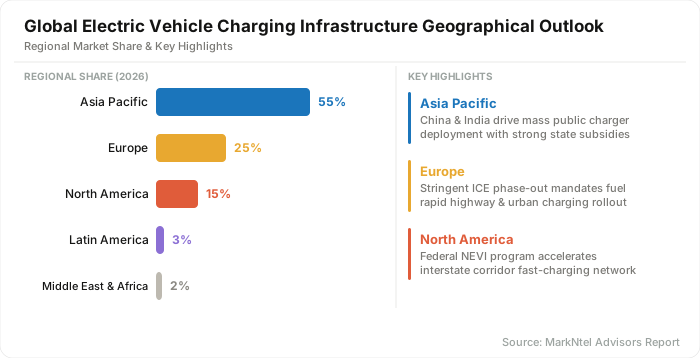
Additionally, increasing EV adoption in Japan, South Korea, and India is supporting regional market growth. In India, government-backed initiatives such as the PM E-DRIVE scheme, which targets deployment of nearly 72,300 public EV charging stations across cities and highways, are significantly strengthening nationwide charging accessibility. Rising investments in battery manufacturing, highway charging corridors, and renewable energy integration are strengthening the EV ecosystem across Asia-Pacific. The region also benefits from the presence of major EV manufacturers and charging equipment suppliers, enabling faster deployment of charging stations and advanced charging technologies.
Global Electric Vehicle Charging Infrastructure Market Competitive Analysis
The global electric vehicle charging infrastructure industry is moderately fragmented, with the top five players Tesla, Charge Point, Shell Recharge, ABB, and Electrify America collectively holding around 45% of the global market share, driven by their extensive fast-charging networks, strong international presence, and continuous investments in expanding EV charging infrastructure across key regions.
Key Players in Electric Vehicle Charging Infrastructure Industry
- Tesla
- ChargePoint
- ABB
- Shell Recharge
- Siemens
- BP Pulse
- EVgo
- Blink Charging
- Electrify America
- EVBox
- Schneider Electric
- Tritium
- IONITY
- Wallbox
- Enel X
- Others
Global Electric Vehicle Charging Infrastructure Industry News and Recent Developments
April 2025: ChargePoint Introduces Bidirectional AC Charging Architecture (USA)
ChargePoint introduced a next-generation AC =Level 2 charging architecture featuring bidirectional charging, Vehicle-to-Everything (V2X) capability, and charging speeds up to 19.2 kW in North America and 22 kW in Europe. The architecture was designed for residential, commercial, and fleet applications while integrating smart energy management systems and dynamic load balancing technology.
Impact Analysis: The technology strengthens the role of EVs as distributed energy resources by enabling vehicles to store and supply electricity back to homes, buildings, and power grids. This supports renewable energy integration and improves grid flexibility during peak demand periods. The faster AC charging capability also reduces charging duration for residential and workplace users while lowering infrastructure upgrade costs through smart load balancing. The development is expected to encourage broader adoption of intelligent charging ecosystems and energy-efficient EV infrastructure globally.
March 2025: BYD launches 1,000–1,500 kW megawatt “Flash Charging” system (China)
BYD introduced ultra-fast EV charging technology capable of delivering up to 1.5 MW output, enabling EVs to charge from 10% to 70% in around 5 minutes. The company is also deploying 4,000+ megawatt charging stations across China to support next-generation EVs.
Impact Analysis: This launch significantly transforms EV usability by reducing charging time close to traditional fuel refueling speed. It boosts consumer confidence in long-distance EV travel and increases demand for high-capacity grid infrastructure. It also pushes competitors and utilities to upgrade existing networks, accelerating investment in ultra-fast, high-voltage charging ecosystems globally.
January 2025: SOLUM introduces next-generation EV charger modules at CES 2025 (USA)
SOLUM launched 50 kW modular EV power units designed for scalable, flexible, and cost-efficient charging station deployment at CES 2025 in Las Vegas. These modular systems enable easier expansion of charging infrastructure, reduce installation complexity, and support faster rollout of EV charging stations across urban and highway networks.
Impact Analysis: The modular architecture reduces installation complexity and capital expenditure, enabling faster deployment of charging stations in urban and highway locations. It supports flexible scaling based on demand growth, improves maintenance efficiency, and encourages wider adoption by commercial operators. This accelerates infrastructure rollout and strengthens standardization in global EV charging systems.
Frequently Asked Questions
- Market Segmentation
- Introduction
- Market Definition
- Research Process
- Assumption
- Executive Summary
- Global Electric Vehicle Charging Infrastructure Market Trends & Insights
- Global Electric Vehicle Charging Infrastructure Market Dynamics
- Growth Drivers
- Challenges
- Global Electric Vehicle Charging Infrastructure Market Hotspot & Opportunities
- Global Electric Vehicle Charging Infrastructure Market Regulation & Policy
- Global Electric Vehicle Charging Infrastructure Market Outlook, 2026-2032F
- Market Size & Outlook
- By Revenues (USD Million)
- Market Share & Outlook
- By Charger Type- Market Size & Forecast 2026-2032, (USD Million)
- Wall Mounted
- Pedestal Mounted
- Roof Mounted
- By Vehicle Type- Market Size & Forecast 2026-2032, (USD Million)
- Passenger Cars
- Light Commercial Vehicles
- Medium & Heavy Commercial Vehicles
- By Location- Market Size & Forecast 2026-2032, (USD Million)
- Residential
- Commercial
- By Power Output- Market Size & Forecast 2026-2032, (USD Million)
- Upto 50kW
- 50.1kW-300kW
- Above 300kW
- By Region
- North America
- South America
- Europe
- The Middle East & Africa
- Asia-Pacific
- By Company
- Competition Characteristics
- Revenue Shares
- By Charger Type- Market Size & Forecast 2026-2032, (USD Million)
- Market Size & Outlook
- North America Electric Vehicle Charging Infrastructure Market Outlook, 2026-2032F
- Market Size & Outlook
- By Revenues (USD Million)
- Market Share & Outlook
- By Charger Type- Market Size & Forecast 2026-2032, (USD Million)
- By Vehicle Type- Market Size & Forecast 2026-2032, (USD Million)
- By Location- Market Size & Forecast 2026-2032, (USD Million)
- By Power Output- Market Size & Forecast 2026-2032, (USD Million)
- By Country
- The US
- Canada
- Mexico
- The US Electric Vehicle Charging Infrastructure Market Outlook, 2026-2032F
- Market Size & Outlook
- By Revenues (USD Million)
- Market Size & Outlook
- By Vehicle Type- Market Size & Forecast 2026-2032, (USD Million)
- By Location- Market Size & Forecast 2026-2032, (USD Million)
- By Charger Type- Market Size & Forecast 2026-2032, (USD Million)
- By Power Output- Market Size & Forecast 2026-2032, (USD Million)
- Market Size & Outlook
- Canada Electric Vehicle Charging Infrastructure Market Outlook, 2026-2032F
- Market Size & Outlook
- By Revenues (USD Million)
- Market Size & Outlook
- By Vehicle Type- Market Size & Forecast 2026-2032, (USD Million)
- By Location- Market Size & Forecast 2026-2032, (USD Million)
- By Charger Type- Market Size & Forecast 2026-2032, (USD Million)
- By Power Output- Market Size & Forecast 2026-2032, (USD Million)
- Market Size & Outlook
- Mexico Electric Vehicle Charging Infrastructure Market Outlook, 2026-2032F
- Market Size & Outlook
- By Revenues (USD Million)
- Market Size & Outlook
- By Vehicle Type- Market Size & Forecast 2026-2032, (USD Million)
- By Location- Market Size & Forecast 2026-2032, (USD Million)
- By Charger Type- Market Size & Forecast 2026-2032, (USD Million)
- By Power Output- Market Size & Forecast 2026-2032, (USD Million)
- Market Size & Outlook
- Market Size & Outlook
- South America Electric Vehicle Charging Infrastructure Market Outlook, 2026-2032F
- Market Size & Outlook
- By Revenues (USD Million)
- Market Share & Outlook
- By Charger Type- Market Size & Forecast 2026-2032, (USD Million)
- By Vehicle Type- Market Size & Forecast 2026-2032, (USD Million)
- By Location- Market Size & Forecast 2026-2032, (USD Million)
- By Power Output- Market Size & Forecast 2026-2032, (USD Million)
- By Country
- Brazil
- Argentina
- Rest of South America
- Brazil Electric Vehicle Charging Infrastructure Market Outlook, 2026-2032F
- Market Size & Outlook
- By Revenues (USD Million)
- Market Size & Outlook
- By Vehicle Type- Market Size & Forecast 2026-2032, (USD Million)
- By Location- Market Size & Forecast 2026-2032, (USD Million)
- By Charger Type- Market Size & Forecast 2026-2032, (USD Million)
- By Power Output- Market Size & Forecast 2026-2032, (USD Million)
- Market Size & Outlook
- Argentina Electric Vehicle Charging Infrastructure Market Outlook, 2026-2032F
- Market Size & Outlook
- By Revenues (USD Million)
- Market Size & Outlook
- By Vehicle Type- Market Size & Forecast 2026-2032, (USD Million)
- By Location- Market Size & Forecast 2026-2032, (USD Million)
- By Charger Type- Market Size & Forecast 2026-2032, (USD Million)
- By Power Output- Market Size & Forecast 2026-2032, (USD Million)
- Market Size & Outlook
- Market Size & Outlook
- Europe Electric Vehicle Charging Infrastructure Market Outlook, 2026-2032F
- Market Size & Outlook
- By Revenues (USD Million)
- Market Share & Outlook
- By Charger Type- Market Size & Forecast 2026-2032, (USD Million)
- By Vehicle Type- Market Size & Forecast 2026-2032, (USD Million)
- By Location- Market Size & Forecast 2026-2032, (USD Million)
- By Power Output- Market Size & Forecast 2026-2032, (USD Million)
- By Country
- The UK
- Germany
- France
- Italy
- Spain
- Rest of Europe
- The UK Electric Vehicle Charging Infrastructure Market Outlook, 2026-2032F
- Market Size & Outlook
- By Revenues (USD Million)
- Market Size & Outlook
- By Vehicle Type- Market Size & Forecast 2026-2032, (USD Million)
- By Location- Market Size & Forecast 2026-2032, (USD Million)
- By Charger Type- Market Size & Forecast 2026-2032, (USD Million)
- By Power Output- Market Size & Forecast 2026-2032, (USD Million)
- Market Size & Outlook
- Germany Electric Vehicle Charging Infrastructure Market Outlook, 2026-2032F
- Market Size & Outlook
- By Revenues (USD Million)
- Market Size & Outlook
- By Vehicle Type- Market Size & Forecast 2026-2032, (USD Million)
- By Location- Market Size & Forecast 2026-2032, (USD Million)
- By Charger Type- Market Size & Forecast 2026-2032, (USD Million)
- By Power Output- Market Size & Forecast 2026-2032, (USD Million)
- Market Size & Outlook
- France Electric Vehicle Charging Infrastructure Market Outlook, 2026-2032F
- Market Size & Outlook
- By Revenues (USD Million)
- Market Size & Outlook
- By Vehicle Type- Market Size & Forecast 2026-2032, (USD Million)
- By Location- Market Size & Forecast 2026-2032, (USD Million)
- By Charger Type- Market Size & Forecast 2026-2032, (USD Million)
- By Power Output- Market Size & Forecast 2026-2032, (USD Million)
- Market Size & Outlook
- Italy Electric Vehicle Charging Infrastructure Market Outlook, 2026-2032F
- Market Size & Outlook
- By Revenues (USD Million)
- Market Size & Outlook
- By Vehicle Type- Market Size & Forecast 2026-2032, (USD Million)
- By Location- Market Size & Forecast 2026-2032, (USD Million)
- By Charger Type- Market Size & Forecast 2026-2032, (USD Million)
- By Power Output- Market Size & Forecast 2026-2032, (USD Million)
- Market Size & Outlook
- Spain Electric Vehicle Charging Infrastructure Market Outlook, 2026-2032F
- Market Size & Outlook
- By Revenues (USD Million)
- Market Size & Outlook
- By Vehicle Type- Market Size & Forecast 2026-2032, (USD Million)
- By Location- Market Size & Forecast 2026-2032, (USD Million)
- By Charger Type- Market Size & Forecast 2026-2032, (USD Million)
- By Power Output- Market Size & Forecast 2026-2032, (USD Million)
- Market Size & Outlook
- Market Size & Outlook
- The Middle East & Africa Electric Vehicle Charging Infrastructure Market Outlook, 2026-2032F
- Market Size & Outlook
- By Revenues (USD Million)
- Market Share & Outlook
- By Charger Type- Market Size & Forecast 2026-2032, (USD Million)
- By Vehicle Type- Market Size & Forecast 2026-2032, (USD Million)
- By Location- Market Size & Forecast 2026-2032, (USD Million)
- By Power Output- Market Size & Forecast 2026-2032, (USD Million)
- By Country
- Saudi Arabia
- The UAE
- South Africa
- Rest of the Middle East & Africa
- Saudi Arabia Electric Vehicle Charging Infrastructure Market Outlook, 2026-2032F
- Market Size & Outlook
- By Revenues (USD Million)
- Market Size & Outlook
- By Vehicle Type- Market Size & Forecast 2026-2032, (USD Million)
- By Location- Market Size & Forecast 2026-2032, (USD Million)
- By Charger Type- Market Size & Forecast 2026-2032, (USD Million)
- By Power Output- Market Size & Forecast 2026-2032, (USD Million)
- Market Size & Outlook
- The UAE Electric Vehicle Charging Infrastructure Market Outlook, 2026-2032F
- Market Size & Outlook
- By Revenues (USD Million)
- Market Size & Outlook
- By Vehicle Type- Market Size & Forecast 2026-2032, (USD Million)
- By Location- Market Size & Forecast 2026-2032, (USD Million)
- By Charger Type- Market Size & Forecast 2026-2032, (USD Million)
- By Power Output- Market Size & Forecast 2026-2032, (USD Million)
- Market Size & Outlook
- South Africa Electric Vehicle Charging Infrastructure Market Outlook, 2026-2032F
- Market Size & Outlook
- By Revenues (USD Million)
- Market Size & Outlook
- By Vehicle Type- Market Size & Forecast 2026-2032, (USD Million)
- By Location- Market Size & Forecast 2026-2032, (USD Million)
- By Charger Type- Market Size & Forecast 2026-2032, (USD Million)
- By Power Output- Market Size & Forecast 2026-2032, (USD Million)
- Market Size & Outlook
- Market Size & Outlook
- Asia-Pacific Electric Vehicle Charging Infrastructure Market Outlook, 2026-2032F
- Market Size & Outlook
- By Revenues (USD Million)
- Market Share & Outlook
- By Charger Type- Market Size & Forecast 2026-2032, (USD Million)
- By Vehicle Type- Market Size & Forecast 2026-2032, (USD Million)
- By Location- Market Size & Forecast 2026-2032, (USD Million)
- By Power Output- Market Size & Forecast 2026-2032, (USD Million)
- By Country
- China
- Japan
- South Korea
- India
- Australia
- Rest of Asia-Pacific
- China Electric Vehicle Charging Infrastructure Market Outlook, 2026-2032F
- Market Size & Outlook
- By Revenues (USD Million)
- Market Size & Outlook
- By Vehicle Type- Market Size & Forecast 2026-2032, (USD Million)
- By Location- Market Size & Forecast 2026-2032, (USD Million)
- By Charger Type- Market Size & Forecast 2026-2032, (USD Million)
- By Power Output- Market Size & Forecast 2026-2032, (USD Million)
- Market Size & Outlook
- Japan Electric Vehicle Charging Infrastructure Market Outlook, 2026-2032F
- Market Size & Outlook
- By Revenues (USD Million)
- Market Size & Outlook
- By Vehicle Type- Market Size & Forecast 2026-2032, (USD Million)
- By Location- Market Size & Forecast 2026-2032, (USD Million)
- By Charger Type- Market Size & Forecast 2026-2032, (USD Million)
- By Power Output- Market Size & Forecast 2026-2032, (USD Million)
- Market Size & Outlook
- South Korea Electric Vehicle Charging Infrastructure Market Outlook, 2026-2032F
- Market Size & Outlook
- By Revenues (USD Million)
- Market Size & Outlook
- By Vehicle Type- Market Size & Forecast 2026-2032, (USD Million)
- By Location- Market Size & Forecast 2026-2032, (USD Million)
- By Charger Type- Market Size & Forecast 2026-2032, (USD Million)
- By Power Output- Market Size & Forecast 2026-2032, (USD Million)
- Market Size & Outlook
- India Electric Vehicle Charging Infrastructure Market Outlook, 2026-2032F
- Market Size & Outlook
- By Revenues (USD Million)
- Market Size & Outlook
- By Vehicle Type- Market Size & Forecast 2026-2032, (USD Million)
- By Location- Market Size & Forecast 2026-2032, (USD Million)
- By Charger Type- Market Size & Forecast 2026-2032, (USD Million)
- By Power Output- Market Size & Forecast 2026-2032, (USD Million)
- Market Size & Outlook
- Australia Electric Vehicle Charging Infrastructure Market Outlook, 2026-2032F
- Market Size & Outlook
- By Revenues (USD Million)
- Market Size & Outlook
- By Vehicle Type- Market Size & Forecast 2026-2032, (USD Million)
- By Location- Market Size & Forecast 2026-2032, (USD Million)
- By Charger Type- Market Size & Forecast 2026-2032, (USD Million)
- By Power Output- Market Size & Forecast 2026-2032, (USD Million)
- Market Size & Outlook
- Market Size & Outlook
- Global Electric Vehicle Charging Infrastructure Market Key Strategic Imperatives for Success & Growth
- Competitive Outlook
- Company Profiles
- ABB
- Business Description
- Product Portfolio
- Strategic Alliances or Partnerships
- Recent Developments
- Financial Details
- Others
- BP Pulse
- Business Description
- Product Portfolio
- Strategic Alliances or Partnerships
- Recent Developments
- Financial Details
- Others
- Charge Point
- Business Description
- Product Portfolio
- Strategic Alliances or Partnerships
- Recent Developments
- Financial Details
- Others
- EVBOX
- Business Description
- Product Portfolio
- Strategic Alliances or Partnerships
- Recent Developments
- Financial Details
- Others
- EVgo
- Business Description
- Product Portfolio
- Strategic Alliances or Partnerships
- Recent Developments
- Financial Details
- Others
- Shell Recharge
- Business Description
- Product Portfolio
- Strategic Alliances or Partnerships
- Recent Developments
- Financial Details
- Others
- Wallbox
- Business Description
- Product Portfolio
- Strategic Alliances or Partnerships
- Recent Developments
- Financial Details
- Others
- Schneider Electric
- Business Description
- Product Portfolio
- Strategic Alliances or Partnerships
- Recent Developments
- Financial Details
- Others
- Siemens
- Business Description
- Product Portfolio
- Strategic Alliances or Partnerships
- Recent Developments
- Financial Details
- Others
- Tesla
- Business Description
- Product Portfolio
- Strategic Alliances or Partnerships
- Recent Developments
- Financial Details
- Others
- Blink Charging
- Business Description
- Product Portfolio
- Strategic Alliances or Partnerships
- Recent Developments
- Financial Details
- Others
- Electrify America
- Business Description
- Product Portfolio
- Strategic Alliances or Partnerships
- Recent Developments
- Financial Details
- Others
- Enel X
- Business Description
- Product Portfolio
- Strategic Alliances or Partnerships
- Recent Developments
- Financial Details
- Others
- IONITY
- Business Description
- Product Portfolio
- Strategic Alliances or Partnerships
- Recent Developments
- Financial Details
- Others
- Tritium
- Business Description
- Product Portfolio
- Strategic Alliances or Partnerships
- Recent Developments
- Financial Details
- Others
- Others
- ABB
- Company Profiles
- Disclaimer
MarkNtel Advisors follows a robust and iterative research methodology designed to ensure maximum accuracy and minimize deviation in market estimates and forecasts. Our approach combines both bottom-up and top-down techniques to effectively segment and quantify various aspects of the market. A consistent feature across all our research reports is data triangulation, which examines the market from three distinct perspectives to validate findings. Key components of our research process include:
1. Scope & Research Design At the outset, MarkNtel Advisors define the research objectives and formulate pertinent questions. This phase involves determining the type of research—qualitative or quantitative—and designing a methodology that outlines data collection methods, target demographics, and analytical tools. They also establish timelines and budgets to ensure the research aligns with client goals.
2. Sample Selection and Data Collection In this stage, the firm identifies the target audience and determines the appropriate sample size to ensure representativeness. They employ various sampling methods, such as random or stratified sampling, based on the research objectives. Data collection is carried out using tools like surveys, interviews, and observations, ensuring the gathered data is reliable and relevant.
3. Data Analysis and Validation Once data is collected, MarkNtel Advisors undertake a rigorous analysis process. This includes cleaning the data to remove inconsistencies, employing statistical software for quantitative analysis, and thematic analysis for qualitative data. Validation steps are taken to ensure the accuracy and reliability of the findings, minimizing biases and errors.

4. Data Forecast and FinalizationThe final phase involves forecasting future market trends based on the analyzed data. MarkNtel Advisors utilize predictive modeling and time series analysis to anticipate market behaviors. The insights are then compiled into comprehensive reports, featuring visual aids like charts and graphs, and include strategic recommendations to inform client decision-making
We offer flexible licensing options to cater to varying organizational needs. Choose the pricing pack that best suits your requirements:
Buy Now Inquire Before Buying
 Request Customization
 Talk to our Consultant







