

Beer Market Research Report: Forecast (2026-2032)
By Type (Dark Beer (Ale, Sorghum, Wheat Beer), Lager (Flavored/Mixed Lager, Standard Lager (Premium Lager, Mid-Priced Lager, Economy Lager)), Non/Low Alcohol Beer, Stout, Others (P ... orter, Malt, etc.)), By Category (Standard, Premium), By Packaging (Glass Bottles, Metal Can, Others), By Production (Macro Brewery, Micro Brewery, Craft Brewery), By Distribution Channel (On-Trade (Bars, Restaurants, Pubs), Off-Trade (Supermarkets/Hypermarkets, Convenience Stores, Specialty Stores, Online Retailers)), and others Read more
- Food & Beverages
- Jul 2026
- Pages 340
- Report Format: PDF, Excel, PPT
Beer Market
Projected 7.38% CAGR from 2026 to 2032
Study Period
2026-2032
Market Size (2026)
USD 0.79 Trillion
Market Size (2032)
USD 1.21 Trillion
Largest Region
Asia-Pacific
Projected CAGR
7.38%
Leading Segments
By Type: Dark Beer
Beer Market Key Takeaways
- The global Beer market size was valued at USD 0.74 trillion in 2025 and is projected to grow from USD 0.79 trillion in 2026 to USD 1.21 trillion by 2032.
- The industry is projected to reflect sustained growth at a steady CAGR of 7.38% during 2026-2032.
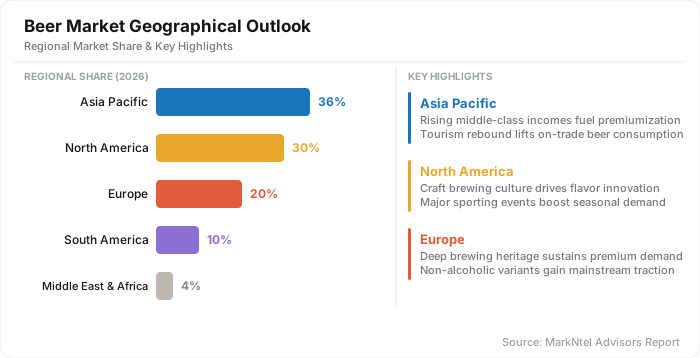
- Asia Pacific holds the largest share of about 36% in 2026.
- By type, lager holds a significant share of about 82% in 2026.
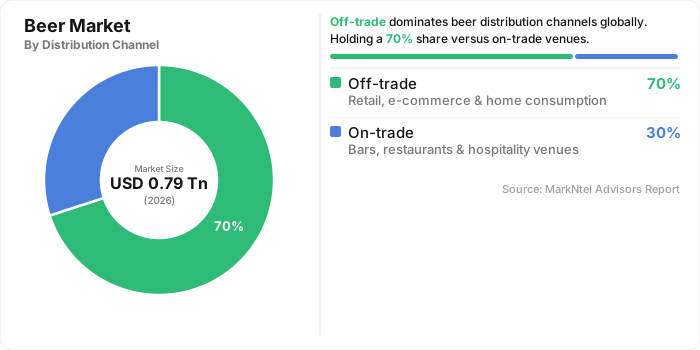
- By distribution channel, off-trade seized a significant share of about 70% in 2026.
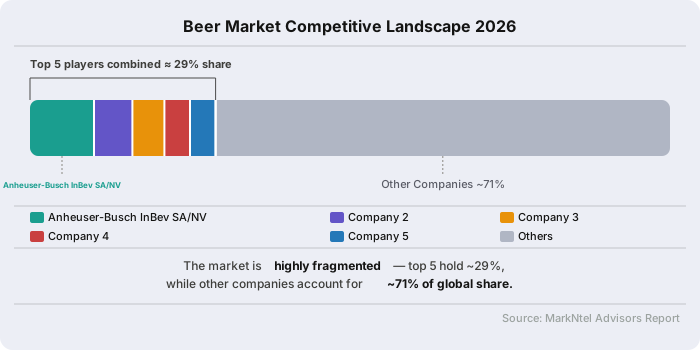
- The industry is highly fragmented. However, the top five players collectively account for nearly 29% share.
Beer Market Size and Outlook
The global Beer industry size was valued at USD 0.74 trillion in 2025 and is projected to grow from USD 0.79 trillion in 2026 to USD 1.21 trillion by 2032. Along with this, the market is estimated to grow at a CAGR of around 7.38% during the forecast period, i.e., 2026-32.
The industry is evolving through premiumization, expanding distribution networks, and rapid innovation in alcohol-free products, enabling brewers to address changing consumer preferences while strengthening long-term industry resilience. Although mature markets are witnessing moderate volume growth, demand is increasingly shifting toward premium, craft, flavored, and non-alcoholic beers, creating new opportunities for product differentiation and consumer engagement.
An important factor supporting this evolution is the expansion of retail and hospitality channels. According to The Brewers of Europe (2024), the beer value chain supports approximately 1.5 million jobs across Europe's on-trade sector, including bars, pubs, restaurants, hotels, and events, and around 220,000 jobs in off-trade retail. This extensive commercial network improves product availability, enhances brand visibility, and enables brewers to broaden the distribution of premium, craft, and alcohol-free beers across both established and emerging markets. As tourism, dining, and social occasions continue to recover globally, these channels are expected to remain vital drivers of beer sales.
Product innovation is also reshaping the competitive landscape, particularly within the fast-growing non-alcoholic segment. In April 2026, Best Day Brewing launched Wild American Pilsner, a non-alcoholic beer that was subsequently awarded "Best in Show" at the inaugural North American Nonalcoholic Cup, demonstrating significant improvements in brewing technology and taste quality. Such innovations are helping brewers attract health-conscious and moderation-focused consumers without compromising the traditional beer experience. Similarly, leading global breweries continue to invest in premium flavors, low-alcohol alternatives, and sustainable brewing practices to diversify their portfolios and meet evolving consumer expectations.
Looking ahead, continued investments in distribution infrastructure, hospitality partnerships, product innovation, and alcohol-free beer development are expected to strengthen the global beer industry's competitiveness. As brewers adapt to changing lifestyles and consumption patterns, innovation and wider market accessibility will remain central to sustaining demand across diverse consumer segments.
Beer Market Key Indicators
- According to Kirin Holdings' Global Beer Consumption Report 2025, global beer consumption reached 194.12 million kiloliters in 2024, representing a 0.5% increase over 2023. China remained the largest beer-consuming country, while India recorded the highest growth among major markets. Asia accounted for 32.6% of global beer consumption, reinforcing its position as the leading beer-consuming region. This indicator reflects changing consumer demand and regional consumption patterns.
- Per capita beer consumption measures the average quantity of beer consumed per person annually. According to Kirin Holdings' Global Beer Consumption Report 2025, Czechia remained the world's leading beer-consuming country in 2024, with 148.8 liters per capita, maintaining the top position for the 32nd consecutive year. It was followed by Lithuania (136.5 liters) and Austria (103.9 liters). In contrast, India recorded only 2.9 liters per capita, despite registering the highest consumption growth of 14.6% among the top 25 beer-consuming countries in 2024. This significant gap highlights the maturity of European beer markets while underscoring the substantial long-term consumption potential in emerging economies with expanding urban populations and rising disposable incomes.
- According to BarthHaas' Hop Update (December 2025), global hop production declined by 4.8%, falling from 113,839 tonnes in 2024 to 108,319 tonnes in 2025, while global alpha acid production decreased by 4.1% to 11,854 tonnes. Germany and the United States, the two largest hop-producing countries, also recorded harvest declines of 7.2% and 6.1%, respectively. Reduced agricultural output tightens raw material availability, increases procurement costs for brewers, and encourages greater investment in supply-chain resilience, long-term grower contracts, and sustainable farming practices to ensure consistent beer production
Global Beer Market Scope
| Category | Segments |
|---|---|
| By Type | Dark Beer (Ale, Sorghum, Wheat Beer), Lager (Flavored/Mixed Lager, Standard Lager (Premium Lager, Mid-Priced Lager, Economy Lager)), Non/Low Alcohol Beer, Stout, Others (Porter, Malt, etc. |
| By Category | Standard, Premium |
| By Packaging | Glass Bottles, Metal Can, Others |
| By Production | Macro Brewery, Micro Brewery, Craft Brewery |
| By Distribution Channel | On-Trade (Bars, Restaurants, Pubs), Off-Trade (Supermarkets/Hypermarkets, Convenience Stores, Specialty Stores, Online Retailers |
Global Beer Market Growth Drivers
Urbanization and Social Drinking Culture Driving Global Beer Market Growth
Urbanization is a major structural driver of beer demand because it concentrates populations in cities where social drinking occasions (bars, pubs, restaurants, events, nightlife) are more frequent and accessible. According to the United Nations Department of Economic and Social Affairs (UN DESA, 2024), about 57% of the global population lived in urban areas in 2023, and this is projected to reach 68% by 2050, significantly expanding urban consumption hubs where beer is commonly consumed in social settings.
The OECD (2024) highlights that beer remains the most consumed alcoholic beverage in member countries, accounting for around 42% of total alcohol consumption, with a large share consumed in social environments such as restaurants and entertainment venues rather than at home. This reinforces beer’s role as a “social beverage,” especially in urban lifestyles where leisure consumption is more frequent.
In addition, the WHO European alcohol consumption report (2024) notes that drinking patterns in urban populations are strongly linked to social and recreational behavior, particularly among younger adults, where alcohol is integrated into nightlife, dining, and cultural gatherings.
Overall, accelerating urbanization combined with a socially driven drinking culture is expanding beer consumption occasions across cities worldwide. As urban entertainment infrastructure grows, this driver will continue to significantly strengthen global beer market expansion in the coming years.
Recent Trends
Craft Brewing and Flavor Innovation Emerging as a Defining Trend in the Global Beer Market
Craft beer and flavor diversification are defining trend in the global beer industry, driven by consumer demand for experiential drinking, variety, and distinct flavor profiles beyond standard lagers. In the United States, the Brewers Association reported 9,736 active craft breweries in 2024, reflecting a highly fragmented and innovation-driven brewing landscape focused on style experimentation and localized tastes.
Major global brewers have actively expanded craft portfolios to capture this shift. For example, Anheuser-Busch InBev’s craft brands such as Goose Island Beer Co. and Elysian Brewing continue to invest heavily in IPA-led innovations, including hazy and fruit-forward variants like mango, citrus, and tropical hop blends that align with evolving consumer preferences.
At the same time, industry reporting highlights that breweries are increasingly prioritizing flavor-led innovation such as hazy IPAs, fruit-infused ales, and barrel-aged stouts, which use ingredients like citrus peels, berries, spices, and experimental hop combinations to create differentiated taste profiles.
Moreover, breweries are expected to expand data-driven brewing, AI-assisted recipe design, and hyper-local flavor collaborations with microbreweries, enabling more personalized and region-specific beer styles.
Craft beer and flavor diversification is transforming beer consumption into a highly experimental and experience-led category. Continuous innovation in ingredients, brewing techniques, and limited-edition launches is redefining product variety across global markets.
Beer Market Opportunities and Challenges
Rising Health Awareness Driving Decline in Alcohol Consumption and Accelerating Non-Alcoholic Beer Innovation
Rising health awareness is a significant challenge for the global beer market as consumers are increasingly reducing alcohol consumption due to concerns over obesity, liver disease, and long-term non-communicable diseases. According to the World Health Organization (WHO, 2024 update), harmful alcohol use is linked to approximately 2.6–3 million deaths annually worldwide, contributing to cancers, cardiovascular diseases, and other chronic health conditions. The WHO continues to strengthen its Global Alcohol Action Plan (2022–2030), which emphasizes reducing harmful drinking through policy measures such as health warnings, marketing restrictions, and public awareness campaigns, accelerating the global shift toward moderation
However, this challenge is also reshaping the industry and creating strong growth opportunities through innovation in non-alcoholic beer (NAB) products. A key example is Heineken® 0.0, which has become one of the fastest-growing alcohol-free beer brands globally and is now available in over 100 markets, reflecting strong consumer acceptance of healthier alternatives. The company also expanded its portfolio in 2026 with new Heineken 0.0 flavor variants such as Cold Pressed Lime and Nectarine Juniper, targeting consumers who want taste and social experience without alcohol.
Overall, rising health consciousness is reducing traditional beer consumption but simultaneously accelerating the shift toward non-alcoholic and wellness-oriented beer products. This transformation is expanding the total addressable market and ensuring long-term category growth through innovation-led diversification.
Segmentation Insights
Lager Commands Approximately 82% of the Global Beer Market Through Broad Consumer Appeal and Premium Innovation
Lager accounts for approximately 82% of the global beer market, making it the dominant product segment due to its mild flavor, crisp taste, high drinkability, and broad consumer appeal across both developed and emerging economies. Its versatility allows it to cater to a wide range of consumer preferences, making it the preferred beer style in markets such as China, the United States, Germany, Brazil, and Japan. Major global brewers, including Anheuser-Busch InBev, Heineken, Carlsberg, Asahi, and China Resources Beer, derive a significant share of their flagship portfolios from lager brands such as Budweiser, Heineken, Carlsberg, Asahi Super Dry, and Snow Beer.
Premiumization is further strengthening the segment, with breweries introducing premium lagers, low-carb variants, and alcohol-free lager alternatives to address evolving consumer preferences. Looking ahead, continued investments in brewing capacity, premium lager innovation, and expanding distribution across Asia-Pacific, Latin America, and Africa are expected to reinforce lager's leadership, supported by rising urbanization, growing middle-class populations, and increasing demand for premium beer experiences. Based on type, the scope has been segmented into
- Dark Beer
- Lager
- Non/Low Alcohol Beer
- Stout
- Others
Off-Trade Accounts for Approximately 70% of the Industry, Driven by Retail Expansion and At-Home Consumption
Off-trade represents the largest distribution channel in the global beer market, accounting for approximately 70% of total beer sales, driven by the convenience of retail purchasing, competitive pricing, and the growing preference for at-home consumption. Supermarkets, hypermarkets, convenience stores, and online retailers offer consumers a wide assortment of domestic, imported, premium, and craft beers, often supported by promotional discounts and bulk purchase options.
Following the shift in purchasing behavior during and after the pandemic, consumers have continued to purchase beer through retail outlets for home gatherings and everyday consumption. Major brewers, including Anheuser-Busch InBev, Heineken, and Carlsberg, have strengthened partnerships with modern retail chains and expanded digital sales channels to improve product accessibility. The increasing penetration of organized retail in emerging economies and the rapid growth of e-commerce platforms are further enhancing off-trade beer sales. As retailers continue to expand premium and alcohol-free beer assortments, the off-trade channel is expected to maintain its leading position by offering greater product variety and purchasing convenience. Based on distribution channel, the scope has been classified into
- On-Trade
- Off-Trade
Beer Market Geographical Outlook
Asia Pacific Accounts for Approximately 36% of the Industry, Supported by Strong Cereal Production and Manufacturing Capacity
Asia Pacific accounts for approximately 36% of global beer demand, making it the leading regional market. This dominance stems from the region's vast food processing base and abundant cereal supply. China and India together account for 26 percent of Asia's cereal production, with China ranking as the top wheat producer at 17 percent of global output and India second at 14 percent. This ensures manufacturers a stable, low-cost supply of wheat, the primary noodle ingredient.
Asian countries have driven a major share of global cereal production growth over the past decade and are projected to continue contributing roughly 45 percent of future increases, reinforcing long-term raw material security. Vietnam and Thailand also rank among the world's leading rice exporters, giving noodle producers direct access to key grains.
Building on this supply base, China, Japan, Indonesia, Thailand, and Vietnam function as major noodle production and export hubs. Rising supermarket penetration, expanding convenience retail, and growing demand for premium, healthier variants further support regional growth—together cementing Asia Pacific's role as both the largest noodle consumer and manufacturing hub globally.
Beer Market Competitive Analysis
Top Five Brewers Collectively Account for Approximately 29% of the Global Beer Market
The global beer market is highly fragmented, with leading companies including Anheuser-Busch InBev SA/NV, Heineken N.V., China Resources Beer (Holdings) Company Limited, Carlsberg A/S, and Molson Coors Beverage Company collectively accounting for an estimated 29% of the global beer market share.
Key Players in Global Beer market
- Anheuser-Busch InBev SA/NV
- Heineken N.V.
- China Resources Beer (Holdings) Company Limited
- Carlsberg A/S
- Molson Coors Beverage Company
- Tsingtao Brewery Company Limited
- Asahi Group Holdings, Ltd.
- Constellation Brands, Inc.
- Kirin Holdings Company, Limited
- The Boston Beer Company, Inc.
- Thai Beverage Public Company Limited
- United Breweries Limited
- Mahou San Miguel, S.L.
- Royal Unibrew A/S
- Anadolu Efes Biracılık ve Malt Sanayii A.Ş.
- Others
Beer Industry News and Recent Developments
June 2026: Stella Artois Introduces Strawberries & Cream Beer
In June 2026, Stella Artois launched a limited-edition Strawberries & Cream beer for the Wimbledon Championships. The nitro-infused beer combines strawberry flavors with a creamy finish, targeting consumers seeking lighter and fruit-forward seasonal beverages while expanding the brand's premium flavored beer portfolio.
Impact Analysis: The launch reinforces the growing trend of premiumization and flavor innovation in the global beer market by targeting consumers seeking unique, seasonal drinking experiences. Fruit-infused and limited-edition beers help breweries attract younger adults and occasional beer drinkers while increasing brand engagement during major sporting events such as Wimbledon. The product also highlights how global brewers are leveraging experiential marketing and differentiated flavors to strengthen premium portfolios and stimulate demand beyond traditional lager categories.
May 2026: Coors Launches Coors 0.0 Non-Alcoholic Beer
In May 2026, Molson Coors Beverage Company introduced Coors 0.0, its first completely alcohol-free beer (0.0% ABV), in the U.S. Northeast. The launch expands the company's non-alcoholic portfolio ahead of a nationwide rollout planned for 2027 and aligns with rising consumer demand for moderation-focused beverages.
Impact Analysis: The introduction of Coors 0.0 strengthens competition within the rapidly expanding non-alcoholic beer segment and reflects the industry's response to rising health consciousness and moderation trends. By extending a well-established beer brand into the alcohol-free category, Molson Coors broadens its consumer base to include wellness-focused and sober-curious consumers. The planned nationwide rollout is expected to enhance category visibility and accelerate innovation across the global alcohol-free beer market.
December 2025: United Breweries Launches Kingfisher Smooth
In December 2025, United Breweries Limited introduced Kingfisher Smooth, a new strong beer designed for next-generation consumers in India. The product features a smoother taste profile than conventional strong beers and expands the Kingfisher portfolio in one of the world's fastest-growing beer markets.
Impact Analysis: Kingfisher Smooth demonstrates how brewers are adapting products to evolving consumer preferences by offering smoother taste profiles while maintaining the appeal of strong beer. The launch strengthens United Breweries' position in India's premium mainstream beer segment and supports product differentiation in an increasingly competitive market. It also reflects the growing importance of localized product innovation, enabling breweries to better address changing taste preferences among younger legal-age consumers and expand premium beer consumption.
Frequently Asked Questions
- Market Segmentation
- Introduction
- Product Definition
- Research Process
- Assumptions
- Executive Summary
- Global Beer Market Policies, Regulations, and Product Standards
- Global Beer Market Production Trend 2022-2032
- Global Beer Market Production Trend By Type of Product
- Dark Beer
- Ale a
- Sorghum
- Wheat Beer
- Lager
- Flavored/Mixed Lager
- Standard Lager
- Premium Lager
- Mid-Priced Lager
- Economy Lager
- Non/Low Alcohol Beer
- Stout
- Others (Porter, Malt etc.)
- Dark Beer
- Company Wise Production Plants and Statistics
- Installed Production Capacity
- Actual Production
- Planned Production Target
- Global Beer Market Production Trend By Type of Product
- Global Beer Market Pricing Analysis 2022-2032
- Global Beer Market Pricing Trend (USD/Liters) 2022-2032
- Global Beer Market Pricing Trend (USD/Liters) By Regions 2022-2032
- North America
- South America
- Europe
- Middle East & Africa
- Asia Pacific
- Global Beer Market Pricing Trend (USD/Liters) By Product Type 2022-2032
- Dark Beer
- Ale
- Sorghum
- Wheat Beer
- Lager
- Flavored/Mixed Lager
- Standard Lager
- Premium Lager
- Mid-Priced Lager
- Economy Lager
- Non/Low Alcohol Beer
- Stout
- Others (Porter, Malt, etc.)
- Dark Beer
- Global Beer Market Trends & Developments
- Global Beer Market Dynamics
- Growth Factors
- Challenges
- Global Beer Market Hotspot & Opportunities
- Global Beer Market Outlook, 2022-2032F
- Market Size & Outlook
- By Revenues (USD Million)
- By Quantity Sold (Thousand Liters)
- Market Segmentation & Outlook
- By Type- Market Size & Forecast 2022-2032, USD Million & Thousand Liters
- Dark Beer
- Ale
- Sorghum
- Wheat Beer
- Lager
- Flavored/Mixed Lager
- Standard Lager
- Premium Lager
- Mid-Priced Lager
- Economy Lager
- Non/Low Alcohol Beer
- Stout
- Others (Porter, Malt, etc.)
- Dark Beer
- By Category- Market Size & Forecast 2022-2032, USD Million & Thousand Liters
- Standard
- Premium
- By Packaging- Market Size & Forecast 2022-2032, USD Million & Thousand Liters
- Glass Bottles
- Metal Can
- Others
- By Production- Market Size & Forecast 2022-2032, USD Million & Thousand Liters
- Macro Brewery
- Micro Brewery
- Craft Brewery
- By Distribution Channel- Market Size & Forecast 2022-2032, USD Million & Thousand Liters
- On-Trade
- Bars
- Restaurants
- Pubs
- Off-Trade
- Supermarkets/Hypermarkets
- Convenience Stores
- Specialty Stores
- Online Retailers
- On-Trade
- By Region
- North America
- South America
- Europe
- The Middle East & Africa
- Asia-Pacific
- By Company
- Competition Characteristics
- Market Share & Outlook
- By Type- Market Size & Forecast 2022-2032, USD Million & Thousand Liters
- Market Size & Outlook
- North America Beer Market Outlook, 2022-2032F
- Market Size & Outlook
- By Revenues (USD Million)
- By Quantity Sold (Thousand Liters)
- Market Segmentation & Outlook
- By Type- Market Size & Forecast 2022-2032, USD Million & Thousand Liters
- By Category- Market Size & Forecast 2022-2032, USD Million & Thousand Liters
- By Packaging- Market Size & Forecast 2022-2032, USD Million & Thousand Liters
- By Production- Market Size & Forecast 2022-2032, USD Million & Thousand Liters
- By Distribution Channel- Market Size & Forecast 2022-2032, USD Million & Thousand Liters
- By Country
- The US
- Canada
- Mexico
- The US Beer Market Outlook, 2022-2032F
- Market Size & Outlook
- By Revenues (USD Million)
- By Quantity Sold (Thousand Liters)
- Market Segmentation & Outlook
- By Type- Market Size & Forecast 2022-2032, USD Million & Thousand Liters
- By Category- Market Size & Forecast 2022-2032, USD Million & Thousand Liters
- By Packaging- Market Size & Forecast 2022-2032, USD Million & Thousand Liters
- By Production- Market Size & Forecast 2022-2032, USD Million & Thousand Liters
- By Distribution Channel- Market Size & Forecast 2022-2032, USD Million & Thousand Liters
- Market Size & Outlook
- Canada Beer Market Outlook, 2022-2032F
- Market Size & Outlook
- By Revenues (USD Million)
- By Quantity Sold (Thousand Liters)
- Market Segmentation & Outlook
- By Type- Market Size & Forecast 2022-2032, USD Million & Thousand Liters
- By Category- Market Size & Forecast 2022-2032, USD Million & Thousand Liters
- By Packaging- Market Size & Forecast 2022-2032, USD Million & Thousand Liters
- By Production- Market Size & Forecast 2022-2032, USD Million & Thousand Liters
- By Distribution Channel- Market Size & Forecast 2022-2032, USD Million & Thousand Liters
- Market Size & Outlook
- Mexico Beer Market Outlook, 2022-2032F
- Market Size & Outlook
- By Revenues (USD Million)
- By Quantity Sold (Thousand Liters)
- Market Segmentation & Outlook
- By Type- Market Size & Forecast 2022-2032, USD Million & Thousand Liters
- By Category- Market Size & Forecast 2022-2032, USD Million & Thousand Liters
- By Packaging- Market Size & Forecast 2022-2032, USD Million & Thousand Liters
- By Production- Market Size & Forecast 2022-2032, USD Million & Thousand Liters
- By Distribution Channel- Market Size & Forecast 2022-2032, USD Million & Thousand Liters
- Market Size & Outlook
- Market Size & Outlook
- South America Beer Market Outlook, 2022-2032F
- Market Size & Outlook
- By Revenues (USD Million)
- By Quantity Sold (Thousand Liters)
- Market Segmentation & Outlook
- By Type- Market Size & Forecast 2022-2032, USD Million & Thousand Liters
- By Category- Market Size & Forecast 2022-2032, USD Million & Thousand Liters
- By Packaging- Market Size & Forecast 2022-2032, USD Million & Thousand Liters
- By Production- Market Size & Forecast 2022-2032, USD Million & Thousand Liters
- By Distribution Channel- Market Size & Forecast 2022-2032, USD Million & Thousand Liters
- By Country
- Brazil
- Argentina
- Chile
- Colombia
- Rest of South America
- Brazil Beer Market Outlook, 2022-2032F
- Market Size & Outlook
- By Revenues (USD Million)
- By Quantity Sold (Thousand Liters)
- Market Segmentation & Outlook
- By Type- Market Size & Forecast 2022-2032, USD Million & Thousand Liters
- By Category- Market Size & Forecast 2022-2032, USD Million & Thousand Liters
- By Packaging- Market Size & Forecast 2022-2032, USD Million & Thousand Liters
- By Production- Market Size & Forecast 2022-2032, USD Million & Thousand Liters
- By Distribution Channel- Market Size & Forecast 2022-2032, USD Million & Thousand Liters
- Market Size & Outlook
- Argentina Beer Market Outlook, 2022-2032F
- Market Size & Outlook
- By Revenues (USD Million)
- By Quantity Sold (Thousand Liters)
- Market Segmentation & Outlook
- By Type- Market Size & Forecast 2022-2032, USD Million & Thousand Liters
- By Category- Market Size & Forecast 2022-2032, USD Million & Thousand Liters
- By Packaging- Market Size & Forecast 2022-2032, USD Million & Thousand Liters
- By Production- Market Size & Forecast 2022-2032, USD Million & Thousand Liters
- By Distribution Channel- Market Size & Forecast 2022-2032, USD Million & Thousand Liters
- Market Size & Outlook
- Chile Beer Market Outlook, 2022-2032F
- Market Size & Outlook
- By Revenues (USD Million)
- By Quantity Sold (Thousand Liters)
- Market Segmentation & Outlook
- By Type- Market Size & Forecast 2022-2032, USD Million & Thousand Liters
- By Category- Market Size & Forecast 2022-2032, USD Million & Thousand Liters
- By Packaging- Market Size & Forecast 2022-2032, USD Million & Thousand Liters
- By Production- Market Size & Forecast 2022-2032, USD Million & Thousand Liters
- By Distribution Channel- Market Size & Forecast 2022-2032, USD Million & Thousand Liters
- Market Size & Outlook
- Colombia Beer Market Outlook, 2022-2032F
- Market Size & Outlook
- By Revenues (USD Million)
- By Quantity Sold (Thousand Liters)
- Market Segmentation & Outlook
- By Type- Market Size & Forecast 2022-2032, USD Million & Thousand Liters
- By Category- Market Size & Forecast 2022-2032, USD Million & Thousand Liters
- By Packaging- Market Size & Forecast 2022-2032, USD Million & Thousand Liters
- By Production- Market Size & Forecast 2022-2032, USD Million & Thousand Liters
- By Distribution Channel- Market Size & Forecast 2022-2032, USD Million & Thousand Liters
- Market Size & Outlook
- Market Size & Outlook
- Europe Beer Market Outlook, 2022-2032F
- Market Size & Outlook
- By Revenues (USD Million)
- By Quantity Sold (Thousand Liters)
- Market Segmentation & Outlook
- By Type- Market Size & Forecast 2022-2032, USD Million & Thousand Liters
- By Category- Market Size & Forecast 2022-2032, USD Million & Thousand Liters
- By Packaging- Market Size & Forecast 2022-2032, USD Million & Thousand Liters
- By Production- Market Size & Forecast 2022-2032, USD Million & Thousand Liters
- By Distribution Channel- Market Size & Forecast 2022-2032, USD Million & Thousand Liters
- By Country
- The UK
- Germany
- France
- Italy
- Spain
- Rest of Europe
- The UK Beer Market Outlook, 2022-2032F
- Market Size & Outlook
- By Revenues (USD Million)
- By Quantity Sold (Thousand Liters)
- Market Segmentation & Outlook
- By Type- Market Size & Forecast 2022-2032, USD Million & Thousand Liters
- By Category- Market Size & Forecast 2022-2032, USD Million & Thousand Liters
- By Packaging- Market Size & Forecast 2022-2032, USD Million & Thousand Liters
- By Production- Market Size & Forecast 2022-2032, USD Million & Thousand Liters
- By Distribution Channel- Market Size & Forecast 2022-2032, USD Million & Thousand Liters
- Market Size & Outlook
- Germany Beer Market Outlook, 2022-2032F
- Market Size & Outlook
- By Revenues (USD Million)
- By Quantity Sold (Thousand Liters)
- Market Segmentation & Outlook
- By Type- Market Size & Forecast 2022-2032, USD Million & Thousand Liters
- By Category- Market Size & Forecast 2022-2032, USD Million & Thousand Liters
- By Packaging- Market Size & Forecast 2022-2032, USD Million & Thousand Liters
- By Production- Market Size & Forecast 2022-2032, USD Million & Thousand Liters
- By Distribution Channel- Market Size & Forecast 2022-2032, USD Million & Thousand Liters
- Market Size & Outlook
- France Beer Market Outlook, 2022-2032F
- Market Size & Outlook
- By Revenues (USD Million)
- By Quantity Sold (Thousand Liters)
- Market Segmentation & Outlook
- By Type- Market Size & Forecast 2022-2032, USD Million & Thousand Liters
- By Category- Market Size & Forecast 2022-2032, USD Million & Thousand Liters
- By Packaging- Market Size & Forecast 2022-2032, USD Million & Thousand Liters
- By Production- Market Size & Forecast 2022-2032, USD Million & Thousand Liters
- By Distribution Channel- Market Size & Forecast 2022-2032, USD Million & Thousand Liters
- Market Size & Outlook
- Italy Beer Market Outlook, 2022-2032F
- Market Size & Outlook
- By Revenues (USD Million)
- By Quantity Sold (Thousand Liters)
- Market Segmentation & Outlook
- By Type- Market Size & Forecast 2022-2032, USD Million & Thousand Liters
- By Category- Market Size & Forecast 2022-2032, USD Million & Thousand Liters
- By Packaging- Market Size & Forecast 2022-2032, USD Million & Thousand Liters
- By Production- Market Size & Forecast 2022-2032, USD Million & Thousand Liters
- By Distribution Channel- Market Size & Forecast 2022-2032, USD Million & Thousand Liters
- Market Size & Outlook
- Spain Beer Market Outlook, 2022-2032F
- Market Size & Outlook
- By Revenues (USD Million)
- By Quantity Sold (Thousand Liters)
- Market Segmentation & Outlook
- By Type- Market Size & Forecast 2022-2032, USD Million & Thousand Liters
- By Category- Market Size & Forecast 2022-2032, USD Million & Thousand Liters
- By Packaging- Market Size & Forecast 2022-2032, USD Million & Thousand Liters
- By Production- Market Size & Forecast 2022-2032, USD Million & Thousand Liters
- By Distribution Channel- Market Size & Forecast 2022-2032, USD Million & Thousand Liters
- Market Size & Outlook
- Market Size & Outlook
- The Middle East & Africa Beer Market Outlook, 2022-2032F
- Market Size & Outlook
- By Revenues (USD Million)
- By Quantity Sold (Thousand Liters)
- Market Segmentation & Outlook
- By Type- Market Size & Forecast 2022-2032, USD Million & Thousand Liters
- By Category- Market Size & Forecast 2022-2032, USD Million & Thousand Liters
- By Packaging- Market Size & Forecast 2022-2032, USD Million & Thousand Liters
- By Production- Market Size & Forecast 2022-2032, USD Million & Thousand Liters
- By Distribution Channel- Market Size & Forecast 2022-2032, USD Million & Thousand Liters
- By Country
- Saudi Arabia
- The UAE
- South Africa
- Egypt
- Qatar
- Kuwait
- Oman
- Rest of Middle East & Africa
- Saudi Arabia Beer Market Outlook, 2022-2032F
- Market Size & Outlook
- By Revenues (USD Million)
- By Quantity Sold (Thousand Liters)
- Market Segmentation & Outlook
- By Type- Market Size & Forecast 2022-2032, USD Million & Thousand Liters
- By Category- Market Size & Forecast 2022-2032, USD Million & Thousand Liters
- By Packaging- Market Size & Forecast 2022-2032, USD Million & Thousand Liters
- By Production- Market Size & Forecast 2022-2032, USD Million & Thousand Liters
- By Distribution Channel- Market Size & Forecast 2022-2032, USD Million & Thousand Liters
- Market Size & Outlook
- The UAE Beer Market Outlook, 2022-2032F
- Market Size & Outlook
- By Revenues (USD Million)
- By Quantity Sold (Thousand Liters)
- Market Segmentation & Outlook
- By Type- Market Size & Forecast 2022-2032, USD Million & Thousand Liters
- By Category- Market Size & Forecast 2022-2032, USD Million & Thousand Liters
- By Packaging- Market Size & Forecast 2022-2032, USD Million & Thousand Liters
- By Production- Market Size & Forecast 2022-2032, USD Million & Thousand Liters
- By Distribution Channel- Market Size & Forecast 2022-2032, USD Million & Thousand Liters
- Market Size & Outlook
- South Africa Beer Market Outlook, 2022-2032F
- Market Size & Outlook
- By Revenues (USD Million)
- By Quantity Sold (Thousand Liters)
- Market Segmentation & Outlook
- By Type- Market Size & Forecast 2022-2032, USD Million & Thousand Liters
- By Category- Market Size & Forecast 2022-2032, USD Million & Thousand Liters
- By Packaging- Market Size & Forecast 2022-2032, USD Million & Thousand Liters
- By Production- Market Size & Forecast 2022-2032, USD Million & Thousand Liters
- By Distribution Channel- Market Size & Forecast 2022-2032, USD Million & Thousand Liters
- Market Size & Outlook
- Egypt Beer Market Outlook, 2022-2032F
- Market Size & Outlook
- By Revenues (USD Million)
- By Quantity Sold (Thousand Liters)
- Market Segmentation & Outlook
- By Type- Market Size & Forecast 2022-2032, USD Million & Thousand Liters
- By Category- Market Size & Forecast 2022-2032, USD Million & Thousand Liters
- By Packaging- Market Size & Forecast 2022-2032, USD Million & Thousand Liters
- By Production- Market Size & Forecast 2022-2032, USD Million & Thousand Liters
- By Distribution Channel- Market Size & Forecast 2022-2032, USD Million & Thousand Liters
- Market Size & Outlook
- Qatar Beer Market Outlook, 2022-2032F
- Market Size & Outlook
- By Revenues (USD Million)
- By Quantity Sold (Thousand Liters)
- Market Segmentation & Outlook
- By Type- Market Size & Forecast 2022-2032, USD Million & Thousand Liters
- By Category- Market Size & Forecast 2022-2032, USD Million & Thousand Liters
- By Packaging- Market Size & Forecast 2022-2032, USD Million & Thousand Liters
- By Production- Market Size & Forecast 2022-2032, USD Million & Thousand Liters
- By Distribution Channel- Market Size & Forecast 2022-2032, USD Million & Thousand Liters
- Market Size & Outlook
- Kuwait Beer Market Outlook, 2022-2032F
- Market Size & Outlook
- By Revenues (USD Million)
- By Quantity Sold (Thousand Liters)
- Market Segmentation & Outlook
- By Type- Market Size & Forecast 2022-2032, USD Million & Thousand Liters
- By Category- Market Size & Forecast 2022-2032, USD Million & Thousand Liters
- By Packaging- Market Size & Forecast 2022-2032, USD Million & Thousand Liters
- By Production- Market Size & Forecast 2022-2032, USD Million & Thousand Liters
- By Distribution Channel- Market Size & Forecast 2022-2032, USD Million & Thousand Liters
- Market Size & Outlook
- Oman Beer Market Outlook, 2022-2032F
- Market Size & Outlook
- By Revenues (USD Million)
- By Quantity Sold (Thousand Liters)
- Market Segmentation & Outlook
- By Type- Market Size & Forecast 2022-2032, USD Million & Thousand Liters
- By Category- Market Size & Forecast 2022-2032, USD Million & Thousand Liters
- By Packaging- Market Size & Forecast 2022-2032, USD Million & Thousand Liters
- By Production- Market Size & Forecast 2022-2032, USD Million & Thousand Liters
- By Distribution Channel- Market Size & Forecast 2022-2032, USD Million & Thousand Liters
- Market Size & Outlook
- Market Size & Outlook
- Asia-Pacific Beer Market Outlook, 2022-2032F
- Market Size & Outlook
- By Revenues (USD Million)
- By Quantity Sold (Thousand Liters)
- Market Segmentation & Outlook
- By Type- Market Size & Forecast 2022-2032, USD Million & Thousand Liters
- By Category- Market Size & Forecast 2022-2032, USD Million & Thousand Liters
- By Packaging- Market Size & Forecast 2022-2032, USD Million & Thousand Liters
- By Production- Market Size & Forecast 2022-2032, USD Million & Thousand Liters
- By Distribution Channel- Market Size & Forecast 2022-2032, USD Million & Thousand Liters
- By Country
- China
- Japan
- India
- South Korea
- Australia
- Rest of Asia-Pacific
- China Beer Market Outlook, 2022-2032F
- Market Size & Outlook
- By Revenues (USD Million)
- By Quantity Sold (Thousand Liters)
- Market Segmentation & Outlook
- By Type- Market Size & Forecast 2022-2032, USD Million & Thousand Liters
- By Category- Market Size & Forecast 2022-2032, USD Million & Thousand Liters
- By Packaging- Market Size & Forecast 2022-2032, USD Million & Thousand Liters
- By Production- Market Size & Forecast 2022-2032, USD Million & Thousand Liters
- By Distribution Channel- Market Size & Forecast 2022-2032, USD Million & Thousand Liters
- Market Size & Outlook
- Japan Beer Market Outlook, 2022-2032F
- Market Size & Outlook
- By Revenues (USD Million)
- By Quantity Sold (Thousand Liters)
- Market Segmentation & Outlook
- By Type- Market Size & Forecast 2022-2032, USD Million & Thousand Liters
- By Category- Market Size & Forecast 2022-2032, USD Million & Thousand Liters
- By Packaging- Market Size & Forecast 2022-2032, USD Million & Thousand Liters
- By Production- Market Size & Forecast 2022-2032, USD Million & Thousand Liters
- By Distribution Channel- Market Size & Forecast 2022-2032, USD Million & Thousand Liters
- Market Size & Outlook
- India Beer Market Outlook, 2022-2032F
- Market Size & Outlook
- By Revenues (USD Million)
- By Quantity Sold (Thousand Liters)
- Market Segmentation & Outlook
- By Type- Market Size & Forecast 2022-2032, USD Million & Thousand Liters
- By Category- Market Size & Forecast 2022-2032, USD Million & Thousand Liters
- By Packaging- Market Size & Forecast 2022-2032, USD Million & Thousand Liters
- By Production- Market Size & Forecast 2022-2032, USD Million & Thousand Liters
- By Distribution Channel- Market Size & Forecast 2022-2032, USD Million & Thousand Liters
- Market Size & Outlook
- South Korea Beer Market Outlook, 2022-2032F
- Market Size & Outlook
- By Revenues (USD Million)
- By Quantity Sold (Thousand Liters)
- Market Segmentation & Outlook
- By Type- Market Size & Forecast 2022-2032, USD Million & Thousand Liters
- By Category- Market Size & Forecast 2022-2032, USD Million & Thousand Liters
- By Packaging- Market Size & Forecast 2022-2032, USD Million & Thousand Liters
- By Production- Market Size & Forecast 2022-2032, USD Million & Thousand Liters
- By Distribution Channel- Market Size & Forecast 2022-2032, USD Million & Thousand Liters
- Market Size & Outlook
- Australia Beer Market Outlook, 2022-2032F
- Market Size & Outlook
- By Revenues (USD Million)
- By Quantity Sold (Thousand Liters)
- Market Segmentation & Outlook
- By Type- Market Size & Forecast 2022-2032, USD Million & Thousand Liters
- By Category- Market Size & Forecast 2022-2032, USD Million & Thousand Liters
- By Packaging- Market Size & Forecast 2022-2032, USD Million & Thousand Liters
- By Production- Market Size & Forecast 2022-2032, USD Million & Thousand Liters
- By Distribution Channel- Market Size & Forecast 2022-2032, USD Million & Thousand Liters
- Market Size & Outlook
- Market Size & Outlook
- Global Beer Market Key Strategic Imperatives for Success & Growth
- Competitive Outlook
- Company Profiles
- Anheuser-Busch InBev SA/NV
- Business Description
- Product Portfolio
- Collaborations & Alliances
- Recent Developments
- Financial Details
- Others
- Heineken N.V.
- Business Description
- Product Portfolio
- Collaborations & Alliances
- Recent Developments
- Financial Details
- Others
- China Resources Beer (Holdings) Company Limited
- Business Description
- Product Portfolio
- Collaborations & Alliances
- Recent Developments
- Financial Details
- Others
- Carlsberg A/S
- Business Description
- Product Portfolio
- Collaborations & Alliances
- Recent Developments
- Financial Details
- Others
- Molson Coors Beverage Company
- Business Description
- Product Portfolio
- Collaborations & Alliances
- Recent Developments
- Financial Details
- Others
- Tsingtao Brewery Company Limited
- Business Description
- Product Portfolio
- Collaborations & Alliances
- Recent Developments
- Financial Details
- Others
- Asahi Group Holdings, Ltd.
- Business Description
- Product Portfolio
- Collaborations & Alliances
- Recent Developments
- Financial Details
- Others
- Constellation Brands, Inc.
- Business Description
- Product Portfolio
- Collaborations & Alliances
- Recent Developments
- Financial Details
- Others
- Kirin Holdings Company, Limited
- Business Description
- Product Portfolio
- Collaborations & Alliances
- Recent Developments
- Financial Details
- Others
- The Boston Beer Company, Inc.
- Business Description
- Product Portfolio
- Collaborations & Alliances
- Recent Developments
- Financial Details
- Others
- Thai Beverage Public Company Limited
- Business Description
- Product Portfolio
- Collaborations & Alliances
- Recent Developments
- Financial Details
- Others
- United Breweries Limited
- Business Description
- Product Portfolio
- Collaborations & Alliances
- Recent Developments
- Financial Details
- Others
- Mahou San Miguel, S.L.
- Business Description
- Product Portfolio
- Collaborations & Alliances
- Recent Developments
- Financial Details
- Others
- Royal Unibrew A/S
- Business Description
- Product Portfolio
- Collaborations & Alliances
- Recent Developments
- Financial Details
- Others
- Anadolu Efes Biracılık ve Malt Sanayii A.Ş.
- Business Description
- Product Portfolio
- Collaborations & Alliances
- Recent Developments
- Financial Details
- Others
- Anheuser-Busch InBev SA/NV
- Company Profiles
- Disclaimer
MarkNtel Advisors follows a robust and iterative research methodology designed to ensure maximum accuracy and minimize deviation in market estimates and forecasts. Our approach combines both bottom-up and top-down techniques to effectively segment and quantify various aspects of the market. A consistent feature across all our research reports is data triangulation, which examines the market from three distinct perspectives to validate findings. Key components of our research process include:
1. Scope & Research Design At the outset, MarkNtel Advisors define the research objectives and formulate pertinent questions. This phase involves determining the type of research—qualitative or quantitative—and designing a methodology that outlines data collection methods, target demographics, and analytical tools. They also establish timelines and budgets to ensure the research aligns with client goals.
2. Sample Selection and Data Collection In this stage, the firm identifies the target audience and determines the appropriate sample size to ensure representativeness. They employ various sampling methods, such as random or stratified sampling, based on the research objectives. Data collection is carried out using tools like surveys, interviews, and observations, ensuring the gathered data is reliable and relevant.
3. Data Analysis and Validation Once data is collected, MarkNtel Advisors undertake a rigorous analysis process. This includes cleaning the data to remove inconsistencies, employing statistical software for quantitative analysis, and thematic analysis for qualitative data. Validation steps are taken to ensure the accuracy and reliability of the findings, minimizing biases and errors.

4. Data Forecast and FinalizationThe final phase involves forecasting future market trends based on the analyzed data. MarkNtel Advisors utilize predictive modeling and time series analysis to anticipate market behaviors. The insights are then compiled into comprehensive reports, featuring visual aids like charts and graphs, and include strategic recommendations to inform client decision-making
We offer flexible licensing options to cater to varying organizational needs. Choose the pricing pack that best suits your requirements:
Buy Now Inquire Before Buying
 Request Customization
 Talk to our Consultant







