

India Whey Protein Market Research Report: Forecast (2026-2032)
By Product Type (Whey Protein Concentrate (WPC), Whey Protein Isolate (WPI), Whey Protein Hydrolysate (WPH)), By Application (Sports Nutrition, Food & Beverages, Dietary Supplement ... s, Animal Feed), By Distribution Channel (Online Stores, Supermarkets/Hypermarkets, Pharmacies, Specialty Stores), and others Read more
- Food & Beverages
- Jun 2026
- Pages 120
- Report Format: PDF, Excel, PPT
India Whey Protein Market
Projected 5.84% CAGR from 2026 to 2032
Study Period
2026-2032
Market Size (2026)
USD 110.56 Million
Market Size (2032)
USD 155.45 Million
Base Year
2025
Projected CAGR
5.84%
Leading Segments
By Application: Sports Nutrition
India Whey Protein Market Key Takeaways
- India Whey Protein Market size was valued at USD 102.45 million in 2025 and is projected to grow from USD 110.56 million in 2026 to USD 155.45 million by 2032.
- The market is projected to register a CAGR of 5.84% during the forecast period, i.e., 2026-32.
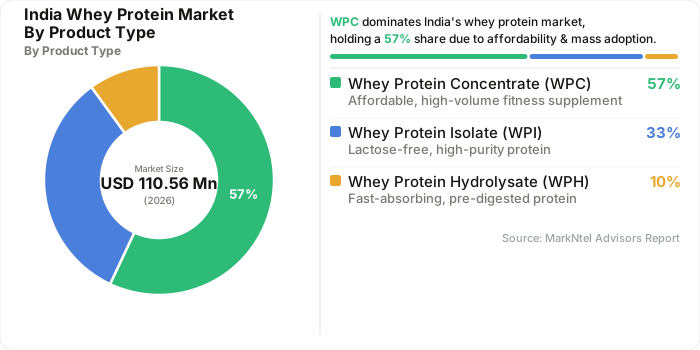
- By product type, the whey protein concentrate (WPC) holds a significant share of about 57% in 2026.
- By application, the sports nutrition segment seized a significant share of about 48% in 2026.
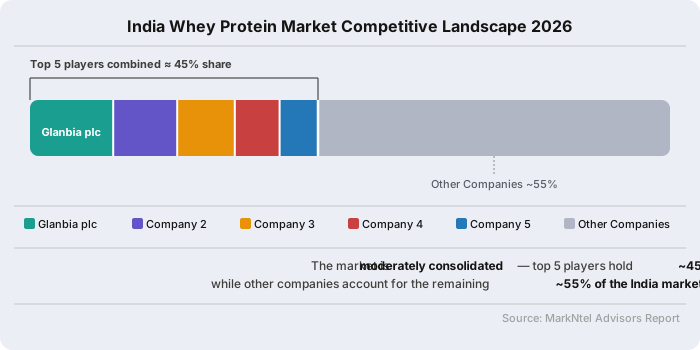
- The industry is moderately consolidated. However, the top five players collectively account for nearly 45% of the market share.
India Whey Protein Market Size and Outlook
The India Whey Protein Market size was valued at USD 102.45 million in 2025 and is projected to grow from USD 110.56 million in 2026 to USD 155.45 million by 2032. Along with this, the market is estimated to grow at a CAGR of around 3.87% during the forecast period, i.e., 2026-32.
The market is expected to witness sustained expansion driven by rising innovation in multi-functional nutrition products and strong policy-level support for sports development. A notable industry shift is the launch of GNC India's “Keto Surge Whey Protein”, which integrates whey protein with fat-burning ingredients like L-Carnitine, CLA, and Garcinia Cambogia. This reflects growing consumer demand for hybrid supplements that combine muscle recovery with weight management benefits, strengthening the sports nutrition demand.
Such product innovation highlights the transition from traditional single-function whey protein to advanced formulations targeting broader wellness goals. Increasing consumer awareness around fitness, body composition, and metabolic health is pushing brands to develop value-added protein solutions. This evolution is expected to enhance premiumization and accelerate adoption of specialized dietary protein powders in India, particularly among urban fitness-conscious populations.
On the policy front, government investment is further reinforcing long-term market growth. The Union Budget 2026–27 increased sports funding by 18%, allocating approximately USD 5.3 billion to the Ministry of Youth Affairs and Sports. This allocation reflects India’s continued commitment to strengthening sports infrastructure, expanding grassroots participation, and enhancing training ecosystems nationwide. Such investments are expected to significantly increase the base of active athletes and fitness participants, indirectly driving protein supplementation demand.
Overall, the combination of product innovation and strong government support is expected to reshape the India whey protein market. The convergence of advanced formulations and expanded sports infrastructure will accelerate long-term demand, positioning whey protein as a mainstream nutrition category rather than a niche fitness supplement, ensuring sustained market growth beyond 2026.
India Whey Protein Market Key Indicators
- Protein deficiency is emerging as a significant nutritional concern in urban India, with dietary studies highlighting that a large share of the population fails to meet recommended intake levels. According to the Indian Council of Medical Research, adults require around 0.83 grams of protein per kilogram of body weight daily, yet actual consumption in many urban diets remains below this benchmark. This persistent gap reflects a strong imbalance in macronutrient intake, where carbohydrate-heavy diets dominate daily consumption patterns.
- India may import around 23,000 tonnes of whey protein in 2025, reflecting nearly 20% year-on-year growth in import volumes driven by rising demand from fitness, wellness, and functional food segments. This dependence highlights a critical supply-side constraint, where global price volatility directly impacts domestic retail pricing and availability. As a result, import reliance is emerging as a key structural indicator shaping cost dynamics and long-term growth potential in the India whey protein market ecosystem.
- India fitness industry is projected to grow from USD 1.9 billion in 2024 to USD 4.5 billion by 2030, reflecting strong expansion in structured physical activity. Fitness memberships are expected to nearly double during this period, indicating rising gym participation and a significantly expanding consumer base for sports nutrition products.
- A nationwide nutrition assessment highlights that protein deficiency is a widespread issue in urban India, with nearly 60% of urban consumers not meeting daily protein requirements. Dietary patterns remain heavily carbohydrate-driven, while protein intake is consistently below the ICMR-recommended 0.83 grams per kilogram of body weight per day, indicating a persistent nutritional imbalance across major cities. This reflects a structural gap between recommended dietary standards and actual consumption behavior.
India Whey Protein Market Scope
| Category | Segments |
|---|---|
| By Product Type | Whey Protein Concentrate (WPC), Whey Protein Isolate (WPI), Whey Protein Hydrolysate (WPH, |
| By Application | Sports Nutrition, Food & Beverages, Dietary Supplements, Animal Feed |
| By Distribution Channel | Online Stores, Supermarkets/Hypermarkets, Pharmacies, Specialty Stores |
India Whey Protein Market Growth Drivers
Rising Fitness and Gym Participation
Rising fitness participation is a core structural driver of India whey protein market. According to the Sports Authority of India Annual Report, India’s organized fitness ecosystem is expanding through initiatives such as Fit India Mission and Khelo India, which collectively engaged millions of participants across schools, colleges, and community programs, strengthening physical activity adoption nationwide. This expansion is directly increasing demand for performance-based nutrition, particularly whey protein used for muscle recovery and strength development.
Government-backed schemes such as Khelo India continue to expand grassroots sports infrastructure, with consistent annual fund allocations for sports development reinforcing long-term participation growth. Additionally, India's fitness-active population is estimated at 138 million individuals in 2024, representing only a fraction of the total potential base, indicating significant headroom for expansion of gym culture and structured training adoption.
Looking ahead, India's sports ecosystem is expected to benefit from continued government investment in training centers, synthetic tracks, and digital fitness platforms. Expansion of urban gym chains and public-private sports infrastructure partnerships will further strengthen protein supplementation demand.
Recent Trends
Rise of Clean-Label and Transparent Nutrition Brands
A major trend reshaping the India whey protein and broader nutrition market is the rapid shift toward clean-label, transparent food products. Consumers are increasingly rejecting artificial additives, refined sugars, and complex ingredient lists, favoring brands that emphasize simplicity and ingredient honesty. This transformation is strengthening demand for whey-based nutrition products aligned with “what you see is what you eat” positioning, especially in urban health-conscious segments.
A strong example of this shift is the rapid scaling of clean-label nutrition brand The Whole Truth Foods, which recently secured around USD 51 million in funding led by Sofina and Sauce.vc, reflecting strong investor confidence in transparency-led food businesses. The brand has built its identity around minimal-ingredient protein products such as bars and protein powders, directly responding to consumer distrust of heavily processed supplements.
This trend is also pushing innovation in whey protein formats, formulation simplicity, and ingredient disclosure standards across India’s sports nutrition ecosystem. The increasing acceptance of “no hidden ingredient” positioning is encouraging both startups and established players to redesign product portfolios around clean nutrition principles.
Furthermore, the clean-label movement is redefining purchasing behavior, shifting whey protein from a performance-only supplement to a trust-driven wellness product category, accelerating long-term market expansion.
India Whey Protein Market Opportunities and Challenges
High Product Pricing Challenge and Low-Cost Innovation & Localized Manufacturing
A key challenge in the India whey protein market is persistent price inflation driven by global supply shortages and rising input costs. Limited availability of whey ingredients and strong international demand have pushed retail prices higher, particularly in premium and imported protein categories. This has restricted affordability in price-sensitive segments and slowed penetration beyond urban fitness consumers, even as health awareness continues to expand across India’s growing middle-class population.
At the same time, pricing pressure is creating structural opportunities through product innovation and access expansion. For example, the introduction of sachet-based whey protein formats in India, designed to lower entry cost barriers and encourage trial adoption among new users. Single-serve packaging is increasingly being used to make whey protein more accessible beyond gym-focused consumers, supporting wider reach in the sports nutrition India market. Notable example, Amul Whey Protein single-serve sachets, offered in pre-portioned packs of around 25g protein per sachet, enabling convenient, portion-controlled nutrition for broader consumer adoption.
This shift is enabling brands to tap semi-urban demand by offering affordable, small-quantity formats instead of bulk packs. It is also encouraging cost-efficient formulation strategies and value-driven product positioning. As a result, pricing constraints are not only limiting demand but also accelerating innovation in packaging, distribution, and consumption models across the India whey protein industry.
Segmentation Insights
Whey Protein Concentrate (WPC) Dominates the Market
Whey Protein Concentrate (WPC) dominates the India whey protein market with an estimated 57% share, primarily due to its cost-effectiveness and broad accessibility across consumer segments. It contains an optimal balance of protein, carbohydrates, and fats, making it suitable for entry-level fitness users. The relatively lower processing requirement compared to isolates reduces production costs, supporting mass-market penetration. Strong demand from first-time users and price-sensitive buyers further strengthens WPC’s leadership in the whey protein concentrate India category, especially across urban and semi-urban regions.
Additionally, WPC is widely used in mainstream fitness and wellness products, allowing brands to position it as an affordable protein solution. Its versatility in shakes, functional foods, and dietary supplements has further expanded adoption. Growing fitness awareness and increasing gym participation continue to drive consistent demand, making WPC the most commercially viable and widely consumed protein type in India’s evolving nutrition ecosystem. Based on product type, the scope has been segmented into
- Whey Protein Concentrate (WPC)
- Whey Protein Isolate (WPI)
- Whey Protein Hydrolysate (WPH)
Sports Nutrition leads the Market
Sports Nutrition dominates the India whey protein market with nearly 48% share, driven by rising fitness participation, structured athletic training, and increasing awareness of performance-based nutrition. Growing gym enrollment, strength training adoption, and organized sports activities are significantly boosting demand for protein supplementation focused on muscle recovery and endurance enhancement. Government initiatives such as India bid for the 2030 Youth Olympics and 2036 Summer Olympics are expected to strengthen sports infrastructure and expand athlete participation, indirectly supporting long-term growth in the sports nutrition market.
The segment is further supported by rapid urbanization and lifestyle shifts, where young consumers increasingly prioritize health, physique, and fitness goals. Expansion of gyms, personal training studios, and fitness coaching ecosystems is reinforcing regular protein consumption habits among active users. Social media, fitness culture, and awareness of dietary protein deficiencies are also encouraging the adoption of dietary protein powders as part of daily nutrition routines.
Overall, sports nutrition remains the most dominant application segment, shaping product innovation, marketing strategies, and consumption patterns across India’s whey protein ecosystem. It continues to evolve from a niche bodybuilding category into a mainstream wellness-driven nutrition segment, supporting sustained long-term market expansion and premium product demand. The key applications analyzed in the study include
- Sports Nutrition
- Food & Beverages
- Dietary Supplements
- Animal Feed
India Whey Protein Industry Competitive Analysis
The India whey protein market is moderately consolidated, with a mix of global nutrition giants and strong domestic supplement brands operating across premium, value, and mass-market segments. The top five companies, including Glanbia plc, BellRing Brands, Inc., Parag Milk Foods Limited, Bright Life Care Private Limited, and AS-IT-IS Nutrition, collectively account for approximately 45% of the total market share, reflecting a competitive structure driven by import-led branding strength, rapid D2C expansion, and growing domestic manufacturing capabilities.
Major Companies in Whey Protein
- Glanbia plc
- Bright Life Care Private Limited
- Parag Milk Foods Limited
- AS-IT-IS Nutrition
- MyFitFuel
- BellRing Brands, Inc.
- Naturell India Pvt. Ltd.
- Trojan Group
- Iovate Health Sciences Inc.
- Bigmuscles Nutrition Pvt. Ltd.
- Others
Global Whey Protein Industry News and Recent Developments
June 2025: Parag Milk Foods to invest USD 48 million to accelerate new-age dairy expansion
Parag Milk Foods is committing USD 48 million to expand its premium dairy and nutrition portfolio, particularly Avvatar whey protein and Pride of Cows. The investment will support capacity expansion, product innovation, and wider distribution across e-commerce and retail channels. The company aims to shift its revenue mix toward high-growth, value-added dairy categories and strengthen its long-term positioning in functional nutrition.
Impact Analysis: The investment strengthens Parag Milk Foods’ shift toward high-margin functional nutrition, improving competitiveness in India’s fast-growing whey protein segment. It enhances supply capability, supports product diversification, and deepens presence in D2C and modern trade channels. This is likely to increase competitive pressure on both global brands like Glanbia-linked products and domestic players in the premium dairy space, while improving revenue stability through branded value-added offerings rather than commodity dairy reliance.
June 2025: Nutrabay launches BioAbsorb Whey Protein with ProDiFi blend to improve absorption
Nutrabay has introduced BioAbsorb, a next-generation whey protein formulated with its proprietary ProDiFi blend, combining probiotics, digestive enzymes, and dietary fibre. The product is designed to improve protein absorption and reduce digestive discomfort, addressing a key consumer pain point in whey supplementation. It targets fitness users seeking better digestibility along with high protein efficiency for muscle recovery and performance.
Impact Analysis: The launch strengthens Nutrabay’s positioning in India’s competitive whey protein segment by differentiating on gut-health and absorption efficiency rather than only protein concentration. It intensifies competition with established brands such as Glanbia-backed products and AS-IT-IS Nutrition in the mid-premium category. The functional ingredient strategy (ProDiFi) aligns with rising demand for digestive-friendly sports nutrition, potentially increasing consumer switching and expanding the value-added protein sub-segment in India’s fitness nutrition market.
Frequently Asked Questions
- Market Segmentation
- Introduction
- Product Definition
- Research Process
- Assumptions
- Executive Summary
- India Whey Protein Market Policies, Regulations, and Product Standards
- India Whey Protein Market Trends & Developments
- India Whey Protein Market Dynamics
- Growth Factors
- Challenges
- India Whey Protein Market Hotspot & Opportunities
- India Whey Protein Market Outlook, 2022-2032F
- Market Size & Outlook
- By Revenues (USD Million)
- Market Share & Outlook
- By Product Type- Market Size & Forecast 2022-2032, USD Million
- Whey Protein Concentrate (WPC)
- Whey Protein Isolate (WPI)
- Whey Protein Hydrolysate (WPH)
- By Application- Market Size & Forecast 2022-2032, USD Million
- Sports Nutrition
- Food & Beverages
- Dietary Supplements
- Animal Feed
- By Distribution Channel- Market Size & Forecast 2022-2032, USD Million
- Online Stores
- Supermarkets/Hypermarkets
- Pharmacies
- Specialty Stores
- By Region- Market Size & Forecast 2022-2032, USD Million
- North
- East
- West
- South
- By Company
- Competition Characteristics
- Market Share & Analysis
- By Product Type- Market Size & Forecast 2022-2032, USD Million
- Market Size & Outlook
- India Whey Protein Concentrate (WPC) Market Outlook, 2022-2032
- Market Size & Outlook
- By Revenues (USD Million)
- Market Share & Outlook
- By Application- Market Size & Forecast 2022-2032, USD Million
- By Distribution Channel- Market Size & Forecast 2022-2032, USD Million
- By Region- Market Size & Forecast 2022-2032, USD Million
- Market Size & Outlook
- India Whey Protein Isolate (WPI) Market Outlook, 2022-2032
- Market Size & Outlook
- By Revenues (USD Million)
- Market Share & Outlook
- By Application- Market Size & Forecast 2022-2032, USD Million
- By Distribution Channel- Market Size & Forecast 2022-2032, USD Million
- By Region- Market Size & Forecast 2022-2032, USD Million
- Market Size & Outlook
- India Whey Protein Isolate (WPI) Market Outlook, 2022-2032
- Market Size & Outlook
- By Revenues (USD Million)
- Market Share & Outlook
- By Application- Market Size & Forecast 2022-2032, USD Million
- By Distribution Channel- Market Size & Forecast 2022-2032, USD Million
- By Region- Market Size & Forecast 2022-2032, USD Million
- Market Size & Outlook
- India Whey Protein Market Key Strategic Imperatives for Success & Growth
- Competitive Outlook
- Company Profiles
- Glanbia plc
- Business Description
- Product Portfolio
- Collaborations & Alliances
- Recent Developments
- Financial Details
- Others
- Bright Life Care Private Limited
- Business Description
- Product Portfolio
- Collaborations & Alliances
- Recent Developments
- Financial Details
- Others
- Parag Milk Foods Limited
- Business Description
- Product Portfolio
- Collaborations & Alliances
- Recent Developments
- Financial Details
- Others
- AS-IT-IS Nutrition
- Business Description
- Product Portfolio
- Collaborations & Alliances
- Recent Developments
- Financial Details
- Others
- MyFitFuel
- Business Description
- Product Portfolio
- Collaborations & Alliances
- Recent Developments
- Financial Details
- Others
- BellRing Brands, Inc.
- Business Description
- Product Portfolio
- Collaborations & Alliances
- Recent Developments
- Financial Details
- Others
- Naturell India Pvt. Ltd.
- Business Description
- Product Portfolio
- Collaborations & Alliances
- Recent Developments
- Financial Details
- Others
- Trojan Group
- Business Description
- Product Portfolio
- Collaborations & Alliances
- Recent Developments
- Financial Details
- Others
- Iovate Health Sciences Inc.
- Business Description
- Product Portfolio
- Collaborations & Alliances
- Recent Developments
- Financial Details
- Others
- Bigmuscles Nutrition Pvt. Ltd.
- Business Description
- Product Portfolio
- Collaborations & Alliances
- Recent Developments
- Financial Details
- Others
- Others
- Glanbia plc
- Company Profiles
- Disclaimer
MarkNtel Advisors follows a robust and iterative research methodology designed to ensure maximum accuracy and minimize deviation in market estimates and forecasts. Our approach combines both bottom-up and top-down techniques to effectively segment and quantify various aspects of the market. A consistent feature across all our research reports is data triangulation, which examines the market from three distinct perspectives to validate findings. Key components of our research process include:
1. Scope & Research Design At the outset, MarkNtel Advisors define the research objectives and formulate pertinent questions. This phase involves determining the type of research—qualitative or quantitative—and designing a methodology that outlines data collection methods, target demographics, and analytical tools. They also establish timelines and budgets to ensure the research aligns with client goals.
2. Sample Selection and Data Collection In this stage, the firm identifies the target audience and determines the appropriate sample size to ensure representativeness. They employ various sampling methods, such as random or stratified sampling, based on the research objectives. Data collection is carried out using tools like surveys, interviews, and observations, ensuring the gathered data is reliable and relevant.
3. Data Analysis and Validation Once data is collected, MarkNtel Advisors undertake a rigorous analysis process. This includes cleaning the data to remove inconsistencies, employing statistical software for quantitative analysis, and thematic analysis for qualitative data. Validation steps are taken to ensure the accuracy and reliability of the findings, minimizing biases and errors.

4. Data Forecast and FinalizationThe final phase involves forecasting future market trends based on the analyzed data. MarkNtel Advisors utilize predictive modeling and time series analysis to anticipate market behaviors. The insights are then compiled into comprehensive reports, featuring visual aids like charts and graphs, and include strategic recommendations to inform client decision-making
We offer flexible licensing options to cater to varying organizational needs. Choose the pricing pack that best suits your requirements:
Buy Now Inquire Before Buying
 Request Customization
 Talk to our Consultant







