Oman Fruits and Vegetables Market Research Report: Forecast (2026-2032)
By Type (Fruits, Vegetables), By Product (Fresh Fruits & Vegetables, Frozen Fruits & Vegetables, Dried Fruits & Vegetables), By Source (Organic, Conventional), By Sales Channel (Su ... permarkets and Hypermarkets, Grocery Stores, Specialty Stores, Online Retailer, Others), and others Read more
- Food & Beverages
- May 2026
- Pages 121
- Report Format: PDF, Excel, PPT
Oman Fruits and Vegetables Market
Projected 5.71% CAGR from 2026 to 2032
Study Period
2026-2032
Market Size (2026)
USD 2.15 Billion
Market Size (2032)
USD 3.0 Billion
Base Year
2025
Projected CAGR
5.71%
Leading Segments
By Product: Fresh Fruits & Vegetables
Oman Fruits and Vegetables Market Key Takeaways
- The Oman fruits and vegetables market size was valued at USD 2.0 billion in 2025 and is projected to grow from USD 2.15 billion in 2026 to USD 3.0 billion by 2032.
- The industry is anticipated to exhibit a CAGR of 5.71% during 2026-2032.
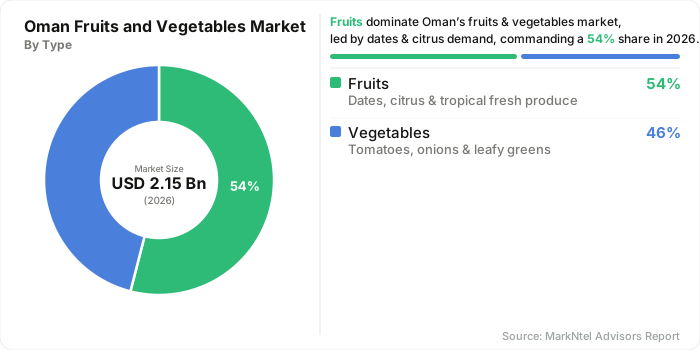
- By type, the fruits hold a significant share of about 54% in 2026.
- By product, the fresh fruits & vegetables segment seized a significant share of about 70% in 2026.
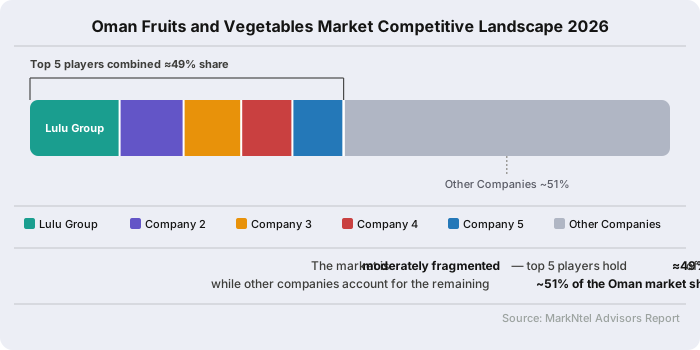
- The industry is moderately fragmented. However, the top five players collectively account for nearly 49% share.
Oman Fruits and Vegetables Market Size and Outlook
The Oman fruits and vegetables market is estimated to grow at a CAGR of around 5.71% during the forecast period, i.e., 2026-32, supported by national food security priorities and increasing agricultural modernization. In 2024, the agricultural sector recorded nearly 3.94 million tonnes of plant production across 311,000 cultivated acres, reflecting expanding domestic farming capacity and a stronger focus on self-sufficiency. Growth in fruits, vegetables, and date cultivation continues to improve local supply availability while reducing reliance on imports. This structural expansion is positioning agriculture as a key non-oil contributor under national development goals.
Technological transformation is further reshaping the market through rapid adoption of AI-driven precision agriculture and smart farm monitoring systems. The integration of drones, GIS mapping, and IoT-based analytics is improving irrigation efficiency, pest detection, and crop yield optimization. These advancements are enabling farmers to make real-time, data-driven decisions that enhance productivity and reduce resource wastage. Such innovations are particularly critical in the arid environment, where water-efficient farming practices are essential for long-term agricultural sustainability and consistent fruit and vegetable output.
Further strengthening the sector, the Ministry of Agriculture launched the “Smart Vegetable Farms” initiative in 2025 in collaboration with OMIFCO, introducing indoor vertical farming systems. These systems use controlled lighting, humidity regulation, and CO₂ management to produce pesticide-free vegetables while significantly reducing water consumption compared to traditional farming methods. The initiative reflects a shift toward controlled environment agriculture, improving year-round production efficiency and supporting domestic supply chain resilience.
Overall, the Oman fruits and vegetables market is transitioning toward a technology-driven and self-reliant ecosystem and is projected to grow from USD 2.15 billion in 2026 to USD 3.0 billion by 2032. Expanding production capacity, combined with smart agriculture adoption and controlled farming systems, is expected to enhance productivity, strengthen food security, and drive sustainable long-term market growth.
Oman Fruits and Vegetables Market Key Indicators
- Oman vegetable output reached about 1.22 million tonnes in 2023, reflecting strong growth compared to earlier levels of around 0.82 million tonnes. Expansion has been supported by improved irrigation infrastructure, greenhouse cultivation practices, and rising domestic consumption needs. The upward trajectory highlights how structural improvements in farming techniques are gradually enhancing productivity and reinforcing the country’s fresh produce supply base.
- Agricultural land in Oman accounts for nearly 14,600 sq. km or 4.7% of total land area, reflecting natural constraints such as arid climate and water scarcity. Despite this limitation, farming activity is becoming more productive through the adoption of greenhouse systems, efficient irrigation methods, and controlled-environment agriculture, enabling higher output from a restricted cultivable base and supporting steady growth in domestic fruit and vegetable availability.
- Fruit exports expanded to 678,033 tonnes in 2024, up from 577,666 tonnes in 2023, marking a 17.37% annual increase. This growth reflects improved production efficiency, stronger logistics connectivity, and expanding regional trade partnerships. The rising export base demonstrates the Oman improving competitiveness in agricultural commodities and its growing integration into Gulf and international fresh produce markets.
- Imports of fruits and vegetables increased by 11.6% in 2024, driven by population growth, changing dietary patterns, and limited local production capacity. This rising import reliance ensures continuous supply across retail, hospitality, and food service sectors, while also highlighting the gap between domestic production and consumption demand, reinforcing opportunities for further agricultural investment.
Oman Fruits and Vegetables Market Scope
| Category | Segments |
|---|---|
| By Type | Fruits, Vegetables |
| By Product | Fresh Fruits & Vegetables, Frozen Fruits & Vegetables, Dried Fruits & Vegetables |
| By Source | Organic, Conventional |
| By Sales Channel | Supermarkets and Hypermarkets, Grocery Stores, Specialty Stores, Online Retailer, Others |
Oman Fruits and Vegetables Market Growth Drivers
Government Initiatives Boosting Agriculture Growth
Government initiatives are a key driver shaping the Oman fruits and vegetables market, strongly anchored in Oman Vision 2040, which emphasizes food security, agricultural modernization, and reduced reliance on imports. The Ministry of Agriculture, Fisheries and Water Resources is actively strengthening domestic horticulture through structured programs focused on improving productivity, water efficiency, and sustainable cultivation practices across key farming regions in the country.
A flagship initiative is the Model Farms Programme, which has developed over 250 demonstration farms across Oman, introducing drip irrigation systems, improved seed varieties, and climate-resilient farming techniques. These farms act as training and knowledge transfer hubs, enabling farmers to adopt efficient cultivation methods and enhance fruit and vegetable output. This initiative is directly improving yield quality and strengthening domestic supply capabilities.
Additionally, Oman is reinforcing agricultural production through large-scale seedling distribution and crop diversification programs, supporting fruit tree cultivation and vegetable expansion. In 2025, more than 120,000 seedlings were distributed, strengthening long-term plantation capacity and improving future harvest stability.
Overall, upcoming investments in controlled environment agriculture, precision irrigation, and agri-logistics infrastructure, are expected to further enhance productivity, reduce import dependency, and accelerate market expansion.
Recent Trends
Precision Agriculture and AI-Based Farm Monitoring
A major trend reshaping the Oman fruits and vegetables industry is the increasing adoption of precision agriculture and AI-based farm monitoring systems to improve productivity, crop quality, and water efficiency. Farmers are gradually integrating drones, IoT sensors, satellite imaging, and AI-powered analytics into cultivation practices to monitor irrigation requirements, soil conditions, and pest outbreaks in real time. This transition is particularly important in arid climate of Oman, where sustainable resource management and efficient crop production are becoming critical for long-term agricultural stability.
For example, the Oman Million Date Trees Plantation Project, which utilizes Geographic Information Systems, drones, and AI technologies to improve plantation management and detect crop stress at early stages. The initiative supports optimized irrigation and precision farming practices aimed at increasing agricultural efficiency and reducing operational costs. Government authorities have also emphasized that smart agriculture technologies are essential for strengthening domestic food security and expanding sustainable fruit and vegetable production under Oman Vision 2040.
Overall, AI-driven precision farming is accelerating agricultural modernization, improving crop quality consistency, and supporting sustainable growth across Oman fresh produce sector.
Oman Fruits and Vegetables Industry Opportunities and Challenges
Cold Storage Gaps Driving Integrated Supply Chain Infrastructure
A key challenge in the Oman fruits and vegetables industry is the limited cold storage infrastructure and fragmented temperature-controlled logistics network, which creates inefficiencies across the fresh produce supply chain. Inadequate refrigerated warehousing and weak last-mile cold transport lead to higher post-harvest losses, reduced shelf life, and quality degradation, especially under extreme climatic conditions. These gaps increase import dependency and raise operational costs for distributors, wholesalers, and retailers handling perishable goods.
This structural challenge is simultaneously generating strong infrastructure-led opportunities. For example, the development of the Silal Fruit & Vegetable Central Market in Khazaen Economic City, designed as an integrated hub combining wholesale trading, inspection services, and advanced cold storage systems. By centralizing supply chain activities, the facility improves handling efficiency, reduces wastage, and supports better price stability across the market. It also strengthens the organized distribution of both imported and locally produced fruits and vegetables.
Further opportunities are emerging for cold chain logistics providers, automated warehouse operators, and refrigerated transport companies. The growing need for value-added services such as sorting, packaging, and temperature-controlled distribution is encouraging investment in modern supply chain infrastructure. Overall, Oman’s cold storage limitations are directly transforming into scalable investment and modernization opportunities.
Segmentation Insights
Fruit Consumption Accelerating Market Dominance
The fruits segment contributes approximately 54% share of the overall volume in the Oman Fruits and Vegetables Market, mainly supported by rising consumption of citrus fruits, bananas, apples, berries, and tropical imports across households, hospitality, and food service sectors. Increasing health awareness and demand for vitamin-rich diets are encouraging consumers to purchase premium and imported fruit varieties year-round. The segment is also benefiting from rising tourism activity and higher spending on fresh produce through organized retail channels across Muscat and other urban centers.
Another key factor supporting segment growth is the rapid expansion of modern retail infrastructure and fresh produce sourcing networks. In 2026, Lulu Group opened its 33rd hypermarket in Oman at Al Qurum Complex, featuring dedicated fresh fruit and vegetable sections, including produce sourced from local farms. The company also announced additional food sourcing and export hub projects to strengthen fresh produce distribution and retail accessibility across Oman. Overall, improving retail penetration, premium fruit demand, and stronger cold chain connectivity are expected to maintain the fruits segment’s market leadership. Based on type, the scope has been segmented into
- Fruits
- Vegetables
Fresh Fruits & Vegetables Segment Dominates with Healthy Food Consumption
The fresh fruits and vegetables segment accounts for nearly 70% of the Oman fruits and vegetables market, supported by strong consumer preference for minimally processed and nutrient-rich food products. Fresh produce remains a staple in daily diets across households, restaurants, hotels, and institutional food services. Growing awareness regarding healthy eating habits and rising demand for natural, preservative-free food products are significantly driving consumption of fresh fruits and vegetables throughout the country.
Another major growth factor is the expansion of supermarkets, hypermarkets, and organized grocery retail channels that ensure wider accessibility of fresh produce. Oman increasing investments in refrigerated transportation, cold storage facilities, and integrated wholesale markets are also improving freshness retention and reducing post-harvest losses across supply chains. Additionally, domestic greenhouse farming and hydroponic cultivation are supporting the year-round availability of selected vegetables despite climatic challenges. The hospitality sector, tourism growth, and rising urban population are further accelerating demand for fresh produce, helping the segment maintain its dominant position within the Oman fruits and vegetables market. The key product mapped in the study involves
- Fresh Fruits & Vegetables
- Frozen Fruits & Vegetables
- Dried Fruits & Vegetables
Oman Fruits and Vegetables Industry Competitive Analysis
The Oman fruits & vegetables market is moderately fragmented, with a mix of large retail chains, wholesale distribution hubs, and domestic agricultural producers operating across the value chain. The top five companies, including Lulu Group, Nakheel Oman Development Company, Khazaen Fruits and Vegetables Central Market, Khimji Ramdas, and Oman Agriculture Development Company, collectively account for approximately 49% of the total market share, reflecting a competitive structure driven by strong import dependence, expanding organized retail penetration, and growing investments in local agricultural production and distribution infrastructure.
Major Companies in Oman Fruits and Vegetables Market
- Nakheel Oman Development Company
- Lulu Group
- Khazaen Fruits and Vegetables Central Market
- Suhol Al Fayha
- Nitaj - Oman Food Investment Holding
- HyperMax
- Oman Agriculture Development Company
- Gulf Mushroom Products
- Al Fair Trading Company LLC
- Khimji Ramdas
- Others
Oman Fruits and Vegetables Industry News and Recent Developments:
October 2025: USD 96 Million Food Security Investment Package Boosts Oman’s Agricultural Development
Oman announced a USD 96 million food security investment package in 2025 under the Food Security Lab framework, targeting agricultural production, fisheries, and water resource development. The initiative includes multiple projects and investment opportunities aimed at improving domestic production capacity, strengthening supply chains, and advancing self-sufficiency in fruits, vegetables, and other essential food commodities.
Impact Analysis: This investment significantly strengthens Oman’s fruits and vegetables ecosystem by accelerating farm productivity, expanding controlled agriculture projects, and improving infrastructure for post-harvest handling. It reduces import dependency while enhancing supply chain resilience through integrated agri-logistics and irrigation upgrades. The initiative also attracts private sector participation, improves rural employment, and supports long-term food security goals, ultimately positioning Oman as a more self-sufficient and technology-driven agricultural economy.
Frequently Asked Questions
- Market Segmentation
- Introduction
- Product Definition
- Research Process
- Assumptions
- Executive Summary
- Oman Fruits and Vegetables Market Pricing Analysis
- Oman Fruits and Vegetables Import & Export Analysis
- Oman Fruits and Vegetables Market Supply Chain Analysis
- Oman Fruits and Vegetables Market Trends & Developments
- Oman Fruits and Vegetables Market Production Trend by Product Type
- Fruits
- Vegetables
- Oman Fruits and Vegetables Market Production Trend by Product Type
- Company Wise Production Plants and Statistics
- Installed Production Capacity
- Actual Production
- Planned Production Target
- Oman Fruits and Vegetables Pricing Analysis 2022-2032
- Oman Fruits and Vegetables Pricing Trend by Product Type 2022-2032
- Fruits
- Vegetables
- Oman Fruits and Vegetables Market Dynamics
- Growth Drivers
- Challenges
- Oman Fruits and Vegetables Market Regulations, Policies, & Product Standards
- Oman Fruits and Vegetables Market Hotspots & Opportunities
- Oman Fruits and Vegetables Market Outlook, 2022-32F
- Market Size & Analysis
- By Revenues (USD Million)
- By Quantity Sold (Thousand Tons)
- Market Share & Analysis
- By Type
- Fruits
- Vegetables
- By Product
- Fresh Fruits & Vegetables
- Frozen Fruits & Vegetables
- Dried Fruits & Vegetables
- By Source
- Organic
- Conventional
- By Sales Channel
- Supermarkets and Hypermarkets
- Grocery Stores
- Specialty Stores
- Online Retailer
- Others
- By Region
- North
- South
- Central
- By Company
- Market Shares
- Competition Characteristics
- By Type
- Market Size & Analysis
- Oman Fruits Market Analysis, 2022-32F
- Market Size & Analysis
- By Revenues (USD Million)
- By Quantity Sold (Thousand Tons)
- Market Share & Analysis
- By Type- (USD Million & Thousand Tons)
- Mango
- Apple
- Papaya
- Banana
- Pomegranates
- Grapes
- Pineapple
- Orange
- Kiwi Fruit
- Lemon and Limes
- Strawberries
- Others
- By Product Type- (USD Million & Thousand Tons)
- By Source- (USD Million & Thousand Tons)
- By Sales Channel- (USD Million & Thousand Tons)
- By Type- (USD Million & Thousand Tons)
- Market Size & Analysis
- Oman Vegetables Market Analysis, 2022-32F
- Market Size & Analysis
- By Revenues (USD Million)
- By Quantity Sold (Thousand Tons)
- Market Share & Analysis
- By Type- (USD Million & Thousand Tons)
- Cauliflowers and broccoli
- Onion
- Tomato
- Cucumbers,
- Capsicum
- Cabbage
- Others
- By Product Type- (USD Million & Thousand Tons)
- By Source- (USD Million & Thousand Tons)
- By Sales Channel- (USD Million & Thousand Tons)
- By Type- (USD Million & Thousand Tons)
- Market Size & Analysis
- Oman Fruits and Vegetables Market Key Strategic Imperatives for Success & Growth
- Competitive Benchmarking
- Company Profiles
- Nakheel Oman Development Company
- Business Description
- Product Portfolio
- Strategic Alliances or Partnerships
- Recent Developments
- Financial Details
- Others
- Lulu Group
- Business Description
- Product Portfolio
- Strategic Alliances or Partnerships
- Recent Developments
- Financial Details
- Others
- Khazaen Fruits and Vegetables Central Market
- Business Description
- Product Portfolio
- Strategic Alliances or Partnerships
- Recent Developments
- Financial Details
- Others
- Suhol Al Fayha
- Business Description
- Product Portfolio
- Strategic Alliances or Partnerships
- Recent Developments
- Financial Details
- Others
- Nitaj - Oman Food Investment Holding
- Business Description
- Product Portfolio
- Strategic Alliances or Partnerships
- Recent Developments
- Financial Details
- Others
- HyperMax
- Business Description
- Product Portfolio
- Strategic Alliances or Partnerships
- Recent Developments
- Financial Details
- Others
- Oman Agriculture Development Company
- Business Description
- Product Portfolio
- Strategic Alliances or Partnerships
- Recent Developments
- Financial Details
- Others
- Gulf Mushroom Products
- Business Description
- Product Portfolio
- Strategic Alliances or Partnerships
- Recent Developments
- Financial Details
- Others
- Al Fair Trading Company LLC
- Business Description
- Product Portfolio
- Strategic Alliances or Partnerships
- Recent Developments
- Financial Details
- Others
- Khimji Ramdas
- Business Description
- Product Portfolio
- Strategic Alliances or Partnerships
- Recent Developments
- Financial Details
- Others
- Others
- Nakheel Oman Development Company
- Company Profiles
- Disclaimer
MarkNtel Advisors follows a robust and iterative research methodology designed to ensure maximum accuracy and minimize deviation in market estimates and forecasts. Our approach combines both bottom-up and top-down techniques to effectively segment and quantify various aspects of the market. A consistent feature across all our research reports is data triangulation, which examines the market from three distinct perspectives to validate findings. Key components of our research process include:
1. Scope & Research Design At the outset, MarkNtel Advisors define the research objectives and formulate pertinent questions. This phase involves determining the type of research—qualitative or quantitative—and designing a methodology that outlines data collection methods, target demographics, and analytical tools. They also establish timelines and budgets to ensure the research aligns with client goals.
2. Sample Selection and Data Collection In this stage, the firm identifies the target audience and determines the appropriate sample size to ensure representativeness. They employ various sampling methods, such as random or stratified sampling, based on the research objectives. Data collection is carried out using tools like surveys, interviews, and observations, ensuring the gathered data is reliable and relevant.
3. Data Analysis and Validation Once data is collected, MarkNtel Advisors undertake a rigorous analysis process. This includes cleaning the data to remove inconsistencies, employing statistical software for quantitative analysis, and thematic analysis for qualitative data. Validation steps are taken to ensure the accuracy and reliability of the findings, minimizing biases and errors.

4. Data Forecast and FinalizationThe final phase involves forecasting future market trends based on the analyzed data. MarkNtel Advisors utilize predictive modeling and time series analysis to anticipate market behaviors. The insights are then compiled into comprehensive reports, featuring visual aids like charts and graphs, and include strategic recommendations to inform client decision-making
We offer flexible licensing options to cater to varying organizational needs. Choose the pricing pack that best suits your requirements:
Buy Now Inquire Before Buying
 Request Customization
 Talk to our Consultant