

Kuwait Snacks Market Research Report: Forecast (2026-2032)
By Product Type (Biscuits, Snack Bars, and Fruit Snacks, Savory Snacks, Ice Cream, Confectionery), By Distribution Channel (Online, Offline (Hypermarket & Supermarket, Convenience ... Store, Others (Specialty Store, etc.))), By Packaging Type (Cans, Container & Boxes, Bags & Pouches), and others Read more
- Food & Beverages
- Jun 2026
- Pages 128
- Report Format: PDF, Excel, PPT
Kuwait Snacks Market
Projected 5.82% CAGR from 2026 to 2032
Study Period
2026-2032
Market Size (2026)
USD 686.88 Million
Market Size (2032)
USD 964.21 Million
Base Year
2025
Projected CAGR
5.82%
Leading Segments
By Distribution Channel: Offline
Kuwait Snacks Market Key Takeaways
- Kuwait Snacks market size was valued at USD 650.45 million in 2025 and is projected to grow from USD 686.88 million in 2026 to USD 964.21 million by 2032.
- The industry is projected to reflect sustain growth at a steady CAGR of 5.82% during 2026-2032.
- By product type, confectionery hold a significant share of about 52% in 2026.
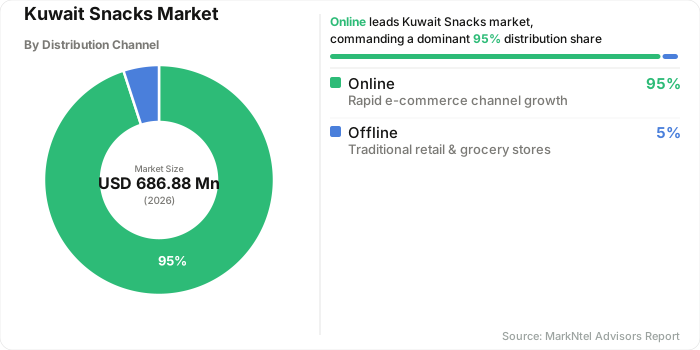
- By distribution channel, the offline segment seized a significant share of about 95% in 2026.
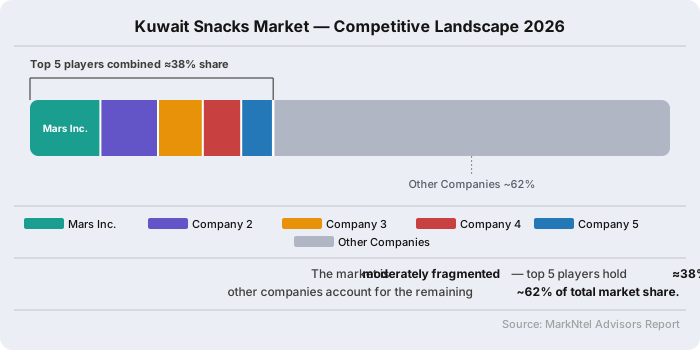
- The industry is moderately fragmented. However, the top five players collectively account for nearly 38% share.
Kuwait Snacks Market Size and Outlook
The Kuwait Snacks market is estimated to grow at a CAGR of around 5.82% during the forecast period, i.e., 2026-32.
The expansion of the market is driven by the increasing popularity of multicultural cuisines and a growing emphasis on health consciousness among consumers. The International Trade Administration (ITA) highlights that investments outside Kuwait are inspired by the fact that nearly 90% of the country's land is inappropriate for agriculture. This strategic investment approach is geared towards improving food & snack production abilities to meet the escalating need, thereby contributing to the overall market growth. These initiatives not only strengthen food security but also exert influence on the pricing dynamics of snacks & related products across the industry.
According to the study “Trends in Fast-food Consumption among Kuwaiti Youth” published in the International Journal of Preventive Medicine, fast food is highly prevalent in Kuwait, with the findings showing that 81.4% of university students consumed fast food more than twice per week. The study further highlights that fast food has become deeply integrated into the dietary habits of young adults in Kuwait due to factors such as taste preference, convenience, and widespread availability of fast-food outlets.
Moreover, key competitors in the snacks industry, such as Nestle and Mars Inc., are also actively involved in the production of innovative & personalized snack offerings. For instance, in 2026, LuLu Hypermarket in Kuwait introduced an extensive Ramadan Iftar snack collection featuring over 100 freshly prepared varieties across Arabic, Indian, and international cuisines, highlighting how modern retail formats actively drive product diversification and festive demand cycles.
Additionally, continuous product innovation by multinational brands and strong retail execution across Kuwait’s organized grocery sector are reinforcing long-term market stability. With high import dependence, strong hypermarket penetration, and increasing consumer demand for variety and convenience, the Kuwait snacks market is expected to sustain steady expansion over the forecast period, growing from USD 686.88 million in 2026 to USD 964.21 million by 2032.
Kuwait Snacks Market Key Indicators
- Kuwait’s snacks market is strongly influenced by its expatriate-dominated population structure, where expatriates account for approximately 68.6%–70% of the total population (around 3.4–3.5 million expatriates out of a total population of 5 million). According to the Public Authority for Civil Information (PACI), Kuwait’s population reached about 5.09 million in 2025, of which only about 1.55 million are Kuwaiti nationals (30%), while the remaining majority are foreign residents. This demographic structure is crucial for the snacks market because the large expatriate workforce (around 80% in the working-age group) drives high-frequency consumption of affordable packaged foods and increases demand for diverse ethnic snack categories.
- Kuwait’s snacks market is strongly supported by high income levels, with GDP per capita of around USD 32,700 (2024), making it one of the highest-income economies globally. This high-income base significantly enhances discretionary spending capacity, directly driving demand for packaged snacks, chocolates, biscuits, and premium imported food products, and resulting in relatively higher consumption frequency compared to many regional markets.
Kuwait Snacks Market Scope
| Category | Segments |
|---|---|
| By Product Type | Biscuits, Snack Bars, and Fruit Snacks, Savory Snacks, Ice Cream, Confectionery |
| By Distribution Channel | Online, Offline (Hypermarket & Supermarket, Convenience Store, Others (Specialty Store, etc. |
| By Packaging Type | Cans, Container & Boxes, Bags & Pouches |
Kuwait Snacks Market Growth Drivers
Increasing Advancement in E-commerce Platform to Fuel Market Growth
The increasing advancement of e-commerce platforms in Kuwait is significantly driving the snacks market by improving accessibility, convenience, and purchase frequency. Kuwait has a highly digitalized consumer base, with internet penetration reaching approximately 99% in 2024, supported by widespread smartphone adoption and advanced telecom infrastructure. This strong digital foundation enables seamless online transactions and supports the growth of online grocery consumption.
The country’s e-commerce sector is expanding steadily, with market value reaching approximately USD 1.61 billion in 2024, reflecting rising consumer preference for digital purchasing. Additionally, increasing digital payment adoption and logistics improvements are facilitating higher online transaction volumes across consumer goods, including packaged foods.
For instance, in 2024, Deliveroo Kuwait launched “Deliveroo Shopping” in 2024, enabling consumers to purchase a wide range of supermarket and FMCG products, including packaged snacks, confectionery, and beverages through a single platform, reflecting the growing integration of retail and quick-commerce services in the country. This expansion demonstrates how digital platforms are increasingly acting as alternative distribution channels for snack products, improving accessibility and supporting impulse-based consumption behavior across urban Kuwait
Therefore, advancements in e-commerce platforms are reducing purchase barriers and increasing buying frequency of snacks. With continued platform expansion and infrastructure investment, this driver will accelerate consumption patterns and support sustained growth of the Kuwait snacks market.
Recent Trends
Rising Presence of Global Food and Snack Chains in Kuwait
The Kuwait snacks market is witnessing a strong trend of increasing entry and expansion of global quick-service and snack brands, driven by rising demand for international flavors, convenience foods, and premium packaged snack options. Global confectionery companies such as Mars Incorporated maintain a strong presence in Kuwait through established regional supply chains and distribution partnerships, with their products widely available across major retail channels in the country.
Mars’ snack and confectionery brands are distributed in Kuwait through local FMCG distributors, reflecting the integration of global snack portfolios into the domestic retail ecosystem. A key instance of global foodservice expansion in the region is the entry of international quick-service brands such as Chipotle Mexican Grill into the Middle East, highlighting the growing penetration of global food concepts in Gulf markets, including Kuwait
Additionally, Kuwait’s strong dependence on imported food products supports the expansion of international snack brands in the market. According to the U.S. Department of Agriculture, Kuwait imported around USD 2.6 billion worth of agricultural and food products in 2023, reflecting its reliance on global supply sources. This import-driven structure enables quick entry and scaling of international snack brands, ensuring consistent availability and variety of packaged foods across retail outlets in the country and supporting long-term growth in the Kuwait snacks market.
Kuwait Snacks Market Opportunities and Challenges
Rising Concerns Over Food Additives Driving Technological Transformation in Kuwait’s Snacks Market
The increasing inclusion of food additives such as artificial preservatives, colorants, and flavor enhancers in snacks is restraining the growth of the Kuwait snacks market, as consumers are becoming more health-conscious and concerned about long-term risks such as obesity and metabolic disorders. The World Health Organization highlights that although additives improve shelf life and taste, their intake must be regulated due to potential health implications.
Despite these challenges, they are simultaneously creating meaningful opportunities through AI-driven innovation. Nestlé MENA partnered with Dubai AI Campus to develop an AI-powered tool that analyses emerging trends and provides consumer insights, enabling accelerated product development to meet the evolving needs of consumers across the region, including Kuwait.
Similarly, PepsiCo's expanded manufacturing hub in Middle East, which integrates cutting-edge technologies including automated systems and advanced production processes, directly supplies snacks to Kuwait, with the company further announcing a new SAR 30 million regional R&D center in Saudi Arabia serving as a central hub for product and packaging innovations across the GCC.
In conclusion, while additive usage limits traditional market growth, it is accelerating innovation and technological adoption. The shift toward clean-label products, supported by AI-driven production, is reshaping the industry. Companies that adapt to these changes are likely to achieve sustainable growth and competitive advantage.
Segmentation Insights
Confectionery Emerging as the Dominant Product Segment
Confectionery is expected to hold the majority share of the Kuwait snacks market during the 2026–2032 period, accounting for approximately 52% of the total market. This dominance is primarily driven by strong consumer preference for indulgent and ready-to-eat sweet snacks such as chocolates, candies, gums, and coated confectionery products. Wide availability across hypermarkets, supermarkets, and convenience stores in Kuwait further supports consistent consumption, while strong brand visibility from global FMCG players ensures high penetration and repeat purchases across urban retail channels.
The segment’s growth is further reinforced by Kuwait’s urban lifestyle, high disposable income levels, and strong inclination toward impulse-based purchasing behavior. Leading companies such as Mars, Nestlé, and Mondelez maintain a dominant presence through popular products like chocolate bars, wafers, and sugar confectionery, which are deeply integrated into everyday consumption patterns. Based on product type, the scope has been segmented into
- Biscuits, Snack Bars, and Fruit Snacks
- Savory Snacks
- Ice Cream
- Confectionery
Offline Segment Gaining Strong Share in Distribution Channels
The offline distribution channel is expected to capture a dominant share of the Kuwait snacks market during the 2026–2032 period, accounting for approximately 95% of the total market. This dominance is primarily driven by the strong penetration of hypermarkets, supermarkets, convenience stores, and traditional retail outlets across Kuwait. Consumers prefer offline channels due to the ability to physically inspect products, access wider in-store assortments, and benefit from frequent promotional offers available in large retail chains such as LuLu Hypermarket, Carrefour, and Sultan Center.
Additionally, Kuwait’s snacks market is highly import-dependent, and global FMCG brands such as Mars, Nestlé, Mondelez, and PepsiCo are primarily distributed through established offline retail networks. These channels ensure consistent product availability, strong shelf visibility, and impulse-driven purchases. Seasonal demand during Ramadan, Eid, and national events further strengthens offline sales as retailers expand product assortments and introduce limited-time offerings. Despite the gradual growth of e-commerce, offline channels remain the dominant and most trusted distribution mode in Kuwait’s snacks market. The key distribution channel mapped in the study involve:
- Online
- Offline
Kuwait Snacks Market Competitive Analysis
The Kuwait snacks market is moderately fragmented, with a mix of global FMCG brands, regional manufacturers, and local snack producers operating across savory, confectionery, bakery, and dairy-based categories. The top five players, including Mars, Inc., Nestlé, PepsiCo, Ferrero Group, and Kellogg Company (Kellanova), collectively account for approximately 38% of the total market share, reflecting strong international dominance within a fragmented structure.
Key Players in the Kuwait Snacks Industry
- Mars, Inc.
- Kuwait Indo Trading Co. (KITCO)
- Nestlé
- Kellogg Company (Kellanova)
- Arabian Beverage Co. Ltd (ABC)
- IFFCO Group
- Ferrero Group
- Kuwait Danish Dairy Company (KDDC)
- United Beverage Company (UNIBEV)
- Others
Kuwait Snacks Industry News and Recent Developments
-
Craze Biscuits Expansion via AZCCO Global
Craze Biscuits expanded its retail footprint across Kuwait’s hypermarkets through AZCCO Global’s GCC-wide distribution network, strengthening its presence in the premium biscuit and convenience snack segment. This expansion reflects the increasing role of organized distribution partnerships in improving product penetration across modern retail formats in Kuwait, particularly hypermarkets that serve as key purchasing points for packaged snacks.
Impact Analysis: This development enhances product availability and brand visibility in Kuwait’s highly import-dependent snacks market. By leveraging AZCCO Global’s established GCC logistics and retail distribution system, Craze Biscuits gains stronger shelf access and wider geographic reach. It also intensifies competition in the biscuit and convenience snack category, pushing both global and regional brands to strengthen retail placement, pricing strategies, and product differentiation within hypermarkets.
-
Sealed Premium Dessert Snack Launch
Kuwait-based dessert snack brand Sealed introduced premium molten dessert products such as Cookie Molten and Chocolate Molten through online delivery platforms and social commerce channels. The launch targets indulgence-oriented consumers, particularly younger demographics who prefer premium, ready-to-eat dessert snacks accessible through digital ordering channels
Impact Analysis: This development highlights the growing influence of digital-first snack consumption in Kuwait, where online platforms are becoming key sales channels for premium and impulse-driven products. By focusing on social commerce and delivery apps, Sealed strengthens the trend of convenience-led indulgence consumption. It also reflects rising opportunities for local brands to compete with multinational players by leveraging niche positioning, premium offerings, and direct-to-consumer digital models, thereby reshaping competitive dynamics in the dessert snack segment.
Frequently Asked Questions
- Market Segmentation
- Introduction
- Product Definition
- Research Process
- Assumptions
- Executive Summary
- Kuwait Snacks Market Policies, Regulations, and Product Standards
- Kuwait Snacks Market Trends & Developments
- Kuwait Snacks Market Dynamics
- Growth Factors
- Challenges
- Kuwait Snacks Market Hotspot & Opportunities
- Kuwait Snacks Market Outlook, 2026-32F
- Market Size & Outlook
- By Revenues (USD Million)
- Quantity Sold (Thousand Tons and Million Liters)
- Market Share & Outlook
- By Product Type - Market Size & Forecast 2026-32, (Thousand Tons and Million Liters)
- Biscuits, Snack Bars, and Fruit Snacks
- Savory Snacks
- Ice Cream
- Confectionery
- By Distribution Channel - Market Size & Forecast 2026-32, (USD Million)
- Online
- Offline
- Hypermarket & Supermarket
- Convenience Store
- Others (Specialty Store, etc.)
- By Packaging Type - Market Size & Forecast 2026-32, (USD Million)
- Cans
- Container & Boxes
- Bags & Pouches
- By Company
- Competition Characteristics
- Market Share and Analysis
- By Product Type - Market Size & Forecast 2026-32, (Thousand Tons and Million Liters)
- Market Size & Outlook
- Kuwait Sweet Biscuits, Snack Bars and Fruit Snacks Market Outlook, 2026-32F
- Market Size & Outlook
- By Revenues (USD Million)
- Quantity Sold (Thousand Tons)
- Market Share & Outlook
- By Type - Market Size & Forecast 2026-32, (Thousand Tons)
- Wafers Sweet Biscuits
- Snack Bars
- Fruit Snacks
- Others (Crackers, Puffs, etc.)
- By Packaging Type - Market Size & Forecast 2026-32, (USD Million)
- By Type - Market Size & Forecast 2026-32, (Thousand Tons)
- Market Size & Outlook
- Kuwait Savory Snacks Market Outlook, 2026-32F
- Market Size & Outlook
- By Revenues (USD Million)
- Quantity Sold (Thousand Tons)
- Market Share & Outlook
- By Type - Market Size & Forecast 2026-32, (Thousand Tons)
- Salty Snacks
- Nuts, Seeds and Trail Mixes
- Savory Biscuits
- Others (Potato Chips, Pretzel, etc.))
- By Packaging Type - Market Size & Forecast 2026-32, (USD Million)
- By Type - Market Size & Forecast 2026-32, (Thousand Tons)
- Market Size & Outlook
- Kuwait Ice Cream Market Outlook, 2026-32F
- Market Size & Outlook
- By Revenues (USD Million)
- Quantity Sold (Million Liters)
- Market Share & Outlook
- By Type - Market Size & Forecast 2026-32, (Million Liters)
- Impulse Ice Cream
- Take-Home Ice Cream
- Others
- By Packaging Type - Market Size & Forecast 2026-32, (USD Million)
- By Type - Market Size & Forecast 2026-32, (Million Liters)
- Market Size & Outlook
- Kuwait Sugar Confectionery Market Outlook, 2026-32F
- Market Size & Outlook
- By Revenues (USD Million)
- Quantity Sold (Thousand Tons)
- Market Share & Outlook
- By Type - Market Size & Forecast 2026-32, (Thousand Tons)
- Toffees, Caramels and Nougat
- Pastilles, Gummies, Jellies and Chews
- Medicated Confectionery
- Boiled Sweets Others (Mints, Lollipops, etc.)
- By Packaging Type - Market Size & Forecast 2026-32, (USD Million)
- By Type - Market Size & Forecast 2026-32, (Thousand Tons)
- Market Size & Outlook
- Kuwait Chocolate Confectionery Market Outlook, 2026-32F
- Market Size & Outlook
- By Revenues (USD Million)
- Quantity Sold (Thousand Tons)
- Market Share & Outlook
- By Type - Market Size & Forecast 2026-32, (Thousand Tons)
- Countlines
- Tablets
- Others (Chocolate Pouches and Bags, etc.)
- By Packaging Type - Market Size & Forecast 2026-32, (USD Million)
- By Type - Market Size & Forecast 2026-32, (Thousand Tons)
- Market Size & Outlook
- Kuwait Market Key Strategic Imperatives for Success & Growth
- Competitive Outlook
- Company Profiles
- Mars, Inc.
- Business Description
- Product Portfolio
- Strategic Alliances or Partnerships
- Recent Developments
- Financial Details
- Others
- Kuwait Indo Training Co. (KITCO)
- Business Description
- Product Portfolio
- Strategic Alliances or Partnerships
- Recent Developments
- Financial Details
- Others
- Nestle
- Business Description
- Product Portfolio
- Strategic Alliances or Partnerships
- Recent Developments
- Financial Details
- Others
- Kellogg Company (Kellanova)
- Business Description
- Product Portfolio
- Strategic Alliances or Partnerships
- Recent Developments
- Financial Details
- Others
- Arabian Beverage Co. Ltd (ABC)
- Business Description
- Product Portfolio
- Strategic Alliances or Partnerships
- Recent Developments
- Financial Details
- Others
- IFFCO Group
- Business Description
- Product Portfolio
- Strategic Alliances or Partnerships
- Recent Developments
- Financial Details
- Others
- Ferrero Group
- Business Description
- Product Portfolio
- Strategic Alliances or Partnerships
- Recent Developments
- Financial Details
- Others
- Kuwait Danish Dairy Company (KDDC)
- Business Description
- Product Portfolio
- Strategic Alliances or Partnerships
- Recent Developments
- Financial Details
- Others
- United Beverage Company K.S.C.C (UNIBEV)
- Business Description
- Product Portfolio
- Strategic Alliances or Partnerships
- Recent Developments
- Financial Details
- Others
- Others
- Mars, Inc.
- Company Profiles
- Disclaimer
MarkNtel Advisors follows a robust and iterative research methodology designed to ensure maximum accuracy and minimize deviation in market estimates and forecasts. Our approach combines both bottom-up and top-down techniques to effectively segment and quantify various aspects of the market. A consistent feature across all our research reports is data triangulation, which examines the market from three distinct perspectives to validate findings. Key components of our research process include:
1. Scope & Research Design At the outset, MarkNtel Advisors define the research objectives and formulate pertinent questions. This phase involves determining the type of research—qualitative or quantitative—and designing a methodology that outlines data collection methods, target demographics, and analytical tools. They also establish timelines and budgets to ensure the research aligns with client goals.
2. Sample Selection and Data Collection In this stage, the firm identifies the target audience and determines the appropriate sample size to ensure representativeness. They employ various sampling methods, such as random or stratified sampling, based on the research objectives. Data collection is carried out using tools like surveys, interviews, and observations, ensuring the gathered data is reliable and relevant.
3. Data Analysis and Validation Once data is collected, MarkNtel Advisors undertake a rigorous analysis process. This includes cleaning the data to remove inconsistencies, employing statistical software for quantitative analysis, and thematic analysis for qualitative data. Validation steps are taken to ensure the accuracy and reliability of the findings, minimizing biases and errors.

4. Data Forecast and FinalizationThe final phase involves forecasting future market trends based on the analyzed data. MarkNtel Advisors utilize predictive modeling and time series analysis to anticipate market behaviors. The insights are then compiled into comprehensive reports, featuring visual aids like charts and graphs, and include strategic recommendations to inform client decision-making
We offer flexible licensing options to cater to varying organizational needs. Choose the pricing pack that best suits your requirements:
Buy Now Inquire Before Buying
 Request Customization
 Talk to our Consultant







