

By System Type (Attitude & Heading Reference System (AHRS)-based Autopilot, Flight Director System, Fully Integrated Autopilot Systems, Digital Autopilot Systems, Analog Autopilot Systems), By Aircraf... ... Systems), By Aircraft Type (Commercial Aircraft (Narrow-body Aircraft, Wide-body Aircraft, Regional Aircraft), Military Aircraft (Fighter Aircraft, Transport Aircraft, Unmanned Aerial Vehicles (UAVs)), Business & General Aviation (Business Jets, Turboprop Aircraft, Helicopters)), By Component (Flight Control Computers, Sensors (Gyroscopes, Accelerometers, Air Data Sensors), Actuators & Servos, Software & Control Algorithms), By End Use (OEM (Line-fit Installation), Aftermarket (Retrofit, Upgrade, Maintenance)), and others Read more
- Aerospace & Defense
- May 2026
- 330
- PDF, Excel, PPT
Global Aircraft Autopilot Market Key Takeaways
- The global aircraft autopilot market was valued at nearly USD 5.75 billion in 2025 and is projected to expand steadily over the coming years, increasing from approximately USD 6.09 billion in 2026 to around USD 8.58 billion by 2032.
- The industry is projected to grow at a steady CAGR of 5.88% during the forecast period, i.e., 2026-32.
- In 2026, North America is expected to hold a dominant position, accounting for approximately 35.62% of the market share, supported by advanced aviation infrastructure and increasing investments in aircraft automation technologies.
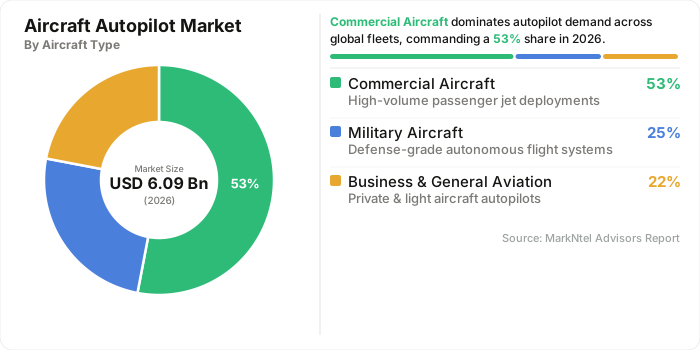
- The commercial aircraft segment is projected to account for nearly 53% of the market share in 2026, driven by expanding airline operations and the growing adoption of advanced autopilot systems across commercial fleets.
- By end use, the aftermarket segment is anticipated to capture approximately 75% of the market share in 2026, supported by rising demand for retrofit avionics upgrades and autopilot modernization solutions for aging aircraft.
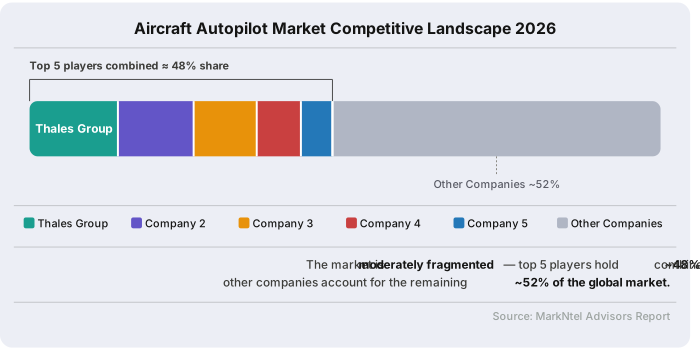
- The market is moderately fragmented, with more than 25 companies operating across commercial, business, and defense aviation segments. However, the top five players collectively account for approximately 48% of the global market share, driven by strong avionics capabilities, established OEM partnerships, and advanced flight automation technologies.
Global Aircraft Autopilot Market Size and Outlook
The global aircraft autopilot market is expected to register a CAGR of around 5.88% between 2026 and 2032, driven by increasing air passenger traffic, ongoing defense fleet modernization, and the growing integration of advanced digital avionics technologies across commercial, military, and business aviation sectors.
In 2025, the International Air Transport Association reported that global passenger demand reached record highs, while the active commercial aircraft fleet exceeded 30,300 aircraft worldwide , creating sustained demand for advanced flight automation systems and retrofit avionics solutions. Commercial airlines remain the leading end-user segment as operators increasingly focus on fuel efficiency, operational safety, and pilot workload reduction through integrated autopilot technologies. Additionally, the rising deployment of narrow-body aircraft for regional and low-cost operations continues to support the adoption of advanced digital autopilot systems worldwide.
Complementing the market’s expansion, regulatory authorities and government agencies are increasingly investing in airspace modernization projects that promote the adoption of advanced avionics and automated flight technologies worldwide. In 2026, the Federal Aviation Administration reaffirmed its commitment to the NextGen modernization program aimed at improving communication, navigation, surveillance, and automation infrastructure across the United States aviation sector . The initiative has accelerated the deployment of performance-based navigation procedures and ADS-B technologies, increasing compatibility requirements for autopilot-equipped aircraft and retrofit avionics systems. Similarly, aviation authorities across Europe are promoting digital aviation frameworks and advanced cockpit technologies under broader regional aviation modernization initiatives.
In response to these operational and regulatory developments, commercial airlines, business jet operators, and defense organizations are increasingly investing in avionics modernization programs to improve navigation accuracy, operational efficiency, and aircraft reliability. Leading avionics manufacturers are expanding digital flight deck solutions incorporating integrated autopilot, synthetic vision, and AI-assisted situational awareness technologies to support growing automation requirements across modern aircraft platforms. At the same time, retrofit demand within the business aviation segment is increasing as digital connectivity and compliance standards become key operational priorities. Aircraft manufacturers are also integrating fly-by-wire and automated flight systems into next-generation aircraft to support broader digital avionics modernization initiatives.
As global aviation networks continue to expand, the market is expected to experience steady growth, increasing from approximately USD 6.09 billion in 2026 to around USD 8.58 billion by 2032, supported by higher aircraft production volumes, modernization of airport infrastructure, and increasing integration of automated flight technologies. In 2026, Airbus stated that India’s commercial aircraft fleet could nearly triple by 2035 due to ongoing airport development projects and strong aircraft order backlogs, highlighting long-term avionics demand across Asia Pacific . Furthermore, the International Air Transport Association continues to forecast sustained growth in passenger traffic and aircraft utilization, encouraging airlines to invest in advanced automation systems that improve operational efficiency and flight safety . As aviation regulators increasingly emphasize digital airspace integration and automated flight operations, adoption of advanced aircraft autopilot technologies is expected to accelerate steadily worldwide.
Global Aircraft Autopilot Market Key Indicators
- The International Civil Aviation Organization (ICAO), under its Strategic Plan 2026–2050, projects global air traffic to reach around 12.4 billion passengers by 2050, indicating significant long-term growth in aviation activity. Rising passenger traffic is expected to accelerate the adoption of advanced aircraft autopilot systems, automated flight technologies, and integrated avionics platforms worldwide.
- The global defense expenditure surpassed USD 2.4 trillion in 2025, reflecting rising investments in military modernization programs worldwide. Increased procurement of fighter jets, surveillance aircraft, military helicopters, and unmanned aerial vehicles is driving demand for advanced autopilot and autonomous flight control systems used in mission-critical defense operations.
- According to the Federal Aviation Administration (FAA), the U.S. commercial aviation sector handles more than 45,000 flights daily. Growing flight frequencies and increasing air traffic congestion are encouraging the adoption of advanced autopilot systems that improve flight precision, reduce pilot workload, and enhance operational safety across commercial aircraft operations.
- Global general aviation aircraft deliveries generated nearly USD 31.9 billion in revenue in 2024, reflecting steady growth in business jets, turboprops, piston aircraft, and helicopter shipments, as highlighted by the General Aviation Manufacturers Association (GAMA). Rising aircraft production and ongoing fleet modernization are increasing the integration of advanced avionics, digital flight control technologies, and automated navigation systems, thereby driving demand for sophisticated aircraft autopilot solutions worldwide .
Global Aircraft Autopilot Market Scope
| Category | Segments |
|---|---|
| By System Type | Attitude & Heading Reference System (AHRS)-based Autopilot, Flight Director System, Fully Integrated Autopilot Systems, Digital Autopilot Systems, Analog Autopilot Systems |
| By Aircraft Type | Commercial Aircraft (Narrow-body Aircraft, Wide-body Aircraft, Regional Aircraft), Military Aircraft (Fighter Aircraft, Transport Aircraft, Unmanned Aerial Vehicles (UAVs)), Business & General Aviation (Business Jets, Turboprop Aircraft, Helicopters |
| By Component | Flight Control Computers, Sensors (Gyroscopes, Accelerometers, Air Data Sensors), Actuators & Servos, Software & Control Algorithms |
| By End Use | OEM (Line-fit Installation), Aftermarket (Retrofit, Upgrade, Maintenance |
Global Aircraft Autopilot Market Growth Drivers
Rising Global Air Traffic and Fleet Expansion
Increasing passenger traffic worldwide, coupled with growing aircraft fleet expansion, has become a key factor driving demand for aircraft autopilot systems globally. According to Airports Council International (ACI), global passenger traffic is projected to reach approximately 17.7 billion passengers by 2043, reflecting sustained long-term aviation growth worldwide . Rising passenger volumes are encouraging airlines to increase aircraft procurement while investing in Integrated flight automation technologies to improve operational efficiency, navigation accuracy, and flight safety. As aircraft utilization rates continue rising across major aviation markets, demand for integrated autopilot systems is expanding steadily across both OEM and retrofit installations.
This growth trend is particularly visible across commercial aviation, which remains the largest end-user segment within the aircraft autopilot market. Airlines are increasingly deploying automated flight technologies to optimize fuel consumption, reduce pilot workload, and support safer high-frequency flight operations. Airports Council International Asia-Pacific & Middle East reported that regional connectivity surged by 14% in 2025, primarily supported by expanding Gulf aviation hubs and rising aviation activity across China. Consequently, expanding regional air connectivity and low-cost carrier networks are accelerating the adoption of digitally integrated autopilot systems and next-generation avionics systems across narrow-body and regional aircraft fleets.
Alongside rising fleet expansion, airport modernization, and infrastructure development projects are further strengthening long-term market demand for advanced flight automation systems. In 2026, the UK government approved Heathrow Airport’s nearly USD 41 billion third-runway expansion plan aimed at increasing annual passenger capacity to approximately 150 million while supporting an additional 760 daily flights . Such large-scale airport expansion projects are increasing aircraft movements and operational complexity across major aviation hubs. As a result, airlines and aviation authorities are increasingly adopting integrated avionics platforms and advanced autopilot technologies to support safer and more efficient aviation operations worldwide.
Recent Trends
Growing Adoption of AI-Assisted Flight Automation
Adoption of AI-driven flight automation systems is accelerating across the aviation industry, creating a major transformation within the aircraft autopilot industry. Airlines, aircraft manufacturers, and defense organizations are increasingly integrating artificial intelligence and machine-learning capabilities into flight control systems to improve navigation accuracy, operational efficiency, and situational awareness. This transition has accelerated due to rising aircraft movements, increasing cockpit data complexity, and growing demand for safer and more automated flight operations. As a result, aviation stakeholders are steadily investing in intelligent flight automation technologies and digitally connected aviation ecosystems.
This evolving trend is reshaping aircraft manufacturing, avionics integration, pilot training, and airline operational models across the aviation industry. Aircraft manufacturers are increasingly integrating AI-supported autopilot and fly-by-wire technologies into next-generation aircraft platforms, while airlines continue to modernize existing fleets through retrofit avionics upgrades. In 2025, NASA’s X-59 supersonic aircraft entered advanced flight testing with digitally controlled fly-by-wire systems designed to improve automated flight safet y. Similarly, Quantum3D introduced AI-generated Level D simulation environments at WATS 2026, highlighting the industry’s increasing focus on intelligent flight automation and advanced digital cockpit ecosystems .
As aviation networks become increasingly complex and data-driven, airlines are expected to accelerate investments in automation and intelligent flight management technologies, strengthening the long-term impact of this trend. Growing investments in connected aircraft ecosystems, digital avionics platforms, and intelligent flight management systems are strengthening demand for AI-assisted autopilot technologies worldwide. Additionally, increasing deployment of autonomous and unmanned aerial platforms across defense and commercial aviation is accelerating the development of advanced automated flight systems. As aviation operations become increasingly digitalized, AI-assisted flight automation is expected to remain a key trend shaping the future evolution of the aircraft autopilot market.
Global Aircraft Autopilot Market Opportunities and Challenges
Complex Integration with Legacy Aircraft Platforms Creating Demand for Retrofit-Compatible and Scalable Avionics Solutions
Integration of advanced autopilot technologies into aging aircraft platforms is emerging as a significant operational challenge across the global aviation industry. Many commercial and business aircraft continue operating with legacy analog cockpit systems and older avionics architectures that were not originally designed to support modern automated flight technologies and advanced digital cockpit technologies for aircraft. Retrofitting these aircraft often requires extensive wiring modifications, software upgrades, compatibility validation, and regulatory certification processes, thereby increasing installation complexity and operational costs. Boeing’s latest commercial aircraft outlook also stated that nearly half of future aircraft deliveries will replace older airplanes , highlighting the growing need for modernization of existing aviation fleets worldwide.
The growing complexity of legacy aircraft integration is creating strong demand for modular and retrofit-friendly avionics solutions within the aircraft autopilot industry. Avionics manufacturers are increasingly introducing modular autopilot systems, integrated digital cockpit technologies, and scalable flight management platforms designed for easier integration into aging aircraft fleets. Addressing this modernization need, Air India completed the first phase of its legacy retrofit programme in 2025, covering 27 A320neo aircraft under a broader USD 400 million fleet modernization initiative . Such large-scale retrofit programs are accelerating demand for autopilot retrofit solutions for aircraft fleets, scalable avionics technologies, and digitally integrated cockpit systems across global commercial aviation fleets.
Segmentation Insights
Commercial Aircraft Hold a Leading Position Supported by Expanding Airline Fleets and Rising Global Flight Operations
Expanding airline fleets and growing frequency of commercial flight operations are enabling the commercial aircraft segment to dominate the Global Aircraft Autopilot Market with nearly 53% share. According to the International Air Transport Association (IATA), global passenger demand measured in Revenue Passenger Kilometers (RPK) increased by 5.7% year-on-year in November 2025, while international passenger demand rose by 7.7%, reflecting sustained growth in global commercial aviation activity . As passenger volumes and aircraft utilization continue increasing, airlines are steadily deploying advanced autopilot systems, automated flight control technologies, and integrated avionics platforms to improve navigation accuracy, fuel efficiency, and operational reliability across high-frequency flight operations.
The dominance of the commercial aircraft segment is further supported by ongoing aviation infrastructure expansion and large-scale aircraft procurement programs across major aviation markets. Boeing’s latest long-term outlook projects demand for more than 43,000 new commercial aircraft deliveries by 2044 , supported by increasing urbanization and expanding regional air connectivity across emerging economies. At the same time, airlines are modernizing narrow-body and wide-body fleets with digitally integrated cockpit systems and AI-assisted flight management technologies to strengthen operational efficiency and regulatory compliance. As commercial aviation networks become increasingly complex and passenger traffic continues rising, demand for advanced aircraft autopilot systems is expected to remain strongest within the commercial aircraft segment. Based on aircraft type, the market is segmented into:
- Commercial Aircraft
- Military Aircraft
- Business & General Aviation
Aftermarket Segment Holds a Dominant Position Supported by Continuous Fleet Modernization and Rising Retrofit Demand Across Aging Aircraft
The aftermarket segment accounts for approximately 75% share, making it the largest revenue contributor within the aircraft autopilot industry. This dominance is primarily driven by the large global base of aging commercial and business aircraft that require continuous avionics upgrades, autopilot replacements, software updates, and autopilot retrofit solutions for aircraft fleets throughout their operational lifecycle. Airlines and fleet operators increasingly rely on aftermarket autopilot systems to improve navigation accuracy, fuel efficiency, operational reliability, and regulatory compliance without replacing existing aircraft fleets. Retrofit demand remains particularly strong among operators seeking cost-effective modernization solutions that extend aircraft service life while supporting digitally integrated flight operations.
Rising focus on digital aviation infrastructure and stricter operational safety standards is reinforcing demand for aftermarket autopilot upgrades across commercial and business aviation fleets. In 2026, the Federal Aviation Administration (FAA) continued implementation of its NextGen modernization framework focused on upgrading digitally connected aviation systems and navigation infrastructure across the United States aviation sector . Supporting this trend, in 2025, Avidyne received FAA certification for retrofit deployment of its Vantage 12 Flight Display System across more than 4,000 Cirrus aircraft. Such retrofit initiatives are accelerating demand for aftermarket autopilot systems, scalable avionics technologies, and integrated flight management solutions across global aviation fleets. Based on end user, the market is segmented into:
- OEM
- Aftermarket
Global Aircraft Autopilot Market Geographical Outlook
North America dominates the Global Aircraft Autopilot Market, accounting for approximately 35.62% of total market demand, primarily because the region maintains one of the world’s largest commercial and defense aviation ecosystems. According to the Federal Aviation Administration (FAA), the United States handles approximately 2.9 million airline passengers daily, reflecting the scale and operational intensity of the regional aviation sector . Such high passenger traffic and aircraft utilization significantly increase reliance on advanced autopilot systems, automated flight control technologies, and digitally integrated avionics platforms to improve navigation accuracy, operational efficiency, and flight safety across dense air traffic networks. The region also benefits from the strong presence of major aircraft manufacturers, avionics suppliers, and aerospace technology developers continuously investing in next-generation flight automation systems.
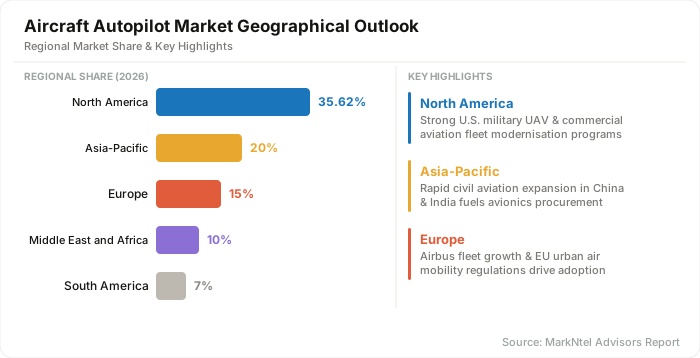
North America’s dominance is further reinforced by strong investment activity and rapid development of advanced aviation automation technologies across the region. In 2026, U.S.-based Reliable Robotics secured USD 160 million in new funding to accelerate deployment and certification of autonomous aircraft systems designed for automated flight operations . Such investments highlight the region’s strong innovation ecosystem and increasing commercialization of AI-enabled aviation automation technologies across commercial and defense aviation sectors. In parallel, airlines and business aviation operators across North America continue investing heavily in retrofit avionics upgrades, AI-assisted flight management systems, and digitally integrated cockpit technologies to strengthen operational efficiency and regulatory compliance. As aviation automation adoption continues accelerating, North America maintains a strong competitive advantage within the aviation autopilot systems market.
Global Aircraft Autopilot Market Competitive Analysis
The Global Aircraft Autopilot Market demonstrates a moderately fragmented competitive structure, with more than 25 companies actively competing across commercial, business, and defense aviation segments. Leading companies including Honeywell Aerospace, Collins Aerospace, Garmin Ltd., Thales Group, and BAE Systems collectively contribute nearly 48% of global market revenue, supported by strong OEM relationships, advanced avionics capabilities, and broad flight automation portfolios.
Leading Aircraft Autopilot Companies Globally
- Honeywell Aerospace
- Collins Aerospace
- Garmin Ltd.
- Thales Group
- BAE Systems
- Leonardo S.p.A.
- Moog Inc.
- Safran Electronics & Defense
- Genesys Aerosystems
- Cobham Aerospace Communications
- Dynon Avionics
- Avidyne Corporation
- Meggitt PLC
- Lockheed Martin Corporation
- Northrop Grumman Corporation
- Others
Global Aircraft Autopilot Industry News and Recent Developments
April 2025: Epic Aircraft Launches E1000 AX with Advanced Autoland and Autothrottle Technologies
Epic Aircraft introduced the E1000 AX aircraft featuring advanced autoland technology and autothrottle capabilities integrated with Garmin avionics systems. The aircraft was designed to enhance automated flight safety, operational efficiency, and pilot assistance capabilities across business aviation operations.
Impact Analysis: This development highlights the increasing adoption of intelligent cockpit technologies and advanced autopilot systems within business aviation aircraft. It is expected to accelerate demand for automated flight control technologies, AI-assisted navigation systems, and digitally integrated avionics platforms across modern aircraft fleets.
March 2025: Airbus Helicopters Introduces H140 with Four-Axis Autopilot System
Airbus Helicopters launched the H140 light twin-engine helicopter equipped with the Helionix avionics suite and a four-axis autopilot system for medical, rescue, and utility operations. The aircraft was developed to improve operational safety, pilot situational awareness, and automated flight capabilities within rotary-wing aviation platforms.
Impact Analysis: This development reflects the growing integration of digitally connected cockpit systems and advanced autopilot technologies across helicopter operations. It is expected to strengthen demand for integrated flight automation systems and advanced avionics solutions within commercial and emergency aviation sectors.
- Market Segmentation
- Introduction
- Product Definition
- Research Process
- Assumptions
- Executive Summary
- Global Aircraft Autopilot Market Policies, Regulations, and Product Standards
- Global Aircraft Autopilot Market Trends & Developments
- Global Aircraft Autopilot Market Dynamics
- Growth Factors
- Challenges
- Global Aircraft Autopilot Market Hotspot & Opportunities
- Global Aircraft Autopilot Market Outlook, 2022-2032F
- Market Size & Outlook
- By Revenues (USD Million)
- Market Share & Analysis
- By System Type- Market Size & Forecast 2022-2032, USD Million
- Attitude & Heading Reference System (AHRS)-based Autopilot
- Flight Director System
- Fully Integrated Autopilot Systems
- Digital Autopilot Systems
- Analog Autopilot Systems
- By Aircraft Type- Market Size & Forecast 2022-2032, USD Million
- Commercial Aircraft
- Narrow-body Aircraft
- Wide-body Aircraft
- Regional Aircraft
- Military Aircraft
- Fighter Aircraft
- Transport Aircraft
- Unmanned Aerial Vehicles (UAVs)
- Business & General Aviation
- Business Jets
- Turboprop Aircraft
- Helicopters
- Commercial Aircraft
- By Component- Market Size & Forecast 2022-2032, USD Million
- Flight Control Computers
- Sensors (Gyroscopes, Accelerometers, Air Data Sensors)
- Actuators & Servos
- Software & Control Algorithms
- By End Use- Market Size & Forecast 2022-2032, USD Million
- OEM (Line-fit Installation)
- Aftermarket (Retrofit, Upgrade, Maintenance)
- By Region
- North America
- South America
- Europe
- Middle East and Africa
- Asia Pacific
- By Company
- Competition Characteristics
- Market Share & Analysis
- By System Type- Market Size & Forecast 2022-2032, USD Million
- Market Size & Outlook
- North America Aircraft Autopilot Market Outlook, 2022-2032F
- Market Size & Outlook
- By Revenues (USD Million)
- Market Share & Analysis
- By System Type- Market Size & Forecast 2022-2032, USD Million
- By Aircraft Type- Market Size & Forecast 2022-2032, USD Million
- By Component- Market Size & Forecast 2022-2032, USD Million
- By End Use- Market Size & Forecast 2022-2032, USD Million
- By Country
- The US
- Canada
- Mexico
- The US Aircraft Autopilot Market Outlook, 2022-2032F
- Market Size & Outlook
- By Revenues (USD Million)
- Market Share & Analysis
- By System Type- Market Size & Forecast 2022-2032, USD Million
- By Aircraft Type- Market Size & Forecast 2022-2032, USD Million
- By Component- Market Size & Forecast 2022-2032, USD Million
- By End Use- Market Size & Forecast 2022-2032, USD Million
- Market Size & Outlook
- Canada Aircraft Autopilot Market Outlook, 2022-2032F
- Market Size & Outlook
- By Revenues (USD Million)
- Market Share & Analysis
- By System Type- Market Size & Forecast 2022-2032, USD Million
- By Aircraft Type- Market Size & Forecast 2022-2032, USD Million
- By Component- Market Size & Forecast 2022-2032, USD Million
- By End Use- Market Size & Forecast 2022-2032, USD Million
- Market Size & Outlook
- Market Size & Outlook
- South America Aircraft Autopilot Market Outlook, 2022-2032F
- Market Size & Outlook
- By Revenues (USD Million)
- Market Share & Analysis
- By System Type- Market Size & Forecast 2022-2032, USD Million
- By Aircraft Type- Market Size & Forecast 2022-2032, USD Million
- By Component- Market Size & Forecast 2022-2032, USD Million
- By End Use- Market Size & Forecast 2022-2032, USD Million
- By Country
- Brazil
- Argentina
- Chile
- Colombia
- Peru
- Ecuador
- Uruguay
- Rest of South America
- Brazil Aircraft Autopilot Market Outlook, 2022-2032F
- Market Size & Outlook
- By Revenues (USD Million)
- Market Share & Analysis
- By System Type- Market Size & Forecast 2022-2032, USD Million
- By Aircraft Type- Market Size & Forecast 2022-2032, USD Million
- By Component- Market Size & Forecast 2022-2032, USD Million
- By End Use- Market Size & Forecast 2022-2032, USD Million
- Market Size & Outlook
- Argentina Aircraft Autopilot Market Outlook, 2022-2032F
- Market Size & Outlook
- By Revenues (USD Million)
- Market Share & Analysis
- By System Type- Market Size & Forecast 2022-2032, USD Million
- By Aircraft Type- Market Size & Forecast 2022-2032, USD Million
- By Component- Market Size & Forecast 2022-2032, USD Million
- By End Use- Market Size & Forecast 2022-2032, USD Million
- Market Size & Outlook
- Chile Aircraft Autopilot Market Outlook, 2022-2032F
- Market Size & Outlook
- By Revenues (USD Million)
- Market Share & Analysis
- By System Type- Market Size & Forecast 2022-2032, USD Million
- By Aircraft Type- Market Size & Forecast 2022-2032, USD Million
- By Component- Market Size & Forecast 2022-2032, USD Million
- By End Use- Market Size & Forecast 2022-2032, USD Million
- Market Size & Outlook
- Colombia Aircraft Autopilot Market Outlook, 2022-2032F
- Market Size & Outlook
- By Revenues (USD Million)
- Market Share & Analysis
- By System Type- Market Size & Forecast 2022-2032, USD Million
- By Aircraft Type- Market Size & Forecast 2022-2032, USD Million
- By Component- Market Size & Forecast 2022-2032, USD Million
- By End Use- Market Size & Forecast 2022-2032, USD Million
- Market Size & Outlook
- Peru Aircraft Autopilot Market Outlook, 2022-2032F
- Market Size & Outlook
- By Revenues (USD Million)
- Market Share & Analysis
- By System Type- Market Size & Forecast 2022-2032, USD Million
- By Aircraft Type- Market Size & Forecast 2022-2032, USD Million
- By Component- Market Size & Forecast 2022-2032, USD Million
- By End Use- Market Size & Forecast 2022-2032, USD Million
- Market Size & Outlook
- Ecuador Aircraft Autopilot Market Outlook, 2022-2032F
- Market Size & Outlook
- By Revenues (USD Million)
- Market Share & Analysis
- By System Type- Market Size & Forecast 2022-2032, USD Million
- By Aircraft Type- Market Size & Forecast 2022-2032, USD Million
- By Component- Market Size & Forecast 2022-2032, USD Million
- By End Use- Market Size & Forecast 2022-2032, USD Million
- Market Size & Outlook
- Uruguay Aircraft Autopilot Market Outlook, 2022-2032F
- Market Size & Outlook
- By Revenues (USD Million)
- Market Share & Analysis
- By System Type- Market Size & Forecast 2022-2032, USD Million
- By Aircraft Type- Market Size & Forecast 2022-2032, USD Million
- By Component- Market Size & Forecast 2022-2032, USD Million
- By End Use- Market Size & Forecast 2022-2032, USD Million
- Market Size & Outlook
- Market Size & Outlook
- Europe Aircraft Autopilot Market Outlook, 2022-2032F
- Market Size & Outlook
- By Revenues (USD Million)
- Market Share & Analysis
- By System Type- Market Size & Forecast 2022-2032, USD Million
- By Aircraft Type- Market Size & Forecast 2022-2032, USD Million
- By Component- Market Size & Forecast 2022-2032, USD Million
- By End Use- Market Size & Forecast 2022-2032, USD Million
- By Country
- The UK
- Germany
- France
- Italy
- Spain
- Netherlands
- Switzerland
- Sweden
- Belgium
- Poland
- Norway
- Rest of Europe
- The UK Aircraft Autopilot Market Outlook, 2022-2032F
- Market Size & Outlook
- By Revenues (USD Million)
- Market Share & Analysis
- By System Type- Market Size & Forecast 2022-2032, USD Million
- By Aircraft Type- Market Size & Forecast 2022-2032, USD Million
- By Component- Market Size & Forecast 2022-2032, USD Million
- By End Use- Market Size & Forecast 2022-2032, USD Million
- Market Size & Outlook
- Germany Aircraft Autopilot Market Outlook, 2022-2032F
- Market Size & Outlook
- By Revenues (USD Million)
- Market Share & Analysis
- By System Type- Market Size & Forecast 2022-2032, USD Million
- By Aircraft Type- Market Size & Forecast 2022-2032, USD Million
- By Component- Market Size & Forecast 2022-2032, USD Million
- By End Use- Market Size & Forecast 2022-2032, USD Million
- Market Size & Outlook
- France Aircraft Autopilot Market Outlook, 2022-2032F
- Market Size & Outlook
- By Revenues (USD Million)
- Market Share & Analysis
- By System Type- Market Size & Forecast 2022-2032, USD Million
- By Aircraft Type- Market Size & Forecast 2022-2032, USD Million
- By Component- Market Size & Forecast 2022-2032, USD Million
- By End Use- Market Size & Forecast 2022-2032, USD Million
- Market Size & Outlook
- Italy Aircraft Autopilot Market Outlook, 2022-2032F
- Market Size & Outlook
- By Revenues (USD Million)
- Market Share & Analysis
- By System Type- Market Size & Forecast 2022-2032, USD Million
- By Aircraft Type- Market Size & Forecast 2022-2032, USD Million
- By Component- Market Size & Forecast 2022-2032, USD Million
- By End Use- Market Size & Forecast 2022-2032, USD Million
- Market Size & Outlook
- Spain Aircraft Autopilot Market Outlook, 2022-2032F
- Market Size & Outlook
- By Revenues (USD Million)
- Market Share & Analysis
- By System Type- Market Size & Forecast 2022-2032, USD Million
- By Aircraft Type- Market Size & Forecast 2022-2032, USD Million
- By Component- Market Size & Forecast 2022-2032, USD Million
- By End Use- Market Size & Forecast 2022-2032, USD Million
- Market Size & Outlook
- Netherlands Aircraft Autopilot Market Outlook, 2022-2032F
- Market Size & Outlook
- By Revenues (USD Million)
- Market Share & Analysis
- By System Type- Market Size & Forecast 2022-2032, USD Million
- By Aircraft Type- Market Size & Forecast 2022-2032, USD Million
- By Component- Market Size & Forecast 2022-2032, USD Million
- By End Use- Market Size & Forecast 2022-2032, USD Million
- Market Size & Outlook
- Switzerland Aircraft Autopilot Market Outlook, 2022-2032F
- Market Size & Outlook
- By Revenues (USD Million)
- Market Share & Analysis
- By System Type- Market Size & Forecast 2022-2032, USD Million
- By Aircraft Type- Market Size & Forecast 2022-2032, USD Million
- By Component- Market Size & Forecast 2022-2032, USD Million
- By End Use- Market Size & Forecast 2022-2032, USD Million
- Market Size & Outlook
- Sweden Aircraft Autopilot Market Outlook, 2022-2032F
- Market Size & Outlook
- By Revenues (USD Million)
- Market Share & Analysis
- By System Type- Market Size & Forecast 2022-2032, USD Million
- By Aircraft Type- Market Size & Forecast 2022-2032, USD Million
- By Component- Market Size & Forecast 2022-2032, USD Million
- By End Use- Market Size & Forecast 2022-2032, USD Million
- Market Size & Outlook
- Belgium Aircraft Autopilot Market Outlook, 2022-2032F
- Market Size & Outlook
- By Revenues (USD Million)
- Market Share & Analysis
- By System Type- Market Size & Forecast 2022-2032, USD Million
- By Aircraft Type- Market Size & Forecast 2022-2032, USD Million
- By Component- Market Size & Forecast 2022-2032, USD Million
- By End Use- Market Size & Forecast 2022-2032, USD Million
- Market Size & Outlook
- Poland Aircraft Autopilot Market Outlook, 2022-2032F
- Market Size & Outlook
- By Revenues (USD Million)
- Market Share & Analysis
- By System Type- Market Size & Forecast 2022-2032, USD Million
- By Aircraft Type- Market Size & Forecast 2022-2032, USD Million
- By Component- Market Size & Forecast 2022-2032, USD Million
- By End Use- Market Size & Forecast 2022-2032, USD Million
- Market Size & Outlook
- Norway Aircraft Autopilot Market Outlook, 2022-2032F
- Market Size & Outlook
- By Revenues (USD Million)
- Market Share & Analysis
- By System Type- Market Size & Forecast 2022-2032, USD Million
- By Aircraft Type- Market Size & Forecast 2022-2032, USD Million
- By Component- Market Size & Forecast 2022-2032, USD Million
- By End Use- Market Size & Forecast 2022-2032, USD Million
- Market Size & Outlook
- Market Size & Outlook
- Middle East and Africa Aircraft Autopilot Market Outlook, 2022-2032F
- Market Size & Outlook
- By Revenues (USD Million)
- Market Share & Analysis
- By System Type- Market Size & Forecast 2022-2032, USD Million
- By Aircraft Type- Market Size & Forecast 2022-2032, USD Million
- By Component- Market Size & Forecast 2022-2032, USD Million
- By End Use- Market Size & Forecast 2022-2032, USD Million
- By Country
- Saudi Arabia
- The UAE
- South Africa
- Egypt
- Qatar
- Kuwait
- Oman
- Bahrain
- Rest of Middle East & Africa
- Saudi Arabia Aircraft Autopilot Market Outlook, 2022-2032F
- Market Size & Outlook
- By Revenues (USD Million)
- Market Share & Analysis
- By System Type- Market Size & Forecast 2022-2032, USD Million
- By Aircraft Type- Market Size & Forecast 2022-2032, USD Million
- By Component- Market Size & Forecast 2022-2032, USD Million
- By End Use- Market Size & Forecast 2022-2032, USD Million
- Market Size & Outlook
- The UAE Aircraft Autopilot Market Outlook, 2022-2032F
- Market Size & Outlook
- By Revenues (USD Million)
- Market Share & Analysis
- By System Type- Market Size & Forecast 2022-2032, USD Million
- By Aircraft Type- Market Size & Forecast 2022-2032, USD Million
- By Component- Market Size & Forecast 2022-2032, USD Million
- By End Use- Market Size & Forecast 2022-2032, USD Million
- Market Size & Outlook
- South Africa Aircraft Autopilot Market Outlook, 2022-2032F
- Market Size & Outlook
- By Revenues (USD Million)
- Market Share & Analysis
- By System Type- Market Size & Forecast 2022-2032, USD Million
- By Aircraft Type- Market Size & Forecast 2022-2032, USD Million
- By Component- Market Size & Forecast 2022-2032, USD Million
- By End Use- Market Size & Forecast 2022-2032, USD Million
- Market Size & Outlook
- Egypt Aircraft Autopilot Market Outlook, 2022-2032F
- Market Size & Outlook
- By Revenues (USD Million)
- Market Share & Analysis
- By System Type- Market Size & Forecast 2022-2032, USD Million
- By Aircraft Type- Market Size & Forecast 2022-2032, USD Million
- By Component- Market Size & Forecast 2022-2032, USD Million
- By End Use- Market Size & Forecast 2022-2032, USD Million
- Market Size & Outlook
- Qatar Aircraft Autopilot Market Outlook, 2022-2032F
- Market Size & Outlook
- By Revenues (USD Million)
- Market Share & Analysis
- By System Type- Market Size & Forecast 2022-2032, USD Million
- By Aircraft Type- Market Size & Forecast 2022-2032, USD Million
- By Component- Market Size & Forecast 2022-2032, USD Million
- By End Use- Market Size & Forecast 2022-2032, USD Million
- Market Size & Outlook
- Kuwait Aircraft Autopilot Market Outlook, 2022-2032F
- Market Size & Outlook
- By Revenues (USD Million)
- Market Share & Analysis
- By System Type- Market Size & Forecast 2022-2032, USD Million
- By Aircraft Type- Market Size & Forecast 2022-2032, USD Million
- By Component- Market Size & Forecast 2022-2032, USD Million
- By End Use- Market Size & Forecast 2022-2032, USD Million
- Market Size & Outlook
- Oman Aircraft Autopilot Market Outlook, 2022-2032F
- Market Size & Outlook
- By Revenues (USD Million)
- Market Share & Analysis
- By System Type- Market Size & Forecast 2022-2032, USD Million
- By Aircraft Type- Market Size & Forecast 2022-2032, USD Million
- By Component- Market Size & Forecast 2022-2032, USD Million
- By End Use- Market Size & Forecast 2022-2032, USD Million
- Market Size & Outlook
- Bahrain Aircraft Autopilot Market Outlook, 2022-2032F
- Market Size & Outlook
- By Revenues (USD Million)
- Market Share & Analysis
- By System Type- Market Size & Forecast 2022-2032, USD Million
- By Aircraft Type- Market Size & Forecast 2022-2032, USD Million
- By Component- Market Size & Forecast 2022-2032, USD Million
- By End Use- Market Size & Forecast 2022-2032, USD Million
- Market Size & Outlook
- Market Size & Outlook
- Asia Pacific Aircraft Autopilot Market Outlook, 2022-2032F
- Market Size & Outlook
- By Revenues (USD Million)
- Market Share & Analysis
- By System Type- Market Size & Forecast 2022-2032, USD Million
- By Aircraft Type- Market Size & Forecast 2022-2032, USD Million
- By Component- Market Size & Forecast 2022-2032, USD Million
- By End Use- Market Size & Forecast 2022-2032, USD Million
- By Country
- China
- Japan
- India
- South Korea
- Australia
- Indonesia
- Thailand
- Malaysia
- Singapore
- Rest of Asia-Pacific
- China Aircraft Autopilot Market Outlook, 2022-2032F
- Market Size & Outlook
- By Revenues (USD Million)
- Market Share & Analysis
- By System Type- Market Size & Forecast 2022-2032, USD Million
- By Aircraft Type- Market Size & Forecast 2022-2032, USD Million
- By Component- Market Size & Forecast 2022-2032, USD Million
- By End Use- Market Size & Forecast 2022-2032, USD Million
- Market Size & Outlook
- Japan Aircraft Autopilot Market Outlook, 2022-2032F
- Market Size & Outlook
- By Revenues (USD Million)
- Market Share & Analysis
- By System Type- Market Size & Forecast 2022-2032, USD Million
- By Aircraft Type- Market Size & Forecast 2022-2032, USD Million
- By Component- Market Size & Forecast 2022-2032, USD Million
- By End Use- Market Size & Forecast 2022-2032, USD Million
- Market Size & Outlook
- India Aircraft Autopilot Market Outlook, 2022-2032F
- Market Size & Outlook
- By Revenues (USD Million)
- Market Share & Analysis
- By System Type- Market Size & Forecast 2022-2032, USD Million
- By Aircraft Type- Market Size & Forecast 2022-2032, USD Million
- By Component- Market Size & Forecast 2022-2032, USD Million
- By End Use- Market Size & Forecast 2022-2032, USD Million
- Market Size & Outlook
- South Korea Aircraft Autopilot Market Outlook, 2022-2032F
- Market Size & Outlook
- By Revenues (USD Million)
- Market Share & Analysis
- By System Type- Market Size & Forecast 2022-2032, USD Million
- By Aircraft Type- Market Size & Forecast 2022-2032, USD Million
- By Component- Market Size & Forecast 2022-2032, USD Million
- By End Use- Market Size & Forecast 2022-2032, USD Million
- Market Size & Outlook
- Australia Aircraft Autopilot Market Outlook, 2022-2032F
- Market Size & Outlook
- By Revenues (USD Million)
- Market Share & Analysis
- By System Type- Market Size & Forecast 2022-2032, USD Million
- By Aircraft Type- Market Size & Forecast 2022-2032, USD Million
- By Component- Market Size & Forecast 2022-2032, USD Million
- By End Use- Market Size & Forecast 2022-2032, USD Million
- Market Size & Outlook
- Indonesia Aircraft Autopilot Market Outlook, 2022-2032F
- Market Size & Outlook
- By Revenues (USD Million)
- Market Share & Analysis
- By System Type- Market Size & Forecast 2022-2032, USD Million
- By Aircraft Type- Market Size & Forecast 2022-2032, USD Million
- By Component- Market Size & Forecast 2022-2032, USD Million
- By End Use- Market Size & Forecast 2022-2032, USD Million
- Market Size & Outlook
- Thailand Aircraft Autopilot Market Outlook, 2022-2032F
- Market Size & Outlook
- By Revenues (USD Million)
- Market Share & Analysis
- By System Type- Market Size & Forecast 2022-2032, USD Million
- By Aircraft Type- Market Size & Forecast 2022-2032, USD Million
- By Component- Market Size & Forecast 2022-2032, USD Million
- By End Use- Market Size & Forecast 2022-2032, USD Million
- Market Size & Outlook
- Malaysia Aircraft Autopilot Market Outlook, 2022-2032F
- Market Size & Outlook
- By Revenues (USD Million)
- Market Share & Analysis
- By System Type- Market Size & Forecast 2022-2032, USD Million
- By Aircraft Type- Market Size & Forecast 2022-2032, USD Million
- By Component- Market Size & Forecast 2022-2032, USD Million
- By End Use- Market Size & Forecast 2022-2032, USD Million
- Market Size & Outlook
- Singapore Aircraft Autopilot Market Outlook, 2022-2032F
- Market Size & Outlook
- By Revenues (USD Million)
- Market Share & Analysis
- By System Type- Market Size & Forecast 2022-2032, USD Million
- By Aircraft Type- Market Size & Forecast 2022-2032, USD Million
- By Component- Market Size & Forecast 2022-2032, USD Million
- By End Use- Market Size & Forecast 2022-2032, USD Million
- Market Size & Outlook
- Market Size & Outlook
- Global Aircraft Autopilot Market Key Strategic Imperatives for Success & Growth
- Competitive Outlook
- Company Profiles
- Honeywell Aerospace
- Business Description
- Product Portfolio
- Collaborations & Alliances
- Recent Developments
- Financial Details
- Others
- Collins Aerospace
- Business Description
- Product Portfolio
- Collaborations & Alliances
- Recent Developments
- Financial Details
- Others
- Garmin Ltd.
- Business Description
- Product Portfolio
- Collaborations & Alliances
- Recent Developments
- Financial Details
- Others
- Thales Group
- Business Description
- Product Portfolio
- Collaborations & Alliances
- Recent Developments
- Financial Details
- Others
- BAE Systems
- Business Description
- Product Portfolio
- Collaborations & Alliances
- Recent Developments
- Financial Details
- Others
- Leonardo S.p.A.
- Business Description
- Product Portfolio
- Collaborations & Alliances
- Recent Developments
- Financial Details
- Others
- Moog Inc.
- Business Description
- Product Portfolio
- Collaborations & Alliances
- Recent Developments
- Financial Details
- Others
- Safran Electronics & Defense
- Business Description
- Product Portfolio
- Collaborations & Alliances
- Recent Developments
- Financial Details
- Others
- Genesys Aerosystems
- Business Description
- Product Portfolio
- Collaborations & Alliances
- Recent Developments
- Financial Details
- Others
- Cobham Aerospace Communications
- Business Description
- Product Portfolio
- Collaborations & Alliances
- Recent Developments
- Financial Details
- Others
- Dynon Avionics
- Business Description
- Product Portfolio
- Collaborations & Alliances
- Recent Developments
- Financial Details
- Others
- Avidyne Corporation
- Business Description
- Product Portfolio
- Collaborations & Alliances
- Recent Developments
- Financial Details
- Others
- Meggitt PLC
- Business Description
- Product Portfolio
- Collaborations & Alliances
- Recent Developments
- Financial Details
- Others
- Lockheed Martin Corporation
- Business Description
- Product Portfolio
- Collaborations & Alliances
- Recent Developments
- Financial Details
- Others
- Northrop Grumman Corporation
- Business Description
- Product Portfolio
- Collaborations & Alliances
- Recent Developments
- Financial Details
- Others
- Honeywell Aerospace
- Company Profiles
- Disclaimer

MarkNtel Advisors follows a robust and iterative research methodology designed to ensure maximum accuracy and minimize deviation in market estimates and forecasts. Our approach combines both bottom-up and top-down techniques to effectively segment and quantify various aspects of the market. A consistent feature across all our research reports is data triangulation, which examines the market from three distinct perspectives to validate findings. Key components of our research process include:
1. Scope & Research Design At the outset, MarkNtel Advisors define the research objectives and formulate pertinent questions. This phase involves determining the type of research—qualitative or quantitative—and designing a methodology that outlines data collection methods, target demographics, and analytical tools. They also establish timelines and budgets to ensure the research aligns with client goals.
2. Sample Selection and Data Collection In this stage, the firm identifies the target audience and determines the appropriate sample size to ensure representativeness. They employ various sampling methods, such as random or stratified sampling, based on the research objectives. Data collection is carried out using tools like surveys, interviews, and observations, ensuring the gathered data is reliable and relevant.
3. Data Analysis and Validation Once data is collected, MarkNtel Advisors undertake a rigorous analysis process. This includes cleaning the data to remove inconsistencies, employing statistical software for quantitative analysis, and thematic analysis for qualitative data. Validation steps are taken to ensure the accuracy and reliability of the findings, minimizing biases and errors.

4. Data Forecast and FinalizationThe final phase involves forecasting future market trends based on the analyzed data. MarkNtel Advisors utilize predictive modeling and time series analysis to anticipate market behaviors. The insights are then compiled into comprehensive reports, featuring visual aids like charts and graphs, and include strategic recommendations to inform client decision-making
We offer flexible licensing options to cater to varying organizational needs. Choose the pricing pack that best suits your requirements:
Buy Now Inquire Before Buying
 Request Customization