

Global Aviation Market Research Report: Growth Drivers & Forecast (2026-2032)
By Type (Commercial Aviation (Narrowbody, Widebody, Regional Jets), Military Aviation (Combat, Transport, Special Missions, Helicopters), General Aviation (Business Jets, Commercia ... l Helicopters), Unmanned Aerial Systems (Civil and Commercial, Defense and Government), Advanced Air Mobility (AAM) (eVTOL, Urban Air Mobility (UAM))), By Propulsion Technology (Turboprop, Turbofan, Piston Engine, Turboshaft, Turbojet, Hybrid-Electric, Electric), By Power Source (Conventional Fuel, SAF-Based, Fuel Cell, Battery Powered, Solar Powered), By Fit (Line Fit, Retrofit), and others Read more
- Aerospace & Defense
- Apr 2026
- Pages 320
- Report Format: PDF, Excel, PPT
Global Aviation Market
Projected 4.90% CAGR from 2026 to 2032
Study Period
2026-2032
Market Size (2026)
USD 393.36 Billion
Market Size (2032)
USD 524.14 Billion
Largest Region
North America
Projected CAGR
4.90%
Leading Segments
By type: Commercial Aviation
Global Aviation Market Report Key Takeaways
- The Global Aviation market size was valued at USD 357.85 billion in 2025 and is projected to grow from USD 393.36 billion in 2026 to USD 524.14 billion by 2032. Along with this, the market is estimated to grow at a CAGR of around 4.90% during the forecast period.
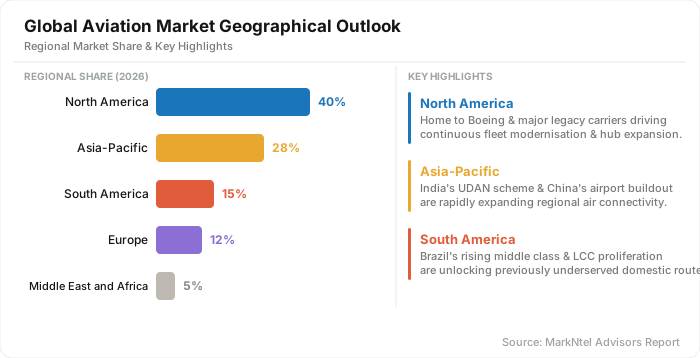
- North America is the leading region with a significant share of 40% in 2026.
- By type, the commercial aviation segment represented a significant share of about 61% in the Global Aviation Market in 2026.
- By power source type, the conventional fuel segment seized a significant share of about 83% in the Global Aviation market in 2026.
- The market exhibits a moderate level of consolidation, with the top five companies accounting for approximately 76.2% of the total market size.
Global Aviation Market Size and Outlook
The Global Aviation market size was valued at USD 357.85 billion in 2025 and is projected to grow from USD 393.36 billion in 2026 to USD 524.14 billion by 2032. Along with this, the market is estimated to grow at a CAGR of around 4.90% during the forecast period, i.e., 2026-32.
The market covers commercial aircraft manufacturing, leasing, and MRO services; military aviation procurement; business and general aviation; advanced air mobility, including electric vertical takeoff and landing (eVTOL) platforms; and unmanned aerial systems. Demand is driven by commercial carriers, defense agencies, cargo operators, charter services, and urban air mobility developers. According to the International Civil Aviation Organization (ICAO) and Airports Council International (ACI) World's joint 2025 report, global passenger traffic reached 9.4 billion in 2024, the first full year to surpass pre-pandemic 2019 levels, highlighting the structural demand recovery supporting market investment across all segments.
The United States government's FAA Reauthorization Act of 2024 (Public Law 118-63), signed in May 2024, authorizes USD 105 billion over five years for aviation infrastructure modernization, safety enhancements, and air traffic control system upgrades . The legislation mandates digital tower trials at regional airports, accelerates copper-to-fiber conversion across hundreds of Federal Aviation Administration (FAA) communication sites, and establishes new commercial operator safety oversight requirements, collectively generating measurable demand for avionics procurement, control system replacement, and fleet recertification programs that flow directly to North American manufacturers and MRO providers.
India's Directorate General of Civil Aviation (DGCA) confirmed that domestic passenger traffic in India reached 161.3 million in 2024, a 6.12% year-over-year increase, establishing India as one of the fastest-growing domestic aviation landscapes globally. I ndian carriers placed substantial fleet expansion orders through this period, including Air India's agreement in December 2024 for 10 Airbus A350 widebody and 90 A320-family narrowbody aircraft, a procurement cycle that directs significant revenue to commercial original equipment manufacturers (OEMs) and aftermarket service providers across the forecast period.
Airbus SE is targeting production of 75 A320neo-family aircraft per month by 2027, up from approximately 50–55 per month in 2025, working against a narrowbody -dominated backlog of 8,748 commercial aircraft recorded at year-end 2025. The Boeing Company resumed full production across its 737, 767, and 777/777X programs following resolution of the International Association of Machinists and Aerospace Workers (IAM) work stoppage, delivering 348 commercial aircraft in 2024 with the 787 Dreamliner program scaled to five aircraft per month at year-end and targeting seven per month by the end of 2025.
Global Aviation Market Key Indicators
- IATA confirmed that the global commercial aircraft order backlog surpassed 17,000 aircraft as of late 2025, equivalent to approximately 60% of the active global fleet, historically double the 30–40% ratio sustaining multi-year production demand for narrowbody and widebody airframes, engines, aerostructures , and avionics systems across the aviation industry supply chain.
- Per IATA's 2024 World Air Transport Statistics, Boeing 737 aircraft flew 10 million commercial flights with 2.4 trillion Available Seat Kilometers (ASKs) in 2024, followed by the Airbus A320 at 7.9 million flights and 1.7 trillion ASKs; this utilization volume confirms narrowbody dominance in global fleet operations, sustaining long-order pipelines for the 737 MAX and A320neo families that anchor the commercial aviation segment through 2032.
- ICAO projects global passenger traffic to exceed 12 billion by 2030, with Asia-Pacific and the Middle East growing at CAGRs of 4.6% and 4.7%, respectively, between 2024 and 2030, above the 3.7% global average, generating concentrated aircraft procurement demand in both regions that will require thousands of new narrowbody and widebody deliveries within the current forecast window.
- IATA's 2024 World Air Transport Statistics confirmed the United States recorded 876 million passengers in 2024, growing 5.2% year-over-year, sustaining North America's position as the world's largest aviation industry by passenger volume and generating continuous demand for fleet additions, terminal expansion, MRO capacity, and advanced avionics programs tied to the FAA's USD 105 billion reauthorization mandate.
Global Aviation Market Scope
| Category | Segments |
|---|---|
| By Type | (Commercial Aviation (Narrowbody, Widebody, Regional Jets), Military Aviation (Combat, Transport, Special Missions, Helicopters), General Aviation (Business Jets, Commercial Helicopters), Unmanned Aerial Systems (Civil and Commercial, Defense and Government), Advanced Air Mobility (AAM) (eVTOL, Urban Air Mobility (UAM))), |
| By Propulsion Technology | (Turboprop, Turbofan, Piston Engine, Turboshaft, Turbojet, Hybrid-Electric, Electric), |
| By Power Source | (Conventional Fuel, SAF-Based, Fuel Cell, Battery Powered, Solar Powered), |
| By Fit | (Line Fit, Retrofit), |
Global Aviation Market Growth Drivers
Record Air Travel Demand and Load Factors Accelerating Global Fleet Expansion
The robust recovery of global air travel beyond pre-pandemic levels is a primary structural driver of fleet procurement across the global industry, as airlines simultaneously seek to replace aging aircraft. According to IATA, total global air travel demand, measured in Revenue Passenger Kilometres (RPKs), grew 10.4% in 2024, with Passenger Load Factors (PLF) reaching an all-time annual record of 83.5%. This unprecedented utilization underscores strong underlying demand compounded by constrained capacity additions due to aircraft supply chain bottlenecks, compelling airlines to maximize productivity from each aircraft while accelerating deliveries of replacements already on order.
Demand momentum continued into 2025: IATA’s October 2025 data showed RPK growth of 6.6% year-over-year with load factors climbing further to 84.6%, indicating that capacity constraints remained tight even as growth moderated from the 2024 peak. This structural imbalance between demand and delivery capability is directly driving durable fleet procurement. By the end of 2025, Boeing and Airbus held combined backlogs exceeding 15,000 commercial aircraft, providing over a decade of production visibility and sustaining long-term demand across engines, aerostructures, avionics, and aviation services supply chains.
The continued mismatch between passenger demand and aircraft availability ensures order book stability for commercial OEMs and their upstream suppliers throughout the forecast period. Airlines unable to secure new deliveries are extending the service life of legacy fleets beyond planned retirements, generating parallel demand for MRO, retrofits, and upgrades. This dual-cycle dynamic simultaneous growth in new aircraft production and extended fleet maintenance broadens the global aviation industry’s total addressable revenue base and reinforces fleet procurement as a key structural driver of the sector.
Global Aviation Market Trends
Autonomous and AI-Enabled Aircraft Systems Reshaping the Market's Demand Structure
The accelerating recovery of international premium travel business class and first class is generating a differentiated fleet demand cycle within the global aviation sector, one that specifically benefits widebody commercial aircraft and business jet platforms and operates on a separate investment logic from the high-volume narrowbody replacement cycle that dominates aggregate order flows.
IATA's 2024 World Air Transport Statistics confirmed that international premium-class travel grew 11.8% in 2024, outpacing global economy class growth of 11.5%, with 116.9 million premium passengers carried representing 6% of all international travelers .
Asia-Pacific led regional premium growth at 22.8% year-over-year, with 21 million premium passengers in 2024; Europe retained the largest absolute market at 39.3 million premium travelers; and the Middle East recorded the highest premium travel penetration rate at 14.7% of all travelers, a structural characteristic of Gulf carrier networks that drives widebody aircraft configuration decisions .
The premium travel trend is not a rebound artifact; it reflects a structural shift in consumer spending toward experiential travel that sustained itself through 2025, with IATA recording continued load factor records above 84% in late 2025 even as total demand growth moderated.
In business aviation, the directional shift is equally measurable. NBAA data confirmed an 11% rise in 2025 business aircraft deliveries valued at USD 25 billion, with demand migrating toward super-midsize and large-cabin models capable of intercontinental legs. Operators are embedding advanced satellite connectivity and cabin automation systems that redefine business jets as mobile productivity environments, a configuration preference that supports premium pricing and sustained order activity for Gulfstream Aerospace Corporation, Dassault Aviation, and Bombardier Inc. through the forecast period.
The premium travel trend creates durable differentiation in global aviation investment patterns, sustaining widebody order pipelines and business jet procurement cycles alongside the dominant narrowbody volume. This bifurcated demand structure broadens the revenue base of the global aviation market's commercial segment and supports pricing power for manufacturers operating across both mass-market and premium platform categories through 2032.
Opportunities and Challenges
Aircraft Supply Chain Disruption and Aging Fleets Driving Unprecedented MRO and Modernization Demand
The global aviation industry's single most acute structural challenge, the sustained mismatch between aircraft delivery capacity and airline demand, has simultaneously created the largest commercial opportunity in the aftermarket and fleet modernization segments, with both the constraint and the opportunity intensifying in parallel through the 2026–2032 forecast window.
Aircraft are retained well beyond their original operating plans, unscheduled maintenance costs increase, fuel efficiency improvements slow, dropping from a historical 2.0% annual gain to 0.3% in 2025 (IATA), and engine reliability is sues multiply, particularly among low-cost carriers, constraining capacity and compressing margins.
Paradoxically, the same delivery shortfall that limits fleet renewal creates a directly proportional commercial opportunity in MRO and fleet modernization. Airlines with robust balance sheets are investing in predictive maintenance platforms and digital MRO systems that reduce unscheduled downtime and extend the productive service life of aircraft that cannot yet be replaced.
Ultimately, supply chain disruptions and aging fleets are inseparable from the MRO opportunity they generate. For the global aviation market, this dynamic ensures elevated aftermarket revenue throughout the forecast period, with firms specializing in retrofit services, avionics upgrades, and fleet management technologies positioned to capture market share growth that is resilient to delays in new aircraft deliveries. In effect, revenue potential rises precisely as procurement schedules are disrupted, creating a structurally advantageous environment for aftermarket providers.
Segmentation Insights
Commercial Aviation Leads by Type with 61% Share, Anchored by Global Fleet Expansion
Commercial aviation maintains leadership because global air travel demand continues to grow faster than other aviation segments, driven by rising middle‑class incomes and expanding tourism and business travel worldwide.
Airlines prioritize investments in new commercial aircraft since long‑term route planning and fleet modernization optimize operating costs and yield higher passenger throughput. Policy support for liberalized air traffic rights, airport infrastructure expansion, and air service agreements directly enhances commercial flight connectivity, stimulating demand for narrowbody and widebody fleets. End users, both leisure and corporate travelers, consistently choose scheduled airline services over alternatives for reliability, safety, and frequency.
Commercial aviation maintains leadership because global air travel demand continues to grow faster than other aviation segments, driven by rising middle‑class incomes and expanding tourism and business travel worldwide.
Airlines prioritize investments in new commercial aircraft since long‑term route planning and fleet modernization optimize operating costs and yield higher passenger throughput. Policy support for liberalized air traffic rights, airport infrastructure expansion, and air service agreements directly enhances commercial flight connectivity, stimulating demand for narrowbody and widebody fleets. End users, both leisure and corporate travelers, consistently choose scheduled airline services over alternatives for reliability, safety, and frequency. For instance, in 2025, Boeing and Airbus reported that a large majority of deliveries and orders were for narrowbody aircraft, especially the Airbus A320 family and Boeing 737 MAX jets, which underscores airline preference for single‑aisle models on short‑ and medium‑haul routes.
Compared to other aviation types such as business jets, helicopters, or military aircraft, commercial aviation benefits from predictable demand cycles, passenger volume growth, and stronger revenue streams. Sub-categories by type:
- Commercial Aviation
- Military Aviation
- General Aviation
- Unmanned Aerial Systems
- Advanced Air Mobility (AAM)

Conventional Fuel Holds 83% Share by Power Source, with SAF-Based Segment Emerging Under Mandate Pressure.
Conventional jet fuel remains the dominant power source because it combines high energy density, broad infrastructure support, and compatibility with existing aircraft engines, key requirements for commercial aviation’s range and payload performance. Airlines and aircraft manufacturers have optimized turbine engines over decades specifically for kerosene‑based fuels, creating unmatched operational reliability at a global scale. Regulatory frameworks currently treat conventional fuel as the baseline energy source, even as mandates encourage sustainable alternatives; this balance limits disruption to core operations. End‑user demand for long‑haul travel, high-frequency schedules, and uninterrupted service further cements reliance on established fuel supply systems.
Despite growing interest and policy support for alternative fuels like Sustainable Aviation Fuel (SAF), conventional aviation fuel (jet kerosene) still accounts for the vast majority of the fuel used in aircraft because SAF production remains extremely limited in supply and significantly more expensive than traditional jet fuel. In fact, global SAF output in 2025 was only a tiny fraction of overall jet fuel demand, roughly 0.6 % of total consumption, and is projected to remain under 1 % in 2026, while conventional fossil‑based jet fuel continues to supply over 99 % of aviation energy needs. Sub-categories by power source:
- Conventional Fuel
- SAF-Based
- Fuel Cell
- Battery Powered
- Solar Powered
Global Aviation Market Geographical Outlook
North America, led by the United States, represents the largest and most influential aviation market globally, commanding a dominant share of regional aviation activity and economic output.
Major airline hubs such as Los Angeles International and Phoenix Sky Harbor handled tens of millions of passengers, testifying to the scale and connectivity of the network. The sheer volume of flights and passengers underpins strong demand for aircraft production, maintenance, and services within the region.
The Federal Aviation Administration (FAA) and Congress have approved multi‑billion‑dollar upgrades to air traffic control systems and radar/telecom networks, accelerating capacity and safety improvements across the national airspace. Such regulatory commitments strengthen market confidence and reduce systemic constraints on growth.
The presence of advanced manufacturing hubs and aerospace suppliers also facilitates rapid integration of new technologies and capacity expansion. Policy advantages further reinforce North American leadership through targeted government support and trade facilitation. Institutional frameworks such as the FAA’s modernization mandates and federal incentives for infrastructure grant projects catalyze long‑term capital investment. Large‑scale export contracts for aircraft and parts, including U.S. Commerce Department‑assisted aerospace deals valued at hundreds of billions in 2025, enhance global competitiveness and secure export revenues. Regulatory stability and open market structures attract both domestic and foreign carriers seeking operational breadth and network linkage.
End‑user demand patterns in North America show diverse and sustained consumption growth across commercial, general, and defense aviation segments. The U.S. airline industry transported record passenger volumes in recent years, generating substantial operating revenues and contributing significantly to GDP.
Global Aviation Market Competitive Analysis
The industry is moderately consolidated at the commercial airframe level and highly fragmented across business aviation, advanced air mobility, and unmanned aerial systems, with 20 companies tracked globally. The top 5 players, Boeing Co., Airbus SE, Lockheed Martin Corp., Northrop Grumman Corp., and Embraer S.A., collectively account for 76.2% of the overall market share.

Significant Aviation Companies Worldwide
- The Boeing Company
- Airbus SE
- Lockheed Martin Corporation
- Textron Inc.
- Embraer S.A.
- Bombardier Inc.
- Pilatus Aircraft Ltd.
- Leonardo S.p.A
- Gulfstream Aerospace Corporation
- Dassault Aviation
- Commercial Aircraft Corporation of China (COMAC)
- ATR
- United Aircraft Corporation
- Honda Aircraft Company
- Piper Aircraft, Inc.
- Cirrus Aircraft Corporation
- Diamond Aircraft Industries
- Eve Holding, Inc.
- SZ DJI Technology Co., Ltd.
- Parrot Drones SAS
Global Aviation Market News and Recent Developments
January 2025: ReFuelEU Aviation Regulation Enters into Force, Mandating 2% SAF Blend at 150 Designated EU Airports
The ReFuelEU Aviation Regulation (Regulation (EU) 2023/2405), administered by the European Union Aviation Safety Agency (EASA), took effect on January 1, 2025, requiring fuel suppliers at approximately 150 Union airports handling over 800,000 passengers annually to supply a minimum 2% SAF blend. EASA's inaugural ReFuelEU Annual Technical Report, published in October 2025, established the 2024 compliance baseline: SAF represented 0.6% of all aviation fuel supplied at Union airports, 193 kilotons, avoiding approximately 714 kilotons of CO₂ emissions. The regulation escalates the SAF blend requirement to 6% by 2030, 20% by 2035, and 70% by 2050, with an e-SAF sub-mandate commencing at 0.2% in 2028.
Impact Analysis: The ReFuelEU mandate converts SAF from a voluntary airline commitment into a binding compliance obligation for EU fuel suppliers at the world's largest international aviation hub system, directly expanding the SAF-based power source segment of the aviation industry. At current prices, SAF costs airlines up to five times conventional Jet-A fuel in mandated European markets, per IATA's December 2025 assessment, creating sustained procurement pressure on operators and accelerating demand for fuel-efficient next-generation aircraft that minimize total SAF cost exposure across European route networks.
March 2026: FAA and DOT Select Eight Regional Proposals for the Advanced Air Mobility and eVTOL Integration Pilot Program
The United States Federal Aviation Administration (FAA) and Department of Transportation (DOT) announced eight selected regional proposals for the Advanced Air Mobility and eVTOL Integration Pilot Program (eIPP) in March 2026, established under the executive order "Unleashing American Drone Dominance" issued in June 2025. The selected projects span 13 or more states and cover 12 distinct operational concepts, including eVTOL passenger service at New York's Manhattan heliport, multi-city air taxi networks connecting Dallas, Austin, and San Antonio in Texas, and multi-state Pacific Northwest and Rocky Mountain test corridors. The three-year program uniquely authorizes participants to conduct revenue-generating eVTOL operations before receiving full FAA type certification, an authorization unavailable under standard flight-test and market-survey frameworks.
Impact Analysis: The eIPP creates the first US regulatory pathway permitting commercial revenue operations for eVTOL and advanced air mobility aircraft before full FAA type certification, directly compressing commercialization timelines for producers, including Joby Aviation, Archer Aviation, and Wisk Aero. By enabling real-world operational data collection at scale across diverse airspace environments, the program supports FAA type inspection authorization processes and is expected to reduce the certification timeline that has historically been the single most significant barrier to advanced air mobility market entry in the United States.
*Reports Delivery Format - Market research studies from MarkNtel Advisors are offered in PDF, Excel and PowerPoint formats. Within 24 hours of the payment being successfully received, the report will be sent to your email address.
Frequently Asked Questions
- Market Segmentation
- Introduction
- Product Definition
- Research Process
- Assumptions
- Executive Summary
- Global Aviation Market Policies, Regulations, and Product Standards
- Global Aviation Market Trends & Developments
- Global Aviation Market Dynamics
- Growth Factors
- Challenges
- Global Aviation Market Hotspot & Opportunities
- Global Aviation Market Outlook, 2022-2032F
- Market Size & Outlook
- By Revenues (USD Million)
- Market Share & Analysis
- By Type- Market Size & Forecast 2022-2032, USD Million
- Commercial Aviation
- Narrowbody
- Widebody
- Regional Jets
- Military Aviation
- Combat
- Transport
- Special Missions
- Helicopters
- General Aviation
- Business Jets
- Commercial Helicopters
- Unmanned Aerial Systems
- Civil and Commercial
- Defense and Government
- Advanced Air Mobility (AAM)
- eVTOL
- Urban Air Mobility (UAM)
- Commercial Aviation
- By Propulsion Technology- Market Size & Forecast 2022-2032, USD Million
- Turboprop
- Turbofan
- Piston Engine
- Turboshaft
- Turbojet
- Hybrid-Electric
- Electric
- By Power Source- Market Size & Forecast 2022-2032, USD Million
- Conventional Fuel
- SAF-Based
- Fuel Cell
- Battery Powered
- Solar Powered
- By Fit- Market Size & Forecast 2022-2032, USD Million
- Line Fit
- Retrofit
- By Region
- North America
- South America
- Europe
- The Middle East & Africa
- Asia-Pacific
- By Company
- Competition Characteristics
- Market Share & Analysis
- By Type- Market Size & Forecast 2022-2032, USD Million
- Market Size & Outlook
- North America Aviation Market Outlook, 2022-2032F
- Market Size & Outlook
- By Revenues (USD Million)
- Market Share & Analysis
- By Type- Market Size & Forecast 2022-2032, USD Million
- By Propulsion Technology- Market Size & Forecast 2022-2032, USD Million
- By Power Source- Market Size & Forecast 2022-2032, USD Million
- By Fit- Market Size & Forecast 2022-2032, USD Million
- By Country
- The US
- Canada
- Mexico
- Rest of North America
- The US Aviation Market Outlook, 2022-2032F
- Market Size & Outlook
- By Revenues (USD Million)
- Market Share & Analysis
- By Type- Market Size & Forecast 2022-2032, USD Million
- By Propulsion Technology- Market Size & Forecast 2022-2032, USD Million
- By Power Source- Market Size & Forecast 2022-2032, USD Million
- By Fit- Market Size & Forecast 2022-2032, USD Million
- Market Size & Outlook
- Canada Aviation Market Outlook, 2022-2032F
- Market Size & Outlook
- By Revenues (USD Million)
- Market Share & Analysis
- By Type- Market Size & Forecast 2022-2032, USD Million
- By Propulsion Technology- Market Size & Forecast 2022-2032, USD Million
- By Power Source- Market Size & Forecast 2022-2032, USD Million
- By Fit- Market Size & Forecast 2022-2032, USD Million
- Market Size & Outlook
- Mexico Aviation Market Outlook, 2022-2032F
- Market Size & Outlook
- By Revenues (USD Million)
- Market Share & Analysis
- By Type- Market Size & Forecast 2022-2032, USD Million
- By Propulsion Technology- Market Size & Forecast 2022-2032, USD Million
- By Power Source- Market Size & Forecast 2022-2032, USD Million
- By Fit- Market Size & Forecast 2022-2032, USD Million
- Market Size & Outlook
- Market Size & Outlook
- South America Aviation Market Outlook, 2022-2032F
- Market Size & Outlook
- By Revenues (USD Million)
- Market Share & Analysis
- By Type- Market Size & Forecast 2022-2032, USD Million
- By Propulsion Technology- Market Size & Forecast 2022-2032, USD Million
- By Power Source- Market Size & Forecast 2022-2032, USD Million
- By Fit- Market Size & Forecast 2022-2032, USD Million
- By Country
- Brazil
- Argentina
- Chile
- Peru
- Ecuador
- Rest of South America
- Brazil Aviation Market Outlook, 2022-2032F
- Market Size & Outlook
- By Revenues (USD Million)
- Market Share & Analysis
- By Type- Market Size & Forecast 2022-2032, USD Million
- By Propulsion Technology- Market Size & Forecast 2022-2032, USD Million
- By Power Source- Market Size & Forecast 2022-2032, USD Million
- By Fit- Market Size & Forecast 2022-2032, USD Million
- Market Size & Outlook
- Argentina Aviation Market Outlook, 2022-2032F
- Market Size & Outlook
- By Revenues (USD Million)
- Market Share & Analysis
- By Type- Market Size & Forecast 2022-2032, USD Million
- By Propulsion Technology- Market Size & Forecast 2022-2032, USD Million
- By Power Source- Market Size & Forecast 2022-2032, USD Million
- By Fit- Market Size & Forecast 2022-2032, USD Million
- Market Size & Outlook
- Chile Aviation Market Outlook, 2022-2032F
- Market Size & Outlook
- By Revenues (USD Million)
- Market Share & Analysis
- By Type- Market Size & Forecast 2022-2032, USD Million
- By Propulsion Technology- Market Size & Forecast 2022-2032, USD Million
- By Power Source- Market Size & Forecast 2022-2032, USD Million
- By Fit- Market Size & Forecast 2022-2032, USD Million
- Market Size & Outlook
- Peru Aviation Market Outlook, 2022-2032F
- Market Size & Outlook
- By Revenues (USD Million)
- Market Share & Analysis
- By Type- Market Size & Forecast 2022-2032, USD Million
- By Propulsion Technology- Market Size & Forecast 2022-2032, USD Million
- By Power Source- Market Size & Forecast 2022-2032, USD Million
- By Fit- Market Size & Forecast 2022-2032, USD Million
- Market Size & Outlook
- Ecuador Aviation Market Outlook, 2022-2032F
- Market Size & Outlook
- By Revenues (USD Million)
- Market Share & Analysis
- By Type- Market Size & Forecast 2022-2032, USD Million
- By Propulsion Technology- Market Size & Forecast 2022-2032, USD Million
- By Power Source- Market Size & Forecast 2022-2032, USD Million
- By Fit- Market Size & Forecast 2022-2032, USD Million
- Market Size & Outlook
- Market Size & Outlook
- Europe Aviation Market Outlook, 2022-2032F
- Market Size & Outlook
- By Revenues (USD Million)
- Market Share & Analysis
- By Type- Market Size & Forecast 2022-2032, USD Million
- By Propulsion Technology- Market Size & Forecast 2022-2032, USD Million
- By Power Source- Market Size & Forecast 2022-2032, USD Million
- By Fit- Market Size & Forecast 2022-2032, USD Million
- By Country
- The UK
- Germany
- France
- Italy
- Spain
- The Netherlands, Belgium, Sweden
- Denmark
- Switzerland
- Rest of Europe
- The UK Aviation Market Outlook, 2022-2032F
- Market Size & Outlook
- By Revenues (USD Million)
- Market Share & Analysis
- By Type- Market Size & Forecast 2022-2032, USD Million
- By Propulsion Technology- Market Size & Forecast 2022-2032, USD Million
- By Power Source- Market Size & Forecast 2022-2032, USD Million
- By Fit- Market Size & Forecast 2022-2032, USD Million
- Market Size & Outlook
- Germany Aviation Market Outlook, 2022-2032F
- Market Size & Outlook
- By Revenues (USD Million)
- Market Share & Analysis
- By Type- Market Size & Forecast 2022-2032, USD Million
- By Propulsion Technology- Market Size & Forecast 2022-2032, USD Million
- By Power Source- Market Size & Forecast 2022-2032, USD Million
- By Fit- Market Size & Forecast 2022-2032, USD Million
- Market Size & Outlook
- France Aviation Market Outlook, 2022-2032F
- Market Size & Outlook
- By Revenues (USD Million)
- Market Share & Analysis
- By Type- Market Size & Forecast 2022-2032, USD Million
- By Propulsion Technology- Market Size & Forecast 2022-2032, USD Million
- By Power Source- Market Size & Forecast 2022-2032, USD Million
- By Fit- Market Size & Forecast 2022-2032, USD Million
- Market Size & Outlook
- Italy Aviation Market Outlook, 2022-2032F
- Market Size & Outlook
- By Revenues (USD Million)
- Market Share & Analysis
- By Type- Market Size & Forecast 2022-2032, USD Million
- By Propulsion Technology- Market Size & Forecast 2022-2032, USD Million
- By Power Source- Market Size & Forecast 2022-2032, USD Million
- By Fit- Market Size & Forecast 2022-2032, USD Million
- Market Size & Outlook
- Spain Aviation Market Outlook, 2022-2032F
- Market Size & Outlook
- By Revenues (USD Million)
- Market Share & Analysis
- By Type- Market Size & Forecast 2022-2032, USD Million
- By Propulsion Technology- Market Size & Forecast 2022-2032, USD Million
- By Power Source- Market Size & Forecast 2022-2032, USD Million
- By Fit- Market Size & Forecast 2022-2032, USD Million
- Market Size & Outlook
- The Netherlands, Belgium, Sweden Aviation Market Outlook, 2022-2032F
- Market Size & Outlook
- By Revenues (USD Million)
- Market Share & Analysis
- By Type- Market Size & Forecast 2022-2032, USD Million
- By Propulsion Technology- Market Size & Forecast 2022-2032, USD Million
- By Power Source- Market Size & Forecast 2022-2032, USD Million
- By Fit- Market Size & Forecast 2022-2032, USD Million
- Market Size & Outlook
- Denmark Aviation Market Outlook, 2022-2032F
- Market Size & Outlook
- By Revenues (USD Million)
- Market Share & Analysis
- By Type- Market Size & Forecast 2022-2032, USD Million
- By Propulsion Technology- Market Size & Forecast 2022-2032, USD Million
- By Power Source- Market Size & Forecast 2022-2032, USD Million
- By Fit- Market Size & Forecast 2022-2032, USD Million
- Market Size & Outlook
- Switzerland Aviation Market Outlook, 2022-2032F
- Market Size & Outlook
- By Revenues (USD Million)
- Market Share & Analysis
- By Type- Market Size & Forecast 2022-2032, USD Million
- By Propulsion Technology- Market Size & Forecast 2022-2032, USD Million
- By Power Source- Market Size & Forecast 2022-2032, USD Million
- By Fit- Market Size & Forecast 2022-2032, USD Million
- Market Size & Outlook
- Market Size & Outlook
- The Middle East & Africa Aviation Market Outlook, 2022-2032F
- Market Size & Outlook
- By Revenues (USD Million)
- Market Share & Analysis
- By Type- Market Size & Forecast 2022-2032, USD Million
- By Propulsion Technology- Market Size & Forecast 2022-2032, USD Million
- By Power Source- Market Size & Forecast 2022-2032, USD Million
- By Fit- Market Size & Forecast 2022-2032, USD Million
- By Country
- Saudi Arabia
- The UAE
- Qatar
- Kuwait
- Oman
- South Africa
- Egypt
- Nigeria
- Rest of Middle East & Africa
- Saudi Arabia Aviation Market Outlook, 2022-2032F
- Market Size & Outlook
- By Revenues (USD Million)
- Market Share & Analysis
- By Type- Market Size & Forecast 2022-2032, USD Million
- By Propulsion Technology- Market Size & Forecast 2022-2032, USD Million
- By Power Source- Market Size & Forecast 2022-2032, USD Million
- By Fit- Market Size & Forecast 2022-2032, USD Million
- Market Size & Outlook
- The UAE Aviation Market Outlook, 2022-2032F
- Market Size & Outlook
- By Revenues (USD Million)
- Market Share & Analysis
- By Type- Market Size & Forecast 2022-2032, USD Million
- By Propulsion Technology- Market Size & Forecast 2022-2032, USD Million
- By Power Source- Market Size & Forecast 2022-2032, USD Million
- By Fit- Market Size & Forecast 2022-2032, USD Million
- Market Size & Outlook
- Qatar Aviation Market Outlook, 2022-2032F
- Market Size & Outlook
- By Revenues (USD Million)
- Market Share & Analysis
- By Type- Market Size & Forecast 2022-2032, USD Million
- By Propulsion Technology- Market Size & Forecast 2022-2032, USD Million
- By Power Source- Market Size & Forecast 2022-2032, USD Million
- By Fit- Market Size & Forecast 2022-2032, USD Million
- Market Size & Outlook
- Kuwait Aviation Market Outlook, 2022-2032F
- Market Size & Outlook
- By Revenues (USD Million)
- Market Share & Analysis
- By Type- Market Size & Forecast 2022-2032, USD Million
- By Propulsion Technology- Market Size & Forecast 2022-2032, USD Million
- By Power Source- Market Size & Forecast 2022-2032, USD Million
- By Fit- Market Size & Forecast 2022-2032, USD Million
- Market Size & Outlook
- Oman Aviation Market Outlook, 2022-2032F
- Market Size & Outlook
- By Revenues (USD Million)
- Market Share & Analysis
- By Type- Market Size & Forecast 2022-2032, USD Million
- By Propulsion Technology- Market Size & Forecast 2022-2032, USD Million
- By Power Source- Market Size & Forecast 2022-2032, USD Million
- By Fit- Market Size & Forecast 2022-2032, USD Million
- Market Size & Outlook
- South Africa Aviation Market Outlook, 2022-2032F
- Market Size & Outlook
- By Revenues (USD Million)
- Market Share & Analysis
- By Type- Market Size & Forecast 2022-2032, USD Million
- By Propulsion Technology- Market Size & Forecast 2022-2032, USD Million
- By Power Source- Market Size & Forecast 2022-2032, USD Million
- By Fit- Market Size & Forecast 2022-2032, USD Million
- Market Size & Outlook
- Egypt Aviation Market Outlook, 2022-2032F
- Market Size & Outlook
- By Revenues (USD Million)
- Market Share & Analysis
- By Type- Market Size & Forecast 2022-2032, USD Million
- By Propulsion Technology- Market Size & Forecast 2022-2032, USD Million
- By Power Source- Market Size & Forecast 2022-2032, USD Million
- By Fit- Market Size & Forecast 2022-2032, USD Million
- Market Size & Outlook
- Nigeria Aviation Market Outlook, 2022-2032F
- Market Size & Outlook
- By Revenues (USD Million)
- Market Share & Analysis
- By Type- Market Size & Forecast 2022-2032, USD Million
- By Propulsion Technology- Market Size & Forecast 2022-2032, USD Million
- By Power Source- Market Size & Forecast 2022-2032, USD Million
- By Fit- Market Size & Forecast 2022-2032, USD Million
- Market Size & Outlook
- Market Size & Outlook
- Asia-Pacific Aviation Market Outlook, 2022-2032F
- Market Size & Outlook
- By Revenues (USD Million)
- Market Share & Analysis
- By Type- Market Size & Forecast 2022-2032, USD Million
- By Propulsion Technology- Market Size & Forecast 2022-2032, USD Million
- By Power Source- Market Size & Forecast 2022-2032, USD Million
- By Fit- Market Size & Forecast 2022-2032, USD Million
- By Country
- China
- Japan
- India
- South Korea
- Australia
- Indonesia
- Thailand
- Philippines
- Malaysia
- Vietnam
- Rest of Asia-Pacific
- China Aviation Market Outlook, 2022-2032F
- Market Size & Outlook
- By Revenues (USD Million)
- Market Share & Analysis
- By Type- Market Size & Forecast 2022-2032, USD Million
- By Propulsion Technology- Market Size & Forecast 2022-2032, USD Million
- By Power Source- Market Size & Forecast 2022-2032, USD Million
- By Fit- Market Size & Forecast 2022-2032, USD Million
- Market Size & Outlook
- Japan Aviation Market Outlook, 2022-2032F
- Market Size & Outlook
- By Revenues (USD Million)
- Market Share & Analysis
- By Type- Market Size & Forecast 2022-2032, USD Million
- By Propulsion Technology- Market Size & Forecast 2022-2032, USD Million
- By Power Source- Market Size & Forecast 2022-2032, USD Million
- By Fit- Market Size & Forecast 2022-2032, USD Million
- Market Size & Outlook
- India Aviation Market Outlook, 2022-2032F
- Market Size & Outlook
- By Revenues (USD Million)
- Market Share & Analysis
- By Type- Market Size & Forecast 2022-2032, USD Million
- By Propulsion Technology- Market Size & Forecast 2022-2032, USD Million
- By Power Source- Market Size & Forecast 2022-2032, USD Million
- By Fit- Market Size & Forecast 2022-2032, USD Million
- Market Size & Outlook
- South Korea Aviation Market Outlook, 2022-2032F
- Market Size & Outlook
- By Revenues (USD Million)
- Market Share & Analysis
- By Type- Market Size & Forecast 2022-2032, USD Million
- By Propulsion Technology- Market Size & Forecast 2022-2032, USD Million
- By Power Source- Market Size & Forecast 2022-2032, USD Million
- By Fit- Market Size & Forecast 2022-2032, USD Million
- Market Size & Outlook
- Australia Aviation Market Outlook, 2022-2032F
- Market Size & Outlook
- By Revenues (USD Million)
- Market Share & Analysis
- By Type- Market Size & Forecast 2022-2032, USD Million
- By Propulsion Technology- Market Size & Forecast 2022-2032, USD Million
- By Power Source- Market Size & Forecast 2022-2032, USD Million
- By Fit- Market Size & Forecast 2022-2032, USD Million
- Market Size & Outlook
- Indonesia Aviation Market Outlook, 2022-2032F
- Market Size & Outlook
- By Revenues (USD Million)
- Market Share & Analysis
- By Type- Market Size & Forecast 2022-2032, USD Million
- By Propulsion Technology- Market Size & Forecast 2022-2032, USD Million
- By Power Source- Market Size & Forecast 2022-2032, USD Million
- By Fit- Market Size & Forecast 2022-2032, USD Million
- Market Size & Outlook
- Thailand Aviation Market Outlook, 2022-2032F
- Market Size & Outlook
- By Revenues (USD Million)
- Market Share & Analysis
- By Type- Market Size & Forecast 2022-2032, USD Million
- By Propulsion Technology- Market Size & Forecast 2022-2032, USD Million
- By Power Source- Market Size & Forecast 2022-2032, USD Million
- By Fit- Market Size & Forecast 2022-2032, USD Million
- Market Size & Outlook
- Philippines Aviation Market Outlook, 2022-2032F
- Market Size & Outlook
- By Revenues (USD Million)
- Market Share & Analysis
- By Type- Market Size & Forecast 2022-2032, USD Million
- By Propulsion Technology- Market Size & Forecast 2022-2032, USD Million
- By Power Source- Market Size & Forecast 2022-2032, USD Million
- By Fit- Market Size & Forecast 2022-2032, USD Million
- Market Size & Outlook
- Malaysia Aviation Market Outlook, 2022-2032F
- Market Size & Outlook
- By Revenues (USD Million)
- Market Share & Analysis
- By Type- Market Size & Forecast 2022-2032, USD Million
- By Propulsion Technology- Market Size & Forecast 2022-2032, USD Million
- By Power Source- Market Size & Forecast 2022-2032, USD Million
- By Fit- Market Size & Forecast 2022-2032, USD Million
- Market Size & Outlook
- Vietnam Aviation Market Outlook, 2022-2032F
- Market Size & Outlook
- By Revenues (USD Million)
- Market Share & Analysis
- By Type- Market Size & Forecast 2022-2032, USD Million
- By Propulsion Technology- Market Size & Forecast 2022-2032, USD Million
- By Power Source- Market Size & Forecast 2022-2032, USD Million
- By Fit- Market Size & Forecast 2022-2032, USD Million
- Market Size & Outlook
- Market Size & Outlook
- Global Aviation Market Key Strategic Imperatives for Success & Growth
- Competitive Outlook
- Company Profiles
- The Boeing Company
- Business Description
- Product Portfolio
- Collaborations & Alliances
- Recent Developments
- Financial Details
- Others
- Airbus SE
- Business Description
- Product Portfolio
- Collaborations & Alliances
- Recent Developments
- Financial Details
- Others
- Lockheed Martin Corporation
- Business Description
- Product Portfolio
- Collaborations & Alliances
- Recent Developments
- Financial Details
- Others
- Textron Inc.
- Business Description
- Product Portfolio
- Collaborations & Alliances
- Recent Developments
- Financial Details
- Others
- Embraer S.A.
- Business Description
- Product Portfolio
- Collaborations & Alliances
- Recent Developments
- Financial Details
- Others
- Bombardier Inc.
- Business Description
- Product Portfolio
- Collaborations & Alliances
- Recent Developments
- Financial Details
- Others
- Pilatus Aircraft Ltd.
- Business Description
- Product Portfolio
- Collaborations & Alliances
- Recent Developments
- Financial Details
- Others
- Leonardo S.p.A
- Business Description
- Product Portfolio
- Collaborations & Alliances
- Recent Developments
- Financial Details
- Others
- Gulfstream Aerospace Corporation
- Business Description
- Product Portfolio
- Collaborations & Alliances
- Recent Developments
- Financial Details
- Others
- Dassault Aviation
- Business Description
- Product Portfolio
- Collaborations & Alliances
- Recent Developments
- Financial Details
- Others
- Commercial Aircraft Corporation of China (COMAC)
- Business Description
- Product Portfolio
- Collaborations & Alliances
- Recent Developments
- Financial Details
- Others
- ATR
- Business Description
- Product Portfolio
- Collaborations & Alliances
- Recent Developments
- Financial Details
- Others
- United Aircraft Corporation
- Business Description
- Product Portfolio
- Collaborations & Alliances
- Recent Developments
- Financial Details
- Others
- Honda Aircraft Company
- Business Description
- Product Portfolio
- Collaborations & Alliances
- Recent Developments
- Financial Details
- Others
- Piper Aircraft, Inc.
- Business Description
- Product Portfolio
- Collaborations & Alliances
- Recent Developments
- Financial Details
- Others
- Cirrus Aircraft Corporation
- Business Description
- Product Portfolio
- Collaborations & Alliances
- Recent Developments
- Financial Details
- Others
- Diamond Aircraft Industries
- Business Description
- Product Portfolio
- Collaborations & Alliances
- Recent Developments
- Financial Details
- Others
- Eve Holding, Inc.
- Business Description
- Product Portfolio
- Collaborations & Alliances
- Recent Developments
- Financial Details
- Others
- SZ DJI Technology Co., Ltd.
- Business Description
- Product Portfolio
- Collaborations & Alliances
- Recent Developments
- Financial Details
- Others
- Parrot Drones SAS
- Business Description
- Product Portfolio
- Collaborations & Alliances
- Recent Developments
- Financial Details
- Others
- The Boeing Company
- Company Profiles
- Disclaimer
MarkNtel Advisors follows a robust and iterative research methodology designed to ensure maximum accuracy and minimize deviation in market estimates and forecasts. Our approach combines both bottom-up and top-down techniques to effectively segment and quantify various aspects of the market. A consistent feature across all our research reports is data triangulation, which examines the market from three distinct perspectives to validate findings. Key components of our research process include:
1. Scope & Research Design At the outset, MarkNtel Advisors define the research objectives and formulate pertinent questions. This phase involves determining the type of research—qualitative or quantitative—and designing a methodology that outlines data collection methods, target demographics, and analytical tools. They also establish timelines and budgets to ensure the research aligns with client goals.
2. Sample Selection and Data Collection In this stage, the firm identifies the target audience and determines the appropriate sample size to ensure representativeness. They employ various sampling methods, such as random or stratified sampling, based on the research objectives. Data collection is carried out using tools like surveys, interviews, and observations, ensuring the gathered data is reliable and relevant.
3. Data Analysis and Validation Once data is collected, MarkNtel Advisors undertake a rigorous analysis process. This includes cleaning the data to remove inconsistencies, employing statistical software for quantitative analysis, and thematic analysis for qualitative data. Validation steps are taken to ensure the accuracy and reliability of the findings, minimizing biases and errors.

4. Data Forecast and FinalizationThe final phase involves forecasting future market trends based on the analyzed data. MarkNtel Advisors utilize predictive modeling and time series analysis to anticipate market behaviors. The insights are then compiled into comprehensive reports, featuring visual aids like charts and graphs, and include strategic recommendations to inform client decision-making
We offer flexible licensing options to cater to varying organizational needs. Choose the pricing pack that best suits your requirements:
Buy Now Inquire Before Buying
 Request Customization
 Talk to our Consultant







