

India Kamikaze Drones Market Research Report: Trends & Forecast (2026-2032)
By Type (Fixed-Wing Loitering Munition, Rotary-Wing Loitering Munition, Hybrid VTOL Loitering Munition, FPV (First-Person View) Kamikaze Drones, Swarm Loitering Drones), By Range ( ... Short-Range (Below 20 km), Medium-Range (20–100 km), Long-Range (Above 100 km)), By Launch Mode (Tube-Launched, Catapult-Launched, Hand-Launched, Vertical Take-Off and Landing (VTOL)), By Mode of Operation (Autonomous, Semi-Autonomous, Man-in-the-Loop), By Payload Type (Anti-Personnel, Anti-Armor, Anti-Radiation, Multi-Purpose Payload), By Propulsion Type (Electric Powered, Hybrid Powered, Fuel Powered), By Application (Precision Strike Missions, Intelligence, Surveillance & Reconnaissance (ISR) with Strike Capability, Border Security Operations, Anti-Radar & Air Defense Suppression, Counter-Terrorism Operations, Urban Warfare Operations), By End User (Indian Army, Indian Air Force, Indian Navy, Border Security Forces & Paramilitary Forces, Special Operations Forces) Read more
- Aerospace & Defense
- May 2026
- Pages 170
- Report Format: PDF, Excel, PPT
India Kamikaze Drones Market
Projected 16.1% CAGR from 2026 to 2032
Study Period
2026-2032
Market Size (2026)
USD 23.22 Million
Market Size (2032)
USD 56.87 Million
Base Year
2025
Projected CAGR
16.1%
Leading Segments
By Offering: Fixed-Wing Loitering Munition
India Kamikaze Drones Market Key Takeaways
- The India Kamikaze Drones market stood at around USD 20 million in 2025 and is anticipated to expand from USD 23.22 million in 2026 to USD 56.87 million by 2032, reflecting a CAGR of 16.1% over the forecast period.
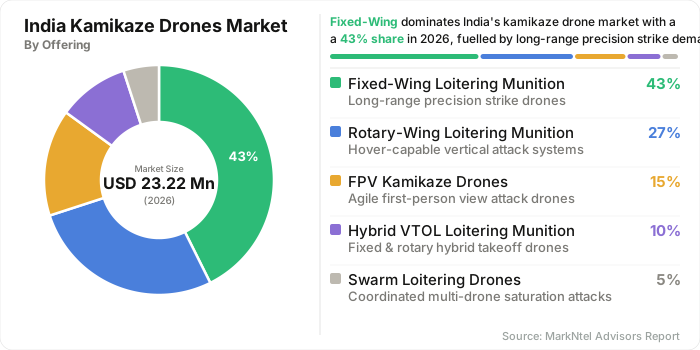
- The Fixed-Wing Loitering Munition segment accounted for nearly 43% market share in 2026, owing to its long-range strike capability, higher endurance, and increasing deployment across border surveillance and tactical combat operations.
- The Indian Army emerged as the dominant end user with approximately 68% share in 2026, supported by accelerated procurement of indigenous loitering munitions, rising border security requirements, and modernization of tactical warfare systems.
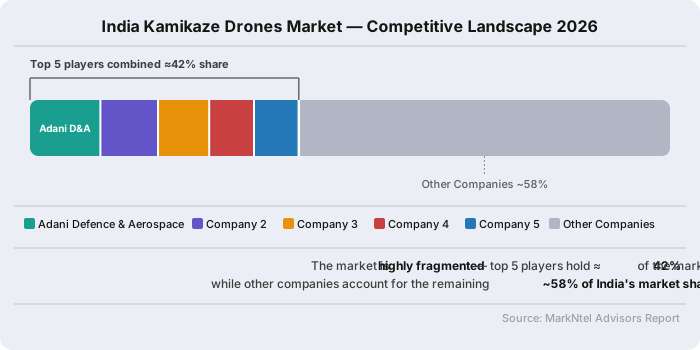
- The industry is highly fragmented, with the top five leading players accounting for approximately 42% of the total market share.
India Kamikaze Drones Market Size and Outlook
The India Kamikaze Drones market is expected to grow at a steady CAGR of 16.1% during the forecast period, driver by growing focus on autonomous warfare technologies and modern battlefield systems. The Indian armed forces are increasingly deploying loitering munitions and FPV kamikaze drones capable of conducting precision strikes against enemy infrastructure, armored vehicles, and radar systems while minimizing operational risks to personnel.
Moreover, the rising geopolitical tensions and the growing strategic importance of unmanned combat systems have further accelerated India’s adoption of advanced drone warfare technologies. As part of this broader defence capability enhancement strategy, India’s Defence Acquisition Council approved military procurement proposals worth nearly USD 8.8 billion in 2025, including loitering munition systems and advanced combat technologies.
Government-backed localization initiatives are also supporting the expansion of India’s indigenous drone ecosystem. Under the “Make in India” and “Aatmanirbhar Bharat” initiatives, India is promoting indigenous drone technologies, AI-enabled warfare systems, and autonomous combat platforms to reduce dependence on imported defence equipment and strengthen domestic manufacturing capabilities.
In addition, defence corridors, localization programs, and procurement preference for domestic manufacturers are encouraging greater private-sector participation across the unmanned systems industry. Supporting these efforts, the Indian Army received locally developed FPV kamikaze drones and UAV-launched precision-guided munitions from Adani Defence & Aerospace under emergency procurement programs in 2026 .
At the same time, rising military expenditure and ongoing combat capability development programs are creating favorable conditions for long-term market growth. According to SIPRI, India remained among the world’s largest military spenders in 2025, supporting investments in surveillance systems, loitering munitions, autonomous strike drones, and integrated battlefield technologies. Higher defence allocations are enabling upgrades to tactical combat infrastructure, border surveillance networks, and rapid-response warfare capabilities across the Indian Army, Air Force, and Navy.
Consequently, increasing operational requirements related to counter-terrorism missions, high-altitude warfare readiness, and precision battlefield engagement are continuing to strengthen procurement demand for advanced kamikaze drone systems.
Rapid technological advancements are further improving the operational effectiveness of kamikaze drones across India’s defence sector. Defence companies are increasingly developing AI-enabled navigation systems, swarm drone technologies, GPS-denied targeting capabilities, and high-endurance loitering platforms designed for complex combat environments. The integration of electro-optical payloads, thermal imaging systems, and real-time battlefield communication networks is also enhancing strike precision and mission coordination during military operations.
Overall, supported by expanding indigenous manufacturing capabilities and continued investments in advanced warfare systems, India’s kamikaze drones market is projected to grow from USD 23.22 million in 2026 to USD 56.87 million by 2032, with the market outlook remaining highly favorable over the forecast period.
India Kamikaze Drones Market Key Indicators
- According to SIPRI, India’s military expenditure increased by 8.9% to approximately USD 92.1 billion in 2025, positioning the country among the world’s largest defence spenders and supporting rising investments in loitering munitions, autonomous strike drones, and advanced battlefield technologies.
- In 2025, the Indian Army signed contracts worth approximately USD 18.5 million for nearly 450 Nagastra-1R loitering munitions to strengthen tactical combat capabilities and accelerate deployment of indigenous kamikaze drone systems across defence operations. Rising procurement of locally manufactured loitering munitions is supporting expansion of India’s autonomous warfare ecosystem and domestic defence production capabilities.
- The Government of India is planning an incentive program worth nearly USD 230 million to strengthen domestic drone manufacturing capabilities and reduce dependence on imported drone components and systems. The initiative is expected to accelerate investments in indigenous unmanned aerial technologies, AI-enabled combat platforms, and loitering munition production across India’s defence drone ecosystem.
India Kamikaze Drones Market Scope
| Category | Segments |
|---|---|
| By Type | Fixed-Wing Loitering Munition, Rotary-Wing Loitering Munition, Hybrid VTOL Loitering Munition, FPV (First-Person View) Kamikaze Drones, Swarm Loitering Drones |
| By Range | Short-Range (Below 20 km), Medium-Range (20–100 km), Long-Range (Above 100 km |
| By Launch Mode | Tube-Launched, Catapult-Launched, Hand-Launched, Vertical Take-Off and Landing (VTOL |
| By Mode of Operation | Autonomous, Semi-Autonomous, Man-in-the-Loop |
| By Payload Type | Anti-Personnel, Anti-Armor, Anti-Radiation, Multi-Purpose Payload |
| By Propulsion Type | Electric Powered, Hybrid Powered, Fuel Powered |
| By Application | Precision Strike Missions, Intelligence, Surveillance & Reconnaissance (ISR) with Strike Capability, Border Security Operations, Anti-Radar & Air Defense Suppression, Counter-Terrorism Operations, Urban Warfare Operations |
| By End User | Indian Army, Indian Air Force, Indian Navy, Border Security Forces & Paramilitary Forces, Special Operations Forces |
India Kamikaze Drones Market Growth Drivers
Rising Defence Modernization and Border Security Requirements
Escalating geopolitical tensions and the increasing need for advanced tactical warfare capabilities are significantly boosting demand for kamikaze drones and loitering munitions across India’s defence sector. The Indian armed forces are prioritizing autonomous strike systems capable of conducting precision attacks, real-time reconnaissance, and tactical battlefield operations across sensitive border regions with Pakistan and China. Growing cross-border infiltration risks and evolving asymmetric warfare strategies are further encouraging deployment of FPV kamikaze drones, swarm drones, and AI-enabled loitering munition systems across operational environments.
This strategic shift has intensified as the Indian Army continues integrating next-generation unmanned warfare technologies into its future combat framework. In April 2026, the Indian Army released its first dedicated roadmap for Unmanned Aerial Systems and Loitering Munitions, outlining nearly 30 categories of drones and autonomous combat systems required for future warfare operations while providing long-term visibility to defence manufacturers and research institutions . At the same time, operational lessons from the Russia–Ukraine conflict have reinforced the effectiveness of low-cost precision strike systems against armored vehicles, artillery positions, and critical infrastructure, accelerating India’s focus on indigenous loitering munition development.
Driven by these evolving battlefield requirements, India is steadily expanding investments in indigenous loitering munition platforms capable of operating in GPS-denied environments, electronic warfare conditions, and high-altitude combat zones. In 2025, the Indian Army successfully conducted trials of the indigenous “Rudrastra” hybrid VTOL loitering munition at the Pokharan firing range, demonstrating precision strike capability, operational endurance exceeding 170 km, and real-time battlefield surveillance performance . As military authorities continue emphasizing autonomous combat systems, AI-enabled targeting technologies, and swarm warfare capabilities, demand for kamikaze drones is expected to witness sustained growth across India’s defence sector during the forecast period.
Recent Trends
Growing Adoption of FPV Kamikaze Drones and Swarm Warfare Technologies
The increasing deployment of FPV kamikaze drones and swarm-enabled autonomous combat platforms is emerging as a major technological trend transforming India’s tactical warfare and unmanned combat capabilities. Indian defence forces are actively deploying low-cost, high-precision FPV drones capable of conducting real-time surveillance and precision strikes against enemy infrastructure, armored targets, and personnel positions. Their operational flexibility, low radar visibility, and effectiveness in contested battlefield environments are accelerating deployment across tactical combat operations. Responding to rising defence demand, IG Defence announced plans in 2026 to scale manufacturing capacity to nearly 200 FPV kamikaze drones per day to support increasing requirements for indigenous loitering munition systems .
Alongside the growth of FPV drones, the integration of swarm warfare technologies is significantly reshaping India’s unmanned combat ecosystem. Defence manufacturers are increasingly developing coordinated drone swarm platforms capable of overwhelming enemy air defence systems and executing synchronized precision strikes using artificial intelligence and autonomous flight coordination technologies. Bengaluru-based NewSpace Research & Technologies is also accelerating development of the “Sheshnaag-150” long-range swarm attack drone designed for coordinated autonomous combat missions and tactical strike operations exceeding ranges of 700 km. These developments are expected to strengthen the role of autonomous drone networks across future battlefield operations.
As battlefield requirements continue evolving, defence authorities are placing greater emphasis on anti-jamming and GPS-denied operational capabilities for kamikaze drones. This is encouraging manufacturers to integrate advanced navigation systems, machine vision technologies, electro-optical payloads, and autonomous targeting algorithms into loitering munition platforms to improve operational reliability in electronic warfare environments. At the same time, increasing collaboration between defence startups, armed forces, and research institutions is accelerating indigenous innovation across AI-enabled combat technologies and autonomous strike systems. Supported by India’s growing focus on network-centric warfare and AI-driven defence transformation, FPV and swarm-enabled kamikaze drones are expected to become a critical component of future military operations.
India Kamikaze Drones Market Opportunities and Challenges
Evolving Electronic Warfare Threats Creating Opportunities for AI-Enabled and GPS-Denied Kamikaze Drones
The increasing deployment of electronic warfare systems, anti-drone technologies, and GPS jamming platforms is emerging as a major operational challenge for kamikaze drones across modern combat environments. Advanced radar systems, RF jammers, signal spoofing technologies, and drone interception platforms are becoming increasingly capable of disrupting conventional loitering munitions during tactical missions. These evolving battlefield threats are creating growing concerns regarding mission reliability, navigation accuracy, and the survivability of autonomous strike drones operating in contested combat zones. As military forces continue facing complex electronic warfare environments, demand is steadily increasing for kamikaze drones capable of functioning with autonomous navigation, AI-enabled targeting, and GPS-denied operational capabilities.
In response to these evolving warfare requirements, defence manufacturers are increasingly prioritizing development of AI-enabled and electronically resilient loitering munition platforms designed for contested battlefield environments. Companies are investing in machine vision technologies, autonomous flight coordination systems, anti-jamming communication networks, and advanced onboard processing capabilities to improve operational reliability during electronic warfare conditions. Reinforcing this transition, the India–Pakistan drone conflict in 2025 highlighted the growing importance of survivable and electronically resilient unmanned combat systems capable of operating despite signal disruption and battlefield interception risks . As defence forces continue emphasizing survivability, autonomous targeting, and electronic warfare resilience, adoption of AI-enabled and GPS-denied kamikaze drones is expected to create significant growth opportunities across India’s unmanned combat ecosystem during the forecast period.
Segmentation Insights
Fixed-Wing Loitering Munition Segment Dominates the Market Due to Long-Range Precision Strike Capabilities
With nearly 43% market share, Fixed-Wing Loitering Munition has emerged as the dominant category in India’s kamikaze drones market due to its superior long-range strike and battlefield surveillance capabilities. The segment’s leadership is primarily supported by its extended operational endurance, precision targeting capability, and effectiveness in conducting autonomous strike missions against high-value enemy assets across tactical combat environments. Indian defence forces are increasingly deploying fixed-wing loitering munitions for surveillance, target acquisition, and long-range precision attack missions across border regions and sensitive operational zones.
The growing emphasis on indigenous defence manufacturing is further strengthening the adoption of fixed-wing kamikaze drone platforms across the country. Defence manufacturers are actively developing lightweight loitering munition systems equipped with AI-enabled targeting technologies, electro-optical payloads, thermal imaging systems, and anti-jamming communication capabilities to improve mission reliability in complex combat environments. Platforms such as the Nagastra-1 and Nagastra-1R loitering munitions have gained significant attention following additional procurement initiatives by the Indian Army, including orders for nearly 450 Nagastra-1R systems aimed at strengthening tactical precision strike capabilities and indigenous autonomous warfare preparedness. The increasing need for long-range precision strike capabilities and autonomous battlefield engagement against enemy infrastructure, artillery units, and armored targets is reinforcing the strategic importance of fixed-wing loitering munitions across India’s evolving combat warfare ecosystem. Based on offering, the market has been segmented into:
- Fixed-Wing Loitering Munition
- Rotary-Wing Loitering Munition
- Hybrid VTOL Loitering Munition
- FPV (First-Person View) Kamikaze Drones
- Swarm Loitering Drones
Growing Border Surveillance and Combat Requirements Drive Indian Army Dominance
The Indian Army represents nearly 68% share of the kamikaze drones market across India within the end-user segment due to expanding deployment of loitering munitions and FPV combat drones across tactical warfare operations. The Army is actively strengthening procurement of autonomous strike systems to improve surveillance, reconnaissance, and precision attack capabilities across mountainous terrain, border regions, and counter-terrorism missions. Rising focus on rapid-response battlefield operations and real-time tactical intelligence is further accelerating the adoption of kamikaze drones across frontline combat environments.
This dominance is closely linked to the Army’s broader transition toward future-ready battlefield technologies and network-centric warfare systems. Kamikaze drones are increasingly being integrated into infantry operations, artillery coordination, and tactical intelligence missions to improve operational efficiency while reducing troop exposure during combat situations. At the same time, growing procurement requirements are encouraging domestic manufacturers to expand development of tactical FPV drones, portable loitering munitions, and AI-enabled autonomous strike platforms optimized for Army operational needs. Supported by continued investments in tactical combat preparedness and border security infrastructure, the Indian Army is expected to remain the largest end user of kamikaze drones in India. Based on end user, the market is categorized into:
- Indian Army
- Indian Air Force
- Indian Navy
- Border Security Forces & Paramilitary Forces
- Special Operations Forces
India Kamikaze Drones Market Competitive Analysis
A highly fragmented competitive structure characterizes the India kamikaze drones market, with several domestic and international players competing across autonomous combat technologies and loitering munition systems. Leading companies including Tata Advanced Systems, Adani Defence & Aerospace, Elbit Systems, Israel Aerospace Industries, and IG Defence collectively hold nearly 42% market share, supported by growing military procurement programs and continuous advancements in indigenous drone manufacturing capabilities.
Key Kamikaze Drone Companies in India
- Flying Wedge Defence
- Tata Advanced Systems
- Adani Defence & Aerospace
- Alpha Design Technologies
- Elbit Systems
- Israel Aerospace Industries
- Johnnette Technologies
- Flying Wedge Defence
- IG Defence
- Others
India Kamikaze Drones Industry News and Recent Developments
May 2026: Adani Defence & Aerospace Expands Indigenous FPV Kamikaze Drone Deployment for Indian Army
Adani Defence & Aerospace supplied indigenously developed AGNIKAA VTOL-1 FPV Kamikaze Drones and UAV-Launched Precision Guided Munition systems to the Indian Army under emergency procurement programs aimed at strengthening autonomous battlefield strike capabilities and tactical combat preparedness across sensitive operational zones in India. The systems were developed in collaboration with DRDO and are designed to support precision targeting, real-time surveillance, and rapid-response military operations in complex combat environments.
Impact Analysis: This development highlights the growing operational integration of indigenous FPV kamikaze drones and autonomous strike systems within India’s modern warfare infrastructure. It is expected to accelerate deployment of locally manufactured loitering munition technologies, strengthen domestic defence manufacturing capabilities, and increase demand for AI-enabled tactical drone systems across India’s armed forces modernization programs.
February 2026: Johnnette Technologies Strengthens Indigenous Loitering Munition Deliveries to Indian Army
Johnnette Technologies completed delivery of the third batch of indigenously developed JM-1 loitering munition systems to the Indian Army under emergency procurement initiatives focused on improving tactical strike readiness and unmanned combat capabilities across border security and counter-terrorism operations. The deployment supports the Army’s increasing adoption of portable precision-strike drone systems designed for rapid battlefield engagement and autonomous target neutralization.
Impact Analysis: This development reflects the growing confidence of Indian defence authorities in domestically manufactured loitering munition platforms and next-generation autonomous combat technologies. It is expected to strengthen India’s indigenous drone warfare ecosystem, encourage additional defence procurement opportunities for local manufacturers, and accelerate expansion of tactical unmanned combat systems across military operations.
Frequently Asked Questions
- Market Segmentation
- Introduction
- Product Definition
- Research Process
- Assumptions
- Executive Summary
- India Kamikaze Drones Market Policies, Regulations, and Product Standards
- India Kamikaze Drones Market Trends & Developments
- India Kamikaze Drones Market Dynamics
- Growth Factors
- Challenges
- India Kamikaze Drones Market Hotspot & Opportunities
- India Kamikaze Drones Market Outlook, 2022-2032F
- Market Size & Outlook
- By Revenues (USD Million)
- Market Share & Outlook
- By Type- Market Size & Forecast 2022-2032, USD Million
- Fixed-Wing Loitering Munition
- Rotary-Wing Loitering Munition
- Hybrid VTOL Loitering Munition
- FPV (First-Person View) Kamikaze Drones
- Swarm Loitering Drones
- By Range- Market Size & Forecast 2022-2032, USD Million
- Short-Range (Below 20 km)
- Medium-Range (20–100 km)
- Long-Range (Above 100 km)
- By Launch Mode- Market Size & Forecast 2022-2032, USD Million
- Tube-Launched
- Catapult-Launched
- Hand-Launched
- Vertical Take-Off and Landing (VTOL)
- By Mode of Operation- Market Size & Forecast 2022-2032, USD Million
- Autonomous
- Semi-Autonomous
- Man-in-the-Loop
- By Payload Type- Market Size & Forecast 2022-2032, USD Million
- Anti-Personnel
- Anti-Armor
- Anti-Radiation
- Multi-Purpose Payload
- By Propulsion Type- Market Size & Forecast 2022-2032, USD Million
- Electric Powered
- Hybrid Powered
- Fuel Powered
- By Application- Market Size & Forecast 2022-2032, USD Million
- Precision Strike Missions
- Intelligence, Surveillance & Reconnaissance (ISR) with Strike Capability
- Border Security Operations
- Anti-Radar & Air Defense Suppression
- Counter-Terrorism Operations
- Urban Warfare Operations
- By End User- Market Size & Forecast 2022-2032, USD Million
- Indian Army
- Indian Air Force
- Indian Navy
- Border Security Forces & Paramilitary Forces
- Special Operations Forces
- By Company
- Competition Characteristics
- Market Share & Analysis
- By Type- Market Size & Forecast 2022-2032, USD Million
- Market Size & Outlook
- India Fixed-Wing Loitering Munition Market Outlook, 2022-2032
- Market Size & Outlook
- By Revenues (USD Million)
- Market Share & Outlook
- By Range- Market Size & Forecast 2022-2032, USD Million
- By Launch Mode- Market Size & Forecast 2022-2032, USD Million
- By Mode of Operation- Market Size & Forecast 2022-2032, USD Million
- By Payload Type- Market Size & Forecast 2022-2032, USD Million
- By Propulsion Type- Market Size & Forecast 2022-2032, USD Million
- By Application- Market Size & Forecast 2022-2032, USD Million
- By End User- Market Size & Forecast 2022-2032, USD Million
- Market Size & Outlook
- India Rotary-Wing Loitering Munition Market Outlook, 2022-2032
- Market Size & Outlook
- By Revenues (USD Million)
- Market Share & Outlook
- By Range- Market Size & Forecast 2022-2032, USD Million
- By Launch Mode- Market Size & Forecast 2022-2032, USD Million
- By Mode of Operation- Market Size & Forecast 2022-2032, USD Million
- By Payload Type- Market Size & Forecast 2022-2032, USD Million
- By Propulsion Type- Market Size & Forecast 2022-2032, USD Million
- By Application- Market Size & Forecast 2022-2032, USD Million
- By End User- Market Size & Forecast 2022-2032, USD Million
- Market Size & Outlook
- India Hybrid VTOL Loitering Munition Market Outlook, 2022-2032
- Market Size & Outlook
- By Revenues (USD Million)
- Market Share & Outlook
- By Range- Market Size & Forecast 2022-2032, USD Million
- By Launch Mode- Market Size & Forecast 2022-2032, USD Million
- By Mode of Operation- Market Size & Forecast 2022-2032, USD Million
- By Payload Type- Market Size & Forecast 2022-2032, USD Million
- By Propulsion Type- Market Size & Forecast 2022-2032, USD Million
- By Application- Market Size & Forecast 2022-2032, USD Million
- By End User- Market Size & Forecast 2022-2032, USD Million
- Market Size & Outlook
- India FPV (First-Person View) Kamikaze Drones Market Outlook, 2022-2032
- Market Size & Outlook
- By Revenues (USD Million)
- Market Share & Outlook
- By Range- Market Size & Forecast 2022-2032, USD Million
- By Launch Mode- Market Size & Forecast 2022-2032, USD Million
- By Mode of Operation- Market Size & Forecast 2022-2032, USD Million
- By Payload Type- Market Size & Forecast 2022-2032, USD Million
- By Propulsion Type- Market Size & Forecast 2022-2032, USD Million
- By Application- Market Size & Forecast 2022-2032, USD Million
- By End User- Market Size & Forecast 2022-2032, USD Million
- Market Size & Outlook
- India Swarm Loitering Drones Market Outlook, 2022-2032
- Market Size & Outlook
- By Revenues (USD Million)
- Market Share & Outlook
- By Range- Market Size & Forecast 2022-2032, USD Million
- By Launch Mode- Market Size & Forecast 2022-2032, USD Million
- By Mode of Operation- Market Size & Forecast 2022-2032, USD Million
- By Payload Type- Market Size & Forecast 2022-2032, USD Million
- By Propulsion Type- Market Size & Forecast 2022-2032, USD Million
- By Application- Market Size & Forecast 2022-2032, USD Million
- By End User- Market Size & Forecast 2022-2032, USD Million
- Market Size & Outlook
- India Kamikaze Drones Market Key Strategic Imperatives for Success & Growth
- Competitive Outlook
- Company Profiles
- Flying Wedge Defence
- Business Description
- Product Portfolio
- Collaborations & Alliances
- Recent Developments
- Financial Details
- Others
- Tata Advanced Systems
- Business Description
- Product Portfolio
- Collaborations & Alliances
- Recent Developments
- Financial Details
- Others
- Adani Defence & Aerospace
- Business Description
- Product Portfolio
- Collaborations & Alliances
- Recent Developments
- Financial Details
- Others
- Alpha Design Technologies
- Business Description
- Product Portfolio
- Collaborations & Alliances
- Recent Developments
- Financial Details
- Others
- Elbit Systems
- Business Description
- Product Portfolio
- Collaborations & Alliances
- Recent Developments
- Financial Details
- Others
- Israel Aerospace Industries
- Business Description
- Product Portfolio
- Collaborations & Alliances
- Recent Developments
- Financial Details
- Others
- Johnnette Technologies
- Business Description
- Product Portfolio
- Collaborations & Alliances
- Recent Developments
- Financial Details
- Others
- Flying Wedge Defence
- Business Description
- Product Portfolio
- Collaborations & Alliances
- Recent Developments
- Financial Details
- Others
- IG Defence
- Business Description
- Product Portfolio
- Collaborations & Alliances
- Recent Developments
- Financial Details
- Others
- Others
- Business Description
- Product Portfolio
- Collaborations & Alliances
- Recent Developments
- Financial Details
- Others
- Flying Wedge Defence
- Company Profiles
- Disclaimer
MarkNtel Advisors follows a robust and iterative research methodology designed to ensure maximum accuracy and minimize deviation in market estimates and forecasts. Our approach combines both bottom-up and top-down techniques to effectively segment and quantify various aspects of the market. A consistent feature across all our research reports is data triangulation, which examines the market from three distinct perspectives to validate findings. Key components of our research process include:
1. Scope & Research Design At the outset, MarkNtel Advisors define the research objectives and formulate pertinent questions. This phase involves determining the type of research—qualitative or quantitative—and designing a methodology that outlines data collection methods, target demographics, and analytical tools. They also establish timelines and budgets to ensure the research aligns with client goals.
2. Sample Selection and Data Collection In this stage, the firm identifies the target audience and determines the appropriate sample size to ensure representativeness. They employ various sampling methods, such as random or stratified sampling, based on the research objectives. Data collection is carried out using tools like surveys, interviews, and observations, ensuring the gathered data is reliable and relevant.
3. Data Analysis and Validation Once data is collected, MarkNtel Advisors undertake a rigorous analysis process. This includes cleaning the data to remove inconsistencies, employing statistical software for quantitative analysis, and thematic analysis for qualitative data. Validation steps are taken to ensure the accuracy and reliability of the findings, minimizing biases and errors.

4. Data Forecast and FinalizationThe final phase involves forecasting future market trends based on the analyzed data. MarkNtel Advisors utilize predictive modeling and time series analysis to anticipate market behaviors. The insights are then compiled into comprehensive reports, featuring visual aids like charts and graphs, and include strategic recommendations to inform client decision-making
We offer flexible licensing options to cater to varying organizational needs. Choose the pricing pack that best suits your requirements:
Buy Now Inquire Before Buying
 Request Customization
 Talk to our Consultant







