

By Smart Transportation (Smart Ticketing, Traffic Management System, Passenger Information Management System, Freight Information System, Connected Vehicles, Smart Parking, Others)......, By Smart Buildings (Building Energy Optimization, Emergency Management System, Parking Management System, Integrated Security & Surveillance, Smart HVAC & Lighting, Building Automation Systems, Others), By Smart Utilities (Advanced Metering Infrastructure (AMI), Distribution Management System, Substation Automation, Smart Water Management, Smart Waste Management, Smart Grid Infrastructure, Others), By Smart Citizen Services (Smart Governance, Smart Healthcare, Smart Education, Smart Public Safety, Smart Street Lighting, Smart Tourism, Smart Environmental Monitoring, Others), By Deployment Mode (Cloud-Based, On-Premises), By Technology (Internet of Things (IoT), Artificial Intelligence (AI), Big Data Analytics, Cloud Computing, 5G Technology, Edge Computing, Cybersecurity, Digital Twin Technology), and others Read more
- ICT & Electronics
- May 2026
- 135
- PDF, Excel, PPT
Saudi Arabia Smart Cities Market Key Takeaways
- The Saudi Arabia Smart Cities Market was valued at nearly USD 5.3 billion in 2025 and is anticipated to expand steadily, reaching USD 15.06 billion by 2032 from USD 6.15 billion in 2026, reflecting a CAGR of 16.1% over 2026–2032.
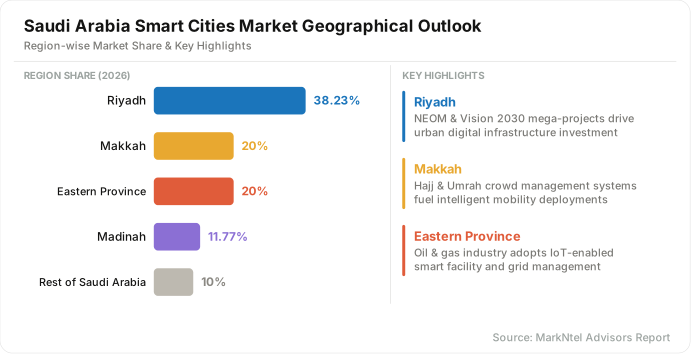
- Riyadh maintained its position as the largest regional contributor to the market in 2026, capturing nearly 38.23% share due to extensive smart infrastructure and digital transformation investments.
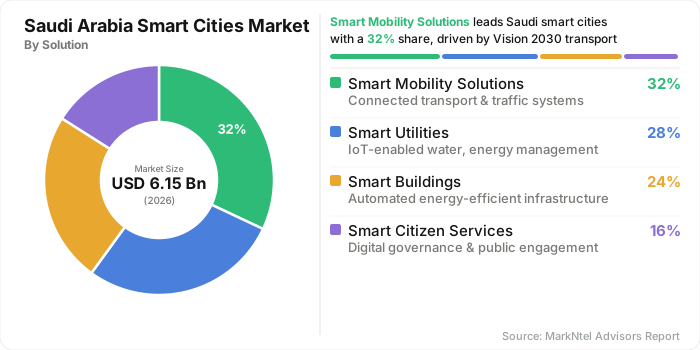
- The Smart Mobility Solutions segment led the market with around 32% share in 2026, driven by expanding investments in intelligent transportation systems, smart transit, and connected mobility infrastructure.
- Internet of Things (IoT) dominated the technology landscape in 2026 with approximately 32% share in 2026, supported by rising implementation of connected devices, smart utility systems, and real-time urban monitoring infrastructure across the Kingdom.
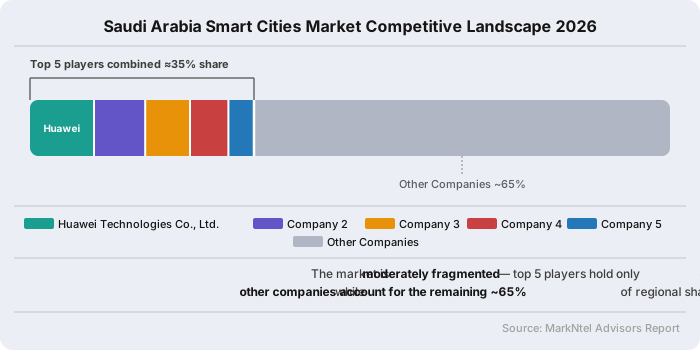
- The industry is moderately fragmented, with the top five players collectively accounting for nearly 35% share, supported by their strong presence across 5G connectivity, cloud computing, AI-enabled urban infrastructure, smart mobility, and digital transformation solutions.
Saudi Arabia Smart Cities Market Size and Outlook
The Saudi Arabia smart cities market is expected to register a CAGR of approximately 16.1% during 2026–2032, driven by rapid urbanization, large-scale infrastructure modernization, and ongoing Vision 2030 initiatives focused on digital transformation, smart governance, connected mobility, energy efficiency, and sustainable urban development.
The government continues strengthening smart city infrastructure through strategic investments aimed at improving transportation systems, public services, and urban connectivity across the Kingdom. Reflecting this commitment, government expenditure increased by 20% year-on-year to USD 103.2 billion in Q1 2026, supporting large-scale infrastructure and technology modernization programs . In early 2025, nearly 85.3% of Saudi Arabia’s population resided in urban centers , significantly increasing demand for intelligent transportation systems, smart utilities, connected residential communities, and digitally integrated public infrastructure.
As urban populations continue expanding, authorities are accelerating the deployment of advanced digital infrastructure and integrated governance systems across major cities. Saudi Arabia continued expanding investments in AI infrastructure, e-government services, cloud computing, and interoperable digital ecosystems aligned with national modernization objectives during 2025 . At the same time, the expansion of advanced 5G infrastructure across the Kingdom is supporting wider adoption of IoT-enabled smart city infrastructure across healthcare, transportation, utilities, education, and public-sector projects. This increasing integration of AI-powered municipal services and cloud-enabled governance platforms is improving operational efficiency, traffic management, and public safety capabilities throughout urban areas.
Alongside government-led modernization efforts, rising participation from commercial, industrial, and institutional end users is further strengthening demand for integrated smart infrastructure technologies across Saudi Arabia. The Kingdom continued expanding smart grid and smart meter deployment initiatives to improve grid efficiency, optimize electricity consumption, and support long-term energy modernization objectives.
Simultaneously, technology providers operating in the country expanded localization strategies and collaborative initiatives supporting AI surveillance systems, cloud-based city management platforms, and intelligent transportation infrastructure deployment. Growing adoption of digital twin technologies, automated building management systems, and smart HVAC platforms is also accelerating integration of intelligent infrastructure across commercial real estate and mixed-use urban developments.
Supported by sustained infrastructure diversification efforts and long-term sustainability commitments, the future outlook for Saudi Arabia’s smart cities market remains highly favorable. Saudi Arabia’s net-zero emissions target for 2060 is accelerating investments in renewable energy infrastructure, energy-efficiency initiatives, sustainable transportation systems, and environmentally integrated urban development projects.
In parallel, the Public Investment Fund continues financing giga-projects intended to attract tourism, foreign investment, and advanced manufacturing operations throughout the Kingdom. As integration of AI, cloud computing, cybersecurity, edge computing, and IoT-enabled platforms continues expanding across residential, industrial, and institutional applications, the KSA smart cities market is projected to grow from USD 6.15 billion in 2026 to USD 15.06 billion by 2032, with demand for smart city technologies expected to maintain strong growth momentum during the forecast period.
Saudi Arabia Smart Cities Market Key Indicators
- Saudi Arabia’s Vision 2030 initiative includes investments of nearly USD 1 trillion across smart infrastructure, transportation, renewable energy, tourism, and urban development projects. These investments are accelerating adoption of IoT platforms, AI-powered surveillance systems, cloud infrastructure, and intelligent transportation technologies across the Kingdom.
- According to the Communications, Space & Technology Commission (CST), internet penetration in Saudi Arabia reached 99% in 2025, reflecting a highly connected digital ecosystem. Strong digital connectivity is supporting wider deployment of smart mobility solutions, e-governance platforms, smart healthcare systems, and intelligent city management technologies across urban regions.
- NEOM officially states that THE LINE is designed to accommodate approximately 9 million residents through fully connected and digitally integrated urban systems. The project’s large-scale smart urban infrastructure is increasing demand for intelligent energy management systems, smart buildings, autonomous transportation technologies, AI-powered governance platforms, and connected public infrastructure solutions across Saudi Arabia.
- In 2025, NEOM’s “Hidden Marina” phase remained under development as part of Saudi Arabia’s USD 2 trillion megacity project focused on AI-enabled and digitally integrated urban infrastructure. The project includes smart buildings, connected mobility systems, and intelligent city management technologies, accelerating adoption of advanced smart infrastructure solutions across major urban developments in the Kingdom.
- Saudi Arabia is working to automate 40% of its electricity distribution network by the end of 2025 and has already installed more than 11 million smart meters across the Kingdom. Expansion of smart grid infrastructure and real-time monitoring technologies is increasing demand for AI-enabled energy management systems, connected utility networks, and intelligent urban infrastructure solutions supporting large-scale digital transformation initiatives.
- In 2025, MODON attracted more than USD 8 billion in investments across industrial cities and logistics projects in Saudi Arabia. Expansion of digitally connected industrial zones is increasing adoption of IoT-enabled monitoring systems, AI-driven operational platforms, and smart infrastructure technologies across the Kingdom
- Saudi Arabia aims to generate around 50% of its electricity from renewable energy sources by 2030 under its national sustainability and energy diversification strategy. Expansion of renewable energy infrastructure is increasing demand for smart grid technologies, intelligent energy management systems, and digital utility monitoring platforms required for efficient integration of renewable power across urban infrastructure networks
Saudi Arabia Smart Cities Market Scope
| Category | Segments |
|---|---|
| By Smart Transportation | Smart Ticketing, Traffic Management System, Passenger Information Management System, Freight Information System, Connected Vehicles, Smart Parking, Others |
| By Smart Buildings | Building Energy Optimization, Emergency Management System, Parking Management System, Integrated Security & Surveillance, Smart HVAC & Lighting, Building Automation Systems, Others |
| By Smart Utilities | Advanced Metering Infrastructure (AMI), Distribution Management System, Substation Automation, Smart Water Management, Smart Waste Management, Smart Grid Infrastructure, Others |
| By Smart Citizen Services | Smart Governance, Smart Healthcare, Smart Education, Smart Public Safety, Smart Street Lighting, Smart Tourism, Smart Environmental Monitoring, Others |
| By Deployment Mode | Cloud-Based, On-Premises |
| By Technology | Internet of Things (IoT), Artificial Intelligence (AI), Big Data Analytics, Cloud Computing, 5G Technology, Edge Computing, Cybersecurity, Digital Twin Technology |
Saudi Arabia Smart Cities Market Growth Drivers
Vision 2030 Infrastructure Modernization Programs
Saudi Arabia’s ongoing infrastructure modernization and digital transformation initiatives under Vision 2030 are playing a central role in accelerating development of the country’s smart cities ecosystem. Over recent years, the government has increased investments in transportation networks, logistics infrastructure, digital connectivity, and sustainable urban development projects to support economic diversification and long-term modernization objectives. Reflecting this momentum, Saudi Arabia invited private investment across 45 transportation and logistics projects valued at approximately USD 16 billion in 2025 , supporting expansion of integrated infrastructure networks across the Kingdom. These modernization initiatives are generating strong demand for intelligent transportation systems, connected mobility platforms, and smart infrastructure development across major urban regions.
The impact of infrastructure modernization intensified further during 2025 and 2026 as authorities accelerated development of utility and digitally connected public infrastructure projects. Saudi Arabia finalized a USD 13 billion syndicated loan to finance power, water, and public utility infrastructure projects aligned with Vision 2030 development objectives . Expansion of utility networks and digitally integrated infrastructure is increasing deployment of smart grids, intelligent utility management systems, connected monitoring technologies, and AI-enabled urban infrastructure across residential, commercial, and industrial applications. At the same time, projects including NEOM continue integrating smart buildings, connected public services, and smart mobility initiatives into large-scale infrastructure frameworks.
As infrastructure modernization expands across multiple sectors, the driver is creating sustained long-term demand rather than supporting temporary technology adoption alone. Saudi Arabia also plans to invest more than USD 65 billion under Vision 2030 to modernize healthcare infrastructure, expand e-health services, and develop 21 integrated health clusters across the Kingdom . Expansion of digitally connected healthcare infrastructure is increasing adoption of cloud-based management systems, AI-enabled healthcare platforms, IoT-based monitoring technologies, and integrated digital public services across institutional infrastructure networks. With authorities continuing to prioritize digital transformation, sustainable development, and economic diversification, infrastructure modernization programs are expected to remain a long-term catalyst supporting expansion of smart city technologies throughout Saudi Arabia.
Recent Trends
Expansion of AI-Driven Urban Management and Smart Governance Systems
Growing reliance on data-driven urban management technologies is accelerating adoption of AI-powered monitoring systems and digital governance platforms across Saudi Arabia’s smart cities landscape. Municipal authorities are increasingly deploying artificial intelligence, computer vision, predictive analytics, and automated surveillance technologies to improve public safety, traffic optimization, environmental monitoring, and city resource management. These AI-enabled platforms are helping authorities process real-time urban data more efficiently while strengthening operational management and decision-making capabilities across connected infrastructure networks. Supporting this expansion, Saudi Arabia announced AI and digital infrastructure investments exceeding USD 14.9 billion during LEAP 2025 to strengthen cloud computing, artificial intelligence, and advanced technology ecosystems across the Kingdom.
This technological transformation is being further reinforced by Saudi Arabia’s expanding national artificial intelligence and digital government initiatives under Vision 2030. The Saudi Data and Artificial Intelligence Authority continues supporting adoption of AI across government services, municipal operations, and smart urban infrastructure systems under the National Strategy for Data and A I. In parallel, Saudi Arabia launched the HUMAIN initiative in 2025 to strengthen AI infrastructure, cloud computing capabilities, and large-scale AI deployment across government and urban systems. Arab News Report on Saudi Arabia’s HUMAIN AI Initiative These initiatives are accelerating integration of AI-driven governance systems and intelligent public infrastructure across major urban developments.
Alongside government initiatives, investments from global technology companies are supporting wider deployment of artificial intelligence and cloud infrastructure across Saudi Arabia’s smart city projects. Oracle Corporation announced plans to invest USD 1.5 billion to expand cloud infrastructure capabilities in Saudi Arabia, including a new public cloud region in Riyadh supporting AI-focused government systems and digital infrastructure expansion . At the same time, Honeywell International Inc. continued supporting Saudi Arabia’s localization and digital transformation initiatives through investments in automation technologies, industrial AI, and smart infrastructure solutions aligned with Vision 2030 objectives . Together, these developments are strengthening convergence between artificial intelligence, cloud computing, and connected urban infrastructure across the Kingdom.
Saudi Arabia Smart Cities Market Opportunities and Challenges
Growing Cybersecurity Risks in Connected Urban Infrastructure Creating Demand for Advanced Smart City Security Solutions
The increasing deployment of connected urban infrastructure and digital public services is emerging as a major challenge for Saudi Arabia’s smart cities industry due to rising cybersecurity risks. Smart city ecosystems rely heavily on interconnected IoT devices, cloud-based data platforms, intelligent transportation systems, and digital governance networks, making urban infrastructure increasingly vulnerable to cyberattacks, data breaches, and operational disruptions. As cities continue integrating AI-enabled surveillance, connected mobility platforms, and digital utility systems, the complexity of securing critical infrastructure networks is also increasing significantly.
The challenge is becoming more prominent as Saudi Arabia rapidly expands its digital economy and smart infrastructure investments under Vision 2030. According to Dark Reading, hacktivism-related DDoS attacks across the GCC region increased by 70%, with Saudi Arabia emerging as one of the primary cyberattack targets due to expanding digital infrastructure and connected public systems . Increasing dependence on cloud computing, IoT-connected infrastructure, and AI-enabled urban platforms is further amplifying the need for advanced cyber protection mechanisms across municipal and infrastructure networks. At the same time, the National Cybersecurity Authority continues strengthening cybersecurity frameworks and controls to safeguard critical infrastructure, priority sectors, and government digital services against rising cyber threats.
While cybersecurity risks remain a significant operational challenge, they are also creating substantial growth opportunities for cybersecurity providers and secure digital infrastructure solutions. In 2026, CrowdStrike Holdings, Inc. signed a memorandum of understanding with Saudi Aramco to support AI-powered cybersecurity systems, secure cloud capabilities, and infrastructure protection initiatives aligned with Vision 2030 objectives . The collaboration highlights increasing investment in advanced cybersecurity technologies designed to protect critical infrastructure, operational technology systems, and connected urban ecosystems across the Kingdom. As Saudi Arabia continues accelerating connected urban development, demand for advanced cybersecurity technologies is expected to increase significantly across transportation, utilities, and digital governance networks.
Segmentation Insights
Smart Mobility Solutions Dominate the Market Owing to Vision 2030-Led Investments in Advanced Transportation and Digital Mobility Ecosystems
Accounting for approximately 32% of total market revenue, Smart Mobility Solutions represent the largest solution category, driven by Saudi Arabia’s strategic emphasis on developing efficient, connected, and sustainable urban ecosystems. Under Vision 2030, significant investments are being directed toward intelligent transportation systems, smart traffic management platforms, connected public transit networks, and digital mobility services designed to improve urban accessibility and reduce congestion. The rapid development of next-generation cities such as NEOM and THE LINE further strengthens demand for advanced mobility infrastructure, positioning transportation technologies at the center of the Kingdom’s smart city transformation efforts.
This leadership is further supported by major transportation projects that continue to expand the country’s intelligent mobility capabilities. In 2025, the Riyadh Metro became fully operational as the world’s longest driverless metro network, spanning 176 kilometers and 85 stations, highlighting the scale of investment in integrated and technology-driven public transportation. Such initiatives require extensive deployment of communication networks, real-time monitoring systems, data analytics platforms, and centralized control centers to ensure seamless operations. As a result, transportation projects consistently attract higher technology spending and infrastructure investment than other smart city applications, enabling Smart Mobility Solutions to maintain their dominant position across smart city developments. Based on solution, the market has been segmented into:
- Smart Mobility Solutions
- Smart Utilities
- Smart Buildings
- Smart Citizen Services
- Others
Internet of Things (IoT) Dominates the Technology Segment Driven by Large-Scale Deployment of Connected Urban Infrastructure
Internet of Things (IoT) holds approximately 32% share within the technology segment, making it the dominant technology category in the digital cities industry. The segment’s growth is primarily driven by the increasing deployment of connected sensors, smart devices, communication modules, and real-time monitoring systems across transportation, utilities, energy management, public safety, and smart building infrastructure. IoT technologies serve as the foundation for intelligent urban ecosystems by enabling seamless data collection, automated communication, and real-time operational management. The growing implementation of smart utility infrastructure is further accelerating adoption across the Kingdom. For instance, according to the Saudi Ministry of Energy, more than 11 million smart meters have been installed across Saudi Arabia since 2021 under Vision 2030 initiatives, enabling consumers to monitor energy consumption in real time through connected smart applications.
The rapid expansion of industrial digitization and connected infrastructure projects is also reinforcing IoT dominance across Saudi Arabia. Industry 4.0 initiatives are driving the adoption of connected industrial monitoring systems, predictive maintenance platforms, and automated infrastructure management technologies across industrial cities and economic zones. In addition, the integration of IoT with artificial intelligence, cloud computing, and 5G connectivity is enabling advanced urban analytics and real-time infrastructure optimization capabilities. The continued development of smart city projects such as NEOM is expected to create long-term growth opportunities for IoT-enabled infrastructure, supporting the segment’s continued leadership within the Saudi Arabia smart cities market. Based on technology, the market is categorized into:
- Internet of Things (IoT)
- Artificial Intelligence (AI)
- Big Data Analytics
- Cloud Computing
- 5G Technology
- Edge Computing
- Cybersecurity
- Digital Twin Technology
Saudi Arabia Smart Cities Market Geographical Outlook
The Saudi Arabia smart cities market is heavily concentrated in Riyadh, which captures around 38.23% share due to its rapid adoption of advanced digital and connected city technologies. The city’s leadership is primarily supported by its position as the Kingdom’s political, financial, and administrative center, along with its large population base and ongoing urban modernization initiatives under Vision 2030. Riyadh continues witnessing substantial investments in intelligent transportation systems, smart governance platforms, connected utilities, AI-enabled surveillance infrastructure, and digital public services aimed at improving urban efficiency and connectivity. In addition, large-scale infrastructure projects are accelerating the deployment of smart mobility and connected urban infrastructure across the capital. For instance, the Royal Commission for Riyadh City (RCRC) announced the expansion of the Riyadh Metro Red Line with five additional stations to improve connectivity between major residential, healthcare, educational, and cultural districts across the city.
The rapid growth of commercial and residential developments in Riyadh is further generating strong demand for smart buildings, intelligent energy management systems, and integrated urban connectivity solutions. The city also serves as the primary center for several national AI, smart governance, and digital transformation initiatives, supported by the presence of major government institutions, enterprise headquarters, telecom infrastructure, and technology investments. Furthermore, rising investments in cloud computing infrastructure, AI research, and data center development continue strengthening Riyadh’s position as the central hub for Saudi Arabia’s smart urban transformation ecosystem.
Saudi Arabia Smart Cities Market Competitive Analysis
The Saudi Arabia smart cities industry is moderately fragmented, with several global technology providers, telecom operators, and digital infrastructure companies actively operating across the Kingdom. The top five players, including Saudi Telecom Company (stc), Huawei Technologies Co., Ltd., Cisco Systems, Inc., Siemens AG, and Microsoft Corporation, collectively account for nearly 35% of the total market share. stc maintains a strong presence in telecom and digital infrastructure deployment, while Huawei, Cisco, Siemens, and Microsoft continue expanding their footprint across 5G connectivity, smart mobility, cloud computing, and AI-enabled urban infrastructure solutions.
Key Players in Saudi Arabia Smart Cities Market
- Siemens AG
- Cisco Systems, Inc.
- Huawei Technologies Co., Ltd.
- Honeywell International Inc.
- Schneider Electric SE
- Saudi Telecom Company (stc)
- Ericsson AB
- Microsoft Corporation
- IBM Corporation
- NEOM Company
- Others
Saudi Arabia Smart Cities Industry News and Recent Developments
February 2026: Microsoft Advances Saudi Arabia Cloud Region Infrastructure Development
Microsoft Corporation confirmed significant progress in developing its Saudi Arabia cloud region infrastructure, including completion of three Azure availability zones designed to support sovereign cloud services, AI applications, and digital transformation initiatives. The infrastructure expansion aims to strengthen secure cloud capabilities and support large-scale smart governance and connected urban infrastructure projects across the Kingdom.
Impact Analysis: The development reflects increasing investment in hyperscale cloud infrastructure to support Saudi Arabia’s smart city transformation initiatives. It is expected to strengthen AI adoption, data localization capabilities, and cloud-enabled urban management systems while supporting long-term growth of the Kingdom’s digital economy ecosystem.
February 2025: Salesforce Announces USD 500 Million Investment in AI and Cloud Infrastructure in Saudi Arabia
Salesforce announced plans to invest nearly USD 500 million in AI-related infrastructure and cloud technologies in Saudi Arabia during LEAP 2025. The investment includes deployment of Hyperforce cloud infrastructure and expansion of AI-powered Agentforce platforms to support digital transformation, cloud adoption, and smart governance initiatives across the Kingdom.
Impact Analysis: This development highlights Saudi Arabia’s growing focus on strengthening AI-driven digital infrastructure and cloud-based smart city ecosystems under Vision 2030. The investment is expected to accelerate adoption of intelligent public services, enterprise cloud solutions, and AI-enabled urban management technologies across the country.
- Market Segmentation
- Introduction
- Product Definition
- Research Process
- Assumptions
- Executive Summary
- Saudi Arabia Macroeconomic Outlook
- Saudi Arabia Smart Cities Market Policies, Regulations, and Product Standards
- Saudi Arabia Smart Cities Market Trends & Developments
- Saudi Arabia Smart Cities Market Dynamics
- Growth Drivers
- Challenges
- Saudi Arabia Smart Cities Market Hotspot & Opportunities
- Saudi Arabia Smart Cities Market Outlook, 2022–2032F
- Market Size & Outlook
- By Revenues (USD Million)
- Market Share & Outlook
- By Solution
- Smart Mobility Solutions
- Smart Utilities
- Smart Buildings
- Smart Citizen Services
- Others
- By Components
- Hardware
- Software
- Services
- Consulting Services
- Integration & Deployment Services
- Managed Services
- Maintenance & Support Services
- By Technology
- Internet of Things (IoT)
- Artificial Intelligence (AI)
- Big Data Analytics
- Cloud Computing
- 5G Technology
- Edge Computing
- Cybersecurity
- Digital Twin Technology
- By End-User
- Government & Municipalities
- Commercial
- Residential
- Industrial
- Others
- By Region
- Riyadh
- Makkah
- Eastern Province
- Madinah
- Tabuk
- Rest of Saudi Arabia
- By Company
- Company Revenue Shares
- Competitor Characteristics
- By Solution
- Market Size & Outlook
- Saudi Arabia Smart Mobility Solutions Market Outlook, 2022–2032F
- Market Size & Outlook
- By Revenues (USD Million)
- Market Share & Outlook
- By Solution
- Smart Ticketing
- Traffic Management System
- Passenger Information System
- Freight Information System
- Connected Vehicles
- Smart Parking
- Others
- By Components
- By Technology
- By End-User
- By Solution
- Market Size & Outlook
- Saudi Arabia Smart Utilities Market Outlook, 2022–2032F
- Market Size & Outlook
- By Revenues (USD Million)
- Market Share & Outlook
- By Solution
- Advanced Metering Infrastructure (AMI)
- Distribution Management System
- Substation Automation
- Smart Water Management
- Smart Waste Management
- Smart Grid Infrastructure
- Others
- By Components
- By Technology
- By End-User
- By Solution
- Market Size & Outlook
- Saudi Arabia Smart Buildings Market Outlook, 2022–2032F
- Market Size & Outlook
- By Revenues (USD Million)
- Market Share & Outlook
- By Solution
- Building Energy Optimization
- Emergency Management System
- Parking Management System
- Integrated Security & Surveillance
- Smart HVAC & Lighting
- Building Automation Systems
- Others
- By Components
- By Technology
- By End-User
- By Solution
- Market Size & Outlook
- Saudi Arabia Smart Citizen Services Market Outlook, 2022–2032F
- Market Size & Outlook
- By Revenues (USD Million)
- Market Share & Outlook
- By Solution
- Smart Governance
- Smart Healthcare
- Smart Education
- Smart Public Safety
- Smart Street Lighting
- Smart Tourism
- Others
- By Components
- By Technology
- By End-User
- By Solution
- Market Size & Outlook
- Saudi Arabia Smart Cities Market Key Strategic Imperatives for Success & Growth
- Competition Outlook
- Company Profiles
- Siemens AG
- Business Description
- Product Portfolio
- Strategic Alliances or Partnerships
- Recent Developments
- Financial Details
- Others
- Cisco Systems, Inc.
- Business Description
- Product Portfolio
- Strategic Alliances or Partnerships
- Recent Developments
- Financial Details
- Others
- Huawei Technologies Co., Ltd.
- Business Description
- Product Portfolio
- Strategic Alliances or Partnerships
- Recent Developments
- Financial Details
- Others
- Saudi Telecom Company
- Business Description
- Product Portfolio
- Strategic Alliances or Partnerships
- Recent Developments
- Financial Details
- Others
- Ericsson AB
- Business Description
- Product Portfolio
- Strategic Alliances or Partnerships
- Recent Developments
- Financial Details
- Others
- NEOM Company
- Business Description
- Product Portfolio
- Strategic Alliances or Partnerships
- Recent Developments
- Financial Details
- Others
- Saudi Aramco
- Business Description
- Product Portfolio
- Strategic Alliances or Partnerships
- Recent Developments
- Financial Details
- Others
- Elm Company
- Business Description
- Product Portfolio
- Strategic Alliances or Partnerships
- Recent Developments
- Financial Details
- Others
- Honeywell International
- Business Description
- Product Portfolio
- Strategic Alliances or Partnerships
- Recent Developments
- Financial Details
- Others
- IBM Corporation
- Business Description
- Product Portfolio
- Strategic Alliances or Partnerships
- Recent Developments
- Financial Details
- Others
- Zain KSA
- Business Description
- Product Portfolio
- Strategic Alliances or Partnerships
- Recent Developments
- Financial Details
- Others
- Others
- Siemens AG
- Company Profiles
- Disclaimer

MarkNtel Advisors follows a robust and iterative research methodology designed to ensure maximum accuracy and minimize deviation in market estimates and forecasts. Our approach combines both bottom-up and top-down techniques to effectively segment and quantify various aspects of the market. A consistent feature across all our research reports is data triangulation, which examines the market from three distinct perspectives to validate findings. Key components of our research process include:
1. Scope & Research Design At the outset, MarkNtel Advisors define the research objectives and formulate pertinent questions. This phase involves determining the type of research—qualitative or quantitative—and designing a methodology that outlines data collection methods, target demographics, and analytical tools. They also establish timelines and budgets to ensure the research aligns with client goals.
2. Sample Selection and Data Collection In this stage, the firm identifies the target audience and determines the appropriate sample size to ensure representativeness. They employ various sampling methods, such as random or stratified sampling, based on the research objectives. Data collection is carried out using tools like surveys, interviews, and observations, ensuring the gathered data is reliable and relevant.
3. Data Analysis and Validation Once data is collected, MarkNtel Advisors undertake a rigorous analysis process. This includes cleaning the data to remove inconsistencies, employing statistical software for quantitative analysis, and thematic analysis for qualitative data. Validation steps are taken to ensure the accuracy and reliability of the findings, minimizing biases and errors.

4. Data Forecast and FinalizationThe final phase involves forecasting future market trends based on the analyzed data. MarkNtel Advisors utilize predictive modeling and time series analysis to anticipate market behaviors. The insights are then compiled into comprehensive reports, featuring visual aids like charts and graphs, and include strategic recommendations to inform client decision-making
FILL THE FORM TO GET THE FREE SAMPLE PAGES
We offer flexible licensing options to cater to varying organizational needs. Choose the pricing pack that best suits your requirements:
Buy Now Inquire Before Buying
 Talk to our Consultant
 Request Customization