

Global Cybersecurity Market Research Report: Forecast (2026-2032)
By Offering (Solution ( Standalone Hardware, Software Solution), Services (Professional Services (Design, Consulting & implementation, Risk & Threat Management, Training & Educati ... on, Support & Maintenance), Managed Services)), By By Solution Type (Identity & Access Management (IAM), Antivirus/Antimalware, Log Management & SIEM, Firewall, Encryption & Tokenization, Compliance & Policy Management, Patch Management, Others), By By Deployment mode (On-premises, Cloud, Hybrid Cloud), By Organization size (Large Enterprises, SMEs (Small & Medium Enterprises)), By Security Type (Network Security, Cloud Security, Endpoint & IoT Security, Application Security, Others), By Vertical (Banking, Financial Services and Insurance (BFSI), Government, Healthcare & Life Sciences, Aerospace & Defense, Manufacturing, IT & ITeS, Education, Retail & Ecommerce, Energy & Utilities, Telecommunications, Transportation & Logistics, Media & Entertainment, Others (Education, Construction, Travel & Hospitality)), and others Read more
- ICT & Electronics
- Jun 2026
- Pages 340
- Report Format: PDF, Excel, PPT
Global Cybersecurity Market
Projected 7.19% CAGR from 2026 to 2032
Study Period
2026-2032
Market Size (2026)
USD 271 Billion
Market Size (2032)
USD 411 Billion
Largest Region
North America
Projected CAGR
7.19%
Leading Segments
By Security Type: Network Security
Cybersecurity Market Key Takeaways
- The cybersecurity market size was valued at USD 248 billion in 2025 and is projected to grow from USD 271 billion in 2026 to USD 411 billion by 2032.
- The industry is projected to reflect sustained growth at a steady CAGR of 7.19% during 2026-2032.
- North America holds the largest share of about 36% in 2026.
- By security type, the cloud security accounts for approximately 33% of the industry revenue.
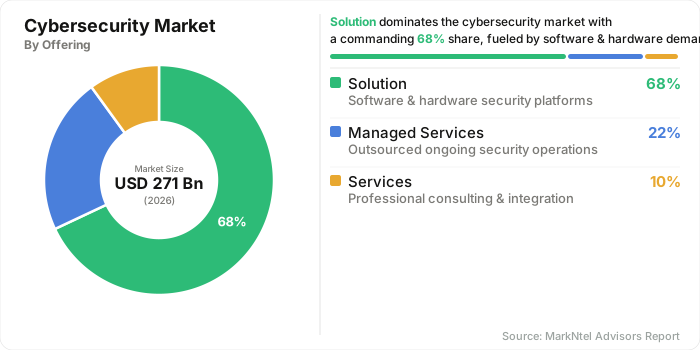
- In 2026, the solutions segment accounts for approximately 68% of the industry, making it the largest revenue contributor among all solution types.
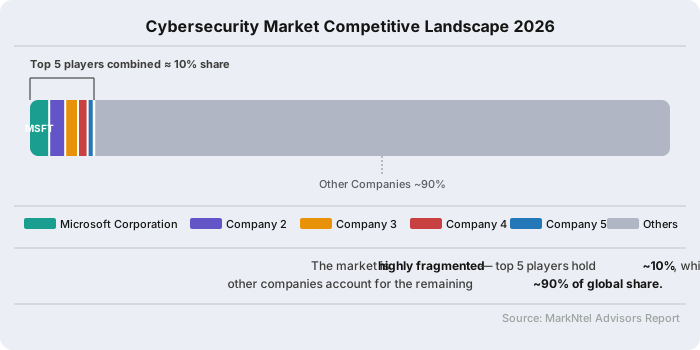
- The industry is highly fragmented. However, the top five players collectively account for nearly 10% share.
Cybersecurity Market Size and Outlook
The global cybersecurity market size was valued at USD 248 billion in 2025 and is projected to grow from USD 271 billion in 2026 to USD 411 billion by 2032. Along with this, the market is estimated to grow at a CAGR of around 7.19% during the forecast period, i.e., 2026-32, due to rising cyber threats, growing digital dependence, and stricter regulatory frameworks across industries. The FBI Internet Crime Complaint Center (IC3) reported over USD 12.5 billion in cybercrime losses in 2023, reflecting the increasing financial impact of ransomware, phishing, and business email compromise attacks on organizations worldwide.
In parallel, cybersecurity investment trends continue to show strong momentum, with global spending expected to surpass USD 213 billion in 2025, compared to USD 193 billion in 2024. This growth is being driven by escalating ransomware incidents, accelerated cloud adoption, and increasing compliance requirements across sectors. At the same time, cyberattacks are rising in scale and frequency globally, with millions of incidents reported annually across major economies. India alone recorded over 265 million cyberattacks in 2025, highlighting the severity of cyber risks in fast-growing digital markets.
Additionally, governments and enterprises are increasingly prioritizing cybersecurity as a strategic investment rather than a reactive cost center. Organizations are strengthening their security postures by integrating advanced monitoring systems, improving incident response capabilities, and aligning with global security standards to reduce operational and financial risks associated with cyber incidents.
The threat landscape is also becoming more complex due to rapid technological advancement. The Microsoft Digital Defense Report states that Microsoft processes over 100 trillion security signals daily, along with millions of malware detections, demonstrating both the scale and sophistication of modern cyber threats. Attackers are increasingly exploiting cloud environments, identity systems, and supply chain vulnerabilities, making cybersecurity essential for ensuring business continuity and operational resilience.
Overall, the cybersecurity outlook remains highly positive, driven by persistent threat escalation, expanding regulatory oversight, and rapid adoption of advanced security technologies such as AI-based threat detection, endpoint protection, and zero-trust architecture.
Cybersecurity Market Key Indicators
- According to the 2026 Data Center Global Outlook, spending by six US hyperscalers Microsoft, Amazon, Alphabet, Oracle, Meta, and CoreWeave hit nearly USD 400 billion in 2025, expected to grow by another USD 200 billion over the next two years, with at least USD 3 trillion in global data center investment projected over the next five years to keep pace with AI-driven capacity growth. Each new facility demands embedded cybersecurity architecture across networks, physical access, and operational systems making the data center buildout one of the most direct and measurable structural drivers of global cybersecurity demand.
- Cloud adoption and digital transformation are driving the cybersecurity industry as organizations increasingly move critical data and applications to cloud environments. According to EC-Council University, hybrid and multi-cloud adoption is expanding organizational attack surfaces and increasing exposure to cyber threats. Thales' 2024 Cloud Security Study found that 44% of organizations experienced a cloud data breach, while 47% of cloud-stored corporate data is sensitive. These growing risks are accelerating demand for cloud security, identity management, and endpoint protection solutions.
- Ransomware-as-a-Service (RaaS) is driving the cybersecurity market by making ransomware attacks easier to launch and scale. Unlike traditional cyberattacks, RaaS allows criminals to rent ransomware tools and infrastructure, lowering entry barriers and increasing attack frequency. According to the FBI, ransomware remained the most pervasive threat to U.S. critical infrastructure in 2024, with complaints rising 9% year-over-year. As organizations face growing risks of operational disruption and financial losses, they are increasing investments in threat detection, endpoint security, backup, and incident-response solutions.
- According to Statista, global IoT connections are projected to increase from 19.8 billion in 2025 to 40.6 billion by 2034. At the industrial level, InHand Networks reports that the Industrial IoT market is expected to grow from USD 194.4 billion in 2024 to USD 286.3 billion by 2029, with 152 million industrial IoT devices anticipated by 2025. This increasing connectivity is driving demand for IoT security, network protection, and threat monitoring solutions.
Cybersecurity Market Scope:
| Category | Segments |
|---|---|
| By Offering | Solution ( Standalone Hardware, Software Solution), Services (Professional Services (Design, Consulting & implementation, Risk & Threat Management, Training & Education, Support & Maintenance), Managed Services |
| By Solution Type | Identity & Access Management (IAM), Antivirus/Antimalware, Log Management & SIEM, Firewall, Encryption & Tokenization, Compliance & Policy Management, Patch Management, Others |
| By Deployment mode | On-premises, Cloud, Hybrid Cloud |
| By Organization size | Large Enterprises, SMEs (Small & Medium Enterprises |
| By Security Type | Network Security, Cloud Security, Endpoint & IoT Security, Application Security, Others |
| By Vertical | Banking, Financial Services and Insurance (BFSI), Government, Healthcare & Life Sciences, Aerospace & Defense, Manufacturing, IT & ITeS, Education, Retail & Ecommerce, Energy & Utilities, Telecommunications, Transportation & Logistics, Media & Entertainment, Others (Education, Construction, Travel & Hospitality |
Cybersecurity Market Growth Drivers
Rising Cybercrime Incidents and Financial Losses Driving Cybersecurity Market Growth
The rapid rise in cyberattacks and data breaches has become a major driver of the global cybersecurity industry. In 2024, the FBI’s Internet Crime Complaint Center received 859,532 complaints of cyber-enabled crimes, resulting in over USD 16.6 billion in reported losses, a 33% increase compared to 2023. The same report highlights phishing, extortion, and personal data breaches as the most frequent attack types, reflecting growing exploitation of digital ecosystems and weak security controls.
Cybercrime is also becoming more financially damaging. Investment fraud and cryptocurrency related scams alone accounted for more than USD 6.5 billion in losses in 2024, showing how attackers increasingly target high-value digital assets. Government agencies also note that ransomware continues to disrupt critical infrastructure sectors, further increasing operational and recovery costs for organizations.
Going forward, cybersecurity demand is expected to rise as governments expand mandatory breach reporting rules and strengthen enforcement-led cybersecurity regulation, as highlighted in Reuters coverage of increasing U.S. federal focus on compliance and national cyber defense. Authorities are also reinforcing protection of critical infrastructure through coordinated strategies and higher regulatory oversight. Investments in advanced incident-response frameworks and AI-based threat intelligence systems are expected to grow beyond 2025, accelerating enterprise adoption of cybersecurity solutions and improving real-time threat detection and response capabilities.
Consequently, the sharp and continuous rise in cyberattacks is directly increasing financial losses and operational risks, forcing organizations and governments to invest heavily in cybersecurity solutions. This sustained threat escalation will significantly accelerate global cybersecurity industry growth in the coming years.
Recent Trends
Zero Trust Architecture Adoption Driven by Government Compliance and Standards
Zero Trust Architecture has been formally established as a government cybersecurity compliance framework, particularly in the United States, through a structured policy and standards ecosystem. The foundation is provided by the National Institute of Standards and Technology (NIST) in Special Publication SP 800-207, which defines Zero Trust principles such as “never trust, always verify,” continuous authentication, and least-privilege access. This serves as the official technical standard for federal and enterprise cybersecurity adoption.
Building on this, the Cybersecurity and Infrastructure Security Agency (CISA) introduced the Zero Trust Maturity Model, which provides a structured implementation roadmap for U.S. federal agencies. It guides deployment across identity, devices, networks, applications, and data, making Zero Trust a measurable and enforceable security approach rather than a conceptual framework.
This shift is reinforced through federal cybersecurity strategy guidance from the Office of Management and Budget (OMB) under Memorandum M-22-09, which directs U.S. civilian agencies to adopt Zero Trust principles, including identity-based access controls, multi-factor authentication (MFA), encryption, and continuous monitoring as part of national cybersecurity modernization efforts.
Zero Trust Architecture is now a government-backed cybersecurity standard supported by NIST guidance, CISA implementation models, and OMB federal strategy directives. This structured regulatory push is accelerating enterprise adoption and significantly strengthening the global cybersecurity industry.
Cybersecurity Market Opportunities and Challenges
Cybersecurity Skills Shortage Driving Adoption of AI-Powered Security Solutions
The shortage of skilled cybersecurity professionals remains a major challenge for the global cybersecurity industry. As organizations increasingly adopt cloud computing, AI, and connected technologies, cyber threats are becoming more complex and difficult to manage. However, the availability of qualified security personnel has not kept pace with demand.
According to the World Economic Forum, the global cyber skills gap increased by 8% between 2024 and 2025, while only 14% of organizations are confident they have sufficient cybersecurity expertise. Consequently, many organizations struggle with timely threat detection, incident response, and security management.
As a direct response, enterprises are accelerating investments in AI-powered cybersecurity solutions that automate security operations and reduce dependence on human resources. Supporting this trend, 66% of organizations expect AI to significantly impact cybersecurity in 2025, according to the World Economic Forum. Furthermore, Cisco launched AI Defense in 2025 to help organizations secure AI applications and automate protection against emerging AI-related threats, demonstrating the industry's growing focus on AI-driven security.
Therefore, while the cybersecurity talent shortage poses a significant challenge, it is simultaneously creating a strong opportunity for AI-powered security platforms. As organizations seek greater efficiency, scalability, and resilience, demand for automated cybersecurity solutions is expected to drive future market growth.
Segmentation Insights
Cloud Security is a Widely Adopted Security Type
Cloud security accounts for approximately 33% of the global cybersecurity industry revenue, making it the leading segment due to rapid enterprise migration to cloud-based infrastructure and digital services. Organizations are increasingly adopting multi-cloud and hybrid cloud environments across platforms such as AWS, Microsoft Azure, and Google Cloud, which significantly expands the attack surface and drives demand for advanced security solutions. The rise in cloud misconfigurations, API vulnerabilities, and unauthorized access risks has further accelerated investment in cloud-native security tools such as CNAPP, CASB, and cloud workload protection platforms.
Additionally, the shift toward remote and hybrid work models has increased dependency on cloud applications, strengthening the need for identity-based access control, encryption, and continuous monitoring. Enterprises are prioritizing cloud security as part of digital transformation strategies to ensure compliance with data protection regulations and safeguard sensitive information. This sustained cloud adoption trend is making cloud security the most dominant revenue-generating segment in the global cybersecurity industry. Based on the security type, the scope has been segmented into
- Network Security
- Cloud Security
- Endpoint & IoT Security
- Application Security
- Others
Solutions Dominate the Cybersecurity Offering Landscape
The solutions segment accounts for approximately 68% of the cybersecurity industry, making it the largest revenue contributor among all solution types. This dominance is primarily driven by rapid digital transformation across industries, where organizations are increasingly adopting cloud-based platforms, software-as-a-service applications, and AI-powered security tools. Software solutions offer scalability, flexibility, and real-time threat detection capabilities, which are essential in managing today’s complex and evolving cyber threat landscape.
Additionally, the growing frequency of cyberattacks such as ransomware, phishing, and data breaches has increased demand for advanced software-based security systems, including endpoint protection, identity and access management, and security analytics platforms. Enterprises also prefer software solutions due to their lower deployment cost compared to hardware-based systems and their ability to integrate seamlessly with cloud and hybrid IT environments. This strong adoption across sectors such as banking, healthcare, IT, and government continues to reinforce software solutions as the leading revenue-generating segment in the global cybersecurity industry. Based on the offering, the scope has been classified into
- Solution
- Services
- Managed Services
Cybersecurity Market Geographical Outlook
North America accounts for approximately 36% of cybersecurity demand, making it the leading regional market. This dominance is driven by advanced digital infrastructure, early cloud adoption, and the strong presence of major technology and cybersecurity firms across the United States and Canada. The region also faces a high frequency of sophisticated cyberattacks, including ransomware campaigns such as the 2023 Cl0p attacks targeting U.S. critical data systems and large-scale breaches affecting healthcare providers and financial institutions, increasing security spending significantly.
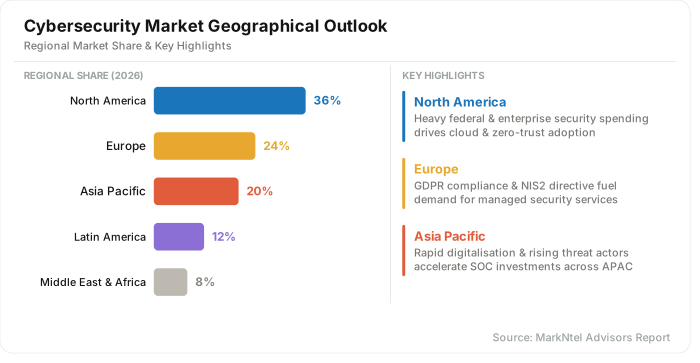
In addition, regulatory pressure such as U.S. federal cybersecurity requirements and mandatory breach disclosure rules is pushing organizations to strengthen defenses. For example, the U.S. Securities and Exchange Commission introduced stricter cyber incident reporting rules in 2023 for publicly listed companies, increasing demand for advanced compliance-driven security solutions. Enterprises in the region are also early adopters of Zero Trust Architecture and AI-based threat detection systems. Continuous government funding for defense cybersecurity and protection of critical infrastructure further reinforces North America’s leadership in the global cybersecurity market.
Cybersecurity Market Competitive Analysis
The global cybersecurity market is highly fragmented, with strong competition among leading vendors across cloud, network, and endpoint security segments. The top five players Palo Alto Networks, Microsoft, Cisco, CrowdStrike, and Fortinet collectively hold approximately 10% of the total market share. The remaining market is distributed among numerous regional and specialized cybersecurity providers.
Key Players in Cybersecurity Market
- IBM
- Cisco
- Microsoft
- Palo Alto Networks
- Fortinet
- Check Point Software Technologies
- Broadcom
- Amazon Web Services (AWS)
- CrowdStrike
- OpenText
- Trend Micro
- Oracle
- Accenture
- Google Cloud
- Zscaler
- Others
Cybersecurity Industry News and Recent Developments
May 2026: Anthropic Launches Claude Mythos Cybersecurity Model
Anthropic announced the upcoming rollout of Claude Mythos, a specialized AI model developed for cybersecurity applications. Under Project Glasswing, partners including major technology firms are using the model to identify software vulnerabilities and strengthen cyber defenses. The launch reflects the growing integration of advanced AI into cybersecurity operations and threat detection workflows.
Impact Analysis: The launch of Claude Mythos highlights the growing role of specialized AI models in cybersecurity, enabling faster vulnerability discovery and more proactive threat detection. By supporting software security assessments and cyber defense operations, the model can help organizations identify risks before exploitation occurs. Its deployment under Project Glasswing is expected to accelerate AI adoption across cybersecurity workflows, driving demand for advanced threat intelligence, automated security tools, and AI-powered defense solutions.
October 2025: Palo Alto Networks Launches Prisma AIRS 2.0
Palo Alto Networks launched Prisma AIRS 2.0, an AI security platform designed to protect enterprise AI applications, models, and autonomous AI agents. The company noted that 78% of organizations are transforming with AI, but only 6% have adequate security guardrails, highlighting growing demand for AI security solutions
Impact Analysis: The launch of Prisma AIRS 2.0 strengthens the cybersecurity market by addressing the rapidly growing need to secure enterprise AI applications, models, and autonomous agents. With 78% of organizations pursuing AI transformation but only 6% having adequate security controls, the platform highlights a significant protection gap. Its introduction is expected to accelerate investments in AI governance, model security, threat detection, and AI workload protection, creating a fast-growing cybersecurity segment as enterprise AI adoption expands globally.
February 2025: CrowdStrike Launches Charlotte AI Detection Triage
CrowdStrike introduced Charlotte AI Detection Triage, an agentic AI solution designed to automate security alert investigations. The platform reportedly achieves over 98% triage accuracy and eliminates more than 40 hours of manual work per week for security teams. The launch reflects the industry's shift toward AI-driven security operations amid growing cyber threats.
Impact Analysis: The launch of Charlotte AI Detection Triage accelerates the adoption of AI-driven security operations by reducing analyst workload and improving threat response efficiency. With over 98% triage accuracy and savings of 40+ hours per week, the solution helps organizations address cybersecurity talent shortages while managing rising alert volumes. Its introduction is expected to increase enterprise investment in AI-powered security platforms, strengthening growth opportunities across the cybersecurity market.
Frequently Asked Questions
- Market Segmentation
- Introduction
- Market Definition
- Research Process
- Assumption
- Executive Summary
- Global Cybersecurity Market Patent Outlook
- Global Cybersecurity Market Start-Up Ecosystem
- Entrepreneurial Activity
- Funding Received by Top Companies
- Key Investors Active in The Market
- Series-wise Funding Received
- Seed Funding
- Angel Investing
- Venture Capitalists (VC) Funding
- Others
- Global Cybersecurity Market Trends & Insights
- Global Cybersecurity Market Dynamics
- Growth Drivers
- Challenges
- Global Cybersecurity Market Hotspot & Opportunities
- Global Cybersecurity Market Regulation & Policy
- Global Cybersecurity Market Outlook, 2022-2032F
- Market Size & Outlook
- By Revenues (USD Million)
- Market Share & Outlook
- By Offering
- Solution
- Standalone Hardware
- Software Solution
- Services
- Professional Services
- Design, Consulting & implementation
- Risk & Threat Management
- Training & Education
- Support & Maintenance
- Managed Services
- Professional Services
- Solution
- By Solution Type
- Identity & Access Management (IAM)
- Antivirus/Antimalware
- Log Management & SIEM
- Firewall
- Encryption & Tokenization
- Compliance & Policy Management
- Patch Management
- Others
- By Deployment mode
- On-premises
- Cloud
- Hybrid Cloud
- By Organization size
- Large Enterprises
- SMEs (Small & Medium Enterprises)
- By Security Type
- Network Security
- Cloud Security
- Endpoint & IoT Security
- Application Security
- Others
- By Vertical
- Banking, Financial Services and Insurance (BFSI)
- Government
- Healthcare & Life Sciences
- Aerospace & Defense
- Manufacturing
- IT & ITeS
- Education
- Retail & Ecommerce
- Energy & Utilities
- Telecommunications
- Transportation & Logistics
- Media & Entertainment
- Others (Education, Construction, Travel & Hospitality)
- By Region
- North America
- South America
- Europe
- The Middle East & Africa
- Asia-Pacific
- By Company
- Competition Characteristics
- Revenue Shares
- By Offering
- Market Size & Outlook
- North America Cybersecurity Market Outlook, 2022-2032F
- Market Size & Outlook
- By Revenues (USD Million)
- Market Share & Outlook
- By Offering
- By Solution Type
- By Deployment mode
- By Organization size
- By Security Type
- By Vertical
- By Country
- The US
- Canada
- Mexico
- The US Cybersecurity Market Outlook, 2022-2032F
- Market Size & Outlook
- By Revenues (USD Million)
- Market Size & Outlook
- By Offering
- By Solution Type
- By Deployment Type
- By Organization Size
- By Security Type
- By Vertical
- Market Size & Outlook
- Canada Cybersecurity Market Outlook, 2022-2032F
- Market Size & Outlook
- By Revenues (USD Million)
- Market Size & Outlook
- By Offering
- By Solution Type
- By Deployment Type
- By Organization Size
- By Security Type
- By Vertical
- Market Size & Outlook
- Mexico Cybersecurity Market Outlook, 2022-2032F
- Market Size & Outlook
- By Revenues (USD Million)
- Market Size & Outlook
- By Offering
- By Solution Type
- By Deployment Type
- By Organization Size
- By Security Type
- By Vertical
- Market Size & Outlook
- Market Size & Outlook
- South America Cybersecurity Market Outlook, 2022-2032F
- Market Size & Outlook
- By Revenues (USD Million)
- Market Share & Outlook
- By Offering
- By Solution Type
- By Deployment mode
- By Organization size
- By Security Type
- By Vertical
- By Country
- Brazil
- Argentina
- Colombia
- Rest of South America
- Brazil Cybersecurity Market Outlook, 2022-2032F
- Market Size & Outlook
- By Revenues (USD Million)
- Market Size & Outlook
- By Offering
- By Solution Type
- By Deployment Type
- By Organization Size
- By Security Type
- By Vertical
- Market Size & Outlook
- Argentina Cybersecurity Market Outlook, 2022-2032F
- Market Size & Outlook
- By Revenues (USD Million)
- Market Size & Outlook
- By Offering
- By Solution Type
- By Deployment Type
- By Organization Size
- By Security Type
- By Vertical
- Market Size & Outlook
- Colombia Cybersecurity Market Outlook, 2022-2032F
- Market Size & Outlook
- By Revenues (USD Million)
- Market Size & Outlook
- By Offering
- By Solution Type
- By Deployment Type
- By Organization Size
- By Security Type
- By Vertical
- Market Size & Outlook
- Market Size & Outlook
- Europe Cybersecurity Market Outlook, 2022-2032F
- Market Size & Outlook
- By Revenues (USD Million)
- Market Share & Outlook
- By Offering
- By Solution Type
- By Deployment mode
- By Organization size
- By Security Type
- By Vertical
- By Country
- The UK
- Germany
- France
- Italy
- Spain
- The Netherlands
- Belgium
- Rest of Europe
- The UK Cybersecurity Market Outlook, 2022-2032F
- Market Size & Outlook
- By Revenues (USD Million)
- Market Size & Outlook
- By Offering
- By Solution Type
- By Deployment Type
- By Organization Size
- By Security Type
- By Vertical
- Market Size & Outlook
- Germany Cybersecurity Market Outlook, 2022-2032F
- Market Size & Outlook
- By Revenues (USD Million)
- Market Size & Outlook
- By Offering
- By Solution Type
- By Deployment Type
- By Organization Size
- By Security Type
- By Vertical
- Market Size & Outlook
- France Cybersecurity Market Outlook, 2022-2032F
- Market Size & Outlook
- By Revenues (USD Million)
- Market Size & Outlook
- By Offering
- By Solution Type
- By Deployment Type
- By Organization Size
- By Security Type
- By Vertical
- Market Size & Outlook
- Italy Cybersecurity Market Outlook, 2022-2032F
- Market Size & Outlook
- By Revenues (USD Million)
- Market Size & Outlook
- By Offering
- By Solution Type
- By Deployment Type
- By Organization Size
- By Security Type
- By Vertical
- Market Size & Outlook
- Spain Cybersecurity Market Outlook, 2022-2032F
- Market Size & Outlook
- By Revenues (USD Million)
- Market Size & Outlook
- By Offering
- By Solution Type
- By Deployment Type
- By Organization Size
- By Security Type
- By Vertical
- Market Size & Outlook
- The Netherlands Cybersecurity Market Outlook, 2022-2032F
- Market Size & Outlook
- By Revenues (USD Million)
- Market Size & Outlook
- By Offering
- By Solution Type
- By Deployment Type
- By Organization Size
- By Security Type
- By Vertical
- Market Size & Outlook
- Belgium Cybersecurity Market Outlook, 2022-2032F
- Market Size & Outlook
- By Revenues (USD Million)
- Market Size & Outlook
- By Offering
- By Solution Type
- By Deployment Type
- By Organization Size
- By Security Type
- By Vertical
- Market Size & Outlook
- Market Size & Outlook
- The Middle East & Africa Cybersecurity Market Outlook, 2022-2032F
- Market Size & Outlook
- By Revenues (USD Million)
- Market Share & Outlook
- By Offering
- By Solution Type
- By Deployment mode
- By Organization size
- By Security Type
- By Vertical
- By Country
- Saudi Arabia
- The UAE
- South Africa
- Egypt
- Nigeria
- Qatar
- Rest of The Middle East & Africa
- Saudi Arabia Cybersecurity Market Outlook, 2022-2032F
- Market Size & Outlook
- By Revenues (USD Million)
- Market Size & Outlook
- By Offering
- By Solution Type
- By Deployment Type
- By Organization Size
- By Security Type
- By Vertical
- Market Size & Outlook
- The UAE Cybersecurity Market Outlook, 2022-2032F
- Market Size & Outlook
- By Revenues (USD Million)
- Market Size & Outlook
- By Offering
- By Solution Type
- By Deployment Type
- By Organization Size
- By Security Type
- By Vertical
- Market Size & Outlook
- South Africa Cybersecurity Market Outlook, 2022-2032F
- Market Size & Outlook
- By Revenues (USD Million)
- Market Size & Outlook
- By Offering
- By Solution Type
- By Deployment Type
- By Organization Size
- By Security Type
- By Vertical
- Market Size & Outlook
- Egypt Cybersecurity Market Outlook, 2022-2032F
- Market Size & Outlook
- By Revenues (USD Million)
- Market Size & Outlook
- By Offering
- By Solution Type
- By Deployment Type
- By Organization Size
- By Security Type
- By Vertical
- Market Size & Outlook
- Nigeria Cybersecurity Market Outlook, 2022-2032F
- Market Size & Outlook
- By Revenues (USD Million)
- Market Size & Outlook
- By Offering
- By Solution Type
- By Deployment Type
- By Organization Size
- By Security Type
- By Vertical
- Market Size & Outlook
- Qatar Cybersecurity Market Outlook, 2022-2032F
- Market Size & Outlook
- By Revenues (USD Million)
- Market Size & Outlook
- By Offering
- By Solution Type
- By Deployment Type
- By Organization Size
- By Security Type
- By Vertical
- Market Size & Outlook
- Market Size & Outlook
- Asia-Pacific Cybersecurity Market Outlook, 2022-2032F
- Market Size & Outlook
- By Revenues (USD Million)
- Market Share & Outlook
- By Offering
- By Solution Type
- By Deployment mode
- By Organization size
- By Security Type
- By Vertical
- By Country
- China
- Japan
- South Korea
- India
- Australia
- South East Asia
- Rest of Asia-Pacific
- China Cybersecurity Market Outlook, 2022-2032F
- Market Size & Outlook
- By Revenues (USD Million)
- Market Size & Outlook
- By Offering
- By Solution Type
- By Deployment Type
- By Organization Size
- By Security Type
- By Vertical
- Market Size & Outlook
- Japan Cybersecurity Market Outlook, 2022-2032F
- Market Size & Outlook
- By Revenues (USD Million)
- Market Size & Outlook
- By Offering
- By Security Type
- By Vertical
- Market Size & Outlook
- South Korea Cybersecurity Market Outlook, 2022-2032F
- Market Size & Outlook
- By Revenues (USD Million)
- Market Size & Outlook
- By Offering
- By Solution Type
- By Deployment Type
- By Organization Size
- By Security Type
- By Vertical
- Market Size & Outlook
- India Cybersecurity Market Outlook, 2022-2032F
- Market Size & Outlook
- By Revenues (USD Million)
- Market Size & Outlook
- By Offering
- By Solution Type
- By Deployment Type
- By Organization Size
- By Security Type
- By Vertical
- Market Size & Outlook
- Australia Cybersecurity Market Outlook, 2022-2032F
- Market Size & Outlook
- By Revenues (USD Million)
- Market Size & Outlook
- By Offering
- By Solution Type
- By Deployment Type
- By Organization Size
- By Security Type
- By Vertical
- Market Size & Outlook
- South East Asia Cybersecurity Market Outlook, 2022-2032F
- Market Size & Outlook
- By Revenues (USD Million)
- Market Size & Outlook
- By Offering
- By Solution Type
- By Deployment Type
- By Organization Size
- By Security Type
- By Vertical
- Market Size & Outlook
- Market Size & Outlook
- Global Cybersecurity Market Key Strategic Imperatives for Success & Growth
- Competitive Outlook
- Company Profiles
- IBM
- Business Description
- Product Portfolio
- Strategic Alliances or Partnerships
- Recent Developments
- Financial Details
- Others
- CISCO
- Business Description
- Product Portfolio
- Strategic Alliances or Partnerships
- Recent Developments
- Financial Details
- Others
- Microsoft
- Business Description
- Product Portfolio
- Strategic Alliances or Partnerships
- Recent Developments
- Financial Details
- Others
- Palo Alto Networks
- Business Description
- Product Portfolio
- Strategic Alliances or Partnerships
- Recent Developments
- Financial Details
- Others
- Fortinet
- Business Description
- Product Portfolio
- Strategic Alliances or Partnerships
- Recent Developments
- Financial Details
- Others
- Check Point Software Technologies
- Business Description
- Product Portfolio
- Strategic Alliances or Partnerships
- Recent Developments
- Financial Details
- Others
- Broadcom
- Business Description
- Product Portfolio
- Strategic Alliances or Partnerships
- Recent Developments
- Financial Details
- Others
- Amazon Web Services
- Business Description
- Product Portfolio
- Strategic Alliances or Partnerships
- Recent Developments
- Financial Details
- Others
- CrowdStrike
- Business Description
- Product Portfolio
- Strategic Alliances or Partnerships
- Recent Developments
- Financial Details
- Others
- Open Text
- Business Description
- Product Portfolio
- Strategic Alliances or Partnerships
- Recent Developments
- Financial Details
- Others
- Trend Micro
- Business Description
- Product Portfolio
- Strategic Alliances or Partnerships
- Recent Developments
- Financial Details
- Others
- Oracle
- Business Description
- Product Portfolio
- Strategic Alliances or Partnerships
- Recent Developments
- Financial Details
- Others
- Accenture
- Business Description
- Product Portfolio
- Strategic Alliances or Partnerships
- Recent Developments
- Financial Details
- Others
- Google Cloud
- Business Description
- Product Portfolio
- Strategic Alliances or Partnerships
- Recent Developments
- Financial Details
- Others
- ZScaler
- Business Description
- Product Portfolio
- Strategic Alliances or Partnerships
- Recent Developments
- Financial Details
- Others
- Others
- IBM
- Company Profiles
- Disclaimer
MarkNtel Advisors follows a robust and iterative research methodology designed to ensure maximum accuracy and minimize deviation in market estimates and forecasts. Our approach combines both bottom-up and top-down techniques to effectively segment and quantify various aspects of the market. A consistent feature across all our research reports is data triangulation, which examines the market from three distinct perspectives to validate findings. Key components of our research process include:
1. Scope & Research Design At the outset, MarkNtel Advisors define the research objectives and formulate pertinent questions. This phase involves determining the type of research—qualitative or quantitative—and designing a methodology that outlines data collection methods, target demographics, and analytical tools. They also establish timelines and budgets to ensure the research aligns with client goals.
2. Sample Selection and Data Collection In this stage, the firm identifies the target audience and determines the appropriate sample size to ensure representativeness. They employ various sampling methods, such as random or stratified sampling, based on the research objectives. Data collection is carried out using tools like surveys, interviews, and observations, ensuring the gathered data is reliable and relevant.
3. Data Analysis and Validation Once data is collected, MarkNtel Advisors undertake a rigorous analysis process. This includes cleaning the data to remove inconsistencies, employing statistical software for quantitative analysis, and thematic analysis for qualitative data. Validation steps are taken to ensure the accuracy and reliability of the findings, minimizing biases and errors.

4. Data Forecast and FinalizationThe final phase involves forecasting future market trends based on the analyzed data. MarkNtel Advisors utilize predictive modeling and time series analysis to anticipate market behaviors. The insights are then compiled into comprehensive reports, featuring visual aids like charts and graphs, and include strategic recommendations to inform client decision-making
We offer flexible licensing options to cater to varying organizational needs. Choose the pricing pack that best suits your requirements:
Buy Now Inquire Before Buying
 Request Customization
 Talk to our Consultant







