

Canada General Insurance Market Research Report: Forecast (2026-2032)
By Insurance Type (Home Insurance, Motor Insurance, Health Insurance, Cyber Insurance, Travel Insurance, Liability Insurance, Others), By Distribution Channel (Direct, Brokers & Ag ... ents, Banks, Others), By End User (Individual Customers, Commercial and Industrial), and others Read more
- ICT & Electronics
- Jul 2026
- Pages 140
- Report Format: PDF, Excel, PPT
Canada General Insurance Market
Projected 6.73% CAGR from 2026 to 2032
Study Period
2026-2032
Market Size (2026)
USD 69 Billion
Market Size (2032)
USD 102 Billion
Base Year
2025
Projected CAGR
6.73%
Leading Segments
By Insurance Type: Home Insurance
Canada General Insurance Market Key Takeaways
- Canada General Insurance Market size was valued at USD 64 billion in 2025 and is projected to grow from USD 69 billion in 2026 to USD 102 billion by 2032.
- The market is projected to register a CAGR of 6.73% during 2026–2032.
- By Insurance type, motor insurance is dominating the industry accounting for more than 40% market share in 2026.
- By End Users, the individual customers segment holds the largest market share of more than 55% in 2026.
- The industry is consolidated, with the top five players collectively accounting for approximately 65% of the market share in 2026.
Canada General Insurance Market Size and Outlook
The Canada general insurance industry was valued at USD 64 billion in 2025 and is currently standing at USD 69 billion in 2026. The industry is projected to grow to USD 102 billion by 2032 showcasing a CAGR of around 6.73% during the forecast period, i.e., 2026–32. The market is expected to maintain a positive growth trajectory during the forecast period, supported by resilient insurance demand, expanding risk exposures, and a progressively evolving regulatory framework.
While the OSFI continues to characterize Canada's financial system as resilient, it has also cautioned that geopolitical instability is creating a more fragile operating environment, with geopolitical disruptions increasingly associated with higher cyber incident risks. This evolving risk profile is encouraging insurers to strengthen underwriting capabilities, expand cyber protection offerings, and enhance enterprise risk management, supporting sustained demand across personal, commercial, and specialty insurance segments.
Demand fundamentals also remain favourable across key insurance lines. Statistics Canada reported 397,601 new motor vehicle registrations during the first quarter of 2026, reinforcing continued policy creation opportunities in Canada's largest insurance segment. Beyond motor insurance, Canada's cyber insurance segment is gaining momentum as businesses strengthen protection against increasingly sophisticated digital threats and insurers continue expanding cyber-specific coverage and underwriting capabilities. At the same time, stronger outbound travel is also creating additional demand for travel coverage.
Regulatory developments are expected to further strengthen market competitiveness and product innovation. OSFI's minimum capital test guideline became effective on January 1, 2026, reinforcing capital adequacy requirements for federally regulated property and casualty insurers and supporting long-term financial resilience across the sector. Complementing this, Ontario's financial services regulatory authority implemented auto insurance reforms from July 1, 2026, making selected accident benefits optional rather than mandatory. The reforms are expected to accelerate product customization, encourage greater advisory engagement between insurers and policyholders, positioning the Canada general insurance market for sustained development through 2032.
Canada General Insurance Market Key Indicators
- The Insurance Bureau of Canada (IBC) and CatIQ reported approximately USD 1.7 billion in insured catastrophic losses during 2025, making it the tenth costliest year on record. Persistent weather-related claims continue to reinforce the need for disciplined underwriting, catastrophe risk management, and reinsurance across the Canada general insurance market.
- According to the Insurance Bureau of Canada and CatIQ, insured wildfire losses totaled approximately USD 5.7 billion over the past decade, compared with about USD 517 million during the previous decade. Rising climate-related losses are increasing demand for resilient risk management and insurance solutions.
- Canadian outbound travel spending is projected to reach approximately USD 33.5 billion in 2026, representing a 22% year-over-year increase, according to Allianz Global Assistance. Rising international travel is expected to support continued demand for travel insurance products.
- The Financial Services Regulatory Authority of Ontario (FSRA) introduced auto insurance regulatory reforms effective July 1, 2026, covering private passenger, commercial, motorcycle, snowmobile, and all-terrain vehicle policies. The reforms are expected to influence product design, claims processes, and insurer operations within Canada's general insurance market.
Canada General Insurance Market Scope
| Category | Segments |
|---|---|
| By Insurance Type | Home Insurance, Motor Insurance, Health Insurance, Cyber Insurance, Travel Insurance, Liability Insurance, Others |
| By Distribution Channel | Direct, Brokers & Agents, Banks, Others |
| By End User | Individual Customers, Commercial and Industrial |
| By Provinces/Territories | North, East, West, South |
Canada General Insurance Market Growth Drivers
Escalating Climate Catastrophes Accelerating Demand for Risk Protection
Escalating climate-related catastrophes are emerging as a key growth driver for the Canada general insurance market as severe weather events raise financial exposure across residential, commercial, agricultural, and industrial assets. As climate volatility increases the frequency and severity of insured events, households and businesses are reassessing their financial exposure and purchasing broader insurance protection against property damage, business interruption, liability, and other emerging risks. This shift is increasing policy uptake, encouraging higher coverage limits, and supporting premium expansion across multiple general insurance lines.
In response, insurers are expanding catastrophe-focused coverage, strengthening underwriting standards, enhancing climate risk modelling, and refining pricing strategies to better reflect evolving risk exposures. These measures are improving underwriting discipline while supporting sustainable premium growth across property and casualty insurance portfolios. As both consumers and insurers adapt to rising climate risks, higher policy adoption, broader coverage selection, and more risk-based pricing are expected to support long-term premium growth across Canada's general insurance market.
The strengthening relationship between climate exposure and insurance demand is reflected in the continued rise in catastrophe-related insured losses across Canada. According to the Insurance Bureau of Canada and CatIQ, insured losses from catastrophic weather events and wildfires reached approximately USD27.0 billion between 2016 and 2025. In 2026, the organizations also reported that Canada experienced 16 catastrophic wildfire events over the past decade. Furthermore, insured damage from severe weather exceeded approximately USD1.8 billion during 2025, highlighting that climate-related events continue to generate substantial financial losses and reinforcing long term demand for comprehensive general insurance coverage across Canada.
Recent Trends
Agentic AI Transforming Claims Management and Underwriting Operations
Agentic AI is emerging as a defining technology trend in the Canadian insurance industry as insurers increasingly automate complex claims workflows to improve operational efficiency, reduce settlement timelines, and strengthen fraud detection capabilities. Unlike conventional automation, agentic AI enables systems to execute multi-step claims processes with limited human intervention, supporting faster decision making and more consistent claim outcomes. As insurers seek to balance rising claims volumes with cost efficiency, the technology is expected to become an integral component of digital claims management and customer service strategies.
The transition from experimentation to enterprise-wide deployment accelerated during 2026. Insurance thought leadership identified 2026 as the year insurers move beyond pilot projects toward systematic integration of agentic AI across claims operations. Reinforcing this shift, Intact stated in April 2026 that intelligent automation, AI-powered claim triage, assessment, and fraud detection will represent the most transformative change across commercial claims.
The broader insurance technology ecosystem is also accelerating this transition. In April 2026, Guidewire launched ProNavigator, an embedded AI assistant for underwriting, claims, billing, and customer service workflows, highlighting the industry's shift toward integrating AI directly into core insurance operations rather than deploying standalone automation tools. The expanding adoption of agentic AI is therefore expected to improve claims accuracy, strengthen operational scalability, and enhance customer experience, supporting the long-term digital evolution of Canada's insurance sector.
Canada General Insurance Market Challenges and Opportunities
Ontario Auto Insurance Reform Increasing Coverage Complexity While Expanding Advisory-Driven Insurance Distribution
Ontario's auto insurance reforms present a significant challenge for the Canada general insurance market by increasing the complexity of coverage decisions and the risk of unintentional underinsurance. Effective July 1, 2026, several accident benefits that were previously included in standard auto insurance policies became optional, requiring policyholders to actively evaluate their protection needs before selecting coverage. As a result, individuals who do not purchase the newly optional benefits may incorrectly assume they remain adequately protected, creating gaps between consumer expectations and actual policy coverage.
The reforms also expand exposure for individuals who are not covered under qualifying policies. According to Sonnet Insurance, pedestrians, cyclists, and passengers injured in motor vehicle accidents may no longer have access to benefits such as income replacement if they do not hold eligible optional coverage. This shift increases the importance of consumer education and policy transparency, while requiring insurers and intermediaries to communicate coverage limitations more effectively to reduce misunderstanding, disputes, and post claim dissatisfaction.
The same structural changes also create meaningful opportunities for insurers and brokers to strengthen customer engagement through advice led insurance distribution. As policyholders gain greater flexibility to tailor accident benefits according to their protection needs and budgets, insurers can differentiate through customized coverage packages, digital benefit comparison tools, and personalized advisory services rather than competing primarily on premium levels. This transition enables insurers to deliver greater value across the customer journey while improving product relevance.
Supporting this shift, FSRA introduced a communications toolkit and collaborated with industry stakeholders to launch a standardized training program during 2026 to help insurers, agents, and brokers explain the revised accident benefit framework. As consumers increasingly depend on professional guidance to understand coverage choices, brokers are expected to play a more strategic role as trusted advisors, strengthening long term customer relationships while supporting higher quality policy selection and retention.
Segmentation Insights
Motor Insurance Maintaining Market Leadership Through Mandatory Coverage Requirements and Expanding Vehicle Ownership
Motor insurance dominates the Canada general insurance market, accounting for more than 40% market share in 2026. The segment's leadership is primarily driven by mandatory automobile insurance requirements across Canadian provinces, ensuring a consistent base of insured vehicles. Rising vehicle ownership further supports demand, with Statistics Canada reporting 397,601 new motor vehicle registrations during the first quarter of 2026. Continued growth in passenger and commercial vehicle registrations is expected to sustain policy issuance while reinforcing the segment's leading position within the market.
The segment also benefits from evolving regulatory frameworks and increasing risk awareness among vehicle owners. Ontario's auto insurance reforms introduced in July 2026 are encouraging insurers to offer more flexible coverage options while enabling policyholders to customize accident benefits according to their protection needs. At the same time, insurers are strengthening digital claims processing, telematics enabled risk assessment, fraud detection, and customer service capabilities to improve operational efficiency and enhance policyholder experience. These developments continue to support the long term expansion of motor insurance across Canada's general insurance market. Based on insurance type, the market is further bifurcated into:
- Home Insurance
- Motor Insurance
- Health Insurance
- Liability Insurance
- Others.
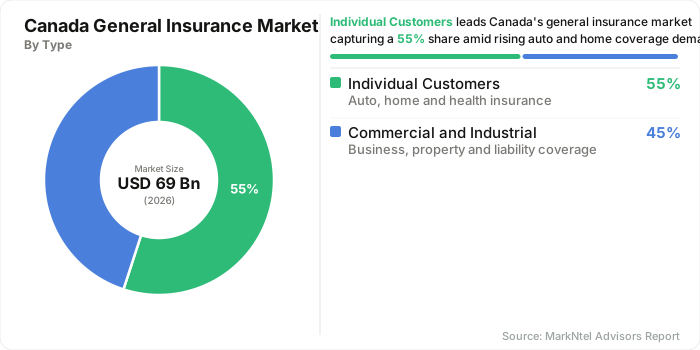
Individual Customers Leading the Market Through Broad Insurance Adoption Across Personal Risk Categories
Individual customers hold the largest share of the Canada general insurance market, accounting for more than 55% in 2026, driven by widespread demand for personal insurance products covering homes, automobiles, travel, liability, and other financial risks. Rising awareness regarding financial protection, increasing climate related uncertainties, and evolving consumer preferences for customized insurance solutions continue to support policy adoption among households. Continued digitalization is also improving accessibility, enabling customers to compare, purchase, and manage insurance policies more conveniently.
The segment's dominance is further supported by regulatory developments and expanding advisory services that encourage informed coverage decisions. Ontario's auto insurance reforms are increasing consumer engagement in selecting optional benefits, while insurers and brokers are introducing personalized policy recommendations and digital advisory tools to simplify coverage choices. Growing adoption of online policy servicing, faster claims processing, and customer centric insurance offerings is expected to strengthen long term retention and reinforce the leading position of individual customers throughout the forecast period. Based on end user, the market is further bifurcated into:
- Individual Customers
- Commercial and Industrial
Canada General Insurance Market Competitive Analysis
The Canada general insurance market is consolidated, with competition led by well-established domestic insurers, bank-affiliated insurance providers, mutual insurers, and subsidiaries of international insurance groups. Market participants compete across personal and commercial insurance through broad product portfolios, digital distribution capabilities, claims management efficiency, underwriting expertise, and customer service.
Leading companies such as Intact Financial Corporation, Aviva Canada, Desjardins General Insurance Inc., Co-operators General Insurance Company, and TD Insurance collectively anchor the competitive landscape, with the top five players accounting for approximately 65% of the Canada general insurance market.
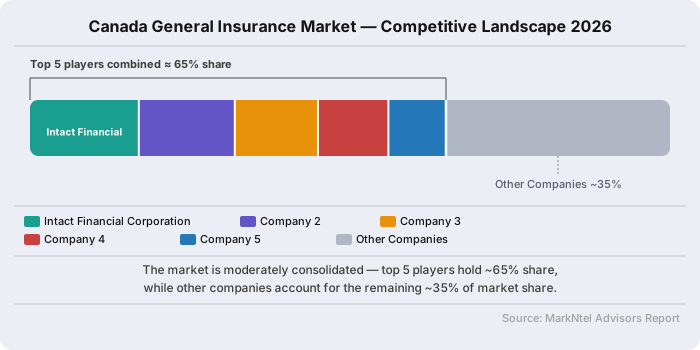
Key Companies in the Canada General Insurance Market
- Intact Financial Corporation
- Aviva Canada
- Desjardins General Insurance Inc.
- Co operators General Insurance Company
- TD Insurance
- Wawanesa Mutual Insurance
- Definity Financial
- Société d'assurance Beneva inc.
- Northbridge Financial
- Allstate Canada
Canada General Insurance Industry News and Recent Developments
2026: Definity Financial Completes USD 3.3 Billion Travelers Canada Acquisition to Strengthen Market Position
Definity Financial Corporation completed its USD 3.3 billion acquisition of Travelers Canada on January 2, 2026, marking one of the largest transactions in Canada's property and casualty insurance industry in recent years. Following the acquisition, the combined business is expected to generate approximately USD 4.6 billion in annual gross written premiums, positioning Definity among the five largest property and casualty insurers in Canada. The transaction significantly expands Definity's presence across personal and commercial insurance while strengthening its nationwide distribution network, underwriting capabilities, and claims management operations. The acquisition also broadens the company's customer base and product portfolio, enabling greater operational scale and enhancing its ability to compete with other leading domestic insurers in an increasingly competitive insurance landscape.
Impact Analysis: The acquisition accelerates consolidation within the Canada general insurance market by strengthening Definity's competitive position across personal and commercial insurance segments. The expanded scale is expected to improve underwriting efficiency, diversify risk exposure, and enhance distribution capabilities, while increasing competitive pressure on mid sized insurers pursuing growth through organic expansion alone.
2026: Ontario Tribunal Rules Against TD General Insurance in Accident Benefits Dispute
In June 2026, the Ontario Licence Appeal Tribunal ruled that TD General Insurance had unreasonably withheld statutory accident benefits despite possessing supporting medical evidence, ordering the insurer to pay an award equal to 25% of the benefits withheld, including applicable interest under Regulation 664. The decision reinforces regulatory expectations regarding fair claims handling and the timely assessment of accident benefit entitlements under Ontario's insurance framework. The ruling also highlights the growing importance of transparent claims evaluation, appropriate documentation, and regulatory compliance as insurers navigate an evolving claims environment shaped by changing consumer expectations and increased regulatory oversight.
Impact Analysis: The tribunal's decision is expected to encourage insurers across Canada to strengthen claims governance, improve documentation standards, and enhance internal claims review processes to reduce litigation and regulatory disputes. The precedent also reinforces the importance of policyholder centric claims management, supporting greater accountability and operational discipline across the general insurance industry.
Frequently Asked Questions
- Market Segmentation
- Introduction
- Product Definition
- Research Process
- Assumptions
- Executive Summary
- Canada General Insurance Market Policies, Regulations, and Product Standards
- Canada General Insurance Market Trends & Developments
- Canada General Insurance Market Dynamics
- Growth Factors
- Challenges
- Canada General Insurance Market Hotspot & Opportunities
- Canada General Insurance Market Outlook, 2022-2032
- Market Size & Outlook
- By Revenues (USD Million)
- Market Segmentation & Outlook
- By Insurance Type- Market Size & Forecast 2022-2032, USD Million
- Home Insurance
- Motor Insurance
- Health Insurance
- Cyber Insurance
- Travel Insurance
- Liability Insurance
- Others
- By Distribution Channel- Market Size & Forecast 2022-2032, USD Million
- Direct
- Brokers & Agents
- Banks
- Others
- By End User- Market Size & Forecast 2022-2032, USD Million
- Individual Customers
- Commercial and Industrial
- By Provinces/Territories- Market Size & Forecast 2022-2032, USD Million
- North
- East
- West
- South
- By Company
- Competition Characteristics
- Market Share & Analysis
- By Insurance Type- Market Size & Forecast 2022-2032, USD Million
- Market Size & Outlook
- Canada Home Insurance Market Outlook, 2022-2032
- Market Size & Outlook
- By Revenues (USD Million)
- Market Segmentation & Outlook
- By Distribution Channel- Market Size & Forecast 2022-2032, USD Million
- By End User- Market Size & Forecast 2022-2032, USD Million
- By Region- Market Size & Forecast 2022-2032, USD Million
- Market Size & Outlook
- Canada Motor Insurance Market Outlook, 2022-2032
- Market Size & Outlook
- By Revenues (USD Million)
- Market Segmentation & Outlook
- By Distribution Channel- Market Size & Forecast 2022-2032, USD Million
- By End User- Market Size & Forecast 2022-2032, USD Million
- By Region- Market Size & Forecast 2022-2032, USD Million
- Market Size & Outlook
- Canada Health Insurance Market Outlook, 2022-2032
- Market Size & Outlook
- By Revenues (USD Million)
- Market Segmentation & Outlook
- By Distribution Channel- Market Size & Forecast 2022-2032, USD Million
- By End User- Market Size & Forecast 2022-2032, USD Million
- By Region- Market Size & Forecast 2022-2032, USD Million
- Market Size & Outlook
- Canada Cyber Insurance Market Outlook, 2022-2032
- Market Size & Outlook
- By Revenues (USD Million)
- Market Segmentation & Outlook
- By Distribution Channel- Market Size & Forecast 2022-2032, USD Million
- By End User- Market Size & Forecast 2022-2032, USD Million
- By Region- Market Size & Forecast 2022-2032, USD Million
- Market Size & Outlook
- Canada Travel Insurance Market Outlook, 2022-2032
- Market Size & Outlook
- By Revenues (USD Million)
- Market Segmentation & Outlook
- By Distribution Channel- Market Size & Forecast 2022-2032, USD Million
- By End User- Market Size & Forecast 2022-2032, USD Million
- By Region- Market Size & Forecast 2022-2032, USD Million
- Market Size & Outlook
- Canada Liability Insurance Market Outlook, 2022-2032
- Market Size & Outlook
- By Revenues (USD Million)
- Market Segmentation & Outlook
- By Distribution Channel- Market Size & Forecast 2022-2032, USD Million
- By End User- Market Size & Forecast 2022-2032, USD Million
- By Region- Market Size & Forecast 2022-2032, USD Million
- Market Size & Outlook
- Canada Food & Groceries Market Outlook, 2022-2032
- Market Size & Outlook
- By Revenues (USD Million)
- Market Segmentation & Outlook
- By Distribution Channel- Market Size & Forecast 2022-2032, USD Million
- By End User- Market Size & Forecast 2022-2032, USD Million
- By Region- Market Size & Forecast 2022-2032, USD Million
- Market Size & Outlook
- Canada Health & Pharmacies Market Outlook, 2022-2032
- Market Size & Outlook
- By Revenues (USD Million)
- Market Segmentation & Outlook
- By Distribution Channel- Market Size & Forecast 2022-2032, USD Million
- By End User- Market Size & Forecast 2022-2032, USD Million
- By Region- Market Size & Forecast 2022-2032, USD Million
- Market Size & Outlook
- Canada Travel & Tourism Market Outlook, 2022-2032
- Market Size & Outlook
- By Revenues (USD Million)
- Market Segmentation & Outlook
- By Distribution Channel- Market Size & Forecast 2022-2032, USD Million
- By End User- Market Size & Forecast 2022-2032, USD Million
- By Region- Market Size & Forecast 2022-2032, USD Million
- Market Size & Outlook
- Canada Hospitality Market Outlook, 2022-2032
- Market Size & Outlook
- By Revenues (USD Million)
- Market Segmentation & Outlook
- By Distribution Channel- Market Size & Forecast 2022-2032, USD Million
- By End User- Market Size & Forecast 2022-2032, USD Million
- By Region- Market Size & Forecast 2022-2032, USD Million
- Market Size & Outlook
- Canada Others (Media & Entertainment) Market Outlook, 2022-2032
- Market Size & Outlook
- By Revenues (USD Million)
- Market Segmentation & Outlook
- By Distribution Channel- Market Size & Forecast 2022-2032, USD Million
- By End User- Market Size & Forecast 2022-2032, USD Million
- By Region- Market Size & Forecast 2022-2032, USD Million
- Market Size & Outlook
- Canada General Insurance Market Key Strategic Imperatives for Success & Growth
- Competitive Outlook
- Company Profiles
- Intact Financial Corporation
- Business Description
- Product Portfolio
- Collaborations & Alliances
- Recent Developments
- Financial Details
- Others
- Aviva Canada
- Business Description
- Product Portfolio
- Collaborations & Alliances
- Recent Developments
- Financial Details
- Others
- Desjardins General Insurance Inc
- Business Description
- Product Portfolio
- Collaborations & Alliances
- Recent Developments
- Financial Details
- Others
- Co-operators General Insurance Company
- Business Description
- Product Portfolio
- Collaborations & Alliances
- Recent Developments
- Financial Details
- Others
- TD Insurance
- Business Description
- Product Portfolio
- Collaborations & Alliances
- Recent Developments
- Financial Details
- Others
- Wawanesa Mutual Insurance
- Business Description
- Product Portfolio
- Collaborations & Alliances
- Recent Developments
- Financial Details
- Others
- Definity Financial
- Business Description
- Product Portfolio
- Collaborations & Alliances
- Recent Developments
- Financial Details
- Others
- Société d'assurance Beneva inc
- Business Description
- Product Portfolio
- Collaborations & Alliances
- Recent Developments
- Financial Details
- Others
- Northbridge Financial
- Business Description
- Product Portfolio
- Collaborations & Alliances
- Recent Developments
- Financial Details
- Others
- Allstate Canada
- Business Description
- Product Portfolio
- Collaborations & Alliances
- Recent Developments
- Financial Details
- Others
- Intact Financial Corporation
- Company Profiles
- Disclaimer
MarkNtel Advisors follows a robust and iterative research methodology designed to ensure maximum accuracy and minimize deviation in market estimates and forecasts. Our approach combines both bottom-up and top-down techniques to effectively segment and quantify various aspects of the market. A consistent feature across all our research reports is data triangulation, which examines the market from three distinct perspectives to validate findings. Key components of our research process include:
1. Scope & Research Design At the outset, MarkNtel Advisors define the research objectives and formulate pertinent questions. This phase involves determining the type of research—qualitative or quantitative—and designing a methodology that outlines data collection methods, target demographics, and analytical tools. They also establish timelines and budgets to ensure the research aligns with client goals.
2. Sample Selection and Data Collection In this stage, the firm identifies the target audience and determines the appropriate sample size to ensure representativeness. They employ various sampling methods, such as random or stratified sampling, based on the research objectives. Data collection is carried out using tools like surveys, interviews, and observations, ensuring the gathered data is reliable and relevant.
3. Data Analysis and Validation Once data is collected, MarkNtel Advisors undertake a rigorous analysis process. This includes cleaning the data to remove inconsistencies, employing statistical software for quantitative analysis, and thematic analysis for qualitative data. Validation steps are taken to ensure the accuracy and reliability of the findings, minimizing biases and errors.

4. Data Forecast and FinalizationThe final phase involves forecasting future market trends based on the analyzed data. MarkNtel Advisors utilize predictive modeling and time series analysis to anticipate market behaviors. The insights are then compiled into comprehensive reports, featuring visual aids like charts and graphs, and include strategic recommendations to inform client decision-making
We offer flexible licensing options to cater to varying organizational needs. Choose the pricing pack that best suits your requirements:
Buy Now Inquire Before Buying
 Request Customization
 Talk to our Consultant







