

By Product Type (Drip/Filter Coffee Makers, Single-Serve Pod/Capsule Machine, Espresso Machine, Bean-to-Cup Machine, Others), By Mode of Operation (Manual, Semi-Automatic, Automati......c), By Distribution Channel (Offline, Online), By Price Tier, (Entry (
- FMCG
- Jul 2026
- 140
- PDF, Excel, PPT
US Coffee Machine Market Key Takeaways
- The US Coffee Machine Market was valued at USD 4.59 billion in 2025 and is projected to reach USD 5.39 billion in 2026 and USD 12.33 billion by 2032.
- The industry is projected to witness steady growth at a 14.79% CAGR during 2026–2032.
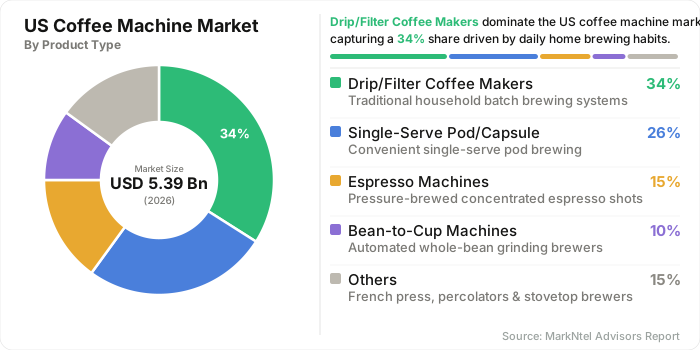
- Drip/filter coffee makers dominated the product landscape, accounting for approximately 34% share in 2026.
- The residential application segment captured approximately 74% share in 2026.
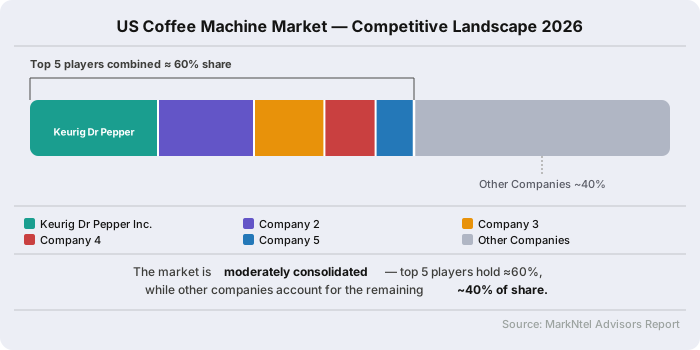
- The industry remains moderately consolidated, with the top five companies collectively accounting for nearly 60% of the overall competitive landscape.
US Coffee Machine Market Size and Outlook
The coffee machine market size in the US was valued at USD 4.59 billion in 2025 and is projected to increase from USD 5.39 billion in 2026 to USD 12.33 billion by 2032, registering a CAGR of approximately 14.79% during 2026–2032. Growth is expected to remain supported by rising specialty coffee consumption and expanding multi-format household brewing habits. Coffee machine manufacturers are increasingly responding through innovation in connected coffee appliances and premium products that deliver convenience, customization, and café-quality experiences within residential settings.
Coffee remains deeply embedded in American consumption patterns, providing a resilient foundation for long-term equipment demand. It was found that Americans consume more than 500 million cups of coffee every day, averaging 2.8 cups per coffee drinker, sustaining consistent demand across residential and commercial applications. This widespread consumption encourages continued investment in advanced brewing technologies while supporting replacement purchases and premium upgrades across beverage preparation equipment designed for evolving consumer preferences and diverse brewing occasions.
A durable shift toward hybrid working continues to reinforce at-home coffee preparation. The Bureau of Labor Statistics' American Time Use Survey reported that 34.9%, or 32.5 million, full-time US employees performed at least part of their work from home in 2025, compared with 33.4% in 2024. This sustained workplace flexibility increases the frequency of household brewing, strengthening utilization rates for premium coffee machines while supporting replacement demand throughout the US coffee machine industry.
The industry's economic contribution further reinforces its long-term growth outlook. As per the National Coffee Association, coffee-related commerce supports approximately 2.2 million US jobs and contributes nearly USD 350 billion annually to the American economy. This extensive ecosystem promotes continued retail expansion, product innovation, and manufacturing investment, while encouraging wider adoption of consumer kitchen appliances that align with evolving lifestyle preferences and sustained coffee consumption across the United States.
US Coffee Machine Market Key Indicators
- The National Coffee Association's Fall 2025 National Coffee Data Trends report found that 66% of American adults drink coffee daily, marking the highest participation rate in twenty years. This consistently large consumer base sustains recurring demand for replacement and upgraded brewing appliances as households increasingly seek enhanced convenience, performance, and beverage quality. The trend reinforces long-term opportunities for manufacturers offering automatic coffee machines tailored to evolving home consumption preferences.
- Despite rising interest in premium brewing methods, drip brewers remained the preferred preparation format among past-day coffee drinkers, accounting for 38%, followed by single-cup brewers at 23% and espresso machines at 11%, according to the National Coffee Association's Fall 2025 survey. These preferences demonstrate that traditional brewing continues to dominate while premium formats complement existing ownership, supporting sustained demand for drip coffee makers across American households.
- The US Census Bureau reported 134.79 million households nationwide as of January 2025, creating a substantial installed base for residential coffee appliance ownership. As household formation and replacement cycles continue, each residence represents an opportunity for manufacturers to expand penetration through differentiated products and premium upgrades. This broad demographic foundation strengthens long-term demand for premium kitchen appliances designed to meet diverse brewing preferences and lifestyle requirements.
- According to the US Census Bureau's Quarterly Retail E-Commerce Sales report, e-commerce represented 16.8% of total US retail sales during the first quarter of 2026. Growing digital adoption is reshaping how consumers research, compare, and purchase brewing appliances, encouraging manufacturers to strengthen direct-to-consumer strategies and omnichannel distribution. This ongoing shift is accelerating sales opportunities through online retail platforms offering broader product selection and competitive pricing.
US Coffee Machine Market Scope
| Category | Segments |
|---|---|
| By Product Type | Drip/Filter Coffee Makers, Single-Serve Pod/Capsule Machine, Espresso Machine, Bean-to-Cup Machine, Others |
| By Mode of Operation | Manual, Semi-Automatic, Automatic |
| By Distribution Channel | Offline, Online |
| By Price Tier | Entry (<USD 100), Mid (USD 100– USD 300), Premium (USD 300–USD 600), Super-Premium (> USD 600) |
| By Application | Residential, Commercial |
US Coffee Machine Market Growth Drivers
Rising Specialty Coffee Consumption Driving Premium At-Home Brewing Equipment Purchases
Rising specialty coffee consumption has become the primary catalyst accelerating demand across the US coffee machines industry. The National Coffee Association's Fall 2025 National Coffee Data Trends report found that 57% of Americans consumed specialty coffee within the past week, matching the category's previous high recorded in 2023. This sustained preference for café-style beverages is encouraging households to invest in premium coffee appliances capable of preparing espresso-based and cold specialty drinks beyond conventional drip brewing.
The transition toward premium home brewing is further validated by manufacturer performance. Nestlé S.A. reported that its Nespresso brand achieved double-digit organic growth alongside market share gains in North America during the first nine months of 2025, with third-quarter expansion driven specifically by the United States through pricing initiatives and innovation launches. These results demonstrate rising consumer willingness to purchase bean-to-cup machines and premium capsule systems that deliver professional-quality beverages at home.
Manufacturers are responding by expanding connected, multi-beverage product portfolios that integrate espresso, drip, and cold-brew capabilities within a single appliance. This strategy enables brands to differentiate through functionality instead of competing primarily on price while addressing evolving consumer expectations. Consequently, the US coffee machine market is expected to maintain strong momentum as premium at-home brewing continues replacing a growing share of traditional coffee shop purchases through 2026 and beyond.
Recent Trends
Growing Multi-Format Household Brewing Driving Equipment-Stacking Trends
Consumer preferences are increasingly shifting toward specialized brewing formats, creating a lasting trend across the US coffee machine market. According to the National Coffee Association's Spring 2025 report, ownership of bean-to-cup machines reached 15% of American households in 2025, rising from 10%. Slow-drip cold brew setups similarly increased to 11% from 7%, while espresso machine ownership advanced to 12% from 8%, reflecting rising interest in specialty coffee equipment.
The trend extends beyond premium brewing formats. Drip coffee makers, the dominant household appliance, increased ownership to 62% from 58%, while single-cup brewers rose to 42% from 40% during the same period. In contrast, French press ownership declined to 12% from 14%, indicating consumers increasingly prefer automated and semi-automated solutions that deliver convenience alongside consistent beverage quality through advanced home coffee brewing capabilities.
Rather than replacing existing appliances, many households are expanding their brewing portfolios to suit different occasions, beverage preferences, and seasonal consumption patterns. This equipment-stacking behavior reflects a structural evolution in purchasing decisions that supports demand for complementary coffee machines across multiple price segments. Consequently, the US coffee machines industry is expected to benefit as manufacturers position diverse brewing solutions within integrated household coffee ecosystems through 2026 and beyond.
US Coffee Machine Market Opportunities and Challenges
Escalating Arabica Prices Driving Demand for Value-Engineered Multi-Function Machines
Record Arabica coffee prices are increasing household brewing costs, creating a significant challenge for the US coffee machines industry. Reuters reported that Arabica coffee futures on the ICE exchange surged more than 6% to a fresh all-time high of USD 4.3195 per pound in February 2025, driven by tight global supplies and concerns over Brazilian production. Elevated coffee costs are encouraging consumers to prioritize coffee brewing systems that deliver better long-term value while reducing recurring beverage preparation expenses.
The same pricing pressure is creating opportunities for manufacturers to introduce products that lower ongoing brewing costs. Conair Corporation's Cuisinart brand launched the Custom Grind & Brew Single-Serve Coffee Maker (DGB-30) in September 2025. The company stated that the pod-free bean-to-cup design can save consumers more than USD 135 annually compared with leading pod-based systems for households brewing two cups per day, highlighting growing demand for coffee automation that combines premium flavor with improved cost efficiency.
Manufacturers are increasingly focusing on value-engineered, multi-function appliances that reduce dependence on single-use capsules while preserving premium beverage quality. This strategy strengthens product differentiation and addresses rising consumer sensitivity toward total brewing expenses rather than only upfront purchase prices. Consequently, the US Coffee Machine Market is well positioned to benefit from innovation centered on affordability, versatility, and long-term cost savings as commodity price volatility continues to influence household purchasing decisions.
Segmentation Insights
Drip/Filter Coffee Makers Lead Due to Affordability, Convenience, and High Household Adoption
Drip/filter coffee makers account for approximately 34% share of the US coffee machine market, making them the leading product category. Their leadership is supported by low acquisition costs, simple operation, and the ability to brew multiple cups in a single cycle, making them well suited for households and shared workplaces. These practical advantages continue to strengthen demand for household coffee appliances among consumers seeking dependable daily brewing solutions.
Affordability remains the segment's strongest competitive advantage across diverse consumer groups. According to Consumer Reports, basic drip coffee makers are available from as low as USD 18, representing the lowest entry price among all major brewing formats. Combined with minimal maintenance requirements and reliable performance, these machines continue attracting first-time buyers and replacement purchasers seeking cost-effective coffee preparation equipment without sacrificing brewing consistency.
The segment also benefits from its versatility in accommodating varying household sizes and consumption habits while delivering familiar brewing experiences. Unlike specialized formats that primarily serve niche preferences, drip/filter coffee makers remain suitable for routine daily use. Their combination of affordability, accessibility, and dependable batch brewing is expected to preserve category leadership as consumers continue prioritizing practical and economical coffee solutions. Based on product type, the scope has been divided into:
- Drip/Filter Coffee Makers
- Single-Serve Pod/Capsule Machines
- Espresso Machines
- Bean-to-Cup Machines
- Others
Residential Segment Dominates Due to Strong At-Home Coffee Consumption and Household Ownership
The residential segment accounts for approximately 74% share of the US coffee machines industry. Its dominance is driven by sustained at-home brewing habits, growing consumer preference for café-style beverages, and continuous investment in modern brewing appliances. These factors have strengthened adoption of smart coffee makers as households increasingly prioritize convenience, personalization, and premium beverage experiences within everyday routines.
The expanding scale of domestic coffee consumption further reinforces residential demand. The USDA Foreign Agricultural Service reported US coffee consumption at 23.4 million 60-kilogram bags in its latest circular, representing an upward revision of 600,000 bags from previous estimates. Rising household consumption continues directing equipment purchases toward connected home appliances that offer enhanced functionality, digital features, and improved user convenience.
Replacement purchases, premium upgrades, and ownership of multiple brewing formats continue supporting residential equipment demand. Consumers increasingly seek appliances that deliver versatility, consistent beverage quality, and seamless operation while complementing evolving lifestyles. Consequently, the residential segment is expected to maintain its leadership position as households continue investing in advanced coffee solutions that combine innovation with everyday practicality. The key applications analyzed in the study include:
- Residential
- Commercial
- HoReCa (Hotels, Restaurants, Cafés)
- Offices & Corporate Workspaces
- Retail Stores & Convenience Stores
- Institutions
US Coffee Machine Market Competitive Analysis
The US coffee machines industry is moderately consolidated, with the top five players Keurig Dr Pepper Inc., De'Longhi Group, Nestlé S.A. (Nespresso), Breville Group Limited, and Koninklijke Philips N.V. collectively accounting for an estimated 60% of total revenue. These companies maintain competitive advantages through extensive product portfolios, strong retail and e-commerce distribution networks, continuous product innovation, and established brand recognition. Meanwhile, manufacturers such as Hamilton Beach Brands Holding Company, BUNN-O-Matic Corporation, Conair Corporation (Cuisinart Brand), SharkNinja Operating LLC, and JURA Elektroapparate AG intensify competition across premium, commercial, and value-oriented segments, resulting in a dynamic yet moderately concentrated industry landscape.
Major Companies in the US Coffee Machine Market
- Keurig Dr Pepper Inc.
- De'Longhi Group
- Nestlé S.A. (Nespresso)
- Breville Group Limited
- Hamilton Beach Brands Holding Company
- BUNN-O-Matic Corporation
- Koninklijke Philips N.V.
- Conair Corporation (Cuisinart Brand)
- SharkNinja Operating LLC
- JURA Elektroapparate AG
- Others
US Coffee Machines Industry News and Recent Developments
April 2026: De'Longhi Unveils PrimaDonna Aromatic Fully Automatic Espresso Machine
De'Longhi launched the PrimaDonna Aromatic, its most advanced fully automatic espresso machine featuring Bean Adapt Technology, Adaptive Grinding Technology, LatteCrema™ Hot and Cool systems, and 38 hot and iced beverage options. The machine automatically optimizes grinding, dosage, and brewing parameters according to bean characteristics, delivering a highly personalized coffee experience while strengthening De'Longhi's premium bean-to-cup product portfolio.
Impact Analysis: PrimaDonna Aromatic reinforces De'Longhi's leadership in premium residential coffee equipment by combining intelligent brewing automation with advanced personalization capabilities. The launch reflects increasing consumer preference for sophisticated bean-to-cup solutions offering convenience and consistent beverage quality. As premium appliance adoption continues expanding, manufacturers are expected to introduce increasingly intelligent brewing technologies, intensifying innovation and product differentiation across the high-end coffee machine landscape
August 2025: Breville Launchs Next-Generation Oracle Dual Boiler Espresso Machine
Breville introduced the Oracle Dual Boiler, its next-generation premium espresso machine designed to deliver café-quality coffee at home. The machine combines automatic and manual brewing modes, Auto Dial-In technology, a 5.7-inch HD touchscreen, Wi-Fi connectivity, and integration with the Breville+ app. The launch further expands Breville's premium residential portfolio by enhancing precision, convenience, and beverage customization for home consumers.
Impact Analysis: The product launch strengthens Breville's position within the premium home espresso segment by addressing growing demand for connected and intelligent brewing solutions. Advanced automation, digital connectivity, and personalized beverage preparation reinforce the industry's shift toward premium at-home coffee experiences. The introduction is expected to encourage competing manufacturers to accelerate investments in smart brewing technologies, strengthening innovation across premium coffee equipment.
June 2026: Lavazza Launches Tablì Single-Serve Coffee Machine with 100% Coffee Tabs
Lavazza North America introduced Tablì, the world's first single-serve coffee machine using 100% coffee tabs without capsules, individual wrapping, or coatings. Developed through five years of research and supported by more than 15 patents, the system delivers café-quality espresso while creating an entirely new product category in single-serve brewing. The machine debuted in the US following its successful launch in Italy.
Impact Analysis: The introduction of Tablì is expected to reshape competition within the premium single-serve coffee equipment segment by offering an alternative to conventional capsule-based systems. Its patented coffee-tab technology addresses growing consumer interest in reducing packaging waste while maintaining brewing convenience and espresso quality. The launch also reinforces the United States as a strategic innovation market for global manufacturers, encouraging further investment in sustainable brewing technologies and differentiated single-serve coffee solutions.
- Market Segmentation
- Introduction
- Product Definition
- Research Process
- Assumptions
- Executive Summary
- US Coffee Machine Market Import & Export Analysis
- US Coffee Machine Market Supply Chain Analysis
- US Coffee Machine Production Trend 2022-2032
- US Coffee Machine Trend by Type of Product Type
- Drip/Filter Coffee Makers
- Single-Serve Pod/Capsule Machine
- Espresso Machine
- Bean-to-Cup Machine
- Others
- Company Wise Production Plants and Statistics
- Installed Production Capacity
- Actual Production
- Planned Production Target
- US Coffee Machine Trend by Type of Product Type
- US Coffee Machine Pricing Analysis 2022-2032
- US Coffee Machine Pricing Trend 2022-2032
- US Coffee Machine Pricing Trend by Product Type 2022-2032
- Drip/Filter Coffee Makers
- Single-Serve Pod/Capsule Machine
- Espresso Machine
- Bean-to-Cup Machine
- Others
- US Coffee Machine Market Policies, Regulations, and Product Standards
- US Coffee Machine Market Dynamics
- Growth Factors
- Challenges
- US Coffee Machine Market Hotspot & Opportunities
- US Coffee Machine Market Outlook, 2022-2032F
- Market Size & Outlook
- By Revenues (USD Million)
- By Quantity Sold (Thousand Units)
- Market Segmentation & Outlook
- By Product Type - Market Size & Forecast 2022-2032, USD Million & Thousand Units
- Drip/Filter Coffee Makers
- Single-Serve Pod/Capsule Machine
- Espresso Machine
- Bean-to-Cup Machine
- Others
- By Mode of Operation - Market Size & Forecast 2022-2032, USD Million & Thousand Units
- Manual
- Semi-Automatic
- Automatic
- By Distribution Channel- Market Size & Forecast 2022-2032, USD Million & Thousand Units
- Offline
- Supermarkets & Hypermarkets
- Specialty Stores
- Electronics & Appliance Stores
- Department Stores
- Warehouse Clubs
- Online
- Brand Websites
- E-commerce Platforms
- Offline
- By Price Tier-Market Size & Forecast 2022-2032, USD Million & Thousand Units
- Entry (<USD 100)
- Mid (USD 100– USD 300)
- Premium (USD 300–USD 600)
- Super-Premium (> USD 600)
- By Application- Market Size & Forecast 2022-2032, USD Million & Thousand Units
- Residential
- Commercial
- HoReCa (Hotels, Restaurants, Cafés)
- Offices & Corporate Workspaces
- Retail Stores & Convenience Stores
- Institutions
- By Region- Market Size & Forecast 2022-2032, USD Million & Thousand Units
- Northeast
- Midwest
- South
- West
- By Company
- Competition Characteristics
- Market Share & Analysis
- By Product Type - Market Size & Forecast 2022-2032, USD Million & Thousand Units
- Market Size & Outlook
- US Drip/Filter Coffee Makers Market Outlook, 2022-2032
- Market Size & Outlook
- By Revenues (USD Million)
- By Quantity Sold (Thousand Units)
- Market Segmentation & Outlook
- By Mode of Operation - Market Size & Forecast 2022-2032, USD Million & Thousand Units
- By Distribution Channel- Market Size & Forecast 2022-2032, USD Million & Thousand Units
- By Price Tier-Market Size & Forecast 2022-2032, USD Million & Thousand Units
- By Application- Market Size & Forecast 2022-2032, USD Million & Thousand Units
- By Region- Market Size & Forecast 2022-2032, USD Million & Thousand Units
- Market Size & Outlook
- US Single-Serve Pod/Capsule Coffee Machine Market Outlook, 2022-2032
- Market Size & Outlook
- By Revenues (USD Million)
- By Quantity Sold (Thousand Units)
- Market Segmentation & Outlook
- By Mode of Operation - Market Size & Forecast 2022-2032, USD Million & Thousand Units
- By Distribution Channel- Market Size & Forecast 2022-2032, USD Million & Thousand Units
- By Price Tier-Market Size & Forecast 2022-2032, USD Million & Thousand Units
- By Application- Market Size & Forecast 2022-2032, USD Million & Thousand Units
- By Region- Market Size & Forecast 2022-2032, USD Million & Thousand Units
- Market Size & Outlook
- US Espresso Coffee Machine Market Outlook, 2022-2032
- Market Size & Outlook
- By Revenues (USD Million)
- By Quantity Sold (Thousand Units)
- Market Segmentation & Outlook
- By Mode of Operation - Market Size & Forecast 2022-2032, USD Million & Thousand Units
- By Distribution Channel- Market Size & Forecast 2022-2032, USD Million & Thousand Units
- By Price Tier-Market Size & Forecast 2022-2032, USD Million & Thousand Units
- By Application- Market Size & Forecast 2022-2032, USD Million & Thousand Units
- By Region- Market Size & Forecast 2022-2032, USD Million & Thousand Units
- Market Size & Outlook
- US Bean-to-Cup Coffee Machine Market Outlook, 2022-2032
- Market Size & Outlook
- By Revenues (USD Million)
- By Quantity Sold (Thousand Units)
- Market Segmentation & Outlook
- By Mode of Operation - Market Size & Forecast 2022-2032, USD Million & Thousand Units
- By Distribution Channel- Market Size & Forecast 2022-2032, USD Million & Thousand Units
- By Price Tier-Market Size & Forecast 2022-2032, USD Million & Thousand Units
- By Application- Market Size & Forecast 2022-2032, USD Million & Thousand Units
- By Region- Market Size & Forecast 2022-2032, USD Million & Thousand Units
- Market Size & Outlook
- US Coffee Machine Market Key Strategic Imperatives for Success & Growth
- Competitive Outlook
- Company Profiles
- Keurig Dr Pepper Inc.
- Business Description
- Product Portfolio
- Collaborations & Alliances
- Recent Developments
- Financial Details
- Others
- De'Longhi Group
- Business Description
- Product Portfolio
- Collaborations & Alliances
- Recent Developments
- Financial Details
- Others
- Nestlé S.A. (Nespresso)
- Business Description
- Product Portfolio
- Collaborations & Alliances
- Recent Developments
- Financial Details
- Others
- Breville Group Limited
- Business Description
- Product Portfolio
- Collaborations & Alliances
- Recent Developments
- Financial Details
- Others
- Hamilton Beach Brands Holding Company
- Business Description
- Product Portfolio
- Collaborations & Alliances
- Recent Developments
- Financial Details
- Others
- BUNN-O-Matic Corporation
- Business Description
- Product Portfolio
- Collaborations & Alliances
- Recent Developments
- Financial Details
- Others
- Koninklijke Philips N.V.
- Business Description
- Product Portfolio
- Collaborations & Alliances
- Recent Developments
- Financial Details
- Others
- Conair Corporation (Cuisinart Brand)
- Business Description
- Product Portfolio
- Collaborations & Alliances
- Recent Developments
- Financial Details
- Others
- SharkNinja Operating LLC
- Business Description
- Product Portfolio
- Collaborations & Alliances
- Recent Developments
- Financial Details
- Others
- JURA Elektroapparate AG
- Business Description
- Product Portfolio
- Collaborations & Alliances
- Recent Developments
- Financial Details
- Others
- Others
- Keurig Dr Pepper Inc.
- Company Profiles
- Disclaimer

MarkNtel Advisors follows a robust and iterative research methodology designed to ensure maximum accuracy and minimize deviation in market estimates and forecasts. Our approach combines both bottom-up and top-down techniques to effectively segment and quantify various aspects of the market. A consistent feature across all our research reports is data triangulation, which examines the market from three distinct perspectives to validate findings. Key components of our research process include:
1. Scope & Research Design At the outset, MarkNtel Advisors define the research objectives and formulate pertinent questions. This phase involves determining the type of research—qualitative or quantitative—and designing a methodology that outlines data collection methods, target demographics, and analytical tools. They also establish timelines and budgets to ensure the research aligns with client goals.
2. Sample Selection and Data Collection In this stage, the firm identifies the target audience and determines the appropriate sample size to ensure representativeness. They employ various sampling methods, such as random or stratified sampling, based on the research objectives. Data collection is carried out using tools like surveys, interviews, and observations, ensuring the gathered data is reliable and relevant.
3. Data Analysis and Validation Once data is collected, MarkNtel Advisors undertake a rigorous analysis process. This includes cleaning the data to remove inconsistencies, employing statistical software for quantitative analysis, and thematic analysis for qualitative data. Validation steps are taken to ensure the accuracy and reliability of the findings, minimizing biases and errors.

4. Data Forecast and FinalizationThe final phase involves forecasting future market trends based on the analyzed data. MarkNtel Advisors utilize predictive modeling and time series analysis to anticipate market behaviors. The insights are then compiled into comprehensive reports, featuring visual aids like charts and graphs, and include strategic recommendations to inform client decision-making
FILL THE FORM TO INQUIRE BEFORE BUYING THIS REPORT
We offer flexible licensing options to cater to varying organizational needs. Choose the pricing pack that best suits your requirements:
Buy Now Talk to our Consultant
 Request Customization