

US Coffee Market Research Report: Size, Share, Trends & Forecast (2026-2032)
By Product Type (Fresh Coffee, Instant Coffee, Ready-to-Drink (RTD) Coffee), By Source (Arabica, Robusta, Liberica, Others), By Process (Natural Process, Wet Process, Wet Hulled, H ... oney Process), By Nature (Conventional Coffee, Organic Coffee, Specialty Coffee, Functional Coffee), By Consumption Format (At-Home Consumption, Away-from-Home Consumption), By Price Range (Mass / Economy, Mid-Range, Premium / Specialty), By Packaging (Flexible Packs (Pouches, Bags), Rigid Packs (Cans, Bottles, Jars), Single-Serve Pods/Capsules), By Distribution Channel (Retail (Off-Trade), Foodservice (On-Trade), Institutional Supply), By End User (Household, Commercial), and others Read more
- Food & Beverages
- Apr 2026
- Pages 130
- Report Format: PDF, Excel, PPT
US Coffee Market
Projected 4.48% CAGR from 2026 to 2032
Study Period
2026-2032
Market Size (2026)
USD 24.96 Billion
Market Size (2032)
USD 32.47 Billion
Base Year
2025
Projected CAGR
4.48%
Leading Segments
By Product Type: Fresh Coffee
US Coffee Market Report Key Takeaways:
- The US Coffee market size was valued at USD 23.89 billion in 2025 and is projected to grow from USD 24.96 billion in 2026 to USD 32.47 billion by 2032, exhibiting a CAGR of 4.48% during the forecast period.
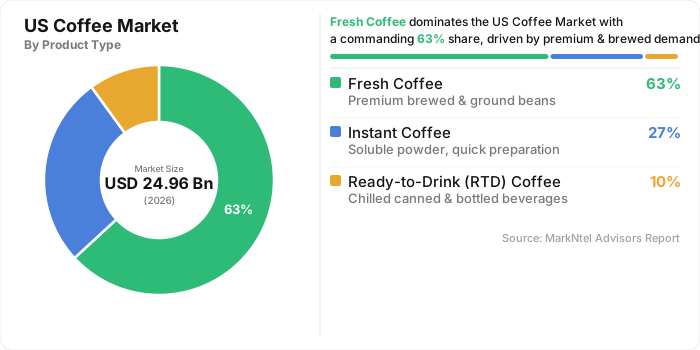
- By product type, the fresh coffee segment represented a significant share of about 63% in the US Coffee Market in 2026.
- By end user, the household segment presented a significant share of about 62% in the US Coffee Market in 2026.
Market Insights & Analysis: US Coffee Market (2026-32):
The US Coffee Market size was valued at around USD 23.89 billion in 2025 and is projected to grow from USD 24.96 billion in 2026 to USD 32.47 billion by 2032. Along with this, the market is estimated to grow at a CAGR of around 4.48% during the forecast period, i.e., 2026-32.
The US Coffee Market is projected to expand steadily, driven by a deeply entrenched consumption culture and increasing demand for innovative and diverse coffee flavors, which continue to enhance consumer engagement and drive consistent market expansion.
According to data aligned with the United States Department of Agriculture (USDA), total domestic coffee consumption reached approximately 1.6 billion kilograms annually, positioning the country among the largest coffee-consuming markets globally .
This high consumption base is further reflected in daily habits, with Americans consuming nearly 169.1 billion cups of coffee during 2024–2025, highlighting the beverage’s essential role in everyday routines.
Consumption penetration remains notably strong, with approximately 66% of U.S. adults drinking coffee daily, averaging nearly three cups per person per day in 2025. This habitual consumption is reinforced by robust import dynamics, as the U.S. imported over 22.3 million bags of coffee in 2024, driven by rising domestic demand. Import values from key producing nations such as Brazil exceeded USD 1.96 billion, emphasizing the country’s reliance on global supply chains.
Further strengthening this outlook, the USDA Foreign Agricultural Service Coffee Circular reported domestic consumption at 26.22 million 60-kg bags in 2023/24, with estimates of 25.55 million bags in 2024/25 and projections reaching 26.55 million bags by 2025/26. This upward trajectory reflects consistent demand growth supported by both retail and foodservice channels.
The extensive café ecosystem in the U.S. also plays a crucial role in market expansion. For instance, as of 2025, the country hosts over 23,000 coffee shop outlets, ensuring high accessibility across urban and suburban regions.
Major chains continue to dominate and expand aggressively. For example, Starbucks operates nearly 17,000 stores in 2024, with projections exceeding 17,100 outlets by 2026, while Dunkin’ and Tim Hortons collectively contribute thousands of additional locations, intensifying market penetration and consumer reach.
Simultaneously, evolving consumer preferences are driving demand for innovative coffee experiences. The rising popularity of unique and globally inspired flavors is accelerating product innovation. For instance, in 2025, Starbucks introduced the Iced Horchata Oatmilk Shaken Espresso, incorporating cinnamon, vanilla, and rice-milk-inspired notes, reflecting growing interest in fusion-based flavor profiles.
Looking ahead, expansion strategies by major players will further strengthen market growth. Starbucks plans to open approximately 175 new U.S. outlets in 2026 and around 400 additional stores by 2028, with long-term potential for up to 5,000 new locations nationwide, significantly enhancing accessibility and consumption frequency .
The U.S. coffee market is expected to grow steadily, driven by strong consumption habits, expanding retail infrastructure, and continuous flavor innovation. Increasing outlet density and evolving consumer preferences will further reinforce long-term demand and market expansion.
US Coffee Market Recent Developments:
- 2026: Starbucks has expanded its functional beverage portfolio by launching a new line of bottled coffee protein drinks, aimed at meeting rising demand for convenient, nutrition-focused options. The ready-to-drink products, available in flavors such as Classic Caffè and Caffè Mocha, deliver high protein content with low sugar, targeting on-the-go consumers seeking both energy and nutritional value.
- 2025: Starbucks has introduced a new spring menu featuring innovative beverages such as ube, toasted coconut, and customized chai drinks, alongside returning lavender flavors. The launch includes items like the Iced Ube Coconut Macchiato and Toasted Coconut Cream Cold Brew, highlighting growing demand for experimental and visually appealing coffee options.
US Coffee Market Scope:
| Category | Segments |
|---|---|
| By Product Type | (Fresh Coffee, Instant Coffee, Ready-to-Drink (RTD) Coffee), |
| By Source | (Arabica, Robusta, Liberica, Others), |
| By Process | (Natural Process, Wet Process, Wet Hulled, Honey Process), |
| By Nature | (Conventional Coffee, Organic Coffee, Specialty Coffee, Functional Coffee), |
| By Consumption Format | (At-Home Consumption, Away-from-Home Consumption), |
| By Price Range | (Mass / Economy, Mid-Range, Premium / Specialty), |
| By Packaging | (Flexible Packs (Pouches, Bags), Rigid Packs (Cans, Bottles, Jars), Single-Serve Pods/Capsules), |
| By Distribution Channel | (Retail (Off-Trade), Foodservice (On-Trade), Institutional Supply), |
| By End User | (Household, Commercial), |
US Coffee Market Driver:
Strong Coffee Consumption Culture
The U.S. coffee market is significantly driven by a well-established and continuously expanding consumption culture across the population. For instance, in 2024, coffee consumption reached a 20-year high, with approximately 67% of U.S. adults consuming coffee daily, surpassing all other beverages, including water. This highlights coffee’s dominant position as a preferred daily beverage and underscores its deep integration into consumer lifestyles.
Beyond daily consumption, the beverage demonstrates extensive weekly penetration as well. Around 75% of American adults consumed coffee at least once within a week in 2024, reflecting its widespread acceptance across diverse demographic groups, including varying age brackets and income levels. This broad-based consumption pattern indicates that coffee is not limited to niche segments but serves as a staple product across the mass market.
Such consistently high consumption levels are supported by evolving consumption occasions, including at-home brewing, on-the-go purchases, and café-based experiences. The increasing normalization of multiple cups per day further reinforces steady demand, while product diversification and accessibility continue to attract new consumers and retain existing ones.
The strong penetration and habitual nature of coffee consumption in the U.S. provide a stable demand foundation. This sustained consumer reliance will continue to drive market growth and support long-term expansion.
US Coffee Market Trend:
Rising Popularity of Innovative Coffee Flavors
The U.S. coffee market is increasingly characterized by a shift toward innovative and unconventional flavor profiles, reflecting evolving consumer preferences for unique and experiential beverages. Major industry players such as Starbucks are at the forefront of this transformation, continuously introducing new flavors to capture consumer interest and drive engagement.
In 2024, Starbucks launched a range of lavender-based coffee beverages, including Vanilla Lavender and Lavender Oatmilk drinks, marking a significant move toward botanical and floral flavor integration in mainstream coffee offerings . This development highlights a departure from traditional flavor profiles such as caramel and mocha, indicating growing consumer openness to more sophisticated and sensory-driven experiences.
Such innovations are particularly resonating with younger consumers, who are actively seeking novelty, customization, and aesthetically appealing drinks. The trend is further supported by seasonal menu rotations and limited-time offerings, which create excitement and encourage repeat purchases. As competition intensifies, brands are expected to continue experimenting with globally inspired, plant-based, and fusion flavors to maintain relevance and expand their consumer base.
The emergence of botanical and innovative flavors is redefining coffee consumption in the U.S., transforming it into a more experiential category. This trend will continue to drive product innovation, enhance consumer engagement, and support sustained market growth.
US Coffee Market Opportunity:
Premiumization and Craft Coffee Movement
The U.S. coffee market is experiencing a strong opportunity through the premiumization and craft coffee movement, as consumers increasingly shift from basic coffee to high-quality, specialty offerings.
This is driven by growing awareness of bean origin, roasting techniques, and flavor profiles, encouraging consumers to seek more refined and personalized coffee experiences. As a result, demand for single-origin coffee, artisanal blends, and ethically sourced products is rising across both retail and café channels.
Consumers are also demonstrating a willingness to pay higher prices for superior quality and authenticity, which is enabling brands to improve margins and differentiate themselves in a highly competitive market. Independent roasters, boutique cafés, and premium product lines are gaining traction, particularly in urban areas where consumers value craftsmanship and transparency. Additionally, the expansion of premium coffee formats such as cold brew, pour-over, and specialty espresso-based beverages is further supporting this shift.
Looking ahead, continued investments in advanced roasting technologies, direct trade sourcing, and experiential café formats are expected to strengthen this opportunity beyond 2025. Companies are also focusing on storytelling, sustainability, and traceability to enhance perceived value.
The premiumization of coffee is elevating it from a routine beverage to a curated experience. This shift will drive higher consumer spending, boost brand loyalty, and significantly accelerate long-term growth in the U.S. coffee market.
US Coffee Market Challenge:
Volatility in Coffee Bean Prices
The U.S. coffee market is increasingly challenged by significant volatility in global coffee bean prices, primarily due to its strong dependence on imports from key producing countries. Price instability has intensified in recent years, with Arabica coffee futures rising from approximately USD 2 per pound in early 2024 to a record USD 4.41 per pound by February 2025, underscoring sharp fluctuations within a short timeframe . These price movements are largely attributed to adverse climatic conditions in major producing regions such as Brazil and Vietnam, which have disrupted production cycles and constrained global supply availability.
This volatility has directly translated into higher retail prices in the U.S. market. The average price of ground coffee reached around USD 9.14 per pound in September 2025, reflecting a 41% year-over-year increase, based on government-supported data reported by credible news sources. Such increases place pressure on both consumers and businesses, forcing retailers to adjust pricing strategies while potentially impacting consumption levels.
Ongoing price volatility introduces cost uncertainty and margin pressure across the value chain. If sustained, it may weaken demand consistency and pose a constraint on the stable growth of the U.S. coffee market.
US Coffee Market (2026-32) Segmentation Analysis:
The US Coffee Market study of MarkNtel Advisors evaluates & highlights the major trends and influencing factors in each segment. It includes predictions for the period 2026–32 at the country level. Based on the analysis, the market has been further classified as;
Based on Product Type:
- Fresh Coffee
- Fresh Coffee Beans
- Fresh Ground Coffee
- Fresh Ground Coffee Pods
- Standard Fresh Ground Coffee
- Instant Coffee
- Instant Standard Coffee
- Instant Coffee Mixes
- Ready-to-Drink (RTD) Coffee
The fresh coffee segment dominates the US Coffee market, accounting for approximately 63% of the total market volume, primarily supported by strong consumer inclination toward superior taste, aroma, and product authenticity.
Fresh coffee beans and fresh ground coffee are widely perceived as higher-quality options, offering enhanced flavor profiles compared to instant alternatives. This perception has significantly influenced purchasing behavior, particularly among consumers seeking premium and specialty coffee experiences.
The segment’s growth is further reinforced by the increasing adoption of home brewing systems, including espresso machines and single-serve pod-based equipment, which rely heavily on fresh coffee formats such as ground coffee and pods. In parallel, the expansion of specialty coffee culture and the rising presence of artisanal roasters have strengthened demand for freshly sourced and locally roasted coffee products.
Moreover, the foodservice sector, including cafés and restaurants, predominantly utilizes fresh coffee to maintain consistency in quality and customer experience, thereby contributing substantially to overall segment demand. Although instant and ready-to-drink coffee provides convenience, they are generally positioned as a secondary option rather than a core daily consumption choice.
The sustained preference for quality-driven consumption and premiumization continues to support the leadership of the fresh coffee segment. This trend is expected to reinforce its dominance as consumers increasingly prioritize freshness and sensory experience.
Based on End User:
- Household
- Commercial
The household segment dominates the US Coffee market, accounting for about 62% of the total market size, supported by the strong integration of coffee consumption into daily home-based routines. Consumers increasingly prefer preparing coffee at home due to its cost efficiency, convenience, and the ability to customize taste and brewing methods according to individual preferences.
This dominance is further reinforced by the rising penetration of advanced home brewing equipment, including drip machines, single-serve systems, and espresso makers, which enable consumers to replicate café-quality beverages within residential settings.
The growing availability of diverse coffee formats such as ground coffee, beans, and pods through retail stores and e-commerce platforms has enhanced product accessibility and encouraged frequent consumption.
Additionally, evolving lifestyle patterns, particularly the continued prevalence of remote and hybrid work models, have contributed to higher in-home coffee intake. Consumers are increasingly replacing out-of-home purchases with home-prepared beverages, thereby strengthening demand within the household segment.
While the commercial segment, comprising cafés and foodservice outlets, remains an important contributor, it is relatively more dependent on external factors such as mobility patterns and discretionary spending.
The household segment’s leadership is underpinned by convenience-driven consumption and evolving lifestyle dynamics. This trend is expected to persist, ensuring sustained demand and reinforcing its dominance in the U.S. coffee market.
US Coffee Market Competitive Landscape
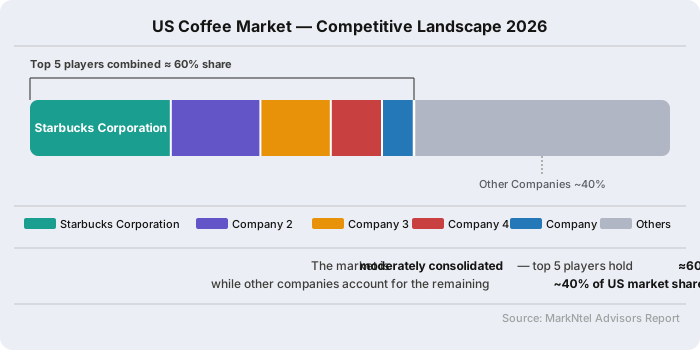
The market is moderately consolidated, with the top five players accounting for approximately 60% of the total market share. Leading companies include Starbucks Corporation, Nestlé S.A., Keurig Dr Pepper Inc., The Kraft Heinz Company, and The J.M. Smucker Company.z
Key Coffee Producing Companies in United States
- Starbucks Corporation
- Nestlé S.A.
- Keurig Dr Pepper Inc.
- Kraft Heinz Co
- The J.M. Smucker Company
- Black Rifle Coffee Company
- Eight O'Clock Coffee Co
- Caribou Coffee Company, Inc.
- Blue Bottle Coffee, Inc.
- Intelligentsia Coffee & Tea, Inc.
- Luigi Lavazza S.p.A.
- Califia Farms, LLC
- Others
Gain a Competitive Edge with Our US Coffee Market Report:
- The US Coffee Market Report by MarkNtel Advisors provides a detailed & thorough analysis of market size & share, growth rate, competitive landscape, and key players. This comprehensive analysis helps businesses gain a holistic understanding of the market dynamics & make informed decisions.
- This report also highlights current market trends & future projections, allowing businesses to identify emerging opportunities & potential challenges. By understanding market forecasts, companies can align their strategies & stay ahead of the competition.
- The US Coffee Market Report aids in assessing & mitigating risks associated with entering or operating in the market. By understanding market dynamics, regulatory frameworks, and potential challenges, businesses can develop strategies to minimize risks & optimize their operations.
*Reports Delivery Format - Market research studies from MarkNtel Advisors are offered in PDF, Excel and PowerPoint formats. Within 24 hours of the payment being successfully received, the report will be sent to your email address.
Frequently Asked Questions
- Market Segmentation
- Introduction
- Product Definition
- Research Process
- Assumptions
- Executive Summary
- US Coffee Market Policies, Regulations, and Product Standards
- US Coffee Market Trends & Developments
- US Coffee Market Dynamics
- Growth Drivers
- Challenges
- US Coffee Market Hotspot & Opportunities
- US Coffee Market Outlook, 2022-2032
- Market Size & Outlook
- By Revenues (USD Million)
- By Volume (Thousand Tons)
- Market Share & Outlook
- By Product Type – Market Size & Forecast 2022-2032, USD Million & Thousand Tons
- Fresh Coffee
- Fresh Coffee Beans
- Fresh Ground Coffee
- Fresh Ground Coffee Pods
- Standard Fresh Ground Coffee
- Instant Coffee
- Instant Standard Coffee
- Instant Coffee Mixes
- Ready-to-Drink (RTD) Coffee
- Fresh Coffee
- By Source – Market Size & Forecast 2022-2032, USD Million & Thousand Tons
- Arabica
- Robusta
- Liberica
- Others
- By Process – Market Size & Forecast 2022-2032, USD Million & Thousand Tons
- Natural Process
- Wet Process
- Wet Hulled
- Honey Process
- By Nature – Market Size & Forecast 2022-2032, USD Million & Thousand Tons
- Conventional Coffee
- Organic Coffee
- Specialty Coffee
- Functional Coffee
- By Consumption Format – Market Size & Forecast 2022-2032, USD Million & Thousand Tons
- At-Home Consumption
- Away-from-Home Consumption
- By Price Range – Market Size & Forecast 2022-2032, USD Million & Thousand Tons
- Mass / Economy
- Mid-Range
- Premium / Specialty
- By Packaging – Market Size & Forecast 2022-2032, USD Million & Thousand Tons
- Flexible Packs (Pouches, Bags)
- Rigid Packs (Cans, Bottles, Jars)
- Single-Serve Pods/Capsules
- By Distribution Channel – Market Size & Forecast 2022-2032, USD Million & Thousand Tons
- Retail (Off-Trade)
- Supermarkets & Hypermarkets
- Convenience Stores
- Specialty Coffee Stores
- Online Retail
- Foodservice (On-Trade)
- Cafés & Coffee Chains
- Restaurants & Hotels
- Institutional Supply
- Retail (Off-Trade)
- By End User – Market Size & Forecast 2022-2032, USD Million & Thousand Tons
- Household
- Commercial
- By Region
- Northeast
- Midwest
- South
- West
- By Company
- Company Revenue Shares
- Competitor Characteristics
- By Product Type – Market Size & Forecast 2022-2032, USD Million & Thousand Tons
- Market Size & Outlook
- US Fresh Coffee Market Outlook, 2022-2032
- Market Size & Outlook
- By Revenues (USD Million)
- By Volume (Thousand Tons)
- Market Share & Outlook
- By Source – Market Size & Forecast 2022-2032, USD Million & Thousand Tons
- By Process – Market Size & Forecast 2022-2032, USD Million & Thousand Tons
- By Nature – Market Size & Forecast 2022-2032, USD Million & Thousand Tons
- By Consumption Format – Market Size & Forecast 2022-2032, USD Million & Thousand Tons
- By Price Range – Market Size & Forecast 2022-2032, USD Million & Thousand Tons
- By Packaging – Market Size & Forecast 2022-2032, USD Million & Thousand Tons
- By Distribution Channel – Market Size & Forecast 2022-2032, USD Million & Thousand Tons
- By End User – Market Size & Forecast 2022-2032, USD Million & Thousand Tons
- By Region
- Market Size & Outlook
- US Instant Coffee Market Outlook, 2022-2032
- Market Size & Outlook
- By Revenues (USD Million)
- By Volume (Thousand Tons)
- Market Share & Outlook
- By Source – Market Size & Forecast 2022-2032, USD Million & Thousand Tons
- By Process – Market Size & Forecast 2022-2032, USD Million & Thousand Tons
- By Nature – Market Size & Forecast 2022-2032, USD Million & Thousand Tons
- By Consumption Format – Market Size & Forecast 2022-2032, USD Million & Thousand Tons
- By Price Range – Market Size & Forecast 2022-2032, USD Million & Thousand Tons
- By Packaging – Market Size & Forecast 2022-2032, USD Million & Thousand Tons
- By Distribution Channel – Market Size & Forecast 2022-2032, USD Million & Thousand Tons
- By End User – Market Size & Forecast 2022-2032, USD Million & Thousand Tons
- By Region
- Market Size & Outlook
- US Ready-to-Drink (RTD) Coffee Market Outlook, 2022-2032
- Market Size & Outlook
- By Revenues (USD Million)
- By Volume (Thousand Tons)
- Market Share & Outlook
- By Source – Market Size & Forecast 2022-2032, USD Million & Thousand Tons
- By Process – Market Size & Forecast 2022-2032, USD Million & Thousand Tons
- By Nature – Market Size & Forecast 2022-2032, USD Million & Thousand Tons
- By Consumption Format – Market Size & Forecast 2022-2032, USD Million & Thousand Tons
- By Price Range – Market Size & Forecast 2022-2032, USD Million & Thousand Tons
- By Packaging – Market Size & Forecast 2022-2032, USD Million & Thousand Tons
- By Distribution Channel – Market Size & Forecast 2022-2032, USD Million & Thousand Tons
- By End User – Market Size & Forecast 2022-2032, USD Million & Thousand Tons
- By Region
- Market Size & Outlook
- US Coffee Market Key Strategic Imperatives for Success & Growth
- Competition Outlook
- Company Profiles
- Starbucks Corporation
- Business Description
- Product Portfolio
- Strategic Alliances or Partnerships
- Recent Developments
- Financial Details
- Others
- Nestlé S.A.
- Business Description
- Product Portfolio
- Strategic Alliances or Partnerships
- Recent Developments
- Financial Details
- Others
- Keurig Dr Pepper Inc.
- Business Description
- Product Portfolio
- Strategic Alliances or Partnerships
- Recent Developments
- Financial Details
- Others
- Kraft Heinz Co
- Business Description
- Product Portfolio
- Strategic Alliances or Partnerships
- Recent Developments
- Financial Details
- Others
- The J.M. Smucker Company
- Business Description
- Product Portfolio
- Strategic Alliances or Partnerships
- Recent Developments
- Financial Details
- Others
- Black Rifle Coffee Company
- Business Description
- Product Portfolio
- Strategic Alliances or Partnerships
- Recent Developments
- Financial Details
- Others
- Eight O'Clock Coffee Co
- Business Description
- Product Portfolio
- Strategic Alliances or Partnerships
- Recent Developments
- Financial Details
- Others
- Caribou Coffee Company, Inc.
- Business Description
- Product Portfolio
- Strategic Alliances or Partnerships
- Recent Developments
- Financial Details
- Others
- Blue Bottle Coffee, Inc.
- Business Description
- Product Portfolio
- Strategic Alliances or Partnerships
- Recent Developments
- Financial Details
- Others
- Intelligentsia Coffee & Tea, Inc.
- Business Description
- Product Portfolio
- Strategic Alliances or Partnerships
- Recent Developments
- Financial Details
- Others
- Luigi Lavazza S.p.A.
- Business Description
- Product Portfolio
- Strategic Alliances or Partnerships
- Recent Developments
- Financial Details
- Others
- Califia Farms, LLC
- Business Description
- Product Portfolio
- Strategic Alliances or Partnerships
- Recent Developments
- Financial Details
- Others
- Others
- Starbucks Corporation
- Company Profiles
- Disclaimer
MarkNtel Advisors follows a robust and iterative research methodology designed to ensure maximum accuracy and minimize deviation in market estimates and forecasts. Our approach combines both bottom-up and top-down techniques to effectively segment and quantify various aspects of the market. A consistent feature across all our research reports is data triangulation, which examines the market from three distinct perspectives to validate findings. Key components of our research process include:
1. Scope & Research Design At the outset, MarkNtel Advisors define the research objectives and formulate pertinent questions. This phase involves determining the type of research—qualitative or quantitative—and designing a methodology that outlines data collection methods, target demographics, and analytical tools. They also establish timelines and budgets to ensure the research aligns with client goals.
2. Sample Selection and Data Collection In this stage, the firm identifies the target audience and determines the appropriate sample size to ensure representativeness. They employ various sampling methods, such as random or stratified sampling, based on the research objectives. Data collection is carried out using tools like surveys, interviews, and observations, ensuring the gathered data is reliable and relevant.
3. Data Analysis and Validation Once data is collected, MarkNtel Advisors undertake a rigorous analysis process. This includes cleaning the data to remove inconsistencies, employing statistical software for quantitative analysis, and thematic analysis for qualitative data. Validation steps are taken to ensure the accuracy and reliability of the findings, minimizing biases and errors.

4. Data Forecast and FinalizationThe final phase involves forecasting future market trends based on the analyzed data. MarkNtel Advisors utilize predictive modeling and time series analysis to anticipate market behaviors. The insights are then compiled into comprehensive reports, featuring visual aids like charts and graphs, and include strategic recommendations to inform client decision-making
We offer flexible licensing options to cater to varying organizational needs. Choose the pricing pack that best suits your requirements:
Buy Now Inquire Before Buying
 Request Customization
 Talk to our Consultant







