

Peru E-Commerce Market Research Report: Forecast (2026-2032)
By Business Model (Business-to-Consumer (B2C), Business-to-Business (B2B), Consumer-to-Consumer (C2C)), By Product Category (Electronics & Appliances (Smartphones, Cooking Applianc ... es, Washing Machines, Refrigerators, Ovens, Vacuum Cleaners, Television, Others), Fashion & Apparel (Kids wear, Mens Wear, Women Wear), Food & Grocery (Fresh Fruits, Snacks & Processed Food, Cereals, Others), Beauty & Personal Care (Skincare, Color Cosmetics, Haircare, Suncare, Others), Home & Furniture (Kitchen Furniture, Living Room Furniture, Bedroom Furniture, Home Cleaners, Others), Books, Toys & Hobby (Books, Traditional Toys, Electronic Toys & Games, Others), Automotive & Accessories (Car Interiors, Tires, Infotainment Systems, Others), Healthcare & Pharmaceuticals (OTC Medicines, Medical Consumables, Others), Others), By Platform Type (Web-based, Mobile-based), By Payment Mode (Digital Wallets, Bank Transfers, Credit/Debit Cards, Cash on Delivery (COD)), By End User (Individual Consumers, Enterprises / Businesses), and others Read more
- ICT & Electronics
- Aug 2026
- Pages 145
- Report Format: PDF, Excel, PPT
Peru E-Commerce Market
Projected 8.87% CAGR from 2026 to 2032
Study Period
2026-2032
Market Size (2026)
USD 18.21 Billion
Market Size (2032)
USD 30.32 Billion
Base Year
2025
Projected CAGR
8.87%
Leading Segments
By Payment Mode: Digital Wallets
Peru E-Commerce Market Key Takeaways
- Peru e-commerce market size was valued at USD 17.98 billion in 2025 and is projected to grow from USD 18.21 billion in 2026 to USD 30.32 billion by 2032.
- The industry is projected to grow at a steady CAGR of 8.87% during 2026-2032.
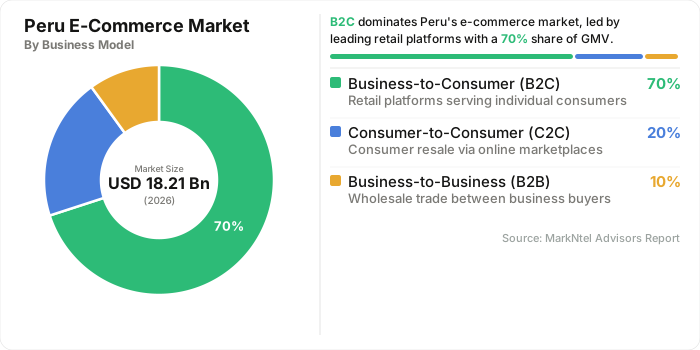
- By business model, business-to-consumer (B2C) holds a significant share of about 70% in 2026.
- By payment method, digital wallets seized a significant share of about 45% in 2026.
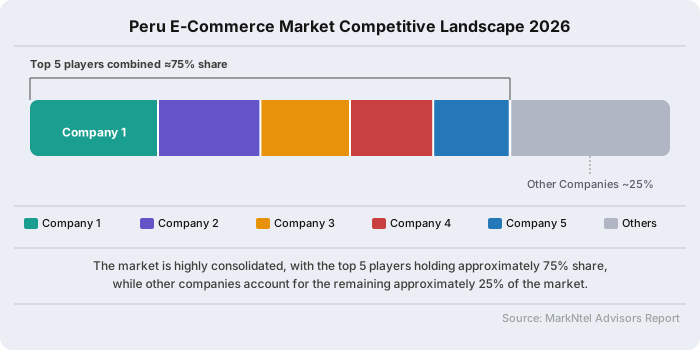
- The industry is moderately consolidated. However, the top five players collectively account for nearly 75% share.
Peru E-Commerce Market Size and Outlook
The Peru E-commerce market size was valued at USD 17.98 billion in 2025 and is projected to grow from USD 18.21 billion in 2026 to USD 30.32 billion by 2032. Along with this, the market is estimated to grow at a CAGR of around 8.87% during the forecast period, i.e., 2026-32.
The market is undergoing rapid transformation as increasing digital connectivity, marketplace expansion, and changing consumer preferences reshape the country's retail landscape. The growth of online shopping has been supported by rising participation from businesses, particularly small and medium-sized enterprises (SMEs), that are adopting digital channels to reach wider customer bases. According to the Peruvian Chamber of Electronic Commerce (CAPECE), approximately 335,000 businesses were selling online in 2024–2025, including SMEs using marketplaces and digital storefronts. This expansion is improving product availability, strengthening competition, and enabling businesses to overcome geographic limitations without significant investments in physical stores.
Marketplaces continue to play a central role in Peru's digital commerce ecosystem. According to CAPECE, approximately 40% of Peru's total
The market is also witnessing increased participation from international digital retailers seeking growth opportunities in Peru. In February 2025, SHEIN expanded its presence in Peru by launching a localized e-commerce platform designed for Peruvian consumers. The platform introduced local currency pricing, promotional campaigns, personalized offers, and delivery incentives, increasing accessibility to international fashion products and intensifying competition in the online
Furthermore, improvements in digital payments, smartphone adoption, and logistics infrastructure are expected to strengthen consumer confidence and encourage more frequent online purchases. Investments by marketplaces and retailers in fulfillment networks and customer experience are likely to accelerate adoption beyond major urban centers. As SMEs continue embracing digital commerce and global platforms expand their local presence, Peru's e-commerce market is positioned for sustained growth, supported by broader digital inclusion, improved accessibility, and increasing consumer acceptance of online retail.
Peru E-Commerce Market Key Indicators
- According to the Peruvian Chamber of Electronic Commerce (CAPECE), the online commerce market reached approximately USD 15.6 billion in 2024–2025, representing around 5.5% of Peru's GDP. The country also accounts for approximately 4.8% of Latin America's e-commerce market, highlighting its growing regional importance. Increasing digital adoption among consumers, marketplace expansion, and SME participation are supporting continued market development.
- Expanding internet access is creating a strong foundation for Peru's e-commerce growth. According to OSIPTEL's ERESTEL 2024 survey, 92.6% of Peruvian households had access to fixed or mobile internet by the end of 2024, representing approximately 9.8 million connected households. Rural connectivity also improved significantly, increasing from 41.5% in 2019 to nearly 83% in 2024. This broader digital inclusion is enabling consumers outside major cities to access online marketplaces, digital payments, and online services.
- Peruvian consumers are demonstrating increasing engagement and spending through digital channels. According to PROMPERÚ, based on digital commerce analysis, the average online consumer in Peru spends approximately USD 741 annually on digital purchases. Additionally, CAPECE data indicates that consumers spend approximately USD 62 per online transaction. Rising consumer confidence, wider product availability, and improved payment convenience are encouraging higher purchase frequency across categories such as electronics, fashion, groceries, and household products.
- Online purchase frequency reflects the increasing maturity of Peru's digital consumer base. According to PROMPERÚ, approximately 64% of Peruvian online shoppers are occasional buyers, completing around four transactions per month. The growing familiarity with online shopping is supported by better payment options, improved delivery services, and wider product availability. As consumers gain confidence in digital channels, businesses are focusing on loyalty programs, personalized offers, and subscription models to increase repeat purchases and lifetime customer value.
Peru E-Commerce Market Scope
| Category | Segments |
|---|---|
| By Business Model | Business-to-Consumer (B2C), Business-to-Business (B2B), Consumer-to-Consumer (C2C |
| By Product Category | Electronics & Appliances (Smartphones, Cooking Appliances, Washing Machines, Refrigerators, Ovens, Vacuum Cleaners, Television, Others), Fashion & Apparel (Kids wear, Mens Wear, Women Wear), Food & Grocery (Fresh Fruits, Snacks & Processed Food, Cereals, Others), Beauty & Personal Care (Skincare, Color Cosmetics, Haircare, Suncare, Others), Home & Furniture (Kitchen Furniture, Living Room Furniture, Bedroom Furniture, Home Cleaners, Others), Books, Toys & Hobby (Books, Traditional Toys, Electronic Toys & Games, Others), Automotive & Accessories (Car Interiors, Tires, Infotainment Systems, Others), Healthcare & Pharmaceuticals (OTC Medicines, Medical Consumables, Others), Others |
| By Platform Type | Web-based, Mobile-based |
| By Payment Mode | Digital Wallets, Bank Transfers, Credit/Debit Cards, Cash on Delivery (COD |
| By End User | Individual Consumers, Enterprises / Businesses |
Peru E-Commerce Market Growth Drivers
Growing Smartphone Penetration and Mobile Commerce Adoption Driving Online Retail Expansion
Growing smartphone adoption has become a major catalyst for Peru's e-commerce industry by enabling consumers to shop anytime through mobile applications and mobile-optimized websites. According to Peru's telecommunications regulator, OSIPTEL, 94.8% of Peruvian households owned at least one smartphone by the end of 2024, representing more than 10 million households. Smartphone ownership in rural areas also increased sharply to 84.8%, significantly expanding digital access beyond major cities and creating new opportunities for online retailers to reach underserved consumers
Moreover, according to the official investment promotion agency PROMPERÚ, citing OSIPTEL's Residential Survey of Telecommunications Services (ERESTEL), 64% of all online purchases in Peru are completed through mobile devices, while only 36% are made via desktop computers, demonstrating that smartphones have become the dominant channel for digital shopping. Additionally, nearly USD 8.82 million made online purchases in 2023, representing a 30% increase compared with 2022, reflecting the growing role of smartphones in expanding the country's digital consumer base.
The continued rise in smartphone-led shopping, supported by expanding digital infrastructure and government-backed digital transformation initiatives, will significantly broaden Peru's online consumer base. As mobile commerce becomes the preferred purchasing channel, it will remain a key driver of sustained growth in the Peru e-commerce market.
Recent Trends
Growing Adoption of AI-Driven Personalization in Peru's E-commerce
Artificial intelligence (AI) and personalization technologies are emerging as a key trend in Peru's e-commerce industry as retailers increasingly leverage intelligent solutions to enhance customer engagement, improve operational efficiency, and differentiate themselves in an increasingly competitive digital landscape. Rather than offering standardized shopping experiences, businesses are using AI to analyze consumer behavior, predict purchasing preferences, automate inventory management, optimize pricing strategies, and provide real-time personalized product recommendations. This shift is enabling retailers to improve customer satisfaction while increasing conversion rates and repeat purchases.
The growing reliance on AI is particularly important as mobile commerce continues to dominate online shopping in Peru. According to Butik.ai, more than 70% of Peru's e-commerce transactions are conducted through smartphones, making AI-powered personalization essential for delivering seamless and customized mobile shopping experiences. In 2025, Eduardo Acuña, CEO of Butik.ai, stated that AI is becoming a crucial technology for the country's e-commerce sector by automating key processes such as inventory management, sales analysis, and real-time personalized recommendations, enabling retailers to respond more effectively to changing consumer demand.
Similarly, in October 2025, GoPersonal highlighted that AI-powered customer data platforms enable brands to anticipate consumer needs by analyzing real-time behavioral data across digital channels. This allows retailers to deliver personalized offers, optimize marketing campaigns, and strengthen customer loyalty through predictive engagement rather than traditional mass marketing.
As AI adoption expands across Peru's retail sector, businesses are expected to enhance customer experiences, improve operational performance, and build stronger long-term relationships with consumers, making AI-driven personalization one of the most influential trends shaping the country's e-commerce market.
Peru E-Commerce Market Opportunities and Challenges
Cybersecurity Challenges Accelerating Secure Payment Innovation in Peru E-commerce
Cybersecurity risks and fraudulent online transactions remain key challenges for Peru’s e-commerce market as increasing digital commerce activity creates opportunities for scams targeting buyers and sellers. According to Peru’s National Police, online purchase and sale scams were among the most reported fraud categories in 2024, with 81 complaints registered nationwide. Criminals used methods such as fake payment confirmations, phishing messages, and impersonation of e-commerce platforms, resulting in financial losses of approximately USD 105,000 and more than USD 21,000. These incidents can reduce consumer confidence, increase transaction hesitation, and slow adoption of online shopping, particularly among first-time digital consumers and SMEs.
However, this challenge is creating opportunities for secure payment innovation, digital authentication, and fraud prevention solutions across Peru’s e-commerce ecosystem. In June 2025, Mercado Libre Perú integrated Yape as a new payment method on its marketplace, enabling consumers to make purchases through one of Peru's most widely used digital wallets. The integration strengthened transaction security by leveraging Yape's three-digit Security Code feature, introduced in April 2025, which allows both senders and recipients to verify that the same security code appears in the transaction details.
The integration provides a faster and more secure payment experience, with Mercado Libre reporting that its platform receives more than 10 million visits per month in Peru. Additionally, Peru records approximately 15.8 million daily transactions through digital wallets, highlighting strong demand for convenient and trusted payment solutions.
As digital payment security improves, consumer confidence is expected to rise, reducing hesitation toward online purchases and encouraging greater participation from consumers and SMEs, thereby supporting the long-term growth of Peru’s e-commerce market.
Segmentation Insights
Business-to-Consumer (B2C) Holds Approximately 70% Share of Total Revenue
The Business-to-Consumer (B2C) segment dominates the Peru e-commerce market, accounting for approximately 70% of total market revenue. The segment's leadership is driven by the growing preference of consumers for purchasing products directly from online retailers and marketplace platforms across categories such as fashion, electronics, home goods, beauty, and groceries. The increasing availability of digital payment options, widespread smartphone usage, and improvements in logistics have made online shopping more accessible and convenient.
Additionally, marketplace platforms have become the primary sales channel for both large retailers and small businesses by providing integrated payment, marketing, and fulfillment services. Marketplaces generate approximately 40% of Peru's total e-commerce activity, highlighting their central role in supporting B2C transactions. Furthermore, international retailers such as SHEIN have expanded their localized operations in Peru, while companies including Mercado Libre continue investing in logistics and payment infrastructure, further strengthening the country's consumer-oriented online retail ecosystem and reinforcing the dominance of the B2C segment. Based on business model, the scope has been segmented into
- Business-to-Consumer (B2C)
- Business-to-Business (B2B)
- Consumer-to-Consumer (C2C)
Digital Wallets Account for Approximately 45% Share, Emerging as the Leading Payment Mode
Digital Wallets account for approximately 45% of the Peru e-commerce market by payment mode, making them the preferred payment option for online transactions. Their dominance is driven by the increasing demand for fast, convenient, and secure cashless payments, supported by the widespread use of smartphones and mobile banking applications. Digital wallets enable consumers to complete purchases instantly while reducing dependence on cash and physical cards.
Approximately 15.8 million digital wallet transactions daily, highlighting the growing acceptance of mobile payments across the country. Furthermore, in June 2025, Mercado Libre Perú integrated Yape as a payment method on its marketplace, allowing customers to use one of Peru's most widely adopted digital wallets for online purchases. The integration also leverages Yape's three-digit Security Code feature, introduced in April 2025, to enhance transaction verification and reduce payment fraud. These developments are improving consumer confidence, accelerating digital payment adoption, and reinforcing the leadership of digital wallets in Peru's evolving e-commerce ecosystem. Based on payment mode, the scope has been segmented into
- Digital Wallets
- Bank Transfers
- Credit/Debit Cards
- Cash on Delivery (COD)
Peru E-Commerce Market Competitive Analysis
The Peru e-commerce market is moderately consolidated, with regional marketplace leaders, international platforms, and domestic omnichannel retailers competing across multiple product categories. The top five companies MercadoLibre Perú S.R.L., Falabella.com S.A., Amazon.com, Inc., Cencosud Retail Perú S.A., and Supermercados Peruanos S.A. collectively account for approximately 75% of the organized e-commerce market, supported by strong logistics networks, established brand presence, digital payment capabilities, and continued investments in mobile commerce and customer experience.
Major E-Commerce Companies in Peru
- MercadoLibre Perú S.R.L.
- com S.A.
- com, Inc.
- Cencosud Retail Perú S.A.
- Supermercados Peruanos S.A.
- Tiendas por Departamento Ripley S.A.
- Alibaba Group Holding Limited
- Homecenters Peruanos S.A. (Promart)
- Oechsle S.A.
- Juntoz S.A.C.
- Others
Peru E-Commerce Industry News and Recent Developments
November 2025: Amazon Launches Amazon Bazaar App in Peru
Amazon.com, Inc. launched its low-cost shopping application Amazon Bazaar in Peru in November 2025, expanding its affordable product marketplace across Latin America. The app offers hundreds of thousands of products across categories such as fashion, home, and lifestyle, with prices starting from around PEN 7 (approximately USD 2) and discounts of up to 50%. The launch strengthens Amazon’s presence in Peru’s e-commerce landscape by targeting price-sensitive consumers and competing with low-cost cross-border platforms
Impact Analysis: The launch of Amazon Bazaar is expected to intensify competition in Peru’s online retail market by increasing access to affordable international products and expanding consumer choices. The platform can accelerate adoption among price-sensitive shoppers, particularly in fashion and lifestyle categories, while encouraging local and regional e-commerce players to improve pricing strategies, promotions, and customer experience to retain market share.
August 2025: Mercado Libre Announces First Fulfillment Center in Peru
MercadoLibre Perú S.R.L. announced the launch of its first storage and distribution center in Peru, located in Lurín. The 3,000 m² facility can store up to 90,000 product units and aims to enable faster deliveries, expand product availability, and improve logistics efficiency for online sellers and consumers. The investment strengthens Peru’s e-commerce infrastructure by reducing delivery times and enhancing marketplace competitiveness.
Impact Analysis: Mercado Libre’s fulfillment center is expected to improve Peru’s e-commerce logistics ecosystem by enabling faster order processing, shorter delivery times, and better inventory management. The facility will support sellers through more efficient fulfillment services while enhancing customer satisfaction. This investment may encourage more SMEs to join online marketplaces and strengthen consumer confidence in digital shopping across Peru.
Frequently Asked Questions
- Market Segmentation
- Introduction
- Product Definition
- Research Process
- Assumptions
- Executive Summary
- Peru E-Commerce Market Policies, Regulations, and Product Standards
- Peru E-Commerce Market Trends & Developments
- Peru E-Commerce Market Dynamics
- Growth Factors
- Challenges
- Peru E-Commerce Market Hotspot & Opportunities
- Peru E-Commerce Market Supply Chain Analysis
- Peru E-Commerce Market PESTLE Analysis
- Peru E-Commerce Market Outlook, 2022-2032
- Market Size & Outlook
- By Revenues (USD Million)
- Market Segmentation & Outlook
- By Business Model - Market Size & Forecast 2022-2032, USD Million
- Business-to-Consumer (B2C)
- Business-to-Business (B2B)
- Consumer-to-Consumer (C2C)
- By Product Category - Market Size & Forecast 2022-2032, USD Million
- Electronics & Appliances
- Smartphones
- Cooking Appliances
- Washing Machines
- Refrigerators
- Ovens
- Vacuum Cleaners
- Television
- Others
- Fashion & Apparel
- Kids wear
- Mens Wear
- Women Wear
- Food & Grocery
- Fresh Fruits
- Snacks & Processed Food
- Cereals
- Others
- Beauty & Personal Care
- Skincare
- Color Cosmetics
- Haircare
- Suncare
- Others
- Home & Furniture
- Kitchen Furniture
- Living Room Furniture
- Bedroom Furniture
- Home Cleaners
- Others
- Books, Toys & Hobby
- Books
- Traditional Toys
- Electronic Toys & Games
- Others
- Automotive & Accessories
- Car Interiors
- Tires
- Infotainment Systems
- Others
- Healthcare & Pharmaceuticals
- OTC Medicines
- Medical Consumables
- Others
- Others
- Electronics & Appliances
- By Platform Type - Market Size & Forecast 2022-2032, USD Million
- Web-based
- Mobile-based
- By Payment Mode - Market Size & Forecast 2022-2032, USD Million
- Digital Wallets
- Bank Transfers
- Credit/Debit Cards
- Cash on Delivery (COD)
- By End User - Market Size & Forecast 2022-2032, USD Million
- Individual Consumers
- Enterprises / Businesses
- By Region- Market Size & Forecast 2022-2032, USD Million
- North
- South
- Central
- By Company
- Competition Characteristics
- Market Share & Analysis
- By Business Model - Market Size & Forecast 2022-2032, USD Million
- Market Size & Outlook
- Peru Electronics & Appliances E-Commerce Market Outlook, 2022-2032
- Market Size & Outlook
- By Revenues (USD Million)
- Market Segmentation & Outlook
- By Product Category - Market Size & Forecast 2022-2032, USD Million
- By Platform Type - Market Size & Forecast 2022-2032, USD Million
- By Payment Mode - Market Size & Forecast 2022-2032, USD Million
- By End User - Market Size & Forecast 2022-2032, USD Million
- By Region- Market Size & Forecast 2022-2032, USD Million
- Market Size & Outlook
- Peru Fashion & Apparel E-Commerce Market Outlook, 2022-2032
- Market Size & Outlook
- By Revenues (USD Million)
- Market Segmentation & Outlook
- By Product Category - Market Size & Forecast 2022-2032, USD Million
- By Platform Type - Market Size & Forecast 2022-2032, USD Million
- By Payment Mode - Market Size & Forecast 2022-2032, USD Million
- By End User - Market Size & Forecast 2022-2032, USD Million
- By Region- Market Size & Forecast 2022-2032, USD Million
- Market Size & Outlook
- Peru Food & Grocery E-Commerce Market Outlook, 2022-2032
- Market Size & Outlook
- By Revenues (USD Million)
- Market Segmentation & Outlook
- By Product Category - Market Size & Forecast 2022-2032, USD Million
- By Platform Type - Market Size & Forecast 2022-2032, USD Million
- By Payment Mode - Market Size & Forecast 2022-2032, USD Million
- By End User - Market Size & Forecast 2022-2032, USD Million
- By Region- Market Size & Forecast 2022-2032, USD Million
- Market Size & Outlook
- Peru Beauty & Personal Care E-Commerce Market Outlook, 2022-2032
- Market Size & Outlook
- By Revenues (USD Million)
- Market Segmentation & Outlook
- By Product Category - Market Size & Forecast 2022-2032, USD Million
- By Platform Type - Market Size & Forecast 2022-2032, USD Million
- By Payment Mode - Market Size & Forecast 2022-2032, USD Million
- By End User - Market Size & Forecast 2022-2032, USD Million
- By Region- Market Size & Forecast 2022-2032, USD Million
- Market Size & Outlook
- Peru Home & Furniture E-Commerce Market Outlook, 2022-2032
- Market Size & Outlook
- By Revenues (USD Million)
- Market Segmentation & Outlook
- By Product Category - Market Size & Forecast 2022-2032, USD Million
- By Platform Type - Market Size & Forecast 2022-2032, USD Million
- By Payment Mode - Market Size & Forecast 2022-2032, USD Million
- By End User - Market Size & Forecast 2022-2032, USD Million
- By Region- Market Size & Forecast 2022-2032, USD Million
- Market Size & Outlook
- Peru Books, Toys & Hobby E-Commerce Market Outlook, 2022-2032
- Market Size & Outlook
- By Revenues (USD Million)
- Market Segmentation & Outlook
- By Product Category - Market Size & Forecast 2022-2032, USD Million
- By Platform Type - Market Size & Forecast 2022-2032, USD Million
- By Payment Mode - Market Size & Forecast 2022-2032, USD Million
- By End User - Market Size & Forecast 2022-2032, USD Million
- By Region- Market Size & Forecast 2022-2032, USD Million
- Market Size & Outlook
- Peru Automotive & Accessories E-Commerce Market Outlook, 2022-2032
- Market Size & Outlook
- By Revenues (USD Million)
- Market Segmentation & Outlook
- By Product Category - Market Size & Forecast 2022-2032, USD Million
- By Platform Type - Market Size & Forecast 2022-2032, USD Million
- By Payment Mode - Market Size & Forecast 2022-2032, USD Million
- By End User - Market Size & Forecast 2022-2032, USD Million
- By Region- Market Size & Forecast 2022-2032, USD Million
- Market Size & Outlook
- Peru Healthcare & Pharmaceuticals E-Commerce Market Outlook, 2022-2032
- Market Size & Outlook
- By Revenues (USD Million)
- Market Segmentation & Outlook
- By Product Category - Market Size & Forecast 2022-2032, USD Million
- By Platform Type - Market Size & Forecast 2022-2032, USD Million
- By Payment Mode - Market Size & Forecast 2022-2032, USD Million
- By End User - Market Size & Forecast 2022-2032, USD Million
- By Region- Market Size & Forecast 2022-2032, USD Million
- Market Size & Outlook
- Peru E-Commerce Market Key Strategic Imperatives for Success & Growth
- Competitive Outlook
- Company Profiles
- MercadoLibre Perú S.R.L.
- Business Description
- Product Portfolio
- Collaborations & Alliances
- Recent Developments
- Financial Details
- Others
- Falabella.com S.A.
- Business Description
- Product Portfolio
- Collaborations & Alliances
- Recent Developments
- Financial Details
- Others
- Amazon.com, Inc.
- Business Description
- Product Portfolio
- Collaborations & Alliances
- Recent Developments
- Financial Details
- Others
- Cencosud Retail Perú S.A.
- Business Description
- Product Portfolio
- Collaborations & Alliances
- Recent Developments
- Financial Details
- Others
- Supermercados Peruanos S.A.
- Business Description
- Product Portfolio
- Collaborations & Alliances
- Recent Developments
- Financial Details
- Others
- Tiendas por Departamento Ripley S.A.
- Business Description
- Product Portfolio
- Collaborations & Alliances
- Recent Developments
- Financial Details
- Others
- Alibaba Group Holding Limited
- Business Description
- Product Portfolio
- Collaborations & Alliances
- Recent Developments
- Financial Details
- Others
- Homecenters Peruanos S.A. (Promart)
- Business Description
- Product Portfolio
- Collaborations & Alliances
- Recent Developments
- Financial Details
- Others
- Oechsle S.A.
- Business Description
- Product Portfolio
- Collaborations & Alliances
- Recent Developments
- Financial Details
- Others
- Juntoz S.A.C.
- Business Description
- Product Portfolio
- Collaborations & Alliances
- Recent Developments
- Financial Details
- Others
- Others
- MercadoLibre Perú S.R.L.
- Company Profiles
- Disclaimer
MarkNtel Advisors follows a robust and iterative research methodology designed to ensure maximum accuracy and minimize deviation in market estimates and forecasts. Our approach combines both bottom-up and top-down techniques to effectively segment and quantify various aspects of the market. A consistent feature across all our research reports is data triangulation, which examines the market from three distinct perspectives to validate findings. Key components of our research process include:
1. Scope & Research Design At the outset, MarkNtel Advisors define the research objectives and formulate pertinent questions. This phase involves determining the type of research—qualitative or quantitative—and designing a methodology that outlines data collection methods, target demographics, and analytical tools. They also establish timelines and budgets to ensure the research aligns with client goals.
2. Sample Selection and Data Collection In this stage, the firm identifies the target audience and determines the appropriate sample size to ensure representativeness. They employ various sampling methods, such as random or stratified sampling, based on the research objectives. Data collection is carried out using tools like surveys, interviews, and observations, ensuring the gathered data is reliable and relevant.
3. Data Analysis and Validation Once data is collected, MarkNtel Advisors undertake a rigorous analysis process. This includes cleaning the data to remove inconsistencies, employing statistical software for quantitative analysis, and thematic analysis for qualitative data. Validation steps are taken to ensure the accuracy and reliability of the findings, minimizing biases and errors.

4. Data Forecast and FinalizationThe final phase involves forecasting future market trends based on the analyzed data. MarkNtel Advisors utilize predictive modeling and time series analysis to anticipate market behaviors. The insights are then compiled into comprehensive reports, featuring visual aids like charts and graphs, and include strategic recommendations to inform client decision-making
We offer flexible licensing options to cater to varying organizational needs. Choose the pricing pack that best suits your requirements:
Buy Now Inquire Before Buying
 Request Customization
 Talk to our Consultant







