

Vietnam Electric Vehicle Market Research Report: Forecast (2026-2032)
By Vehicle Type (Passenger Cars, Commercial Vehicles, Light Trucks, Minivans, Electric Trucks Electric Bus, Two Wheelers, Three Wheelers), By Propulsion Type (Battery Electric Vehi ... cle (BEV), Plug-in hybrid electric vehicles, Fuel-cell electric vehicles), By Charging Infrastructure (AC Charging, DC Fast Charging, Ultra-Fast / High-Power Charging), By Range (Less than 200 km, 200–400 km, Above 400 km), By Battery Type (Lithium-Ion Battery, Lithium Iron Phosphate (LFP), Nickel Manganese Cobalt (NMC), Solid-State Battery, Nickel Metal Hydride (NiMH)), and others Read more
- Automotive
- Jul 2026
- Pages 140
- Report Format: PDF, Excel, PPT
Vietnam Electric Vehicle Market
Projected 18.95% CAGR from 2026 to 2032
Study Period
2026-2032
Market Size (2026)
USD 3.71 Billion
Market Size (2032)
USD 10.52 Billion
Base Year
2025
Projected CAGR
18.95%
Leading Segments
By Vehicle Type: Passenger cars
Vietnam Electric Vehicle Market Key Takeaways
- The Vietnam electric vehicle market size was valued at around USD 3.12 billion in 2025 and is projected to grow from USD 3.71 billion in 2026 to USD 10.52 billion by 2032, exhibiting a CAGR of 18.95 % during 2026-2032.
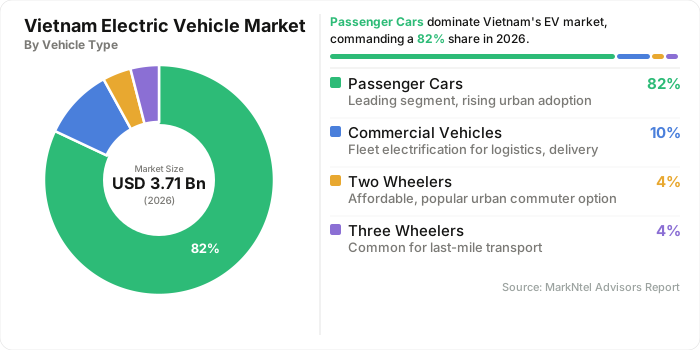
- By vehicle type, passenger electric vehicles are anticipated to hold approximately 82% of the market share in 2026.
- By propulsion type, battery electric vehicles are projected to account for approximately 90% of the market share in 2026.
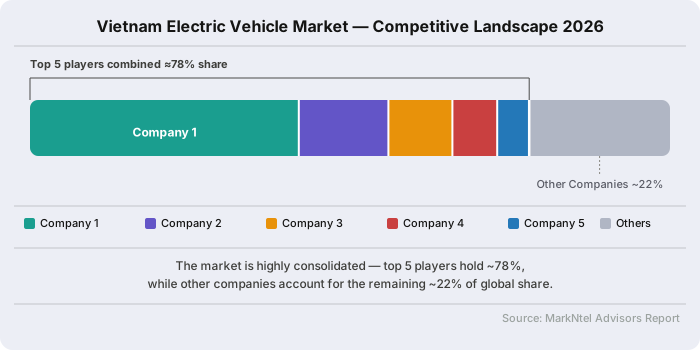
- The industry remains moderately consolidated, with the top five players collectively accounting for approximately 78% market share.
Vietnam Electric Vehicle Market Size and Outlook
The electric vehicle market size in Vietnam was valued at USD 3.12 billion in 2025 and is projected to grow from USD 3.71 billion in 2026 to USD 10.52 billion by 2032. Along with this, the market is estimated to grow at a CAGR of around 18.95% during the forecast period, i.e., 2026-32.
Vietnam EV industry outlook is closely intertwined with the country's accelerating digital retail economy, where instant delivery expectations are reshaping last-mile logistics fleets toward electrification. The Ministry of Industry and Trade projects B2C e-commerce expansion of 25.5% in 2025, pushing transaction value to USD 26-28 billion, a trajectory that intensifies pressure on delivery networks to adopt faster, lower-cost mobility solutions. This momentum carried into 2026, with combined revenue across Shopee, TikTok Shop, Lazada, and Tiki climbing nearly 47% year-on-year to USD 5.7 billion in the first quarter alone. As quick commerce platforms race to fulfil 30-minute delivery promises, electric two-wheelers and three-wheelers are becoming the preferred choice for logistics operators, directly widening the electric vehicle market's commercial mobility base alongside passenger adoption.
Reinforcing this trajectory, the Ministry approved Decision No. 1568/QĐ-BCT on June 3, 2026, endorsing the National Master Plan for E-Commerce Development for 2026-2030, which prioritizes fulfilment centres and logistics hubs capable of supporting instant commerce at scale, infrastructure that inherently favours electric delivery fleets over conventional vehicles. Simultaneously, national statistics point to a manufacturing base well positioned to support this shift: the manufacturing and processing sector expanded 12.6% in the first half of 2026, while electricity production and distribution rose 8.7% over the same period, according to the National Statistics Office.
Together, these factors suggest Vietnam's electric vehicle market will increasingly draw demand not only from private consumers but from a fast-digitizing retail and logistics ecosystem, positioning the sector for sustained, diversified growth through 2032.
Vietnam Electric Vehicle Market Key Indicators
- The Government of Vietnam extended the 100% registration fee exemption for battery electric vehicles until February, 2027 through Decree No. 51/2025/ND-CP, issued in March 2025. The continued tax incentive reduces vehicle acquisition costs, encouraging faster EV adoption and supporting higher sales across Vietnam's electric vehicle market.
- According to the General Statistics Office (GSO), Vietnam's Index of Industrial Production (IIP) increased by 8.4% during the first five months of 2025 compared with the same period in 2024. Higher industrial activity strengthens domestic automotive manufacturing and component production, improving the country's capacity to expand electric vehicle manufacturing.
- Vietnam's GDP grew by 7.52% in the first half of 2025, according to the General Statistics Office (GSO). Rising economic growth enhances consumer purchasing power and business confidence, supporting greater demand for passenger and commercial electric vehicles.
- The Ministry of Industry and Trade (MOIT) is implementing the National Power Development Plan VIII (PDP8) to expand electricity generation and transmission infrastructure across Vietnam. A stronger electricity network supports large-scale EV charging infrastructure deployment, improving charging accessibility and accelerating electric vehicle adoption.
- VinFast delivered 175,099 electric vehicles in Vietnam during 2025, according to the company's filing with the U.S. Securities and Exchange Commission (SEC). Record domestic EV deliveries demonstrate increasing market acceptance, encouraging investments in charging networks, battery manufacturing, dealerships, and localized EV supply chains.
Vietnam Electric Vehicle Market Scope
| Category | Segments |
|---|---|
| By Vehicle Type | Passenger Cars, Commercial Vehicles, Light Trucks, Minivans, Electric Trucks Electric Bus, Two Wheelers, Three Wheelers |
| By Propulsion Type | Battery Electric Vehicle (BEV), Plug-in hybrid electric vehicles, Fuel-cell electric vehicles |
| By Charging Infrastructure | AC Charging, DC Fast Charging, Ultra-Fast / High-Power Charging |
| By Range | Less than 200 km, 200–400 km, Above 400 km |
| By Battery Type | Lithium-Ion Battery, Lithium Iron Phosphate (LFP), Nickel Manganese Cobalt (NMC), Solid-State Battery, Nickel Metal Hydride (NiMH |
Vietnam Electric Vehicle Market Growth Drivers
Expanding Domestic Battery Manufacturing and Supply Chain Localization, Accelerating Vietnam's Electric Vehicle Market Growth
Vietnam's electric vehicle industry is being driven by the rapid localization of battery manufacturing and supply chains, reducing dependence on imported components while improving production efficiency and cost competitiveness. Government policies supporting domestic EV manufacturing, coupled with increasing investments in battery materials and component production, are strengthening the country's position as a regional electric mobility hub. Localizing critical EV inputs also enhances supply chain resilience, shortens lead times, and enables manufacturers to scale production more efficiently. These developments are expected to attract additional investments across battery manufacturing, vehicle assembly, and supporting industries, reinforcing Vietnam's long-term EV growth trajectory.
A notable example is VinFast's December 2025 commencement of construction of its second manufacturing facility in Ha Tinh Province, designed with an annual production capacity of 300,000 electric vehicles. The plant will primarily manufacture compact EV models for both domestic and export markets, significantly expanding Vietnam's EV production capacity. The investment reflects manufacturers' growing focus on scaling localized production to meet rising demand while strengthening Vietnam's role in the regional electric vehicle value chain.
Recent Trends
Rapid Expansion of Charging Networks and Commercial EV Solutions Reshaping Vietnam's Electric Vehicle Adoption
Vietnam's electric vehicle market is evolving through several structural trends, including the rapid expansion of charging infrastructure, increasing localization of EV manufacturing, diversification of vehicle portfolios, stronger adoption by commercial mobility operators, and deeper collaboration across the domestic EV ecosystem. These developments are improving vehicle accessibility while strengthening supply chains and accelerating consumer confidence in electric mobility. As manufacturers continue investing in new technologies and localized production, Vietnam is emerging as one of Southeast Asia's fastest-growing EV manufacturing and adoption hubs, supported by an integrated ecosystem spanning vehicles, batteries, charging infrastructure, and mobility services.
A notable example is V-GREEN's March 2025 partnership with ChargePoint, aimed at accelerating the deployment of multi-utility charging stations for VinFast electric vehicles across Vietnam through a franchised charging model. The initiative complements the country's expanding charging infrastructure while encouraging broader EV adoption among private users and commercial fleets. Simultaneously, manufacturers are introducing purpose-built electric vehicles for logistics, ride-hailing, and public transport, demonstrating a clear shift toward market-specific solutions that support Vietnam's long-term electrification strategy and sustainable transportation objectives.
Vietnam Electric Vehicle Market Opportunities and Challenges
Grid Capacity Constraints Challenge Vietnam Electric Vehicle Market Growth, Driving Government-Led Charging Infrastructure Expansion
Vietnam's electric vehicle market faces mounting pressure from national grid capacity constraints as rising electricity consumption strains power infrastructure. According to Vietnam Electricity (EVN), national peak load reached a record 57,189 MW in May, 2026, with northern Vietnam demand nearing 29,900 MW. This surging electricity demand, combined with still-developing public charging networks beyond manufacturer-led rollouts, creates uncertainty for electric mobility adoption and threatens to slow the broader Vietnam electric vehicle market's charging accessibility and grid readiness across residential and commercial zones nationwide.
Recognizing this challenge, Vietnam's government has moved decisively to expand charging infrastructure and accelerate electric transportation. The Prime Minister issued Directive No. 27/CĐ-TTg dated March 31, 2026, directing ministries and localities to accelerate EV charging infrastructure development in residential buildings, complemented by Directive No. 09/CT-TTg in March, 2026, promoting electric transportation and energy transition. These coordinated policy measures strengthen grid preparedness while creating structural opportunities for charging infrastructure investment, positioning Vietnam's electric vehicle ecosystem for sustainable, government-backed expansion.
Segmentation Insights
Passenger Electric Vehicles Hold Approximately 82% Share of the Vietnam Electric Vehicle Market, supported by Expanding Domestic EV Ecosystem
Passenger electric vehicles account for an estimated 82% share of the Vietnam electric vehicle industry, driven by robust domestic manufacturing, increasing consumer acceptance, and continuous expansion of the country's electric mobility ecosystem. The segment benefits from supportive government policies promoting green transportation, alongside growing investments in charging infrastructure, battery manufacturing, and localized vehicle production. Rising urbanization, improving disposable incomes, and the availability of electric vehicles across multiple price categories have further strengthened consumer adoption. Compared with commercial electric vehicles, passenger EVs offer broader applicability for daily commuting and personal mobility, enabling manufacturers to scale production and expand dealership networks across major Vietnamese cities while reinforcing the segment's leading market position.
The segment's growth is further illustrated by VinFast's January 2025 launch of its Green vehicle lineup, comprising the Minio Green, Herio Green, Nerio Green, and Limo Green, developed specifically for Vietnam's transport and mobility sector. These purpose-built electric vehicles target taxi operators, ride-hailing services, and individual consumers, expanding the domestic EV portfolio while supporting the country's transition toward sustainable transportation. The introduction reflects manufacturers' increasing focus on diversified product offerings tailored to local demand, thereby strengthening passenger vehicle adoption and reinforcing Vietnam's long-term electric vehicle development strategy. Based on vehicle type, the market is bifurcated into:
- Passenger cars
- Commercial vehicle
- Two – Wheelers
- Three –Wheelers
Battery Electric Vehicles Hold Approximately 90% Share of the Vietnam Electric Vehicle Market, supported by Expanding Domestic EV Production
Battery electric vehicles (BEVs) account for an estimated 90% share of the Vietnam electric vehicle market, reflecting the country's strong emphasis on zero-emission mobility and the rapid expansion of domestic EV manufacturing. Unlike hybrid vehicles, BEVs have gained wider consumer acceptance due to improving charging accessibility, lower operating costs, and an expanding portfolio of locally produced models. Government measures encouraging transport electrification, together with investments in battery production, charging stations, and localized supply chains, have strengthened the segment's competitive position. As leading automakers continue introducing new BEV models across different price categories, fully electric vehicles remain the preferred choice for both individual consumers and commercial fleet operators.
The segment's leadership is further demonstrated by VinFast's May 2025 launch of the EC Van, the company's first fully electric light commercial vehicle designed for the Vietnamese market. The compact battery electric van was developed to serve urban logistics and small business operators, expanding the application of BEVs beyond passenger transportation. The launch highlights manufacturers' increasing focus on diversifying battery electric vehicle offerings while supporting Vietnam's transition toward sustainable mobility through localized innovation, broader product availability, and the continued development of the country's electric vehicle ecosystem.Based on the Propulsion type, the market is bifurcated into:
- Battery Electric Vehicle (BEV)
- Hybrid Electric Vehicle (HEV)
- Plug-in hybrid electric vehicles
- Fuel-cell electric vehicles
Vietnam Electric Vehicle Market Competitive Anlysis
The Vietnam electric vehicle market remains moderately consolidated, with the top five companies, VinFast Auto Ltd., Hyundai Thanh Cong Vietnam, Toyota Motor Vietnam, Kia Vietnam, and BYD Vietnam, collectively accounting for an estimated 78% of total market revenue in 2026. Market competition is driven by domestic manufacturing, product portfolio expansion, dealership networks, charging infrastructure, localization initiatives, and strategic investments in electric mobility.
Key Companies in the Vietnam Electric Vehicle Market
- VinFast Auto Ltd.
- Hyundai Thanh Cong Vietnam
- Toyota Motor Vietnam
- Kia Vietnam
- BYD Vietnam
- TMT Motors
- Mercedes-Benz Vietnam
- Tesla, Inc..
- Honda Vietnam
- Dat Bike
- Others
Vietnam Electric Vehicle Industry News and Recent Developments
January 2026: VinFast Launches VF MPV7, a Seven-Seat Electric MPV for Vietnamese Families
VinFast officially launched the VF MPV7, a seven-seat battery electric multi-purpose vehicle (MPV) designed specifically for Vietnamese families. The model expands VinFast's domestic EV portfolio by addressing demand for larger family-oriented electric vehicles while incorporating the company's latest design, safety, and connectivity technologies.
Impact Analysis: The launch broadens Vietnam's passenger EV offerings beyond compact SUVs and city cars, enabling greater EV adoption among larger households. It also strengthens VinFast's domestic market leadership and intensifies competition in the emerging electric MPV segment, encouraging further product innovation across Vietnam's EV industry.
February 2026: VinFast Delivers More Than 16,000 Electric Vehicles in January 2026
VinFast announced preliminary domestic deliveries of 16,172 electric vehicles in January 2026, representing a 55% year-on-year increase. The newly introduced Limo Green became the company's best-selling model with 3,868 units, while the VF 3 also recorded strong customer demand.
Impact Analysis: The sustained delivery growth indicates robust domestic EV demand despite increasing market competition. Strong acceptance of new vehicle models encourages manufacturers to expand production capacity, diversify product offerings, and accelerate localization of EV manufacturing across Vietnam.
Frequently Asked Questions
- Market Segmentation
- Introduction
- Product Definition
- Research Process
- Assumptions
- Executive Summary
- Vietnam Electric Vehicle Market Supply Chain Data Analysis 2022-2032
- Vietnam Electric Vehicle Market Import and Export Data Analysis 2022-2032
- Vietnam Electric Vehicle Production (Thousand Units) Trend 2022-2032
- 4.1. Vietnam Electric Vehicle Production (Thousand Units) Trend by Type of Vehicle
- 4.1.1. Passenger Cars
- 4.1.2. Commercial Vehicle
- 4.1.3. Two-Wheelers
- 4.1.4. Three-Wheelers
- 4.2. Company Wise Production Plants and Statistics
- 4.2.1. Installed Production Capacity
- 4.2.2. Actual Production
- 4.2.3. Planned Production Target
- Vietnam Electric Vehicle Market Policies, Regulations, and Product Standards
- Vietnam Electric Vehicle Market Trends & Developments
- Vietnam Electric Vehicle Market Dynamics
- Growth Factors
- Challenges
- Vietnam Electric Vehicle Market Hotspot & Opportunities
- Vietnam Electric Vehicle Market Outlook, 2022-2032
- Market Size & Outlook
- By Revenues (USD Million)
- By Unit Sold (Thousand Units)
- Market Segmentation & Outlook
- By Vehicle Type- Market Size & Forecast 2022-2032, USD Million & Thousand Units
- Passenger Cars
- Sedan
- Hatchback
- SUV
- Commercial Vehicles
- Light Commercial Vehicles
- Light Trucks
- Minivans
- Medium & Heavy Commercial Vehicles
- Electric Trucks Electric Bus
- Two Wheelers
- Scooters
- Motorcycles
- Moped
- Three Wheelers
- Passenger Carrier
- Load Carrier
- Passenger Cars
- By Propulsion Type- Market Size & Forecast 2022-2032, USD Million & Thousand Units
- Battery Electric Vehicle (BEV)
- Plug-in hybrid electric vehicles
- Fuel-cell electric vehicles
- By Charging Infrastructure- Market Size & Forecast 2022-2032, USD Million & Thousand Units
- AC Charging
- DC Fast Charging
- Ultra-Fast / High-Power Charging
- By Range- Market Size & Forecast 2022-2032, USD Million & Thousand Units
- Less than 200 km
- 200–400 km
- Above 400 km
- By Battery Type- Market Size & Forecast 2022-2032, USD Million & Thousand Units
- Lithium-Ion Battery
- Lithium Iron Phosphate (LFP)
- Nickel Manganese Cobalt (NMC)
- Solid-State Battery
- Nickel Metal Hydride (NiMH)
- By Region- Market Size & Forecast 2022-2032, USD Million & Thousand Units
- Northern
- Central
- Southern
- Southeast
- Mekong Delta
- By Company
- Competition Characteristics
- Market Share & Analysis
- By Vehicle Type- Market Size & Forecast 2022-2032, USD Million & Thousand Units
- Market Size & Outlook
- Vietnam Electric Passenger Cars Market Outlook, 2022-2032
- Market Size & Outlook
- By Revenues (USD Million)
- By Unit Sold (Thousand Units)
- Market Segmentation & Outlook
- By Propulsion Type- Market Size & Forecast 2022-2032, USD Million & Thousand Units
- By Charging Type- Market Size & Forecast 2022-2032, USD Million & Thousand Units
- By Range- Market Size & Forecast 2022-2032, USD Million & Thousand Units
- By Battery Type- Market Size & Forecast 2022-2032, USD Million & Thousand Units
- By Region- Market Size & Forecast 2022-2032, USD Million & Thousand Units
- Market Size & Outlook
- Vietnam Electric Commercial Vehicles Market Outlook, 2022-2032
- Market Size & Outlook
- By Revenues (USD Million)
- By Unit Sold (Thousand Units)
- Market Segmentation & Outlook
- By Propulsion Type- Market Size & Forecast 2022-2032, USD Million & Thousand Units
- By Charging Type- Market Size & Forecast 2022-2032, USD Million & Thousand Units
- By Range- Market Size & Forecast 2022-2032, USD Million & Thousand Units
- By Battery Type- Market Size & Forecast 2022-2032, USD Million & Thousand Units
- By Region- Market Size & Forecast 2022-2032, USD Million & Thousand Units
- Market Size & Outlook
- Vietnam Electric Two Wheelers Market Outlook, 2022-2032
- Market Size & Outlook
- By Revenues (USD Million)
- By Unit Sold (Thousand Units)
- Market Segmentation & Outlook
- By Propulsion Type- Market Size & Forecast 2022-2032, USD Million & Thousand Units
- By Charging Type- Market Size & Forecast 2022-2032, USD Million & Thousand Units
- By Range- Market Size & Forecast 2022-2032, USD Million & Thousand Units
- By Battery Type- Market Size & Forecast 2022-2032, USD Million & Thousand Units
- By Region- Market Size & Forecast 2022-2032, USD Million & Thousand Units
- Market Size & Outlook
- Vietnam Electric Three Wheelers Market Outlook, 2022-2032
- Market Size & Outlook
- By Revenues (USD Million)
- By Unit Sold (Thousand Units)
- Market Segmentation & Outlook
- By Propulsion Type- Market Size & Forecast 2022-2032, USD Million & Thousand Units
- By Charging Type- Market Size & Forecast 2022-2032, USD Million & Thousand Units
- By Range- Market Size & Forecast 2022-2032, USD Million & Thousand Units
- By Battery Type- Market Size & Forecast 2022-2032, USD Million & Thousand Units
- By Region- Market Size & Forecast 2022-2032, USD Million & Thousand Units
- Market Size & Outlook
- Vietnam Electric Vehicle Market Key Strategic Imperatives for Success & Growth
- Competitive Outlook
- Company Profiles
- VinFast Auto Ltd.
- Business Description
- Product Portfolio
- Collaborations & Alliances
- Recent Developments
- Financial Details
- Others
- Hyundai Thanh Cong Vietnam
- Business Description
- Product Portfolio
- Collaborations & Alliances
- Recent Developments
- Financial Details
- Others
- Toyota Motor Vietnam
- Business Description
- Product Portfolio
- Collaborations & Alliances
- Recent Developments
- Financial Details
- Others
- Kia Vietnam
- Business Description
- Product Portfolio
- Collaborations & Alliances
- Recent Developments
- Financial Details
- Others
- BYD Vietnam
- Business Description
- Product Portfolio
- Collaborations & Alliances
- Recent Developments
- Financial Details
- Others
- TMT Motors
- Business Description
- Product Portfolio
- Collaborations & Alliances
- Recent Developments
- Financial Details
- Others
- Mercedes-Benz Vietnam
- Business Description
- Product Portfolio
- Collaborations & Alliances
- Recent Developments
- Financial Details
- Others
- Tesla, Inc.
- Business Description
- Product Portfolio
- Collaborations & Alliances
- Recent Developments
- Financial Details
- Others
- Honda Vietnam
- Business Description
- Product Portfolio
- Collaborations & Alliances
- Recent Developments
- Financial Details
- Others
- Dat Bike
- Business Description
- Product Portfolio
- Collaborations & Alliances
- Recent Developments
- Financial Details
- Others
- Others
- VinFast Auto Ltd.
- Company Profiles
- Disclaimer
MarkNtel Advisors follows a robust and iterative research methodology designed to ensure maximum accuracy and minimize deviation in market estimates and forecasts. Our approach combines both bottom-up and top-down techniques to effectively segment and quantify various aspects of the market. A consistent feature across all our research reports is data triangulation, which examines the market from three distinct perspectives to validate findings. Key components of our research process include:
1. Scope & Research Design At the outset, MarkNtel Advisors define the research objectives and formulate pertinent questions. This phase involves determining the type of research—qualitative or quantitative—and designing a methodology that outlines data collection methods, target demographics, and analytical tools. They also establish timelines and budgets to ensure the research aligns with client goals.
2. Sample Selection and Data Collection In this stage, the firm identifies the target audience and determines the appropriate sample size to ensure representativeness. They employ various sampling methods, such as random or stratified sampling, based on the research objectives. Data collection is carried out using tools like surveys, interviews, and observations, ensuring the gathered data is reliable and relevant.
3. Data Analysis and Validation Once data is collected, MarkNtel Advisors undertake a rigorous analysis process. This includes cleaning the data to remove inconsistencies, employing statistical software for quantitative analysis, and thematic analysis for qualitative data. Validation steps are taken to ensure the accuracy and reliability of the findings, minimizing biases and errors.

4. Data Forecast and FinalizationThe final phase involves forecasting future market trends based on the analyzed data. MarkNtel Advisors utilize predictive modeling and time series analysis to anticipate market behaviors. The insights are then compiled into comprehensive reports, featuring visual aids like charts and graphs, and include strategic recommendations to inform client decision-making
We offer flexible licensing options to cater to varying organizational needs. Choose the pricing pack that best suits your requirements:
Buy Now Inquire Before Buying
 Request Customization
 Talk to our Consultant







