

US Plant-Based Dairy Market Research Report: Size, Share, Trends & Forecast (2026-2032)
By Product Type (Plant-Based Milk, Plant-Based Yogurt, Plant-Based Cheese, Plant-Based Butter & Spreads, Plant-Based Ice Cream & Frozen Desserts), By Source (Almond, Oat, Soy, Coco ... nut, Cashew, Others (Pea, Rice, Hemp, Blends)), By Distribution Channel (Supermarkets & Hypermarkets, Convenience Stores, Online Retail / E-commerce, Specialty Stores, Foodservice), By End User (Household / Residential, Commercial / Foodservice), By Formulation (Organic, Conventional) Read more
- Food & Beverages
- Apr 2026
- Pages 140
- Report Format: PDF, Excel, PPT
US Plant-Based Dairy Market
Projected 9.82% CAGR from 2026 to 2032
Study Period
2026-2032
Market Size (2026)
USD 4.19 Billion
Market Size (2032)
USD 7.35 Billion
Base Year
2025
Projected CAGR
9.82%
Leading Segments
By End User: Household / Residential
US Plant-Based Dairy Market Report Key Takeaways:
- The US Plant-Based Dairy Market size was valued at around USD 3.91 billion in 2025 and is projected grow from USD 4.19 billion in 2026 to USD 7.35 billion by 2032, exhibiting a CAGR of 9.82% during the forecast period.
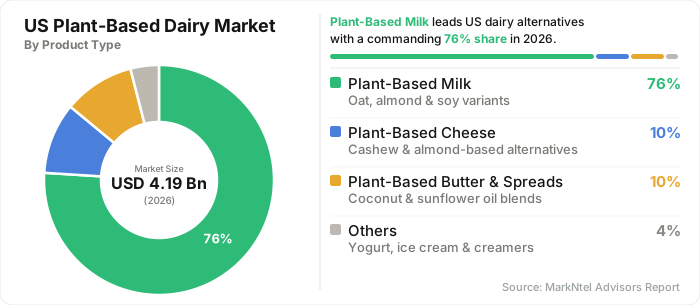
- By Product Type, the Plant-Based Milk segment represented a significant share of about 76% in the US Plant-Based Dairy Market in 2026.
- By End User, the Household / Residential segment seized a significant share of about 82% in the US Plant-Based Dairy Market in 2026.
- Leading companies in the U.S. Market are Danone North America, Califia Farms, Blue Diamond Growers, Oatly AB, Ripple Foods, SunOpta Inc., Otsuka Holdings, The Campbell’s Co, Forager Project, Lyrical Foods Inc, Good Karma Foods, and Others.
Market Insights & Analysis: US Plant-Based Dairy Market (2026-32):
The US Plant-Based Dairy Market size was valued at around USD 3.91 billion in 2025 and is projected grow from USD 4.19 billion in 2026 to USD 7.35 billion by 2032, exhibiting a CAGR of 9.82% during the forecast period, i.e., 2026-32.
The US Plant-Based Dairy Market has demonstrated steady historical expansion, supported by evolving consumption patterns and diversification in retail offerings. Data from the U.S. Department of Agriculture indicates a long-term decline in fluid milk consumption, reflecting a structural shift toward alternative beverages. With the population exceeding 341 million in 2025, according to the U.S. Census Bureau, demand for diversified dairy substitutes continues to expand . This transition reflects sustained adoption of plant-based products across mainstream dietary habits.
Current market conditions are reinforced by strong retail penetration and affordability improvements driven by private-label expansion. Companies such as Walmart have introduced plant-based offerings under new private labels, including products priced below USD 5, enhancing accessibility for price-sensitive consumers . Similarly, Kroger has expanded store-brand portfolios as private-label products reached approximately 21% of total U.S. grocery sales in 2025. Residential consumers remain the primary demand drivers, supported by frequent at-home consumption of plant-based milk and related products.
Regulatory and institutional frameworks further support market development through sustainability and nutrition initiatives. Programs under the U.S. Department of Agriculture promoting climate-smart agriculture encourage plant-based ingredient sourcing, while federal dietary guidelines emphasize diversified protein intake across households and institutions. Additionally, the U.S. Food and Drug Administration issued guidance on plant-based labeling in 2025, improving transparency and strengthening consumer trust. These measures contribute to stable demand across residential and institutional end users.
Industry participants are reinforcing growth through product innovation, localized manufacturing, and capacity expansion initiatives. Companies such as Danone North America have invested USD 65 million in a Florida production expansion and upgraded facilities in Ohio, strengthening domestic supply chains and creating new jobs . Similarly, Oatly AB has secured funding exceeding USD 70 million to scale production capacity and improve distribution efficiency in North America . These combined efforts are expected to sustain moderate growth and enhance long-term market resilience.
US Plant-Based Dairy Market Recent Developments:
- 2025: Organic Valley launched a new line of oat-based creamers in the U.S., marking its entry into plant-based dairy alternatives. The products use oats sourced from its cooperative farms, highlighting a strategic diversification by traditional dairy players into plant-based offerings.
- 2025 : Danone acquired a majority stake in U.S.-based Kate Farms, strengthening its plant-based dairy and nutrition portfolio. The move expands its presence in medical and functional plant-based beverages, supporting growth in specialized nutrition across the U.S. market.
US Plant-Based Dairy Market Scope:
| Category | Segments |
|---|---|
| By Product Type | (Plant-Based Milk, Plant-Based Yogurt, Plant-Based Cheese, Plant-Based Butter & Spreads, Plant-Based Ice Cream & Frozen Desserts), |
| By Source | (Almond, Oat, Soy, Coconut, Cashew, Others (Pea, Rice, Hemp, Blends)), |
| By Distribution Channel | (Supermarkets & Hypermarkets, Convenience Stores, Online Retail / E-commerce, Specialty Stores, Foodservice), |
| By End User | (Household / Residential, Commercial / Foodservice), |
| By Formulation | (Organic, Conventional) |
US Plant-Based Dairy Market Driver:
Rising Health Consciousness
Rising health consciousness has emerged as the most influential structural driver accelerating demand for plant-based dairy in the United States. Data from the Centers for Disease Control and Prevention indicates that over 40% of U.S. adults are affected by obesity, increasing focus on calorie control and preventive nutrition. Concurrently, federal dietary guidelines from the U.S. Department of Agriculture emphasize reduced saturated fat intake and diversified protein sources. These policy-driven dietary shifts have strengthened consumer preference for plant-based alternatives perceived as lower in cholesterol and easier to digest.
This driver is measurably expanding demand across both residential and institutional segments, particularly among younger and urban populations. National dietary monitoring under the U.S. Department of Health and Human Services indicates increasing incorporation of plant-based foods into daily consumption patterns. School meal programs are integrating non-dairy options in line with federal nutrition standards, while hospital systems such as NYC Health + Hospitals have served over 2 million plant-based meals . Additionally, initiatives led by Sodexo are expanding plant-based menus across approximately 400 U.S. hospitals, demonstrating scalable institutional adoption.
The impact of rising health consciousness extends beyond preference shifts to materially expanding market volume through consistent consumption behavior. Large-scale hospital programs and institutional frameworks indicate that plant-based diets are becoming embedded in healthcare nutrition strategies. Unlike price-driven growth, this driver supports recurring consumption as consumers substitute traditional dairy in everyday diets such as beverages and meals. This structural transition, reinforced by public health initiatives and institutional adoption, is expected to sustain long-term market expansion.
US Plant-Based Dairy Market Trend:
Shift Toward Oat-Based Products
The shift toward oat-based products has emerged as a defining trend reshaping the US Plant-Based Dairy Market, driven by changing consumer preferences and product functionality. Oat milk has gained traction due to its neutral taste, creamy texture, and compatibility with coffee applications, particularly in urban foodservice channels. According to company disclosures from Starbucks, oat milk has become one of the most requested non-dairy options in beverages. This demand is further validated by Oatly AB reporting sales volumes exceeding 590 million liters in 2025, confirming sustained demand growth.
This trend is driving structural changes across the value chain, including sourcing, manufacturing, and distribution strategies. Companies such as Oatly AB have expanded North American production capacity and introduced barista-specific formulations tailored for coffee applications. The launch of flavored and barista oat milk variants in 2025–2026 highlights a shift toward application-specific product development . Additionally, oat-based formats are expanding into adjacent categories such as creamers, reinforcing their role across both retail and foodservice segments.
The persistence of this trend is supported by sustainability advantages and strong integration into daily consumption habits. The U.S. Department of Agriculture highlights oats as a relatively resource-efficient crop compared to dairy production, supporting long-term supply viability. Combined with continued innovation and strong commercial performance, oat-based products are expected to remain central to category growth. This sustained shift will continue to influence product portfolios, retail strategies, and competitive positioning across the market.
US Plant-Based Dairy Market Opportunity:
Innovation in Cheese and Yogurt Segments
Innovation in plant-based cheese and yogurt presents a compelling opportunity due to persistent performance gaps and low category penetration relative to plant-based milk. Industry developments, including initiatives by Danone, highlight a clear innovation gap in functional and protein-rich plant-based dairy products. At the same time, product development activity across next-generation dairy formulations indicates ongoing efforts to improve texture and sensory performance. These factors confirm that non-milk segments remain structurally underdeveloped, creating favorable conditions for targeted innovation .
This opportunity translates into tangible demand as consumers increasingly seek complete dairy alternatives across multiple consumption occasions. Advances in precision fermentation technologies are enabling improved meltability and mouthfeel in plant-based cheese, directly addressing key adoption barriers. Additionally, industry insights indicate that plant-based cheese and yogurt penetration remains limited at approximately 4–6%, despite rising menu adoption in foodservice. This combination of low household penetration and increasing exposure signals substantial untapped volume potential across both retail and institutional channels.
The opportunity is particularly advantageous for new and emerging players due to the innovation-driven nature of these segments. Unlike incumbents focused on scaling plant-based milk, smaller companies can leverage fermentation and formulation advancements to differentiate on product quality. The evolving technology landscape reduces dependence on large-scale manufacturing, enabling niche specialization and faster product iteration. As a result, new entrants can establish early leadership in high-margin, underpenetrated categories while addressing critical consumer pain points.
US Plant-Based Dairy Market Challenge:
Price Sensitivity Impeding Smooth Market Progression
Price sensitivity remains a critical structural constraint in the US Plant-Based Dairy Market, driven by persistent cost disparities relative to conventional dairy. According to the U.S. Department of Agriculture, federal dairy programs and established supply chains help stabilize milk prices, maintaining affordability for consumers. In contrast, plant-based alternatives rely on processed inputs and lack comparable subsidies, increasing production costs. This structural imbalance results in consistently higher retail prices for plant-based milk and related products.
This pricing gap is directly impacting consumer adoption and purchasing behavior across retail channels. A 2025 announcement by Walmart highlighted the launch of its “Bettergoods” private-label line, with plant-based products priced below USD 5 to address affordability concerns . Despite such efforts, price premiums persist across categories, limiting accessibility for cost-sensitive households. The expansion of private-label offerings itself reflects retailer acknowledgment that price remains a key barrier to broader category penetration.
The challenge materially restricts market expansion by slowing volume growth and limiting institutional adoption. Budget-constrained programs such as school meal systems under the U.S. Department of Agriculture continue prioritizing lower-cost dairy options despite regulatory flexibility for non-dairy alternatives. Additionally, sustained cost pressures discourage aggressive pricing strategies among manufacturers, constraining scalability. As a result, price sensitivity continues to hinder widespread adoption, particularly among lower-income consumers and high-volume institutional buyers.
US Plant-Based Dairy Market (2026-32) Segmentation Analysis:
The US Plant-Based Dairy Market study of MarkNtel Advisors evaluates & highlights the major trends and influencing factors in each segment. It includes predictions for the period 2026–32 at the country level. Based on the analysis, the market has been further classified as;
Based on Product Type:
- Plant-Based Milk
- Plant-Based Yogurt
- Plant-Based Cheese
- Plant-Based Butter & Spreads
- Plant-Based Ice Cream & Frozen Desserts
- Others (Creamers, Condensed Milk, etc.)
Plant-based milk dominates the US Plant-Based Dairy Market, accounting for approximately 76% of total demand, primarily because it has achieved early commercialization and category standardization compared to other plant-based formats. The segment benefited from first-mover advantage, with almond and soy milk gaining mainstream adoption decades earlier, allowing brands to build consumer trust and distribution networks ahead of emerging categories such as plant-based cheese and yogurt. This early adoption cycle has resulted in deeply embedded consumption habits that continue to drive sustained volume demand.
Functional versatility further reinforces this dominance, as plant-based milk integrates seamlessly into multiple daily consumption occasions, including beverages, cooking, and processed food applications. Unlike cheese and yogurt, which require specific textures and fermentation precision, plant-based milk formulations are comparatively simpler, enabling consistent product quality across brands. This ease of formulation has accelerated product launches and reduced technical barriers, allowing manufacturers to scale production more efficiently and maintain a stable supply across national markets.
In addition, plant-based milk benefits from broader compatibility with industrial and commercial applications, including ready-to-drink beverages and coffee-based products, which significantly expand its consumption base. In contrast, plant-based cheese and yogurt remain constrained by performance limitations such as meltability and texture replication, slowing their adoption in mainstream foodservice and packaged food industries. This combination of early adoption, formulation simplicity, and cross-category applicability continues to position plant-based milk as the dominant segment in the U.S. market.
Based on End User:
- Household / Residential
- Commercial / Foodservice
Household/residential consumption dominates the US Plant-Based Dairy Market, accounting for approximately 82% of total demand, primarily because of the scale and consistency of at-home food consumption. According to the U.S. Department of Agriculture, U.S. consumers spent over USD 1.06 trillion on food at home in 2024, highlighting the dominance of household-driven consumption. Plant-based dairy products such as milk, yogurt, and spreads are routinely used in daily meals, including breakfast, beverages, and cooking, resulting in high-frequency usage. This consistent integration into everyday diets sustains strong volume demand within residential settings.
Behavioral shifts toward increased home cooking further reinforce this dominance across the market. Academic research published indicates a sustained rise in home meal preparation, increasing reliance on grocery-based food consumption. This trend directly benefits plant-based dairy products, which serve as staple ingredients across multiple meal occasions. In contrast, commercial usage remains limited to specific applications such as beverages and desserts, restricting its contribution to overall market volume.
Additionally, stable household purchasing power and food access support continuous demand for plant-based dairy products. Data from the U.S. Department of Agriculture shows that over 86% of U.S. households are food secure, ensuring consistent grocery spending patterns . Manufacturers also design packaging formats such as multi-serve cartons and shelf-stable products to align with home consumption needs. This combination of large-scale at-home food expenditure, rising cooking activity, and stable purchasing behavior continues to position the household segment as the dominant end user in the U.S. market.
US Plant-Based Dairy Market Competitive Landscape
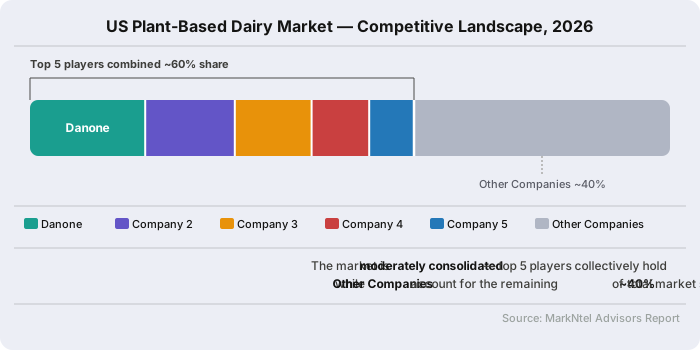
The market is moderately consolidated, with the top five players accounting for approximately 60% of the total market share. Leading companies include Danone North America, Califia Farms, Blue Diamond Growers, Oatly AB, and SunOpta Inc.. T
Key plant-based dairy companies in the United States
- Danone North America
- Califia Farms
- Blue Diamond Growers
- Oatly AB
- Ripple Foods
- SunOpta Inc.
- Otsuka Holdings
- The Campbell’s Co
- Forager Project
- Lyrical Foods Inc
- Good Karma Foods
- Others
Gain a Competitive Edge with Our US Plant-Based Dairy Market Report:
- US Plant-Based Dairy Market Report by MarkNtel Advisors provides a detailed & thorough analysis of market size & share, growth rate, competitive landscape, and key players. This comprehensive analysis helps businesses gain a holistic understanding of the market dynamics & make informed decisions.
- This report also highlights current market trends & future projections, allowing businesses to identify emerging opportunities & potential challenges. By understanding market forecasts, companies can align their strategies & stay ahead of the competition.
- US Plant-Based Dairy Market Report aids in assessing & mitigating risks associated with entering or operating in the market. By understanding market dynamics, regulatory frameworks, and potential challenges, businesses can develop strategies to minimize risks & optimize their operations.
*Reports Delivery Format - Market research studies from MarkNtel Advisors are offered in PDF, Excel and PowerPoint formats. Within 24 hours of the payment being successfully received, the report will be sent to your email address.
Frequently Asked Questions
- Market Segmentation
- Introduction
- Product Definition
- Research Process
- Assumptions
- Executive Summary
- US Plant-Based Dairy Market Policies, Regulations, and Product Standards
- US Plant-Based Dairy Market Trends & Developments
- US Plant-Based Dairy Market Dynamics
- Growth Factors
- Challenges
- US Plant-Based Dairy Market Hotspot & Opportunities
- US Plant-Based Dairy Market Outlook, 2022-2032F
- Market Size & Outlook
- By Revenues (USD Million)
- Market Share & Outlook
- By Product Type- Market Size & Forecast 2022-2032, USD Million
- Plant-Based Milk
- Plant-Based Yogurt
- Plant-Based Cheese
- Plant-Based Butter & Spreads
- Plant-Based Ice Cream & Frozen Desserts
- Others (Creamers, Condensed Milk, etc.)
- By Source- Market Size & Forecast 2022-2032, USD Million
- Almond
- Oat
- Soy
- Coconut
- Cashew
- Others (Pea, Rice, Hemp, Blends)
- By Distribution Channel- Market Size & Forecast 2022-2032, USD Million
- Supermarkets & Hypermarkets
- Convenience Stores
- Online Retail / E-commerce
- Specialty Stores
- Foodservice
- By End User- Market Size & Forecast 2022-2032, USD Million
- Household / Residential
- Commercial / Foodservice
- By Formulation- Market Size & Forecast 2022-2032, USD Million
- Organic
- Conventional
- By Company
- Competition Characteristics
- Market Share & Analysis
- By Product Type- Market Size & Forecast 2022-2032, USD Million
- Market Size & Outlook
- US Plant-Based Milk Market Outlook, 2022-2032
- Market Size & Outlook
- By Revenues (USD Million)
- Market Share & Outlook
- By Source- Market Size & Forecast 2022-2032, USD Million
- By Distribution Channel- Market Size & Forecast 2022-2032, USD Million
- By End User- Market Size & Forecast 2022-2032, USD Million
- By Formulation- Market Size & Forecast 2022-2032, USD Million
- Market Size & Outlook
- US Plant-Based Yogurt Market Outlook, 2022-2032
- Market Size & Outlook
- By Revenues (USD Million)
- Market Share & Outlook
- By Source- Market Size & Forecast 2022-2032, USD Million
- By Distribution Channel- Market Size & Forecast 2022-2032, USD Million
- By End User- Market Size & Forecast 2022-2032, USD Million
- By Formulation- Market Size & Forecast 2022-2032, USD Million
- Market Size & Outlook
- US Plant-Based Cheese Market Outlook, 2022-2032
- Market Size & Outlook
- By Revenues (USD Million)
- Market Share & Outlook
- By Source- Market Size & Forecast 2022-2032, USD Million
- By Distribution Channel- Market Size & Forecast 2022-2032, USD Million
- By End User- Market Size & Forecast 2022-2032, USD Million
- By Formulation- Market Size & Forecast 2022-2032, USD Million
- Market Size & Outlook
- US Plant-Based Butter & Spreads Market Outlook, 2022-2032
- Market Size & Outlook
- By Revenues (USD Million)
- Market Share & Outlook
- By Source- Market Size & Forecast 2022-2032, USD Million
- By Distribution Channel- Market Size & Forecast 2022-2032, USD Million
- By End User- Market Size & Forecast 2022-2032, USD Million
- By Formulation- Market Size & Forecast 2022-2032, USD Million
- Market Size & Outlook
- US Plant-Based Ice Cream & Frozen Desserts Market Outlook, 2022-2032
- Market Size & Outlook
- By Revenues (USD Million)
- Market Share & Outlook
- By Source- Market Size & Forecast 2022-2032, USD Million
- By Distribution Channel- Market Size & Forecast 2022-2032, USD Million
- By End User- Market Size & Forecast 2022-2032, USD Million
- By Formulation- Market Size & Forecast 2022-2032, USD Million
- Market Size & Outlook
- US Others (Creamers, Condensed Milk, etc.) Market Outlook, 2022-2032
- Market Size & Outlook
- By Revenues (USD Million)
- Market Share & Outlook
- By Source- Market Size & Forecast 2022-2032, USD Million
- By Distribution Channel- Market Size & Forecast 2022-2032, USD Million
- By End User- Market Size & Forecast 2022-2032, USD Million
- By Formulation- Market Size & Forecast 2022-2032, USD Million
- Market Size & Outlook
- US Plant-Based Dairy Market Key Strategic Imperatives for Success & Growth
- Competitive Outlook
- Company Profiles
- Danone North America
- Business Description
- Product Portfolio
- Collaborations & Alliances
- Recent Developments
- Financial Details
- Others
- Califia Farms
- Business Description
- Product Portfolio
- Collaborations & Alliances
- Recent Developments
- Financial Details
- Others
- Blue Diamond Growers
- Business Description
- Product Portfolio
- Collaborations & Alliances
- Recent Developments
- Financial Details
- Others
- Oatly AB
- Business Description
- Product Portfolio
- Collaborations & Alliances
- Recent Developments
- Financial Details
- Others
- Ripple Foods
- Business Description
- Product Portfolio
- Collaborations & Alliances
- Recent Developments
- Financial Details
- Others
- SunOpta Inc.
- Business Description
- Product Portfolio
- Collaborations & Alliances
- Recent Developments
- Financial Details
- Others
- Otsuka Holdings
- Business Description
- Product Portfolio
- Collaborations & Alliances
- Recent Developments
- Financial Details
- Others
- The Campbell’s Co
- Business Description
- Product Portfolio
- Collaborations & Alliances
- Recent Developments
- Financial Details
- Others
- Forager Project
- Business Description
- Product Portfolio
- Collaborations & Alliances
- Recent Developments
- Financial Details
- Others
- Lyrical Foods Inc
- Business Description
- Product Portfolio
- Collaborations & Alliances
- Recent Developments
- Financial Details
- Others
- Good Karma Foods
- Business Description
- Product Portfolio
- Collaborations & Alliances
- Recent Developments
- Financial Details
- Others
- Danone North America
- Company Profiles
- Disclaimer
MarkNtel Advisors follows a robust and iterative research methodology designed to ensure maximum accuracy and minimize deviation in market estimates and forecasts. Our approach combines both bottom-up and top-down techniques to effectively segment and quantify various aspects of the market. A consistent feature across all our research reports is data triangulation, which examines the market from three distinct perspectives to validate findings. Key components of our research process include:
1. Scope & Research Design At the outset, MarkNtel Advisors define the research objectives and formulate pertinent questions. This phase involves determining the type of research—qualitative or quantitative—and designing a methodology that outlines data collection methods, target demographics, and analytical tools. They also establish timelines and budgets to ensure the research aligns with client goals.
2. Sample Selection and Data Collection In this stage, the firm identifies the target audience and determines the appropriate sample size to ensure representativeness. They employ various sampling methods, such as random or stratified sampling, based on the research objectives. Data collection is carried out using tools like surveys, interviews, and observations, ensuring the gathered data is reliable and relevant.
3. Data Analysis and Validation Once data is collected, MarkNtel Advisors undertake a rigorous analysis process. This includes cleaning the data to remove inconsistencies, employing statistical software for quantitative analysis, and thematic analysis for qualitative data. Validation steps are taken to ensure the accuracy and reliability of the findings, minimizing biases and errors.

4. Data Forecast and FinalizationThe final phase involves forecasting future market trends based on the analyzed data. MarkNtel Advisors utilize predictive modeling and time series analysis to anticipate market behaviors. The insights are then compiled into comprehensive reports, featuring visual aids like charts and graphs, and include strategic recommendations to inform client decision-making
We offer flexible licensing options to cater to varying organizational needs. Choose the pricing pack that best suits your requirements:
Buy Now Inquire Before Buying
 Request Customization
 Talk to our Consultant







