GCC Ice Cream Market Research Report: Forecast (2026-2032)
By Type (Impulse Ice Cream (Single Portion Dairy Ice Cream, Single Portion Water Ice Cream), Unpackaged Ice Cream, Take-Home Ice Cream (Bulk Dairy Ice Cream, Ice Cream Desserts)), ... By Flavor (Chocolate, Mango, Vanilla, Strawberry, Butterscotch, Others), By Format (Cup, Stick, Cone, Brick, Others (Sandwich, Tub, etc.)), By Composition (Dairy Ice Cream, Plant-based Ice Cream), By Positioning (Mass Market Ice Cream, Artisanal Ice Cream), By Sales Channel (Grocery Retailers, Hypermarkets/Supermarkets, Brand Owned Outlets, Ice Cream Carts, Online, Convenience Stores, Others), and others Read more
- Food & Beverages
- Jul 2026
- Pages 240
- Report Format: PDF, Excel, PPT
GCC Ice Cream Market
Projected 5.9% CAGR from 2026 to 2032
Study Period
2026-2032
Market Size (2026)
USD 1.12 Billion
Market Size (2032)
USD 1.58 Billion
Base Year
2025
Projected CAGR
5.9%
Leading Segments
By Type: Impulse Ice Cream
GCC Ice Cream Market Key Takeaways
- The GCC ice cream market size was valued at USD 0.98 billion in 2025 and is projected to grow from USD 1.12 billion in 2026 to USD 1.58 billion by 2032.
- The industry is projected to reflect sustain growth at a steady CAGR of 5.9% during 2026-2032.
- Saudi Arabia holds the largest share of about 62% in 2026.
- By type, impulse ice cream holds a significant share of about 50% in 2026.
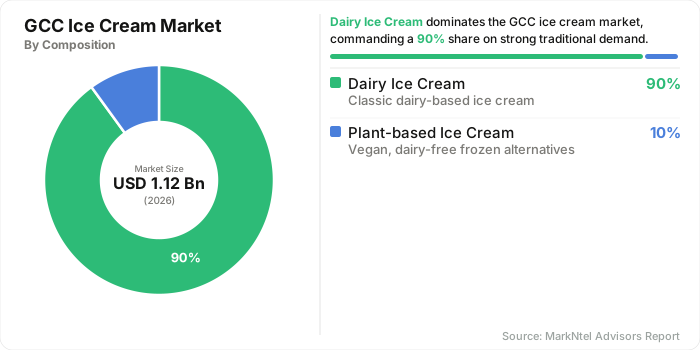
- By composition, dairy ice cream seized a significant share of about 90% in 2026.
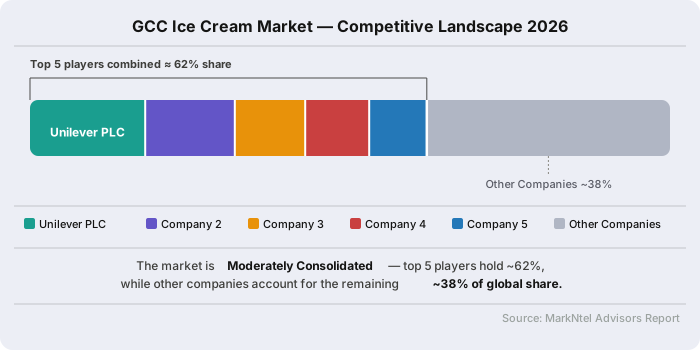
- The industry is moderately fragmented. However, the top five players collectively account for nearly 62% share.
GCC Ice Cream Market Size and Outlook
The GCC ice cream market size was valued at USD 0.98 billion in 2025 and is projected to grow from USD 1.12 billion in 2026 to USD 1.58 billion by 2032. Along with this, the market is estimated to grow at a CAGR of around 5.9% during the forecast period, i.e., 2026-32, supported by climatic conditions, rising urban consumption, and strong intra-regional trade flows. The region’s consistently high temperatures create year-round demand for frozen desserts, making ice cream a staple impulse purchase across modern retail and convenience channels. At the same time, increasing tourism activity and a growing expatriate population continue to diversify consumption patterns, encouraging manufacturers to introduce premium, indulgent, and multi-flavor product ranges.
A key indicator of market integration is regional trade in ice cream products. In 2024, the United Arab Emirates emerged as a major re-export hub, supplying significant volumes across GCC economies. For instance, UAE exports of ice cream and similar edible ice products reached key partners such as Oman (USD 28.17 million), Saudi Arabia (USD 26.22 million), Kuwait (USD 4.95 million), and Bahrain (USD 3.69 million), reflecting strong cross-border demand and interconnected supply chains across the Gulf region. This consistent trade flow highlights the role of regional logistics efficiency and retail harmonization in sustaining category growth.
Consumer demand is also being reinforced by evolving retail infrastructure, particularly the expansion of supermarkets, hypermarkets, and convenience stores, which improve product accessibility. Additionally, government-led food security initiatives across GCC countries have strengthened cold-chain logistics and food import resilience, indirectly supporting frozen dessert availability.
Another important trend is product diversification driven by health-conscious consumers. Manufacturers are increasingly introducing reduced-sugar, dairy-free, and portion-controlled formats to align with shifting dietary preferences, especially among younger urban populations.
Overall, the ice cream industry in GCC is expected to maintain strong growth momentum, driven by structural climatic advantages, robust regional trade networks, and continuous innovation in product offerings and distribution systems, positioning it as a resilient and evolving segment within the broader dairy-based food industry.
GCC Ice Cream Market Key Indicators
- Milk is the primary raw material used in conventional ice cream manufacturing. Strong domestic dairy production ensures a reliable supply of high-quality milk, reduces dependence on imported dairy inputs, and supports stable production costs. According to Almarai's Q3 2024 results, the company's dairy and juice segment generated revenue of approximately USD 1.39 billion, while net profit increased 17% year-on-year to approximately USD 152 million, driven by improved sales across core GCC markets.
- Additionally, Almarai's vertically integrated dairy operations also support its frozen dessert portfolio, including ice cream cones, sticks, and tubs. The continued expansion of domestic dairy production strengthens the regional supply chain, enables manufacturers to scale ice cream production, and supports the launch of premium dairy-based frozen desserts across the GCC.
- The rapid expansion of quick commerce is improving consumer access to ice cream by enabling fast and reliable delivery of frozen products while maintaining product quality. According to Talabat's 2025 Annual Report, its grocery and retail Gross Merchandise Value (GMV) increased by 45% year-on-year in Q4 2025, with the segment accounting for 32% of total GMV, compared with 27% a year earlier.
- Additionally, Bagason Group reports that quick-commerce operators in the UAE are expanding dark stores, micro-fulfilment centres, insulated packaging, and 15–30-minute delivery networks to support frozen FMCG products. These investments improve product availability, reduce spoilage during transit, encourage impulse purchases, and strengthen ice cream sales across the GCC.
- Investments in manufacturing capacity reflect manufacturers' confidence in long-term consumer demand and their ability to meet rising consumption across the GCC. In May 2025, Pure Ice Cream Co. LLC began constructing a new production facility at Dubai Industrial City with an investment of approximately USD 21.8 million. The facility is expected to increase the company's annual production capacity, reaching 50 million litres, with operations scheduled to begin in 2026. The expansion will strengthen regional supply, reduce lead times, support the launch of new premium and innovative ice cream products, and enhance export capabilities across GCC markets, indicating sustained growth in the regional ice cream industry.
GCC Ice Cream Market Scope
| Category | Segments |
|---|---|
| By Type | Impulse Ice Cream (Single Portion Dairy Ice Cream, Single Portion Water Ice Cream), Unpackaged Ice Cream, Take-Home Ice Cream (Bulk Dairy Ice Cream, Ice Cream Desserts |
| By Flavor | Chocolate, Mango, Vanilla, Strawberry, Butterscotch, Others |
| By Format | Cup, Stick, Cone, Brick, Others (Sandwich, Tub, etc. |
| By Composition | Dairy Ice Cream, Plant-based Ice Cream |
| By Positioning | Mass Market Ice Cream, Artisanal Ice Cream |
| By Sales Channel | Grocery Retailers, Hypermarkets/Supermarkets, Brand Owned Outlets, Ice Cream Carts, Online, Convenience Stores, Others |
GCC Ice Cream Market Growth Drivers
Rising Disposable Income & Economic Diversification Driving Premium Ice Cream Demand in the GCC
Rising disposable income is a critical demand-side driver of the GCC ice cream market, as it directly increases spending on discretionary and premium food products. According to the World Bank, GDP per capita in 2024 reached USD 50,273 in the UAE and USD 35,122 in Saudi Arabia, reflecting strong household purchasing power compared to global averages. In Qatar, income levels are even higher, exceeding USD 76,000 per capita in 2024, reinforcing the region’s high-affluence consumer base. Such income levels enable frequent consumption of non-essential indulgence goods like ice cream, especially premium and branded variants.
Government-led economic transformation policies are further strengthening income growth. Saudi Arabia’s Vision 2030 reforms and UAE diversification strategies have expanded non-oil sectors such as tourism, retail, and hospitality, which collectively supported non-oil GDP growth in 2023 as reported by the World Bank. These sectors generate higher urban employment and wage growth, increasing discretionary spending capacity.
Moreover, large-scale investments, including Saudi Arabia’s tourism megaprojects (NEOM, Red Sea Project) and the UAE’s expansion of luxury retail and hospitality corridors, are expected to further raise household incomes and strengthen high-value consumption patterns. These developments will directly boost demand for premium ice cream formats, artisanal gelato, and innovative dessert offerings.
Rising affluence is transforming ice cream from an occasional treat into a regular premium indulgence category. As disposable incomes continue to grow, the GCC ice cream market will experience sustained expansion in both volume and high-value product segments.
Recent Trends
Premium Flavor Innovation Emerging as a Key Trend in the GCC Ice Cream Market
The introduction of innovative global flavors and premium ice cream formats has emerged as a key trend in the GCC ice cream market, driven by rising disposable incomes, evolving consumer preferences, and increasing demand for indulgent dessert experiences. Consumers across the GCC are increasingly seeking internationally inspired products that offer unique taste profiles and premium quality. According to the UN Tourism World Tourism Barometer, the Middle East welcomed 95 million international tourist arrivals in 2024, representing a 32% increase compared to 2019, making it the fastest-growing tourism region globally. The influx of international visitors is encouraging food manufacturers to diversify their product portfolios with globally recognized flavors and premium frozen desserts.
A notable example is Ferrero's launch of its first-ever ice cream range in the UAE in May 2024, introducing premium ice cream products under its globally renowned Ferrero Rocher, Raffaello, Kinder Bueno, and Kinder Bueno White brands. The launch highlights the growing consumer appetite for internationally recognized confectionery flavors in frozen dessert formats and reinforces the GCC's position as a strategic market for premium product innovation.
The growing preference for innovative global flavors is transforming ice cream into a premium lifestyle product rather than a seasonal indulgence. Continued product innovation, expanding tourism, and higher consumer spending on premium desserts are expected to strengthen market value and accelerate long-term growth across the GCC.
GCC Ice Cream Market Opportunities and Challenges
Rising Health Consciousness Driving Innovation in Better-for-You Ice Cream Products
Rising health concerns are a key structural challenge for the GCC ice cream market, as high consumption of sugar-rich desserts is increasingly associated with obesity and diabetes. According to the International Diabetes Federation (IDF) Diabetes Atlas 2021–2025, GCC countries rank among the highest globally for diabetes prevalence. The International Diabetes Federation (IDF) estimates that Saudi Arabia had over 5.3 million adults living with diabetes in 2024, highlighting a strong regional health burden closely associated with high sugar consumption patterns. The World Health Organization (WHO) also identifies the Gulf region as having one of the highest obesity rates worldwide, driven by high-calorie diets and sedentary lifestyles. This creates regulatory and consumer pressure to reduce sugar intake, limiting demand for traditional ice cream products.
However, this challenge is actively reshaping the market into a health-driven innovation segment. Leading manufacturers are responding with low-sugar, sugar-free, high-protein, keto-friendly, and plant-based ice cream variants. For example, in September 2024, The Brooklyn Creamery launched its Keto-friendly Caramel Pecan Crunch Ice Cream in the UAE, containing just 1 g net carbs and 132 calories per serving, specifically targeting health-conscious and ketogenic consumers. The product is distributed through major delivery platforms, including Deliveroo, Talabat, Careem, and Noon Food, demonstrating how brands are expanding market reach by catering to wellness-focused consumers.
These innovations are attracting new consumer groups, including diabetics, calorie-conscious individuals, and vegan consumers, thereby expanding the addressable market rather than merely replacing conventional ice cream sales.
Segmentation Insights
Impulse Ice Cream Leads the GCC Ice Cream Market with Approximately 50% Share
Impulse Ice Cream represents the largest application segment in the GCC ice cream industry, accounting for approximately 50% of total market share. This dominance is primarily driven by strong consumer preference for on-the-go consumption formats such as cones, sticks, cups, and single-serve portions, which align well with the region’s hot climate and high impulse buying behavior. Frequent purchases from convenience stores, supermarkets, petrol stations, cinemas, and quick-commerce platforms further reinforce this segment’s leadership.
The presence of well-established global brands such as Magnum, Cornetto, and Baskin-Robbins in impulse formats enhances visibility and accessibility, supporting repeat consumption. Additionally, the GCC’s strong tourism inflow, vibrant retail environment, and expanding foodservice outlets continue to boost demand for single-serve frozen desserts. High temperatures across the region also encourage immediate consumption rather than storage-based purchases, making impulse ice cream the preferred choice among both residents and tourists. Collectively, these factors firmly position impulse ice cream as the leading segment in the GCC market structure. Based on type, the scope has been segmented into
- Impulse Ice Cream
- Unpackaged Ice Cream
- Take-Home Ice Cream
Dairy Ice Cream Emerges as the Leading Composition Segment with Around 90% Market Share
Dairy ice cream is the dominant segment in the GCC ice cream market, accounting for approximately 90% of total market share. This strong dominance is driven by deep-rooted consumer preference for rich, creamy textures and indulgent dairy-based desserts, which align well with traditional taste profiles across the region. Dairy ice cream is widely available across supermarkets, hypermarkets, convenience stores, cafés, and foodservice outlets, ensuring strong accessibility and consistent consumption.
The segment also benefits from a well-established regional dairy supply chain supported by leading producers such as Almarai and Al Ain Dairy, which ensures reliable availability of high-quality milk and dairy ingredients for ice cream manufacturing. In addition, the popularity of premium and impulse ice cream formats such as cones, sticks, and tubs further strengthens dairy-based product demand.
Seasonal demand spikes during hot summer months, combined with strong tourism and retail penetration, further reinforce consumption. As a result, dairy ice cream remains the clear market leader, while plant-based alternatives continue to grow but remain a niche segment driven by health-conscious consumers. Based on composition, the market is categorized into
- Dairy Ice Cream
- Plant-based Ice Cream
GCC Ice Cream Market Geographical Outlook
Saudi Arabia Emerges as the Largest GCC Ice Cream Market with Around 45% Share
Saudi Arabia accounts for approximately 62% of GCC ice cream demand, making it the largest market in the region. This leadership is driven by strong economic diversification, rising demand for premium desserts, and rapid expansion of modern retail and foodservice channels. Under Saudi Vision 2030, the Kingdom is actively developing tourism, entertainment, and hospitality sectors, which are creating new consumption occasions for frozen desserts in malls, cinemas, amusement parks, and resort destinations.
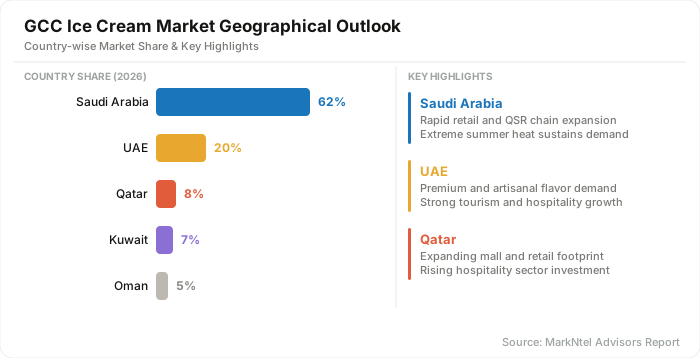
A clear example is the rapid expansion of international QSR and café chains such as Baskin-Robbins and Cold Stone Creamery across major cities like Riyadh and Jeddah, reflecting strong consumer demand for premium and indulgent ice cream experiences. In addition, large-scale entertainment developments such as Riyadh Season, which attracts millions of visitors annually, have significantly increased short-term demand for impulse ice cream consumption through kiosks and pop-up dessert outlets. The growth of supermarkets, hypermarkets, and quick-commerce delivery platforms further strengthens product accessibility nationwide. Collectively, these factors position Saudi Arabia as the dominant growth engine of the GCC ice cream market.
GCC Ice Cream Market Competitive Analysis
Top Five Players Hold Approximately 62% Share of the Market
The GCC ice cream market is moderately fragmented, with the top five players accounting for approximately 62% of the market share. The leading companies include Unilever PLC, Nestlé S.A., IFFCO Group, Pure Ice Cream Co. LLC, and General Mills, Inc.
Key Players in GCC Ice Cream Market
- Unilever PLC
- Nestlé S.A.
- IFFCO Group
- Pure Ice Cream Co. LLC
- General Mills, Inc.
- Almarai Company
- Mars, Incorporated
- Saudia Dairy & Foodstuff Company (SADAFCO)
- Galadari Ice Cream Company LLC
- Unikai Foods P.J.S.C.
- Baladna Q.P.S.C.
- National Agricultural Development Company (NADEC)
- Others
GCC Ice Cream Industry News and Recent Developments
-
House of Pops Showcases Edible Flower Ice Lolly at Gulfood
At Gulfood 2025, Dubai-based House of Pops introduced its Edible Flower Ice Lolly, which was shortlisted in the event's Health & Wellness Innovation category. The company also showcased innovative savoury ice lollies containing ingredients such as spinach and beetroot, highlighting the growing demand for natural, plant-based frozen desserts in the GCC.
Impact Analysis: The launch of House of Pops’ edible flower ice lolly at Gulfood 2025 highlights the GCC ice cream market’s shift toward clean-label and plant-based innovation. It reflects rising consumer preference for natural ingredients and functional indulgence beyond traditional dairy products. Such product differentiation strengthens premiumization trends, encourages healthier frozen dessert segments, and signals growing opportunities for niche artisanal brands in the region’s competitive frozen dessert industry.
-
Ferrero Expands Premium Ice Cream Portfolio Across the GCC
In 2025, Ferrero expanded the availability of its premium ice cream portfolio across GCC retail channels following its successful UAE debut. The range includes Ferrero Rocher, Raffaello, Kinder Bueno, and Kinder Bueno White ice creams, targeting consumers seeking premium confectionery-inspired frozen desserts. The expansion reflects increasing demand for premium indulgence products across the Gulf.
Impact Analysis: Ferrero's regional expansion strengthens the premiumization trend in the GCC ice cream market by increasing consumer access to internationally recognized confectionery-inspired ice creams. The launch intensifies competition within the premium segment, encouraging established manufacturers to accelerate flavor innovation and premium product development. It also reinforces the growing role of modern retail and organized distribution channels in driving value-added ice cream sales, ultimately supporting higher average selling prices and expanding the premium frozen dessert category across the GCC.
Frequently Asked Questions
- Market Segmentation
- Introduction
- Product Definition
- Research Process
- Assumptions
- Executive Summary
- GCC Ice Cream Market Policies, Regulations, and Product Standards
- GCC Ice Cream Market Production Trend 2022-2032
- GCC Ice Cream Market Production Trend By Type of Product
- Impulse Ice Cream
- Single Portion Dairy Ice Cream
- Single Portion Water Ice Cream
- Unpackaged Ice Cream
- Take-Home Ice Cream
- Bulk Dairy Ice Cream
- Ice Cream Desserts
- Impulse Ice Cream
- Company-Wise Production Plants and Statistics
- Installed Production Capacity
- Actual Production
- Planned Production Target
- GCC Ice Cream Market Production Trend By Type of Product
- GCC Ice Cream Market Pricing Analysis 2022-2032
- GCC Ice Cream Market Pricing Trend (USD/Liters) 2022-2032
- GCC Ice Cream Market Pricing Trend (USD/Liters) By Regions 2022-2032
- The UAE
- Saudi Arabia
- Qatar
- Kuwait
- Oman
- Bahrain
- GCC Ice Cream Market Pricing Trend (USD/Liters) By Product Type 2022-2032
- Impulse Ice Cream
- Single Portion Dairy Ice Cream
- Single Portion Water Ice Cream
- Unpackaged Ice Cream
- Take-Home Ice Cream
- Bulk Dairy Ice Cream
- Ice Cream Desserts
- Impulse Ice Cream
- The GCC Ice Cream Market Trends & Developments
- The GCC Ice Cream Market Dynamics
- Growth Factors
- Challenges
- The GCC Ice Cream Market Hotspot & Opportunities
- The GCC Ice Cream Market Outlook, 2022-2032F
- Market Size & Outlook
- By Revenues (USD Million)
- By Quantity Sold (Thousand Liters)
- Market Segmentation & Outlook
- By Type- Market Size & Forecast 2022-2032, USD Million & Thousand Liters
- Impulse Ice Cream
- Single Portion Dairy Ice Cream
- Single Portion Water Ice Cream
- Unpackaged Ice Cream
- Take-Home Ice Cream
- Bulk Dairy Ice Cream
- Ice Cream Desserts
- Impulse Ice Cream
- By Flavor- Market Size & Forecast 2022-2032, USD Million & Thousand Liters
- Chocolate
- Mango
- Vanilla
- Strawberry
- Butterscotch
- Others
- By Format- Market Size & Forecast 2022-2032, USD Million & Thousand Liters
- Cup
- Stick
- Cone
- Brick
- Others (Sandwich, Tub, etc.)
- By Composition- Market Size & Forecast 2022-2032, USD Million & Thousand Liters
- Dairy Ice Cream
- Plant-based Ice Cream
- By Positioning- Market Size & Forecast 2022-2032, USD Million & Thousand Liters
- Mass Market Ice Cream
- Artisanal Ice Cream
- By Sales Channel- Market Size & Forecast 2022-2032, USD Million & Thousand Liters
- Grocery Retailers
- Hypermarkets/Supermarkets
- Brand Owned Outlets
- Ice Cream Carts
- Online
- Convenience Stores
- Others
- By Country- Market Size & Forecast 2022-2032, USD Million & Thousand Liters
- The UAE
- Saudi Arabia
- Qatar
- Kuwait
- Oman
- Bahrain
- By Company
- Competition Characteristics
- Market Share & Analysis
- By Type- Market Size & Forecast 2022-2032, USD Million & Thousand Liters
- Market Size & Outlook
- The UAE Ice Cream Market Outlook, 2022-2032
- Market Size & Outlook
- By Revenues (USD Million)
- By Quantity Sold (Thousand Liters)
- Market Segmentation & Outlook
- By Type- Market Size & Forecast 2022-2032, USD Million & Thousand Liters
- By Flavor- Market Size & Forecast 2022-2032, USD Million & Thousand Liters
- By Format- Market Size & Forecast 2022-2032, USD Million & Thousand Liters
- By Composition- Market Size & Forecast 2022-2032, USD Million & Thousand Liters
- By Positioning- Market Size & Forecast 2022-2032, USD Million & Thousand Liters
- By Sales Channel- Market Size & Forecast 2022-2032, USD Million & Thousand Liters
- Market Size & Outlook
- Saudi Arabia Ice Cream Market Outlook, 2022-2032
- Market Size & Outlook
- By Revenues (USD Million)
- By Quantity Sold (Thousand Liters)
- Market Segmentation & Outlook
- By Type- Market Size & Forecast 2022-2032, USD Million & Thousand Liters
- By Flavor- Market Size & Forecast 2022-2032, USD Million & Thousand Liters
- By Format- Market Size & Forecast 2022-2032, USD Million & Thousand Liters
- By Composition- Market Size & Forecast 2022-2032, USD Million & Thousand Liters
- By Positioning- Market Size & Forecast 2022-2032, USD Million & Thousand Liters
- By Sales Channel- Market Size & Forecast 2022-2032, USD Million & Thousand Liters
- Market Size & Outlook
- Qatar Ice Cream Market Outlook, 2022-2032
- Market Size & Outlook
- By Revenues (USD Million)
- By Quantity Sold (Thousand Liters)
- Market Segmentation & Outlook
- By Type- Market Size & Forecast 2022-2032, USD Million & Thousand Liters
- By Flavor- Market Size & Forecast 2022-2032, USD Million & Thousand Liters
- By Format- Market Size & Forecast 2022-2032, USD Million & Thousand Liters
- By Composition- Market Size & Forecast 2022-2032, USD Million & Thousand Liters
- By Positioning- Market Size & Forecast 2022-2032, USD Million & Thousand Liters
- By Sales Channel- Market Size & Forecast 2022-2032, USD Million & Thousand Liters
- Market Size & Outlook
- Kuwait Ice Cream Market Outlook, 2022-2032
- Market Size & Outlook
- By Revenues (USD Million)
- By Quantity Sold (Thousand Liters)
- Market Segmentation & Outlook
- By Type- Market Size & Forecast 2022-2032, USD Million & Thousand Liters
- By Flavor- Market Size & Forecast 2022-2032, USD Million & Thousand Liters
- By Format- Market Size & Forecast 2022-2032, USD Million & Thousand Liters
- By Composition- Market Size & Forecast 2022-2032, USD Million & Thousand Liters
- By Positioning- Market Size & Forecast 2022-2032, USD Million & Thousand Liters
- By Sales Channel- Market Size & Forecast 2022-2032, USD Million & Thousand Liters
- Market Size & Outlook
- Oman Ice Cream Market Outlook, 2022-2032
- Market Size & Outlook
- By Revenues (USD Million)
- By Quantity Sold (Thousand Liters)
- Market Segmentation & Outlook
- By Type- Market Size & Forecast 2022-2032, USD Million & Thousand Liters
- By Flavor- Market Size & Forecast 2022-2032, USD Million & Thousand Liters
- By Format- Market Size & Forecast 2022-2032, USD Million & Thousand Liters
- By Composition- Market Size & Forecast 2022-2032, USD Million & Thousand Liters
- By Positioning- Market Size & Forecast 2022-2032, USD Million & Thousand Liters
- By Sales Channel- Market Size & Forecast 2022-2032, USD Million & Thousand Liters
- Market Size & Outlook
- Bahrain Ice Cream Market Outlook, 2022-2032
- Market Size & Outlook
- By Revenues (USD Million)
- By Quantity Sold (Thousand Liters)
- Market Segmentation & Outlook
- By Type- Market Size & Forecast 2022-2032, USD Million & Thousand Liters
- By Flavor- Market Size & Forecast 2022-2032, USD Million & Thousand Liters
- By Format- Market Size & Forecast 2022-2032, USD Million & Thousand Liters
- By Composition- Market Size & Forecast 2022-2032, USD Million & Thousand Liters
- By Positioning- Market Size & Forecast 2022-2032, USD Million & Thousand Liters
- By Sales Channel- Market Size & Forecast 2022-2032, USD Million & Thousand Liters
- Market Size & Outlook
- The GCC Ice Cream Market Key Strategic Imperatives for Success & Growth
- Competitive Outlook
- Company Profiles
- Unilever PLC
- Business Description
- Product Portfolio
- Collaborations & Alliances
- Recent Developments
- Financial Details
- Others
- Nestlé S.A.
- Business Description
- Product Portfolio
- Collaborations & Alliances
- Recent Developments
- Financial Details
- Others
- IFFCO Group
- Business Description
- Product Portfolio
- Collaborations & Alliances
- Recent Developments
- Financial Details
- Others
- Pure Ice Cream Co. LLC
- Business Description
- Product Portfolio
- Collaborations & Alliances
- Recent Developments
- Financial Details
- Others
- General Mills, Inc.
- Business Description
- Product Portfolio
- Collaborations & Alliances
- Recent Developments
- Financial Details
- Others
- Almarai Company
- Business Description
- Product Portfolio
- Collaborations & Alliances
- Recent Developments
- Financial Details
- Others
- Mars, Incorporated
- Business Description
- Product Portfolio
- Collaborations & Alliances
- Recent Developments
- Financial Details
- Others
- Saudia Dairy & Foodstuff Company (SADAFCO)
- Business Description
- Product Portfolio
- Collaborations & Alliances
- Recent Developments
- Financial Details
- Others
- Galadari Ice Cream Company LLC
- Business Description
- Product Portfolio
- Collaborations & Alliances
- Recent Developments
- Financial Details
- Others
- Unikai Foods P.J.S.C.
- Business Description
- Product Portfolio
- Collaborations & Alliances
- Recent Developments
- Financial Details
- Others
- Baladna Q.P.S.C.
- Business Description
- Product Portfolio
- Collaborations & Alliances
- Recent Developments
- Financial Details
- Others
- National Agricultural Development Company (NADEC)
- Business Description
- Product Portfolio
- Collaborations & Alliances
- Recent Developments
- Financial Details
- Others
- Others
- Unilever PLC
- Company Profiles
- Disclaimer
MarkNtel Advisors follows a robust and iterative research methodology designed to ensure maximum accuracy and minimize deviation in market estimates and forecasts. Our approach combines both bottom-up and top-down techniques to effectively segment and quantify various aspects of the market. A consistent feature across all our research reports is data triangulation, which examines the market from three distinct perspectives to validate findings. Key components of our research process include:
1. Scope & Research Design At the outset, MarkNtel Advisors define the research objectives and formulate pertinent questions. This phase involves determining the type of research—qualitative or quantitative—and designing a methodology that outlines data collection methods, target demographics, and analytical tools. They also establish timelines and budgets to ensure the research aligns with client goals.
2. Sample Selection and Data Collection In this stage, the firm identifies the target audience and determines the appropriate sample size to ensure representativeness. They employ various sampling methods, such as random or stratified sampling, based on the research objectives. Data collection is carried out using tools like surveys, interviews, and observations, ensuring the gathered data is reliable and relevant.
3. Data Analysis and Validation Once data is collected, MarkNtel Advisors undertake a rigorous analysis process. This includes cleaning the data to remove inconsistencies, employing statistical software for quantitative analysis, and thematic analysis for qualitative data. Validation steps are taken to ensure the accuracy and reliability of the findings, minimizing biases and errors.

4. Data Forecast and FinalizationThe final phase involves forecasting future market trends based on the analyzed data. MarkNtel Advisors utilize predictive modeling and time series analysis to anticipate market behaviors. The insights are then compiled into comprehensive reports, featuring visual aids like charts and graphs, and include strategic recommendations to inform client decision-making
We offer flexible licensing options to cater to varying organizational needs. Choose the pricing pack that best suits your requirements:
Buy Now Inquire Before Buying
 Request Customization
 Talk to our Consultant