

Chocolate Market Research Report: Forecast (2026-2032)
By Chocolate Type (Milk Chocolate, White Chocolate, Dark Chocolate), By Form (Tablets and Bars, Moulded Blocks, Pralines and Truffles, Other Forms), By Packaging Type (Plastic Pouc ... hes and Bags, Paper Pouches and Bags, Metal Tins, Plastic Boxed Assortments, Others), By SKU Size (Upto 50 Gram, 51 to 100 Gram, 100 to 200 Gram, Above 200 Gram), By Ingredient Type (Dairy-Based, Plant-Based, Single Origin), By Application (Food products, Beverages, Others), By Sales Channel (Supermarkets/Hypermarkets, Online Retail Stores, Convenience Stores, Other Channels), and others Read more
- Food & Beverages
- Jul 2026
- Pages 340
- Report Format: PDF, Excel, PPT
Chocolate Market
Projected 5.82% CAGR from 2026 to 2032
Study Period
2026-2032
Market Size (2026)
USD 151 Billion
Market Size (2032)
USD 212 Billion
Largest Region
Europe
Projected CAGR
5.82%
Leading Segments
By Product Type: Milk Chocolate
Chocolate Market Key Takeaways
- Chocolate Market size was valued at USD 142 billion in 2025 and is projected to grow from USD 151 billion in 2026 to USD 212 billion by 2032.
- The market is projected to register a CAGR of 5.82% during 2026–2032.
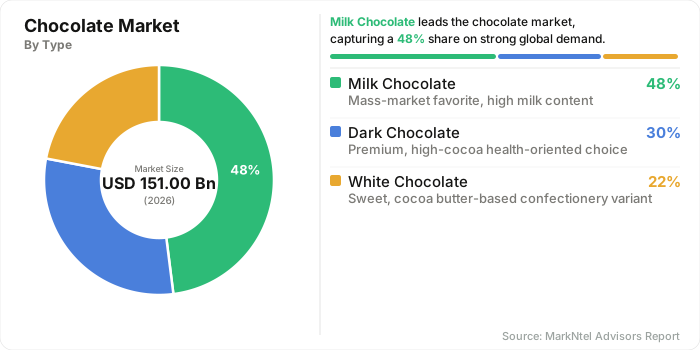
- By product type, milk chocolate led with 48% of market share in 2026.
- By ingredient type, dairy chocolate captured 90% share of the industry in 2026.
- By geography, Europe held a leading share of about 39% of the global Chocolate market size in 2026.
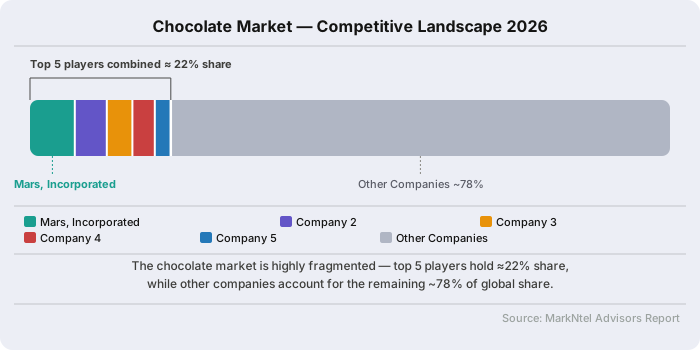
- The industry is moderately fragmented, with the top five players collectively accounting for approximately 22% of the market share in 2026.
Chocolate Market Size and Outlook
The chocolate industry was valued at USD 142 billion in 2025 and is currently standing at USD 151 billion in 2026. The industry is projected to grow to USD 212 billion by 2032, showcasing a CAGR of around 5.82% during the forecast period, i.e., 2026–32. The market is evolving through steady product innovation, premiumization, and changing consumer preferences, while manufacturers strengthen sourcing strategies to improve supply resilience.
Industry expansion is driven by the category's widespread presence across confectionery, bakery, beverages, and gifting applications, alongside increasing investments in product diversification and value-added offerings. Manufacturers are simultaneously strengthening procurement and production strategies to efficiently manage fluctuations in cocoa availability and raw material costs, supporting operational resilience and long-term category development.
Consumer demand is increasingly shifting toward health-oriented and specialty chocolate products, creating new opportunities for product innovation. Manufacturers are expanding vegan, dairy-free, and reduced-sugar portfolios to address evolving category and wellness-focused purchasing behaviour. Reflecting this trend, Lindt & Sprüngli expanded its oat-based LINDOR Vegan Truffles into Canada during 2025, while ChocZero introduced new zero-sugar and dairy-free seasonal chocolate products in 2026. Such developments highlight the growing emphasis on plant-based formulations, sugar reduction, and portfolio diversification, enabling manufacturers to broaden consumer appeal while strengthening premium product offerings.
The regulatory landscape is also becoming increasingly important in shaping the market. The European Union's Deforestation Regulation is strengthening traceability and due diligence requirements across cocoa supply chains, encouraging manufacturers to enhance sourcing transparency and compliance systems. These measures are accelerating investments in digital traceability, responsible procurement practices, and sustainable supply chain management, while promoting greater standardization across international cocoa sourcing and trade.
Chocolate Market Key Indicators
- Global cocoa production is estimated at approximately 4.7 million tonnes for the 2025/26 season, with the International Cocoa Organization projecting a 75,000-tonne supply surplus, indicating a relatively balanced raw material environment for chocolate manufacturers despite continued supply-side uncertainties.
- Global cocoa grindings reached 325,895 tonnes in Europe, 223,503 tonnes in Asia, and 106,087 tonnes in North America during Q1 2026. While Europe remained the largest processing region, Asia recorded significant growth, reflecting stronger manufacturing and consumption momentum.
- Cocoa prices reached approximately US$4,588 per tonne in June 2026, following an 8.28% daily increase and a 20% monthly gain, reflecting continued adjustments in cocoa procurement and sourcing strategies across the global chocolate industry.
- Côte d'Ivoire shipped 1.57 million tonnes of cocoa to ports between October 2025 and May 2026, reinforcing its position as the world's leading cocoa supplier.
- Ghana's cocoa bean exports are projected to reach 520,000 metric tonnes in MY2024/25, increasing 55% year-on-year, reflecting improving export availability from one of the world's largest cocoa-producing countries.
- According to the USDA, global sugar consumption is forecast to exceed 179 million metric tonnes during 2025/26. As sugar is one of the primary ingredients in chocolate formulations, sustained growth in sugar consumption reflects continued expansion in confectionery manufacturing and underpins chocolate manufacturing growth.
- According to the FAO, global milk production exceeded 980 million tonnes in 2025. Rising milk availability supports production of milk chocolate, the largest product segment across the global chocolate industry, while ensuring stable dairy ingredient supply.
Chocolate Market Scope
| Category | Segments |
|---|---|
| By Chocolate Type | Milk Chocolate, White Chocolate, Dark Chocolate |
| By Form | Tablets and Bars, Moulded Blocks, Pralines and Truffles, Other Forms |
| By Packaging Type | Plastic Pouches and Bags, Paper Pouches and Bags, Metal Tins, Plastic Boxed Assortments, Others |
| By SKU Size | Upto 50 Gram, 51 to 100 Gram, 100 to 200 Gram, Above 200 Gram |
| By Ingredient Type | Dairy-Based, Plant-Based, Single Origin |
| By Application | Food products, Beverages, Others |
| By Sales Channel | Supermarkets/Hypermarkets, Online Retail Stores, Convenience Stores, Other Channels |
Chocolate Market Growth Drivers
Growing Adoption of Cocoa-Free Ingredients Strengthening Supply Resilience
Volatility in cocoa prices is accelerating the commercial adoption of cocoa-free and cocoa-reduced ingredients across the chocolate industry. During June 2026, cocoa prices reached approximately USD 4,588 per tonne after gaining around 20% during the month, encouraging manufacturers to strengthen procurement strategies, optimize ingredient utilization, and diversify raw material sourcing. As a result, cocoa alternatives are increasingly being integrated into long-term product development and supply resilience strategies rather than being limited to niche applications.
Reflecting this shift, Nestlé, Mars, and Barry Callebaut each entered commercial partnerships with Planet A foods in 2026 to scale Choviva, a fermented sunflower seed-based cocoa alternative designed to reduce dependence on conventional cocoa while improving sourcing flexibility. These collaborations demonstrate growing confidence in commercially scalable cocoa substitutes as manufacturers seek to maintain production continuity amid evolving raw material conditions.
The momentum further strengthened in 2026 when Cargill, in partnership with Voyage Foods, introduced NextCoain the United States. Produced from upcycled grape seeds and sunflower kernel flour, the ingredient is designed for use across chocolate bars, bakery products, coatings, and ice cream. The entry of another global ingredient supplier into the cocoa-free segment highlights the industry's transition toward diversified ingredient platforms, improving product innovation, supply resilience, and long-term growth across the global chocolate value chain.
Recent Trends
AI-Driven Product Development Transforming Chocolate Innovation
Artificial intelligence is becoming a defining technology trend in the global chocolate market as manufacturers modernize research and development processes to accelerate formulation, improve sensory precision, and respond more efficiently to evolving consumer preferences. AI-powered platforms are enabling companies to analyse flavour profiles, ingredient interactions, nutritional composition, and consumer insights simultaneously, significantly reducing product development timelines while improving formulation accuracy and consistency. This shift is strengthening innovation capabilities across premium, functional, and specialty chocolate categories.
Reflecting this transition, Barry Callebaut inaugurated its global innovation centre in Singapore in 2026, incorporating what the company describes as the world's first AI centre of excellence dedicated to chocolate and cocoa. The facility integrates artificial intelligence into flavour development, application research, and product innovation, enabling faster commercialization of new chocolate formulations. Similarly, Mondelez is leveraging AI-driven product development tools to evaluate sensory characteristics, pricing, and nutritional attributes, substantially shortening formulation cycles while enabling more data-driven product design.
The technology ecosystem supporting chocolate innovation continues to expand beyond traditional manufacturers. In 2025, AKA Foods introduced AKA Studio, an AI platform that utilizes proprietary formulation and sensory data to reduce reformulation timelines from years to weeks. At the same time, companies such as NotCo are applying molecular mapping through AI to develop optimized ingredient combinations, while ofi is using artificial intelligence to identify emerging flavour preferences. These developments demonstrate that AI is evolving into a strategic capability that enhances product innovation, accelerates commercialization, and strengthens manufacturers' ability to respond to rapidly changing market requirements.
Chocolate Market Challenges and Opportunities
Concentrated Cocoa Supply Risks Accelerate Processing Expansion and Origin Diversification
Persistent dependence on smallholder cocoa production in West Africa continues to expose the chocolate market to climate variability, disease outbreaks, and supply disruptions. Côte d'Ivoire accounts for approximately 38% of global cocoa production, while Ghana contributes another 12.5%, resulting in more than half of the global cocoa supply originating from the same climatic zone. This concentration heightens the industry's sensitivity to weather-related events and production challenges. In addition, Ivorian cocoa grinding volumes declined 31% year-on-year in July 2025 due to bean quality issues, highlighting the operational impact of upstream supply constraints.
Climate-related uncertainty is expected to remain elevated as El Niño continues to influence rainfall and temperature patterns across major cocoa-growing regions. These conditions are increasing concerns over yield performance during critical flowering and pod development stages, prompting downward production revisions for Côte d'Ivoire, Ghana, and Ecuador for the 2026/27 crop cycle. The combination of concentrated production and recurring weather disruptions reinforces the industry's need to strengthen supply resilience through diversified sourcing, infrastructure investment, and long-term production strategies.
These structural challenges are simultaneously encouraging greater investment in processing infrastructure and supply diversification across producing regions. Côte d'Ivoire has expanded its installed cocoa grinding capacity to approximately 1.06 million tonnes, representing more than 50% of national cocoa production, supported by projects including the USD 235 million Transcao processing facility commissioned in 2025. Increasing domestic processing enables producing countries to capture greater value addition while strengthening regional supply capabilities.
The evolving supply environment is also encouraging diversification beyond the traditional West African production base. Countries such as Ecuador are expanding cocoa production and strengthening their role in global supply, while origin countries continue investing in domestic processing and export capabilities. These developments are gradually broadening the global sourcing base, improving supply chain resilience, and creating long-term opportunities for a more geographically diversified chocolate industry.
Segmentation Insights
Milk Chocolate Maintaining Leadership Through Broad Consumer Appeal and Continuous Product Innovation
Milk chocolate accounted for approximately 48% of the global chocolate market in 2026, driven by its widespread consumer acceptance, balanced sweetness, and versatility across confectionery applications. Its broad appeal across all age groups, coupled with extensive availability in bars, boxed chocolates, seasonal assortments, bakery products, and gifting portfolios, continues to support high consumption volumes worldwide. Manufacturers also benefit from well-established production capabilities and extensive retail distribution, reinforcing the segment's leadership across both developed and emerging economies.
The segment continues to strengthen its position through premiumization and continuous product innovation. Manufacturers are introducing premium inclusions, single-origin cocoa, reduced-sugar formulations, and plant-based milk alternatives while preserving the familiar taste profile preferred by mainstream consumers. For instance, in September 2025, Mondelez India launched Cadbury Dairy Milk Milkinis, a milk crème-filled chocolate bar designed to cater to evolving snacking preferences and increasing demand for indulgent, on-the-go milk chocolate formats. Strong seasonal demand during festive occasions, expanding organized retail, and growing e-commerce penetration further support sales across global markets. These factors collectively enable milk chocolate to retain its dominant position within the global chocolate product landscape. Based on product type, the market is further bifurcated into:
- Milk Chocolate
- White Chocolate
- Dark Chocolate
Dairy Chocolate Sustaining Market Leadership Through Established Consumer Preference
Dairy chocolate captured around 90% of the global chocolate market in 2026, supported by its extensive consumer base, established manufacturing ecosystem, and widespread availability across retail and foodservice channels. Traditional dairy chocolate formulations continue to dominate demand owing to their familiar taste, broad affordability, and suitability across confectionery, bakery, beverages, desserts, and gifting applications. Their long-standing consumer acceptance enables manufacturers to maintain high production volumes and extensive global market penetration.
Leading manufacturers are also enhancing product quality, packaging formats, and distribution networks while introducing reduced-sugar and functional variants within conventional formulations to address evolving consumer preferences. These developments allow manufacturers to broaden their customer base without fundamentally altering traditional recipes, reinforcing the segment's leadership across the global chocolate market. Based on dietary preference, the market is further bifurcated into:
- Dairy-Based
- Plant-Based
- Single Origin
Chocolate Market Geographical Outlook
Europe accounted for approximately 39% of the global chocolate market in 2026, maintaining its leadership through a mature confectionery industry, well-established premium chocolate culture, and strong manufacturing capabilities. The region benefits from advanced processing infrastructure, extensive retail penetration, and sustained consumer demand for artisanal, premium, and seasonal chocolate products. Its position is further reinforced by the presence of leading global chocolate manufacturers that continue to invest in innovation, capacity expansion, and premium product development.
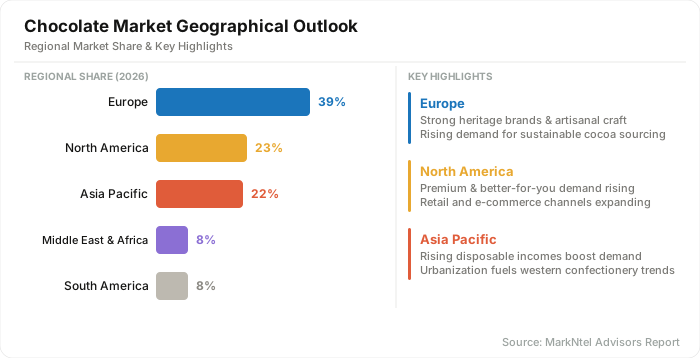
The region also continues to strengthen its leadership through brand investments, sustainability initiatives, and experiential retail formats that enhance consumer engagement. In 2025, Lindt & Sprüngli expanded its experiential retail strategy by opening a new flagship store at London's Piccadilly Lights, offering exclusive product collections and personalized shopping experiences. Additionally, the European Union's Deforestation Regulation is encouraging greater supply chain transparency and traceability, supporting responsible sourcing practices while reinforcing Europe's leadership across the global chocolate market.
Chocolate Market Competitive Analysis
The chocolate market is moderately consolidated, with a mix of multinational confectionery companies, integrated cocoa processors, premium chocolate manufacturers, and regional brands competing across mass-market and premium product categories. Leading participants leverage extensive brand portfolios, global manufacturing networks, strong retail distribution, and continuous investments in product innovation, sustainable cocoa sourcing, and strategic partnerships to strengthen their competitive positioning. Major participants include The Hershey Company, Ferrero International S.A. (Ferrero Group), Mondelēz International, Inc., Chocoladefabriken Lindt & Sprüngli AG, and Barry Callebaut AG, with the top five players collectively accounting for approximately 22% of the global chocolate market.
Key Companies in the Global Chocolate Market
- Mars, Incorporated
- The Hershey Company
- Ferrero International S.A. (Ferrero Group)
- Mondelēz International, Inc
- Nestlé S.A.
- Chocoladefabriken Lindt & Sprüngli AG (Lindt & Sprüngli)
- Barry Callebaut AG
- Cargill, Incorporated
- Barry Callebaut AG
- Meiji Holdings Co., Ltd.
- Lotte Wellfood Co., Ltd. (Formerly Lotte Confectionery)
- Ezaki Glico Co., Ltd
- Puratos Group NV
- Arcor S.A.I.C
- Valrhona SAS (Subsidiary of Groupe Savencia)
- Cocoa Processing Company Limited
Chocolate Industry News and Recent Developments
2026: Puratos Introduces Professional Chocolate Made with Cultured Cocoa
Puratos announced in February 2026 that it will launch the world's first professional chocolate made with cultured cocoa, developed through a partnership with food biotechnology company Celleste Bio. The product utilizes cocoa cell culture technology to produce cocoa ingredients without conventional farming while maintaining the characteristic flavour profile required for professional chocolate applications. Initially targeted at artisan chocolatiers, pastry chefs, and bakery professionals, the innovation forms part of Puratos' long-term strategy to complement conventional cocoa sourcing with scalable biotechnology solutions that enhance supply resilience and support sustainable ingredient development.
Impact Analysis: The launch marks a significant advancement in commercial chocolate innovation by introducing cultured cocoa into professional confectionery applications. It is expected to accelerate investment in biotechnology-based cocoa alternatives, encourage wider adoption of next-generation ingredient technologies, and strengthen long-term supply diversification strategies across the global chocolate value chain.
2025: Cadbury and Lotus Bakeries Launch First Co-Branded Dairy Milk Biscoff Chocolate Bar
In March 2025, Mondelēz International's Cadbury and Lotus Bakeries commercially launched the Cadbury Dairy Milk Biscoff bar following their strategic partnership announced in 2024. The product combines Cadbury Dairy Milk chocolate with Lotus Biscoff biscuit pieces and was introduced in multiple pack formats, including a 95 g price-marked pack and standard 95 g and 105 g bars. The collaboration brings together two globally recognized confectionery brands, leveraging complementary brand equity to expand premium chocolate offerings and strengthen consumer engagement through co-branded product innovation.
Impact Analysis: The collaboration highlights the growing importance of strategic brand partnerships in accelerating product innovation and premiumization within the chocolate industry. It demonstrates how established confectionery manufacturers are leveraging complementary brands to differentiate product portfolios, enhance retail visibility, and attract consumers seeking novel flavor and texture combinations.
2025: Hershey Expands Premium Filled Chocolate Portfolio with Caramel Innovation
The Hershey Company expanded its premium chocolate portfolio in May 2025 with the launch of the Hershey Milk Chocolate with Caramel bar, strengthening its presence in the growing filled chocolate segment. The new product combines Hershey's signature milk chocolate with a smooth caramel center, catering to rising consumer demand for indulgent, multi-textured confectionery experiences. The launch reflects the company's continued focus on premiumization and portfolio diversification through innovative flavor combinations, enabling it to strengthen shelf presence across mainstream retail channels while reinforcing its core chocolate brand.
Impact Analysis: The product launch strengthens competition within the premium filled chocolate segment by expanding consumer choice and encouraging further flavor innovation among major manufacturers. It reinforces the industry's shift toward value-added chocolate products that command higher consumer engagement and support premium pricing strategies across established retail markets.
Frequently Asked Questions
- Market Segmentation
- Introduction
- Product Definition
- Research Process
- Assumptions
- Executive Summary
- Global Chocolate Market Policies, Regulations, and Product Standards
- Global Chocolate Production Trend 2022-2032
- Global Chocolate Production Trend by Type
- Milk Chocolate
- White Chocolate
- Dark Chocolate
- Company-Wise Production Plants and Statistics
- Installed Production Capacity
- Actual Production
- Planned Production Target
- Global Chocolate Production Trend by Type
- Global Chocolate Pricing Analysis 2022-2032
- Global Chocolate Pricing Trend 2022-2032
- Global Chocolate Pricing Trend by Regions 2022-2032
- North America
- South America
- Europe
- Middle East & Africa
- Asia Pacific
- Global Chocolate Pricing by Types 2022-2032
- Milk Chocolate
- White Chocolate
- Dark Chocolate
- Global Chocolate Market Trends & Developments
- Global Chocolate Market Dynamics
- Growth Factors
- Challenges
- Global Chocolate Market Hotspot & Opportunities
- Global Chocolate Market Outlook, 2022-2032F
- Market Size & Outlook
- By Revenues (USD Million)
- By Quantity Sold (Kilo Tons)
- Market Segmentation & Outlook
- By Chocolate Type- Market Size & Forecast 2022-2032, USD Million & Kilo Tons
- Milk Chocolate
- White Chocolate
- Dark Chocolate
- By Form- Market Size & Forecast 2022-2032, USD Million & Kilo Tons
- Tablets and Bars
- Moulded Blocks
- Pralines and Truffles
- Other Forms
- By Packaging Type- Market Size & Forecast 2022-2032, USD Million & Kilo Tons
- Plastic Pouches and Bags
- Paper Pouches and Bags
- Metal Tins
- Plastic Boxed Assortments
- Others
- By SKU Size- Market Size & Forecast 2022-2032, USD Million & Kilo Tons
- Upto 50 Gram
- 51 to 100 Gram
- 100 to 200 Gram
- Above 200 Gram
- By Ingredient Type- Market Size & Forecast 2022-2032, USD Million
- Dairy-Based
- Plant-Based
- Single Origin
- By Application- Market Size & Forecast 2022-2032, USD Million & Kilo Tons
- Food products
- Bakery Products
- Sugar Confectionery
- Desserts
- Others
- Beverages
- Others
- Food products
- By Sales Channel- Market Size & Forecast 2022-2032, USD Million & Kilo Tons
- Supermarkets/Hypermarkets
- Online Retail Stores
- Convenience Stores
- Other Channels
- By Region
- North America
- South America
- Europe
- The Middle East & Africa
- Asia-Pacific
- By Company
- Competition Characteristics
- Market Share & Analysis
- By Chocolate Type- Market Size & Forecast 2022-2032, USD Million & Kilo Tons
- Market Size & Outlook
- North America Chocolate Market Outlook, 2022-2032F
- Market Size & Outlook
- By Revenues (USD Million)
- By Quantity Sold (Kilo Tons)
- Market Segmentation & Outlook
- By Chocolate Type- Market Size & Forecast 2022-2032, USD Million & Kilo Tons
- By Packaging Type- Market Size & Forecast 2022-2032, USD Million & Kilo Tons
- By dietary Preference - Market Size & Forecast 2022-2032, USD Million & Kilo Tons
- By price category- Market Size & Forecast 2022-2032, USD Million & Kilo Tons
- By Application- Market Size & Forecast 2022-2032, USD Million & Kilo Tons
- By Category- Market Size & Forecast 2022-2032, USD Million & Kilo Tons
- By Sales Channel- Market Size & Forecast 2022-2032, USD Million & Kilo Tons
- By Country
- Countries Name by Region (Separated by Semi Colon & Sequencing as per Region Define in Segment)
- Market Size & Outlook
- South America Chocolate Market Outlook, 2022-2032F
- Market Size & Outlook
- By Revenues (USD Million)
- By Quantity Sold (Kilo Tons)
- Market Segmentation & Outlook
- By Chocolate Type- Market Size & Forecast 2022-2032, USD Million & Kilo Tons
- By Packaging Type- Market Size & Forecast 2022-2032, USD Million & Kilo Tons
- By dietary Preference - Market Size & Forecast 2022-2032, USD Million & Kilo Tons
- By price category- Market Size & Forecast 2022-2032, USD Million & Kilo Tons
- By Application- Market Size & Forecast 2022-2032, USD Million & Kilo Tons
- By Category- Market Size & Forecast 2022-2032, USD Million & Kilo Tons
- By Sales Channel- Market Size & Forecast 2022-2032, USD Million & Kilo Tons
- By Country
- The US
- Canada
- Mexico
- The US Chocolate Market Outlook, 2022-2032F
- Market Size & Outlook
- By Revenues (USD Million)
- By Quantity Sold (Kilo Tons)
- Market Segmentation & Outlook
- By Chocolate Type- Market Size & Forecast 2022-2032, USD Million & Kilo Tons
- By Packaging Type- Market Size & Forecast 2022-2032, USD Million & Kilo Tons
- By dietary Preference - Market Size & Forecast 2022-2032, USD Million & Kilo Tons
- By price category- Market Size & Forecast 2022-2032, USD Million & Kilo Tons
- By Application- Market Size & Forecast 2022-2032, USD Million & Kilo Tons
- By Category- Market Size & Forecast 2022-2032, USD Million & Kilo Tons
- By Sales Channel- Market Size & Forecast 2022-2032, USD Million & Kilo Tons
- Market Size & Outlook
- Canada Chocolate Market Outlook, 2022-2032F
- Market Size & Outlook
- By Revenues (USD Million)
- By Quantity Sold (Kilo Tons)
- Market Segmentation & Outlook
- By Chocolate Type- Market Size & Forecast 2022-2032, USD Million & Kilo Tons
- By Packaging Type- Market Size & Forecast 2022-2032, USD Million & Kilo Tons
- By dietary Preference - Market Size & Forecast 2022-2032, USD Million & Kilo Tons
- By price category- Market Size & Forecast 2022-2032, USD Million & Kilo Tons
- By Application- Market Size & Forecast 2022-2032, USD Million & Kilo Tons
- By Category- Market Size & Forecast 2022-2032, USD Million & Kilo Tons
- By Sales Channel- Market Size & Forecast 2022-2032, USD Million & Kilo Tons
- Market Size & Outlook
- Mexico Chocolate Market Outlook, 2022-2032F
- Market Size & Outlook
- By Revenues (USD Million)
- By Quantity Sold (Kilo Tons)
- Market Segmentation & Outlook
- By Chocolate Type- Market Size & Forecast 2022-2032, USD Million & Kilo Tons
- By Packaging Type- Market Size & Forecast 2022-2032, USD Million & Kilo Tons
- By dietary Preference - Market Size & Forecast 2022-2032, USD Million & Kilo Tons
- By price category- Market Size & Forecast 2022-2032, USD Million & Kilo Tons
- By Application- Market Size & Forecast 2022-2032, USD Million & Kilo Tons
- By Category- Market Size & Forecast 2022-2032, USD Million & Kilo Tons
- By Sales Channel- Market Size & Forecast 2022-2032, USD Million & Kilo Tons
- Market Size & Outlook
- Market Size & Outlook
- Europe Chocolate Market Outlook, 2022-2032F
- Market Size & Outlook
- By Revenues (USD Million)
- By Quantity Sold (Kilo Tons)
- Market Segmentation & Outlook
- By Chocolate Type- Market Size & Forecast 2022-2032, USD Million & Kilo Tons
- By Packaging Type- Market Size & Forecast 2022-2032, USD Million & Kilo Tons
- By dietary Preference - Market Size & Forecast 2022-2032, USD Million & Kilo Tons
- By price category- Market Size & Forecast 2022-2032, USD Million & Kilo Tons
- By Application- Market Size & Forecast 2022-2032, USD Million & Kilo Tons
- By Category- Market Size & Forecast 2022-2032, USD Million & Kilo Tons
- By Sales Channel- Market Size & Forecast 2022-2032, USD Million & Kilo Tons
- By Country
- Brazil
- Argentina
- Chile
- Colombia
- Peru
- Ecuador
- Rest of South America
- Brazil Chocolate Market Outlook, 2022-2032F
- Market Size & Outlook
- By Revenues (USD Million)
- By Quantity Sold (Kilo Tons)
- Market Segmentation & Outlook
- By Chocolate Type- Market Size & Forecast 2022-2032, USD Million & Kilo Tons
- By Packaging Type- Market Size & Forecast 2022-2032, USD Million & Kilo Tons
- By dietary Preference - Market Size & Forecast 2022-2032, USD Million & Kilo Tons
- By price category- Market Size & Forecast 2022-2032, USD Million & Kilo Tons
- By Application- Market Size & Forecast 2022-2032, USD Million & Kilo Tons
- By Category- Market Size & Forecast 2022-2032, USD Million & Kilo Tons
- By Sales Channel- Market Size & Forecast 2022-2032, USD Million & Kilo Tons
- Market Size & Outlook
- Argentina Chocolate Market Outlook, 2022-2032F
- Market Size & Outlook
- By Revenues (USD Million)
- By Quantity Sold (Kilo Tons)
- Market Segmentation & Outlook
- By Chocolate Type- Market Size & Forecast 2022-2032, USD Million & Kilo Tons
- By Packaging Type- Market Size & Forecast 2022-2032, USD Million & Kilo Tons
- By dietary Preference - Market Size & Forecast 2022-2032, USD Million & Kilo Tons
- By price category- Market Size & Forecast 2022-2032, USD Million & Kilo Tons
- By Application- Market Size & Forecast 2022-2032, USD Million & Kilo Tons
- By Category- Market Size & Forecast 2022-2032, USD Million & Kilo Tons
- By Sales Channel- Market Size & Forecast 2022-2032, USD Million & Kilo Tons
- Market Size & Outlook
- Chile Chocolate Market Outlook, 2022-2032F
- Market Size & Outlook
- By Revenues (USD Million)
- By Quantity Sold (Kilo Tons)
- Market Segmentation & Outlook
- By Chocolate Type- Market Size & Forecast 2022-2032, USD Million & Kilo Tons
- By Packaging Type- Market Size & Forecast 2022-2032, USD Million & Kilo Tons
- By dietary Preference - Market Size & Forecast 2022-2032, USD Million & Kilo Tons
- By price category- Market Size & Forecast 2022-2032, USD Million & Kilo Tons
- By Application- Market Size & Forecast 2022-2032, USD Million & Kilo Tons
- By Category- Market Size & Forecast 2022-2032, USD Million & Kilo Tons
- By Sales Channel- Market Size & Forecast 2022-2032, USD Million & Kilo Tons
- Market Size & Outlook
- Colombia Chocolate Market Outlook, 2022-2032F
- Market Size & Outlook
- By Revenues (USD Million)
- By Quantity Sold (Kilo Tons)
- Market Segmentation & Outlook
- By Chocolate Type- Market Size & Forecast 2022-2032, USD Million & Kilo Tons
- By Packaging Type- Market Size & Forecast 2022-2032, USD Million & Kilo Tons
- By dietary Preference - Market Size & Forecast 2022-2032, USD Million & Kilo Tons
- By price category- Market Size & Forecast 2022-2032, USD Million & Kilo Tons
- By Application- Market Size & Forecast 2022-2032, USD Million & Kilo Tons
- By Category- Market Size & Forecast 2022-2032, USD Million & Kilo Tons
- By Sales Channel- Market Size & Forecast 2022-2032, USD Million & Kilo Tons
- Market Size & Outlook
- Peru Chocolate Market Outlook, 2022-2032F
- Market Size & Outlook
- By Revenues (USD Million)
- By Quantity Sold (Kilo Tons)
- Market Segmentation & Outlook
- By Chocolate Type- Market Size & Forecast 2022-2032, USD Million & Kilo Tons
- By Packaging Type- Market Size & Forecast 2022-2032, USD Million & Kilo Tons
- By dietary Preference - Market Size & Forecast 2022-2032, USD Million & Kilo Tons
- By price category- Market Size & Forecast 2022-2032, USD Million & Kilo Tons
- By Application- Market Size & Forecast 2022-2032, USD Million & Kilo Tons
- By Category- Market Size & Forecast 2022-2032, USD Million & Kilo Tons
- By Sales Channel- Market Size & Forecast 2022-2032, USD Million & Kilo Tons
- Market Size & Outlook
- Ecuador Chocolate Market Outlook, 2022-2032F
- Market Size & Outlook
- By Revenues (USD Million)
- By Quantity Sold (Kilo Tons)
- Market Segmentation & Outlook
- By Chocolate Type- Market Size & Forecast 2022-2032, USD Million & Kilo Tons
- By Packaging Type- Market Size & Forecast 2022-2032, USD Million & Kilo Tons
- By dietary Preference - Market Size & Forecast 2022-2032, USD Million & Kilo Tons
- By price category- Market Size & Forecast 2022-2032, USD Million & Kilo Tons
- By Application- Market Size & Forecast 2022-2032, USD Million & Kilo Tons
- By Category- Market Size & Forecast 2022-2032, USD Million & Kilo Tons
- By Sales Channel- Market Size & Forecast 2022-2032, USD Million & Kilo Tons
- Market Size & Outlook
- Market Size & Outlook
- Asia-Pacific Chocolate Market Outlook, 2022-2032F
- Market Size & Outlook
- By Revenues (USD Million)
- By Quantity Sold (Kilo Tons)
- Market Segmentation & Outlook
- By Chocolate Type- Market Size & Forecast 2022-2032, USD Million & Kilo Tons
- By Packaging Type- Market Size & Forecast 2022-2032, USD Million & Kilo Tons
- By dietary Preference - Market Size & Forecast 2022-2032, USD Million & Kilo Tons
- By price category- Market Size & Forecast 2022-2032, USD Million & Kilo Tons
- By Application- Market Size & Forecast 2022-2032, USD Million & Kilo Tons
- By Category- Market Size & Forecast 2022-2032, USD Million & Kilo Tons
- By Sales Channel- Market Size & Forecast 2022-2032, USD Million & Kilo Tons
- By Country
- The UK
- Germany
- France
- Italy
- Spain
- Benelux
- Nordic
- Rest of Europe
- The UK Chocolate Market Outlook, 2022-2032F
- Market Size & Outlook
- By Revenues (USD Million)
- By Quantity Sold (Kilo Tons)
- Market Segmentation & Outlook
- By Chocolate Type- Market Size & Forecast 2022-2032, USD Million & Kilo Tons
- By Packaging Type- Market Size & Forecast 2022-2032, USD Million & Kilo Tons
- By dietary Preference - Market Size & Forecast 2022-2032, USD Million & Kilo Tons
- By price category- Market Size & Forecast 2022-2032, USD Million & Kilo Tons
- By Application- Market Size & Forecast 2022-2032, USD Million & Kilo Tons
- By Category- Market Size & Forecast 2022-2032, USD Million & Kilo Tons
- By Sales Channel- Market Size & Forecast 2022-2032, USD Million & Kilo Tons
- Market Size & Outlook
- Germany Chocolate Market Outlook, 2022-2032F
- Market Size & Outlook
- By Revenues (USD Million)
- By Quantity Sold (Kilo Tons)
- Market Segmentation & Outlook
- By Chocolate Type- Market Size & Forecast 2022-2032, USD Million & Kilo Tons
- By Packaging Type- Market Size & Forecast 2022-2032, USD Million & Kilo Tons
- By dietary Preference - Market Size & Forecast 2022-2032, USD Million & Kilo Tons
- By price category- Market Size & Forecast 2022-2032, USD Million & Kilo Tons
- By Application- Market Size & Forecast 2022-2032, USD Million & Kilo Tons
- By Category- Market Size & Forecast 2022-2032, USD Million & Kilo Tons
- By Sales Channel- Market Size & Forecast 2022-2032, USD Million & Kilo Tons
- Market Size & Outlook
- France Chocolate Market Outlook, 2022-2032F
- Market Size & Outlook
- By Revenues (USD Million)
- By Quantity Sold (Kilo Tons)
- Market Segmentation & Outlook
- By Chocolate Type- Market Size & Forecast 2022-2032, USD Million & Kilo Tons
- By Packaging Type- Market Size & Forecast 2022-2032, USD Million & Kilo Tons
- By dietary Preference - Market Size & Forecast 2022-2032, USD Million & Kilo Tons
- By price category- Market Size & Forecast 2022-2032, USD Million & Kilo Tons
- By Application- Market Size & Forecast 2022-2032, USD Million & Kilo Tons
- By Category- Market Size & Forecast 2022-2032, USD Million & Kilo Tons
- By Sales Channel- Market Size & Forecast 2022-2032, USD Million & Kilo Tons
- Market Size & Outlook
- Italy Chocolate Market Outlook, 2022-2032F
- Market Size & Outlook
- By Revenues (USD Million)
- By Quantity Sold (Kilo Tons)
- Market Segmentation & Outlook
- By Chocolate Type- Market Size & Forecast 2022-2032, USD Million & Kilo Tons
- By Packaging Type- Market Size & Forecast 2022-2032, USD Million & Kilo Tons
- By dietary Preference - Market Size & Forecast 2022-2032, USD Million & Kilo Tons
- By price category- Market Size & Forecast 2022-2032, USD Million & Kilo Tons
- By Application- Market Size & Forecast 2022-2032, USD Million & Kilo Tons
- By Category- Market Size & Forecast 2022-2032, USD Million & Kilo Tons
- By Sales Channel- Market Size & Forecast 2022-2032, USD Million & Kilo Tons
- Market Size & Outlook
- Spain Chocolate Market Outlook, 2022-2032F
- Market Size & Outlook
- By Revenues (USD Million)
- By Quantity Sold (Kilo Tons)
- Market Segmentation & Outlook
- By Chocolate Type- Market Size & Forecast 2022-2032, USD Million & Kilo Tons
- By Packaging Type- Market Size & Forecast 2022-2032, USD Million & Kilo Tons
- By dietary Preference - Market Size & Forecast 2022-2032, USD Million & Kilo Tons
- By price category- Market Size & Forecast 2022-2032, USD Million & Kilo Tons
- By Application- Market Size & Forecast 2022-2032, USD Million & Kilo Tons
- By Category- Market Size & Forecast 2022-2032, USD Million & Kilo Tons
- By Sales Channel- Market Size & Forecast 2022-2032, USD Million & Kilo Tons
- Market Size & Outlook
- Benelux Chocolate Market Outlook, 2022-2032F
- Market Size & Outlook
- By Revenues (USD Million)
- By Quantity Sold (Kilo Tons)
- Market Segmentation & Outlook
- By Chocolate Type- Market Size & Forecast 2022-2032, USD Million & Kilo Tons
- By Packaging Type- Market Size & Forecast 2022-2032, USD Million & Kilo Tons
- By dietary Preference - Market Size & Forecast 2022-2032, USD Million & Kilo Tons
- By price category- Market Size & Forecast 2022-2032, USD Million & Kilo Tons
- By Application- Market Size & Forecast 2022-2032, USD Million & Kilo Tons
- By Category- Market Size & Forecast 2022-2032, USD Million & Kilo Tons
- By Sales Channel- Market Size & Forecast 2022-2032, USD Million & Kilo Tons
- Market Size & Outlook
- Nordic Chocolate Market Outlook, 2022-2032F
- Market Size & Outlook
- By Revenues (USD Million)
- By Quantity Sold (Kilo Tons)
- Market Segmentation & Outlook
- By Chocolate Type- Market Size & Forecast 2022-2032, USD Million & Kilo Tons
- By Packaging Type- Market Size & Forecast 2022-2032, USD Million & Kilo Tons
- By dietary Preference - Market Size & Forecast 2022-2032, USD Million & Kilo Tons
- By price category- Market Size & Forecast 2022-2032, USD Million & Kilo Tons
- By Application- Market Size & Forecast 2022-2032, USD Million & Kilo Tons
- By Category- Market Size & Forecast 2022-2032, USD Million & Kilo Tons
- By Sales Channel- Market Size & Forecast 2022-2032, USD Million & Kilo Tons
- Market Size & Outlook
- Market Size & Outlook
- The Middle East & Africa Chocolate Market Outlook, 2022-2032F
- Market Size & Outlook
- By Revenues (USD Million)
- By Quantity Sold (Kilo Tons)
- Market Segmentation & Outlook
- By Chocolate Type- Market Size & Forecast 2022-2032, USD Million & Kilo Tons
- By Packaging Type- Market Size & Forecast 2022-2032, USD Million & Kilo Tons
- By dietary Preference - Market Size & Forecast 2022-2032, USD Million & Kilo Tons
- By price category- Market Size & Forecast 2022-2032, USD Million & Kilo Tons
- By Application- Market Size & Forecast 2022-2032, USD Million & Kilo Tons
- By Category- Market Size & Forecast 2022-2032, USD Million & Kilo Tons
- By Sales Channel- Market Size & Forecast 2022-2032, USD Million & Kilo Tons
- By Country
- Saudi Arabia
- The UAE
- South Africa
- Egypt
- Qatar
- Rest of Middle East & Africa
- Saudi Arabia Chocolate Market Outlook, 2022-2032F
- Market Size & Outlook
- By Revenues (USD Million)
- By Quantity Sold (Kilo Tons)
- Market Segmentation & Outlook
- By Chocolate Type- Market Size & Forecast 2022-2032, USD Million & Kilo Tons
- By Packaging Type- Market Size & Forecast 2022-2032, USD Million & Kilo Tons
- By dietary Preference - Market Size & Forecast 2022-2032, USD Million & Kilo Tons
- By price category- Market Size & Forecast 2022-2032, USD Million & Kilo Tons
- By Application- Market Size & Forecast 2022-2032, USD Million & Kilo Tons
- By Category- Market Size & Forecast 2022-2032, USD Million & Kilo Tons
- By Sales Channel- Market Size & Forecast 2022-2032, USD Million & Kilo Tons
- Market Size & Outlook
- The UAE Chocolate Market Outlook, 2022-2032F
- Market Size & Outlook
- By Revenues (USD Million)
- By Quantity Sold (Kilo Tons)
- Market Segmentation & Outlook
- By Chocolate Type- Market Size & Forecast 2022-2032, USD Million & Kilo Tons
- By Packaging Type- Market Size & Forecast 2022-2032, USD Million & Kilo Tons
- By dietary Preference - Market Size & Forecast 2022-2032, USD Million & Kilo Tons
- By price category- Market Size & Forecast 2022-2032, USD Million & Kilo Tons
- By Application- Market Size & Forecast 2022-2032, USD Million & Kilo Tons
- By Category- Market Size & Forecast 2022-2032, USD Million & Kilo Tons
- By Sales Channel- Market Size & Forecast 2022-2032, USD Million & Kilo Tons
- Market Size & Outlook
- South Africa Chocolate Market Outlook, 2022-2032F
- Market Size & Outlook
- By Revenues (USD Million)
- By Quantity Sold (Kilo Tons)
- Market Segmentation & Outlook
- By Chocolate Type- Market Size & Forecast 2022-2032, USD Million & Kilo Tons
- By Packaging Type- Market Size & Forecast 2022-2032, USD Million & Kilo Tons
- By dietary Preference - Market Size & Forecast 2022-2032, USD Million & Kilo Tons
- By price category- Market Size & Forecast 2022-2032, USD Million & Kilo Tons
- By Application- Market Size & Forecast 2022-2032, USD Million & Kilo Tons
- By Category- Market Size & Forecast 2022-2032, USD Million & Kilo Tons
- By Sales Channel- Market Size & Forecast 2022-2032, USD Million & Kilo Tons
- Market Size & Outlook
- Egypt Chocolate Market Outlook, 2022-2032F
- Market Size & Outlook
- By Revenues (USD Million)
- By Quantity Sold (Kilo Tons)
- Market Segmentation & Outlook
- By Chocolate Type- Market Size & Forecast 2022-2032, USD Million & Kilo Tons
- By Packaging Type- Market Size & Forecast 2022-2032, USD Million & Kilo Tons
- By dietary Preference - Market Size & Forecast 2022-2032, USD Million & Kilo Tons
- By price category- Market Size & Forecast 2022-2032, USD Million & Kilo Tons
- By Application- Market Size & Forecast 2022-2032, USD Million & Kilo Tons
- By Category- Market Size & Forecast 2022-2032, USD Million & Kilo Tons
- By Sales Channel- Market Size & Forecast 2022-2032, USD Million & Kilo Tons
- Market Size & Outlook
- Qatar Chocolate Market Outlook, 2022-2032F
- Market Size & Outlook
- By Revenues (USD Million)
- By Quantity Sold (Kilo Tons)
- Market Segmentation & Outlook
- By Chocolate Type- Market Size & Forecast 2022-2032, USD Million & Kilo Tons
- By Packaging Type- Market Size & Forecast 2022-2032, USD Million & Kilo Tons
- By dietary Preference - Market Size & Forecast 2022-2032, USD Million & Kilo Tons
- By price category- Market Size & Forecast 2022-2032, USD Million & Kilo Tons
- By Application- Market Size & Forecast 2022-2032, USD Million & Kilo Tons
- By Category- Market Size & Forecast 2022-2032, USD Million & Kilo Tons
- By Sales Channel- Market Size & Forecast 2022-2032, USD Million & Kilo Tons
- Market Size & Outlook
- Market Size & Outlook
- Global Chocolate Market Key Strategic Imperatives for Success & Growth
- Competitive Outlook
- Company Profiles
- Mars, Incorporated
- Business Description
- Product Portfolio
- Collaborations & Alliances
- Recent Developments
- Financial Details
- Others
- The Hershey Company
- Business Description
- Product Portfolio
- Collaborations & Alliances
- Recent Developments
- Financial Details
- Others
- Ferrero International S.A. (Ferrero Group)
- Business Description
- Product Portfolio
- Collaborations & Alliances
- Recent Developments
- Financial Details
- Others
- Mondelēz International, Inc.
- Business Description
- Product Portfolio
- Collaborations & Alliances
- Recent Developments
- Financial Details
- Others
- Nestlé S.A.
- Business Description
- Product Portfolio
- Collaborations & Alliances
- Recent Developments
- Financial Details
- Others
- Chocoladefabriken Lindt & Sprüngli AG (Lindt & Sprüngli)
- Business Description
- Product Portfolio
- Collaborations & Alliances
- Recent Developments
- Financial Details
- Others
- Barry Callebaut AG
- Business Description
- Product Portfolio
- Collaborations & Alliances
- Recent Developments
- Financial Details
- Others
- Cargill, Incorporated
- Business Description
- Product Portfolio
- Collaborations & Alliances
- Recent Developments
- Financial Details
- Others
- Barry Callebaut AG
- Business Description
- Product Portfolio
- Collaborations & Alliances
- Recent Developments
- Financial Details
- Others
- Meiji Holdings Co., Ltd.
- Business Description
- Product Portfolio
- Collaborations & Alliances
- Recent Developments
- Financial Details
- Others
- Lotte Wellfood Co., Ltd. (Formerly Lotte Confectionery)
- Business Description
- Product Portfolio
- Collaborations & Alliances
- Recent Developments
- Financial Details
- Others
- Ezaki Glico Co., Ltd
- Business Description
- Product Portfolio
- Collaborations & Alliances
- Recent Developments
- Financial Details
- Others
- Puratos Group NV
- Business Description
- Product Portfolio
- Collaborations & Alliances
- Recent Developments
- Financial Details
- Others
- Arcor S.A.I.C
- Business Description
- Product Portfolio
- Collaborations & Alliances
- Recent Developments
- Financial Details
- Others
- Valrhona SAS (Subsidiary of Groupe Savencia)
- Business Description
- Product Portfolio
- Collaborations & Alliances
- Recent Developments
- Financial Details
- Others
- Cocoa Processing Company Limited
- Business Description
- Product Portfolio
- Collaborations & Alliances
- Recent Developments
- Financial Details
- Others
- Mars, Incorporated
- Company Profiles
- Disclaimer
MarkNtel Advisors follows a robust and iterative research methodology designed to ensure maximum accuracy and minimize deviation in market estimates and forecasts. Our approach combines both bottom-up and top-down techniques to effectively segment and quantify various aspects of the market. A consistent feature across all our research reports is data triangulation, which examines the market from three distinct perspectives to validate findings. Key components of our research process include:
1. Scope & Research Design At the outset, MarkNtel Advisors define the research objectives and formulate pertinent questions. This phase involves determining the type of research—qualitative or quantitative—and designing a methodology that outlines data collection methods, target demographics, and analytical tools. They also establish timelines and budgets to ensure the research aligns with client goals.
2. Sample Selection and Data Collection In this stage, the firm identifies the target audience and determines the appropriate sample size to ensure representativeness. They employ various sampling methods, such as random or stratified sampling, based on the research objectives. Data collection is carried out using tools like surveys, interviews, and observations, ensuring the gathered data is reliable and relevant.
3. Data Analysis and Validation Once data is collected, MarkNtel Advisors undertake a rigorous analysis process. This includes cleaning the data to remove inconsistencies, employing statistical software for quantitative analysis, and thematic analysis for qualitative data. Validation steps are taken to ensure the accuracy and reliability of the findings, minimizing biases and errors.

4. Data Forecast and FinalizationThe final phase involves forecasting future market trends based on the analyzed data. MarkNtel Advisors utilize predictive modeling and time series analysis to anticipate market behaviors. The insights are then compiled into comprehensive reports, featuring visual aids like charts and graphs, and include strategic recommendations to inform client decision-making
We offer flexible licensing options to cater to varying organizational needs. Choose the pricing pack that best suits your requirements:
Buy Now Inquire Before Buying
 Request Customization
 Talk to our Consultant







