

Qatar Camel Milk Market Research Report: Trends, Forecast & Opportunities (2026-2032)
By Product Type (Fresh Camel Milk, Processed Camel Milk Products), By Packaging Type (Bottles, Cartons / Tetra Packs, Plastic Containers, Pouches / Sachets, Others), By Distributio ... n Channel (Supermarkets & Hypermarkets, Convenience Stores, Specialty Stores, Online Retail / E-commerce, Direct Sales), By Application (Food & Beverage Processing, Nutraceuticals / Functional Foods, Cosmetics & Personal Care, Pharmaceuticals, Others), By End User (Households, Foodservice, Institutional Buyers), and others Read more
- Food & Beverages
- Apr 2026
- Pages 145
- Report Format: PDF, Excel, PPT
Qatar Camel Milk Market
Projected 3.36% CAGR from 2026 to 2032
Study Period
2026-2032
Market Size (2026)
USD 42.11 Million
Market Size (2032)
USD 51.34 Million
Base Year
2025
Projected CAGR
3.36%
Leading Segments
By End User: Households
Qatar Camel Milk Market Report Key Takeaways:
- The Qatar Camel Milk market size was valued at USD 40.74 million in 2025 and is projected to grow from USD 42.11 million in 2026 to USD 51.34 million by 2032, exhibiting a CAGR of 3.36% during the forecast period.
- By product type, the fresh camel milk segment represented a significant share of about 60% in the Qatar Camel Milk Market in 2026.
- By end user, the households segment seized a significant share of about 70% in the Qatar Camel Milk Market in 2026.
- Leading camel milk companies in the Qatar Market are Baladna Q.P.S.C., Milk Camel, Emirates Industry for Camel Milk & Products (EICMP), P. Maghanmal & Sons Co. W.L.L., Silent Valley Trading WLL, and Others.
Market Insights & Analysis: Qatar Camel Milk Market (2026-32):
The Qatar Camel Milk Market size is valued at approximately USD 40.74 million in 2025 and is projected to grow from USD 42.11 million in 2026 to USD 51.34 million by 2032. Along with this, the market is estimated to grow at a CAGR of around 3.36% during the forecast period, i.e., 2026-32.
The Qatar Camel Milk Market is projected to expand steadily, driven by rising demand for health-oriented dairy alternatives, which is encouraging product diversification into value-added offerings, while parallel expansion into non-food applications such as cosmetics and personal care is further enhancing market value and premium positioning.
Camel milk is increasingly recognized for its superior nutritional profile and suitability for individuals with dairy sensitivities. Unlike conventional cow milk, camel milk contains a higher proportion of β-casein (65% vs. 36%), which reduces immunological cross-reactivity and lowers the risk of allergic responses. This makes it a viable alternative for consumers with lactose intolerance or milk protein sensitivities.
Nutritionally, camel milk offers a rich composition of essential vitamins and minerals that enhance its positioning as a functional beverage. It contains key micronutrients such as calcium (114 mg), potassium (156 mg), magnesium (10.5 mg), and iron (0.29 mg per 100 grams), supporting bone health, metabolic functions, and immune responses.
Scientific studies indicate that camel milk contains vitamin D3 levels up to eight times higher than cow milk, making it a valuable dietary source . It is also rich in essential vitamins (A, D, E, K, and B-complex) and minerals such as calcium and iron, which support immunity, bone health, and metabolic functions, enhancing its appeal among health-conscious consumers seeking functional dairy alternatives.
Moreover, camel milk demonstrates significantly higher levels of vitamin D (approximately 640–692 IU per liter) compared to cow milk (20–30 IU per liter), with some studies indicating up to eightfold higher vitamin D3 concentrations. This strengthens its appeal in regions where vitamin D deficiency is a growing public health concern.
Beyond basic nutrition, camel milk contains unsaturated fatty acids and bioactive peptides that contribute to cholesterol reduction and blood pressure regulation, supporting cardiovascular health. These scientifically validated benefits are driving demand among health-conscious consumers and positioning camel milk as a premium alternative within the dairy sector.
Simultaneously, product diversification is reshaping the market landscape in Qatar. The transition from traditional raw milk consumption to value-added formats and functional dairy products is enhancing scalability and expanding consumer reach.
In addition, the emerging use of camel milk in non-food applications, particularly in cosmetics and therapeutics, presents a high-value growth avenue. Its bioactive compounds, including vitamins and proteins, make it suitable for skincare and medical formulations, aligning with global demand for natural and functional ingredients. This diversification into adjacent industries is expected to further strengthen market resilience and profitability.
The Qatar camel milk market is evolving from a niche dairy segment into a multifaceted, high-value industry. Strong nutritional advantages, combined with product innovation and expanding applications, will drive sustained growth, premiumization, and broader market adoption in the coming years.
Qatar Camel Milk Market Scope:
| Category | Segments |
|---|---|
| By Product Type | (Fresh Camel Milk, Processed Camel Milk Products), |
| By Packaging Type | (Bottles, Cartons / Tetra Packs, Plastic Containers, Pouches / Sachets, Others), |
| By Distribution Channel | (Supermarkets & Hypermarkets, Convenience Stores, Specialty Stores, Online Retail / E-commerce, Direct Sales), |
| By Application | (Food & Beverage Processing, Nutraceuticals / Functional Foods, Cosmetics & Personal Care, Pharmaceuticals, Others), |
| By End User | (Households, Foodservice, Institutional Buyers), |
Qatar Camel Milk Market Driver:
Rising Preference for Health-Oriented Dairy Alternatives
The growth of the Qatar camel milk market is strongly underpinned by its clinically supported therapeutic properties and superior nutritional composition, particularly in addressing chronic health conditions.
Scientific evidence indicates that camel milk contains insulin-like proteins and bioactive peptides that play a critical role in regulating glucose metabolism. Research findings demonstrate that camel milk protein hydrolysate, administered at 500 mg per kg body weight, delivers significant hypoglycemic and hypolipidemic effects, contributing to reduced blood glucose and lipid concentrations.
Within Qatar, these functional attributes are reinforced by a strong consumer perception of camel milk as a therapeutic product, particularly in the context of diabetes management and preventive healthcare. This culturally embedded belief system plays a pivotal role in shaping consumption patterns, driving consistent demand among health-conscious and medically aware consumers.
In addition to its therapeutic relevance, camel milk exhibits a robust nutritional profile, notably containing 3–5 times higher vitamin C levels than conventional cow milk, typically ranging between 35–37 mg per liter. This elevated micronutrient content enhances immune support and overall metabolic health, further strengthening its positioning as a premium functional dairy alternative.
The convergence of clinically validated therapeutic benefits, superior nutritional value, and strong consumer trust is accelerating demand for camel milk in Qatar. These factors collectively position it as a high-value functional dairy segment, supporting sustained market growth and long-term expansion potential.
Qatar Camel Milk Market Trend:
Product Diversification into Value-Added Camel Milk Products
In Qatar, product diversification within the camel milk segment reflects a structural transition from traditional fresh milk consumption to processed, value-added dairy offerings, driven by evolving consumer preferences and national food security priorities.
While camel milk has historically been consumed in its raw form due to cultural familiarity, increasing urbanization and demand for convenient, shelf-stable, and health-oriented products are encouraging the development of formats such as flavored milk, fermented beverages, powdered milk, and fortified dairy variants.
This shift is closely aligned with the Qatar National Food Security Strategy, which prioritizes domestic dairy diversification, technological advancement, and supply chain resilience to reduce dependence on imports.
Consequently, local producers are progressively adopting advanced processing techniques, including pasteurization, ultra-heat treatment (UHT), and drying technologies, to improve product stability, extend shelf life, and enhance distribution efficiency across modern retail channels.
From a commercial standpoint, diversification enables market participants to move up the value chain, transitioning from low-margin raw milk to premium, branded, and functionally differentiated products. It also facilitates targeted market segmentation, catering to health-conscious consumers, individuals with lactose intolerance, and high-income segments seeking nutritionally superior dairy alternatives.
Overall, product diversification is positioning camel milk in Qatar as a high-value, innovation-driven category, supporting scalability, broader consumer adoption, and sustained market expansion.
Qatar Camel Milk Market Opportunity:
Growing Use in Non-Food Applications
The increasing use of camel milk in non-food applications, especially in cosmetics and personal care, represents a strong growth opportunity for the Qatar camel milk market through value-added diversification.
A 2024 peer-reviewed study published on PubMed on camel milk in cosmetics highlights that camel milk contains lactoferrin, vitamins, and lactic acid, which exhibit strong therapeutic and dermatological benefits, including effectiveness against acne scars, dandruff, and inflammatory skin conditions.
The study further confirms that camel milk’s unique biochemical composition makes it a viable ingredient for skincare and haircare products such as bath soaps and shampoos, distinguishing it from conventional dairy inputs.
Looking ahead, post-2025 investments are expected to focus on R&D-driven formulation development, bioactive compound extraction, and cosmeceutical innovation, particularly across GCC countries, aiming to diversify camel-based value chains. This will drive the commercialization of premium skincare and therapeutic products, expanding demand beyond traditional dairy consumption.
The integration of camel milk into non-food applications enhances value addition and market differentiation. As scientific validation and investment increase, this segment will play a critical role in accelerating premiumization and long-term market growth.
Qatar Camel Milk Market Challenge:
Limited Supply and Scalability Constraints
The Qatar camel milk market faces notable supply-side constraints driven by structural herd limitations and competing utilization of camels. Although the country’s camel population is estimated at 84,825 animals, a considerable share is allocated to non-dairy purposes such as racing (22,000 camels) and breeding, thereby limiting the proportion available for milk production. This reduces the effective dairy herd size and restricts the volume of raw milk available for commercial processing and value-added product development.
Furthermore, animal health challenges add another layer of constraint to supply expansion. Scientific studies indicate that approximately 20.6% of camels in Qatar show seroprevalence of brucellosis, a zoonotic disease known to negatively impact productivity and reproductive performance. The presence of such diseases necessitates stringent herd management practices, including monitoring, isolation, and culling, which further reduces the number of productive animals and increases operational costs for farm operators.
These structural and biological limitations collectively result in inconsistent milk supply and restricted scalability, making it difficult for producers to meet the growing demand for camel milk efficiently.
Limited dairy herd availability and disease-related productivity losses significantly hinder supply expansion. These challenges constrain consistent production, limiting Qatar’s ability to scale its camel milk market and achieve broader commercialization.
Qatar Camel Milk Market (2026-32) Segmentation Analysis:
The Qatar Camel Milk Market study of MarkNtel Advisors evaluates & highlights the major trends and influencing factors in each segment. It includes predictions for the period 2026–32 at the country level. Based on the analysis, the market has been further classified as;
Based on Product Type:
- Fresh Camel Milk
- Raw camel milk
- Pasteurized camel milk
- Flavored camel milk
- Processed Camel Milk Products
- Camel milk powder
- Camel milk yogurt
- Camel milk cheese
- Camel milk ice cream
- Fermented camel milk beverages
- Others
The fresh camel milk segment dominates the Qatar Camel Milk market, accounting for approximately 60% of the market size, primarily driven by strong consumer preference for natural, minimally processed dairy products.
Fresh variants, including raw and pasteurized camel milk, are widely perceived as retaining higher nutritional integrity, particularly in terms of vitamins, bioactive compounds, and immune-boosting properties. This perception significantly influences purchasing decisions among health-conscious consumers.
Pasteurized camel milk, in particular, leads within the segment due to its balance between safety and nutritional preservation, making it suitable for daily consumption while meeting regulatory standards. Additionally, the growing availability of flavored camel milk has expanded the consumer base by attracting younger demographics and first-time users, thereby improving market penetration.
Cultural familiarity and traditional consumption patterns in Qatar further reinforce the demand for fresh camel milk, as it is deeply associated with heritage diets and therapeutic use. Moreover, shorter processing cycles and increasing investments in local dairy infrastructure have enhanced supply chain efficiency, ensuring consistent availability of fresh products.
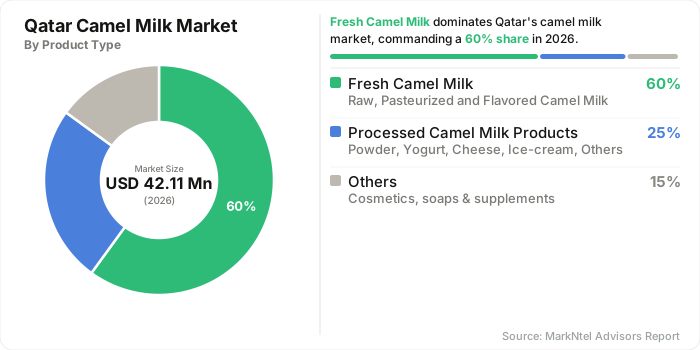
Overall, the segment’s dominance is supported by a combination of nutritional perception, cultural relevance, and accessibility, positioning fresh camel milk as the primary revenue contributor within the market.
Based on End User:
- Households
- Foodservice
- Restaurants
- Cafés
- Hotels
- Institutional Buyers
- Hospitals
- Schools
The households segment dominates the Qatar Camel Milk market, accounting for about 70% of the total market value, primarily driven by strong daily consumption patterns and health-oriented purchasing behavior.
Camel milk is widely consumed at the household level due to its perceived therapeutic benefits, including support for immunity, digestion, and chronic disease management, making it a preferred choice among families seeking functional dairy alternatives.
Cultural familiarity further strengthens this dominance, as camel milk has long been integrated into traditional diets in Qatar, reinforcing regular at-home consumption. Additionally, rising health awareness and increasing incidences of lifestyle-related conditions have encouraged households to incorporate camel milk into daily nutrition routines, particularly for children and elderly populations.
Improved retail availability across supermarkets, hypermarkets, and online platforms has also enhanced product accessibility, enabling consistent household purchases. The availability of multiple formats, such as pasteurized and flavored variants, further supports adoption by catering to diverse taste preferences within families.
Moreover, compared to foodservice and institutional channels, household consumption offers higher volume consistency and repeat purchase frequency, ensuring stable demand. Overall, the segment’s leadership is driven by a combination of health benefits, cultural relevance, and convenient accessibility, positioning households as the primary consumption base in the Qatar camel milk market.
Qatar Camel Milk Market Competitive Landscape
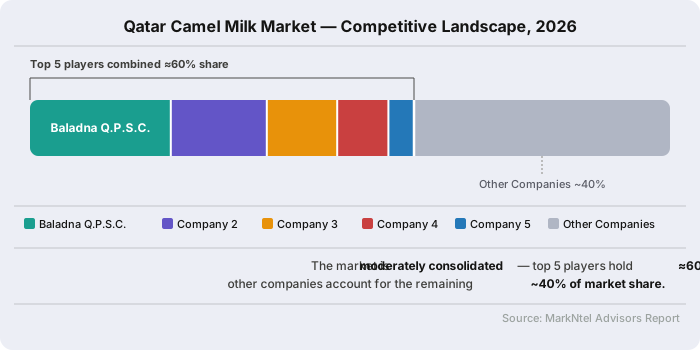
The market is moderately consolidated, with the top five players accounting for approximately 60% of the total market share. Leading companies include Baladna Q.P.S.C., Milk Camel, Emirates Industry for Camel Milk & Products (EICMP), P. Maghanmal & Sons Co. W.L.L., and Silent Valley Trading WLL.
- Major Camel Milk Companies in Qatar
- Baladna Q.P.S.C.
- Milk Camel
- Emirates Industry for Camel Milk & Products (EICMP)
- P. Maghanmal & Sons Co. W.L.L.
- Silent Valley Trading WLL
- Others
Gain a Competitive Edge with Our Qatar Camel Milk Market Report:
- Qatar Camel Milk Market Report by MarkNtel Advisors provides a detailed & thorough analysis of market size & share, growth rate, competitive landscape, and key players. This comprehensive analysis helps businesses gain a holistic understanding of the market dynamics & make informed decisions.
- This report also highlights current market trends & future projections, allowing businesses to identify emerging opportunities & potential challenges. By understanding market forecasts, companies can align their strategies & stay ahead of the competition.
- Qatar Camel Milk Market Report aids in assessing & mitigating risks associated with entering or operating in the market. By understanding market dynamics, regulatory frameworks, and potential challenges, businesses can develop strategies to minimize risks & optimize their operations.
*Reports Delivery Format - Market research studies from MarkNtel Advisors are offered in PDF, Excel and PowerPoint formats. Within 24 hours of the payment being successfully received, the report will be sent to your email address.
Frequently Asked Questions
- Market Segmentation
- Introduction
- Product Definition
- Research Process
- Assumptions
- Executive Summary
- Qatar Camel Milk Market Policies, Regulations, and Product Standards
- Qatar Camel Milk Market Trends & Developments
- Qatar Camel Milk Market Dynamics
- Growth Factors
- Challenges
- Qatar Camel Milk Market Hotspot & Opportunities
- Qatar Camel Milk Market Outlook, 2022-2032F
- Market Size & Outlook
- By Revenues (USD Million)
- Market Share & Outlook
- By Product Type - Market Size & Forecast 2022-2032, USD Million
- Fresh Camel Milk
- Raw camel milk
- Pasteurized camel milk
- Flavored camel milk
- Processed Camel Milk Products
- Camel milk powder
- Camel milk yogurt
- Camel milk cheese
- Camel milk ice cream
- Fermented camel milk beverages
- Fresh Camel Milk
- By Packaging Type- Market Size & Forecast 2022-2032, USD Million
- Bottles
- Cartons / Tetra Packs
- Plastic Containers
- Pouches / Sachets
- Others
- By Distribution Channel- Market Size & Forecast 2022-2032, USD Million
- Supermarkets & Hypermarkets
- Convenience Stores
- Specialty Stores
- Online Retail / E-commerce
- Direct Sales
- By Application- Market Size & Forecast 2022-2032, USD Million
- Food & Beverage Processing
- Nutraceuticals / Functional Foods
- Cosmetics & Personal Care
- Pharmaceuticals
- Others
- By End User- Market Size & Forecast 2022-2032, USD Million
- Households
- Foodservice
- Restaurants
- Cafés
- Hotels
- Institutional Buyers
- Hospitals
- Schools
- By Region - Market Size & Forecast 2022-2032, USD Million
- Doha
- Al Khor
- Al Raiyyan
- Al Dawwah
- Al Wakrah
- Others
- By Company
- Competition Characteristics
- Market Share & Analysis
- By Product Type - Market Size & Forecast 2022-2032, USD Million
- Market Size & Outlook
- Qatar Fresh Camel Milk Market Outlook, 2022-2032
- Market Size & Outlook
- By Revenues (USD Million)
- Market Share & Outlook
- By Packaging Type- Market Size & Forecast 2022-2032, USD Million
- By Distribution Channel- Market Size & Forecast 2022-2032, USD Million
- By Application- Market Size & Forecast 2022-2032, USD Million
- By End User- Market Size & Forecast 2022-2032, USD Million
- By Region - Market Size & Forecast 2022-2032, USD Million
- Market Size & Outlook
- Qatar Processed Camel Milk Products Market Outlook, 2022-2032
- Market Size & Outlook
- By Revenues (USD Million)
- Market Share & Outlook
- By Packaging Type- Market Size & Forecast 2022-2032, USD Million
- By Distribution Channel- Market Size & Forecast 2022-2032, USD Million
- By Application- Market Size & Forecast 2022-2032, USD Million
- By End User- Market Size & Forecast 2022-2032, USD Million
- By Region - Market Size & Forecast 2022-2032, USD Million
- Market Size & Outlook
- Qatar Camel Milk Market Key Strategic Imperatives for Success & Growth
- Competitive Outlook
- Company Profiles
- Baladna Q.P.S.C.
- Business Description
- Product Portfolio
- Collaborations & Alliances
- Recent Developments
- Financial Details
- Others
- Milk Camel
- Business Description
- Product Portfolio
- Collaborations & Alliances
- Recent Developments
- Financial Details
- Others
- Emirates Industry for Camel Milk & Products (EICMP)
- Business Description
- Product Portfolio
- Collaborations & Alliances
- Recent Developments
- Financial Details
- Others
- P. Maghanmal & Sons Co. W.L.L.
- Business Description
- Product Portfolio
- Collaborations & Alliances
- Recent Developments
- Financial Details
- Others
- Silent Valley Trading WLL
- Business Description
- Product Portfolio
- Collaborations & Alliances
- Recent Developments
- Financial Details
- Others
- Others
- Business Description
- Product Portfolio
- Collaborations & Alliances
- Recent Developments
- Financial Details
- Others
- Baladna Q.P.S.C.
- Company Profiles
- Disclaimer
MarkNtel Advisors follows a robust and iterative research methodology designed to ensure maximum accuracy and minimize deviation in market estimates and forecasts. Our approach combines both bottom-up and top-down techniques to effectively segment and quantify various aspects of the market. A consistent feature across all our research reports is data triangulation, which examines the market from three distinct perspectives to validate findings. Key components of our research process include:
1. Scope & Research Design At the outset, MarkNtel Advisors define the research objectives and formulate pertinent questions. This phase involves determining the type of research—qualitative or quantitative—and designing a methodology that outlines data collection methods, target demographics, and analytical tools. They also establish timelines and budgets to ensure the research aligns with client goals.
2. Sample Selection and Data Collection In this stage, the firm identifies the target audience and determines the appropriate sample size to ensure representativeness. They employ various sampling methods, such as random or stratified sampling, based on the research objectives. Data collection is carried out using tools like surveys, interviews, and observations, ensuring the gathered data is reliable and relevant.
3. Data Analysis and Validation Once data is collected, MarkNtel Advisors undertake a rigorous analysis process. This includes cleaning the data to remove inconsistencies, employing statistical software for quantitative analysis, and thematic analysis for qualitative data. Validation steps are taken to ensure the accuracy and reliability of the findings, minimizing biases and errors.

4. Data Forecast and FinalizationThe final phase involves forecasting future market trends based on the analyzed data. MarkNtel Advisors utilize predictive modeling and time series analysis to anticipate market behaviors. The insights are then compiled into comprehensive reports, featuring visual aids like charts and graphs, and include strategic recommendations to inform client decision-making
We offer flexible licensing options to cater to varying organizational needs. Choose the pricing pack that best suits your requirements:
Buy Now Inquire Before Buying
 Request Customization
 Talk to our Consultant







