

India Steel Market Research Report: Growth Drivers & Forecast (2026-2032)
By Technology (Blast Furnace–Basic Oxygen Furnace (BF-BOF), Electric Arc Furnace (EAF), Direct Reduced Iron (DRI)-Based Steelmaking, Induction Furnace-Based Steelmaking, Secondary ... Refining / Ladle Metallurgy), By Product Type (Crude Steel, Finished Steel, Semi-Finished Steel, Flat Steel (Hot Rolled Coil (HRC), Cold Rolled Coil (CRC), Galvanized Steel, Color Coated Steel, Electrical Steel, Tinplate), Long Steel (Bars, Rods, Wire Rods, Rails, Beams & Sections, TMT Bars), Structural Steel, Specialty Steel, Stainless Steel, Alloy Steel), By Raw Material (Iron Ore-Based Steel, Scrap-Based Steel, Pellet-Based Steel, Coking Coal-Based Steel, Sponge Iron-Based Steel), By End-Use Industry (Building & Construction, Infrastructure, Automotive & Transportation, Railways, Energy & Power, Industrial Machinery, Consumer Goods, Shipbuilding, Oil & Gas, Defense & Aerospace), By Distribution Channel (Direct Sales, Distributors / Dealers, Project Sales, Exports), and others Read more
- Energy
- Apr 2026
- Pages 180
- Report Format: PDF, Excel, PPT
India Steel Market
Projected 7.12% CAGR from 2026 to 2032
Study Period
2026-2032
Market Size (2026)
USD 150.50 Billion
Market Size (2032)
USD 227.38 Billion
Base Year
2025
Projected CAGR
7.12%
Leading Segments
By End-Use Industry: Building & Construction
India Steel Market Key Takeaways
- India Steel market size was valued at around USD 140.5 billion in 2025 and is projected to grow from USD 150.50 billion in 2026 to USD 227.38 billion by 2032, exhibiting a CAGR of 7.12 % during 2026-2032.
- North India holds the largest share of about 31.78%.
- By Product Type, the Finished Steel holds a significant share of about 65%.
- By End-Use Industry, the Building & Construction segment seized a significant share of about 63% in 2026.
- The industry in India is moderately consolidated, with approximately 50 companies operating across the country. However, the top three players collectively account for approximately 45% share of the total market.
India Steel Market Size and Outlook
The Steel market in India was valued at USD 140.5 billion in 2025 and is projected to grow from USD 150.50 billion in 2026 to USD 227.38 billion by 2032. Along with this, the market is estimated to grow at a CAGR of around 7.12% during the forecast period, i.e., 2026-32.
India’s steel market has exhibited a strong and consistent growth trajectory, supported by rising production and domestic consumption. According to the Ministry of Steel, India’s crude steel output reached approximately 139.6 million tonnes in 2025, reflecting steady capacity expansion . This growth is further reinforced by robust demand fundamentals, with consumption increasing alongside industrial and construction activity. Rapid urbanization and infrastructure needs, as highlighted by the World Bank, continue to drive long-term steel usage across residential and commercial segments.
Current market conditions remain highly favorable, driven by strong demand growth and infrastructure expansion across key sectors. Steel demand in India is projected to grow by approximately 9% during 2025–2026, supported by increased investments in construction and capital goods industries. Large-scale government initiatives such as the National Infrastructure Pipeline (~USD 2 trillion project pipeline) and PM Gati Shakti (~USD 1.2 trillion master plan) are significantly accelerating steel consumption across transport, logistics, and urban infrastructure sectors. India’s annual infrastructure investment exceeding USD 120 billion is directly driving steel demand across roads, railways, energy, and construction projects, reinforcing sustained market expansion.
Policy support and regulatory frameworks continue to play a pivotal role in shaping market expansion and technological advancement. The Government of India has set a target of achieving 300 million tonnes of steelmaking capacity by 2030, reinforcing long-term industry growth. Incentive schemes and infrastructure-focused policies are encouraging domestic manufacturing and reducing import dependence . Leading players such as Tata Steel and Steel Authority of India Limited have reported strong production and sales growth, reflecting sustained market demand and ongoing capacity utilization improvements.
Looking ahead, the India steel industry is expected to maintain a stable and positive growth trajectory, supported by structural economic and demographic factors. Continued investments in urban infrastructure, estimated at USD 2.4 trillion by 2050 as per global development assessments, will significantly increase steel demand. Growth across residential housing, commercial construction, energy, and industrial machinery sectors will further strengthen consumption. These combined factors position India as a key global steel market, with sustained demand supported by policy initiatives, industrial expansion, and infrastructure modernization.
India Steel Market Key Indicators
- According to the World Steel Association, India’s crude steel production reached approximately 149 million tonnes in 2024, reflecting steady expansion in domestic manufacturing capacity. Higher steel production directly indicates increased utilization across construction, infrastructure, and industrial applications, thereby supporting overall market growth and reinforcing India’s position as a leading global steel producer.
- As per the International Energy Agency, global investment in energy infrastructure, including power generation and grids, exceeded USD 3 trillion in 2025, highlighting rapid expansion in energy systems. Development of power plants, transmission towers, and renewable installations requires large volumes of structural and specialty steel, thereby driving sustained demand for steel across the energy and power sectors.
- According to the Society of Indian Automobile Manufacturers, India produced over 25 million vehicles in FY2025, reflecting strong growth in automotive manufacturing. Vehicle production requires extensive use of flat and specialty steel in body structures, chassis, and components, thereby increasing steel consumption and supporting growth in high-grade steel segments.
- The Ministry of Road Transport and Highways reported that India’s national highway network has expanded to over 145,000 kilometers, reflecting continuous infrastructure development. Construction and expansion of highways require significant quantities of long and structural steel for bridges, flyovers, and reinforcement, thereby driving demand for steel in transportation infrastructure projects .
- According to Steel Authority of India Limited, the company reported steel sales exceeding 20 million tonnes in FY2026, registering an 11.5% year-on-year growth. Higher sales volumes reflect strong domestic demand from infrastructure, construction, and industrial sectors, thereby supporting increased steel consumption and positively influencing the growth trajectory of the India steel industry.
- According to the Ministry of Housing and Urban Affairs, millions of houses have been sanctioned under urban housing initiatives, including the Pradhan Mantri Awas Yojana (Urban). Large-scale residential construction involves extensive use of TMT bars, structural steel, and fabricated components, thereby increasing steel consumption across the residential end-user segment and supporting market expansion .
India Steel Market Scope
| Category | Segments |
|---|---|
| By Technology | (Blast Furnace–Basic Oxygen Furnace (BF-BOF), Electric Arc Furnace (EAF), Direct Reduced Iron (DRI)-Based Steelmaking, Induction Furnace-Based Steelmaking, Secondary Refining / Ladle Metallurgy), |
| By Product Type | (Crude Steel, Finished Steel, Semi-Finished Steel, Flat Steel (Hot Rolled Coil (HRC), Cold Rolled Coil (CRC), Galvanized Steel, Color Coated Steel, Electrical Steel, Tinplate), Long Steel (Bars, Rods, Wire Rods, Rails, Beams & Sections, TMT Bars), Structural Steel, Specialty Steel, Stainless Steel, Alloy Steel), |
| By Raw Material | (Iron Ore-Based Steel, Scrap-Based Steel, Pellet-Based Steel, Coking Coal-Based Steel, Sponge Iron-Based Steel), |
| By End-Use Industry | (Building & Construction, Infrastructure, Automotive & Transportation, Railways, Energy & Power, Industrial Machinery, Consumer Goods, Shipbuilding, Oil & Gas, Defense & Aerospace), |
| By Distribution Channel | (Direct Sales, Distributors / Dealers, Project Sales, Exports), |
India Steel Market Growth Drivers
Infrastructure and Construction Expansion
Infrastructure and construction expansion have emerged as the most influential structural drivers of India’s steel market, supported by sustained growth in public capital expenditure. The Government of India increased capital expenditure to USD 145 billion in FY2026–27, reflecting a continued policy focus on infrastructure-led economic growth. This marks a steady rise from previous years and reinforces long-term investment commitment toward transport, logistics, and industrial infrastructure. Such consistent budgetary expansion demonstrates a systemic shift toward asset creation and demand generation across core sectors.
The impact of this driver is directly measurable through large-scale infrastructure execution across urban and transport segments. According to the Press Information Bureau, India’s metro rail network has expanded to over 1,095 kilometers across 26 cities by 2025, reflecting rapid urban transit development. These projects require extensive volumes of long steel, structural components, and fabricated materials for viaducts, stations, and rail systems. Additionally, investments exceeding ~USD 40 billion have been sanctioned for metro projects, highlighting the scale of steel-intensive infrastructure deployment .
This driver materially expands market volume rather than merely influencing pricing, as infrastructure projects require bulk steel procurement over extended execution timelines. Large public investments in transport corridors, metro systems, and urban infrastructure ensure continuous demand generation across multiple years. Unlike cyclical industrial demand, infrastructure spending is policy-backed and less volatile, ensuring stable consumption patterns. Consequently, infrastructure and construction expansion remain the primary force driving sustained steel demand, capacity utilization, and overall steel industry growth in India.
Recent Trends
Shift Toward Green Steel Production
The shift toward green steel production has accelerated in India due to tightening environmental regulations and national decarbonization initiatives. The Government of India launched the National Green Hydrogen Mission with an allocation exceeding USD 2.4 billion to promote low-carbon industrial transformation . This policy framework is encouraging steel producers to transition away from coal-intensive processes toward cleaner alternatives. Growing global pressure, including carbon border adjustment mechanisms, is further driving the need for low-emission steel production.
This trend is reshaping industry operations through investments in hydrogen, renewable energy, and carbon reduction technologies. Leading companies such as JSW Steel have commissioned green hydrogen projects to integrate low-carbon fuel into steelmaking processes, while also expanding renewable energy capacity to reduce emissions. Similarly, Tata Steel is advancing hydrogen-compatible steel solutions and transitioning toward greener energy sources . These developments are gradually shifting production models toward Electric Arc Furnace routes, scrap utilization, and renewable-powered operations.
The persistence of this trend is supported by long-term policy alignment and evolving global trade requirements for low-carbon materials. Declining renewable energy costs and advancements in hydrogen technologies are improving the economic viability of green steel production. Additionally, sustainability-driven procurement by infrastructure and industrial sectors is reinforcing demand for low-emission steel. As a result, green steel production is expected to remain a defining trend, fundamentally transforming cost structures, supply chains, and competitive positioning in India’s steel industry.
India Steel Market Opportunities and Challenges
Volatility in Raw Material Prices Leading to Increased Scrap Utilization and Recycling-Based Steel Production
Volatility in raw material prices, particularly coking coal, has emerged as a significant challenge for the India steel landscape by increasing cost uncertainty and operational risks for producers. India imports nearly 85–90% of its coking coal requirements, making the industry highly exposed to global price fluctuations and geopolitical disruptions. In 2025, international coal price fluctuations driven by supply constraints and geopolitical factors significantly increased input costs for steel manufacturers, leading to margin pressures across the value chain . Such volatility limits long-term planning and creates instability in production economics, particularly for blast furnace-based steelmakers dependent on imported inputs.
This challenge is simultaneously creating a strong opportunity for increased scrap utilization and recycling-based steel production in India. Rising cost pressures and supply risks are encouraging steel manufacturers to adopt Electric Arc Furnace routes, which rely on domestically available scrap instead of imported coal. Government initiatives such as the Steel Scrap Recycling Policy are further supporting the development of organized scrap collection and processing infrastructure. Additionally, increasing scrap usage can reduce carbon emissions in India’s steel sector by up to 28% (2024), strengthening both environmental sustainability and cost efficiency . As a result, recycling-based steel production is gaining momentum as a strategic solution to mitigate raw material volatility and enhance long-term industry resilience.
Segmentation Insights
Finished Steel is the Dominant Product Type
Finished steel accounts for approximately 65% share of the overall market, making it the most widely consumed product category across end-use industries. This dominance is primarily attributed to its direct applicability in construction, infrastructure, automotive, and industrial manufacturing sectors, where steel is used in its final usable form, such as TMT bars, beams, sheets, and coils. Unlike crude or semi-finished steel, finished steel requires no further processing, enabling immediate deployment in projects and reducing additional conversion costs. Its versatility, standardized quality, and suitability for diverse applications significantly strengthen its position across both urban and industrial demand centers.
From a demand perspective, the expansion of infrastructure and construction activities continues to drive the consumption of finished steel in India. According to the Press Information Bureau, finished steel consumption exceeded 136 million tonnes in 2023–24, supported by strong demand from construction, infrastructure, and automotive sectors. Additionally, growth in capital goods and engineering industries is increasing the demand for high-quality flat finished steel products. The widespread distribution network, ease of availability, and alignment with end-user requirements further support its large-scale adoption. As a result, finished steel continues to dominate the market, supported by strong demand fundamentals and its critical role in downstream applications. Based on product type, the market is segmented into:
- Crude Steel
- Finished Steel
- Semi-Finished Steel
- Flat Steel
- Long Steel
- Structural Steel
- Specialty Steel
- Stainless Steel
- Alloy Steel
Building & Construction Accounts for the Highest Steel Consumption
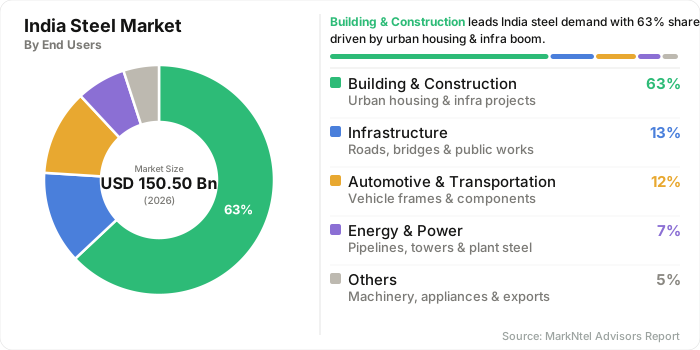
Building & construction accounts for approximately 63% share of the India steel consumption, making it the largest end-use segment. This dominance is primarily driven by the structural role of steel in construction activities, where materials such as bars, beams, and sections are essential for reinforcement and load-bearing applications. Unlike other industries where steel is used as a component, construction requires it as a core input, resulting in significantly higher volume consumption per project. Large-scale development of residential housing, commercial complexes, bridges, and industrial facilities ensures continuous and bulk demand for steel across the country.
From a demand perspective, the scale and economic importance of the construction sector further reinforce its dominance. According to the Ministry of Statistics and Programme Implementation, the construction sector contributes over 8% to India’s GDP, reflecting its strong linkage with material demand. Additionally, rapid urbanization, expansion of logistics parks, and industrial infrastructure development are increasing steel consumption across both public and private projects. The long lifecycle of construction projects and their high material intensity ensure sustained steel demand over time, making building and construction the leading end-use industry in India’s steel industry. Based on end-use industry, the market is segmented into:
- Building & Construction
- Infrastructure
- Automotive & Transportation
- Railways
- Energy & Power
- Industrial Machinery
- Consumer Goods
- Shipbuilding
- Oil & Gas
- Defense & Aerospace
India Steel Market Geographical Outlook
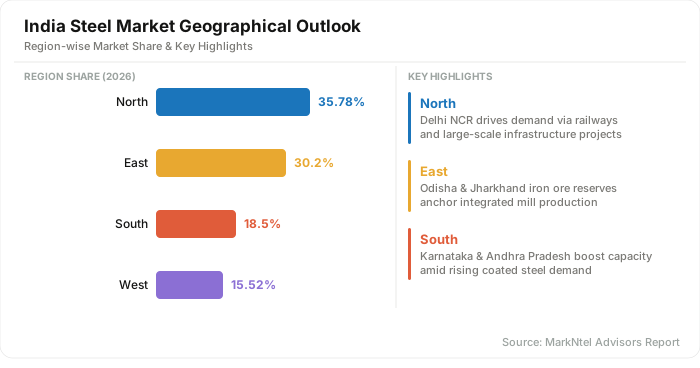
North India accounts for approximately 31.78% share of the India steel market, making it the leading regional contributor. This dominance is primarily driven by the region’s strong concentration of construction activity, urban infrastructure development, and high population density across states such as Uttar Pradesh, Delhi, Haryana, and Rajasthan. These regions are witnessing rapid expansion in residential housing, commercial real estate, and industrial infrastructure, all of which require significant volumes of long and structural steel. The presence of large urban centers and ongoing infrastructure modernization projects ensures continuous and high-volume steel consumption across the region.
This leadership is further reinforced by large-scale infrastructure projects and industrial cluster development across North India. Projects such as the Delhi–Mumbai Expressway, approx. 1,350 km, spanning key northern states, are significantly increasing demand for steel used in bridges, flyovers, and structural components . Additionally, the construction and infrastructure sector accounts for nearly 65% of India’s total steel demand, with a major share concentrated in northern regions due to dense urbanization and industrial activity . The presence of major industrial hubs such as Delhi-NCR, Gurugram, Faridabad, and Ludhiana further strengthens steel consumption across automotive, engineering, and construction sectors. These factors collectively reinforce North India’s dominant position in the India steel sector.
India Steel Market Competitive Analysis
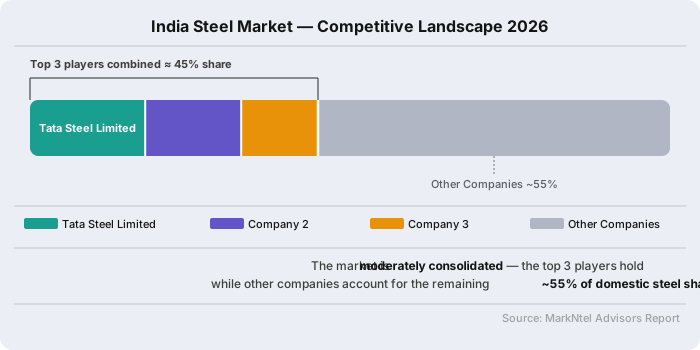
The market in India is moderately consolidated, with approximately 50 companies operating across the country. However, the top three players, Tata Steel, JSW Steel, and Steel Authority of India Limited, collectively account for approximately 45% share of the total market.
Significant Steel Companies in India
- Tata Steel
- JSW Steel
- Steel Authority of India Limited
- Jindal Steel & Power
- ArcelorMittal Nippon Steel India
- Jindal Stainless
- Rashtriya Ispat Nigam Limited
- NMDC Steel Limited
- Vedanta Limited
- APL Apollo Tubes
- Electrosteel Steels
- Bhushan Power & Steel
- Godawari Power and Ispat
- Visa Steel
- Others
India Steel Industry News and Recent Developments
August 2025: Tata Steel Launches Galvanized Coils from Kalinganagar Facility
Tata Steel dispatched its first batch of galvanized steel coils from its newly commissioned Continuous Galvanising Line at Kalinganagar in August 2025. The product is designed for automotive and appliance applications, offering enhanced corrosion resistance, improved surface finish, and higher durability for end-use industries.
Impact Analysis: The launch strengthens Tata Steel’s presence in value-added steel segments, particularly automotive and consumer appliances. Enhanced product capabilities support import substitution and align with rising demand for coated steel, while expanding domestic manufacturing of high-quality galvanized products and improving competitiveness in premium steel categories.
April 2025: Tata Steel Expands High-Strength Rebar Portfolio with Tata Tiscon Fe600
Tata Steel expanded its product portfolio in 2025 with the promotion of Tata Tiscon Fe600 high-strength rebars, designed for high-rise buildings and infrastructure projects. These rebars offer enhanced tensile strength and enable a reduction in steel consumption by up to 25%, improving structural efficiency and performance in construction applications.
Impact Analysis: The introduction of high-strength rebars strengthens Tata Steel’s position in the construction segment by offering cost-efficient and performance-driven solutions. Reduced material usage lowers project costs while supporting sustainability goals, thereby increasing adoption in large-scale infrastructure and real estate developments and driving demand for advanced long steel products.
*Reports Delivery Format - Market research studies from MarkNtel Advisors are offered in PDF, Excel and PowerPoint formats. Within 24 hours of the payment being successfully received, the report will be sent to your email address.
Frequently Asked Questions
- Market Segmentation
- Introduction
- Product Definition
- Research Process
- Assumptions
- Executive Summary
- India Steel Market Policies, Regulations, and Product Standards
- India Steel Market Trends & Developments
- India Steel Market Dynamics
- Growth Factors
- Challenges
- India Steel Market Hotspot & Opportunities
- India Steel Market Raw Material Production, Extraction, Cleaning, Process & Technology, 2026
- Raw Material Overview
- Key Raw Materials (Iron Ore, Coking Coal, Limestone, Scrap)
- Resource Availability and Reserves in India
- Production Volumes and Trends
- Regional Distribution of Raw Materials
- Iron Ore Production and Processing
- Production Statistics
- State-wise Production
- Grade-wise Distribution
- Mining Methods
- Open Cast Mining
- Underground Mining
- Extraction Technologies and Equipment
- Ore Handling and Transportation
- Beneficiation Processes
- Crushing and Screening
- Magnetic Separation
- Gravity Separation
- Pelletization and Sintering Technologies
- Yield and Recovery Ratios
- Coking Coal Production and Processing
- Domestic Production vs Imports
- Coal Mining Technologies
- Coal Washing and Beneficiation
- Coke Production Technologies
- Coke Ovens
- By-product Recovery Systems
- Coal Blending Practices
- Quality Parameters
- Ash Content
- Volatility
- CSR and CRI
- Other Raw Materials
- Key Raw Materials (Iron Ore, Coking Coal, Limestone, Scrap)
- Raw Material Logistics and Supply Chain
- Transportation Modes
- Rail
- Road
- Port
- Storage and Handling Infrastructure
- Logistics Cost Structure
- Supply Chain Bottlenecks
- Steelmaking Process Technologies
- Blast Furnace – Basic Oxygen Furnace (BF-BOF)
- Direct Reduced Iron (DRI) Processes
- Electric Arc Furnace (EAF)
- Induction Furnace (IF)
- Continuous Casting Technologies
- Rolling and Finishing Technologies
- Process Efficiency and Technology Benchmarking
- Energy Consumption Metrics
- Raw Material Consumption Ratios
- Productivity Benchmarks
- Technology Adoption Levels in India
- Raw Material Overview
- India Steel Market Pricing Analysis of Raw Materials and Finished Steel (2022–2032)
- Raw Material Pricing Analysis (Historical)
- Iron Ore Price Trends
- Domestic Prices
- Global Benchmark Prices
- Coking Coal Price Trends
- Scrap Price Trends
- Limestone and Ferroalloy Pricing
- Energy Cost Trends
- Power
- Natural Gas
- Cost Structure Analysis
- Cost Breakdown per Ton of Steel
- Raw Material Cost Contribution
- Energy Cost Contribution
- Logistics and Handling Costs
- Fixed vs Variable Cost Components
- Finished Steel Pricing Trends
- Flat Steel Price Trends
- Long Steel Price Trends
- Domestic vs Export Price Differentials
- Price Cyclicality and Seasonality
- Price Transmission and Margin Analysis
- Input Cost Pass-Through Mechanisms
- EBITDA per Ton Trends
- Spread Analysis
- Steel vs Iron Ore
- Steel vs Coking Coal
- Integrated vs Non-Integrated Player Margins
- Global Price Linkages
- China Price Influence
- Import/Export Parity Pricing
- Trade Measures Impact
- Import Duties
- Safeguard Measures
- Raw Material Pricing Analysis (Historical)
- India Steel Market Outlook, 2022-2032F
- Market Size & Outlook
- By Revenues (USD Million)
- By Volume (Million Tons)
- Market Share & Outlook
- By Technology- Market Size & Forecast 2022-2032, USD Million & Million Tons
- Blast Furnace–Basic Oxygen Furnace (BF-BOF)
- Electric Arc Furnace (EAF)
- Direct Reduced Iron (DRI)-Based Steelmaking
- Induction Furnace-Based Steelmaking
- Secondary Refining / Ladle Metallurgy
- By Product Type- Market Size & Forecast 2022-2032, USD Million & Million Tons
- Crude Steel
- Finished Steel
- Semi-Finished Steel
- Flat Steel
- Hot Rolled Coil (HRC)
- Cold Rolled Coil (CRC)
- Galvanized Steel
- Color Coated Steel
- Electrical Steel
- Tinplate
- Long Steel
- Bars
- Rods
- Wire Rods
- Rails
- Beams & Sections
- TMT Bars
- Structural Steel
- Specialty Steel
- Stainless Steel
- Alloy Steel
- By Raw Material- Market Size & Forecast 2022-2032, USD Million & Million Tons
- Iron Ore-Based Steel
- Scrap-Based Steel
- Pellet-Based Steel
- Coking Coal-Based Steel
- Sponge Iron-Based Steel
- By End-Use Industry- Market Size & Forecast 2022-2032, USD Million & Million Tons
- Building & Construction
- Infrastructure
- Automotive & Transportation
- Railways
- Energy & Power
- Industrial Machinery
- Consumer Goods
- Shipbuilding
- Oil & Gas
- Defense & Aerospace
- By Distribution Channel- Market Size & Forecast 2022-2032, USD Million & Million Tons
- Direct Sales
- Distributors / Dealers
- Project Sales
- Exports
- By Region- Market Size & Forecast 2022-2032, USD Million & Million Tons
- North India
- Delhi
- Punjab
- Haryana
- Uttar Pradesh
- Rajasthan
- Uttarakhand
- Himachal Pradesh
- South India
- Tamil Nadu
- Karnataka
- Andhra Pradesh
- Telangana
- Kerala
- West India
- Madhya Pradesh
- Maharashtra
- Gujarat
- Goa
- East India
- Odisha
- Jharkhand
- West Bengal
- Bihar
- Chhattisgarh
- North India
- By Company
- Competition Characteristics
- Market Share & Analysis
- By Technology- Market Size & Forecast 2022-2032, USD Million & Million Tons
- Market Size & Outlook
- India Crude Steel Market Outlook, 2022-2032
- Market Size & Outlook
- By Revenues (USD Million)
- By Volume (Million Tons)
- Market Share & Outlook
- By Product Type- Market Size & Forecast 2022-2032, USD Million & Million Tons
- By Raw Material- Market Size & Forecast 2022-2032, USD Million & Million Tons
- By End-Use Industry- Market Size & Forecast 2022-2032, USD Million & Million Tons
- By Distribution Channel- Market Size & Forecast 2022-2032, USD Million & Million Tons
- By Region- Market Size & Forecast 2022-2032, USD Million & Million Tons
- Market Size & Outlook
- India Finished Steel Market Outlook, 2022-2032
- Market Size & Outlook
- By Revenues (USD Million)
- By Volume (Million Tons)
- Market Share & Outlook
- By Product Type- Market Size & Forecast 2022-2032, USD Million & Million Tons
- By Raw Material- Market Size & Forecast 2022-2032, USD Million & Million Tons
- By End-Use Industry- Market Size & Forecast 2022-2032, USD Million & Million Tons
- By Distribution Channel- Market Size & Forecast 2022-2032, USD Million & Million Tons
- By Region- Market Size & Forecast 2022-2032, USD Million & Million Tons
- Market Size & Outlook
- India Semi-Finished Steel Market Outlook, 2022-2032
- Market Size & Outlook
- By Revenues (USD Million)
- By Volume (Million Tons)
- Market Share & Outlook
- By Product Type- Market Size & Forecast 2022-2032, USD Million & Million Tons
- By Raw Material- Market Size & Forecast 2022-2032, USD Million & Million Tons
- By End-Use Industry- Market Size & Forecast 2022-2032, USD Million & Million Tons
- By Distribution Channel- Market Size & Forecast 2022-2032, USD Million & Million Tons
- By Region- Market Size & Forecast 2022-2032, USD Million & Million Tons
- Market Size & Outlook
- India Flat Steel Market Outlook, 2022-2032
- Market Size & Outlook
- By Revenues (USD Million)
- By Volume (Million Tons)
- Market Share & Outlook
- By Product Type- Market Size & Forecast 2022-2032, USD Million & Million Tons
- By Raw Material- Market Size & Forecast 2022-2032, USD Million & Million Tons
- By End-Use Industry- Market Size & Forecast 2022-2032, USD Million & Million Tons
- By Distribution Channel- Market Size & Forecast 2022-2032, USD Million & Million Tons
- By Region- Market Size & Forecast 2022-2032, USD Million & Million Tons
- Market Size & Outlook
- India Long Steel Market Outlook, 2022-2032
- Market Size & Outlook
- By Revenues (USD Million)
- By Volume (Million Tons)
- Market Share & Outlook
- By Product Type- Market Size & Forecast 2022-2032, USD Million & Million Tons
- By Raw Material- Market Size & Forecast 2022-2032, USD Million & Million Tons
- By End-Use Industry- Market Size & Forecast 2022-2032, USD Million & Million Tons
- By Distribution Channel- Market Size & Forecast 2022-2032, USD Million & Million Tons
- By Region- Market Size & Forecast 2022-2032, USD Million & Million Tons
- Market Size & Outlook
- India Structural Steel Market Outlook, 2022-2032
- Market Size & Outlook
- By Revenues (USD Million)
- By Volume (Million Tons)
- Market Share & Outlook
- By Product Type- Market Size & Forecast 2022-2032, USD Million & Million Tons
- By Raw Material- Market Size & Forecast 2022-2032, USD Million & Million Tons
- By End-Use Industry- Market Size & Forecast 2022-2032, USD Million & Million Tons
- By Distribution Channel- Market Size & Forecast 2022-2032, USD Million & Million Tons
- By Region- Market Size & Forecast 2022-2032, USD Million & Million Tons
- Market Size & Outlook
- India Specialty Steel Market Outlook, 2022-2032
- Market Size & Outlook
- By Revenues (USD Million)
- By Volume (Million Tons)
- Market Share & Outlook
- By Product Type- Market Size & Forecast 2022-2032, USD Million & Million Tons
- By Raw Material- Market Size & Forecast 2022-2032, USD Million & Million Tons
- By End-Use Industry- Market Size & Forecast 2022-2032, USD Million & Million Tons
- By Distribution Channel- Market Size & Forecast 2022-2032, USD Million & Million Tons
- By Region- Market Size & Forecast 2022-2032, USD Million & Million Tons
- Market Size & Outlook
- India Stainless Steel Market Outlook, 2022-2032
- Market Size & Outlook
- By Revenues (USD Million)
- By Volume (Million Tons)
- Market Share & Outlook
- By Product Type- Market Size & Forecast 2022-2032, USD Million & Million Tons
- By Raw Material- Market Size & Forecast 2022-2032, USD Million & Million Tons
- By End-Use Industry- Market Size & Forecast 2022-2032, USD Million & Million Tons
- By Distribution Channel- Market Size & Forecast 2022-2032, USD Million & Million Tons
- By Region- Market Size & Forecast 2022-2032, USD Million & Million Tons
- Market Size & Outlook
- India Alloy Steel Market Outlook, 2022-2032
- Market Size & Outlook
- By Revenues (USD Million)
- By Volume (Million Tons)
- Market Share & Outlook
- By Product Type- Market Size & Forecast 2022-2032, USD Million & Million Tons
- By Raw Material- Market Size & Forecast 2022-2032, USD Million & Million Tons
- By End-Use Industry- Market Size & Forecast 2022-2032, USD Million & Million Tons
- By Distribution Channel- Market Size & Forecast 2022-2032, USD Million & Million Tons
- By Region- Market Size & Forecast 2022-2032, USD Million & Million Tons
- Market Size & Outlook
- India Steel Market Key Strategic Imperatives for Success & Growth
- India Steel Market ESG Norms and Green Steel Technologies
- ESG Framework in Steel Industry
- ESG Scope and Definitions
- Regulatory Landscape in India
- Global ESG Standards Impacting India
- Environmental Performance Metrics
- Carbon Emissions
- Energy Consumption Metrics
- Water Usage and Recycling
- Waste and Slag Management
- Regulatory and Policy Environment
- National Steel Policy
- PAT Scheme (Energy Efficiency)
- Environmental Compliance Requirements
- Carbon Border Adjustment Mechanism (CBAM) Impact
- Decarbonization Technologies
- Hydrogen-Based Steelmaking
- Green Hydrogen Production
- Direct Reduction Processes
- Electric Arc Furnace (EAF) Transition
- Scrap-Based Steelmaking
- Scrap Collection and Processing
- Carbon Capture, Utilization, and Storage (CCUS)
- Capture Technologies
- Storage and Utilization
- ESG Framework in Steel Industry
- Competitive Outlook
- Company Profiles
- Tata Steel
- Business Description
- Product Portfolio
- Collaborations & Alliances
- Recent Developments
- Financial Details
- Others
- JSW Steel
- Business Description
- Product Portfolio
- Collaborations & Alliances
- Recent Developments
- Financial Details
- Others
- Steel Authority of India Limited
- Business Description
- Product Portfolio
- Collaborations & Alliances
- Recent Developments
- Financial Details
- Others
- Jindal Steel & Power
- Business Description
- Product Portfolio
- Collaborations & Alliances
- Recent Developments
- Financial Details
- Others
- ArcelorMittal Nippon Steel India
- Business Description
- Product Portfolio
- Collaborations & Alliances
- Recent Developments
- Financial Details
- Others
- Jindal Stainless
- Business Description
- Product Portfolio
- Collaborations & Alliances
- Recent Developments
- Financial Details
- Others
- Rashtriya Ispat Nigam Limited
- Business Description
- Product Portfolio
- Collaborations & Alliances
- Recent Developments
- Financial Details
- Others
- NMDC Steel Limited
- Business Description
- Product Portfolio
- Collaborations & Alliances
- Recent Developments
- Financial Details
- Others
- Vedanta Limited
- Business Description
- Product Portfolio
- Collaborations & Alliances
- Recent Developments
- Financial Details
- Others
- APL Apollo Tubes
- Business Description
- Product Portfolio
- Collaborations & Alliances
- Recent Developments
- Financial Details
- Others
- Electrosteel Steels
- Business Description
- Product Portfolio
- Collaborations & Alliances
- Recent Developments
- Financial Details
- Others
- Bhushan Power & Steel
- Business Description
- Product Portfolio
- Collaborations & Alliances
- Recent Developments
- Financial Details
- Others
- Godawari Power and Ispat
- Business Description
- Product Portfolio
- Collaborations & Alliances
- Recent Developments
- Financial Details
- Others
- Visa Steel
- Business Description
- Product Portfolio
- Collaborations & Alliances
- Recent Developments
- Financial Details
- Others
- Tata Steel
- Company Profiles
- Disclaimer
MarkNtel Advisors follows a robust and iterative research methodology designed to ensure maximum accuracy and minimize deviation in market estimates and forecasts. Our approach combines both bottom-up and top-down techniques to effectively segment and quantify various aspects of the market. A consistent feature across all our research reports is data triangulation, which examines the market from three distinct perspectives to validate findings. Key components of our research process include:
1. Scope & Research Design At the outset, MarkNtel Advisors define the research objectives and formulate pertinent questions. This phase involves determining the type of research—qualitative or quantitative—and designing a methodology that outlines data collection methods, target demographics, and analytical tools. They also establish timelines and budgets to ensure the research aligns with client goals.
2. Sample Selection and Data Collection In this stage, the firm identifies the target audience and determines the appropriate sample size to ensure representativeness. They employ various sampling methods, such as random or stratified sampling, based on the research objectives. Data collection is carried out using tools like surveys, interviews, and observations, ensuring the gathered data is reliable and relevant.
3. Data Analysis and Validation Once data is collected, MarkNtel Advisors undertake a rigorous analysis process. This includes cleaning the data to remove inconsistencies, employing statistical software for quantitative analysis, and thematic analysis for qualitative data. Validation steps are taken to ensure the accuracy and reliability of the findings, minimizing biases and errors.

4. Data Forecast and FinalizationThe final phase involves forecasting future market trends based on the analyzed data. MarkNtel Advisors utilize predictive modeling and time series analysis to anticipate market behaviors. The insights are then compiled into comprehensive reports, featuring visual aids like charts and graphs, and include strategic recommendations to inform client decision-making
We offer flexible licensing options to cater to varying organizational needs. Choose the pricing pack that best suits your requirements:
Buy Now Inquire Before Buying
 Request Customization
 Talk to our Consultant







