

GCC Solar Control Glass Market Research Report: Growth Drivers & Forecast (2026-2032)
By Coating Type (Hard-Coated (Pyrolytic) Solar Control Glass, Soft-Coated (Sputtered / Low-E) Solar Control Glass), By Glass Type (Tempered Solar Control Glass, Laminated Solar Con ... trol Glass, Insulated Glass Units (IGU / Double Glazing)), By Application (Commercial Buildings, Residential Buildings, Industrial Buildings), By End-Use Sector (Construction, Automotive), and others Read more
- Energy
- Apr 2026
- Pages 225
- Report Format: PDF, Excel, PPT
GCC Solar Control Glass Market
Projected 7.5% CAGR from 2026 to 2032
Study Period
2026-2032
Market Size (2026)
USD 1.23 Billion
Market Size (2032)
USD 1.90 Billion
Base Year
2025
Projected CAGR
7.5%
Leading Segments
By Coating Type: Hard-Coated (Pyrolytic) Solar Control Glass
GCC Solar Control Glass Market Report Key Takeaways:
- The GCC Solar Control Glass Market size was valued at around USD 1.04 billion in 2025 and is projected grow from USD 1.23 billion in 2026 to USD 1.90 billion by 2032, exhibiting a CAGR of 7.5% during the forecast period.
- Saudi Arabia holds the largest market share of about 44% in the GCC Solar Control Glass Market in 2026.
- By Coating Type, the Soft-Coated (Sputtered / Low-E) Solar Control Glass segment represented a significant share of about 65% in the GCC Solar Control Glass Market in 2026.
- By End User, the Construction segment presented a significant share of about 88% in the GCC Solar Control Glass Market in 2026.
Market Insights & Analysis: GCC Solar Control Glass Market (2026-32):
The GCC Solar Control Glass Market size was valued at around USD 1.04 billion in 2025 and is projected grow from USD 1.23 billion in 2026 to USD 1.90 billion by 2032, exhibiting a CAGR of 7.5% during the forecast period, i.e., 2026-32.
The GCC solar control glass market has expanded in line with rising cooling demand and urbanization across the region. The International Energy Agency states that nearly 40% of electricity demand growth in the Middle East is driven by cooling, reflecting strong demand for heat-reducing materials. The World Bank highlights that GCC countries are among the most urbanized globally, supporting sustained construction activity. This combination of climate and demographic factors has historically increased façade-intensive development, particularly in commercial infrastructure.
Current market conditions are reinforced by large-scale infrastructure investments and institutional construction demand. According to Reuters, Saudi Arabia is advancing projects exceeding USD 1 trillion under national development programs, significantly boosting demand for advanced building materials . Initiatives such as Saudi Vision 2030 and projects like NEOM emphasize energy-efficient construction. In the UAE, regulations implemented by Dubai Municipality under green building frameworks mandate improved thermal performance in buildings.
Regulatory frameworks and sustainability policies continue to strengthen market expansion across the GCC. The International Renewable Energy Agency reports that regional governments are intensifying energy efficiency measures to reduce building-related emissions. Updated building codes in Saudi Arabia and the UAE require enhanced insulation and glazing performance, directly supporting solar control glass adoption. Industry leaders such as Guardian Glass and Saint-Gobain are investing in localized production and advanced Low-E technologies to align with these requirements.
Looking ahead, the market outlook remains positive, supported by continued population growth and infrastructure expansion. The World Bank indicates that urban populations in the GCC are expected to rise significantly, sustaining long-term construction demand . Increasing retrofit activity in existing buildings and gradual adoption in residential housing are expected to broaden the demand base. Combined with ongoing mega projects and stricter energy-efficiency mandates, these factors will continue to support steady growth in solar control glass demand across commercial, residential, and institutional segments.
GCC Solar Control Glass Market Recent Developments:
- 2025 : Emirates Glass signed a five-year agreement with ClearVue Technologies to manufacture advanced solar glazing solutions across the UAE and GCC. The collaboration focuses on building-integrated photovoltaic (BIPV) glass, enhancing energy-generating façades in commercial buildings.
- 2025 : Guardian Glass (via GulfGuard JV) announced expansion plans in Jubail Industrial City, including a new sputter coater capable of producing high-performance solar control and Low-E glass. The facility supports increasing regional demand and aligns with Saudi Arabia’s industrial localization strategy.
GCC Solar Control Glass Market Scope:
| Category | Segments |
|---|---|
| By Coating Type | (Hard-Coated (Pyrolytic) Solar Control Glass, Soft-Coated (Sputtered / Low-E) Solar Control Glass), |
| By Glass Type | (Tempered Solar Control Glass, Laminated Solar Control Glass, Insulated Glass Units (IGU / Double Glazing)), |
| By Application | (Commercial Buildings, Residential Buildings, Industrial Buildings), |
| By End-Use Sector | (Construction, Automotive), |
GCC Solar Control Glass Market Driver:
Extreme Climatic Conditions Driving Heat Reduction Demand
The intensification of extreme heat across the GCC has emerged as a structural driver for solar control glass demand, supported by verified climate data. According to the World Meteorological Organization, temperatures in the Middle East are rising at nearly twice the global average, with 2024 recorded as the hottest year in the Arab region . Reuters further reports that several GCC countries have experienced temperatures exceeding 50°C, indicating worsening climate extremes. These conditions have significantly increased cooling requirements, reinforcing the need for heat-reducing building materials.
This climatic shift is measurably increasing demand across commercial and residential end users, where cooling efficiency is critical. The International Energy Agency states that cooling accounts for a substantial share of electricity consumption in the Middle East, with demand continuing to rise due to higher temperatures . Commercial buildings, particularly offices, retail complexes, and hotels, are adopting solar control glass to reduce HVAC loads and operational costs. At the same time, residential developments are increasingly integrating energy-efficient glazing solutions to manage rising electricity consumption and comply with evolving energy performance standards.
The driver is translating into tangible volume expansion through policy enforcement and infrastructure development across the region. According to Reuters, GCC governments are advancing large-scale infrastructure and urban projects to accommodate population growth and economic diversification, increasing demand for high-performance building materials . Regulatory measures, including updated building efficiency standards in Saudi Arabia and the UAE, are mandating improved thermal performance in construction. As a result, solar control glass is becoming a standard specification in both new developments and retrofits, ensuring sustained market growth driven by climatic necessity rather than short-term adoption trends.
GCC Solar Control Glass Market Trend:
Shift Toward High-Performance Low-E Coatings
The GCC market is witnessing a structural shift toward high-performance Low-E and advanced glazing technologies, driven by stricter energy efficiency mandates and extreme climatic conditions. Regulations enforced by Dubai Municipality and updated Saudi building codes increasingly require improved thermal insulation and solar heat gain control. This has accelerated the transition from conventional glass to engineered, multi-functional glazing solutions across commercial and institutional construction, where façade performance directly impacts energy consumption.
This trend is reshaping innovation and manufacturing strategies, with leading players introducing next-generation products. In 2025, Guardian Glass launched SunGuard™ SNX 60+ triple-silver Low-E glass, offering enhanced solar control and daylight performance. Saint-Gobain introduced INSIO® vacuum glazing, integrating transparent insulation for superior thermal efficiency . Additionally, AGC Inc. and Saint-Gobain jointly inaugurated the Volta low-carbon glass production line, enabling advanced coated glass manufacturing with reduced emissions .
The convergence of regulatory pressure and technological innovation ensures the persistence of this trend over the long term. Large-scale developments such as NEOM are designed with strict sustainability targets, requiring high-performance glazing systems as standard. As developers prioritize lifecycle energy savings and governments tighten building efficiency standards, the adoption of advanced Low-E coatings and next-generation glass solutions will continue to expand, fundamentally transforming material selection across the GCC construction sector.
GCC Solar Control Glass Market Opportunity:
Growth of Smart Cities and Sustainable Infrastructure
The rapid expansion of smart cities and sustainability-driven infrastructure across the GCC presents a compelling structural opportunity for new entrants in the solar control glass market. According to Reuters, Saudi Arabia is advancing giga-projects such as NEOM, a USD 500 billion development central to its economic diversification strategy. These projects are designed with strict sustainability and energy efficiency requirements, creating a strong demand base for advanced glazing materials. This shift reflects a long-term transformation in construction standards rather than a short-term demand cycle.
This opportunity translates into tangible market demand through large-scale, specification-driven procurement in new urban developments. Smart city projects prioritize energy-efficient building envelopes, directly increasing the adoption of solar control and Low-E glass in commercial, institutional, and mixed-use infrastructure. In parallel, regulatory frameworks led by Dubai Municipality enforce green building standards that mandate improved thermal performance. As these projects expand, they generate consistent demand across multiple construction segments, including transport infrastructure and urban utilities.
The opportunity is particularly favorable for new and emerging players due to evolving procurement models and innovation-driven requirements. Smart city developments emphasize advanced technologies, sustainability compliance, and localized sourcing, enabling smaller firms to compete through specialized solutions and partnerships. Unlike traditional construction markets dominated by established suppliers, these projects increasingly adopt performance-based specifications. This allows new entrants with energy-efficient products or niche capabilities to secure contracts and scale alongside the region’s expanding infrastructure ecosystem.
GCC Solar Control Glass Market Challenge:
High Cost Compared to Conventional Glass
The higher cost of solar control glass compared to conventional glazing remains a key structural barrier in the GCC market. Advanced products require additional processes such as coating and insulation, increasing production and installation costs. The International Energy Agency notes that energy-efficient building materials typically involve higher upfront investment despite long-term savings. This cost gap discourages adoption, especially in price-sensitive construction segments.
This challenge is clearly visible in residential and mid-scale projects, where budget constraints dominate material selection. According to Reuters, rising construction costs across the GCC have forced developers to optimize spending, limiting the use of premium materials . As a result, solar control glass is largely concentrated in commercial and high-end developments where regulatory compliance and performance requirements justify the added cost.
The cost barrier restricts market expansion by slowing adoption across broader construction segments. While building regulations are tightening, uneven enforcement allows developers to opt for lower-cost alternatives. For new entrants, high production and technology costs further limit competitiveness. Consequently, despite strong demand drivers, the price differential with conventional glass continues to constrain widespread adoption and market scalability.
GCC Solar Control Glass Market (2026-32) Segmentation Analysis:
The GCC Solar Control Glass market study of MarkNtel Advisors evaluates & highlights the major trends and influencing factors in each segment. It includes predictions for the period 2026–32 at the regional level. Based on the analysis, the market has been further classified as;
Based on Coating Type:
- Hard-Coated (Pyrolytic) Solar Control Glass
- Soft-Coated (Sputtered / Low-E) Solar Control Glass
The soft-coated (sputtered / Low-E) solar control glass segment dominates the GCC Solar Control Glass Market, accounting for approximately 65% of total demand, primarily because modern façade systems in high-rise construction require advanced optical and thermal performance that hard-coated glass cannot deliver. Soft-coated glass enables precise control of solar heat gain while maintaining higher visible light transmission, making it essential for curtain wall systems widely used in commercial towers across the GCC.
This dominance is reinforced by project-level specification trends rather than only regulations. According to Reuters, large-scale developments in the UAE and Saudi Arabia are increasingly adopting high-performance façade materials to enhance building efficiency and asset value. Commercial developers prioritize glazing that reduces operational cooling costs over time, and soft-coated Low-E glass delivers measurable lifecycle savings, making it the preferred choice in office, hospitality, and mixed-use projects.
Manufacturing and supply-side dynamics further strengthen this segment’s leadership. Soft-coated glass is typically integrated into insulated glass units (IGUs), which are now standard in premium construction across the GCC. Major producers have aligned their product portfolios toward sputtered coatings, ensuring availability and scalability for large projects. This ecosystem shift from basic glazing to engineered façade systems continues to anchor soft-coated solar control glass as the dominant coating type in the regional market.
Based on End User:
- Construction
- Automotive
The construction segment dominates the GCC Solar Control Glass Market, accounting for approximately 88% of total demand, primarily because the region’s building activity is heavily façade-driven and requires large volumes of high-performance glazing. As per Reuters, the UAE is witnessing a construction surge supported by strong real estate demand and long-term population growth plans, with Dubai aiming to significantly expand its population by 2040. This sustained expansion in residential and commercial buildings directly increases the consumption of solar control glass across new developments.
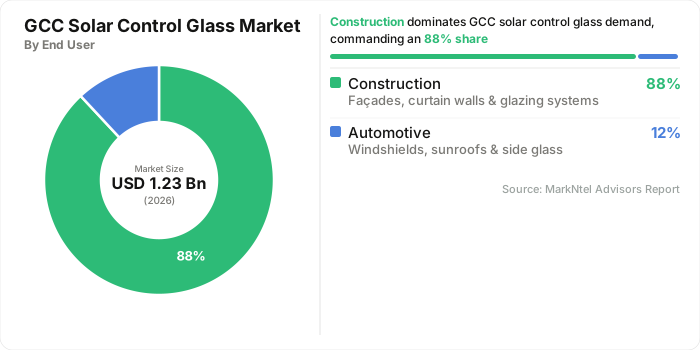
Demand is particularly concentrated in commercial and institutional construction, where extensive glass façades are integral to modern architectural design and energy performance. High-rise offices, airports, and hospitality assets require large glazing surfaces to balance daylighting with thermal efficiency. At the same time, rising residential development across urban centers is gradually increasing the adoption of solar control glass, although at a lower penetration rate. This concentration of demand within construction significantly outweighs other applications, such as automotive or specialty uses.
Industrial alignment across the value chain further reinforces this dominance, as most global and regional suppliers focus on architectural glass solutions for building envelopes. Companies such as AGC Inc., Şişecam, and NSG Group supply advanced coated and insulated glass products tailored for large-scale construction projects. The scale and continuity of infrastructure development ensure consistent volume demand, firmly positioning construction as the dominant end-use segment.
GCC Solar Control Glass Market (2026-32): Regional Projection
Saudi Arabia dominates the GCC Solar Control Glass Market, accounting for approximately 44% of total regional demand, primarily because it represents the largest construction and infrastructure market within the GCC. In 2026, Saudi Arabia secured a USD 13 billion syndicated loan to finance power, water, and public infrastructure projects aligned with its economic diversification strategy. This large-scale investment directly supports urban development and increases demand for façade-intensive construction materials, including solar control glass.
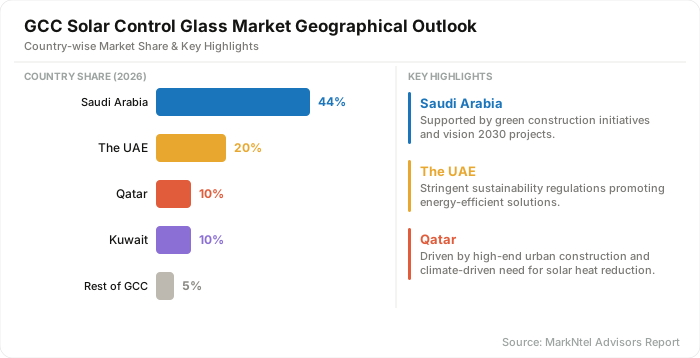
This dominance is reinforced by the scale and continuity of Saudi Arabia’s development pipeline, which surpasses that of other GCC countries. Ongoing expansion in urban infrastructure, utilities, and commercial real estate is driving consistent construction activity across major cities. High-rise buildings, institutional projects, and mixed-use developments require extensive glazing to meet both design and energy performance requirements. This sustained construction intensity positions Saudi Arabia as the primary consumption hub for solar control glass within the region.
Policy and industrial dynamics further strengthen the country’s leadership. National development initiatives continue to prioritize infrastructure expansion and modernization, ensuring a long-term pipeline of projects. At the same time, increasing emphasis on energy-efficient construction is driving the adoption of advanced glazing solutions. The combination of large-scale investment, continuous project execution, and growing focus on building performance firmly establishes Saudi Arabia as the dominant market in the GCC solar control glass industry.
GCC Solar Control Glass Market Competitive Landscape
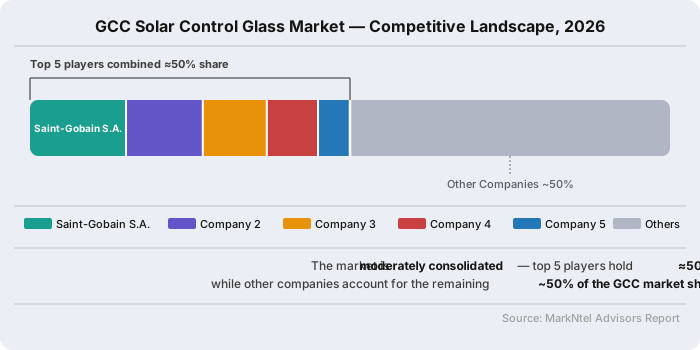
The market is moderately consolidated, with the top five players accounting for approximately 50% of the total market share. Leading companies include Saint-Gobain, Guardian Glass, AGC Inc., Şişecam, and NSG Group (Pilkington).
Key Solar Control Glass Companies in GCC
- Guardian Glass
- Saint-Gobain
- AGC Inc.
- Emirates Glass LLC
- Emirates Float Glass LLC
- Onyx Solar
- Euroglas
- Xinyi Glass Holdings Limited
- NSG Group (Pilkington)
- Şişecam
- Others
Gain a Competitive Edge with Our GCC Solar Control Glass Market Report:
- GCC Solar Control Glass Market Report by MarkNtel Advisors provides a detailed & thorough analysis of market size & share, growth rate, competitive landscape, and key players. This comprehensive analysis helps businesses gain a holistic understanding of the market dynamics & make informed decisions.
- This report also highlights current market trends & future projections, allowing businesses to identify emerging opportunities & potential challenges. By understanding market forecasts, companies can align their strategies & stay ahead of the competition.
- GCC Solar Control Glass Market Report aids in assessing & mitigating risks associated with entering or operating in the market. By understanding market dynamics, regulatory frameworks, and potential challenges, businesses can develop strategies to minimize risks & optimize their operations.
*Reports Delivery Format - Market research studies from MarkNtel Advisors are offered in PDF, Excel and PowerPoint formats. Within 24 hours of the payment being successfully received, the report will be sent to your email address.
Frequently Asked Questions
- Market Segmentation
- Introduction
- Product Definition
- Research Process
- Assumptions
- Executive Summary
- GCC Solar Control Glass Market Policies, Regulations, and Product Standards
- GCC Solar Control Glass Market Trends & Developments
- GCC Solar Control Glass Market Dynamics
- Growth Factors
- Challenges
- GCC Solar Control Glass Market Hotspot & Opportunities
- GCC Solar Control Glass Market Outlook, 2022-2032F
- Market Size & Outlook
- By Revenues (USD Million)
- Market Share & Analysis
- By Coating Type- Market Size & Forecast 2022-2032, USD Million
- Hard-Coated (Pyrolytic) Solar Control Glass
- Soft-Coated (Sputtered / Low-E) Solar Control Glass
- By Glass Type- Market Size & Forecast 2022-2032, USD Million
- Tempered Solar Control Glass
- Laminated Solar Control Glass
- Insulated Glass Units (IGU / Double Glazing)
- By Application- Market Size & Forecast 2022-2032, USD Million
- Commercial Buildings
- Residential Buildings
- Industrial Buildings
- By End-Use Sector- Market Size & Forecast 2022-2032, USD Million
- Construction
- Automotive
- By Country
- The UAE
- Saudi Arabia
- Qatar
- Kuwait
- Oman
- Bahrain
- Rest of GCC
- By Company
- Competition Characteristics
- Market Share & Analysis
- By Coating Type- Market Size & Forecast 2022-2032, USD Million
- Market Size & Outlook
- The UAE Solar Control Glass Market Outlook, 2022-2032F
- Market Size & Outlook
- By Revenues (USD Million)
- Market Share & Analysis
- By Coating Type- Market Size & Forecast 2022-2032, USD Million
- By Glass Type- Market Size & Forecast 2022-2032, USD Million
- By Application- Market Size & Forecast 2022-2032, USD Million
- By End-Use Sector- Market Size & Forecast 2022-2032, USD Million
- Market Size & Outlook
- Saudi Arabia Solar Control Glass Market Outlook, 2022-2032F
- Market Size & Outlook
- By Revenues (USD Million)
- Market Share & Analysis
- By Coating Type- Market Size & Forecast 2022-2032, USD Million
- By Glass Type- Market Size & Forecast 2022-2032, USD Million
- By Application- Market Size & Forecast 2022-2032, USD Million
- By End-Use Sector- Market Size & Forecast 2022-2032, USD Million
- Market Size & Outlook
- Qatar Solar Control Glass Market Outlook, 2022-2032F
- Market Size & Outlook
- By Revenues (USD Million)
- Market Share & Analysis
- By Coating Type- Market Size & Forecast 2022-2032, USD Million
- By Glass Type- Market Size & Forecast 2022-2032, USD Million
- By Application- Market Size & Forecast 2022-2032, USD Million
- By End-Use Sector- Market Size & Forecast 2022-2032, USD Million
- Market Size & Outlook
- Kuwait Solar Control Glass Market Outlook, 2022-2032F
- Market Size & Outlook
- By Revenues (USD Million)
- Market Share & Analysis
- By Coating Type- Market Size & Forecast 2022-2032, USD Million
- By Glass Type- Market Size & Forecast 2022-2032, USD Million
- By Application- Market Size & Forecast 2022-2032, USD Million
- By End-Use Sector- Market Size & Forecast 2022-2032, USD Million
- Market Size & Outlook
- Oman Solar Control Glass Market Outlook, 2022-2032F
- Market Size & Outlook
- By Revenues (USD Million)
- Market Share & Analysis
- By Coating Type- Market Size & Forecast 2022-2032, USD Million
- By Glass Type- Market Size & Forecast 2022-2032, USD Million
- By Application- Market Size & Forecast 2022-2032, USD Million
- By End-Use Sector- Market Size & Forecast 2022-2032, USD Million
- Market Size & Outlook
- Bahrain Solar Control Glass Market Outlook, 2022-2032F
- Market Size & Outlook
- By Revenues (USD Million)
- Market Share & Analysis
- By Coating Type- Market Size & Forecast 2022-2032, USD Million
- By Glass Type- Market Size & Forecast 2022-2032, USD Million
- By Application- Market Size & Forecast 2022-2032, USD Million
- By End-Use Sector- Market Size & Forecast 2022-2032, USD Million
- Market Size & Outlook
- GCC Solar Control Glass Market Key Strategic Imperatives for Success & Growth
- Competitive Outlook
- Company Profiles
- Guardian Glass
- Business Description
- Product Portfolio
- Collaborations & Alliances
- Recent Developments
- Financial Details
- Others
- Saint-Gobain
- Business Description
- Product Portfolio
- Collaborations & Alliances
- Recent Developments
- Financial Details
- Others
- AGC Inc.
- Business Description
- Product Portfolio
- Collaborations & Alliances
- Recent Developments
- Financial Details
- Others
- Emirates Glass LLC
- Business Description
- Product Portfolio
- Collaborations & Alliances
- Recent Developments
- Financial Details
- Others
- Emirates Float Glass LLC
- Business Description
- Product Portfolio
- Collaborations & Alliances
- Recent Developments
- Financial Details
- Others
- Onyx Solar
- Business Description
- Product Portfolio
- Collaborations & Alliances
- Recent Developments
- Financial Details
- Others
- Euroglas
- Business Description
- Product Portfolio
- Collaborations & Alliances
- Recent Developments
- Financial Details
- Others
- Xinyi Glass Holdings Limited
- Business Description
- Product Portfolio
- Collaborations & Alliances
- Recent Developments
- Financial Details
- Others
- NSG Group (Pilkington)
- Business Description
- Product Portfolio
- Collaborations & Alliances
- Recent Developments
- Financial Details
- Others
- Şişecam
- Business Description
- Product Portfolio
- Collaborations & Alliances
- Recent Developments
- Financial Details
- Others
- Others
- Business Description
- Product Portfolio
- Collaborations & Alliances
- Recent Developments
- Financial Details
- Others
- Guardian Glass
- Company Profiles
- Disclaimer
MarkNtel Advisors follows a robust and iterative research methodology designed to ensure maximum accuracy and minimize deviation in market estimates and forecasts. Our approach combines both bottom-up and top-down techniques to effectively segment and quantify various aspects of the market. A consistent feature across all our research reports is data triangulation, which examines the market from three distinct perspectives to validate findings. Key components of our research process include:
1. Scope & Research Design At the outset, MarkNtel Advisors define the research objectives and formulate pertinent questions. This phase involves determining the type of research—qualitative or quantitative—and designing a methodology that outlines data collection methods, target demographics, and analytical tools. They also establish timelines and budgets to ensure the research aligns with client goals.
2. Sample Selection and Data Collection In this stage, the firm identifies the target audience and determines the appropriate sample size to ensure representativeness. They employ various sampling methods, such as random or stratified sampling, based on the research objectives. Data collection is carried out using tools like surveys, interviews, and observations, ensuring the gathered data is reliable and relevant.
3. Data Analysis and Validation Once data is collected, MarkNtel Advisors undertake a rigorous analysis process. This includes cleaning the data to remove inconsistencies, employing statistical software for quantitative analysis, and thematic analysis for qualitative data. Validation steps are taken to ensure the accuracy and reliability of the findings, minimizing biases and errors.

4. Data Forecast and FinalizationThe final phase involves forecasting future market trends based on the analyzed data. MarkNtel Advisors utilize predictive modeling and time series analysis to anticipate market behaviors. The insights are then compiled into comprehensive reports, featuring visual aids like charts and graphs, and include strategic recommendations to inform client decision-making
We offer flexible licensing options to cater to varying organizational needs. Choose the pricing pack that best suits your requirements:
Buy Now Inquire Before Buying
 Request Customization
 Talk to our Consultant







