India Second Hand Car Market Research Report: Forecast (2026-2032)
By Vehicle Type (Hatchbacks, Sedans, SUVs), By Propulsion Type (ICE, Electric), By Sales Channel (Online, Offline), and others ... Read more
- Automotive
- Jul 2026
- Pages 140
- Report Format: PDF, Excel, PPT
India Second Hand Car Market
Projected 14.35 % CAGR from 2026 to 2032
Study Period
2026-2032
Market Size (2026)
USD 40.32 Billion
Market Size (2032)
USD 90.14 Billion
Base Year
2025
Projected CAGR
14.35 %
Leading Segments
By Vehicle Type: Hatchbacks
India Second Hand Car Market Key Takeaways
- India second hand car market size was valued at USD 35.10 billion in 2025 and is projected to grow from USD 40.32 billion in 2026 to USD 90.14 billion by 2032.
- The industry is projected to witness steady growth at a 14.35% CAGR during 2026-2032.
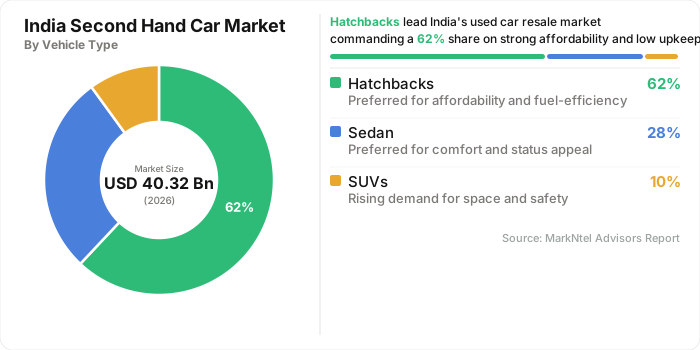
- The hatchback segment dominates the market, accounting for nearly 50% of the industry's total market share.
- By sales channel, the offline segment is anticipated to dominate with approximately 72% market share in 2026.
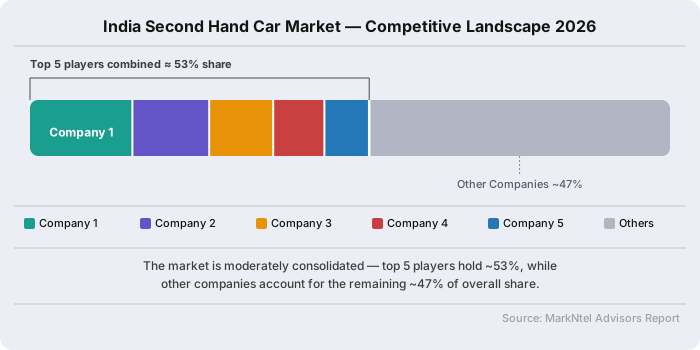
- The industry remains moderately consolidated, with the top five players collectively accounting for approximately 53% of the organized market during 2026.
India Second Hand Car Market Size and Outlook
India Second Hand Car market size was valued at USD 35.10 billion in 2025 and is projected to grow from USD 40.32 billion in 2026 to USD 90.14 billion by 2032. Along with this, the market is estimated to grow at a CAGR of around 14.35 % during the forecast period, i.e., 2026-32.
The industry growth remains favorable as the country's broader automotive ecosystem becomes increasingly digitized and policy-driven. A major catalyst is the Government of India's continued emphasis on vehicle digitalization through the Digital India initiative and the nationwide rollout of electronic Registration Certificates (e-RC) and electronic Driving Licences (e-DL) under the Parivahan Sewa platform. According to the Ministry of Road Transport & Highways (MoRTH), these digital services are being adopted across states to simplify vehicle-related transactions and improve administrative efficiency. In parallel, the VAHAN database continues to expand its integration with state transport departments, enabling faster ownership transfer, taxation, and compliance processes.
Looking ahead, the market is also expected to benefit from India's increasing focus on a formal digital economy and automotive ecosystem modernization. In 2025, the Ministry of Electronics and Information Technology (MeitY) continued expanding the Open Network for Digital Commerce (ONDC) ecosystem, enabling greater interoperability across digital commerce platforms. Although initially developed for broader commerce, the framework is expected to encourage automotive service providers, financing institutions, insurance companies, and mobility platforms to build more integrated digital transaction ecosystems. As financing, insurance, documentation, inspections, and ownership services become increasingly interconnected through digital infrastructure, organized used-car retailers will be better positioned to deliver faster and more transparent customer experiences. This evolving digital ecosystem is expected to improve operational efficiency, increase formal transactions, and reinforce long-term growth prospects for the second-hand car industry in India.
India Second Hand Car Market Key Indicators
- India produced 4.90 million passenger vehicles during FY 2024–25, according to the Ministry of Heavy Industries and SIAM. Rising new vehicle production enlarges the future stock of vehicles entering the pre-owned market after their ownership cycle, supporting long-term market growth.
- Outstanding vehicle loans reached approximately USD 77.6 billion in FY2024–25, according to the Reserve Bank of India (RBI). Higher vehicle financing improves affordability for both new and used cars, encouraging replacement purchases and increasing second-hand vehicle transactions.
- More than 103 million FASTags had been issued by March 2025, according to the National Highways Authority of India (NHAI). Growing digital toll adoption reflects an expanding active passenger vehicle fleet, supporting higher ownership turnover and increasing demand for used vehicles.
- India's National Highway network expanded to over 146,000 km by 2025, according to the Ministry of Road Transport & Highways. Improved road connectivity increases private vehicle usage and ownership, leading to faster vehicle replacement cycles and stronger demand for second-hand cars.
India Second Hand Car Market Scope
| Category | Segments |
|---|---|
| By Vehicle Type | Hatchbacks, Sedans, SUVs |
| By Propulsion Type | ICE, Electric |
| By Sales Channel | Online, Offline |
India Second Hand Car Market Growth Drivers
Rising Vehicle Exchange Programs Are Fueling Used-Car Supply and Market Expansion
The growing adoption of vehicle exchange programs by automobile manufacturers and organized retailers is emerging as a key growth driver for India's second-hand car market. Consumers are increasingly replacing their existing vehicles through exchange offers that provide instant valuation, transparent pricing, and seamless ownership transfer. These programs are improving the supply of quality pre-owned vehicles while encouraging faster replacement cycles. As OEMs integrate exchange services with certified used-car businesses, the availability of inspected and refurbished vehicles continues to increase, supporting the expansion of the organized second-hand car ecosystem.
A notable development reinforcing this trend came in June 2026, when Maruti Suzuki True Value expanded its Smart Finance offerings and strengthened its digital vehicle evaluation and exchange ecosystem across its nationwide dealer network. The initiative enables customers to receive online vehicle valuations, financing assistance, and integrated exchange benefits while purchasing new or certified pre-owned vehicles. By simplifying the trade-in process and improving convenience, Maruti Suzuki is increasing the flow of certified used cars into the organized market, strengthening inventory availability and accelerating the growth of India's second-hand car industry.
Recent Trends
Certified Pre-Owned EV Programs Are Creating a New Growth Avenue
The certified pre-owned electric vehicle segment is emerging as one of the most promising growth factor within India's second-hand car industry, driven by increasing EV adoption and rising demand for affordable electric mobility. As first-generation electric vehicles enter the resale market, organized retailers are introducing standardized certification frameworks to address concerns related to battery health, vehicle performance, and residual value. These initiatives are improving transparency, strengthening buyer confidence, and enabling financial institutions to develop lending products tailored for pre-owned EVs, thereby accelerating the formalization of India's used EV ecosystem.
A notable industry development occurred in July 2026, when JSW MG Motor India partnered with Spinny to establish a structured ecosystem for certified pre-owned MG electric vehicles. The collaboration incorporates comprehensive battery health diagnostics, technical inspections, warranty continuity, and transparent certification standards before vehicles are listed for resale. By reducing uncertainty surrounding battery performance and long-term ownership costs, the partnership establishes a benchmark for organized used EV retailing. The initiative is expected to enhance consumer confidence, improve resale values, and encourage wider participation in India's rapidly evolving second-hand electric vehicle market.
India Second Hand Car Market Opportunities and Challenges
Lack of Standardized Vehicle Quality Assessment Creating Opportunities for AI-Enabled Certified Used-Car Platforms
The India second-hand car market continues to face a significant challenge due to the absence of standardized vehicle quality assessment across the unorganized sector. Many pre-owned vehicles are sold with incomplete maintenance records, inconsistent inspection practices, undisclosed accident histories, or inaccurate odometer readings, making it difficult for buyers to evaluate a vehicle's true condition and fair value. While the Ministry of Road Transport & Highways (MoRTH) has strengthened digital ownership verification through the VAHAN and Parivahan Sewa platforms, these systems primarily authenticate registration and ownership information rather than comprehensive vehicle health. Consequently, limited transparency continues to restrain consumer confidence, financing accessibility, and the expansion of the organized India second-hand car market.
This challenge is creating a strong growth opportunity for the India second-hand car industry, encouraging organized retailers to introduce technology-driven inspection, certification, and refurbishment solutions that differentiate them from informal dealers. Reflecting this trend, Cars24 enhanced its AI-powered vehicle inspection ecosystem in 2025, leveraging artificial intelligence and computer vision to standardize damage detection, quality assessment, and vehicle valuation before resale. These digital inspection capabilities improve pricing transparency, reduce information asymmetry, strengthen lender confidence, and support faster financing approvals. As more organized retailers adopt standardized certification models, the market is expected to witness higher consumer trust, greater organized market penetration, and sustained long-term growth.
Segmentation Insights
Hatchbacks Continue to Lead Industry on the Back of Affordability and Urban Demand
The hatchback segment accounts for approximately 450% of India's second-hand car industry, maintaining its leadership due to its affordability, low maintenance costs, superior fuel efficiency, and suitability for urban mobility. Demand is particularly strong among first-time car buyers, young professionals, and value-conscious households seeking an economical alternative to new vehicles. Popular models consistently dominate used vehicle transactions owing to their extensive service networks, affordable spare parts, and high resale value.
Additionally, the rapid expansion of organized used-car platforms, improved vehicle inspection standards, and easier financing options have enhanced consumer confidence in purchasing pre-owned hatchbacks. According to industry trends, hatchbacks continue to represent the largest share of certified used-car inventories across major online marketplaces. While the market is witnessing increasing demand for compact SUVs, hatchbacks are expected to retain their dominant position over the forecast period, supported by sustained urbanization, rising vehicle ownership in Tier II and Tier III cities, and continued preference for budget-friendly personal mobility solutions. Based on the vehicle type the market is further bifurcated into:
- Hatchbacks
- Sedans
- SUVs
Offline Sales Channel Accounts for an Estimated 72% Share of the Market Owing to Strong Consumer Preference for Physical Inspection
The offline sales channel is estimated to account for around 72% of the India second-hand car market in 2026, as buyers continue to prioritize physical vehicle inspections, test drives, face-to-face negotiations, and immediate ownership verification before making purchase decisions. Since used-car purchases involve evaluating vehicle condition, maintenance quality, and documentation, dealership visits remain a critical part of the buying process. Government-backed digital platforms such as VAHAN simplify ownership verification and registration transfers, but vehicle assessment and final purchase decisions continue to be largely completed through physical retail outlets.
The continued dominance of the offline channel is supported by expanding dealership infrastructure among organized retailers. In February 2026, Cars24 introduced a refreshed brand identity and strengthened its omnichannel retail strategy by enhancing customer experience centers that integrate vehicle inspections, financing, documentation, and after-sales support. These investments demonstrate that physical dealerships remain central to building buyer confidence while complementing digital discovery channels. As organized retailers expand their certified showroom networks across Tier-2 and Tier-3 cities, the offline channel is expected to maintain its leadership throughout the forecast period. Based on sales channel, the market is further bifurcated into:
- Online
- Offline
India Second Hand Car Market Competitive Landscape
The India second hand car industry is moderately consolidated, with the top five players Maruti Suzuki True Value, Cars24 Services Private Limited, Spinny (Valuedrive Technologies Pvt. Ltd.), Mahindra First Choice Wheels Limited, and CarTrade Tech Limited collectively accounting for an estimated 53% of the organized market.
Key Companies in the India Second Hand Car Market
- Cars24 Services Private Limited
- Spinny (Valuedrive Technologies Pvt. Ltd.)
- Maruti Suzuki True Value
- Mahindra First Choice Wheels Limited
- CarTrade Tech Limited
- Droom Technology Pvt. Ltd.
- Toyota U Trust
- Hyundai Promise
- Honda Auto Terrace
- Big Boy Toyz
- Others
India Second Hand Car Industry News and Recent Developments
July 2026: JSW MG Motor India Partners with Spinny for Certified Pre-Owned EVs
JSW MG Motor India partnered with Spinny to establish a structured market for certified pre-owned electric vehicles. Under the partnership, Spinny will adopt standardized EV inspection protocols supported by MG's technical expertise, including battery health assessments and certification. The initiative aims to improve transparency in battery performance and residual value estimation for used EV buyers.
Impact Analysis: The partnership addresses one of the largest barriers to India's used EV market, namely uncertainty around battery health and resale value. Standardized certification is expected to strengthen consumer confidence and support higher resale values, fostering broader adoption of second-hand electric vehicles.
February 2026: Cars24 Unveils New Brand Identity Ahead of Growth Phase
Cars24 introduced a refreshed brand identity as part of its strategy to evolve from a transaction-focused marketplace into a broader automotive services platform. The rebranding emphasizes customer trust, long-term ownership services, and enhanced digital engagement while supporting the company's future expansion and planned public listing.
Impact Analysis: The strategic repositioning reflects increasing competition among organized used-car platforms, where customer experience, transparency, and after-sales services are becoming major differentiators. Stronger brand positioning is likely to accelerate the shift from the unorganized to the organized second-hand vehicle market.
June 2026: Spinny Begins Preparations for an IPO Targeting up to USD 300 Million
Spinny (Valuedrive Technologies Pvt. Ltd.) initiated preparations for an initial public offering expected to raise USD 250–300 million, according to Mint. The planned listing is intended to capitalize on the rapid expansion of India's organized used-car market while supporting technology investments, operational expansion, and stronger nationwide market presence.
Impact Analysis: The planned IPO highlights growing investor confidence in India's organized second-hand vehicle sector. Fresh capital would enable expansion of refurbishment centers, digital infrastructure, financing solutions, and certified inventory, intensifying competition while accelerating formalization of the used-car market.
Frequently Asked Questions
- Market Segmentation
- Introduction
- Product Definition
- Research Process
- Assumptions
- Executive Summary
- India Second Hand Car Production (Thousand Units) Trend 2022-2032
- India Second Hand Car Production (Thousand Units) Trend by Type of Vehicle
- Hatchbacks
- Sedans
- SUVs
- Company Wise Production Plants and Statistics
- Installed Production Capacity
- Actual Production
- Planned Production Target
- India Second Hand Car Production (Thousand Units) Trend by Type of Vehicle
- India Second Hand Car Market Supply Chain Analysis 2022-2032
- India Second Hand Car Market Import & Export Data Analysis 2022-2032
- India Second Hand Car Market Policies, Regulations, and Product Standards
- India Second Hand Car Market Trends & Developments
- India Second Hand Car Market Dynamics
- Growth Factors
- Challenges
- India Second Hand Car Market Hotspot & Opportunities
- India Second Hand Car Market Outlook, 2022-2032F
- Market Size & Outlook
- By Revenues (USD Million)
- By Quantity Sold (Thousand Units)
- Market Segmentation & Outlook
- By Vehicle Type- Market Size & Forecast 2022-2032, USD Million
- Hatchbacks
- Sedans
- SUVs
- By Propulsion Type- Market Size & Forecast 2022-2032, USD Million
- ICE
- Petrol
- Diesel
- CNG/LPG & Others
- Electric
- ICE
- By Sales Channel- Market Size & Forecast 2022-2032, USD Million
- Online
- Offline
- By Region- Market Size & Forecast 2022-2032, USD Million
- North
- South
- West
- East
- By Company
- Competition Characteristics
- Market Share & Analysis
- By Vehicle Type- Market Size & Forecast 2022-2032, USD Million
- Market Size & Outlook
- India Second Hand Hatchbacks Market Outlook, 2022-2032
- Market Size & Outlook
- By Revenues (USD Million)
- By Units Sold (Thousand Units)
- Market Segmentation & Outlook
- By Propulsion Type- Market Size & Forecast 2022-2032, USD Million
- By Sales Channel- Market Size & Forecast 2022-2032, USD Million
- By Region- Market Size & Forecast 2022-2032, USD Million
- Market Size & Outlook
- India Second Hand Sedans Market Outlook, 2022-2032
- Market Size & Outlook
- By Revenues (USD Million)
- By Units Sold (Thousand Units)
- Market Segmentation & Outlook
- By Propulsion Type- Market Size & Forecast 2022-2032, USD Million
- By Sales Channel- Market Size & Forecast 2022-2032, USD Million
- By Region- Market Size & Forecast 2022-2032, USD Million
- Market Size & Outlook
- India Second Hand SUVs Market Outlook, 2022-2032
- Market Size & Outlook
- By Revenues (USD Million)
- By Units Sold (Thousand Units)
- Market Segmentation & Outlook
- By Propulsion Type- Market Size & Forecast 2022-2032, USD Million
- By Sales Channel- Market Size & Forecast 2022-2032, USD Million
- By Region- Market Size & Forecast 2022-2032, USD Million
- Market Size & Outlook
- India Second Hand Car Market Key Strategic Imperatives for Success & Growth
- Competitive Outlook
- Company Profiles
- Big Boy Toyz
- Business Description
- Product Portfolio
- Collaborations & Alliances
- Recent Developments
- Financial Details
- Others
- Cars24 Services Private Limited
- Business Description
- Product Portfolio
- Collaborations & Alliances
- Recent Developments
- Financial Details
- Others
- Spinny (Valuedrive Technologies Pvt. Ltd.)
- Business Description
- Product Portfolio
- Collaborations & Alliances
- Recent Developments
- Financial Details
- Others
- Maruti Suzuki True Value
- Business Description
- Product Portfolio
- Collaborations & Alliances
- Recent Developments
- Financial Details
- Others
- Mahindra First Choice Wheels Limited
- Business Description
- Product Portfolio
- Collaborations & Alliances
- Recent Developments
- Financial Details
- Others
- CarTrade Tech Limited
- Business Description
- Product Portfolio
- Collaborations & Alliances
- Recent Developments
- Financial Details
- Others
- Droom Technology Pvt. Ltd.
- Business Description
- Product Portfolio
- Collaborations & Alliances
- Recent Developments
- Financial Details
- Others
- Toyota U Trust
- Business Description
- Product Portfolio
- Collaborations & Alliances
- Recent Developments
- Financial Details
- Others
- Hyundai Promise
- Business Description
- Product Portfolio
- Collaborations & Alliances
- Recent Developments
- Financial Details
- Others
- Honda Auto Terrace
- Business Description
- Product Portfolio
- Collaborations & Alliances
- Recent Developments
- Financial Details
- Others
- Others
- Big Boy Toyz
- Company Profiles
- Disclaimer
MarkNtel Advisors follows a robust and iterative research methodology designed to ensure maximum accuracy and minimize deviation in market estimates and forecasts. Our approach combines both bottom-up and top-down techniques to effectively segment and quantify various aspects of the market. A consistent feature across all our research reports is data triangulation, which examines the market from three distinct perspectives to validate findings. Key components of our research process include:
1. Scope & Research Design At the outset, MarkNtel Advisors define the research objectives and formulate pertinent questions. This phase involves determining the type of research—qualitative or quantitative—and designing a methodology that outlines data collection methods, target demographics, and analytical tools. They also establish timelines and budgets to ensure the research aligns with client goals.
2. Sample Selection and Data Collection In this stage, the firm identifies the target audience and determines the appropriate sample size to ensure representativeness. They employ various sampling methods, such as random or stratified sampling, based on the research objectives. Data collection is carried out using tools like surveys, interviews, and observations, ensuring the gathered data is reliable and relevant.
3. Data Analysis and Validation Once data is collected, MarkNtel Advisors undertake a rigorous analysis process. This includes cleaning the data to remove inconsistencies, employing statistical software for quantitative analysis, and thematic analysis for qualitative data. Validation steps are taken to ensure the accuracy and reliability of the findings, minimizing biases and errors.

4. Data Forecast and FinalizationThe final phase involves forecasting future market trends based on the analyzed data. MarkNtel Advisors utilize predictive modeling and time series analysis to anticipate market behaviors. The insights are then compiled into comprehensive reports, featuring visual aids like charts and graphs, and include strategic recommendations to inform client decision-making
We offer flexible licensing options to cater to varying organizational needs. Choose the pricing pack that best suits your requirements:
Buy Now Inquire Before Buying
 Request Customization
 Talk to our Consultant