Fuel Cell Electric Vehicle Market Research Report: Forecast (2026-2032)
By Vehicle Type (Passenger Cars, Buses, Light Commercial Vehicles, Medium & Heavy Commercial Vehicles), By Fuel Cell Type (Proton Exchange Membrane Fuel Cell (PEMFC), Phosphoric Ac ... id Fuel Cell (PAFC), Solid Oxide Fuel Cell (SOFC)), By Power Output (Up to 50 kW, 50–100 kW, 100–200 kW, 200–500 kW, Above 500 kW), By Application (Passenger Mobility, Public Transportation, Last-Mile Delivery, Regional & Long-Haul Freight, Port & Industrial Operations), and others Read more
- Automotive
- Aug 2026
- Pages 345
- Report Format: PDF, Excel, PPT
Fuel Cell Electric Vehicle Market
Projected 38.31% CAGR from 2026 to 2032
Study Period
2026-2032
Market Size (2026)
USD 3.4 Billion
Market Size (2032)
USD 23.8 Billion
Largest Region
Asia-Pacific
Projected CAGR
38.31%
Leading Segments
By Vehicle Type: Passenger Cars
Fuel Cell Electric Vehicle Market Key Takeaways
- The fuel cell electric vehicle market size was valued at around USD 0.41 billion in 2025 and is projected to grow from USD 3.4 billion in 2026 to USD 23.8 billion by 2032.
- The industry is projected to exhibit a CAGR of 38.31% during the forecast period.
- Asia-Pacific is anticipated to lead the market, accounting for approximately 66% in 2026.
- Based on fuel cell type, proton exchange membrane fuel cells hold a significant market share of approximately 72% in 2026.
- By vehicle type, the passenger car segment accounted for a dominant share of nearly 42.8% in 2026.
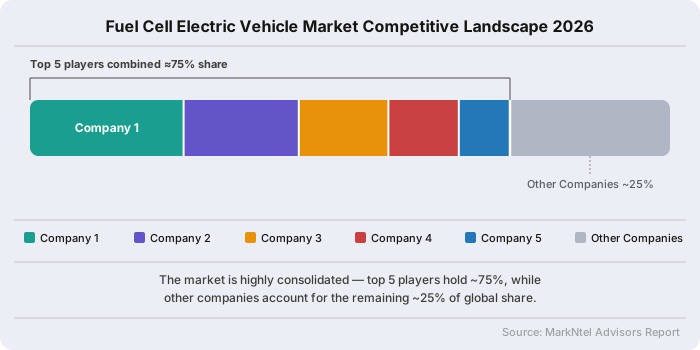
- The industry is highly concentrated. However, the top five players collectively account for nearly 75% share.
Fuel Cell Electric Vehicle Market Size and Outlook
The fuel cell electric vehicle market is estimated at USD 3.4 billion in 2026 and is projected to reach approximately USD 23.8 billion by 2032, representing a 38.31% CAGR. Market expansion is being supported by new deployment programs all over the world in different regions. Countries like China, India, Saudi Arabia, Russia, etc, are conducting major trials to develop hydrogen fuel cell infrastructure. For instance, Russia’s Sakhalin hydrogen-mobility project is developing fuel cell passenger trains supported by localized hydrogen production, storage, transportation, and refueling infrastructure. In 2026, the project plans to assemble two hydrogen trains, with a mobile hydrogen refueling system scheduled for delivery to Sakhalin in Q2 2027. Commercial operation of the two trains is planned from January 2029. The project is designed around centralized infrastructure, demonstrating how localized hydrogen production and depot-based refueling can reduce the complexity of supplying hydrogen to vehicles operating on fixed routes.
Product development is also improving FCEV usability. Moreover, in July 2026, BMW introduced the new iX5 Hydrogen with up to 750 km WLTP range, under-five-minute refueling, and a hydrogen storage capacity of at least 7 kg. Its redesigned storage architecture improves packaging efficiency and supports broader vehicle integration. Through 2032, growth would therefore depend on expanding commercial applications, higher-range products, refueling infrastructure, localized manufacturing and government-backed hydrogen mobility programs.
Fuel Cell Electric Vehicle Market Key Indicators
- Global low-emissions hydrogen production increased 20% in 2025 to nearly 1 Mt, reflecting accelerating investment in cleaner hydrogen supply. The availability of low-carbon hydrogen is particularly important for FCEVs because it determines the lifecycle emissions advantage of hydrogen-powered vehicles over conventional internal-combustion vehicles. As production of green and other low-emissions hydrogen expands, FCEVs can achieve greater emissions reductions without relying on fossil-based hydrogen, improving their attractiveness for governments and commercial fleet operators pursuing decarbonization targets.
- Around 1,300 hydrogen refueling stations were operating globally at the end of 2024, representing a 15% increase from 2023, while China alone had more than 500 stations. Expansion of hydrogen refueling infrastructure directly addresses one of the major barriers to FCEV adoption: limited fueling accessibility. A larger station network improves vehicle usability, supports longer-distance travel, and enables commercial fleets to operate on predictable hydrogen-fueling routes, thereby supporting the expansion of the FCEV market.
- China recorded 10,782 hydrogen fuel cell vehicle sales in 2025, primarily consisting of trucks and buses, while the country's operational hydrogen refueling network exceeded 570 stations. The concentration of FCEV deployment in commercial vehicles demonstrates the increasing suitability of fuel-cell technology for high-utilization applications such as freight transport and public transportation. Continued deployment in these segments can generate economies of scale for fuel-cell stacks, hydrogen storage systems, and vehicle platforms, supporting broader FCEV commercialization.
- The European Union's Alternative Fuels Infrastructure Regulation requires publicly accessible hydrogen refueling stations with a minimum 1 ton-per-day capacity and 700-bar dispensing capability every 200 km along the TEN-T core network by December 2030. Such infrastructure mandates reduce one of the principal barriers to FCEV adoption by creating a defined minimum hydrogen-fueling network. The resulting expansion of hydrogen corridors can facilitate long-distance FCEV deployment, particularly for trucks and buses, while encouraging automakers and fleet operators to invest in hydrogen-powered vehicles.
Fuel Cell Electric Vehicle Market Scope
| Category | Segments |
|---|---|
| By Vehicle Type | Passenger Cars, Buses, Light Commercial Vehicles, Medium & Heavy Commercial Vehicles |
| By Fuel Cell Type | Proton Exchange Membrane Fuel Cell (PEMFC), Phosphoric Acid Fuel Cell (PAFC), Solid Oxide Fuel Cell (SOFC |
| By Power Output | Up to 50 kW, 50–100 kW, 100–200 kW, 200–500 kW, Above 500 kW |
| By Application | Passenger Mobility, Public Transportation, Last-Mile Delivery, Regional & Long-Haul Freight, Port & Industrial Operations |
Fuel Cell Electric Vehicle Market Growth Drivers
Government-Led Hydrogen Investments Accelerate FCEV Deployment
Government policy is creating measurable fuel cell electric vehicle industry demand by combining deployment targets with financial and cost-reduction measures. All over the world, governments are developing and launching projects to boost the hydrogen fuel cell infrastructure. For instance, in March 2026, China announced a target of 100,000 fuel-cell vehicles by 2030, approximately double its 2025 level, while targeting an average end-user hydrogen price below USD 3.5/kg and around USD 2.1/kg in advantageous regions. The policy also supports selected city clusters to accelerate commercial hydrogen applications.
Additionally, in February 2026, Oman launched its first green hydrogen vehicle refueling station near Muscat International Airport. The station uses solar-powered electrolysis and can produce up to 130 kg of green hydrogen per day. The project was launched under the auspices of Oman's Minister of Energy and Minerals and supports the country's Vision 2040 and Net Zero 2050 objectives.
Recent Trends
Increasing Popularity of Mobile Hydrogen Fuelers
Mobile hydrogen fuelers are emerging as a flexible solution for FCEV deployment where fixed stations are not yet economically viable. In May 2026, HYKIT launched the MHR-X75, a trailer-mounted mobile refueler with 75 kg hydrogen capacity, approximately 10–15-minute refueling turnaround, and the ability to support up to seven vehicles.
The system is designed for rapid deployment across construction, industrial, and mobility applications, with remote monitoring and cloud-connected diagnostics. This development is particularly relevant as early FCEV fleets require fueling before permanent station networks achieve sufficient utilization. Earlier industry testing also demonstrated mobile refueling of 1,322 kg of hydrogen across 52 consecutive bus fills in 11.5 hours, averaging 3.4 kg/min.
Fuel Cell Electric Vehicle Market Opportunities and Challenges
Complexity in Offsite Hydrogen Transportation
Offsite hydrogen transportation remains a high-cost and logistics challenge for FCEV deployment because hydrogen has low volumetric energy density, requiring high-pressure compression, specialized storage vessels, and dedicated transport equipment. The U.S. Department of Energy (DOE) identifies transport cost, energy efficiency, hydrogen purity, and leakage as key challenges in hydrogen delivery, making the movement of hydrogen from production facilities to refueling locations an important component of the overall FCEV cost structure.
This challenge is simultaneously creating opportunities for specialized hydrogen logistics. For instance, in May 2026, Powertech Labs introduced a 1,050-kg, 517-bar Type 4 hydrogen tube trailer, increasing the quantity of hydrogen that can be transported per trip and targeting lower delivered hydrogen costs per kilogram.
The development creates opportunities for higher-capacity tube trailers, advanced compression systems, hydrogen logistics management, and specialized storage equipment. A 2026 study also evaluates tube-trailer transportation as a major hydrogen-delivery pathway, reinforcing the need for optimization as FCEV deployment expands. Through 2026–2032, improving transport efficiency can reduce delivered-hydrogen costs and enable refueling stations to operate farther from production hubs.
Segmentation Insights
Passenger FCEVs Anchor the Global Hydrogen Mobility Market by High Demand
The passenger-car segment is projected to remain the leading Fuel cell electric vehicle industry in 2026, accounting for approximately 42.8% of market. Its leading position is supported by the established passenger-FCEV ecosystem in markets such as Japan, South Korea, China and selected European countries. At the global level, fuel-cell passenger-car sales increased 24.4% in 2025 to 16,011 units, indicating renewed demand for hydrogen-powered passenger vehicles.
A recent technology development further supports the segment. On February 14, 2025, Toyota introduced its third-generation fuel-cell system, designed for passenger vehicles as well as commercial applications. For passenger cars, the system improves fuel efficiency by 1.2 times, translating into an approximately 20% increase in cruising range, while manufacturing innovations are intended to substantially reduce system costs.
These improvements can strengthen passenger-FCEV economics and usability during 2026–2032. However, the segment will increasingly compete with electric vehicles, while commercial FCEVs are expected to gain importance as hydrogen mobility expands into high-utilization applications. Based on vehicle type, the market is segmented into:
- Passenger Cars
- Buses
- Light Commercial Vehicles
- Medium & Heavy Commercial Vehicles

Proton Exchange Membrane Fuel Cell Dominates the Fuel Cell Type by 72% Market Share
The proton exchange membrane fuel cell segment leads the global FCEV market in 2026, accounting for approximately 72% of the market. Its dominance is linked to its high power density, compact architecture, rapid start-up, and suitability for variable-load automotive operation. Unlike high-temperature fuel-cell technologies, PEMFC systems operate at relatively low temperatures, making them better suited to frequent vehicle starts and stops.
A recent industry development further supports PEMFC adoption. In February 2026, a state-of-the-art review of hydrogen FCEVs highlighted PEMFC technology as the principal automotive fuel-cell pathway because of its suitability for vehicle applications requiring rapid refueling, long range, and high utilization. Meanwhile, it is reported that more than 90 fuel-cell vehicle models were available globally in 2025, with approximately half being truck models, demonstrating that PEMFC technology is increasingly applicable beyond passenger vehicles.
During 2026–2032, PEMFC should retain its leadership as fuel-cell deployment expands into trucks, buses and other high-utilization applications. Further reductions in catalyst loading, stack costs, and manufacturing complexity are expected to strengthen its commercial competitiveness. Based on fuel type, the market is bifurcated into:
- Proton Exchange Membrane Fuel Cell (PEMFC)
- Phosphoric Acid Fuel Cell (PAFC)
- Solid Oxide Fuel Cell (SOFC)
Fuel Cell Electric Vehicle Market Geographical Outlook
Asia-Pacific is projected to remain the leading regional market for FCEVs, accounting for approximately 66% of the global market in 2026. Its leadership is supported by established hydrogen-mobility ecosystems, government-backed commercialization programs, and increasing focus on commercial vehicles. Asia Pacific countries like China, India, Japan, Korea etc., are gaining new heights in fuel cell electric vehicle industry by new developments, for instance a new development in Japan on May 19, 2025 witnessed the Ministry of Economy, Trade and Industry (METI) designate five priority regions involving six local governments to accelerate fuel-cell commercial-vehicle deployment. The program specifically targets heavy trucks, light trucks and buses and provides additional support of approximately USD 4.7/kg toward the gap between hydrogen and diesel fuel costs.
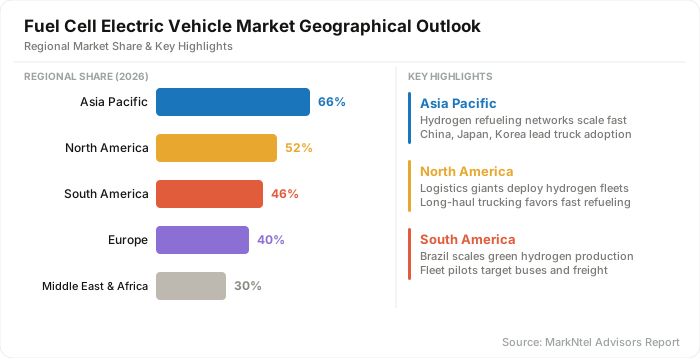
Further strengthening the regional ecosystem, Japan's NEDO selected projects in July 2026 under a 2026–2029 R&D program focused on improving fuel-cell performance, durability and cost, particularly for heavy-duty vehicles. These initiatives support Asia-Pacific's leadership by simultaneously addressing commercial deployment and technology costs, creating opportunities for FCEV adoption through 2032.
Fuel Cell Electric Vehicle Market Competitive Analysis
The FCEV market is highly concentrated, with the top five companies estimated to collectively account for approximately 75% of the market in 2026. Toyota Motor Corporation, Hyundai Motor Company, Honda Motor Co., Ltd., SAIC Motor Corporation, and Ballard Power Systems are the top five players. Competition centers on fuel-cell efficiency, vehicle range, hydrogen-storage integration, stack durability, manufacturing scale and total ownership costs.
Key Companies in the Fuel Cell Electric Vehicle Market
- Toyota Motor Corporation
- Hyundai Motor Company
- Honda Motor Co., Ltd.
- BMW Group
- SAIC Motor Corporation
- Yutong Group
- Foton Motor Group
- Daimler Truck Holding AG
- Volvo Group
- Tata Motors
- Others
Fuel Cell Electric Vehicle Industry News and Recent Developments
April 2025: Hyundai Unveils Second-Generation NEXO with 700-km Range
In April 2025, Hyundai unveiled the production version of its second-generation NEXO, introducing a redesigned fuel-cell system, increased hydrogen-storage capacity and a 201-hp powertrain. The vehicle targets an estimated range of up to 700 km under Korean testing conditions. The redesigned system also improves packaging and cold-weather performance, strengthening passenger-FCEV usability.
Impact Analysis: The higher range and improved system packaging address two important passenger-FCEV limitations—driving range and vehicle-space efficiency. Commercial availability from 2026 can broaden Hyundai’s hydrogen portfolio and encourage competing OEMs to improve range and fuel-cell integration.
May 2026: BMW iX5 Hydrogen Series-Production Development
In May, 2026, BMW Group Plant Landshut began pre-series production of the hydrogen-specific “Energy Master” control unit for the upcoming BMW iX5 Hydrogen. The unit manages energy and data flows between the fuel-cell system, high-voltage battery, and electric drive. BMW plans to launch the iX5 Hydrogen in 2028, with fuel-cell system production beginning at Plant Steyr in 2028. The vehicle is expected to offer up to 750 km of range using BMW’s new hydrogen-storage concept.
Impact Analysis: The move from prototype development to pre-series component manufacturing demonstrates progress toward commercial-scale FCEV production. The integrated control system and 750-km range target could improve vehicle packaging and usability, while BMW’s planned in-house fuel-cell production supports greater manufacturing control. This development could strengthen premium FCEV competition and expand consumer choice from 2028 onward.
Frequently Asked Questions
- Market Segmentation
- Introduction
- Product Definition
- Research Process
- Assumptions
- Executive Summary
- Fuel Cell Electric Vehicle Market Import-Export Trend Analysis
- Fuel Cell Electric Vehicle Market Supply Chain Analysis
- Fuel Cell Electric Vehicle Market Production (Thousand Units) Trend 2026-2032
- Company-Wise Production Plants and Statistics
- List of all the Manufacturing Plants
- Installed Capacity in (Units or Tons)
- Actual Production Capacity
- Type of Tires Produced
- New Plants & Plant Closure Details
- Others
- . Planned Production Target
- List of all the Manufacturing Plants
- Company-Wise Production Plants and Statistics
- Fuel Cell Electric Vehicle Market Pricing Analysis 2026-2032
- Fuel Cell Electric Vehicle Market Pricing Trend (USD/Units) 2026-2032
- By Type of Vehicle (USD/Unit)
- Passenger Cars
- Buses
- Light Commercial Vehicles
- Medium & Heavy Commercial Vehicles
- Competitor Wise Price Benchmarking
- Historical Price YoY Increase by Brands
- By Type of Vehicle (USD/Unit)
- Fuel Cell Electric Vehicle Market Pricing Trend (USD/Units) 2026-2032
- Fuel Cell Electric Vehicle Market Policies, Regulations, and Product Standards
- Fuel Cell Electric Vehicle Market Trends & Developments
- Fuel Cell Electric Vehicle Market Dynamics
- Growth Factors
- Challenges
- Fuel Cell Electric Vehicle Market Hotspot & Opportunities
- Fuel Cell Electric Vehicle Market Outlook, 2026-2032
- Market Size & Outlook
- By Revenues (USD Million)
- By Quantity Sold (Thousand Units)
- Market Segmentation & Analysis
- By Vehicle Type- Market Size & Forecast 2026-2032, USD Million & Thousand Units
- Passenger Cars
- Buses
- Light Commercial Vehicles
- Medium & Heavy Commercial Vehicles
- By Fuel Cell Type- Market Size & Forecast 2026-2032, USD Million & Thousand Units
- Proton Exchange Membrane Fuel Cell (PEMFC)
- Phosphoric Acid Fuel Cell (PAFC)
- Solid Oxide Fuel Cell (SOFC)
- By Power Output- Market Size & Forecast 2026-2032, USD Million & Thousand Units
- Up to 50 kW
- 50–100 kW
- 100–200 kW
- 200–500 kW
- Above 500 kW
- By Application- Market Size & Forecast 2026-2032, USD Million & Thousand Units
- Passenger Mobility
- Public Transportation
- Last-Mile Delivery
- Regional & Long-Haul Freight
- Port & Industrial Operations
- By Region
- North America
- Europe
- Asia-Pacific
- South America
- Middle East & Africa
- By Company
- Competition Characteristics
- Market Share & Analysis
- By Vehicle Type- Market Size & Forecast 2026-2032, USD Million & Thousand Units
- Market Size & Outlook
- North America Fuel Cell Electric Vehicle Market Outlook, 2026-2032
- Market Size & Outlook
- By Revenues (USD Million)
- By Quantity Sold (Thousand Units)
- Market Segmentation & Analysis
- By Vehicle Type- Market Size & Forecast 2026-2032, USD Million & Thousand Units
- By Fuel Cell Type- Market Size & Forecast 2026-2032, USD Million & Thousand Units
- By Power Output- Market Size & Forecast 2026-2032, USD Million & Thousand Units
- By Application- Market Size & Forecast 2026-2032, USD Million & Thousand Units
- By Country
- The US
- Canada
- Mexico
- The US Fuel Cell Electric Vehicle Market Outlook, 2026-2032
- Market Size & Outlook
- By Revenues (USD Million)
- By Quantity Sold (Thousand Units)
- Market Segmentation & Analysis
- By Vehicle Type- Market Size & Forecast 2026-2032, USD Million & Thousand Units
- By Fuel Cell Type- Market Size & Forecast 2026-2032, USD Million & Thousand Units
- By Power Output- Market Size & Forecast 2026-2032, USD Million & Thousand Units
- By Application- Market Size & Forecast 2026-2032, USD Million & Thousand Units
- Market Size & Outlook
- Canada Fuel Cell Electric Vehicle Market Outlook, 2026-2032
- Market Size & Outlook
- By Revenues (USD Million)
- By Quantity Sold (Thousand Units)
- Market Segmentation & Analysis
- By Vehicle Type- Market Size & Forecast 2026-2032, USD Million & Thousand Units
- By Fuel Cell Type- Market Size & Forecast 2026-2032, USD Million & Thousand Units
- By Power Output- Market Size & Forecast 2026-2032, USD Million & Thousand Units
- By Application- Market Size & Forecast 2026-2032, USD Million & Thousand Units
- Market Size & Outlook
- Mexico Fuel Cell Electric Vehicle Market Outlook, 2026-2032
- Market Size & Outlook
- By Revenues (USD Million)
- By Quantity Sold (Thousand Units)
- Market Segmentation & Analysis
- By Vehicle Type- Market Size & Forecast 2026-2032, USD Million & Thousand Units
- By Fuel Cell Type- Market Size & Forecast 2026-2032, USD Million & Thousand Units
- By Power Output- Market Size & Forecast 2026-2032, USD Million & Thousand Units
- By Application- Market Size & Forecast 2026-2032, USD Million & Thousand Units
- Market Size & Outlook
- Market Size & Outlook
- Europe Fuel Cell Electric Vehicle Market Outlook, 2026-2032
- Market Size & Outlook
- By Revenues (USD Million)
- By Quantity Sold (Thousand Units)
- Market Segmentation & Analysis
- By Vehicle Type- Market Size & Forecast 2026-2032, USD Million & Thousand Units
- By Fuel Cell Type- Market Size & Forecast 2026-2032, USD Million & Thousand Units
- By Power Output- Market Size & Forecast 2026-2032, USD Million & Thousand Units
- By Application- Market Size & Forecast 2026-2032, USD Million & Thousand Units
- By Country
- Brazil
- Argentina
- Chile
- Colombia
- Peru
- Ecuador
- Rest of South America
- Brazil Fuel Cell Electric Vehicle Market Outlook, 2026-2032
- Market Size & Outlook
- By Revenues (USD Million)
- By Quantity Sold (Thousand Units)
- Market Segmentation & Analysis
- By Vehicle Type- Market Size & Forecast 2026-2032, USD Million & Thousand Units
- By Fuel Cell Type- Market Size & Forecast 2026-2032, USD Million & Thousand Units
- By Power Output- Market Size & Forecast 2026-2032, USD Million & Thousand Units
- By Application- Market Size & Forecast 2026-2032, USD Million & Thousand Units
- Market Size & Outlook
- Argentina Fuel Cell Electric Vehicle Market Outlook, 2026-2032
- Market Size & Outlook
- By Revenues (USD Million)
- By Quantity Sold (Thousand Units)
- Market Segmentation & Analysis
- By Vehicle Type- Market Size & Forecast 2026-2032, USD Million & Thousand Units
- By Fuel Cell Type- Market Size & Forecast 2026-2032, USD Million & Thousand Units
- By Power Output- Market Size & Forecast 2026-2032, USD Million & Thousand Units
- By Application- Market Size & Forecast 2026-2032, USD Million & Thousand Units
- Market Size & Outlook
- Chile Fuel Cell Electric Vehicle Market Outlook, 2026-2032
- Market Size & Outlook
- By Revenues (USD Million)
- By Quantity Sold (Thousand Units)
- Market Segmentation & Analysis
- By Vehicle Type- Market Size & Forecast 2026-2032, USD Million & Thousand Units
- By Fuel Cell Type- Market Size & Forecast 2026-2032, USD Million & Thousand Units
- By Power Output- Market Size & Forecast 2026-2032, USD Million & Thousand Units
- By Application- Market Size & Forecast 2026-2032, USD Million & Thousand Units
- Market Size & Outlook
- Colombia Fuel Cell Electric Vehicle Market Outlook, 2026-2032
- Market Size & Outlook
- By Revenues (USD Million)
- By Quantity Sold (Thousand Units)
- Market Segmentation & Analysis
- By Vehicle Type- Market Size & Forecast 2026-2032, USD Million & Thousand Units
- By Fuel Cell Type- Market Size & Forecast 2026-2032, USD Million & Thousand Units
- By Power Output- Market Size & Forecast 2026-2032, USD Million & Thousand Units
- By Application- Market Size & Forecast 2026-2032, USD Million & Thousand Units
- Market Size & Outlook
- Peru Fuel Cell Electric Vehicle Market Outlook, 2026-2032
- Market Size & Outlook
- By Revenues (USD Million)
- By Quantity Sold (Thousand Units)
- Market Segmentation & Analysis
- By Vehicle Type- Market Size & Forecast 2026-2032, USD Million & Thousand Units
- By Fuel Cell Type- Market Size & Forecast 2026-2032, USD Million & Thousand Units
- By Power Output- Market Size & Forecast 2026-2032, USD Million & Thousand Units
- By Application- Market Size & Forecast 2026-2032, USD Million & Thousand Units
- Market Size & Outlook
- Ecuador Fuel Cell Electric Vehicle Market Outlook, 2026-2032
- Market Size & Outlook
- By Revenues (USD Million)
- By Quantity Sold (Thousand Units)
- Market Segmentation & Analysis
- By Vehicle Type- Market Size & Forecast 2026-2032, USD Million & Thousand Units
- By Fuel Cell Type- Market Size & Forecast 2026-2032, USD Million & Thousand Units
- By Power Output- Market Size & Forecast 2026-2032, USD Million & Thousand Units
- By Application- Market Size & Forecast 2026-2032, USD Million & Thousand Units
- Market Size & Outlook
- Market Size & Outlook
- Asia-Pacific Fuel Cell Electric Vehicle Market Outlook, 2026-2032
- Market Size & Outlook
- By Revenues (USD Million)
- By Quantity Sold (Thousand Units)
- Market Segmentation & Analysis
- By Vehicle Type- Market Size & Forecast 2026-2032, USD Million & Thousand Units
- By Fuel Cell Type- Market Size & Forecast 2026-2032, USD Million & Thousand Units
- By Power Output- Market Size & Forecast 2026-2032, USD Million & Thousand Units
- By Application- Market Size & Forecast 2026-2032, USD Million & Thousand Units
- By Country
- The UK
- Germany
- France
- Italy
- Spain
- Netherlands
- Switzerland
- Rest of Europe
- The UK Fuel Cell Electric Vehicle Market Outlook, 2026-2032
- Market Size & Outlook
- By Revenues (USD Million)
- By Quantity Sold (Thousand Units)
- Market Segmentation & Analysis
- By Vehicle Type- Market Size & Forecast 2026-2032, USD Million & Thousand Units
- By Fuel Cell Type- Market Size & Forecast 2026-2032, USD Million & Thousand Units
- By Power Output- Market Size & Forecast 2026-2032, USD Million & Thousand Units
- By Application- Market Size & Forecast 2026-2032, USD Million & Thousand Units
- Market Size & Outlook
- Germany Fuel Cell Electric Vehicle Market Outlook, 2026-2032
- Market Size & Outlook
- By Revenues (USD Million)
- By Quantity Sold (Thousand Units)
- Market Segmentation & Analysis
- By Vehicle Type- Market Size & Forecast 2026-2032, USD Million & Thousand Units
- By Fuel Cell Type- Market Size & Forecast 2026-2032, USD Million & Thousand Units
- By Power Output- Market Size & Forecast 2026-2032, USD Million & Thousand Units
- By Application- Market Size & Forecast 2026-2032, USD Million & Thousand Units
- Market Size & Outlook
- France Fuel Cell Electric Vehicle Market Outlook, 2026-2032
- Market Size & Outlook
- By Revenues (USD Million)
- By Quantity Sold (Thousand Units)
- Market Segmentation & Analysis
- By Vehicle Type- Market Size & Forecast 2026-2032, USD Million & Thousand Units
- By Fuel Cell Type- Market Size & Forecast 2026-2032, USD Million & Thousand Units
- By Power Output- Market Size & Forecast 2026-2032, USD Million & Thousand Units
- By Application- Market Size & Forecast 2026-2032, USD Million & Thousand Units
- Market Size & Outlook
- Italy Fuel Cell Electric Vehicle Market Outlook, 2026-2032
- Market Size & Outlook
- By Revenues (USD Million)
- By Quantity Sold (Thousand Units)
- Market Segmentation & Analysis
- By Vehicle Type- Market Size & Forecast 2026-2032, USD Million & Thousand Units
- By Fuel Cell Type- Market Size & Forecast 2026-2032, USD Million & Thousand Units
- By Power Output- Market Size & Forecast 2026-2032, USD Million & Thousand Units
- By Application- Market Size & Forecast 2026-2032, USD Million & Thousand Units
- Market Size & Outlook
- Spain Fuel Cell Electric Vehicle Market Outlook, 2026-2032
- Market Size & Outlook
- By Revenues (USD Million)
- By Quantity Sold (Thousand Units)
- Market Segmentation & Analysis
- By Vehicle Type- Market Size & Forecast 2026-2032, USD Million & Thousand Units
- By Fuel Cell Type- Market Size & Forecast 2026-2032, USD Million & Thousand Units
- By Power Output- Market Size & Forecast 2026-2032, USD Million & Thousand Units
- By Application- Market Size & Forecast 2026-2032, USD Million & Thousand Units
- Market Size & Outlook
- Netherlands Fuel Cell Electric Vehicle Market Outlook, 2026-2032
- Market Size & Outlook
- By Revenues (USD Million)
- By Quantity Sold (Thousand Units)
- Market Segmentation & Analysis
- By Vehicle Type- Market Size & Forecast 2026-2032, USD Million & Thousand Units
- By Fuel Cell Type- Market Size & Forecast 2026-2032, USD Million & Thousand Units
- By Power Output- Market Size & Forecast 2026-2032, USD Million & Thousand Units
- By Application- Market Size & Forecast 2026-2032, USD Million & Thousand Units
- Market Size & Outlook
- Switzerland Fuel Cell Electric Vehicle Market Outlook, 2026-2032
- Market Size & Outlook
- By Revenues (USD Million)
- By Quantity Sold (Thousand Units)
- Market Segmentation & Analysis
- By Vehicle Type- Market Size & Forecast 2026-2032, USD Million & Thousand Units
- By Fuel Cell Type- Market Size & Forecast 2026-2032, USD Million & Thousand Units
- By Power Output- Market Size & Forecast 2026-2032, USD Million & Thousand Units
- By Application- Market Size & Forecast 2026-2032, USD Million & Thousand Units
- Market Size & Outlook
- Market Size & Outlook
- South America Fuel Cell Electric Vehicle Market Outlook, 2026-2032
- Market Size & Outlook
- By Revenues (USD Million)
- By Quantity Sold (Thousand Units)
- Market Segmentation & Analysis
- By Vehicle Type- Market Size & Forecast 2026-2032, USD Million & Thousand Units
- By Fuel Cell Type- Market Size & Forecast 2026-2032, USD Million & Thousand Units
- By Power Output- Market Size & Forecast 2026-2032, USD Million & Thousand Units
- By Application- Market Size & Forecast 2026-2032, USD Million & Thousand Units
- By Country
- Saudi Arabia
- The UAE
- South Africa
- Egypt
- Ethiopia
- Rest of Middle East & Africa
- Saudi Arabia Fuel Cell Electric Vehicle Market Outlook, 2026-2032
- Market Size & Outlook
- By Revenues (USD Million)
- By Quantity Sold (Thousand Units)
- Market Segmentation & Analysis
- By Vehicle Type- Market Size & Forecast 2026-2032, USD Million & Thousand Units
- By Fuel Cell Type- Market Size & Forecast 2026-2032, USD Million & Thousand Units
- By Power Output- Market Size & Forecast 2026-2032, USD Million & Thousand Units
- By Application- Market Size & Forecast 2026-2032, USD Million & Thousand Units
- Market Size & Outlook
- The UAE Fuel Cell Electric Vehicle Market Outlook, 2026-2032
- Market Size & Outlook
- By Revenues (USD Million)
- By Quantity Sold (Thousand Units)
- Market Segmentation & Analysis
- By Vehicle Type- Market Size & Forecast 2026-2032, USD Million & Thousand Units
- By Fuel Cell Type- Market Size & Forecast 2026-2032, USD Million & Thousand Units
- By Power Output- Market Size & Forecast 2026-2032, USD Million & Thousand Units
- By Application- Market Size & Forecast 2026-2032, USD Million & Thousand Units
- Market Size & Outlook
- South Africa Fuel Cell Electric Vehicle Market Outlook, 2026-2032
- Market Size & Outlook
- By Revenues (USD Million)
- By Quantity Sold (Thousand Units)
- Market Segmentation & Analysis
- By Vehicle Type- Market Size & Forecast 2026-2032, USD Million & Thousand Units
- By Fuel Cell Type- Market Size & Forecast 2026-2032, USD Million & Thousand Units
- By Power Output- Market Size & Forecast 2026-2032, USD Million & Thousand Units
- By Application- Market Size & Forecast 2026-2032, USD Million & Thousand Units
- Market Size & Outlook
- Egypt Fuel Cell Electric Vehicle Market Outlook, 2026-2032
- Market Size & Outlook
- By Revenues (USD Million)
- By Quantity Sold (Thousand Units)
- Market Segmentation & Analysis
- By Vehicle Type- Market Size & Forecast 2026-2032, USD Million & Thousand Units
- By Fuel Cell Type- Market Size & Forecast 2026-2032, USD Million & Thousand Units
- By Power Output- Market Size & Forecast 2026-2032, USD Million & Thousand Units
- By Application- Market Size & Forecast 2026-2032, USD Million & Thousand Units
- Market Size & Outlook
- Ethiopia Fuel Cell Electric Vehicle Market Outlook, 2026-2032
- Market Size & Outlook
- By Revenues (USD Million)
- By Quantity Sold (Thousand Units)
- Market Segmentation & Analysis
- By Vehicle Type- Market Size & Forecast 2026-2032, USD Million & Thousand Units
- By Fuel Cell Type- Market Size & Forecast 2026-2032, USD Million & Thousand Units
- By Power Output- Market Size & Forecast 2026-2032, USD Million & Thousand Units
- By Application- Market Size & Forecast 2026-2032, USD Million & Thousand Units
- Market Size & Outlook
- Market Size & Outlook
- Middle East & Africa Fuel Cell Electric Vehicle Market Outlook, 2026-2032
- Market Size & Outlook
- By Revenues (USD Million)
- By Quantity Sold (Thousand Units)
- Market Segmentation & Analysis
- By Vehicle Type- Market Size & Forecast 2026-2032, USD Million & Thousand Units
- By Fuel Cell Type- Market Size & Forecast 2026-2032, USD Million & Thousand Units
- By Power Output- Market Size & Forecast 2026-2032, USD Million & Thousand Units
- By Application- Market Size & Forecast 2026-2032, USD Million & Thousand Units
- By Country
- China
- Japan
- India
- South Korea
- Australia
- Indonesia
- Thailand
- Malaysia
- Singapore
- Rest of Asia-Pacific
- China Fuel Cell Electric Vehicle Market Outlook, 2026-2032
- Market Size & Outlook
- By Revenues (USD Million)
- By Quantity Sold (Thousand Units)
- Market Segmentation & Analysis
- By Vehicle Type- Market Size & Forecast 2026-2032, USD Million & Thousand Units
- By Fuel Cell Type- Market Size & Forecast 2026-2032, USD Million & Thousand Units
- By Power Output- Market Size & Forecast 2026-2032, USD Million & Thousand Units
- By Application- Market Size & Forecast 2026-2032, USD Million & Thousand Units
- Market Size & Outlook
- Japan Fuel Cell Electric Vehicle Market Outlook, 2026-2032
- Market Size & Outlook
- By Revenues (USD Million)
- By Quantity Sold (Thousand Units)
- Market Segmentation & Analysis
- By Vehicle Type- Market Size & Forecast 2026-2032, USD Million & Thousand Units
- By Fuel Cell Type- Market Size & Forecast 2026-2032, USD Million & Thousand Units
- By Power Output- Market Size & Forecast 2026-2032, USD Million & Thousand Units
- By Application- Market Size & Forecast 2026-2032, USD Million & Thousand Units
- Market Size & Outlook
- India Fuel Cell Electric Vehicle Market Outlook, 2026-2032
- Market Size & Outlook
- By Revenues (USD Million)
- By Quantity Sold (Thousand Units)
- Market Segmentation & Analysis
- By Vehicle Type- Market Size & Forecast 2026-2032, USD Million & Thousand Units
- By Fuel Cell Type- Market Size & Forecast 2026-2032, USD Million & Thousand Units
- By Power Output- Market Size & Forecast 2026-2032, USD Million & Thousand Units
- By Application- Market Size & Forecast 2026-2032, USD Million & Thousand Units
- Market Size & Outlook
- South Korea Fuel Cell Electric Vehicle Market Outlook, 2026-2032
- Market Size & Outlook
- By Revenues (USD Million)
- By Quantity Sold (Thousand Units)
- Market Segmentation & Analysis
- By Vehicle Type- Market Size & Forecast 2026-2032, USD Million & Thousand Units
- By Fuel Cell Type- Market Size & Forecast 2026-2032, USD Million & Thousand Units
- By Power Output- Market Size & Forecast 2026-2032, USD Million & Thousand Units
- By Application- Market Size & Forecast 2026-2032, USD Million & Thousand Units
- Market Size & Outlook
- Australia Fuel Cell Electric Vehicle Market Outlook, 2026-2032
- Market Size & Outlook
- By Revenues (USD Million)
- By Quantity Sold (Thousand Units)
- Market Segmentation & Analysis
- By Vehicle Type- Market Size & Forecast 2026-2032, USD Million & Thousand Units
- By Fuel Cell Type- Market Size & Forecast 2026-2032, USD Million & Thousand Units
- By Power Output- Market Size & Forecast 2026-2032, USD Million & Thousand Units
- By Application- Market Size & Forecast 2026-2032, USD Million & Thousand Units
- Market Size & Outlook
- Indonesia Fuel Cell Electric Vehicle Market Outlook, 2026-2032
- Market Size & Outlook
- By Revenues (USD Million)
- By Quantity Sold (Thousand Units)
- Market Segmentation & Analysis
- By Vehicle Type- Market Size & Forecast 2026-2032, USD Million & Thousand Units
- By Fuel Cell Type- Market Size & Forecast 2026-2032, USD Million & Thousand Units
- By Power Output- Market Size & Forecast 2026-2032, USD Million & Thousand Units
- By Application- Market Size & Forecast 2026-2032, USD Million & Thousand Units
- Market Size & Outlook
- Thailand Fuel Cell Electric Vehicle Market Outlook, 2026-2032
- Market Size & Outlook
- By Revenues (USD Million)
- By Quantity Sold (Thousand Units)
- Market Segmentation & Analysis
- By Vehicle Type- Market Size & Forecast 2026-2032, USD Million & Thousand Units
- By Fuel Cell Type- Market Size & Forecast 2026-2032, USD Million & Thousand Units
- By Power Output- Market Size & Forecast 2026-2032, USD Million & Thousand Units
- By Application- Market Size & Forecast 2026-2032, USD Million & Thousand Units
- Market Size & Outlook
- Malaysia Fuel Cell Electric Vehicle Market Outlook, 2026-2032
- Market Size & Outlook
- By Revenues (USD Million)
- By Quantity Sold (Thousand Units)
- Market Segmentation & Analysis
- By Vehicle Type- Market Size & Forecast 2026-2032, USD Million & Thousand Units
- By Fuel Cell Type- Market Size & Forecast 2026-2032, USD Million & Thousand Units
- By Power Output- Market Size & Forecast 2026-2032, USD Million & Thousand Units
- By Application- Market Size & Forecast 2026-2032, USD Million & Thousand Units
- Market Size & Outlook
- Singapore Fuel Cell Electric Vehicle Market Outlook, 2026-2032
- Market Size & Outlook
- By Revenues (USD Million)
- By Quantity Sold (Thousand Units)
- Market Segmentation & Analysis
- By Vehicle Type- Market Size & Forecast 2026-2032, USD Million & Thousand Units
- By Fuel Cell Type- Market Size & Forecast 2026-2032, USD Million & Thousand Units
- By Power Output- Market Size & Forecast 2026-2032, USD Million & Thousand Units
- By Application- Market Size & Forecast 2026-2032, USD Million & Thousand Units
- Market Size & Outlook
- Market Size & Outlook
- Fuel Cell Electric Vehicle Market Key Strategic Imperatives for Success & Growth
- Competitive Outlook
- Company Profiles
- Toyota Motor Corporation
- Business Description
- Product Portfolio
- Collaborations & Alliances
- Recent Developments
- Financial Details
- Others
- Hyundai Motor Company
- Business Description
- Product Portfolio
- Collaborations & Alliances
- Recent Developments
- Financial Details
- Others
- Honda Motor Co., Ltd.
- Business Description
- Product Portfolio
- Collaborations & Alliances
- Recent Developments
- Financial Details
- Others
- BMW Group
- Business Description
- Product Portfolio
- Collaborations & Alliances
- Recent Developments
- Financial Details
- Others
- SAIC Motor Corporation
- Business Description
- Product Portfolio
- Collaborations & Alliances
- Recent Developments
- Financial Details
- Others
- Yutong Group
- Business Description
- Product Portfolio
- Collaborations & Alliances
- Recent Developments
- Financial Details
- Others
- Foton Motor Group
- Business Description
- Product Portfolio
- Collaborations & Alliances
- Recent Developments
- Financial Details
- Others
- Daimler Truck Holding AG
- Business Description
- Product Portfolio
- Collaborations & Alliances
- Recent Developments
- Financial Details
- Others
- Volvo Group
- Business Description
- Product Portfolio
- Collaborations & Alliances
- Recent Developments
- Financial Details
- Others
- Tata Motors
- Business Description
- Product Portfolio
- Collaborations & Alliances
- Recent Developments
- Financial Details
- Others
- Toyota Motor Corporation
- Company Profiles
- Disclaimer
MarkNtel Advisors follows a robust and iterative research methodology designed to ensure maximum accuracy and minimize deviation in market estimates and forecasts. Our approach combines both bottom-up and top-down techniques to effectively segment and quantify various aspects of the market. A consistent feature across all our research reports is data triangulation, which examines the market from three distinct perspectives to validate findings. Key components of our research process include:
1. Scope & Research Design At the outset, MarkNtel Advisors define the research objectives and formulate pertinent questions. This phase involves determining the type of research—qualitative or quantitative—and designing a methodology that outlines data collection methods, target demographics, and analytical tools. They also establish timelines and budgets to ensure the research aligns with client goals.
2. Sample Selection and Data Collection In this stage, the firm identifies the target audience and determines the appropriate sample size to ensure representativeness. They employ various sampling methods, such as random or stratified sampling, based on the research objectives. Data collection is carried out using tools like surveys, interviews, and observations, ensuring the gathered data is reliable and relevant.
3. Data Analysis and Validation Once data is collected, MarkNtel Advisors undertake a rigorous analysis process. This includes cleaning the data to remove inconsistencies, employing statistical software for quantitative analysis, and thematic analysis for qualitative data. Validation steps are taken to ensure the accuracy and reliability of the findings, minimizing biases and errors.

4. Data Forecast and FinalizationThe final phase involves forecasting future market trends based on the analyzed data. MarkNtel Advisors utilize predictive modeling and time series analysis to anticipate market behaviors. The insights are then compiled into comprehensive reports, featuring visual aids like charts and graphs, and include strategic recommendations to inform client decision-making
We offer flexible licensing options to cater to varying organizational needs. Choose the pricing pack that best suits your requirements:
Buy Now Inquire Before Buying
 Request Customization
 Talk to our Consultant