

India Men's Grooming Market Research Report: Forecast (2026-2032)
By Product Category (Shaving Products, Beard & Moustache Care, Grooming Appliances, Skin Care, Hair Care & Styling, Bath & Body Care, Fragrances), By Price Category (Premium, Mass ... Market), By Sales Channel (Online, Offline), and others Read more
- FMCG
- Jul 2026
- Pages 145
- Report Format: PDF, Excel, PPT
India Men's Grooming Market
Projected 7.2% CAGR from 2026 to 2032
Study Period
2026-2032
Market Size (2026)
USD 2.64 Billion
Market Size (2032)
USD 4.01 Billion
Base Year
2025
Projected CAGR
7.2%
Leading Segments
By Product Category: Shaving Products
India Men’s Grooming Market Key Takeaways
- The India men’s grooming market size was valued at USD 2.47 billion in 2025 and is projected to grow from USD 2.64 billion in 2026 to USD 4.01 billion by 2032.
- The market is projected to register a CAGR of 7.2% during 2026–2032.
- By product category, shaving products were the dominant segment in the market accounting for 48% of the market share in 2026.
- By sales channel, offline was the market leader commanding 64% of the market in 2026.
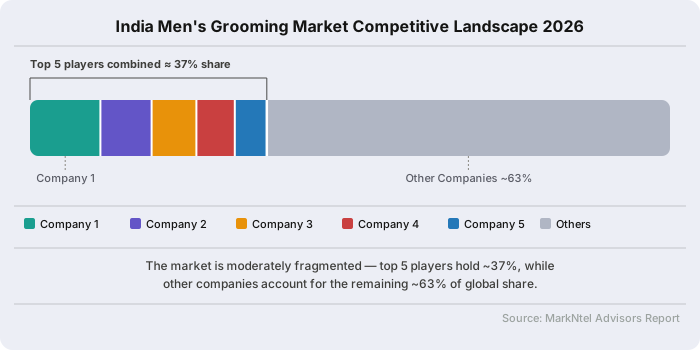
- The industry is fragmented, with the top five players collectively accounting for approximately 37% of the market share in 2026.
India Men’s Grooming Market Size and Outlook
The men’s grooming industry in India was valued at USD 2.47 billion in 2025 and is currently standing at USD 2.64 billion in 2026. The industry is projected to grow to USD 4.01 billion by 2032 showcasing a CAGR of around 7.2% during the forecast period, i.e., 2026–32. The market is evolving beyond its traditional dependence on shaving products into a comprehensive personal care ecosystem spanning beard care, skincare, haircare, fragrances, bath and body care, and electric grooming devices.
Innovation is increasingly shaping competitive differentiation as manufacturers introduce technologically advanced products to address evolving consumer expectations. Reflecting this shift, Philips launched its AI powered SkinIQ electric shaver portfolio during April 2025. The introduction of intelligent grooming solutions highlights the growing convergence of personal care and smart technology, while reinforcing premium product adoption within India's grooming landscape.
The market is also benefiting from expanding investments and broader retail accessibility. Bombay shaving company raised USD 14.2 million in November 2025, underscoring strong investor confidence in premium grooming brands. At the same time, fragrance and personal care brand Vokka expanded its quick commerce presence to more than 320 cities through blinkit, zepto, swiggy instamart, and amazon now during July 2026, demonstrating the increasing role of rapid commerce in strengthening product availability and consumer reach.
The regulatory landscape continues to support long term market development through stronger quality and compliance standards. The cosmetics (amendment) rules, 2025, notified by the ministry of health and family welfare on 29 July 2025, strengthen licensing, labelling, and regulatory oversight under the central drugs standard control organisation. In parallel, the proposed BIS quality control order for selected cosmetic categories reflects the government's continued emphasis on improving product quality and consumer safety.
India Men’s Grooming Market Key Indicators
- India recorded 093 billion internet subscribers in March 2026, expanding digital access, social media engagement, and online product discovery, all of which significantly influence men's grooming awareness and purchasing decisions.
- Around 46% of Indian consumers prioritise domestic beauty and grooming brands, indicating rising acceptance of premium, ingredient focused, and locally developed products across the men's grooming category
- India's FMCG sector recorded 8% year on year value growth during Q4, reflecting resilient consumer demand despite inflationary pressures. Growth was supported by premiumization, improving consumption patterns, and continued expansion across both urban and rural retail channels.
- India's FMCG sector recorded 4% volume growth alongside 7.1% price growth during Q3 2025, indicating that higher product pricing remained a significant contributor to overall value expansion.
- India's digital beauty ecosystem continues to strengthen. According to Flipkart, its Beauty & Personal Care category recorded 50% year-on-year growth, while Gen Z accounted for nearly 60% of all beauty purchases, with two out of every three beauty searches originating from Tier II and Tier III cities. The increasing penetration of online beauty retail significantly improves accessibility of men's grooming brands across non-metro India, boosting product adoption and market expansion.
India Men’s Grooming Market Scope
| Category | Segments |
|---|---|
| By Product Category | Shaving Products, Beard & Moustache Care, Grooming Appliances, Skin Care, Hair Care & Styling, Bath & Body Care, Fragrances |
| By Price Category | Premium, Mass Market |
| By Sales Channel | Online, Offline |
India Men’s Grooming Market Growth Drivers
Rising Grooming Awareness Among Young Men and Premiumization of Personal Care
Changing consumer behavior, rising disposable incomes, and increasing awareness of skincare and personal wellness are significantly accelerating the India men's grooming market. Grooming has evolved beyond traditional shaving products, with men increasingly adopting facial cleansers, serums, beard care, hair styling products, fragrances, and specialized skincare as part of their daily routines. This transformation is particularly evident among Millennials and Gen Z consumers, whose purchasing decisions are heavily influenced by social media, digital creators, celebrity endorsements, and wellness-focused lifestyles. According to Euromonitor International, the men's grooming category in India recorded 9% value growth in 2025, reflecting robust consumer demand for premium and specialized grooming products.
Furthermore, NielsenIQ (NIQ) reports that Gen Z men are reshaping India's grooming landscape through greater adoption of ingredient-led skincare products, a growing preference for domestic brands, and increasing engagement across both online and offline retail channels. The rapid expansion of e-commerce platforms, quick commerce, and organized beauty retail has further improved product accessibility across Tier II and Tier III cities, encouraging consumers to explore a wider range of men's grooming products. Additionally, increasing product innovation, premium formulations, and targeted marketing campaigns by FMCG companies and direct-to-consumer brands are driving higher product penetration and repeat purchases, supporting sustained growth of the India men's grooming market.
Recent Trends
AI Powered Personalisation Reshapes Men's Grooming Experiences
Artificial intelligence is transforming India's men's grooming market by enabling highly personalised product discovery and purchase decisions. Consumers are increasingly selecting grooming products based on individual skin type, beard density, hair condition, local climate, and lifestyle rather than relying on conventional product categories. During 2025, L'Oréal expanded its AI powered beauty diagnostics and personalisation ecosystem while strengthening its generative AI capabilities through collaborations with NVIDIA and Adobe, reflecting the industry's growing emphasis on data driven consumer engagement and customised grooming solutions.
The adoption of AI powered skin analysis and virtual consultations is further reshaping how consumers evaluate and purchase grooming products. Digital diagnostic platforms such as L'Oréal's Skin Genius, ModiFace, Perfect Corp's AI powered skin analysis, and Nykaa's AI Beauty Assistant enable users to assess skin concerns and receive tailored recommendations before purchasing cleansers, serums, sunscreens, beard care, and other grooming products. These technologies improved in 2025 through enhanced machine learning capabilities, making personalised grooming advice more accessible across online retail channels.
AI adoption is also extending beyond customer engagement into product development and portfolio optimisation. During 2025, Hindustan Unilever expanded the use of AI driven consumer insights to accelerate innovation across its beauty and personal care portfolio, while beauty companies increasingly leveraged predictive analytics to identify emerging ingredient preferences and evolving grooming routines. As AI continues integrating across research, merchandising, and digital commerce, manufacturers are expected to deliver more targeted product offerings, improving customer satisfaction and supporting premium category expansion in India's men's grooming market.
India Men’s Grooming Market Challenges and Opportunities
Counterfeit Products Restrain Consumer Confidence While Digital Authentication Creates Competitive Advantage
The proliferation of counterfeit and non-compliant grooming products continues to undermine consumer confidence and intensify competition for legitimate manufacturers in India's men's grooming market. During 2025, enforcement agencies significantly expanded surveillance across the cosmetics supply chain. The DCGI seized non-compliant cosmetics worth approximately USD 0.47 million through nationwide inspections, while the directorate of revenue intelligence intercepted counterfeit products valued at around USD 0.76 million in Mumbai. Additional enforcement by the Maharashtra FDA and local authorities demonstrates that counterfeit products remain deeply embedded across formal and informal distribution networks.
The challenge now extends beyond traditional grey markets into organised retail channels. In March 2025, the bureau of Indian standards recovered more than 3,500 products carrying fake or missing ISI marks from Amazon and Flipkart warehouses in Delhi. Such incidents increase reputational risks for legitimate brands, complicate purchasing decisions, and discourage consumers from trading up to premium grooming products despite rising category innovation.
These enforcement actions are simultaneously accelerating investment in product authentication and regulatory compliance, creating a structural opportunity for organised manufacturers. The cosmetics (amendment) rules, 2025 introduced mandatory digital batch level record maintenance, enabling greater traceability throughout the product lifecycle while strengthening regulatory oversight. The framework is expected to favour compliant brands capable of demonstrating product authenticity and consistent manufacturing standards.
This transition is further reinforced by technology driven authentication across organised retail. According to Amazon's Report, 2026, the company identified and disposed of more than 15 million counterfeit products globally during 2025 using artificial intelligence, while its counterfeit crimes unit has supported over 32,000 legal actions since 2020. As digital marketplaces continue strengthening verification systems, compliant men's grooming brands are expected to gain stronger consumer trust, improve premium product acceptance, and secure a sustainable competitive advantage.
Segmentation Insights
Shaving Products Leading the Market Through High Usage Frequency and Strong Brand Penetration
Shaving Products dominated the India men's grooming market, accounting for approximately 48% of the market share in 2026. The segment maintains its leadership owing to the routine nature of shaving among a large proportion of male consumers, creating consistent demand for razors, blades, shaving foams, creams, gels, and after shave lotions. Strong brand loyalty, extensive product availability across urban and rural markets, and continuous replacement purchases further reinforce the segment's dominant position within the overall market.
The segment continues to benefit from product innovation focused on skin comfort, precision, and convenience. Manufacturers are introducing advanced multi blade cartridge systems, skin sensitive shaving formulations, lubricating strips, and post shave care products to enhance the grooming experience and encourage premium product adoption. The expansion of modern retail, pharmacies, quick commerce, and e commerce platforms has further improved product accessibility, enabling established brands to strengthen market penetration while sustaining the segment's long term leadership. Based on product category, the market is further bifurcated into:
- Shaving Products
- Beard & Moustache Care
- Grooming Appliances (Electric Products)
- Skin Care & Colour Cosmetics
- Hair Care & Styling
- Bath & Body Care
- Fragrances
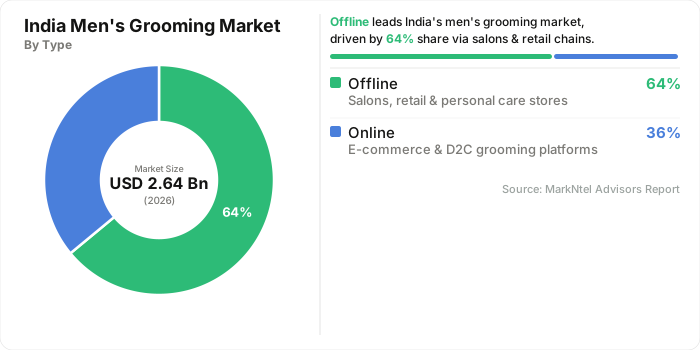
Offline Retail Maintains Market Leadership Through Extensive Reach and Consumer Trust
Offline remained the leading sales channel in the market, commanding approximately 64% of the market share in 2026. Consumers continue to prefer physical retail outlets for grooming purchases owing to immediate product availability, the ability to compare products in person, and greater confidence in product authenticity. Strong penetration of supermarkets, hypermarkets, pharmacies, specialty stores, and neighbourhood general stores ensures widespread accessibility across metropolitan, Tier II, and Tier III cities.
The dominance of offline retail is further supported by extensive distribution networks established by leading FMCG companies, enabling broad product visibility and consistent replenishment across diverse retail formats. Although online platforms continue expanding rapidly, offline channels remain the primary touchpoint for routine grooming purchases due to their convenience, trust, and established consumer buying behaviour. Based on sales channel, the market is further bifurcated into:
- Online
- Offline
India Men’s Grooming Market Competitive Analysis
The India men's grooming market is moderately fragmented, with competition distributed among multinational FMCG companies, domestic personal care manufacturers, premium grooming specialists, digital first brands, and grooming appliance manufacturers. Major participants include Procter & Gamble Hygiene and Health Care Limited, Hindustan Unilever Limited, ITC Limited, L'Oréal India Private Limited, and Beiersdorf India Private Limited. The top five players collectively account for approximately 37% of the industry.
Key Companies in the India Men's Grooming Market
- Procter & Gamble Hygiene and Health Care Limited (Gillette / Old Spice)
- Hindustan Unilever Limited (Axe / Dove Men+Care)
- ITC Limited (Engage / Fiama Men)
- L'Oréal India Private Limited (Garnier Men)
- Beiersdorf India Private Limited (Nivea Men)
- Marico Limited (Beardo)
- Emami Limited (Fair & Handsome / The Man Company)
- Philips India Limited (Philips Men's Grooming)
- McNroe Consumer Products Private Limited (Wild Stone)
- Visage Lines Personal Care Private Limited (Bombay Shaving Company)
India Men’s Grooming Industry News and Recent Developments
2025: Hindustan Unilever Expands Ingredient Led Skincare Portfolio to Strengthen Men's Grooming Innovation
Hindustan Unilever Limited completed the acquisition of a 90.5% stake in premium skincare brand Minimalist in April 2025, reinforcing the industry's increasing focus on science backed and ingredient led personal care solutions. The transaction expands HUL's capabilities in high efficacy skincare formulations featuring active ingredients such as niacinamide, vitamin C, and salicylic acid, categories that are witnessing growing adoption among male consumers. As skincare increasingly becomes a core component of men's daily grooming routines, the acquisition strengthens HUL's ability to develop premium, performance driven products tailored to evolving consumer expectations across India's grooming market.
Impact Analysis: The acquisition highlights the growing convergence between premium skincare and men's grooming, encouraging greater investment in science based formulations and product innovation. The transaction is expected to accelerate premiumisation, expand ingredient focused product offerings, and intensify competition among manufacturers seeking to address the evolving skincare needs of male consumers.
2025: Honasa Consumer Enters Men's Grooming Through Reginald Men Acquisition
Honasa Consumer Limited acquired a 90.7% stake in men's personal care brand Reginald Men for approximately US$22.8 million in December 2025, marking its formal entry into India's men's grooming market. The acquisition expands Honasa's portfolio beyond beauty and skincare while strengthening its presence in premium male grooming categories, including beard care, skincare, and hair care. Reginald Men has established a strong regional presence with a portfolio designed specifically for male consumers, enabling Honasa to leverage its digital capabilities, omnichannel distribution network, and brand building expertise to accelerate category expansion and reach a broader consumer base.
Impact Analysis: The acquisition reflects rising strategic interest in India's men's grooming market as established beauty companies diversify into dedicated male personal care segments. The transaction is expected to strengthen competition, accelerate premium product development, and encourage further investments targeting specialised grooming categories supported by digital commerce and evolving consumer demand.
2026: L'Oréal Deepens Science Led Personal Care Capabilities to Advance Premium Men's Grooming
L'Oréal acquired a majority stake in Indian beauty company Innovist in June 2026, marking its first acquisition in India in nearly thirteen years and strengthening its position in the country's premium beauty and personal care industry. Innovist's portfolio, including Bare Anatomy and Chemist at Play, is recognised for ingredient led skincare and hair care formulations built around dermatological science and efficacy. As demand for specialised skincare and hair care continues to rise among male consumers, the acquisition enhances L'Oréal's innovation capabilities and broadens its presence across premium categories closely aligned with India's evolving men's grooming market.
Impact Analysis: The acquisition strengthens the innovation ecosystem supporting India's men's grooming market by expanding access to advanced ingredient based technologies and premium product development. It is expected to accelerate formulation innovation, intensify competition in high value grooming categories, and encourage wider adoption of science backed skincare and hair care solutions among male consumers.
Frequently Asked Questions
- Market Segmentation
- Introduction
- Product Definition
- Research Process
- Assumptions
- Executive Summary
- India Men’s Grooming Market, Start-up Ecosystem
- Entrepreneurial Activity
- Year-on-Year Funding Received
- Funding Received by Top Companies
- Key Investors Active in the Market
- Series Wise Funding Received
- Seed Funding
- Angel Investing
- Venture Capitalist (VC) Funding
- Others
- India Men’s Grooming Market Policies, Regulations, and Product Standards
- India Men’s Grooming Market Trends & Developments
- India Men’s Grooming Market Dynamics
- Growth Factors
- Challenges
- India Men’s Grooming Market Hotspot & Opportunities
- India Men’s Grooming Market Outlook, 2022-2032
- Market Size & Outlook
- By Revenues (USD Million)
- By Quantity Sold (Thousand Units)
- Market Segmentation & Outlook
- By Product Category- Market Size & Forecast 2022-2032, USD Million & Thousand Units
- Shaving Products
- Shaving Foam, Cream & Gel
- After Shave Lotion & Balms
- Razors & Blades
- Beard & Moustache Care
- Beard Oils & Serums
- Beard Washes & Conditioners
- Beard Waxes & Balms
- Grooming Appliances
- Beard Trimmers & Stylers
- Electric Shavers
- Body Groomers
- Skin Care
- Face Care
- Body Care
- Hair Care & Styling
- Hair Wash & Care
- Hair Styling
- Scalp Treatments
- Bath & Body Care
- Body Washes & Soaps
- Body Lotions & Sprays
- Intimate Hygiene Products
- Fragrances
- Deodorants & Body Sprays
- Perfumes
- Shaving Products
- By Price Category- Market Size & Forecast 2022-2032, USD Million & Thousand Units
- Premium
- Mass Market
- By Sales Channel- Market Size & Forecast 2022-2032, USD Million & Thousand Units
- Online
- Offline
- Specialty Stores
- Supermarkets/Hypermarkets
- General Stores
- Pharmacies & Drugstores
- By Region- Market Size & Forecast 2022-2032, USD Million & Thousand Units
- North
- East
- West
- South
- By Company
- Competition Characteristics
- Market Share & Analysis
- By Product Category- Market Size & Forecast 2022-2032, USD Million & Thousand Units
- Market Size & Outlook
- India Men’s Shaving Products Market Outlook, 2022-2032
- Market Size & Outlook
- By Revenues (USD Million)
- By Quantity Sold (Thousand Units)
- Market Segmentation & Outlook
- By Price Category- Market Size & Forecast 2022-2032, USD Million & Thousand Units
- By Sales Channel- Market Size & Forecast 2022-2032, USD Million & Thousand Units
- By Region- Market Size & Forecast 2022-2032, USD Million & Thousand Units
- Market Size & Outlook
- India Men’s Beard & Moustache Care Market Outlook, 2022-2032
- Market Size & Outlook
- By Revenues (USD Million)
- By Quantity Sold (Thousand Units)
- Market Segmentation & Outlook
- By Price Category- Market Size & Forecast 2022-2032, USD Million & Thousand Units
- By Sales Channel- Market Size & Forecast 2022-2032, USD Million & Thousand Units
- By Region- Market Size & Forecast 2022-2032, USD Million & Thousand Units
- Market Size & Outlook
- India Men’s Grooming Appliances Market Outlook, 2022-2032
- Market Size & Outlook
- By Revenues (USD Million)
- By Quantity Sold (Thousand Units)
- Market Segmentation & Outlook
- By Price Category- Market Size & Forecast 2022-2032, USD Million & Thousand Units
- By Sales Channel- Market Size & Forecast 2022-2032, USD Million & Thousand Units
- By Region- Market Size & Forecast 2022-2032, USD Million & Thousand Units
- Market Size & Outlook
- India Men’s Skin Care & Colour Cosmetics Market Outlook, 2022-2032
- Market Size & Outlook
- By Revenues (USD Million)
- By Quantity Sold (Thousand Units)
- Market Segmentation & Outlook
- By Price Category- Market Size & Forecast 2022-2032, USD Million & Thousand Units
- By Sales Channel- Market Size & Forecast 2022-2032, USD Million & Thousand Units
- By Region- Market Size & Forecast 2022-2032, USD Million & Thousand Units
- Market Size & Outlook
- India Men’s Hair Care & Styling Market Outlook, 2022-2032
- Market Size & Outlook
- By Revenues (USD Million)
- By Quantity Sold (Thousand Units)
- Market Segmentation & Outlook
- By Price Category- Market Size & Forecast 2022-2032, USD Million & Thousand Units
- By Sales Channel- Market Size & Forecast 2022-2032, USD Million & Thousand Units
- By Region- Market Size & Forecast 2022-2032, USD Million & Thousand Units
- Market Size & Outlook
- India Men’s Bath & Body Care Market Outlook, 2022-2032
- Market Size & Outlook
- By Revenues (USD Million)
- By Quantity Sold (Thousand Units)
- Market Segmentation & Outlook
- By Price Category- Market Size & Forecast 2022-2032, USD Million & Thousand Units
- By Sales Channel- Market Size & Forecast 2022-2032, USD Million & Thousand Units
- By Region- Market Size & Forecast 2022-2032, USD Million & Thousand Units
- Market Size & Outlook
- India Men’s Fragrances Market Outlook, 2022-2032
- Market Size & Outlook
- By Revenues (USD Million)
- By Quantity Sold (Thousand Units)
- Market Segmentation & Outlook
- By Price Category- Market Size & Forecast 2022-2032, USD Million & Thousand Units
- By Sales Channel- Market Size & Forecast 2022-2032, USD Million & Thousand Units
- By Region- Market Size & Forecast 2022-2032, USD Million & Thousand Units
- Market Size & Outlook
- India Men’s Grooming Market Key Strategic Imperatives for Success & Growth
- Competitive Outlook
- Company Profiles
- Procter & Gamble Hygiene and Health Care Limited (Gillette / Old Spice)
- Business Description
- Product Portfolio
- Collaborations & Alliances
- Recent Developments
- Financial Details
- Others
- Hindustan Unilever Limited (Axe / Dove Men+Care)
- Business Description
- Product Portfolio
- Collaborations & Alliances
- Recent Developments
- Financial Details
- Others
- ITC Limited (Engage, Fiama Men)
- Business Description
- Product Portfolio
- Collaborations & Alliances
- Recent Developments
- Financial Details
- Others
- L'Oréal India Private Limited (Garnier Men)
- Business Description
- Product Portfolio
- Collaborations & Alliances
- Recent Developments
- Financial Details
- Others
- Beiersdorf India Private Limited (Nivea Men)
- Business Description
- Product Portfolio
- Collaborations & Alliances
- Recent Developments
- Financial Details
- Others
- Marico Limited (Beardo)
- Business Description
- Product Portfolio
- Collaborations & Alliances
- Recent Developments
- Financial Details
- Others
- Emami Limited (Fair & Handsome, The Man Company)
- Business Description
- Product Portfolio
- Collaborations & Alliances
- Recent Developments
- Financial Details
- Others
- Philips India Limited (Philips Men’s Grooming)
- Business Description
- Product Portfolio
- Collaborations & Alliances
- Recent Developments
- Financial Details
- Others
- McNroe Consumer Products Private Limited (Wild Stone)
- Business Description
- Product Portfolio
- Collaborations & Alliances
- Recent Developments
- Financial Details
- Others
- Visage Lines Personal Care Private Limited (Bombay Shaving Company)
- Business Description
- Product Portfolio
- Collaborations & Alliances
- Recent Developments
- Financial Details
- Others
- Procter & Gamble Hygiene and Health Care Limited (Gillette / Old Spice)
- Company Profiles
- Disclaimer
MarkNtel Advisors follows a robust and iterative research methodology designed to ensure maximum accuracy and minimize deviation in market estimates and forecasts. Our approach combines both bottom-up and top-down techniques to effectively segment and quantify various aspects of the market. A consistent feature across all our research reports is data triangulation, which examines the market from three distinct perspectives to validate findings. Key components of our research process include:
1. Scope & Research Design At the outset, MarkNtel Advisors define the research objectives and formulate pertinent questions. This phase involves determining the type of research—qualitative or quantitative—and designing a methodology that outlines data collection methods, target demographics, and analytical tools. They also establish timelines and budgets to ensure the research aligns with client goals.
2. Sample Selection and Data Collection In this stage, the firm identifies the target audience and determines the appropriate sample size to ensure representativeness. They employ various sampling methods, such as random or stratified sampling, based on the research objectives. Data collection is carried out using tools like surveys, interviews, and observations, ensuring the gathered data is reliable and relevant.
3. Data Analysis and Validation Once data is collected, MarkNtel Advisors undertake a rigorous analysis process. This includes cleaning the data to remove inconsistencies, employing statistical software for quantitative analysis, and thematic analysis for qualitative data. Validation steps are taken to ensure the accuracy and reliability of the findings, minimizing biases and errors.

4. Data Forecast and FinalizationThe final phase involves forecasting future market trends based on the analyzed data. MarkNtel Advisors utilize predictive modeling and time series analysis to anticipate market behaviors. The insights are then compiled into comprehensive reports, featuring visual aids like charts and graphs, and include strategic recommendations to inform client decision-making
We offer flexible licensing options to cater to varying organizational needs. Choose the pricing pack that best suits your requirements:
Buy Now Inquire Before Buying
 Request Customization
 Talk to our Consultant







