

Global Private Label Market Research Report: Trends, Forecast & Opportunities (2026-2032)
By Product Category (Food & Beverages (Bakery Products, Dairy Products, Frozen Foods, Snacks & Confectionery, Ready-to-Eat & Ready-to-Cook Meals, Staples & Pantry Products, Beverag ... es, Baby Food, Pet Food), Personal Care & Cosmetics (Skin Care, Hair Care, Oral Care, Bath & Body Care, Color Cosmetics, Men’s Grooming Products), Household & Home Care (Laundry Care, Surface Cleaners, Dishwashing Products, Air Care, Paper & Hygiene Products, Household Maintenance Products), Health & Wellness (Vitamins & Dietary Supplements, Sports Nutrition, Functional Foods, OTC Healthcare Products, Herbal & Ayurvedic Products), Apparel & Fashion (Clothing, Footwear, Innerwear & Loungewear, Sportswear, Fashion Accessories), Consumer Goods & General Merchandise (Kitchenware, Home Décor, Small Household Appliances, Stationery & Office Supplies, Toys & Baby Accessories, DIY & Hardware Products), Electronics & Accessories (Mobile Accessories, Audio Devices, Smart Gadgets, Computer Accessories, Batteries & Charging Devices)), By Brand Positioning (Economy Private Label, Standard/Value Private Label, Premium Private Label, Luxury/Designer Private Label), By Packaging Type (Flexible Packaging, Rigid Packaging, Sustainable/Recyclable Packaging), By Distribution Channel (Offline Channels (Supermarkets & Hypermarkets, Specialty Stores, Others), Online Channels (Online Retail/E-commerce, Direct-to-Consumer (D2C) Platforms)), and others Read more
- FMCG
- May 2026
- Pages 310
- Report Format: PDF, Excel, PPT
Global Private Label Market
Projected 9.15% CAGR from 2026 to 2032
Study Period
2026-2032
Market Size (2026)
USD 1019.23 Billion
Market Size (2032)
USD 1723.80 Billion
Largest Region
Europe
Projected CAGR
9.15%
Leading Segments
By Product Category: Food & Beverages
Global Private Label Market Key Takeaways
- The private label market was valued at USD 948.86 billion in 2025, projected to reach USD 1019.23 billion in 2026 and USD 1723.80 billion by 2032 at a 9.15% CAGR.
- Europe leads regional performance, capturing approximately 40% share in 2026.
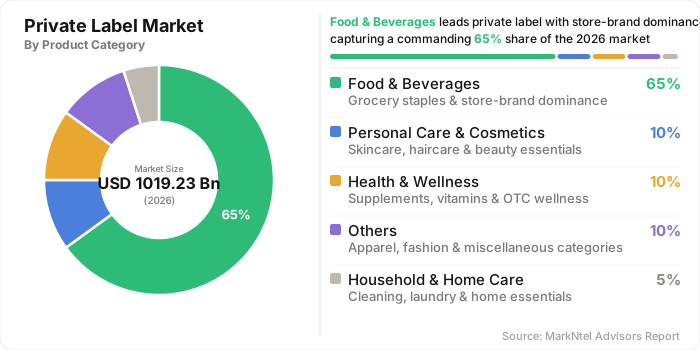
- Food & beverages dominate by product category, contributing around 65% of total revenue in 2026.
- By brand positioning, standard/value private labels hold nearly 50% share in 2026.
- The industry remains moderately fragmented, with the top five players collectively accounting for nearly 28% share, indicating competitive yet distributed industry dynamics.
Global Private Label Market Size and Outlook
The global private label market is projected to witness sustained growth at a CAGR of 9.15% during 2026–2032. This expansion is primarily driven by retailers leveraging cost efficiencies and strengthening in-house product portfolios across food, household, and personal care segments. The ability to deliver competitive pricing while maintaining margin superiority is accelerating adoption, supported by evolving retailer margin optimization strategies that enhance profitability and long-term brand positioning.
Simultaneously, product innovation dynamics are reshaping competitive differentiation within the market. Clean-label reformulation and ingredient transparency have become essential development benchmarks as consumers increasingly prioritize health-conscious purchasing decisions. The U.S. Food and Drug Administration has initiated regulatory actions to revoke authorization for Red Dye No. 3 in food products, signaling stricter oversight of synthetic additives and encouraging industry-wide reformulation. FDA regulatory update. These developments are reinforcing clean ingredient adoption, enabling private label products to compete more effectively with established brands.
On the opportunity side, the expansion of organized retail infrastructure is significantly improving accessibility and distribution reach. Emerging markets such as India are witnessing rapid retail modernization, creating favorable conditions for private label penetration. As per the JLL India Retail Market Dynamics Q4 2025, retail leasing activity increased by 54% year-on-year in 2025, with mall stock nearing 92 million square feet. This growth is strengthening supply chains and driving modern trade expansion, enhancing visibility and shelf space for retailer-owned brands.
The profitability advantages, regulatory-driven innovation, and expanding retail infrastructure are collectively shaping the future trajectory of the market. As consumer trust strengthens and product quality continues to improve, private label offerings are gaining wider acceptance across multiple categories. Increasing investments in innovation, sustainable practices, and distribution expansion are further reinforcing competitive positioning.
Overall, the industry is expected to maintain strong growth momentum, expanding from USD 1,019.23 billion in 2026 to USD 1,723.80 billion by 2032, supported by scalability, evolving consumer preferences, and continuous advancement in product and retail strategies.
Global Private Label Market Key Indicators
- According to the World Bank Current Health Expenditure Database, global healthcare spending remained elevated at approximately 10.3% of GDP in recent years, reflecting sustained investment in preventive healthcare, pharmaceuticals, and wellness products. This structural spending pattern is expanding demand for affordable private-label vitamins, supplements, and over-the-counter healthcare products. Increasing consumer focus on value-driven healthcare solutions continues to accelerate private label healthcare demand globally.
- The FAO Food Price Index update reported an average of 122.0 points in 2024, remaining significantly above historical baselines despite recent moderation . Persistently high food prices are intensifying cost pressures on households, encouraging a shift toward lower-priced grocery alternatives. This pricing dynamic is strengthening private label penetration across essential food categories, supporting continued expansion of value-oriented retail consumption worldwide.
- Eurostat data indicate that real household consumption expenditure in the European Union grew by 1.5% in 2024, accelerating from 0.4% growth. As reported in Eurostat Household Consumption Data, this rebound reflects renewed consumer spending across essential categories. Rising transaction volumes across food, personal care, and household segments are creating favorable conditions for retailer-owned brands, reinforcing the role of FMCG consumption recovery in private label growth.
- According to the U.S. Census Bureau E-commerce Report, U.S. retail e-commerce sales reached USD 326.7 billion in Q1 2026, rising 9.8% year-on-year and outpacing total retail growth. E-commerce accounted for 16.9% of total retail sales, reflecting a steady shift toward digital purchasing channels. This expansion is enhancing the visibility and distribution of retailer-owned brands, significantly boosting online private label penetration across multiple consumer categories.
- The World Bank Urban Development Overview highlights that over 4 billion people currently reside in urban areas, with cities contributing more than 80% of global GDP. The global urban population is projected to reach nearly 70% by 2050 , driving demand for modern retail formats. This demographic shift is expanding access to packaged goods and accelerating the adoption of urban retail expansion strategies, supporting private label growth.
Global Private Label Market Scope
| Category | Segments |
|---|---|
| By Product Category | Food & Beverages (Bakery Products, Dairy Products, Frozen Foods, Snacks & Confectionery, Ready-to-Eat & Ready-to-Cook Meals, Staples & Pantry Products, Beverages, Baby Food, Pet Food), Personal Care & Cosmetics (Skin Care, Hair Care, Oral Care, Bath & Body Care, Color Cosmetics, Men’s Grooming Products), Household & Home Care (Laundry Care, Surface Cleaners, Dishwashing Products, Air Care, Paper & Hygiene Products, Household Maintenance Products), Health & Wellness (Vitamins & Dietary Supplements, Sports Nutrition, Functional Foods, OTC Healthcare Products, Herbal & Ayurvedic Products), Apparel & Fashion (Clothing, Footwear, Innerwear & Loungewear, Sportswear, Fashion Accessories), Consumer Goods & General Merchandise (Kitchenware, Home Décor, Small Household Appliances, Stationery & Office Supplies, Toys & Baby Accessories, DIY & Hardware Products), Electronics & Accessories (Mobile Accessories, Audio Devices, Smart Gadgets, Computer Accessories, Batteries & Charging Devices |
| By Brand Positioning | Economy Private Label, Standard/Value Private Label, Premium Private Label, Luxury/Designer Private Label |
| By Packaging Type | Flexible Packaging, Rigid Packaging, Sustainable/Recyclable Packaging |
| By Distribution Channel | Offline Channels (Supermarkets & Hypermarkets, Specialty Stores, Others), Online Channels (Online Retail/E-commerce, Direct-to-Consumer (D2C) Platforms |
Global Private Label Market Growth Drivers
Profitability and Premiumization Accelerating Private Label Expansion
Private label products are emerging as a key profitability lever in the private label sector, driven by their ability to eliminate external branding, advertising, and intermediary costs associated with national brands. This structural advantage enables retailers to maintain competitive pricing while achieving higher margins. As per recent analysis, Retail & Consumer Trends, over 99% of U.S. households purchased at least one private label product in 2024, with sales increasing by nearly 4% year-on-year.
Consumer perception is simultaneously evolving, strengthening the foundation for sustained growth. As 84% of consumers trust private label products as much as or more than national brands, indicating a significant shift in quality perception . This growing acceptance is enabling retailers to reposition store brands beyond low-cost alternatives toward value-driven offerings, reinforcing private label consumer trust and supporting long-term category expansion.
Retailers are actively capitalizing on this momentum through aggressive investment strategies. As reported by FMI Private Brands Survey via Store Brands, 86% of food retailers plan to increase private brand investment, while 95% consider them critical to operations. This reflects a strong push toward private label premiumization and improved assortment strategies across categories. This superior margin economics, evolving consumer perception, and sustained retailer investment are collectively accelerating growth across the private label industry.
Recent Trends
Clean-Label Reformulation Redefining Private Label Product Standards
Clean-label reformulation and ingredient transparency are emerging as central priorities in the private label demand as retailers respond to evolving consumer demand for simpler, more transparent food products. Walmart Inc. announced that it is removing synthetic dyes along with more than 30 additional ingredients from its private label food brands, including Great Value and Market Side, to enhance product formulation standards and align with shifting consumer expectations.
This transition reflects a broader shift toward clean-label reformulation and ingredient transparency, as consumers increasingly scrutinize product labels and prioritize health-conscious purchasing decisions. Retailers are responding by simplifying ingredient lists, improving sourcing practices, and strengthening product positioning within premium segments, thereby reinforcing private label competitiveness against national brands.
In parallel, regulatory developments and heightened quality expectations are accelerating the pace of reformulation across the private label industry. Retailers are aligning product standards with emerging compliance requirements while integrating premiumization strategies to enhance perceived value and consumer trust. This dual focus on regulatory alignment and consumer-driven innovation is expanding the scope of private label offerings across food and adjacent categories.
Global Private Label Market Opportunities and Challenges
Regulatory Pressure Accelerating Packaging Innovation in Private Labels
Extended Producer Responsibility (EPR) regulations are emerging as a significant constraint within the private label landscape, introducing new cost structures and operational burdens for retailers. As outlined by the EPR overview (Earth911), several U.S. states, including Oregon and California, are implementing compliance frameworks requiring producers to manage packaging waste through reporting, registration, and fee-based systems, increasing complexity and reinforcing EPR compliance costs.
These regulatory mandates are placing pressure on retailers, particularly in private label portfolios where packaging accountability lies directly with the retailer. Increased compliance obligations limit packaging flexibility and introduce additional cost exposure, thereby tightening margins and complicating supply chain decisions. This evolving regulatory landscape is forcing retailers to reassess packaging strategies while balancing cost efficiency with compliance requirements, driving the adoption of sustainable packaging solutions.
However, the same regulatory environment is creating a parallel opportunity for competitive differentiation. Aldi announced a redesign of over 90% of its private label products in 2025, incorporating recyclable and compostable materials to enhance its sustainability positioning. Aldi private label redesign . This initiative demonstrates how retailers are leveraging packaging innovation to strengthen consumer perception and brand visibility, reinforcing private label sustainability positioning. These EPR regulations are simultaneously acting as a cost-driven challenge and a catalyst for innovation, transforming packaging into a strategic lever within the private label industry.
Segmentation Insights
Food & Beverages Leads the Way for Private Label Adoption
The food & beverages segment dominates the private label industry, accounting for nearly 65% of total revenue, driven by its essential nature and high purchase frequency across global households. Core categories such as dairy, bakery, frozen foods, snacks, and staples form the backbone of everyday consumption, enabling retailers to maintain consistent sales volumes and strong shelf turnover. This widespread and recurring demand significantly strengthens private label food dominance, making the segment the primary contributor to overall market growth.
Retailers are actively reinforcing this dominance through large-scale product portfolio expansion and innovation. For instance, Walmart Inc. launched its “bettergoods” private label brand in April 2024, introducing over 300 food products spanning frozen meals, dairy, snacks, beverages, and plant-based offerings . This extensive range reflects a strategic focus on affordability combined with premium-quality positioning, enabling retailers to capture both value-driven and aspirational consumers.
In addition, shifting consumer preferences toward convenience and healthier options are accelerating innovation. Ready-to-eat meals, functional foods, and better-for-your snacks are gaining traction, supported by improved formulations and packaging advancements. This evolution is reinforcing convenience-driven demand, allowing private labels to compete more effectively with established brands. Strong consumption fundamentals, continuous portfolio expansion, and evolving consumer trends ensure the sustained dominance of the Food & Beverages. Based on product category, the market is classified into:
- Food & Beverages
- Personal Care & Cosmetics
- Household & Home Care
- Health & Wellness
- Apparel & Fashion
- Consumer Goods & General Merchandise
- Electronics & Accessories
Standard/Value Private Label Dominates the Brand Positioning
The standard/value segment leads the private label industry, accounting for approximately 50% of total revenue, driven by its strong balance between affordability and dependable quality. Positioned between economy and premium tiers, this segment appeals to a wide consumer base seeking everyday products at competitive prices without compromising usability. Its extensive presence across essential categories such as food, household, and personal care reinforces affordable quality positioning, making it the most scalable and widely adopted segment globally.
Retailers are actively strengthening this dominance through expansive and strategically aligned portfolios. For instance, Walmart Inc.’s “Great Value” brand represents one of the largest standard private label portfolios, spanning grocery, household, and essential products. It is specifically designed to deliver quality comparable to national brands at lower prices, demonstrating the segment’s ability to drive consistent volumes. Such large-scale offerings support high-volume consumption segment dynamics, enabling retailers to maximize reach and repeat purchases across diverse demographics.
Furthermore, continuous improvements in packaging, product formulation, and branding are narrowing the gap with premium offerings. This evolution is enhancing consumer perception while maintaining affordability, reinforcing cost-value optimization across the segment. Strong demand fundamentals, retailer investment, and evolving consumer expectations ensure the sustained dominance of the Standard/Value segment. The study categorizes key brand positioning into the following segments:
- Economy Private Label
- Standard/Value Private Label
- Premium Private Label
- Luxury/Designer Private Label
Global Private Label Market Geographical Outlook
Europe represents the largest regional share in the private label industry, accounting for approximately 40% of global demand, supported by a highly mature retail ecosystem and strong consumer acceptance of retailer-owned brands. Private label products accounted for 42% of total FMCG value sales across major European markets in 2024, confirming the region’s leadership globally and reflecting deep structural integration across food and non-food categories.

The dominance of private labels is further reinforced by the expansion of discount retail formats led by Aldi Group and Lidl Stiftung & Co. KG, which allocate a substantial share of shelf space to own-brand products. These retailers have successfully positioned private labels as high-quality yet cost-effective alternatives, driving adoption across diverse income segments and strengthening discount retail expansion throughout Europe.
Additionally, evolving consumer preferences toward value, sustainability, and product transparency are accelerating the shift toward private label offerings. Retailers are increasingly investing in premium, organic, and clean-label product lines to enhance competitiveness and align with changing expectations. This transition is improving consumer value perception, enabling private labels to compete directly with established brands. This strong retail infrastructure, high penetration levels, and continuous product innovation position Europe as the benchmark region for sustained private label growth globally.
Global Private Label Market Competitive Analysis
The competitive landscape of the private label market is shaped by leading retailers such as Walmart Inc., Amazon.com Inc., Costco Wholesale Corporation, The Kroger Co., and Aldi Group, which collectively hold an estimated 28% share of the global market. Their dominance is driven by large-scale sourcing, strong private brand portfolios, and extensive retail networks. However, the industry remains moderately fragmented due to the presence of regional players such as Tesco plc, Carrefour S.A., and Reliance Retail Limited, which maintain strong local influence.

Leading Companies in the Private Label Market
- Walmart Inc.
- Amazon.com Inc.
- Costco Wholesale Corporation
- The Kroger Co.
- Target Corporation
- Aldi Group
- Lidl Stiftung & Co. KG
- Tesco plc
- Carrefour S.A.
- Ahold Delhaize
- Rewe Group
- Edeka Group
- AEON Co., Ltd.
- Seven & I Holdings Co., Ltd.
- Reliance Retail Limited
- Others
Global Private Label Industry News and Recent Developments
-
April 2026: Walmart Modernizes Great Value Private Brand Portfolio
Walmart Inc. announced a comprehensive redesign of its flagship Great Value private label brand, marking the first major refresh in over a decade. The initiative covers nearly 10,000 food and consumables products and introduces improved packaging visibility, standardized nutritional labeling, and enhanced digital shoppability. Walmart stated that Great Value products are present in nine out of ten U.S. households and help families save approximately 35% annually compared with national brands.
Impact Analysis: The redesign highlights the increasing strategic importance of private labels as retailers move beyond price-focused positioning toward brand modernization and premium shelf appeal. Improved packaging consistency and digital discoverability are expected to strengthen customer retention, increase online conversion rates, and elevate consumer perception of store brands relative to national brands. The scale of the rollout also demonstrates Walmart’s long-term commitment to private label expansion, intensifying competitive pressure across global grocery and household retail markets.
-
October 2025: Kroger Expands Health-Focused Simple Truth Private Label Line
The Kroger Co. launched the new “Simple Truth Protein” range, adding more than 80 high-protein meals and snack products under its flagship private label portfolio. The company described the launch as the largest product expansion in the history of the Simple Truth brand, targeting growing consumer demand for wellness-oriented and clean-label food products.
Impact Analysis: The expansion reflects the accelerating shift of private labels into premium health and wellness categories traditionally dominated by national brands. By leveraging protein-focused and clean-label positioning, Kroger is strengthening consumer trust in retailer-owned brands while improving margin performance in higher-value segments. The development also signals rising private label innovation capabilities, indicating that store brands are increasingly competing on functionality, nutrition, and lifestyle alignment rather than solely on affordability.
-
September 2025: Amazon.com Inc. Launches Amazon Grocery as a Unified Private Label Food Brand
Amazon introduced “Amazon Grocery”, a new private label food brand consolidating its Amazon Fresh and Happy Belly product lines into a unified grocery portfolio. The launch includes more than 1,000 food products across dairy, produce, snacks, meat, seafood, and pantry staples, with most items priced below USD 5. The company also stated that purchases of Amazon private-label products increased 15% during 2024 across Amazon.com, Whole Foods Market, and Amazon Fresh.
Impact Analysis: The launch highlights the growing importance of digitally integrated private label ecosystems within global retail. By consolidating multiple in-house grocery brands under a single identity, Amazon is strengthening consumer recognition, improving operational efficiency, and expanding its ability to compete with established retailer-owned brands from Walmart, Costco, and Kroger. The focus on value pricing, broad category coverage, and omnichannel availability further reinforces the structural shift toward private labels as inflation-conscious consumers increasingly prioritize affordability without sacrificing convenience or product quality.
Frequently Asked Questions
- Market Segmentation
- Introduction
- Product Definition
- Research Process
- Assumptions
- Executive Summary
- Global Private Label Market Policies, Regulations, and Product Standards
- Global Private Label Production Trend 2022-2032
- Global Private Label Trend by Type of Product Category
-
- Food & Beverages
- Personal Care & Cosmetics
- Household & Home Care
- Health & Wellness
- Apparel & Fashion
- Consumer Goods & General Merchandise
- Electronics & Accessories
-
- Company-Wise Production Plants and Statistics
- Installed Production Capacity
- Actual Production
- Planned Production Target
- Global Private Label Trend by Type of Product Category
- Global Private Label Pricing Analysis 2022-2032
- Global Private Label Pricing Trend 2022-2032
- Global Private Label Pricing Trend by Regions 2022-2032
- North America
- South America
- Europe
- Middle East & Africa
- Asia Pacific
- Global Private Label Pricing Trend by Product Category 2022-2032
- Food & Beverages
- Personal Care & Cosmetics
- Household & Home Care
- Health & Wellness
- Apparel & Fashion
- Consumer Goods & General Merchandise
- Electronics & Accessories
- Global Private Label Market Dynamics
- Growth Factors
- Challenges
- Global Private Label Market Hotspot & Opportunities
- Global Private Label Market Outlook, 2022-2032F
- Market Size & Outlook
- By Revenues (USD Million)
- Market Share & Analysis
- By Product Category - Market Size & Forecast 2022-2032, USD Million
- Food & Beverages
- Bakery Products
- Dairy Products
- Frozen Foods
- Snacks & Confectionery
- Ready-to-Eat & Ready-to-Cook Meals
- Staples & Pantry Products
- Beverages
- Baby Food
- Pet Food
- Personal Care & Cosmetics
- Skin Care
- Hair Care
- Oral Care
- Bath & Body Care
- Color Cosmetics
- Men’s Grooming Products
- Household & Home Care
- Laundry Care
- Surface Cleaners
- Dishwashing Products
- Air Care
- Paper & Hygiene Products
- Household Maintenance Products
- Health & Wellness
- Vitamins & Dietary Supplements
- Sports Nutrition
- Functional Foods
- OTC Healthcare Products
- Herbal & Ayurvedic Products
- Apparel & Fashion
- Clothing
- Footwear
- Innerwear & Loungewear
- Sportswear
- Fashion Accessories
- Consumer Goods & General Merchandise
- Kitchenware
- Home Décor
- Small Household Appliances
- Stationery & Office Supplies
- Toys & Baby Accessories
- DIY & Hardware Products
- Electronics & Accessories
- Mobile Accessories
- Audio Devices
- Smart Gadgets
- Computer Accessories
- Batteries & Charging Devices
- Food & Beverages
- By Brand Positioning- Market Size & Forecast 2022-2032, USD Million
- Economy Private Label
- Standard/Value Private Label
- Premium Private Label
- Luxury/Designer Private Label
- By Packaging Type - Market Size & Forecast 2022-2032, USD Million
- Flexible Packaging
- Rigid Packaging
- Sustainable/Recyclable Packaging
- By Distribution Channel - Market Size & Forecast 2022-2032, USD Million
- Offline Channels
- Supermarkets & Hypermarkets
- Specialty Stores
- Others
- Online Channels
- Online Retail/E-commerce
- Direct-to-Consumer (D2C) Platforms
- Offline Channels
- By Region
- North America
- South America
- Europe
- The Middle East & Africa
- Asia-Pacific
- By Company
- Competition Characteristics
- Market Share & Analysis
- By Product Category - Market Size & Forecast 2022-2032, USD Million
- Market Size & Outlook
- North America Private Label Market Outlook, 2022-2032F
- Market Size & Outlook
- By Revenues (USD Million)
- Market Share & Analysis
- By Product Category - Market Size & Forecast 2022-2032, USD Million
- By Brand Positioning - Market Size & Forecast 2022-2032, USD Million
- By Packaging Type- Market Size & Forecast 2022-2032, USD Million
- By Distribution Channel- Market Size & Forecast 2022-2032, USD Million
- By Country
- The US
- Canada
- Mexico
- The US Private Label Market Outlook, 2022-2032F
- Market Size & Outlook
- By Revenues (USD Million)
- Market Share & Analysis
- By Product Category - Market Size & Forecast 2022-2032, USD Million
- By Brand Positioning - Market Size & Forecast 2022-2032, USD Million
- By Packaging Type- Market Size & Forecast 2022-2032, USD Million
- By Distribution Channel- Market Size & Forecast 2022-2032, USD Million
- Market Size & Outlook
- Canada Private Label Market Outlook, 2022-2032F
- Market Size & Outlook
- By Revenues (USD Million)
- Market Share & Analysis
- By Product Category - Market Size & Forecast 2022-2032, USD Million
- By Brand Positioning - Market Size & Forecast 2022-2032, USD Million
- By Packaging Type- Market Size & Forecast 2022-2032, USD Million
- By Distribution Channel- Market Size & Forecast 2022-2032, USD Million
- Market Size & Outlook
- Mexico Private Label Market Outlook, 2022-2032F
- Market Size & Outlook
- By Revenues (USD Million)
- Market Share & Analysis
- By Product Category - Market Size & Forecast 2022-2032, USD Million
- By Brand Positioning - Market Size & Forecast 2022-2032, USD Million
- By Packaging Type- Market Size & Forecast 2022-2032, USD Million
- By Distribution Channel- Market Size & Forecast 2022-2032, USD Million
- Market Size & Outlook
- Market Size & Outlook
- South America Private Label Market Outlook, 2022-2032F
- Market Size & Outlook
- By Revenues (USD Million)
- Market Share & Analysis
- By Product Category - Market Size & Forecast 2022-2032, USD Million
- By Brand Positioning - Market Size & Forecast 2022-2032, USD Million
- By Packaging Type- Market Size & Forecast 2022-2032, USD Million
- By Distribution Channel- Market Size & Forecast 2022-2032, USD Million
- By Country
- Brazil
- Argentina
- Rest of South America
- Brazil Private Label Market Outlook, 2022-2032F
- Market Size & Outlook
- By Revenues (USD Million)
- Market Share & Analysis
- By Product Category - Market Size & Forecast 2022-2032, USD Million
- By Brand Positioning - Market Size & Forecast 2022-2032, USD Million
- By Packaging Type- Market Size & Forecast 2022-2032, USD Million
- By Distribution Channel- Market Size & Forecast 2022-2032, USD Million
- Market Size & Outlook
- Argentina Private Label Market Outlook, 2022-2032F
- Market Size & Outlook
- By Revenues (USD Million)
- Market Share & Analysis
- By Product Category - Market Size & Forecast 2022-2032, USD Million
- By Brand Positioning - Market Size & Forecast 2022-2032, USD Million
- By Packaging Type- Market Size & Forecast 2022-2032, USD Million
- By Distribution Channel- Market Size & Forecast 2022-2032, USD Million
- Market Size & Outlook
- Market Size & Outlook
- Europe Private Label Market Outlook, 2022-2032F
- Market Size & Outlook
- By Revenues (USD Million)
- Market Share & Analysis
- By Product Category - Market Size & Forecast 2022-2032, USD Million
- By Brand Positioning - Market Size & Forecast 2022-2032, USD Million
- By Packaging Type- Market Size & Forecast 2022-2032, USD Million
- By Distribution Channel- Market Size & Forecast 2022-2032, USD Million
- By Country
- The UK
- Germany
- France
- Italy
- Spain
- Rest of Europe
- The UK Private Label Market Outlook, 2022-2032F
- Market Size & Outlook
- By Revenues (USD Million)
- Market Share & Analysis
- By Product Category - Market Size & Forecast 2022-2032, USD Million
- By Brand Positioning - Market Size & Forecast 2022-2032, USD Million
- By Packaging Type- Market Size & Forecast 2022-2032, USD Million
- By Distribution Channel- Market Size & Forecast 2022-2032, USD Million
- Market Size & Outlook
- Germany Private Label Market Outlook, 2022-2032F
- Market Size & Outlook
- By Revenues (USD Million)
- Market Share & Analysis
- By Product Category - Market Size & Forecast 2022-2032, USD Million
- By Brand Positioning - Market Size & Forecast 2022-2032, USD Million
- By Packaging Type- Market Size & Forecast 2022-2032, USD Million
- By Distribution Channel- Market Size & Forecast 2022-2032, USD Million
- Market Size & Outlook
- France Private Label Market Outlook, 2022-2032F
- Market Size & Outlook
- By Revenues (USD Million)
- Market Share & Analysis
- By Product Category - Market Size & Forecast 2022-2032, USD Million
- By Brand Positioning - Market Size & Forecast 2022-2032, USD Million
- By Packaging Type- Market Size & Forecast 2022-2032, USD Million
- By Distribution Channel- Market Size & Forecast 2022-2032, USD Million
- Market Size & Outlook
- Italy Private Label Market Outlook, 2022-2032F
- Market Size & Outlook
- By Revenues (USD Million)
- Market Share & Analysis
- By Product Category - Market Size & Forecast 2022-2032, USD Million
- By Brand Positioning - Market Size & Forecast 2022-2032, USD Million
- By Packaging Type- Market Size & Forecast 2022-2032, USD Million
- By Distribution Channel- Market Size & Forecast 2022-2032, USD Million
- Market Size & Outlook
- Spain Private Label Market Outlook, 2022-2032F
- Market Size & Outlook
- By Revenues (USD Million)
- Market Share & Analysis
- By Product Category - Market Size & Forecast 2022-2032, USD Million
- By Brand Positioning - Market Size & Forecast 2022-2032, USD Million
- By Packaging Type- Market Size & Forecast 2022-2032, USD Million
- By Distribution Channel- Market Size & Forecast 2022-2032, USD Million
- Market Size & Outlook
- Market Size & Outlook
- The Middle East & Africa Private Label Market Outlook, 2022-2032F
- Market Size & Outlook
- By Revenues (USD Million)
- Market Share & Analysis
- By Product Category - Market Size & Forecast 2022-2032, USD Million
- By Brand Positioning - Market Size & Forecast 2022-2032, USD Million
- By Packaging Type- Market Size & Forecast 2022-2032, USD Million
- By Distribution Channel- Market Size & Forecast 2022-2032, USD Million
- By Country
- Saudi Arabia
- The UAE
- South Africa
- Egypt
- Rest of Middle East & Africa
- Saudi Arabia Private Label Market Outlook, 2022-2032F
- Market Size & Outlook
- By Revenues (USD Million)
- Market Share & Analysis
- By Product Category - Market Size & Forecast 2022-2032, USD Million
- By Brand Positioning - Market Size & Forecast 2022-2032, USD Million
- By Packaging Type- Market Size & Forecast 2022-2032, USD Million
- By Distribution Channel- Market Size & Forecast 2022-2032, USD Million
- Market Size & Outlook
- The UAE Private Label Market Outlook, 2022-2032F
- Market Size & Outlook
- By Revenues (USD Million)
- Market Share & Analysis
- By Product Category - Market Size & Forecast 2022-2032, USD Million
- By Brand Positioning - Market Size & Forecast 2022-2032, USD Million
- By Packaging Type- Market Size & Forecast 2022-2032, USD Million
- By Distribution Channel- Market Size & Forecast 2022-2032, USD Million
- Market Size & Outlook
- South Africa Private Label Market Outlook, 2022-2032F
- Market Size & Outlook
- By Revenues (USD Million)
- Market Share & Analysis
- By Product Category - Market Size & Forecast 2022-2032, USD Million
- By Brand Positioning - Market Size & Forecast 2022-2032, USD Million
- By Packaging Type- Market Size & Forecast 2022-2032, USD Million
- By Distribution Channel- Market Size & Forecast 2022-2032, USD Million
- Market Size & Outlook
- Egypt Private Label Market Outlook, 2022-2032F
- Market Size & Outlook
- By Revenues (USD Million)
- Market Share & Analysis
- By Product Category - Market Size & Forecast 2022-2032, USD Million
- By Brand Positioning - Market Size & Forecast 2022-2032, USD Million
- By Packaging Type- Market Size & Forecast 2022-2032, USD Million
- By Distribution Channel- Market Size & Forecast 2022-2032, USD Million
- Market Size & Outlook
- Market Size & Outlook
- Asia Pacific Private Label Market Outlook, 2022-2032F
- Market Size & Outlook
- By Revenues (USD Million)
- Market Share & Analysis
- By Product Category - Market Size & Forecast 2022-2032, USD Million
- By Brand Positioning - Market Size & Forecast 2022-2032, USD Million
- By Packaging Type- Market Size & Forecast 2022-2032, USD Million
- By Distribution Channel- Market Size & Forecast 2022-2032, USD Million
- By Country
- China
- Japan
- India
- South Korea
- Australia
- Rest of Asia-Pacific
- China Private Label Market Outlook, 2022-2032F
- Market Size & Outlook
- By Revenues (USD Million)
- Market Share & Analysis
- By Product Category - Market Size & Forecast 2022-2032, USD Million
- By Brand Positioning - Market Size & Forecast 2022-2032, USD Million
- By Packaging Type- Market Size & Forecast 2022-2032, USD Million
- By Distribution Channel- Market Size & Forecast 2022-2032, USD Million
- Market Size & Outlook
- Japan Private Label Market Outlook, 2022-2032F
- Market Size & Outlook
- By Revenues (USD Million)
- Market Share & Analysis
- By Product Category - Market Size & Forecast 2022-2032, USD Million
- By Brand Positioning - Market Size & Forecast 2022-2032, USD Million
- By Packaging Type- Market Size & Forecast 2022-2032, USD Million
- By Distribution Channel- Market Size & Forecast 2022-2032, USD Million
- Market Size & Outlook
- India Private Label Market Outlook, 2022-2032F
- Market Size & Outlook
- By Revenues (USD Million)
- Market Share & Analysis
- By Product Category - Market Size & Forecast 2022-2032, USD Million
- By Brand Positioning - Market Size & Forecast 2022-2032, USD Million
- By Packaging Type- Market Size & Forecast 2022-2032, USD Million
- By Distribution Channel- Market Size & Forecast 2022-2032, USD Million
- Market Size & Outlook
- South Korea Private Label Market Outlook, 2022-2032F
- Market Size & Outlook
- By Revenues (USD Million)
- Market Share & Analysis
- By Product Category - Market Size & Forecast 2022-2032, USD Million
- By Brand Positioning - Market Size & Forecast 2022-2032, USD Million
- By Packaging Type- Market Size & Forecast 2022-2032, USD Million
- By Distribution Channel- Market Size & Forecast 2022-2032, USD Million
- Market Size & Outlook
- Australia Private Label Market Outlook, 2022-2032F
- Market Size & Outlook
- By Revenues (USD Million)
- Market Share & Analysis
- By Product Category - Market Size & Forecast 2022-2032, USD Million
- By Brand Positioning - Market Size & Forecast 2022-2032, USD Million
- By Packaging Type- Market Size & Forecast 2022-2032, USD Million
- By Distribution Channel- Market Size & Forecast 2022-2032, USD Million
- Market Size & Outlook
- Market Size & Outlook
- Global Private Label Market Key Strategic Imperatives for Success & Growth
- Competitive Outlook
- Company Profiles
- Walmart Inc.
- Business Description
- Product Portfolio
- Collaborations & Alliances
- Recent Developments
- Financial Details
- Others
- Amazon.com Inc.
- Business Description
- Product Portfolio
- Collaborations & Alliances
- Recent Developments
- Financial Details
- Others
- Costco Wholesale Corporation
- Business Description
- Product Portfolio
- Collaborations & Alliances
- Recent Developments
- Financial Details
- Others
- The Kroger Co.
- Business Description
- Product Portfolio
- Collaborations & Alliances
- Recent Developments
- Financial Details
- Others
- Target Corporation
- Business Description
- Product Portfolio
- Collaborations & Alliances
- Recent Developments
- Financial Details
- Others
- Aldi Group
- Business Description
- Product Portfolio
- Collaborations & Alliances
- Recent Developments
- Financial Details
- Others
- Lidl Stiftung & Co. KG
- Business Description
- Product Portfolio
- Collaborations & Alliances
- Recent Developments
- Financial Details
- Others
- Tesco plc
- Business Description
- Product Portfolio
- Collaborations & Alliances
- Recent Developments
- Financial Details
- Others
- Carrefour S.A.
- Business Description
- Product Portfolio
- Collaborations & Alliances
- Recent Developments
- Financial Details
- Others
- Ahold Delhaize
- Business Description
- Product Portfolio
- Collaborations & Alliances
- Recent Developments
- Financial Details
- Others
- Rewe Group
- Business Description
- Product Portfolio
- Collaborations & Alliances
- Recent Developments
- Financial Details
- Others
- Edeka Group
- Business Description
- Product Portfolio
- Collaborations & Alliances
- Recent Developments
- Financial Details
- Others
- AEON Co., Ltd.
- Business Description
- Product Portfolio
- Collaborations & Alliances
- Recent Developments
- Financial Details
- Others
- Seven & I Holdings Co., Ltd.
- Business Description
- Product Portfolio
- Collaborations & Alliances
- Recent Developments
- Financial Details
- Others
- Reliance Retail Limited
- Business Description
- Product Portfolio
- Collaborations & Alliances
- Recent Developments
- Financial Details
- Others
- Others
- Walmart Inc.
- Company Profiles
- Disclaimer
MarkNtel Advisors follows a robust and iterative research methodology designed to ensure maximum accuracy and minimize deviation in market estimates and forecasts. Our approach combines both bottom-up and top-down techniques to effectively segment and quantify various aspects of the market. A consistent feature across all our research reports is data triangulation, which examines the market from three distinct perspectives to validate findings. Key components of our research process include:
1. Scope & Research Design At the outset, MarkNtel Advisors define the research objectives and formulate pertinent questions. This phase involves determining the type of research—qualitative or quantitative—and designing a methodology that outlines data collection methods, target demographics, and analytical tools. They also establish timelines and budgets to ensure the research aligns with client goals.
2. Sample Selection and Data Collection In this stage, the firm identifies the target audience and determines the appropriate sample size to ensure representativeness. They employ various sampling methods, such as random or stratified sampling, based on the research objectives. Data collection is carried out using tools like surveys, interviews, and observations, ensuring the gathered data is reliable and relevant.
3. Data Analysis and Validation Once data is collected, MarkNtel Advisors undertake a rigorous analysis process. This includes cleaning the data to remove inconsistencies, employing statistical software for quantitative analysis, and thematic analysis for qualitative data. Validation steps are taken to ensure the accuracy and reliability of the findings, minimizing biases and errors.

4. Data Forecast and FinalizationThe final phase involves forecasting future market trends based on the analyzed data. MarkNtel Advisors utilize predictive modeling and time series analysis to anticipate market behaviors. The insights are then compiled into comprehensive reports, featuring visual aids like charts and graphs, and include strategic recommendations to inform client decision-making
We offer flexible licensing options to cater to varying organizational needs. Choose the pricing pack that best suits your requirements:
Buy Now Inquire Before Buying
 Request Customization
 Talk to our Consultant







