

India E-Commerce Market Research Report: Trends, Forecast & Opportunities (2026-2032)
By Product Category (Electronics & Appliances, Fashion & Apparel, Grocery & Essentials, Beauty & Personal Care, Home & Furniture, Books, Toys & Hobby), By Business Model (B2C (Busi ... ness-to-Consumer), B2B (Business-to-Business), C2C (Consumer-to-Consumer)), By Device Type (Mobile Commerce (M-Commerce), Desktop/Laptop), By Delivery Mode (10 Minutes Delivery, Same Day Delivery, Others), By Payment Mode (Card Payments, Buy Now Pay Later, UPI Apps, Cash on Delivery (COD)), and others Read more
- ICT & Electronics
- Apr 2026
- Pages 125
- Report Format: PDF, Excel, PPT
India E-Commerce Market
Projected 18% CAGR from 2026 to 2032
Study Period
2026-2032
Market Size (2026)
USD 165.20 Billion
Market Size (2032)
USD 445.97 Billion
Base Year
2025
Projected CAGR
18%
Leading Segments
By Product category: Electronics & Appliances
India E-Commerce Market Report Key Takeaways:
- The India E-Commerce Market size was valued at around USD 140 billion in 2025 and is projected grow from USD 165.20 billion in 2026 to USD 445.97 billion by 2032, exhibiting a CAGR of 18% during the forecast period.
- North India holds the largest market share of about 34% in the India E-Commerce Market in 2026.
- By Product category, the Electronics & Appliances segment represented a significant share of about 33% in the India E-Commerce Market in 2026.
- By Device Type, the Mobile Commerce (M-Commerce) segment presented a significant share of about 78% in the India E-Commerce Market in 2026.
Market Insights & Analysis: India E-Commerce Market (2026-32):
The India E-Commerce Market size was valued at around USD 140 billion in 2025 and is projected grow from USD 165.20 billion in 2026 to USD 445.97 billion by 2032, exhibiting a CAGR of 18% during the forecast period, i.e., 2026-32.
India’s e-commerce market has expanded rapidly over the past decade, supported by strong digital infrastructure and rising consumer connectivity. According to the Telecom Regulatory Authority of India, internet subscribers exceeded approximately 1.02 billion in 2025, reflecting a vast and expanding digital user base. Government data indicates internet connections grew significantly from 251 million in 2014 to over 970 million by 2024 , supported by affordable data pricing and nationwide connectivity initiatives. This structural digital expansion has consistently enabled higher online transaction volumes and broader consumer participation.
Current market conditions reflect strong demand primarily driven by residential consumers, who account for the majority of online transactions. The National Payments Corporation of India reported that UPI processed over 21.6 billion monthly transactions in 2025, demonstrating the scale and reliability of digital payments . Commercial users, including MSMEs, are increasingly leveraging online platforms to expand market reach and improve operational efficiency. This combination of consumer demand and business participation continues to strengthen overall market liquidity and transaction depth.
Government initiatives and regulatory frameworks have played a critical role in enabling inclusive digital commerce growth. Programs such as Digital India have significantly expanded broadband infrastructure and reduced internet costs, improving accessibility across rural and urban areas. The Open Network for Digital Commerce is actively democratizing digital trade by integrating small retailers into open networks, reducing platform dependency, and enhancing competition. Additionally, public investments in logistics and infrastructure are improving last-mile delivery efficiency nationwide.
Industry participants continue to invest in technology, logistics, and sustainability initiatives to capture future growth opportunities. Companies such as Amazon and Flipkart are expanding fulfillment networks and deploying AI-driven solutions to enhance personalization and delivery efficiency. Increasing adoption of electric delivery fleets and localized warehousing is improving cost efficiency and environmental performance. Supported by favorable policy frameworks, expanding digital access, and rising rural participation, the market is expected to sustain strong double-digit growth in the coming years.
India E-Commerce Market Recent Developments:
- 2025 : Amazon initiated plans to launch a quick commerce service in India, targeting delivery timelines of 20–30 minutes. This strategic move aims to compete with emerging rapid delivery platforms and capture high-frequency consumer demand in urban markets.
- 2025 : Flipkart acquired an AI startup to strengthen its generative AI capabilities, aiming to enhance personalized and conversational shopping experiences. This reflects a broader shift toward AI-driven e-commerce interfaces and improved customer engagement across digital platforms.
India E-Commerce Market Scope:
| Category | Segments |
|---|---|
| By Product Category | (Electronics & Appliances, Fashion & Apparel, Grocery & Essentials, Beauty & Personal Care, Home & Furniture, Books, Toys & Hobby), |
| By Business Model | (B2C (Business-to-Consumer), B2B (Business-to-Business), C2C (Consumer-to-Consumer)), |
| By Device Type | (Mobile Commerce (M-Commerce), Desktop/Laptop), |
| By Delivery Mode | (10 Minutes Delivery, Same Day Delivery, Others), |
| By Payment Mode | (Card Payments, Buy Now Pay Later, UPI Apps, Cash on Delivery (COD)), |
| By Region | (North India, East India, West India, South India) |
India E-Commerce Market Driver:
Rapid Growth in Internet & Smartphone Penetration
The expansion of internet connectivity and smartphone adoption has emerged as the most influential structural driver of India’s e-commerce market, fundamentally expanding the addressable consumer base. In 2025, as per credible reports indicate that rural India accounts for approximately 55–57% of total internet users, reflecting a decisive shift in digital adoption toward non-urban regions . This transition has been supported by nationwide connectivity programs such as BharatNet, which aims to provide broadband access to approximately 250,000 Gram Panchayats, with over 218,000 already service-ready as of 2025 . As a result, digital access has extended significantly beyond metropolitan areas, enabling large-scale onboarding of first-time online consumers.
This driver is directly translating into measurable demand expansion across residential end users, particularly in Tier 2 and Tier 3 regions, where online purchasing was historically limited. According to the World Bank, India’s mobile cellular subscriptions are approximately 80 per 100 people, while telecom data indicates that 4G coverage now extends to over 95% of villages. In parallel, government-supported domestic smartphone manufacturing has improved device affordability and availability, lowering entry barriers for digital participation. These combined factors have enabled millions of new users to actively engage in e-commerce platforms, significantly increasing transaction volumes and order frequency.
Unlike cyclical or short-term adoption trends, the growth of the internet and smartphone penetration structurally increases market size by continuously adding new consumers into the digital economy. The International Telecommunication Union highlights that expanding connectivity in developing economies leads to sustained growth in digital service consumption, including online retail. In India, this structural shift is reinforced by ongoing infrastructure investment, rising digital literacy, and improved network reliability across regions. Consequently, the continuous expansion of connected users is directly driving long-term demand growth, higher transaction volumes, and sustained scaling of the e-commerce market.
India E-Commerce Market Trend:
Rising Adoption of Instant Delivery Models
The adoption of instant delivery models has accelerated significantly in India, driven by evolving consumer preferences for speed and convenience. In 2025, quick commerce platforms processed over 4 million daily orders, reflecting a sharp increase in high-frequency purchasing behavior. Additionally, the segment reached an estimated market value of approximately USD 7 billion, indicating rapid scale expansion. This shift demonstrates how e-commerce is transitioning from scheduled purchasing to an on-demand consumption model, particularly among urban residential consumers.
This trend is structurally transforming supply chains by prioritizing hyperlocal fulfillment and decentralized logistics networks. The rapid growth of instant delivery has led to a surge in dark stores and micro-warehousing infrastructure across metropolitan and Tier 2 cities. Quick commerce now accounts for a significant share of online grocery transactions, highlighting a clear shift in consumer purchasing patterns. As a result, traditional centralized warehousing models are increasingly being complemented by proximity-based distribution systems designed for ultra-fast delivery.
The persistence of this trend is supported by sustained investment and strong industry participation, reinforcing its long-term impact on market dynamics. For instance, Zepto raised approximately USD 450 million in 2025, reflecting strong investor confidence in rapid delivery models . Furthermore, continued urbanization and increasing digital adoption are expected to sustain demand for instant commerce services. Consequently, this trend is likely to remain a key structural force shaping competitive strategies and long-term growth in the India e-commerce market.
India E-Commerce Market Opportunity:
Growth in Premium & Leisure Segment
The expansion of cross-border e-commerce represents a significant structural opportunity for new entrants in India’s digital commerce ecosystem, driven by supportive trade policies and digital infrastructure. Under the Foreign Trade Policy 2023, the Government of India has extended regulatory support for e-commerce exports, which are estimated to reach approximately USD 200–300 billion by 2030, according to the Directorate General of Foreign Trade . Additionally, policy measures such as simplified export procedures and the development of dedicated e-commerce export hubs are reducing compliance complexity. These reforms are lowering entry barriers and enabling small sellers to directly access international markets.
This opportunity is translating into tangible demand as global consumers increasingly seek cost-competitive and diverse product offerings from emerging markets. According to the United Nations Conference on Trade and Development, digital trade enhances market access and enables small and medium-sized enterprises to participate more effectively in global value chains . E-commerce platforms provide Indian sellers with direct access to international buyers without requiring extensive physical distribution networks. As a result, cross-border digital trade is enabling incremental revenue generation beyond domestic demand, particularly for niche and specialized product categories.
The opportunity is particularly advantageous for new and emerging players due to lower capital requirements and scalable digital infrastructure. Unlike traditional export channels, cross-border e-commerce minimizes dependence on intermediaries, enabling direct-to-consumer international sales models. Integrated platform services, including digital payments, logistics, and compliance support, further simplify market entry and operations. Consequently, new entrants can achieve rapid scalability and differentiation by targeting underserved global niches, making cross-border e-commerce a high-impact and sustainable growth opportunity.
India E-Commerce Market Challenge:
High Competition and Price Sensitivity
High competition and price sensitivity represent a major structural challenge in India’s e-commerce market, driven by intense rivalry and value-conscious consumers. The presence of major players such as Amazon and Flipkart has intensified discount-led strategies to attract users. This has reduced pricing power across platforms and increased dependence on promotional offers. As a result, the market operates under continuous competitive pressure.
This challenge is directly impacting profitability and operational efficiency across the sector. Flipkart reported losses of approximately USD 1.9 billion in FY2025, despite revenue growth, highlighting the cost burden of discounts and logistics . Similarly, Amazon India has focused on cost optimization to reduce losses, reflecting persistent margin pressures . These trends indicate that companies are prioritizing growth over profitability, leading to sustained financial strain.
The continued dominance of price-sensitive demand further limits market scalability and long-term returns. Consumers frequently switch platforms based on discounts, reducing loyalty and increasing acquisition costs. Additionally, regulatory enforcement actions are adding compliance costs and operational complexity. Consequently, intense competition and pricing pressure remain key barriers to sustainable growth and investment in the market.
India E-Commerce Market (2026-32) Segmentation Analysis:
The India E-Commerce market study of MarkNtel Advisors evaluates & highlights the major trends and influencing factors in each segment. It includes predictions for the period 2026–32 at the country level. Based on the analysis, the market has been further classified as;
Based on Product Category:
- Electronics & Appliances
- Fashion & Apparel
- Grocery & Essentials
- Beauty & Personal Care
- Home & Furniture
- Books, Toys & Hobby
- Others
Electronics & appliances dominate the India e-commerce market, accounting for approximately 33% of total demand, primarily due to their high average selling price and strong replacement-driven consumption. According to the India Cellular and Electronics Association, India continues to witness sustained demand for smartphones and consumer electronics, supported by rapid digital adoption and device upgrade cycles. High-value products such as smartphones, laptops, and large appliances significantly elevate total market value compared to lower-ticket categories, making electronics the leading revenue contributor.
This dominance is further reinforced by strong domestic manufacturing and supply chain expansion. Government-backed initiatives such as the Production Linked Incentive Scheme have accelerated electronics production, with India manufacturing mobile phones worth approximately USD 49 billion in FY2023–24, increasing further to nearly USD 60 billion in FY2024–25. This scale improves product availability and price competitiveness, enabling e-commerce platforms to efficiently meet nationwide demand. The robust manufacturing ecosystem ensures a consistent supply, which is critical for high-volume online sales.
Additionally, electronics act as the primary demand driver during major e-commerce sale events, further strengthening their market leadership. During festive sale events in 2025, online sales exceeded approximately USD 7.3 billion within the first week, with strong demand driven by categories such as smartphones, televisions, and appliances . Platforms such as Amazon and Flipkart actively promote electronics through deep discounts, exchange offers, and financing options. This combination of high ticket size, manufacturing scale, and sales-driven demand continues to position electronics & appliances as the dominant segment in India’s e-commerce market.
Based on Device Type:
- Mobile Commerce (M-Commerce)
- Desktop/Laptop
Mobile commerce (M-Commerce) dominates the India e-commerce market by device type, accounting for approximately 78% of total transactions, primarily due to the country’s mobile-first digital ecosystem. According to the Telecom Regulatory Authority of India, India had over 1.17 billion wireless subscribers in 2025, reflecting extensive mobile connectivity across both urban and rural regions. Affordable smartphones and low-cost data plans have enabled widespread digital access, making mobile devices the primary gateway for online shopping. This scale of connectivity ensures that a majority of consumers engage with e-commerce platforms through smartphones rather than desktops.
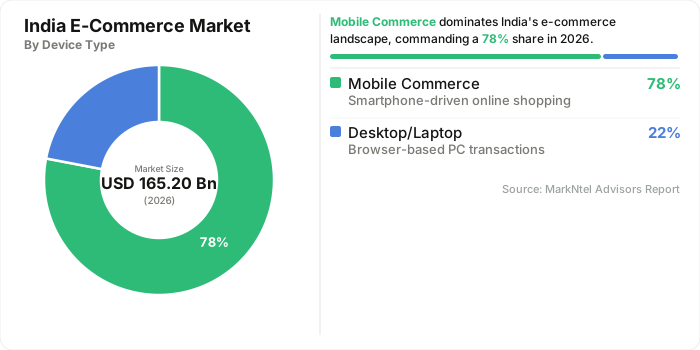
Infrastructure expansion and policy support further reinforce this dominance. Government initiatives such as Digital India have significantly improved mobile broadband access and internet affordability nationwide. Telecom data indicates that 4G coverage now extends to over 95% of villages, ensuring reliable connectivity even in remote areas . This widespread network availability enables seamless app-based transactions, which are better optimized for mobile interfaces. Consequently, e-commerce platforms are increasingly designed with a mobile-first approach, prioritizing app performance and localized user experiences.
Consumer behavior and payment integration also play a critical role in sustaining M-commerce leadership. According to the National Payments Corporation of India, UPI processes over 20 billion transactions monthly, with a significant share initiated via smartphones. Leading platforms such as Amazon and Flipkart have enhanced mobile applications with features such as one-click checkout, AI-driven recommendations, and regional language support. This combination of widespread device penetration, strong infrastructure, and mobile-centric user behavior continues to position M-commerce as the dominant device segment in India’s e-commerce market.
India E-Commerce Market (2026-32): Regional Projection
North India dominates the India e-commerce market, accounting for approximately 34% of total regional demand, primarily due to its large population base and strong concentration of consumption hubs. States such as Uttar Pradesh, Delhi, Haryana, and Punjab collectively represent a substantial share of India’s population and urban households, directly translating into higher online consumption volumes. Uttar Pradesh, being the most populous state, provides a vast and expanding consumer base that supports sustained e-commerce demand across categories.
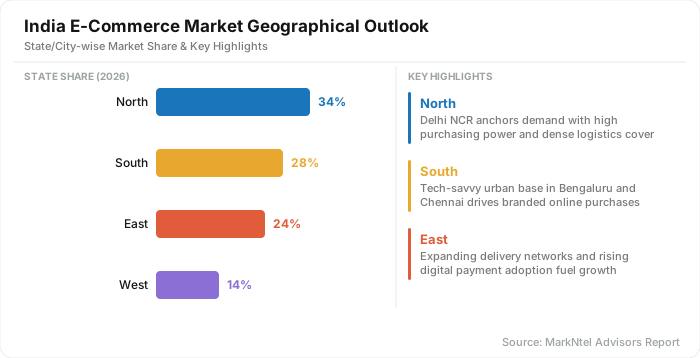
This dominance is further reinforced by strong urban expansion and investment activity across the region. The Delhi NCR region continues to witness significant real estate and infrastructure growth, with Uttar Pradesh recording over 50% growth in real estate investment in 2025, indicating rising purchasing power and urban consumption . Additionally, high telecom penetration across major hubs such as Delhi-NCR, with millions of active subscribers and continuous additions, ensures widespread digital access. These factors collectively strengthen the region’s consumption capacity and enable deeper e-commerce penetration.
Furthermore, rapid growth in Tier 2 and Tier 3 cities across North India is accelerating incremental demand expansion. Cities such as Lucknow, Jaipur, and Chandigarh are witnessing increased online shopping activity, particularly during large-scale festive sales. Reports indicate that non-metro regions significantly contributed to e-commerce growth during recent sales events, supported by expanding logistics and seller participation. As a result, the combination of demographic scale, urban economic expansion, and rising digital adoption continues to position North India as the leading regional market in India’s e-commerce landscape.
India E-Commerce Market Competitive Analysis:
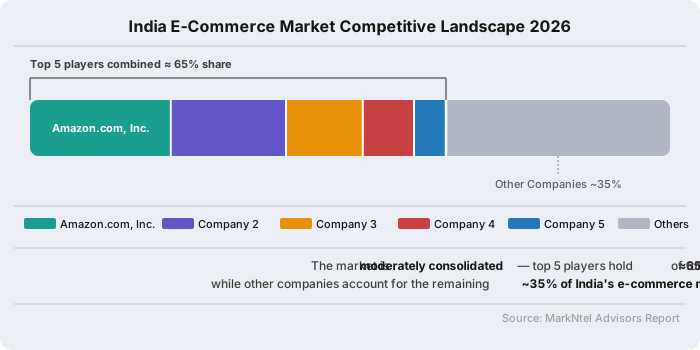
The India e-commerce market is moderately consolidated, with several players operating across horizontal, vertical, and quick commerce segments. The leading 5 companies, such as Amazon, Flipkart, Reliance Retail (JioMart), Meesho, and Nykaa, collectively account for approximately 65% of the total market size.
Major Companies of E-Commerce in India
- Amazon
- Flipkart
- Reliance Retail (JioMart)
- Meesho
- Nykaa
- Myntra
- Tata CLiQ
- AJIO
- Snapdeal
- Big Basket
- Blink Commerce Pvt Ltd.
- Swiggy Instamart Private Limited
- IndiaMART
- Others
Gain a Competitive Edge with Our India E-Commerce Market Report:
- India E-Commerce Market Report by MarkNtel Advisors provides a detailed & thorough analysis of market size & share, growth rate, competitive landscape, and key players. This comprehensive analysis helps businesses gain a holistic understanding of the market dynamics & make informed decisions.
- This report also highlights current market trends & future projections, allowing businesses to identify emerging opportunities & potential challenges. By understanding market forecasts, companies can align their strategies & stay ahead of the competition.
- India E-Commerce Market Report aids in assessing & mitigating risks associated with entering or operating in the market. By understanding market dynamics, regulatory frameworks, and potential challenges, businesses can develop strategies to minimize risks & optimize their operations.
*Reports Delivery Format - Market research studies from MarkNtel Advisors are offered in PDF, Excel and PowerPoint formats. Within 24 hours of the payment being successfully received, the report will be sent to your email address.
Frequently Asked Questions
- Market Segmentation
- Introduction
- Product Definition
- Research Process
- Assumptions
- Executive Summary
- India E-Commerce Market Policies, Regulations, and Product Standards
- India E-Commerce Market Trends & Developments
- India E-Commerce Market Dynamics
- Growth Factors
- Challenges
- India E-Commerce Market Hotspot & Opportunities
- India E-Commerce Market Outlook, 2022-2032F
- Market Size & Outlook
- By Revenues (USD Million)
- Market Share & Outlook
- By Product Category- Market Size & Forecast 2022-2032, USD Million
- Electronics & Appliances
- Consumer Electronics
- Smartphones
- Laptops
- Desktops
- Tablets
- Televisions (LED, OLED, Smart TVs)
- Audio devices (Headphones, Speakers, Soundbars)
- Cameras
- Home Appliances
- Large Appliances
- Refrigerators
- Washing Machines
- Air Conditioners
- Kitchen Appliances
- Microwave Ovens
- Dishwashers
- Chimneys
- Small Appliances
- Mixers
- Grinders
- Coffee Makers
- Induction Cooktops
- Accessories & Peripherals
- Chargers
- Power Banks
- Cables
- Computer Peripherals (Keyboard, Mouse, Monitors)
- Storage Devices (Hard Drives, SSDs, USB Drives)
- Large Appliances
- Consumer Electronics
- Fashion & Apparel
- Clothing
- Men’s Wear (Shirts, Trousers, Ethnic Wear, Activewear)
- Women’s Wear (Dresses, Sarees, Kurtis, Western Wear)
- Kidswear
- Footwear
- Casual Shoes
- Formal Shoes
- Sports Shoes
- Sandals
- Slippers
- Accessories
- Bags
- Wallets
- Belts
- Watches
- Sunglasses
- Caps
- Scarves
- Clothing
- Grocery & Essentials
- Staples
- Rice
- Wheat
- Pulses
- Flour
- Cooking Oils
- Sugar
- Salt
- Packaged Food
- Snacks
- Biscuits
- Ready-To-Eat Meals
- Beverages (Tea, Coffee, Juices)
- Fresh Produce
- Fruits and Vegetables
- Dairy (Milk, Cheese, Butter)
- Meat
- Poultry
- Seafood
- Household Essentials
- Cleaning Supplies (Detergents, Dishwash Liquids)
- Paper Products (Tissues, Wipes)
- Staples
- Beauty & Personal Care
- Skincare
- Face Creams
- Moisturizers
- Serums
- Sunscreens
- Haircare
- Shampoos
- Conditioners
- Hair Oils
- Styling Products
- Personal Hygiene
- Soaps
- Body Washes
- Oral Care (Toothpaste, Toothbrush)
- Deodorants
- Perfumes
- Cosmetics
- Makeup (Foundation, Lipstick, Eye Products)
- Grooming Kits
- Skincare
- Home & Furniture
- Furniture
- Beds
- Sofas
- Dining Tables
- Wardrobes
- Cabinets
- Home Décor
- Curtains
- Carpets
- Wall Art
- Lighting Fixtures
- Kitchen & Dining
- Cookware
- Utensils
- Storage Containers
- Home Improvement
- Tools
- Hardware
- Electrical Fittings
- Furniture
- Books, Toys & Hobby
- Books
- Educational
- Academic
- Fiction
- Non-Fiction
- Children’s Books
- Toys
- Educational Toys
- Action Figures
- Dolls
- Board Games
- Puzzles
- Hobby & Leisure
- Art & Craft Supplies
- Musical Instruments
- Sports Equipment
- Books
- Electronics & Appliances
- By Business Model- Market Size & Forecast 2022-2032, USD Million
- B2C (Business-to-Consumer)
- B2B (Business-to-Business)
- C2C (Consumer-to-Consumer)
- By Device Type- Market Size & Forecast 2022-2032, USD Million
- Mobile Commerce (M-Commerce)
- Desktop/Laptop
- By Delivery Mode- Market Size & Forecast 2022-2032, USD Million
- 10 Minutes Delivery
- Same Day Delivery
- Others
- By Payment Mode- Market Size & Forecast 2022-2032, USD Million
- Card Payments
- Buy Now Pay Later
- UPI Apps
- Cash on Delivery (COD)
- By Region- Market Size & Forecast 2022-2032, USD Million
- North India
- Uttar Pradesh
- Punjab
- Haryana
- Delhi NCR
- Others
- East India
- West Bengal
- Bihar
- Jharkhand
- North Eastern States
- Chhattisgarh
- Others
- West India
- Rajasthan
- Gujarat
- Maharashtra
- Madhya Pradesh
- Others
- South India
- Tamil Nadu
- Karnataka
- Kerala
- Andhra
- Telangana
- Others
- North India
- By Company
- Competition Characteristics
- Market Share & Analysis
- By Product Category- Market Size & Forecast 2022-2032, USD Million
- Market Size & Outlook
- India Electronics & Appliances Market Outlook, 2022-2032
- Market Size & Outlook
- By Revenues (USD Million)
- Market Share & Outlook
- By Business Model- Market Size & Forecast 2022-2032, USD Million
- By Device Type- Market Size & Forecast 2022-2032, USD Million
- By Delivery Mode- Market Size & Forecast 2022-2032, USD Million
- By Payment Mode- Market Size & Forecast 2022-2032, USD Million
- By Region- Market Size & Forecast 2022-2032, USD Million
- Market Size & Outlook
- India Fashion & Apparel Market Outlook, 2022-2032
- Market Size & Outlook
- By Revenues (USD Million)
- Market Share & Outlook
- By Business Model- Market Size & Forecast 2022-2032, USD Million
- By Device Type- Market Size & Forecast 2022-2032, USD Million
- By Delivery Mode- Market Size & Forecast 2022-2032, USD Million
- By Payment Mode- Market Size & Forecast 2022-2032, USD Million
- By Region- Market Size & Forecast 2022-2032, USD Million
- Market Size & Outlook
- India Grocery & Essentials Market Outlook, 2022-2032
- Market Size & Outlook
- By Revenues (USD Million)
- Market Share & Outlook
- By Business Model- Market Size & Forecast 2022-2032, USD Million
- By Device Type- Market Size & Forecast 2022-2032, USD Million
- By Delivery Mode- Market Size & Forecast 2022-2032, USD Million
- By Payment Mode- Market Size & Forecast 2022-2032, USD Million
- By Region- Market Size & Forecast 2022-2032, USD Million
- Market Size & Outlook
- India Beauty & Personal Care Market Outlook, 2022-2032
- Market Size & Outlook
- By Revenues (USD Million)
- Market Share & Outlook
- By Business Model- Market Size & Forecast 2022-2032, USD Million
- By Device Type- Market Size & Forecast 2022-2032, USD Million
- By Delivery Mode- Market Size & Forecast 2022-2032, USD Million
- By Payment Mode- Market Size & Forecast 2022-2032, USD Million
- By Region- Market Size & Forecast 2022-2032, USD Million
- Market Size & Outlook
- India Home & Furniture Market Outlook, 2022-2032
- Market Size & Outlook
- By Revenues (USD Million)
- Market Share & Outlook
- By Business Model- Market Size & Forecast 2022-2032, USD Million
- By Device Type- Market Size & Forecast 2022-2032, USD Million
- By Delivery Mode- Market Size & Forecast 2022-2032, USD Million
- By Payment Mode- Market Size & Forecast 2022-2032, USD Million
- By Region- Market Size & Forecast 2022-2032, USD Million
- Market Size & Outlook
- India Books, Toys & Hobby Market Outlook, 2022-2032
- Market Size & Outlook
- By Revenues (USD Million)
- Market Share & Outlook
- By Business Model- Market Size & Forecast 2022-2032, USD Million
- By Device Type- Market Size & Forecast 2022-2032, USD Million
- By Delivery Mode- Market Size & Forecast 2022-2032, USD Million
- By Payment Mode- Market Size & Forecast 2022-2032, USD Million
- By Region- Market Size & Forecast 2022-2032, USD Million
- Market Size & Outlook
- India E-Commerce Market Key Strategic Imperatives for Success & Growth
- Competitive Outlook
- Company Profiles
- Amazon
- Business Description
- Product Portfolio
- Collaborations & Alliances
- Recent Developments
- Financial Details
- Others
- Flipkart
- Business Description
- Product Portfolio
- Collaborations & Alliances
- Recent Developments
- Financial Details
- Others
- Reliance Retail (JioMart)
- Business Description
- Product Portfolio
- Collaborations & Alliances
- Recent Developments
- Financial Details
- Others
- Meesho
- Business Description
- Product Portfolio
- Collaborations & Alliances
- Recent Developments
- Financial Details
- Others
- Nykaa
- Business Description
- Product Portfolio
- Collaborations & Alliances
- Recent Developments
- Financial Details
- Others
- Myntra
- Business Description
- Product Portfolio
- Collaborations & Alliances
- Recent Developments
- Financial Details
- Others
- Tata CLiQ
- Business Description
- Product Portfolio
- Collaborations & Alliances
- Recent Developments
- Financial Details
- Others
- AJIO
- Business Description
- Product Portfolio
- Collaborations & Alliances
- Recent Developments
- Financial Details
- Others
- Snapdeal
- Business Description
- Product Portfolio
- Collaborations & Alliances
- Recent Developments
- Financial Details
- Others
- Big Basket
- Business Description
- Product Portfolio
- Collaborations & Alliances
- Recent Developments
- Financial Details
- Others
- Blink Commerce Pvt Ltd.
- Business Description
- Product Portfolio
- Collaborations & Alliances
- Recent Developments
- Financial Details
- Others
- Swiggy Instamart Private Limited
- Business Description
- Product Portfolio
- Collaborations & Alliances
- Recent Developments
- Financial Details
- Others
- IndiaMART
- Business Description
- Product Portfolio
- Collaborations & Alliances
- Recent Developments
- Financial Details
- Others
- Amazon
- Company Profiles
- Disclaimer
MarkNtel Advisors follows a robust and iterative research methodology designed to ensure maximum accuracy and minimize deviation in market estimates and forecasts. Our approach combines both bottom-up and top-down techniques to effectively segment and quantify various aspects of the market. A consistent feature across all our research reports is data triangulation, which examines the market from three distinct perspectives to validate findings. Key components of our research process include:
1. Scope & Research Design At the outset, MarkNtel Advisors define the research objectives and formulate pertinent questions. This phase involves determining the type of research—qualitative or quantitative—and designing a methodology that outlines data collection methods, target demographics, and analytical tools. They also establish timelines and budgets to ensure the research aligns with client goals.
2. Sample Selection and Data Collection In this stage, the firm identifies the target audience and determines the appropriate sample size to ensure representativeness. They employ various sampling methods, such as random or stratified sampling, based on the research objectives. Data collection is carried out using tools like surveys, interviews, and observations, ensuring the gathered data is reliable and relevant.
3. Data Analysis and Validation Once data is collected, MarkNtel Advisors undertake a rigorous analysis process. This includes cleaning the data to remove inconsistencies, employing statistical software for quantitative analysis, and thematic analysis for qualitative data. Validation steps are taken to ensure the accuracy and reliability of the findings, minimizing biases and errors.

4. Data Forecast and FinalizationThe final phase involves forecasting future market trends based on the analyzed data. MarkNtel Advisors utilize predictive modeling and time series analysis to anticipate market behaviors. The insights are then compiled into comprehensive reports, featuring visual aids like charts and graphs, and include strategic recommendations to inform client decision-making
We offer flexible licensing options to cater to varying organizational needs. Choose the pricing pack that best suits your requirements:
Buy Now Inquire Before Buying
 Request Customization
 Talk to our Consultant







