

India Beauty and Personal Care Market Research Report: Forecast (2026-2032)
By Type (Organic, Conventional, Vegan), By Product & Thousand Units (Skincare, Hair Care, Oral Care, Makeup & Colour Cosmetic Products, Bath & Shower, Fragrances), By Distribution ... Channel (Supermarkets & Hypermarkets, Convenience Stores, Pharmacies & Drug Stores, Exclusive/Multi Brand Stores, Online Stores, Others (Hair Salons, Beauty Centres, etc.)), By End Users (Men, Women, Kids), and others Read more
- FMCG
- Aug 2026
- Pages 145
- Report Format: PDF, Excel, PPT
India Beauty and Personal Care Market
Projected 10.18% CAGR from 2026 to 2032
Study Period
2026-2032
Market Size (2026)
USD 7.98 Billion
Market Size (2032)
USD 14.29 Billion
Base Year
2025
Projected CAGR
10.18%
Leading Segments
By Type: Organic
India Beauty and Personal Care Market Key Takeaways
- The India beauty and personal care market size was valued at USD 6.81 billion in 2025 and is projected to grow from USD 7.98 billion in 2026 to USD 14.29 billion by 2032.
- The market is projected to register a CAGR of 10.18% during 2026–2032.
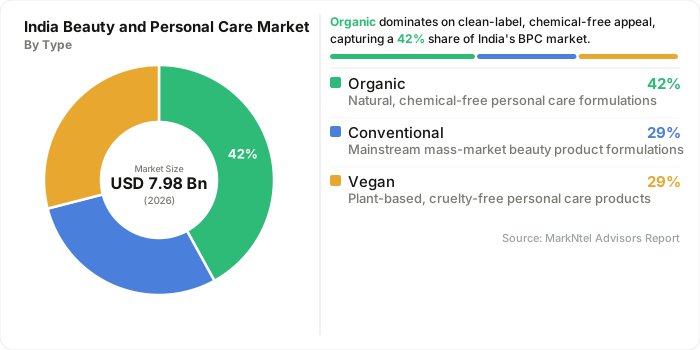
- By type, organic products lead the market with 42% market share in 2026.
- By product, skincare products were dominant with 35% in the 2026 market.
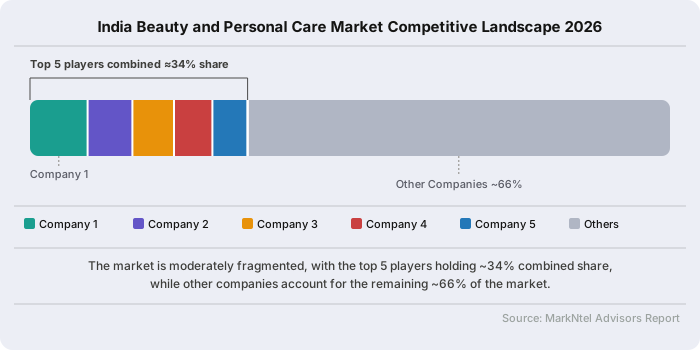
- The industry is fragmented, with the top five players collectively accounting for approximately 34% of the market share in 2026.
India Beauty and Personal Care Market Size and Outlook
The beauty and personal care industry in India was valued at USD 6.81 billion in 2025 and is currently standing at USD 7.98 billion in 2026. The industry is projected to grow to USD 14.29 billion by 2032 showcasing a CAGR of around 10.18% during the forecast period, i.e., 2026–32.
India is emerging as a strategic long-term growth market for global beauty companies, supported by rising disposable incomes, premiumization, evolving consumer preferences, and increasing demand for science-backed, natural, and personalized beauty products. The country's expanding middle-income population and growing preference for higher-value beauty offerings continue to create opportunities across skincare, haircare, cosmetics, and personal hygiene categories.
Global and domestic manufacturers are accelerating investments through localized product development, manufacturing expansion, and technology capabilities to strengthen their competitive positioning. In 2026, L’Oréal announced an investment of approximately USD 383 million to establish its first global Beauty Tech hub in Hyderabad, while Hindustan Unilever committed approximately USD 220 million to expand manufacturing capacity for premium Beauty & Wellbeing and Home Care products.
These investments are supported by India's rapidly expanding digital retail ecosystem, with nearly 300 million online shoppers expected in 2025, online beauty sales growing more than ten times faster than offline channels. Together, these developments are enabling beauty companies to strengthen omnichannel distribution, improve premium product accessibility, and accelerate market penetration.
The regulatory environment is evolving alongside commercial investments to support sustainable market development. The cosmetics amendment rules, 2025 strengthened manufacturing, import, documentation, and compliance requirements while aligning India's cosmetics regulations more closely with international standards. The proposed drugs, medical devices and cosmetics act is expected to further modernize sector governance and improve business certainty for manufacturers and investors.
Supported by an expanding innovation ecosystem, strengthening regulatory framework, and continued investments by domestic and international beauty companies, the industry is expected to witness sustained premiumization, broader organized retail penetration, and long-term growth during the forecast period.
India Beauty and Personal Care Market Key Indicators
- As of 2026, beauty and personal-care sales through Blinkit, Zepto, and Swiggy Instamart are approaching USD 1 billion annually, with more than 30 million shoppers purchasing through these platforms every month. Quick commerce currently represents approximately 5% of India’s BPC market, creating a measurable new distribution channel for both mass and premium beauty products and supporting market expansion.
- The Indian salon and beauty services ecosystem is also expanding, with the Salon Association of India estimating more than 500,000 beauty and salon professionals connected to the industry and projecting the Indian salon market to reach approximately USD 15.7 billion by 2028. The expansion of professional beauty services increases the consumption of haircare, skincare, cosmetics, grooming products, and professional-use formulations, thereby generating additional demand for Beauty and Personal Care products.
- In February 2026, Hindustan Unilever Limited (HUL) announced an investment of USD 227.3 million over two years to strengthen manufacturing capacity, automation, and supply chain capabilities for premium beauty, wellbeing, and home care products.
India Beauty and Personal Care Market Scope
| Category | Segments |
|---|---|
| By Type | Organic, Conventional, Vegan |
| By Product & Thousand Units | Skincare, Hair Care, Oral Care, Makeup & Colour Cosmetic Products, Bath & Shower, Fragrances |
| By Distribution Channel | Supermarkets & Hypermarkets, Convenience Stores, Pharmacies & Drug Stores, Exclusive/Multi Brand Stores, Online Stores, Others (Hair Salons, Beauty Centres, etc. |
| By End Users | Men, Women, Kids |
India Beauty and Personal Care Market Growth Drivers
Rapid Expansion of Quick Commerce Accelerating Beauty Product Sales
The rapid expansion of quick commerce is reshaping India's beauty and personal care market by making skincare, cosmetics, hair care, and wellness products available for near-instant delivery. As consumers increasingly prioritize convenience, beauty brands are expanding their presence across quick commerce platforms to improve product visibility, accelerate purchase decisions, and enhance customer reach. The channel is also strengthening product discovery by enabling consumers to access premium and everyday beauty products alongside routine household purchases, supporting higher purchase frequency and wider category adoption.
The growth of this channel is supported by continued investments in fulfilment infrastructure and category expansion. Blinkit operates around 2,100 dark stores and plans to add another 900 stores by March 2027 to support rising demand across multiple product categories, including beauty and personal care. Demand across quick commerce platforms has increased by more than twofold, encouraging operators to rapidly broaden their assortments beyond grocery essentials.
Beauty and personal care companies are increasingly recognizing quick commerce as a strategic sales channel. Dabur India reported that quick commerce delivered 54% year on year growth in Q4 FY2025-26, making it the company's fastest-growing online channel. Complementing this, quick commerce accounted for more than 75% of India's e-commerce FMCG sales in Q4 2025, underscoring its growing influence on consumer purchasing behaviour and its role in driving sustained demand for beauty and personal care products.
Recent Trends
AI-Driven Personalization and Beauty Technology Reshaping Consumer Engagement
Artificial intelligence is emerging as a defining technology trend in India's beauty and personal care market, enabling brands to deliver personalized skincare recommendations, virtual product experiences, and data-driven consumer engagement. Companies are increasingly integrating AI across product discovery, diagnostics, and customer interaction to improve shopping experiences while supporting more precise product recommendations. As digital adoption accelerates, AI-powered beauty technology is becoming a key differentiator for brands competing in premium and mass beauty segments.
The trend is reinforced by growing investments in dedicated beauty technology infrastructure. In January 2026, L'Oréal announced to establish its global hub, focused on developing solutions powered by artificial intelligence, generative AI, agentic AI, data analytics, and digital platforms. The facility is expected to position India as a global innovation centre for next-generation beauty technologies.
The industry's focus on AI was further highlighted at Cosmetica 2026, where beauty technology emerged as a major theme through demonstrations of AI-powered personalization, virtual try-on solutions, and digital beauty innovations. Together with investments by global beauty companies, these developments indicate that technology is evolving from a customer engagement tool into a core capability spanning product development, consumer experience, and long-term innovation, making AI-enabled personalization a defining trend shaping the India beauty and personal care industry.
India Beauty and Personal Care Market Challenges and Opportunities
Counterfeit Products Undermining Market Integrity While Accelerating Authentication and Digital Traceability
Counterfeit cosmetics continue to threaten the market by eroding consumer trust, diluting brand equity, and exposing consumers to potentially unsafe formulations. The rapid expansion of ecommerce and fragmented distribution networks has made counterfeit products increasingly difficult to identify and control. Reflecting the scale of the issue, the OECD identifies cosmetics and personal care products among the world's most frequently counterfeited consumer goods.
Regulatory authorities are responding through stronger enforcement and surveillance. In June 2026, the Maharashtra food and drug administration seized counterfeit Cetaphil gentle skin cleanser products after identifying discrepancies in packaging, labelling, and security features despite the products passing basic quality tests. Such cases demonstrate that counterfeiters are becoming increasingly sophisticated, compelling regulators and brand owners to strengthen product verification, supply chain oversight, and consumer awareness initiatives.
This evolving landscape is creating opportunities for companies that position authenticity as a competitive advantage. Alongside stricter documentation and labelling requirements introduced under the cosmetics amendment rules, 2025, manufacturers are increasingly investing in digital traceability, serialized product identification, and consumer facing authentication solutions to strengthen supply chain visibility and combat counterfeit products.
During 2025, Mamaearth reinforced its authenticity framework by enabling consumers to verify genuine products through QR codes that provide batch, manufacturing, and ingredient information, while L'Oréal continued expanding QR enabled packaging and digital product information across its beauty portfolio to enhance traceability and transparency.
As counterfeit risks continue to influence purchasing decisions, authentication is evolving from a compliance requirement into a strategic brand differentiator. Companies that combine digital verification, transparent ingredient disclosure, and trusted omnichannel distribution are expected to strengthen consumer confidence, protect premium pricing, and reinforce long term brand equity. This shift is likely to become increasingly important as India's beauty industry formalizes and consumers place greater emphasis on verified, high quality products.
India Beauty and Personal Care Market Start-up Ecosystem
- RAS Luxury Skincare raised USD 7.5 million in a Series B funding round in March 2026, led by Dabur Ventures with participation from Unilever Ventures, highlighting increasing strategic investments by established FMCG companies in India's D2C beauty ecosystem.
- AntiNorm raised approximately USD 2.9 million in a seed funding round during January 2026, reflecting sustained investor confidence in emerging digital-first beauty brands focused on innovative formulations and differentiated consumer positioning.
- Moxie Beauty raised USD 15 million in a Series A funding round in late 2025 to strengthen haircare research, product development, and distribution, illustrating continued venture capital interest in India's premium beauty and personal care segment.
- Bodycraft secured approximately USD 12.6 million in funding during 2026 to expand its integrated beauty, wellness, and medical aesthetics business while investing in AI-enabled operational capabilities, reflecting growing technology adoption across organized beauty service providers.
- India has attracted approximately USD 665 million in venture investment into D2C beauty brands over the past decade, underlining the country's position as one of the world's fastest-growing innovation hubs for digitally native beauty and personal care companies.
- Kama Ayurveda reported approximately USD 14.8 million in FY2025 revenue, demonstrating continued consumer demand for premium Ayurvedic beauty products and reinforcing the commercial potential of heritage-inspired natural personal care brands.
Segmentation Insights
Organic Products Lead the Market Through Rising Demand for Clean Label and Natural Formulations
Organic products held the largest share of around 42% of the market in 2026, supported by growing consumer preference for naturally derived ingredients and greater awareness regarding the potential effects of synthetic chemicals. Consumers are increasingly scrutinizing product labels and seeking formulations free from parabens, sulfates, silicones, and artificial fragrances. This shift has encouraged both domestic and international brands to expand certified organic portfolios across skincare, hair care, and personal hygiene categories.
The segment continues to benefit from increasing disposable incomes, expanding premium beauty consumption, and the rapid growth of digital commerce, which has improved access to niche and clean beauty brands across urban and emerging cities. Manufacturers are also incorporating plant based actives, botanical extracts, and sustainable sourcing practices to strengthen product differentiation and consumer trust. Based on type, the market is further bifurcated into:
- Organic
- Conventional
- Vegan
Skincare Products Dominate the Market Due to Expanding Self Care and Preventive Beauty Routines
Skincare products accounted for approximately 35% of the market in 2026, making them the largest product segment. Rising consumer awareness regarding skin health, increasing exposure to pollution, and greater emphasis on preventive beauty have significantly boosted demand for facial cleansers, moisturizers, sunscreens, serums, and anti-aging products. Growing dermatological awareness and year round skincare routines have further strengthened category performance across diverse consumer groups.
The segment is also benefiting from continuous product innovation, including ingredient focused formulations featuring niacinamide, hyaluronic acid, vitamin C, ceramides, and probiotics. Beauty brands are introducing products tailored to Indian skin types, climatic conditions, and specific concerns such as pigmentation, acne, and sun protection. Premiumization, social media influence, and dermatologist recommended skincare continue to support sustained category leadership. Based on product, the market is further bifurcated into:
- Skincare
- Hair Care
- Oral Care
- Makeup & Colour Cosmetic Products
- Bath & Shower
- Fragrances
India Beauty and Personal Care Market Competitive Analysis
The market is highly fragmented, with competition spread across multinational consumer goods companies, domestic FMCG manufacturers, digital first beauty brands, premium cosmetic companies, and direct to consumer specialists. Major participants include Hindustan Unilever Limited (Lakmé), L'Oréal India Private Limited, FSN E-Commerce Ventures Limited (Nykaa), Honasa Consumer Limited (Mamaearth), and Marico Limited. The top five players collectively account for approximately 34% of the India beauty and personal care market.
Key Companies in the India Beauty and Personal Care Market
- Hindustan Unilever Limited
- L'Oréal India Private Limited
- The Procter & Gamble Company
- Dabur India Limited
- Marico Limited
- Godrej Consumer Products Limited
- The Estée Lauder Companies Inc.
- Honasa Consumer Limited
- Onesto Labs Private Limited
- Beiersdorf India Private Limited
India Beauty and Personal Care Industry News and Recent Developments
2026: L'Oréal Acquires Majority Stake in Innovist
In June 2026, L'Oréal signed an agreement to acquire a majority stake in Innovist, an Indian beauty and personal care company that owns science-led brands including Bare Anatomy, Chemist at Play, and SunScoop. The transaction strengthens L'Oréal's premium skincare and haircare portfolio in India while expanding its presence in high-growth, digital-first beauty segments. The agreement also includes an option for L'Oréal to acquire the remaining shares in the future, subject to customary regulatory approvals, reflecting the company's long-term commitment to India's rapidly evolving beauty landscape.
Impact Analysis: The acquisition reinforces confidence in India's premium beauty and personal care ecosystem and highlights growing interest from multinational companies in digitally native, science-backed brands. It is expected to accelerate product innovation, strengthen research and development capabilities, intensify competition in active ingredient-based skincare, and encourage further investment and consolidation across India's premium beauty market.
2025: Hindustan Unilever Acquires Minimalist
In January 2025, Hindustan Unilever Limited (HUL) entered into definitive agreements to acquire a 90.5% stake in Minimalist, one of India's fastest-growing science-backed skincare brands, with the remaining stake to be acquired over the subsequent two years. The acquisition significantly expands HUL's premium skincare portfolio while strengthening its position in the fast-growing digital-first beauty segment. Minimalist's ingredient-focused formulations and strong direct-to-consumer presence complement HUL's broader personal care portfolio and premiumization strategy.
Impact Analysis: The acquisition enhances HUL's competitiveness in India's premium skincare segment by integrating a rapidly growing science-led brand into its portfolio. The transaction is expected to accelerate innovation, strengthen omnichannel distribution, increase investment in premium skincare products, and intensify competition among domestic and international beauty companies targeting India's ingredient-conscious consumers.
2025: Reliance Retail Acquires Pahadi Local
In March 2025, Reliance Retail acquired Pahadi Local, a natural beauty and wellness brand from Pahadi Goodness, expanding its portfolio of clean beauty and personal care products. The acquisition complements Reliance's Tira beauty retail platform by adding a Himalayan-inspired brand focused on natural ingredients and sustainable formulations. The transaction supports Reliance Retail's strategy of strengthening its presence in India's rapidly expanding premium beauty and wellness segment through acquisitions of emerging domestic brands.
Impact Analysis: The acquisition strengthens Reliance Retail's position in India's natural and clean beauty segment while broadening the product portfolio available through Tira's omnichannel ecosystem. The transaction is expected to increase competition in herbal and sustainable personal care products, encourage greater investment in indigenous beauty brands, and support the expansion of premium beauty retail across both online and offline channels.
Frequently Asked Questions
- Market Segmentation
- Introduction
- Product Definition
- Research Process
- Assumptions
- Executive Summary
- India Beauty and Personal Care Market Policies, Regulations, and Product Standards
- India Beauty and Personal Care Market Trends & Developments
- India Beauty and Personal Care Market Dynamics
- Growth Factors
- Challenges
- India Beauty and Personal Care Market Hotspot & Opportunities
- India Beauty and Personal Care Market Outlook, 2022-2032F
- Market Size & Outlook
- By Revenues (USD Million)
- Market Share & Outlook
- By Type- Market Size & Forecast 2022-2032, USD Million
- Organic
- Conventional
- Vegan
- By Product- Market Size & Forecast 2022-2032, USD Million & Thousand Units
- Skincare
- Hair Care
- Oral Care
- Makeup & Colour Cosmetic Products
- Bath & Shower
- Fragrances
- By Distribution Channel- Market Size & Forecast 2022-2032, USD Million
- Supermarkets & Hypermarkets
- Convenience Stores
- Pharmacies & Drug Stores
- Exclusive/Multi Brand Stores
- Online Stores
- Others (Hair Salons, Beauty Centres, etc.)
- By End Users- Market Size & Forecast 2022-2032, USD Million
- Men
- Women
- Kids
- By Region- Market Size & Forecast 2022-2032, USD Million
- North
- East
- West
- South
- By Company
- Competition Characteristics
- Market Share & Analysis
- By Type- Market Size & Forecast 2022-2032, USD Million
- Market Size & Outlook
- India Skincare Market Outlook, 2022-2032
- Market Size & Outlook
- By Revenues (USD Million)
- Market Share & Outlook
- By Product- Market Size & Forecast 2022-2032, USD Million
- By Distribution Channel- Market Size & Forecast 2022-2032, USD Million
- By End Users- Market Size & Forecast 2022-2032, USD Million
- By Region- Market Size & Forecast 2022-2032, USD Million
- Market Size & Outlook
- India Hair Care Market Outlook, 2022-2032
- Market Size & Outlook
- By Revenues (USD Million)
- Market Share & Outlook
- By Product- Market Size & Forecast 2022-2032, USD Million
- By Distribution Channel- Market Size & Forecast 2022-2032, USD Million
- By End Users- Market Size & Forecast 2022-2032, USD Million
- By Region- Market Size & Forecast 2022-2032, USD Million
- Market Size & Outlook
- India Oral Care Market Outlook, 2022-2032
- Market Size & Outlook
- By Revenues (USD Million)
- Market Share & Outlook
- By Product- Market Size & Forecast 2022-2032, USD Million
- By Distribution Channel- Market Size & Forecast 2022-2032, USD Million
- By End Users- Market Size & Forecast 2022-2032, USD Million
- By Region- Market Size & Forecast 2022-2032, USD Million
- Market Size & Outlook
- India Makeup & Colour Cosmetic Products Market Outlook, 2022-2032
- Market Size & Outlook
- By Revenues (USD Million)
- Market Share & Outlook
- By Product- Market Size & Forecast 2022-2032, USD Million
- By Distribution Channel- Market Size & Forecast 2022-2032, USD Million
- By End Users- Market Size & Forecast 2022-2032, USD Million
- By Region- Market Size & Forecast 2022-2032, USD Million
- Market Size & Outlook
- India Bath & Shower Market Outlook, 2022-2032
- Market Size & Outlook
- By Revenues (USD Million)
- Market Share & Outlook
- By Product- Market Size & Forecast 2022-2032, USD Million
- By Distribution Channel- Market Size & Forecast 2022-2032, USD Million
- By End Users- Market Size & Forecast 2022-2032, USD Million
- By Region- Market Size & Forecast 2022-2032, USD Million
- Market Size & Outlook
- India Fragrances Market Outlook, 2022-2032
- Market Size & Outlook
- By Revenues (USD Million)
- Market Share & Outlook
- By Product- Market Size & Forecast 2022-2032, USD Million
- By Distribution Channel- Market Size & Forecast 2022-2032, USD Million
- By End Users- Market Size & Forecast 2022-2032, USD Million
- By Region- Market Size & Forecast 2022-2032, USD Million
- Market Size & Outlook
- India Beauty and Personal Care Market Key Strategic Imperatives for Success & Growth
- Competitive Outlook
- Company Profiles
- Hindustan Unilever Limited (Lakmé)
- Business Description
- Product Portfolio
- Collaborations & Alliances
- Recent Developments
- Financial Details
- Others
- L'Oréal India Private Limited (L'Oréal Paris, Garnier, Matrix, CeraVe)
- Business Description
- Product Portfolio
- Collaborations & Alliances
- Recent Developments
- Financial Details
- Others
- The Procter & Gamble Company
- Business Description
- Product Portfolio
- Collaborations & Alliances
- Recent Developments
- Financial Details
- Others
- Honasa Consumer Limited (Mamaearth)
- Business Description
- Product Portfolio
- Collaborations & Alliances
- Recent Developments
- Financial Details
- Others
- Marico Limited (Just Herbs, Beardo, Set Wet, Livon)
- Business Description
- Product Portfolio
- Collaborations & Alliances
- Recent Developments
- Financial Details
- Others
- Dabur India Limited (Dabur Gulabari, Oxylife, Vatika)
- Business Description
- Product Portfolio
- Collaborations & Alliances
- Recent Developments
- Financial Details
- Others
- Godrej Consumer Products Limited (Godrej Expert, Godrej Protekt, Godrej aer)
- Business Description
- Product Portfolio
- Collaborations & Alliances
- Recent Developments
- Financial Details
- Others
- The Estée Lauder Companies Inc. (MAC, Clinique, Bobbi Brown, La Mer, Jo Malone London)
- Business Description
- Product Portfolio
- Collaborations & Alliances
- Recent Developments
- Financial Details
- Others
- Onesto Labs Private Limited (Bare Anatomy, Chemist at Play, Sunscoop)
- Business Description
- Product Portfolio
- Collaborations & Alliances
- Recent Developments
- Financial Details
- Others
- Beiersdorf India Private Limited
- Business Description
- Product Portfolio
- Collaborations & Alliances
- Recent Developments
- Financial Details
- Others
- Hindustan Unilever Limited (Lakmé)
- Company Profiles
- Disclaimer
MarkNtel Advisors follows a robust and iterative research methodology designed to ensure maximum accuracy and minimize deviation in market estimates and forecasts. Our approach combines both bottom-up and top-down techniques to effectively segment and quantify various aspects of the market. A consistent feature across all our research reports is data triangulation, which examines the market from three distinct perspectives to validate findings. Key components of our research process include:
1. Scope & Research Design At the outset, MarkNtel Advisors define the research objectives and formulate pertinent questions. This phase involves determining the type of research—qualitative or quantitative—and designing a methodology that outlines data collection methods, target demographics, and analytical tools. They also establish timelines and budgets to ensure the research aligns with client goals.
2. Sample Selection and Data Collection In this stage, the firm identifies the target audience and determines the appropriate sample size to ensure representativeness. They employ various sampling methods, such as random or stratified sampling, based on the research objectives. Data collection is carried out using tools like surveys, interviews, and observations, ensuring the gathered data is reliable and relevant.
3. Data Analysis and Validation Once data is collected, MarkNtel Advisors undertake a rigorous analysis process. This includes cleaning the data to remove inconsistencies, employing statistical software for quantitative analysis, and thematic analysis for qualitative data. Validation steps are taken to ensure the accuracy and reliability of the findings, minimizing biases and errors.

4. Data Forecast and FinalizationThe final phase involves forecasting future market trends based on the analyzed data. MarkNtel Advisors utilize predictive modeling and time series analysis to anticipate market behaviors. The insights are then compiled into comprehensive reports, featuring visual aids like charts and graphs, and include strategic recommendations to inform client decision-making
We offer flexible licensing options to cater to varying organizational needs. Choose the pricing pack that best suits your requirements:
Buy Now Inquire Before Buying
 Request Customization
 Talk to our Consultant







