

Air Purifier Market Research Report: Forecast (2026-2032)
By Filter Type (High-Frequency Particulate Air (HEPA) filters, Ionic filters, Activated Carbon, UV-C and Photocatalytic Oxidation, Others), By Coverage Area (Below 250 Sq. Ft., 250 ... -500 Sq. Ft., Above 500 Sq. Ft.), By Sales Channel (Online, Offline (Supermarkets/hypermarkets, Retail stores, Speciality stores, Others)), By End Users (Commercial, Residential, Industrial, Institutional), and others Read more
- Environment
- Jun 2026
- Pages 320
- Report Format: PDF, Excel, PPT
Air Purifier Market
Projected 8.27% CAGR from 2026 to 2032
Study Period
2026-2032
Market Size (2026)
USD 14.17 Billion
Market Size (2032)
USD 22.83 Billion
Largest Region
Asia Pacific
Projected CAGR
8.27%
Leading Segments
By End User: Commercial
Air Purifier Market Key Takeaways
- The Global Air Purifier Market was valued at approximately USD 14.17 billion in 2026 and is projected to reach nearly USD 22.83 billion by 2032, expanding at a CAGR of around 8.27% during 2026-2032.
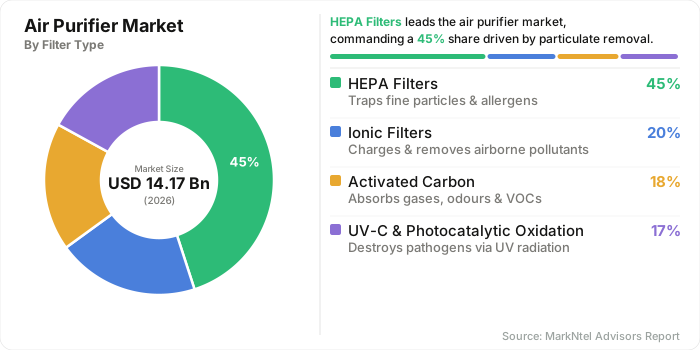
- HEPA filtration systems commanded the dominant market share by filter type by having a 68% market share in 2026.
- The Commercial Segment led the market by end user in 2026, having a market share of approximately 56%.
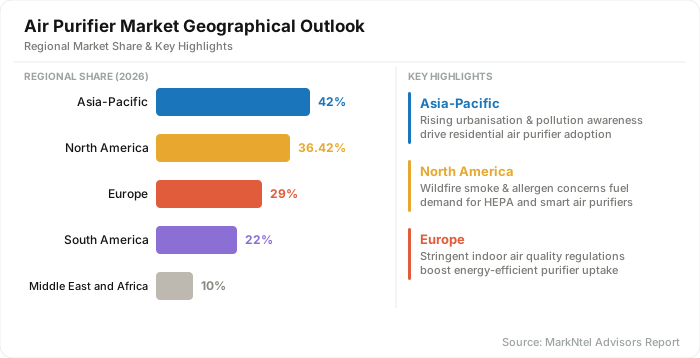
- Asia Pacific retained the largest regional share of around 42% of the total market share.
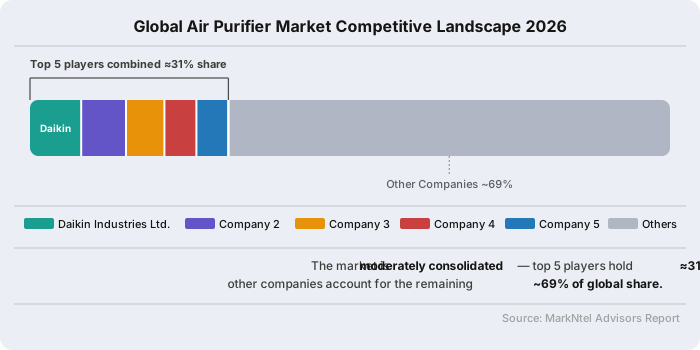
- The market remains moderately fragmented, collectively accounting for approximately 31% of global market share.
Air Purifier Market Size & Outlook
The Air Purifier Market is projected to witness steady growth at a CAGR of around 8.27% during 2026–2032. Market expansion is being driven by deteriorating ambient air quality and growing consumer awareness regarding the importance of indoor air quality across residential, commercial, and institutional environments. According to the World Air Quality Report, nearly 91% of monitored countries recorded annual PM2.5 concentrations above the safety thresholds recommended by the World Health Organization (WHO). This widening gap between regulatory air quality standards and actual exposure levels is encouraging greater adoption of indoor air purification systems worldwide.
The increasing severity of air pollution across major South Asian cities is further accelerating demand for residential air purification technologies. In 2026, Lahore recorded Air Quality Index (AQI) levels exceeding 353 during peak pollution episodes, while several metropolitan areas across Southeast Asia continued to experience "very unhealthy" and "hazardous" air quality conditions. Persistent exposure to elevated PM2.5 concentrations is raising concerns about respiratory and cardiovascular health, thereby supporting increased penetration of portable air purifiers, advanced filtration technologies, and indoor air quality monitoring solutions.
Climate change is also emerging as a significant factor contributing to worsening air pollution patterns globally. In May 2026, France experienced its earliest nationwide ozone pollution episode on record, while environmental agencies across Europe warned that rising temperatures are increasing the frequency and duration of secondary pollution events involving ozone and fine particulate matter, particularly across southern and western regions. These developments are further reinforcing the need for effective indoor air quality management solutions.
In response to evolving consumer and commercial requirements, manufacturers are increasingly differentiating their product portfolios through IoT-enabled air purification systems featuring real-time PM2.5 monitoring, automated airflow optimization, predictive maintenance capabilities, and smart application connectivity. Reflecting this trend, Daikin launched its "Daikin360" lifecycle management platform in 2025, enabling predictive servicing, operational monitoring, and long-term HVAC maintenance optimization across commercial facilities. As demand for intelligent indoor air quality solutions continues to rise, such technological advancements are expected to support the air purifier market's expansion from USD 14.17 billion in 2026 to nearly USD 22.83 billion by 2032.
Air Purifier Market Key Indicators
- World Health Organization estimates that the combined effects of ambient and household air pollution are associated with approximately 6.7–7 million premature deaths annually. The increasing health risks associated with poor air quality are encouraging households, healthcare facilities, schools, and workplaces to invest in air purification systems, thereby supporting market growth.
- According to the United Nations, approximately 55% of the global population currently resides in urban areas, and this figure is projected to reach 68% by 2050, adding around 2.5 billion urban residents globally. Urban areas typically experience higher levels of vehicular emissions, industrial pollution, and indoor air contaminants, creating sustained demand for air purification technologies.
- According to WHO, approximately 89% of air pollution-related premature deaths occur in low- and middle-income countries, particularly across Asia-Pacific regions. The high concentration of pollution-related health risks in emerging economies is creating substantial growth opportunities for air purifier manufacturers.
- The World Bank estimates that health damages associated with air pollution account for more than 6% of global GDP annually, while some countries lose over 10% of their economic output due to air pollution-related impacts. These economic consequences are encouraging governments, businesses, and institutions to implement air quality improvement measures, including deployment of air purification systems.
- WHO identifies air pollution as one of the largest environmental health risks globally, responsible for over 10% of all global deaths annually. Rising public awareness regarding the health impacts of airborne pollutants is accelerating demand for smart and high-efficiency air purification systems across residential and commercial applications.
Air Purifier Market Scope
| Category | Segments |
|---|---|
| By Filter Type | High-Frequency Particulate Air (HEPA) filters, Ionic filters, Activated Carbon, UV-C and Photocatalytic Oxidation, Others |
| By Coverage Area | Below 250 Sq. Ft., 250-500 Sq. Ft., Above 500 Sq. Ft. |
| By Sales Channel | Online, Offline (Supermarkets/hypermarkets, Retail stores, Speciality stores, Others |
| By End Users | Commercial, Residential, Industrial, Institutional |
| By Region | North America, South America, Europe, Asia Pacific, Middle East & Africa |
Air Purifier Growth Drivers
HVAC Integrated Air Purification Deployment Accelerating Across Commercial Infrastructure
The rising integration of air purification systems within centralized HVAC infrastructure is becoming a major growth driver across the industry. Commercial building operators are increasingly prioritizing whole-building indoor air quality management solutions capable of supporting occupant wellness, airflow optimization, and compliance with evolving ventilation standards. Hospitals, corporate offices, educational institutions, airports, hospitality facilities, and retail complexes are accelerating deployment of HVAC-integrated purification systems to strengthen indoor environmental quality across high-occupancy enclosed environments.
Demand is further supported by growing enterprise focus on operational efficiency and long-term building modernization. Facility managers increasingly prefer centralized purification ecosystems integrated with smart ventilation controls, predictive maintenance systems, and real-time particulate monitoring platforms rather than relying solely on standalone portable units. This transition is creating substantial opportunities for manufacturers offering energy-efficient HVAC-compatible filtration technologies, multi-stage purification systems, and building automation integration capabilities aligned with commercial retrofit requirements and sustainable infrastructure objectives.
Air Purifier Recent Trends
Expansion of Smart and AI-Integrated Air Purification Ecosystems
The Global Air Purifier Market is undergoing a structural transition toward intelligent and software-driven purification ecosystems integrated with smart-home platforms and connected building infrastructure. AI-enabled purification systems equipped with occupancy-responsive airflow optimization, real-time particulate analytics, adaptive filtration scheduling, and predictive maintenance capabilities are increasingly defining the premium product segment across residential and commercial applications. Manufacturers are strengthening competitive differentiation through connected ecosystem compatibility, automated indoor air quality management, and intelligent environmental monitoring capabilities.
In 2026, Dyson launched its AI-enabled Find+Follow purification system featuring occupancy tracking and intelligent airflow optimization, reflecting broader industry movement toward user-adaptive indoor air quality management solutions. Commercial operators are also accelerating the adoption of centralized purification architectures integrated with HVAC controls, smart ventilation systems, and building automation platforms capable of managing air quality across multi-zone environments. The convergence of purification technologies with intelligent indoor environmental management systems is expected to sustain long-term premiumization and connected infrastructure deployment trends across the market.
Air Purifier Opportunities & Challenges
Affordability Constraints Limiting Adoption While Creating Opportunities for Cost-Efficient Air Purification Solutions
High ownership costs and recurring filter replacement expenses remain among the primary barriers limiting wider air purifier adoption, particularly across price-sensitive consumers in developing economies. Air purifiers equipped with HEPA filtration, activated carbon layers, UV purification, and smart air-quality monitoring systems often involve high upfront acquisition costs, restricting penetration beyond upper-income urban households. In addition to initial purchase costs, periodic replacement of HEPA and carbon filters substantially increases long-term maintenance expenditure, reducing affordability for middle-income consumers and negatively impacting replacement cycles and customer retention.
The challenge is more pronounced in emerging markets, where consumer purchasing decisions remain heavily value-driven and awareness regarding long-term indoor air quality management is still evolving. Commercial buyers, including small offices, retail establishments, and educational institutions, also remain cautious regarding operational and maintenance costs associated with large-capacity purification systems.
However, these affordability constraints are simultaneously creating opportunities for manufacturers to develop cost-efficient and localized product strategies. Companies are increasingly focusing on compact room-based purifiers, reusable and washable filter technologies, subscription-based maintenance services, and energy-efficient purification systems to improve long-term ownership economics. Manufacturers are also expanding localized production and regional sourcing strategies to reduce product costs and improve pricing competitiveness.
In parallel, growing aftermarket service networks, wider e-commerce penetration, and transparent maintenance pricing models are improving consumer accessibility and supporting adoption across underpenetrated urban and semi-urban markets. These developments are expected to gradually strengthen long-term market penetration while enabling manufacturers to expand beyond premium consumer categories into broader mass-market segments.
Segmentation Insights
HEPA Filtration Systems Lead the Global Air Purifier Market
HEPA filtration systems continue to account for the dominant share of the Global Air Purifier Market by filter type due to their strong efficiency in removing fine particulate matter, airborne allergens, smoke particles, and microbial contaminants. Their widespread acceptance across residential, healthcare, and commercial environments, along with strong consumer familiarity and regulatory preference for HEPA-based filtration standards, continues to support large-scale adoption globally.
Manufacturers are increasingly combining HEPA filters with activated carbon and UV-based purification technologies to improve odour removal, volatile organic compound filtration, and indoor air quality performance. The growing deployment of multi-layer filtration systems across smart residential purifiers, medical-grade purification equipment, and commercial HVAC-integrated solutions continues to reinforce HEPA filtration’s long-term market leadership. The market is bifurcated into the below mentioned sub-segments:
- High-Frequency Particulate Air (HEPA) filters
- Ionic filters
- Activated Carbon
- UV-C and Photocatalytic Oxidation
- Others
Commercial End Users Account for the Largest Demand Share
The commercial segment continues to hold the leading share of the Global Air Purifier Market by end user due to rising deployment across hospitals, educational institutions, hospitality facilities, airports, retail infrastructure, and corporate office environments. Commercial operators are increasingly prioritizing indoor air quality management to support occupant wellness, improve workplace environments, and strengthen compliance with evolving environmental and ventilation standards.
Healthcare facilities remain the largest commercial deployment category within the segment. Hospitals, laboratories, and clinical environments maintain continuous demand for medical-grade air purification systems to support infection prevention and airborne contamination control. Educational institutions, hospitality operators, and commercial offices are also increasing investments in centralized and standalone purification systems to improve indoor environmental quality across high-occupancy enclosed spaces. The market is further bifurcated into the following sub-segments:
- Commercial
- Residential
- Industrial
- Institutional
Air Purifier Geographical Outlook
Asia Pacific dominates the air purifier market with 42% share, supported by severe urban air pollution exposure, rising respiratory health concerns, expanding middle-class spending capacity, and the region’s strong consumer electronics manufacturing ecosystem. China remains the largest regional revenue contributor due to dense urban populations, widespread adoption of smart home appliances, and persistently high indoor and outdoor pollution levels across major metropolitan clusters. The region is also witnessing rapid product innovation, further strengthening market expansion.
Coway launched the Noble Air Purifier 2 (100m²) in January 2025, featuring a 35% smaller footprint than its predecessor while maintaining large-area purification capabilities. The product incorporates Coway's 4D three-dimensional airflow system and smart air quality management functions, targeting premium residential and commercial users in Asia. Such product introductions reflect manufacturers’ growing focus on intelligent, connected, and energy-efficient air purification solutions tailored to evolving consumer requirements across the Asia Pacific.
Simultaneously, India is emerging as one of the fastest-growing demand centers, driven by worsening PM2.5 concentrations, rising awareness regarding indoor air quality, and increasing adoption of portable and smart air purification systems across Tier-1 and Tier-2 cities. Growing disposable incomes, expanding urbanization, and increasing health consciousness are further supporting market penetration across residential and commercial sectors.
Across Southeast Asia, deteriorating air quality caused by transboundary haze, biomass burning, industrial emissions, and seasonal agricultural fires continues strengthening long-term demand for residential and commercial air purification systems. Countries including Thailand, Indonesia, Vietnam, Myanmar, Cambodia, and Laos frequently experience hazardous air-quality episodes, accelerating consumer preference for preventive indoor environmental management solutions.
Additionally, the developing 2026 El Niño cycle is expected to intensify drought conditions, wildfire activity, and atmospheric stagnation across multiple Asia-Pacific economies, further worsening regional particulate pollution exposure. As climate-linked air-quality disruptions become more frequent, demand is increasingly shifting from seasonal purifier purchases toward year-round adoption of smart, connected, and energy-efficient air purification systems across households, commercial establishments, healthcare facilities, and educational institutions.
Air Purifier Competitive Analysis
The Global Air Purifier Market remains moderately fragmented, with Panasonic Corporation, Daikin Industries Ltd., Honeywell International Inc., LG Electronics Inc., and Dyson Ltd. representing some of the most commercially influential companies due to their broad product portfolios, strong distribution networks, smart purification capabilities, and established presence across residential and commercial air quality ecosystems. The top five companies collectively accounted for approximately 31% of the Global Air Purifier Market in 2026.
Key Companies in the Air Purifier Market
- Panasonic Holdings Corporation
- Sharp Corporation
- Daikin Industries Ltd.
- Blueair AB
- Honeywell International Inc.
- LG Electronics Inc.
- Whirlpool Corporation
- Dyson Ltd.
- Samsung Electronics Co. Ltd.
- Molekule Group Inc.
- Coway Co. Ltd.
- Camfil AB
- Carrier Global Corporation
- Hamilton Beach Brands Inc.
- Koninklijke Philips N.V.
Air Purifier Industry News
2026: Dyson Ltd. Expanded Premium HEPA and Activated Carbon Purifier Portfolio Across North America and Europe
Dyson Ltd. launched an expanded portfolio of HEPA and activated carbon air purifiers integrated with real-time air quality dashboards across major North American and European retail channels. The systems were designed to strengthen smart-home compatibility and provide continuous indoor air quality monitoring capabilities alongside advanced particulate and odor filtration performance.
Impact Analysis: The expansion is expected to strengthen Dyson’s premium positioning across technologically mature residential markets characterized by high smart-home penetration and strong consumer preference for connected indoor wellness appliances. The development also reinforces the company’s recurring aftermarket revenue ecosystem through expanding HEPA and activated carbon replacement filter demand. Additionally, the launch reflects increasing competitive emphasis on intelligent environmental monitoring, connected purification ecosystems, and premium differentiated consumer air quality solutions across developed regions.
2026: Honeywell International Inc. Introduced Commercial HVAC-Integrated Purification Systems for Institutional Facilities
Honeywell International Inc. announced commercial-grade HVAC-integrated air purification systems designed for healthcare facilities, institutional infrastructure, and large commercial environments across North America. The systems were introduced to address increasing enterprise requirements for airborne contamination control, indoor environmental compliance, and centralized air quality management within high-occupancy enclosed environments.
Impact Analysis: The development is expected to strengthen Honeywell’s competitive positioning within the rapidly expanding commercial air purification segment, particularly across healthcare and institutional infrastructure categories where compliance-driven procurement remains structurally important. The launch also reflects increasing enterprise investment in HVAC modernization, infection prevention systems, and building-wide indoor air quality management platforms capable of supporting long-term occupant wellness and regulatory preparedness requirements.
2025: Daikin Industries Ltd. Expanded Energy-Efficient Residential Air Purifier Portfolio Across Asia Pacific
Daikin Industries Ltd. expanded its residential air purification portfolio with energy-efficient systems designed for compact high-density urban living environments across Asia Pacific markets. The product range was developed to improve operational efficiency, space optimization, and affordability within densely populated metropolitan regions experiencing prolonged indoor pollution exposure and rising consumer demand for residential air quality management solutions.
Impact Analysis: The expansion is expected to strengthen Daikin’s positioning across urban middle-income consumer segments where affordability, compact system design, and long-duration operational efficiency remain important procurement considerations. The development also reflects increasing manufacturer focus on localized product optimization strategies aligned with Asia Pacific’s dense residential infrastructure, rising health-conscious consumer spending, and growing penetration of energy-efficient indoor environmental management technologies.
Frequently Asked Questions
- Market Segmentation
- Introduction
- Product Definition
- Research Process
- Assumptions
- Executive Summary
- Global Air Purifier Market Policies, Regulations, and Product Standards
- Global Air Purifier Market Pricing Analysis, 2026
- Global Air Purifier Market Supply Chain Analysis
- Global Air Purifier Market Trends & Developments
- Global Air Purifier Market Dynamics
- Growth Factors
- Challenges
- Global Air Purifier Market Hotspot & Opportunities
- Global Air Purifier Market Outlook, 2022-2032F
- Market Size & Outlook
- By Revenues (USD Million)
- By Units Sold (Thousand Units)
- Market Share & Analysis
- By Filter Type- Market Size & Forecast 2022-2032, USD Million & Thousand Units
- High-Frequency Particulate Air (HEPA) filters
- Ionic filters
- Activated Carbon
- UV-C and Photocatalytic Oxidation
- Others
- By Coverage Area- Market Size & Forecast 2022-2032, USD Million & Thousand Units
- Below 250 Sq. Ft.
- 250-500 Sq. Ft.
- Above 500 Sq. Ft.
- By Sales Channel- Market Size & Forecast 2022-2032, USD Million & Thousand Units
- Online
- Offline
- Supermarkets/hypermarkets
- Retail stores
- Speciality stores
- Others
- By End Users- Market Size & Forecast 2022-2032, USD Million & Thousand Units
- Commercial
- Residential
- Industrial
- Institutional
- By Region
- North America
- South America
- Europe
- Asia Pacific
- Middle East & Africa
- By Company
- Competition Characteristics
- Market Share & Analysis
- By Filter Type- Market Size & Forecast 2022-2032, USD Million & Thousand Units
- Market Size & Outlook
- North America Air Purifier Market Outlook, 2022-2032F
- Market Size & Outlook
- By Revenues (USD Million)
- By Units Sold (Thousand Units)
- Market Share & Analysis
- By Filter Type- Market Size & Forecast 2022-2032, USD Million & Thousand Units
- By Type- Market Size & Forecast 2022-2032, USD Million & Thousand Units
- By Sales Channel- Market Size & Forecast 2022-2032, USD Million & Thousand Units
- By End Users- Market Size & Forecast 2022-2032, USD Million & Thousand Units
- By Country
- The US
- Canada
- Mexico
- The US Air Purifier Market Outlook, 2022-2032F
- Market Size & Outlook
- By Revenues (USD Million)
- By Units Sold (Thousand Units)
- Market Share & Analysis
- By Filter Type- Market Size & Forecast 2022-2032, USD Million & Thousand Units
- By Type- Market Size & Forecast 2022-2032, USD Million & Thousand Units
- By Sales Channel- Market Size & Forecast 2022-2032, USD Million & Thousand Units
- By End Users- Market Size & Forecast 2022-2032, USD Million & Thousand Units
- Market Size & Outlook
- Canada Air Purifier Market Outlook, 2022-2032F
- Market Size & Outlook
- By Revenues (USD Million)
- By Units Sold (Thousand Units)
- Market Share & Analysis
- By Filter Type- Market Size & Forecast 2022-2032, USD Million & Thousand Units
- By Type- Market Size & Forecast 2022-2032, USD Million & Thousand Units
- By Sales Channel- Market Size & Forecast 2022-2032, USD Million & Thousand Units
- By End Users- Market Size & Forecast 2022-2032, USD Million & Thousand Units
- Market Size & Outlook
- Mexico Air Purifier Market Outlook, 2022-2032F
- Market Size & Outlook
- By Revenues (USD Million)
- By Units Sold (Thousand Units)
- Market Share & Analysis
- By Filter Type- Market Size & Forecast 2022-2032, USD Million & Thousand Units
- By Type- Market Size & Forecast 2022-2032, USD Million & Thousand Units
- By Sales Channel- Market Size & Forecast 2022-2032, USD Million & Thousand Units
- By End Users- Market Size & Forecast 2022-2032, USD Million & Thousand Units
- Market Size & Outlook
- Market Size & Outlook
- South America Air Purifier Market Outlook, 2022-2032F
- Market Size & Outlook
- By Revenues (USD Million)
- By Units Sold (Thousand Units)
- Market Share & Analysis
- By Filter Type- Market Size & Forecast 2022-2032, USD Million & Thousand Units
- By Type- Market Size & Forecast 2022-2032, USD Million & Thousand Units
- By Sales Channel- Market Size & Forecast 2022-2032, USD Million & Thousand Units
- By End Users- Market Size & Forecast 2022-2032, USD Million & Thousand Units
- By Country
- Brazil
- Argentina
- Rest of South America
- Brazil Air Purifier Market Outlook, 2022-2032F
- Market Size & Outlook
- By Revenues (USD Million)
- By Units Sold (Thousand Units)
- Market Share & Analysis
- By Filter Type- Market Size & Forecast 2022-2032, USD Million & Thousand Units
- By Type- Market Size & Forecast 2022-2032, USD Million & Thousand Units
- By Sales Channel- Market Size & Forecast 2022-2032, USD Million & Thousand Units
- By End Users- Market Size & Forecast 2022-2032, USD Million & Thousand Units
- Market Size & Outlook
- Argentina Air Purifier Market Outlook, 2022-2032F
- Market Size & Outlook
- By Revenues (USD Million)
- By Units Sold (Thousand Units)
- Market Share & Analysis
- By Filter Type- Market Size & Forecast 2022-2032, USD Million & Thousand Units
- By Type- Market Size & Forecast 2022-2032, USD Million & Thousand Units
- By Sales Channel- Market Size & Forecast 2022-2032, USD Million & Thousand Units
- By End Users- Market Size & Forecast 2022-2032, USD Million & Thousand Units
- Market Size & Outlook
- Market Size & Outlook
- Europe Air Purifier Market Outlook, 2022-2032F
- Market Size & Outlook
- By Revenues (USD Million)
- By Units Sold (Thousand Units)
- Market Share & Analysis
- By Filter Type- Market Size & Forecast 2022-2032, USD Million & Thousand Units
- By Type- Market Size & Forecast 2022-2032, USD Million & Thousand Units
- By Sales Channel- Market Size & Forecast 2022-2032, USD Million & Thousand Units
- By End Users- Market Size & Forecast 2022-2032, USD Million & Thousand Units
- By Country
- The UK
- Germany
- France
- Scandinavia
- Rest of Europe
- The UK Air Purifier Market Outlook, 2022-2032F
- Market Size & Outlook
- By Revenues (USD Million)
- By Units Sold (Thousand Units)
- Market Share & Analysis
- By Filter Type- Market Size & Forecast 2022-2032, USD Million & Thousand Units
- By Type- Market Size & Forecast 2022-2032, USD Million & Thousand Units
- By Sales Channel- Market Size & Forecast 2022-2032, USD Million & Thousand Units
- By End Users- Market Size & Forecast 2022-2032, USD Million & Thousand Units
- Market Size & Outlook
- Germany Air Purifier Market Outlook, 2022-2032F
- Market Size & Outlook
- By Revenues (USD Million)
- By Units Sold (Thousand Units)
- Market Share & Analysis
- By Filter Type- Market Size & Forecast 2022-2032, USD Million & Thousand Units
- By Type- Market Size & Forecast 2022-2032, USD Million & Thousand Units
- By Sales Channel- Market Size & Forecast 2022-2032, USD Million & Thousand Units
- By End Users- Market Size & Forecast 2022-2032, USD Million & Thousand Units
- Market Size & Outlook
- France Air Purifier Market Outlook, 2022-2032F
- Market Size & Outlook
- By Revenues (USD Million)
- By Units Sold (Thousand Units)
- Market Share & Analysis
- By Filter Type- Market Size & Forecast 2022-2032, USD Million & Thousand Units
- By Type- Market Size & Forecast 2022-2032, USD Million & Thousand Units
- By Sales Channel- Market Size & Forecast 2022-2032, USD Million & Thousand Units
- By End Users- Market Size & Forecast 2022-2032, USD Million & Thousand Units
- Market Size & Outlook
- Scandinavia Air Purifier Market Outlook, 2022-2032F
- Market Size & Outlook
- By Revenues (USD Million)
- By Units Sold (Thousand Units)
- Market Share & Analysis
- By Filter Type- Market Size & Forecast 2022-2032, USD Million & Thousand Units
- By Type- Market Size & Forecast 2022-2032, USD Million & Thousand Units
- By Sales Channel- Market Size & Forecast 2022-2032, USD Million & Thousand Units
- By End Users- Market Size & Forecast 2022-2032, USD Million & Thousand Units
- Market Size & Outlook
- Market Size & Outlook
- Middle East & Africa Air Purifier Market Outlook, 2022-2032F
- Market Size & Outlook
- By Revenues (USD Million)
- By Units Sold (Thousand Units)
- Market Share & Analysis
- By Filter Type- Market Size & Forecast 2022-2032, USD Million & Thousand Units
- By Type- Market Size & Forecast 2022-2032, USD Million & Thousand Units
- By Sales Channel- Market Size & Forecast 2022-2032, USD Million & Thousand Units
- By End Users- Market Size & Forecast 2022-2032, USD Million & Thousand Units
- By Country
- Saudi Arabia
- The UAE
- South Africa
- Rest of Middle East & Africa
- Saudi Arabia Air Purifier Market Outlook, 2022-2032F
- Market Size & Outlook
- By Revenues (USD Million)
- By Units Sold (Thousand Units)
- Market Share & Analysis
- By Filter Type- Market Size & Forecast 2022-2032, USD Million & Thousand Units
- By Type- Market Size & Forecast 2022-2032, USD Million & Thousand Units
- By Sales Channel- Market Size & Forecast 2022-2032, USD Million & Thousand Units
- By End Users- Market Size & Forecast 2022-2032, USD Million & Thousand Units
- Market Size & Outlook
- The UAE Air Purifier Market Outlook, 2022-2032F
- Market Size & Outlook
- By Revenues (USD Million)
- By Units Sold (Thousand Units)
- Market Share & Analysis
- By Filter Type- Market Size & Forecast 2022-2032, USD Million & Thousand Units
- By Type- Market Size & Forecast 2022-2032, USD Million & Thousand Units
- By Sales Channel- Market Size & Forecast 2022-2032, USD Million & Thousand Units
- By End Users- Market Size & Forecast 2022-2032, USD Million & Thousand Units
- Market Size & Outlook
- South Africa Air Purifier Market Outlook, 2022-2032F
- Market Size & Outlook
- By Revenues (USD Million)
- By Units Sold (Thousand Units)
- Market Share & Analysis
- By Filter Type- Market Size & Forecast 2022-2032, USD Million & Thousand Units
- By Type- Market Size & Forecast 2022-2032, USD Million & Thousand Units
- By Sales Channel- Market Size & Forecast 2022-2032, USD Million & Thousand Units
- By End Users- Market Size & Forecast 2022-2032, USD Million & Thousand Units
- Market Size & Outlook
- Market Size & Outlook
- Asia Pacific Air Purifier Market Outlook, 2022-2032F
- Market Size & Outlook
- By Revenues (USD Million)
- By Units Sold (Thousand Units)
- Market Share & Analysis
- By Filter Type- Market Size & Forecast 2022-2032, USD Million & Thousand Units
- By Type- Market Size & Forecast 2022-2032, USD Million & Thousand Units
- By Sales Channel- Market Size & Forecast 2022-2032, USD Million & Thousand Units
- By End Users- Market Size & Forecast 2022-2032, USD Million & Thousand Units
- By Country
- China
- Japan
- India
- South Korea
- Australia
- Singapore
- Rest of Asia-Pacific
- China Air Purifier Market Outlook, 2022-2032F
- Market Size & Outlook
- By Revenues (USD Million)
- By Units Sold (Thousand Units)
- Market Share & Analysis
- By Filter Type- Market Size & Forecast 2022-2032, USD Million & Thousand Units
- By Type- Market Size & Forecast 2022-2032, USD Million & Thousand Units
- By Sales Channel- Market Size & Forecast 2022-2032, USD Million & Thousand Units
- By End Users- Market Size & Forecast 2022-2032, USD Million & Thousand Units
- Market Size & Outlook
- Japan Air Purifier Market Outlook, 2022-2032F
- Market Size & Outlook
- By Revenues (USD Million)
- By Units Sold (Thousand Units)
- Market Share & Analysis
- By Filter Type- Market Size & Forecast 2022-2032, USD Million & Thousand Units
- By Type- Market Size & Forecast 2022-2032, USD Million & Thousand Units
- By Sales Channel- Market Size & Forecast 2022-2032, USD Million & Thousand Units
- By End Users- Market Size & Forecast 2022-2032, USD Million & Thousand Units
- Market Size & Outlook
- India Air Purifier Market Outlook, 2022-2032F
- Market Size & Outlook
- By Revenues (USD Million)
- By Units Sold (Thousand Units)
- Market Share & Analysis
- By Filter Type- Market Size & Forecast 2022-2032, USD Million & Thousand Units
- By Type- Market Size & Forecast 2022-2032, USD Million & Thousand Units
- By Sales Channel- Market Size & Forecast 2022-2032, USD Million & Thousand Units
- By End Users- Market Size & Forecast 2022-2032, USD Million & Thousand Units
- Market Size & Outlook
- South Korea Air Purifier Market Outlook, 2022-2032F
- Market Size & Outlook
- By Revenues (USD Million)
- By Units Sold (Thousand Units)
- Market Share & Analysis
- By Filter Type- Market Size & Forecast 2022-2032, USD Million & Thousand Units
- By Type- Market Size & Forecast 2022-2032, USD Million & Thousand Units
- By Sales Channel- Market Size & Forecast 2022-2032, USD Million & Thousand Units
- By End Users- Market Size & Forecast 2022-2032, USD Million & Thousand Units
- Market Size & Outlook
- Australia Air Purifier Market Outlook, 2022-2032F
- Market Size & Outlook
- By Revenues (USD Million)
- By Units Sold (Thousand Units)
- Market Share & Analysis
- By Filter Type- Market Size & Forecast 2022-2032, USD Million & Thousand Units
- By Type- Market Size & Forecast 2022-2032, USD Million & Thousand Units
- By Sales Channel- Market Size & Forecast 2022-2032, USD Million & Thousand Units
- By End Users- Market Size & Forecast 2022-2032, USD Million & Thousand Units
- Market Size & Outlook
- Singapore Air Purifier Market Outlook, 2022-2032F
- Market Size & Outlook
- By Revenues (USD Million)
- By Units Sold (Thousand Units)
- Market Share & Analysis
- By Filter Type- Market Size & Forecast 2022-2032, USD Million & Thousand Units
- By Type- Market Size & Forecast 2022-2032, USD Million & Thousand Units
- By Sales Channel- Market Size & Forecast 2022-2032, USD Million & Thousand Units
- By End Users- Market Size & Forecast 2022-2032, USD Million & Thousand Units
- Market Size & Outlook
- Market Size & Outlook
- Global Air Purifier Market Key Strategic Imperatives for Success & Growth
- Competitive Outlook
- Company Profiles
- Panasonic Holdings Corporation
- Business Description
- Product Portfolio
- Collaborations & Alliances
- Recent Developments
- Financial Details
- Others
- Sharp Corporation
- Business Description
- Product Portfolio
- Collaborations & Alliances
- Recent Developments
- Financial Details
- Others
- Daikin Industries, Ltd.
- Business Description
- Product Portfolio
- Collaborations & Alliances
- Recent Developments
- Financial Details
- Others
- Blueair AB
- Business Description
- Product Portfolio
- Collaborations & Alliances
- Recent Developments
- Financial Details
- Others
- Honeywell International Inc.
- Business Description
- Product Portfolio
- Collaborations & Alliances
- Recent Developments
- Financial Details
- Others
- LG Electronics Inc.
- Business Description
- Product Portfolio
- Collaborations & Alliances
- Recent Developments
- Financial Details
- Others
- Whirlpool Corporation
- Business Description
- Product Portfolio
- Collaborations & Alliances
- Recent Developments
- Financial Details
- Others
- Dyson Ltd.
- Business Description
- Product Portfolio
- Collaborations & Alliances
- Recent Developments
- Financial Details
- Others
- Samsung Electronics Co., Ltd.
- Business Description
- Product Portfolio
- Collaborations & Alliances
- Recent Developments
- Financial Details
- Others
- Molekule Group, Inc
- Business Description
- Product Portfolio
- Collaborations & Alliances
- Recent Developments
- Financial Details
- Others
- Coway Co. Ltd.
- Business Description
- Product Portfolio
- Collaborations & Alliances
- Recent Developments
- Financial Details
- Others
- Camfil AB
- Business Description
- Product Portfolio
- Collaborations & Alliances
- Recent Developments
- Financial Details
- Others
- Carrier Global Corporation
- Business Description
- Product Portfolio
- Collaborations & Alliances
- Recent Developments
- Financial Details
- Others
- Hamilton Beach Brands, Inc.
- Business Description
- Product Portfolio
- Collaborations & Alliances
- Recent Developments
- Financial Details
- Others
- Koninklijke Philips N.V.
- Business Description
- Product Portfolio
- Collaborations & Alliances
- Recent Developments
- Financial Details
- Others
- Panasonic Holdings Corporation
- Company Profiles
- Disclaimer
MarkNtel Advisors follows a robust and iterative research methodology designed to ensure maximum accuracy and minimize deviation in market estimates and forecasts. Our approach combines both bottom-up and top-down techniques to effectively segment and quantify various aspects of the market. A consistent feature across all our research reports is data triangulation, which examines the market from three distinct perspectives to validate findings. Key components of our research process include:
1. Scope & Research Design At the outset, MarkNtel Advisors define the research objectives and formulate pertinent questions. This phase involves determining the type of research—qualitative or quantitative—and designing a methodology that outlines data collection methods, target demographics, and analytical tools. They also establish timelines and budgets to ensure the research aligns with client goals.
2. Sample Selection and Data Collection In this stage, the firm identifies the target audience and determines the appropriate sample size to ensure representativeness. They employ various sampling methods, such as random or stratified sampling, based on the research objectives. Data collection is carried out using tools like surveys, interviews, and observations, ensuring the gathered data is reliable and relevant.
3. Data Analysis and Validation Once data is collected, MarkNtel Advisors undertake a rigorous analysis process. This includes cleaning the data to remove inconsistencies, employing statistical software for quantitative analysis, and thematic analysis for qualitative data. Validation steps are taken to ensure the accuracy and reliability of the findings, minimizing biases and errors.

4. Data Forecast and FinalizationThe final phase involves forecasting future market trends based on the analyzed data. MarkNtel Advisors utilize predictive modeling and time series analysis to anticipate market behaviors. The insights are then compiled into comprehensive reports, featuring visual aids like charts and graphs, and include strategic recommendations to inform client decision-making
We offer flexible licensing options to cater to varying organizational needs. Choose the pricing pack that best suits your requirements:
Buy Now Inquire Before Buying
 Request Customization
 Talk to our Consultant







