

ADAS & Autonomous Driving Components Market Research Report: Forecast (2026-2032)
By Level of Automation (Level 1 (Advanced Driving Assist Systems), Level 2 (Partial Automation), Level 3 (Conditional Automation), Level 4 (High Automation), Level 5 (Full Automati ... on)), By Vehicle Type (Passenger Car, Commercial Vehicle (Light Commercial Vehicle, Medium Weight Commercial Vehicle, Heavy Commercial Vehicle, Ultra Heavy Commercial Vehicle )), By Components Type (Camera, Radar, Ultrasonic Sensors, LiDAR (Mechanical Automotive LiDAR, Solid State Automotive LiDAR), Electronic Control Unit), By System (Adaptive Cruise Control (ACC), Adaptive Front Light (AFL), Automatic Emergency Braking (AEB), Blind Spot Detection (BSD), Cross Traffic Alert (CTA), Driver Monitoring System (DMS), Forward Collision Warning (FCW), Intelligent Park Assist (IPA), Lane Departure Warning (LDW), Vision System (NVS), Detection System (PDS), Sign Recognition (Rsr), Pressure Monitoring System (TPMS), Jam Assist (TJA)), and others Read more
- Automotive
- Aug 2026
- Pages 345
- Report Format: PDF, Excel, PPT
ADAS & Autonomous Driving Components Market
Projected 14.2% CAGR from 2026 to 2032
Study Period
2026-2032
Market Size (2026)
USD 34.7 Billion
Market Size (2032)
USD 77.0 Billion
Largest Region
Asia-Pacific
Projected CAGR
14.2%
Leading Segments
By Level of Automation Type: Level 1 (Advanced Driving Assist Systems)
ADAS and Autonomous Driving Components Market Key Takeaways
- The global ADAS and autonomous driving components market size was valued at USD 30.4 billion in 2025 and is projected to grow from USD 34.7 billion in 2026 to USD 77.0 billion by 2032, growing at a 2% CAGR during 2026–2032.
- Asia-Pacific is expected to lead the global market in 2026, accounting for approximately 46% market share.
- By level of automation, level 2 is anticipated to hold approximately 48% of the global market in 2026.
- By vehicle type, the passenger cars segment is projected to account for nearly 77% of the global market in 2026.
- The market remains moderately consolidated, with the top five companies collectively accounting for approximately 45% of the global market.
ADAS and Autonomous Driving Components Market Size and Outlook
The global ADAS and autonomous driving components market size was valued at USD 30.4 billion in 2025 and is projected to grow from USD 34.7 billion in 2026 to USD 77.0 billion by 2032. Along with this, the market is estimated to grow at a CAGR of around 14.2 % during the forecast period, i.e., 2026-32.
The industry is expected to witness sustained expansion during the forecast period as governments strengthen road safety initiatives and accelerate the commercialization of intelligent mobility technologies. In May 2025, the European Commission adopted the General Safety Regulation (GSR) implementation framework, requiring a broader deployment of advanced vehicle safety technologies across newly registered vehicles in the European Union. The framework reinforces the adoption of driver assistance features such as intelligent speed assistance, emergency braking, lane-keeping technologies, and driver monitoring systems, creating long-term demand for ADAS sensors, automotive radar, cameras, electronic control units (ECUs), and autonomous driving components
Beyond regulatory momentum, increasing public investment in connected mobility infrastructure is expected to reinforce long-term market growth. In 2025, the European Commission continued expanding the Connecting Europe Facility (CEF) Digital Programme, supporting cross-border deployment of Cooperative Intelligent Transport Systems (C-ITS) and connected road infrastructure that enables real-time communication between vehicles and transport networks. The initiative is expected to improve the operational efficiency of advanced driver assistance systems, vehicle-to-everything (V2X) communication, and future autonomous driving applications.
As governments continue investing in intelligent transport ecosystems alongside vehicle electrification and digital infrastructure, demand for automotive LiDAR, imaging radar, AI-enabled perception systems, autonomous driving software, and integrated ADAS components is expected to increase steadily. These structural developments position the global ADAS and autonomous driving components industry for sustained technological advancement and long-term commercial opportunities across passenger and commercial vehicle segments.
ADAS and Autonomous Driving Components Market Key Indicators
- According to the International Organization of Motor Vehicle Manufacturers (OICA), global motor vehicle production exceeded 68.7 million units during the first nine months of 2025, reflecting strong automotive manufacturing activity. Every newly manufactured vehicle represents a potential installation point for ADAS hardware such as cameras, radar, ultrasonic sensors, electronic control units (ECUs), and increasingly LiDAR in premium vehicles. Rising vehicle production therefore directly expands the addressable market for ADAS and autonomous driving components.
- According to the International Energy Agency, global electric vehicle sales exceeded 17 million units in 2024, representing more than 20% of all new passenger car sales worldwide. EVs generally incorporate a higher electronic and sensor content than conventional vehicles and serve as the primary platform for Level 2 and Level 3 ADAS deployment. As EV penetration increases, demand for cameras, radar modules, driver monitoring systems, and autonomous driving domain controllers also rises significantly.
- According to the World Semiconductor Trade Statistics, the global semiconductor market exceeded USD 627 billion in 2024, with automotive semiconductors remaining one of the fastest-growing end-use segments. ADAS and autonomous driving systems require high-performance processors, AI accelerators, memory chips, image sensors, and connectivity ICs. Expansion in semiconductor production therefore directly supports higher deployment of autonomous driving components across vehicle platforms.
- The United Nations Economic Commission for Europe has continued expanding global vehicle safety regulations for ADAS. In June 2026, UNECE adopted the world's first international regulation for fully autonomous driving systems (ADS), while more than 90 amendments were introduced to existing vehicle regulations to facilitate automated driving technologies. Additionally, mandatory safety features such as Autonomous Emergency Braking (AEB), Lane Keeping Systems, Driver Monitoring Systems, and Intelligent Speed Assistance are being incorporated into vehicle regulations across multiple countries. These regulatory developments significantly accelerate OEM adoption of ADAS components worldwide.
- According to the GSMA, the number of IoT connections is projected to exceed 38 billion globally by 2030, with connected vehicles representing one of the fastest-growing industrial IoT applications. Connected vehicles require advanced sensing, vehicle-to-cloud communication, and AI-based decision-making capabilities, thereby increasing demand for ADAS sensors, telematics modules, high-performance computing platforms, and autonomous driving software.
ADAS and Autonomous Driving Components Market Scope
| Category | Segments |
|---|---|
| By Level of Automation | Level 1 (Advanced Driving Assist Systems), Level 2 (Partial Automation), Level 3 (Conditional Automation), Level 4 (High Automation), Level 5 (Full Automation |
| By Vehicle Type | Passenger Car, Commercial Vehicle (Light Commercial Vehicle, Medium Weight Commercial Vehicle, Heavy Commercial Vehicle, Ultra Heavy Commercial Vehicle |
| By Components Type | Camera, Radar, Ultrasonic Sensors, LiDAR (Mechanical Automotive LiDAR, Solid State Automotive LiDAR), Electronic Control Unit |
| By System | Adaptive Cruise Control (ACC), Adaptive Front Light (AFL), Automatic Emergency Braking (AEB), Blind Spot Detection (BSD), Cross Traffic Alert (CTA), Driver Monitoring System (DMS), Forward Collision Warning (FCW), Intelligent Park Assist (IPA), Lane Departure Warning (LDW), Vision System (NVS), Detection System (PDS), Sign Recognition (Rsr), Pressure Monitoring System (TPMS), Jam Assist (TJA |
ADAS and Autonomous Driving Components Market Growth Drivers
Growing Transition Toward Software-Defined Vehicles Driving Demand for Advanced ADAS Components
The rapid evolution of software-defined vehicles (SDVs) is emerging as a major growth driver for the global ADAS and autonomous driving components market. Automakers are increasingly replacing distributed electronic architectures with centralized vehicle computers capable of supporting multiple safety and driving functions through software. This transition is accelerating demand for ADAS components, including high-performance processors, radar sensors, cameras, electronic control units (ECUs), and integrated perception software. As OEMs seek to reduce vehicle complexity while enabling continuous feature upgrades through over-the-air updates, scalable ADAS platforms are becoming a strategic investment priority.
This shift is reflected in Bosch and Qualcomm Technologies' April 2026 announcement expanding their strategic partnership to develop production-ready ADAS solutions built on the Snapdragon Ride™ Platform. Bosch also confirmed that it has delivered more than 10 million cockpit computers powered by Snapdragon Cockpit Platforms, spanning vehicle segments from entry-level to premium models worldwide. The collaboration extends to integrated cockpit and ADAS platforms designed for software-defined vehicles, demonstrating the industry's growing emphasis on scalable computing architectures. As global automakers increasingly standardize centralized vehicle electronics, demand for advanced driver assistance systems, automotive semiconductors, sensor fusion technologies, and autonomous driving components is expected to accelerate significantly over the coming years.
Recent Trends
AI-Powered Automotive Computing Emerging as the Foundation of Next-Generation ADAS Platforms
Artificial intelligence is becoming the core technology driving innovation in the global ADAS and autonomous driving components market, enabling vehicles to process complex driving scenarios with greater speed, accuracy, and safety. Automakers are increasingly replacing distributed electronic control units with centralized AI computing platforms capable of supporting perception, sensor fusion, driver monitoring, automated parking, and highway driving functions from a single architecture. This transition enhances software scalability, enables over-the-air feature upgrades, and reduces vehicle development complexity, making AI-powered domain controllers a key differentiator in the evolution of advanced driver assistance systems (ADAS) and autonomous driving components.
Supporting this trend, NVIDIA announced at CES 2025 that its latest DRIVE Hyperion platform will feature the NVIDIA DRIVE Thor system-on-chip running NVIDIA DriveOS, achieving critical automotive safety and cybersecurity milestones for autonomous vehicle development. The platform integrates a validated multimodal sensor suite with centralized AI computing, allowing automakers to accelerate deployment of next-generation autonomous driving technology, intelligent mobility solutions, and software-defined vehicles. The development highlights the growing industry shift toward high-performance AI processors as the foundation for future ADAS architectures and scalable automated driving systems.
ADAS and Autonomous Driving Components Market Opportunities and Challenges
High Cost of Automotive-Grade Imaging Sensors Driving Innovation in Cost-Optimized Integrated ADAS Platforms
The high cost of automotive-grade imaging sensors, advanced semiconductor packaging, and high-performance computing hardware continues to present a significant challenge for the Global ADAS and Autonomous Driving Components Market. Integrating multiple cameras, imaging radar, LiDAR, and high-reliability automotive chips into a single vehicle substantially increases production costs, particularly for entry-level and mid-priced passenger vehicles. At the same time, manufacturers must ensure long-term durability, functional safety, and reliable performance under harsh automotive operating conditions, placing additional pressure on component suppliers. These cost and manufacturing constraints limit the large-scale deployment of advanced driver assistance systems (ADAS) across mass-market vehicle segments, particularly in price-sensitive automotive markets where affordability remains a key purchasing factor.
These cost pressures are encouraging suppliers to develop integrated, cost-efficient ADAS platforms that consolidate sensing, computing, and software into scalable solutions suitable for high-volume vehicle production. Supporting this transition, Valeo announced in June 2025 an expanded partnership with Qualcomm Technologies to deliver scalable ADAS systems based on the Snapdragon Ride™ Platform, enabling automakers to deploy advanced safety technologies through optimized hardware and software integration across multiple vehicle segments. The collaboration focuses on reducing system complexity while improving production scalability and engineering efficiency, allowing OEMs to accelerate the adoption of ADAS components, automotive vision systems, and intelligent mobility solutions. As affordable integrated sensing platforms continue to mature, they are expected to unlock substantial growth opportunities across the global ADAS and autonomous driving components market.
Segmentation Insights
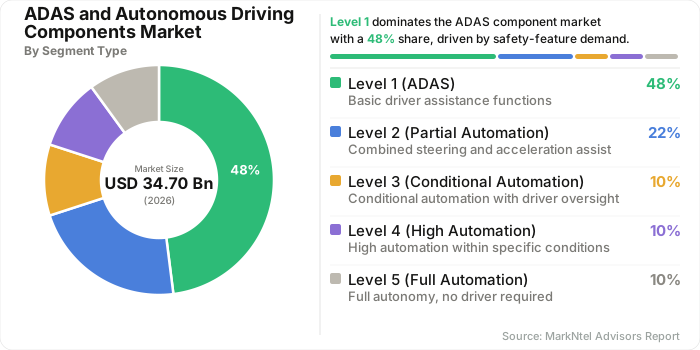
Level 2 (Partial Automation) Captures Approximately 48% Market Share in the Global ADAS and Autonomous Driving Components Industry
The Level 2 (Partial Automation) segment is dominating automation level. Its leadership is driven by the widespread commercialization of advanced driver assistance systems (ADAS) that combine adaptive cruise control, lane centring, automatic emergency braking, and traffic jam assist into a unified driving experience. Compared with higher automation levels, Level 2 technology offers an optimal balance between safety, affordability, and regulatory compliance, enabling deployment across high-volume passenger vehicles. Continuous improvements in ADAS sensors, automotive radar, LiDAR, electronic control units (ECUs), AI-powered perception software, and sensor fusion technologies have further accelerated OEM adoption, strengthening the segment's position in the global automotive safety systems market.
The segment is also benefiting from automakers' transition toward software-defined vehicles and centralized vehicle computing platforms capable of supporting scalable autonomous driving functions. Rising investments in intelligent mobility, vehicle automation, and connected vehicle technologies are encouraging manufacturers to standardize Level 2 capabilities across mainstream vehicle portfolios. Demonstrating this momentum, Mobileye announced in January 2025 that Volkswagen Group selected its Surround ADAS platform powered by the EyeQ™6 High processor for future vehicle programs, enabling deployment of advanced Level 2+ driver assistance technologies across multiple brands. The agreement highlights growing industry confidence in scalable autonomous driving components, AI-enabled perception systems, and next-generation automotive semiconductor platforms that will continue driving market expansion . Based on the level of automation type , the market is further bifurcated into:
- Level 1 (Advanced Driving Assist Systems)
- Level 2 (Partial Automation)
- Level 3 (Conditional Automation)
- Level 4 (High Automation)
- Level 5 (Full Automation)
Passenger Cars Account for Approximately 77% Market Share in the Global ADAS and Autonomous Driving Components Market
The passenger cars segment is estimated to account for approximately 77% of the ADAS and autonomous driving components market in 2026, representing the largest vehicle category. Its dominance is supported by rising global passenger vehicle production, increasing consumer demand for intelligent safety technologies, and expanding regulatory requirements encouraging the adoption of advanced driver assistance systems. Passenger vehicles serve as the primary platform for integrating automotive cameras, radar sensors, LiDAR, driver monitoring systems, electronic control units, and autonomous driving software, enabling manufacturers to introduce advanced safety features across premium and mass-market models. Growing penetration of connected vehicles and software-defined vehicle architectures continues to reinforce this segment's long-term market leadership.
Strong collaboration between automotive OEMs and Tier-1 component suppliers is accelerating innovation in autonomous driving components, sensor fusion, AI computing, and intelligent vehicle platforms specifically designed for passenger mobility. Manufacturers are increasingly introducing modular ADAS solutions that improve safety performance while reducing system complexity and development costs. Supporting this trend, Continental AG unveiled its AI-based Luna and Astra driver assistance systems at Auto Shanghai 2025, offering scalable perception software and cost-efficient hardware solutions tailored for next-generation passenger vehicles. The launch reflects the industry's continued focus on expanding automotive safety systems, autonomous driving technology, and ADAS component integration, further strengthening the passenger car segment's dominant position within the global market . based on the vehicle type, the market is further bifurcated into:
- Passenger Car
- Commercial Vehicle
Asia-Pacific Holds Approximately 46% Share in the Global ADAS and Autonomous Driving Components Market
Asia-Pacific is estimated to account for approximately 46% of the ADAS and autonomous driving components market in 2026, making it the leading regional market. The region's dominance is supported by its position as the world's largest automotive manufacturing hub, strong government initiatives promoting intelligent transportation, and increasing production of vehicles equipped with advanced driver assistance systems (ADAS). According to the International Organization of Motor Vehicle Manufacturers (OICA), Asia produced more than 55 million motor vehicles in 2024, representing the largest share of global vehicle production. The presence of major automotive manufacturers, semiconductor suppliers, and electronics companies across China, Japan, South Korea, and India further strengthens regional demand for automotive cameras, radar, LiDAR, electronic control units (ECUs), and autonomous driving components.
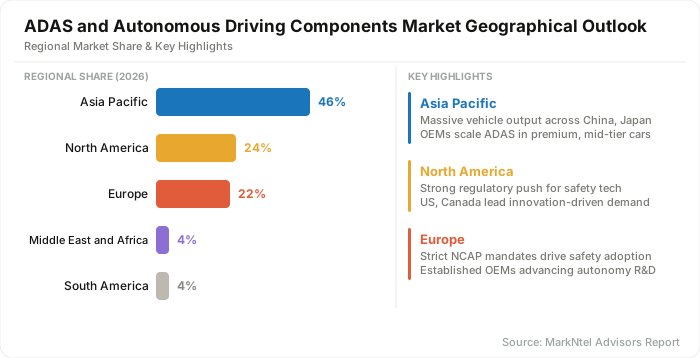
Government policies encouraging intelligent mobility and connected vehicle technologies continue to reinforce the region's leadership. For instance, Japan's Ministry of Land, Infrastructure, Transport and Tourism (MLIT) has expanded support for advanced vehicle safety technologies through its Advanced Safety Vehicle (ASV) Promotion Project, encouraging wider deployment of driver assistance systems and automated driving technologies. These initiatives are accelerating investments in next-generation automotive safety systems, AI-enabled perception technologies, and vehicle electronics while encouraging collaboration between OEMs and component manufacturers. Combined with high vehicle production volumes and continuous technological innovation, these developments are expected to sustain Asia-Pacific's leading position in the ADAS and autonomous driving components market throughout the forecast period.
ADAS and Autonomous Driving Components Market Remains Moderately Consolidated
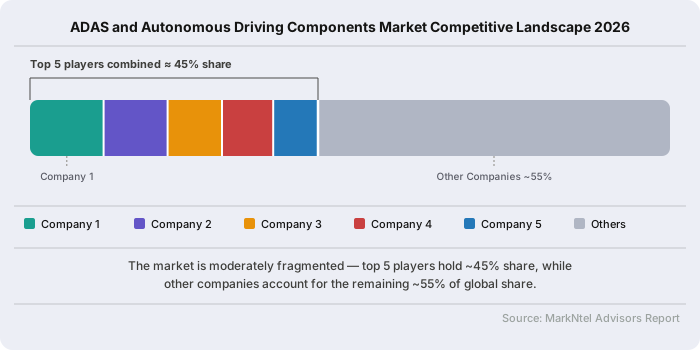
The ADAS and autonomous driving components market remains moderately consolidated, with the top five companies, Robert Bosch GmbH, Continental AG, DENSO Corporation, ZF Friedrichshafen AG, and Valeo SA, collectively accounting for an estimated 45% of the global market in 2026. Market competition is driven by technological innovation in sensing and computing platforms, long-term OEM partnerships, software integration capabilities, semiconductor expertise, and continuous investments in AI-enabled autonomous driving technologies.
Key Companies in the ADAS and Autonomous Driving Components Market
- Robert Bosch GmbH
- Continental AG
- DENSO Corporation
- ZF Friedrichshafen AG
- Valeo SA
- Aptiv PLC
- Mobileye Global Inc.
- Magna International Inc.
- Hyundai Mobis Co., Ltd.
- NVIDIA Corporation
- Qualcomm Incorporated
- NXP Semiconductors N.V.
- Infineon Technologies AG
- Analog Devices, Inc.
- HERE Technologies
- Others
ADAS and Autonomous Driving Components Industry News and Recent Developments
January 2026: Mobileye Expands Surround ADAS with Second Global Top-10 Automaker
At CES 2026, Mobileye announced that a second top-10 global automaker selected its EyeQ™6H-powered Surround ADAS platform as standard equipment across future mass-market and premium vehicle programs. The agreement increased Mobileye's projected deployment pipeline to more than 19 million EyeQ6H-based Surround ADAS systems, including approximately 9 million systems associated with the newly announced OEM. The platform integrates surround-view perception, driver assistance, and highway hands-free driving capabilities into a single electronic control unit.
Impact Analysis: The agreement demonstrates accelerating OEM adoption of centralized ADAS computing architectures capable of supporting advanced safety functions while reducing hardware complexity. Large-scale deployment strengthens the commercialization of Level 2+ driver assistance systems and reinforces growing demand for high-performance processors, cameras, radar sensors, and integrated ADAS software across global passenger vehicle platforms.
January 2026: ZF and Qualcomm Introduce Scalable AI-Based ADAS Compute Platform
ZF Friedrichshafen AG and Qualcomm Technologies unveiled a scalable ADAS platform combining the ZF ProAI Supercomputer with the Snapdragon Ride Platform. The solution supports multiple automated driving levels through high-performance AI computing, sensor fusion, perception, and centralized vehicle computing while enabling automakers to accelerate software-defined vehicle development using an open architecture.
Impact Analysis: The collaboration highlights the industry's transition toward centralized domain controllers capable of integrating multiple ADAS functions into a unified computing platform. This reduces vehicle electronics complexity, improves software scalability, and enables OEMs to deploy advanced driver assistance features across a broader range of vehicle segments with faster development cycles.
January 2026: Hyundai Mobis and Qualcomm Partner on Next-Generation ADAS for Software-Defined Vehicles
During CES 2026, Hyundai Mobis and Qualcomm Technologies signed a comprehensive agreement to jointly develop next-generation Software-Defined Vehicle (SDV) architecture using the Snapdragon Ride Flex SoC. The collaboration focuses on improving ADAS processing performance, system efficiency, and functional safety while supporting integrated vehicle computing for future intelligent vehicles.
Impact Analysis: The partnership reflects increasing convergence between ADAS hardware and software-defined vehicle architectures. Integration of cockpit and driver assistance functions on common computing platforms is expected to reduce development costs, improve vehicle software upgradability, and accelerate commercialization of intelligent driving technologies across global automotive markets.
April 2026: Bosch and Qualcomm Expand Strategic Partnership for Production ADAS Platforms
Bosch and Qualcomm Technologies expanded their strategic collaboration beyond cockpit computing to include production-ready ADAS platforms powered by the Snapdragon Ride™ Platform. Bosch also announced it had delivered more than 10 million cockpit computers powered by Snapdragon Cockpit Platforms worldwide, demonstrating large-scale deployment of centralized vehicle computing technologies.
Impact Analysis: The expanded partnership reinforces industry movement toward integrated compute platforms capable of supporting both infotainment and advanced driver assistance applications. The collaboration is expected to accelerate commercialization of scalable ADAS architectures while improving cost efficiency and enabling broader adoption of intelligent safety technologies across global vehicle portfolios.
March 2026: Mobileye Secures Major Driver Monitoring System Production Program
Mobileye announced that a leading U.S. automaker selected its Driver Monitoring System (DMS) for a high-volume production program. The solution combines advanced in-cabin sensing, AI-based driver state monitoring, and intelligent safety software designed to meet increasing regulatory and consumer demand for enhanced driver supervision and occupant safety.
Impact Analysis: The production award reflects growing industry emphasis on intelligent in-cabin monitoring as ADAS capabilities become more advanced. Increasing adoption of AI-powered driver monitoring systems is expected to stimulate demand for vision sensors, edge AI processors, and integrated safety software while supporting compliance with evolving vehicle safety regulations worldwide.
Frequently Asked Questions
- Market Segmentation
- Introduction
- Product Definition
- Research Process
- Assumptions
- Executive Summary
- ADAS and Autonomous Driving Components Market Policies, Regulations, and Product Standards
- ADAS and Autonomous Driving Components Market Trends and Developments
- ADAS and Autonomous Driving Components Market Dynamics
- Growth Factors
- Challenges
- ADAS and Autonomous Driving Components Market Hotspot and Opportunities
- ADAS and Autonomous Driving Components Market Outlook, 2022-2032
- Market Size and Outlook
- By Revenues (USD Million)
- Market Segmentation and Outlook
- By Level of Automation- Market Size and Forecast 2022-2032, USD Million
- Level 1 (Advanced Driving Assist Systems)
- Level 2 (Partial Automation)
- Level 3 (Conditional Automation)
- Level 4 (High Automation)
- Level 5 (Full Automation)
- By Vehicle Type- Market Size and Forecast 2022-2032, USD Million
- Passenger Car
- Commercial Vehicle
- Light Commercial Vehicle
- Medium Weight Commercial Vehicle
- Heavy Commercial Vehicle
- Ultra Heavy Commercial Vehicle
- By Components Type- Market Size and Forecast 2022-2032, USD Million
- Camera
- Radar
- Ultrasonic Sensors
- LiDAR
- Mechanical Automotive LiDAR
- Solid State Automotive LiDAR
- Electronic Control Unit
- By System- Market Size and Forecast 2022-2032, USD Million
- Adaptive Cruise Control (ACC)
- Adaptive Front Light (AFL)
- Automatic Emergency Braking (AEB)
- Blind Spot Detection (BSD)
- Cross Traffic Alert (CTA)
- Driver Monitoring System (DMS)
- Forward Collision Warning (FCW)
- Intelligent Park Assist (IPA)
- Lane Departure Warning (LDW)
- Night Vision System (NVS)
- Pedestrian Detection System (PDS)
- Road Sign Recognition (Rsr)
- Tire Pressure Monitoring System (TPMS)
- Traffic Jam Assist (TJA)
- Others
- By Region
- North America
- South America
- Asia-Pacific
- Europe
- Middle East and Africa
- By Company
- Competition Characteristics
- Market Segmentation and Outlook
- By Level of Automation- Market Size and Forecast 2022-2032, USD Million
- Market Size and Outlook
- North America ADAS and Autonomous Driving Components Market Outlook, 2022-2032
- Market Size and Outlook
- By Revenues (USD Million)
- Market Segmentation and Outlook
- By Level of Automation- Market Size and Forecast 2022-2032, USD Million
- By Vehicle Type- Market Size and Forecast 2022-2032, USD Million
- By Components Type- Market Size and Forecast 2022-2032, USD Million
- By System- Market Size and Forecast 2022-2032, USD Million
- By Country
- The US
- Canada
- Mexico
- The US ADAS and Autonomous Driving Components Market Outlook, 2022-2032F
- Market Size and Outlook
- By Revenues (USD Million)
- Market Segmentation and Outlook
- By Level of Automation- Market Size and Forecast 2022-2032, USD Million
- By Vehicle Type- Market Size and Forecast 2022-2032, USD Million
- By Components Type- Market Size and Forecast 2022-2032, USD Million
- By System- Market Size and Forecast 2022-2032, USD Million
- Market Size and Outlook
- Canada ADAS and Autonomous Driving Components Market Outlook, 2022-2032F
- Market Size and Outlook
- By Revenues (USD Million)
- Market Segmentation and Outlook
- By Level of Automation- Market Size and Forecast 2022-2032, USD Million
- By Vehicle Type- Market Size and Forecast 2022-2032, USD Million
- By Components Type- Market Size and Forecast 2022-2032, USD Million
- By System- Market Size and Forecast 2022-2032, USD Million
- Market Size and Outlook
- Mexico ADAS and Autonomous Driving Components Market Outlook, 2022-2032F
- Market Size and Outlook
- By Revenues (USD Million)
- Market Segmentation and Outlook
- By Level of Automation- Market Size and Forecast 2022-2032, USD Million
- By Vehicle Type- Market Size and Forecast 2022-2032, USD Million
- By Components Type- Market Size and Forecast 2022-2032, USD Million
- By System- Market Size and Forecast 2022-2032, USD Million
- Market Size and Outlook
- Market Size and Outlook
- South America ADAS and Autonomous Driving Components Market Outlook, 2022-2032
- Market Size and Outlook
- By Revenues (USD Million)
- Market Segmentation and Outlook
- By Level of Automation- Market Size and Forecast 2022-2032, USD Million
- By Vehicle Type- Market Size and Forecast 2022-2032, USD Million
- By Components Type- Market Size and Forecast 2022-2032, USD Million
- By System- Market Size and Forecast 2022-2032, USD Million
- By Country
- Brazil
- Argentina
- Chile
- Colombia
- Peru
- Ecuador
- Rest of South America
- Brazil ADAS and Autonomous Driving Components Market Outlook, 2022-2032F
- Market Size and Outlook
- By Revenues (USD Million)
- Market Segmentation and Outlook
- By Level of Automation- Market Size and Forecast 2022-2032, USD Million
- By Vehicle Type- Market Size and Forecast 2022-2032, USD Million
- By Components Type- Market Size and Forecast 2022-2032, USD Million
- By System- Market Size and Forecast 2022-2032, USD Million
- Market Size and Outlook
- Argentina ADAS and Autonomous Driving Components Market Outlook, 2022-2032F
- Market Size and Outlook
- By Revenues (USD Million)
- Market Segmentation and Outlook
- By Level of Automation- Market Size and Forecast 2022-2032, USD Million
- By Vehicle Type- Market Size and Forecast 2022-2032, USD Million
- By Components Type- Market Size and Forecast 2022-2032, USD Million
- By System- Market Size and Forecast 2022-2032, USD Million
- Market Size and Outlook
- Chile ADAS and Autonomous Driving Components Market Outlook, 2022-2032F
- Market Size and Outlook
- By Revenues (USD Million)
- Market Segmentation and Outlook
- By Level of Automation- Market Size and Forecast 2022-2032, USD Million
- By Vehicle Type- Market Size and Forecast 2022-2032, USD Million
- By Components Type- Market Size and Forecast 2022-2032, USD Million
- By System- Market Size and Forecast 2022-2032, USD Million
- Market Size and Outlook
- Colombia ADAS and Autonomous Driving Components Market Outlook, 2022-2032F
- Market Size and Outlook
- By Revenues (USD Million)
- Market Segmentation and Outlook
- By Level of Automation- Market Size and Forecast 2022-2032, USD Million
- By Vehicle Type- Market Size and Forecast 2022-2032, USD Million
- By Components Type- Market Size and Forecast 2022-2032, USD Million
- By System- Market Size and Forecast 2022-2032, USD Million
- Market Size and Outlook
- Peru ADAS and Autonomous Driving Components Market Outlook, 2022-2032F
- Market Size and Outlook
- By Revenues (USD Million)
- Market Segmentation and Outlook
- By Level of Automation- Market Size and Forecast 2022-2032, USD Million
- By Vehicle Type- Market Size and Forecast 2022-2032, USD Million
- By Components Type- Market Size and Forecast 2022-2032, USD Million
- By System- Market Size and Forecast 2022-2032, USD Million
- Market Size and Outlook
- Ecuador ADAS and Autonomous Driving Components Market Outlook, 2022-2032F
- Market Size and Outlook
- By Revenues (USD Million)
- Market Segmentation and Outlook
- By Level of Automation- Market Size and Forecast 2022-2032, USD Million
- By Vehicle Type- Market Size and Forecast 2022-2032, USD Million
- By Components Type- Market Size and Forecast 2022-2032, USD Million
- By System- Market Size and Forecast 2022-2032, USD Million
- Market Size and Outlook
- Market Size and Outlook
- Europe ADAS and Autonomous Driving Components Market Outlook, 2022-2032
- Market Size and Outlook
- By Revenues (USD Million)
- Market Segmentation and Outlook
- By Level of Automation- Market Size and Forecast 2022-2032, USD Million
- By Vehicle Type- Market Size and Forecast 2022-2032, USD Million
- By Components Type- Market Size and Forecast 2022-2032, USD Million
- By System- Market Size and Forecast 2022-2032, USD Million
- By Country
- The UK
- Germany
- France
- Italy
- Spain
- Nordic
- Benelux
- Rest of Europe
- The UK ADAS and Autonomous Driving Components Market Outlook, 2022-2032F
- Market Size and Outlook
- By Revenues (USD Million)
- Market Segmentation and Outlook
- By Level of Automation- Market Size and Forecast 2022-2032, USD Million
- By Vehicle Type- Market Size and Forecast 2022-2032, USD Million
- By Components Type- Market Size and Forecast 2022-2032, USD Million
- By System- Market Size and Forecast 2022-2032, USD Million
- Market Size and Outlook
- Germany ADAS and Autonomous Driving Components Market Outlook, 2022-2032F
- Market Size and Outlook
- By Revenues (USD Million)
- Market Segmentation and Outlook
- By Level of Automation- Market Size and Forecast 2022-2032, USD Million
- By Vehicle Type- Market Size and Forecast 2022-2032, USD Million
- By Components Type- Market Size and Forecast 2022-2032, USD Million
- By System- Market Size and Forecast 2022-2032, USD Million
- Market Size and Outlook
- France ADAS and Autonomous Driving Components Market Outlook, 2022-2032F
- Market Size and Outlook
- By Revenues (USD Million)
- Market Segmentation and Outlook
- By Level of Automation- Market Size and Forecast 2022-2032, USD Million
- By Vehicle Type- Market Size and Forecast 2022-2032, USD Million
- By Components Type- Market Size and Forecast 2022-2032, USD Million
- By System- Market Size and Forecast 2022-2032, USD Million
- Market Size and Outlook
- Italy ADAS and Autonomous Driving Components Market Outlook, 2022-2032F
- Market Size and Outlook
- By Revenues (USD Million)
- Market Segmentation and Outlook
- By Level of Automation- Market Size and Forecast 2022-2032, USD Million
- By Vehicle Type- Market Size and Forecast 2022-2032, USD Million
- By Components Type- Market Size and Forecast 2022-2032, USD Million
- By System- Market Size and Forecast 2022-2032, USD Million
- Market Size and Outlook
- Spain ADAS and Autonomous Driving Components Market Outlook, 2022-2032F
- Market Size and Outlook
- By Revenues (USD Million)
- Market Segmentation and Outlook
- By Level of Automation- Market Size and Forecast 2022-2032, USD Million
- By Vehicle Type- Market Size and Forecast 2022-2032, USD Million
- By Components Type- Market Size and Forecast 2022-2032, USD Million
- By System- Market Size and Forecast 2022-2032, USD Million
- Market Size and Outlook
- Nordic ADAS and Autonomous Driving Components Market Outlook, 2022-2032F
- Market Size and Outlook
- By Revenues (USD Million)
- Market Segmentation and Outlook
- By Level of Automation- Market Size and Forecast 2022-2032, USD Million
- By Vehicle Type- Market Size and Forecast 2022-2032, USD Million
- By Components Type- Market Size and Forecast 2022-2032, USD Million
- By System- Market Size and Forecast 2022-2032, USD Million
- Market Size and Outlook
- Benelux ADAS and Autonomous Driving Components Market Outlook, 2022-2032F
- Market Size and Outlook
- By Revenues (USD Million)
- Market Segmentation and Outlook
- By Level of Automation- Market Size and Forecast 2022-2032, USD Million
- By Vehicle Type- Market Size and Forecast 2022-2032, USD Million
- By Components Type- Market Size and Forecast 2022-2032, USD Million
- By System- Market Size and Forecast 2022-2032, USD Million
- Market Size and Outlook
- Market Size and Outlook
- Middle East ADAS and Autonomous Driving Components Market Outlook, 2022-2032
- Market Size and Outlook
- By Revenues (USD Million)
- Market Segmentation and Outlook
- By Level of Automation- Market Size and Forecast 2022-2032, USD Million
- By Vehicle Type- Market Size and Forecast 2022-2032, USD Million
- By Components Type- Market Size and Forecast 2022-2032, USD Million
- By System- Market Size and Forecast 2022-2032, USD Million
- By Country
- Saudi Arabia
- The UAE
- South Africa
- Egypt
- Qatar
- Kuwait
- Oman
- Nigeria
- Saudi Arabia ADAS and Autonomous Driving Components Market Outlook, 2022-2032F
- Market Size and Outlook
- By Revenues (USD Million)
- Market Segmentation and Outlook
- By Level of Automation- Market Size and Forecast 2022-2032, USD Million
- By Vehicle Type- Market Size and Forecast 2022-2032, USD Million
- By Components Type- Market Size and Forecast 2022-2032, USD Million
- By System- Market Size and Forecast 2022-2032, USD Million
- Market Size and Outlook
- The UAE ADAS and Autonomous Driving Components Market Outlook, 2022-2032F
- Market Size and Outlook
- By Revenues (USD Million)
- Market Segmentation and Outlook
- By Level of Automation- Market Size and Forecast 2022-2032, USD Million
- By Vehicle Type- Market Size and Forecast 2022-2032, USD Million
- By Components Type- Market Size and Forecast 2022-2032, USD Million
- By System- Market Size and Forecast 2022-2032, USD Million
- Market Size and Outlook
- South Africa ADAS and Autonomous Driving Components Market Outlook, 2022-2032F
- Market Size and Outlook
- By Revenues (USD Million)
- Market Segmentation and Outlook
- By Level of Automation- Market Size and Forecast 2022-2032, USD Million
- By Vehicle Type- Market Size and Forecast 2022-2032, USD Million
- By Components Type- Market Size and Forecast 2022-2032, USD Million
- By System- Market Size and Forecast 2022-2032, USD Million
- Market Size and Outlook
- Egypt ADAS and Autonomous Driving Components Market Outlook, 2022-2032F
- Market Size and Outlook
- By Revenues (USD Million)
- Market Segmentation and Outlook
- By Level of Automation- Market Size and Forecast 2022-2032, USD Million
- By Vehicle Type- Market Size and Forecast 2022-2032, USD Million
- By Components Type- Market Size and Forecast 2022-2032, USD Million
- By System- Market Size and Forecast 2022-2032, USD Million
- Market Size and Outlook
- Qatar ADAS and Autonomous Driving Components Market Outlook, 2022-2032F
- Market Size and Outlook
- By Revenues (USD Million)
- Market Segmentation and Outlook
- By Level of Automation- Market Size and Forecast 2022-2032, USD Million
- By Vehicle Type- Market Size and Forecast 2022-2032, USD Million
- By Components Type- Market Size and Forecast 2022-2032, USD Million
- By System- Market Size and Forecast 2022-2032, USD Million
- Market Size and Outlook
- Kuwait ADAS and Autonomous Driving Components Market Outlook, 2022-2032F
- Market Size and Outlook
- By Revenues (USD Million)
- Market Segmentation and Outlook
- By Level of Automation- Market Size and Forecast 2022-2032, USD Million
- By Vehicle Type- Market Size and Forecast 2022-2032, USD Million
- By Components Type- Market Size and Forecast 2022-2032, USD Million
- By System- Market Size and Forecast 2022-2032, USD Million
- Market Size and Outlook
- Oman ADAS and Autonomous Driving Components Market Outlook, 2022-2032F
- Market Size and Outlook
- By Revenues (USD Million)
- Market Segmentation and Outlook
- By Level of Automation- Market Size and Forecast 2022-2032, USD Million
- By Vehicle Type- Market Size and Forecast 2022-2032, USD Million
- By Components Type- Market Size and Forecast 2022-2032, USD Million
- By System- Market Size and Forecast 2022-2032, USD Million
- Market Size and Outlook
- Nigeria ADAS and Autonomous Driving Components Market Outlook, 2022-2032F
- Market Size and Outlook
- By Revenues (USD Million)
- Market Segmentation and Outlook
- By Level of Automation- Market Size and Forecast 2022-2032, USD Million
- By Vehicle Type- Market Size and Forecast 2022-2032, USD Million
- By Components Type- Market Size and Forecast 2022-2032, USD Million
- By System- Market Size and Forecast 2022-2032, USD Million
- Market Size and Outlook
- Market Size and Outlook
- Asia Pacific ADAS and Autonomous Driving Components Market Outlook, 2022-2032
- Market Size and Outlook
- By Revenues (USD Million)
- Market Segmentation and Outlook
- By Level of Automation- Market Size and Forecast 2022-2032, USD Million
- By Vehicle Type- Market Size and Forecast 2022-2032, USD Million
- By Components Type- Market Size and Forecast 2022-2032, USD Million
- By System- Market Size and Forecast 2022-2032, USD Million
- By Country
- China
- Japan
- India
- South Korea
- Australia
- Indonesia
- Thailand
- Vietnam
- New Zealand
- Rest of Asia-Pacific
- China ADAS and Autonomous Driving Components Market Outlook, 2022-2032F
- Market Size and Outlook
- By Revenues (USD Million)
- Market Segmentation and Outlook
- By Level of Automation- Market Size and Forecast 2022-2032, USD Million
- By Vehicle Type- Market Size and Forecast 2022-2032, USD Million
- By Components Type- Market Size and Forecast 2022-2032, USD Million
- By System- Market Size and Forecast 2022-2032, USD Million
- Market Size and Outlook
- Japan ADAS and Autonomous Driving Components Market Outlook, 2022-2032F
- Market Size and Outlook
- By Revenues (USD Million)
- Market Segmentation and Outlook
- By Level of Automation- Market Size and Forecast 2022-2032, USD Million
- By Vehicle Type- Market Size and Forecast 2022-2032, USD Million
- By Components Type- Market Size and Forecast 2022-2032, USD Million
- By System- Market Size and Forecast 2022-2032, USD Million
- Market Size and Outlook
- India ADAS and Autonomous Driving Components Market Outlook, 2022-2032F
- Market Size and Outlook
- By Revenues (USD Million)
- Market Segmentation and Outlook
- By Level of Automation- Market Size and Forecast 2022-2032, USD Million
- By Vehicle Type- Market Size and Forecast 2022-2032, USD Million
- By Components Type- Market Size and Forecast 2022-2032, USD Million
- By System- Market Size and Forecast 2022-2032, USD Million
- Market Size and Outlook
- South Korea ADAS and Autonomous Driving Components Market Outlook, 2022-2032F
- Market Size and Outlook
- By Revenues (USD Million)
- Market Segmentation and Outlook
- By Level of Automation- Market Size and Forecast 2022-2032, USD Million
- By Vehicle Type- Market Size and Forecast 2022-2032, USD Million
- By Components Type- Market Size and Forecast 2022-2032, USD Million
- By System- Market Size and Forecast 2022-2032, USD Million
- Market Size and Outlook
- Australia ADAS and Autonomous Driving Components Market Outlook, 2022-2032F
- Market Size and Outlook
- By Revenues (USD Million)
- Market Segmentation and Outlook
- By Level of Automation- Market Size and Forecast 2022-2032, USD Million
- By Vehicle Type- Market Size and Forecast 2022-2032, USD Million
- By Components Type- Market Size and Forecast 2022-2032, USD Million
- By System- Market Size and Forecast 2022-2032, USD Million
- Market Size and Outlook
- Indonesia ADAS and Autonomous Driving Components Market Outlook, 2022-2032F
- Market Size and Outlook
- By Revenues (USD Million)
- Market Segmentation and Outlook
- By Level of Automation- Market Size and Forecast 2022-2032, USD Million
- By Vehicle Type- Market Size and Forecast 2022-2032, USD Million
- By Components Type- Market Size and Forecast 2022-2032, USD Million
- By System- Market Size and Forecast 2022-2032, USD Million
- Market Size and Outlook
- Thailand ADAS and Autonomous Driving Components Market Outlook, 2022-2032F
- Market Size and Outlook
- By Revenues (USD Million)
- Market Segmentation and Outlook
- By Level of Automation- Market Size and Forecast 2022-2032, USD Million
- By Vehicle Type- Market Size and Forecast 2022-2032, USD Million
- By Components Type- Market Size and Forecast 2022-2032, USD Million
- By System- Market Size and Forecast 2022-2032, USD Million
- Market Size and Outlook
- Vietnam ADAS and Autonomous Driving Components Market Outlook, 2022-2032F
- Market Size and Outlook
- By Revenues (USD Million)
- Market Segmentation and Outlook
- By Level of Automation- Market Size and Forecast 2022-2032, USD Million
- By Vehicle Type- Market Size and Forecast 2022-2032, USD Million
- By Components Type- Market Size and Forecast 2022-2032, USD Million
- By System- Market Size and Forecast 2022-2032, USD Million
- Market Size and Outlook
- New Zealand ADAS and Autonomous Driving Components Market Outlook, 2022-2032F
- Market Size and Outlook
- By Revenues (USD Million)
- Market Segmentation and Outlook
- By Level of Automation- Market Size and Forecast 2022-2032, USD Million
- By Vehicle Type- Market Size and Forecast 2022-2032, USD Million
- By Components Type- Market Size and Forecast 2022-2032, USD Million
- By System- Market Size and Forecast 2022-2032, USD Million
- Market Size and Outlook
- Market Size and Outlook
- ADAS and Autonomous Driving Components Market Key Strategic Imperatives for Success and Growth
- Competitive Outlook
- Company Profiles
- Robert Bosch GmbH
- Business Description
- Product Portfolio
- Collaborations and Alliances
- Recent Developments
- Financial Details
- Others
- Continental AG
- Business Description
- Product Portfolio
- Collaborations and Alliances
- Recent Developments
- Financial Details
- Others
- DENSO Corporation
- Business Description
- Product Portfolio
- Collaborations and Alliances
- Recent Developments
- Financial Details
- Others
- ZF Friedrichshafen AG
- Business Description
- Product Portfolio
- Collaborations and Alliances
- Recent Developments
- Financial Details
- Others
- Valeo SA
- Business Description
- Product Portfolio
- Collaborations and Alliances
- Recent Developments
- Financial Details
- Others
- Aptiv PLC
- Business Description
- Product Portfolio
- Collaborations and Alliances
- Recent Developments
- Financial Details
- Others
- Mobileye Inc.
- Business Description
- Product Portfolio
- Collaborations and Alliances
- Recent Developments
- Financial Details
- Others
- Magna International Inc.
- Business Description
- Product Portfolio
- Collaborations and Alliances
- Recent Developments
- Financial Details
- Others
- Hyundai Mobis Co., Ltd.
- Business Description
- Product Portfolio
- Collaborations and Alliances
- Recent Developments
- Financial Details
- Others
- NVIDIA Corporation
- Business Description
- Product Portfolio
- Collaborations and Alliances
- Recent Developments
- Financial Details
- Others
- Qualcomm Incorporated
- Business Description
- Product Portfolio
- Collaborations and Alliances
- Recent Developments
- Financial Details
- Others
- NXP Semiconductors N.V.
- Business Description
- Product Portfolio
- Collaborations and Alliances
- Recent Developments
- Financial Details
- Others
- Infineon Technologies AG
- Business Description
- Product Portfolio
- Collaborations and Alliances
- Recent Developments
- Financial Details
- Others
- Analog Devices, Inc.
- Business Description
- Product Portfolio
- Collaborations and Alliances
- Recent Developments
- Financial Details
- Others
- HERE Technologies
- Business Description
- Product Portfolio
- Collaborations and Alliances
- Recent Developments
- Financial Details
- Others
- Others
- Robert Bosch GmbH
- Company Profiles
- Disclaimer
MarkNtel Advisors follows a robust and iterative research methodology designed to ensure maximum accuracy and minimize deviation in market estimates and forecasts. Our approach combines both bottom-up and top-down techniques to effectively segment and quantify various aspects of the market. A consistent feature across all our research reports is data triangulation, which examines the market from three distinct perspectives to validate findings. Key components of our research process include:
1. Scope & Research Design At the outset, MarkNtel Advisors define the research objectives and formulate pertinent questions. This phase involves determining the type of research—qualitative or quantitative—and designing a methodology that outlines data collection methods, target demographics, and analytical tools. They also establish timelines and budgets to ensure the research aligns with client goals.
2. Sample Selection and Data Collection In this stage, the firm identifies the target audience and determines the appropriate sample size to ensure representativeness. They employ various sampling methods, such as random or stratified sampling, based on the research objectives. Data collection is carried out using tools like surveys, interviews, and observations, ensuring the gathered data is reliable and relevant.
3. Data Analysis and Validation Once data is collected, MarkNtel Advisors undertake a rigorous analysis process. This includes cleaning the data to remove inconsistencies, employing statistical software for quantitative analysis, and thematic analysis for qualitative data. Validation steps are taken to ensure the accuracy and reliability of the findings, minimizing biases and errors.

4. Data Forecast and FinalizationThe final phase involves forecasting future market trends based on the analyzed data. MarkNtel Advisors utilize predictive modeling and time series analysis to anticipate market behaviors. The insights are then compiled into comprehensive reports, featuring visual aids like charts and graphs, and include strategic recommendations to inform client decision-making
We offer flexible licensing options to cater to varying organizational needs. Choose the pricing pack that best suits your requirements:
Buy Now Inquire Before Buying
 Request Customization
 Talk to our Consultant







