

Australia Beauty and Personal Care Market Research Report: Trends, Forecast & Opportunities (2026-2032)
By Product (Hair Care, Skin Care, Bath and Shower, Oral Care, Fragrances, Cosmetic products), By Price Category (Mass, Premium), By Distribution Channel (Speciality Stores, Large & ... Small Retail Stores, E), By End User (Men, Women, Kids), and others Read more
- FMCG
- Jul 2026
- Pages 240
- Report Format: PDF, Excel, PPT
Australia Beauty and Personal Care Market
Projected 5.72% CAGR from 2026 to 2032
Study Period
2026-2032
Market Size (2026)
USD 9.19 Billion
Market Size (2032)
USD 12.83 Billion
Base Year
2025
Projected CAGR
5.72%
Leading Segments
By Product Type: Skin Care
Australia Beauty & Personal Care Market Key Takeaways
- The Australia beauty & personal care market was valued at USD 8.53 billion in 2025, is projected to reach USD 9.19 billion in 2026 and USD 12.83 billion by 2032, registering a 5.72% CAGR during 2026–2032.
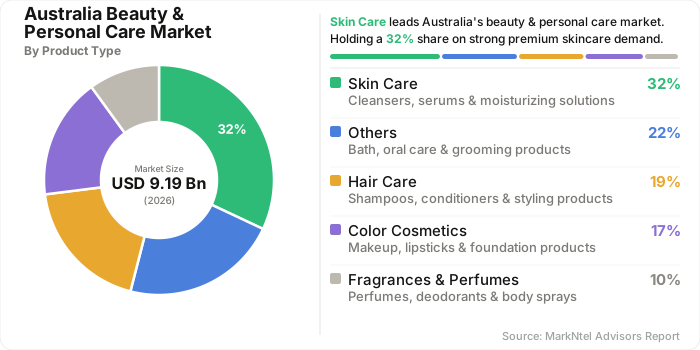
- Skin care dominated the product type segment, accounting for approximately 32% of the industry.
- Adults emerged as the leading end-user segment, capturing approximately 72% of the industry share in 2026.
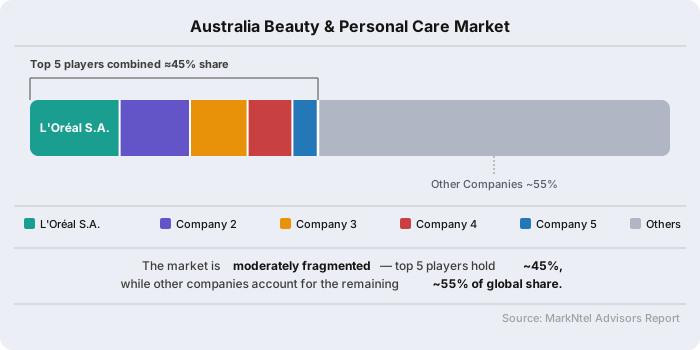
- The industry remains moderately fragmented, with the top five companies collectively accounting for nearly 45% of the total market share.
Australia Beauty & Personal Care Market Size and Outlook
The beauty & personal care market size in Australia was valued at USD 8.53 billion in 2025 and is projected to increase from USD 9.19 billion in 2026 to USD 12.83 billion by 2032, registering a CAGR of 5.72% during 2026–2032. Growth will be supported by the rapid expansion of digital and social commerce alongside rising adoption of Korean and Japanese multi-step skincare routines. These evolving consumer preferences are strengthening beauty retail while encouraging premium product adoption and greater digital engagement.
Long-term demand fundamentals remain favorable as Australia's population reached 27,801,023 at 31 December 2025, increasing by 412,500 people (1.5%) over the year, as per the Australian Bureau of Statistics. A larger consumer base expands demand for everyday skincare essentials while supporting continued premiumization across the Australian beauty industry. This demographic expansion provides manufacturers with opportunities to diversify portfolios and address changing consumer preferences through targeted product development and beauty innovation.
Regulatory compliance will remain an important competitive factor across the beauty & personal care industry. Primary sunscreens sold in Australia must be listed on the Australian Register of Therapeutic Goods before legal supply under Therapeutic Goods Administration requirements. Mandatory registration increases formulation and testing costs, creating higher entry barriers while favoring established multinational manufacturers that possess dedicated regulatory affairs capabilities and extensive product development resources over smaller emerging competitors.
Distribution channels are also expected to continue evolving throughout the forecast period. Supermarkets accounted for 32.8% of consumer beauty spending in the latest data, an estimated USD 1.43 billion in annual sales shifted toward specialty beauty retailers and pharmacies. This structural migration is encouraging brands to strengthen specialty retail partnerships and pharmacy-focused skincare portfolios, reshaping long-term commercial strategies across Australia's beauty ecosystem.
Australia Beauty & Personal Care Market Key Indicators
- Australia continues to experience one of the world's highest melanoma burdens, with the Australian Institute of Health and Welfare projecting approximately 17,000 new melanoma diagnoses in 2025 and an age-standardised incidence rate of 63 cases per 100,000 people. This persistent public health challenge reinforces long-term demand for SPF products, dermatologist-recommended formulations, and preventive skincare solutions, strengthening innovation across clinical skincare and protective personal care categories.
- Demographic shifts are reshaping Australia's beauty landscape as people aged 55 and older account for 26% of the population in capital cities, with an even greater concentration across regional areas, according to the Australian Bureau of Statistics. This expanding older population supports sustained consumption of anti-ageing serums, peptide complexes, and clinic-adjacent at-home skincare devices, creating opportunities for manufacturers specializing in anti-aging skincare.
- Australia's increasingly diverse consumer base continues to reshape product development priorities. The Australian Bureau of Statistics reported that net overseas migration added 301,000 people during the year to 31 December 2025, alongside a natural increase of 111,500. Growing cultural diversity is encouraging brands to broaden shade ranges, develop hair-texture-specific formulations, and introduce culturally relevant assortments, reinforcing demand for inclusive beauty across retail channels.
Australia Beauty & Personal Care Market Scope
| Category | Segments |
|---|---|
| By Product | Hair Care, Skin Care, Bath and Shower, Oral Care, Fragrances, Cosmetic products |
| By Price Category | Mass, Premium |
| By Distribution Channel | Speciality Stores, Large & Small Retail Stores, E |
| By End User | Men, Women, Kids |
Australia Beauty & Personal Care Market Growth Drivers
Rapid Growth of Digital and Social Commerce
Australia beauty & personal care market is experiencing robust growth as digital commerce transforms consumer purchasing behavior and product accessibility. Australians spent USD 53.69 billion shopping online in 2025, representing a 14% year-on-year increase, while online purchases accounted for 24% of total national retail spending. Beauty e-commerce and evolving beauty consumer trends are accelerating product discovery, with skincare and color cosmetics ranking among the categories most frequently researched on social platforms before purchase.
The expanding online retail ecosystem is creating broader market access for beauty brands across Australia. A record 9.8 million Australian households shopped online in 2025, while online marketplaces generated USD 12.29 billion in sales, reflecting 13% year-on-year growth. This expanding digital infrastructure enables brands operating in the Australia beauty & personal care industry to efficiently reach price-conscious and convenience-seeking consumers across both metropolitan and regional locations.
For manufacturers, digital-first retail has evolved from a complementary sales channel into a core business growth strategy. Investment in marketplace-ready packaging, subscription replenishment models, and mobile-optimized product content has become increasingly important for improving customer acquisition and retention. As consumers continue prioritizing seamless online shopping experiences, companies strengthening their digital capabilities are well positioned to achieve sustained volume growth and reinforce long-term competitive differentiation within Australia's beauty industry.
Recent Trends
Rising Adoption of Korean and Japanese Multi-Step Skincare Routines
The Australia beauty & personal care industry is witnessing growing consumer preference for Korean and Japanese multi-step skincare routines that emphasize ingredient-focused regimens over single multifunctional products. On 16 April 2025, Amazon Australia launched its dedicated "Amazon Beauty Finds" storefront featuring brands including Beauty of Joseon, COSRX, and Dear Klairs. This expansion reflects rising demand for premium skincare and natural skincare, as lightweight essences, ampoules, and barrier-repair creams continue moving into mainstream retail.
Retailers are increasingly adapting merchandising strategies to capitalize on this evolving purchasing behavior rather than relying solely on individual product launches. Amazon confirmed that the Beauty Finds storefront will be refreshed frequently to reflect viral skincare trends emerging across social platforms. Fast, free Prime delivery across major Australian cities, including same-day delivery in Sydney, has significantly reduced the import barriers that previously limited access to internationally recognized skincare formulations for Australian consumers.
The growing popularity of layered skincare routines represents a structural transformation in consumer beauty preferences across the Australia beauty & personal care market. Consumers are increasingly selecting ingredient-specific products designed for sequential application while seeking greater transparency regarding formulation benefits and efficacy. Consequently, brands capable of effectively communicating ingredient functionality through digital and social channels are strengthening consumer engagement and competitive positioning beyond the limitations of traditional in-store shelf visibility.
Australia Beauty & Personal Care Market Opportunities and Challenges
PFAS Restrictions Creating an Opening for Verified Clean-Formulation Brands
Australia beauty & personal care market is facing a significant regulatory shift as PFAS restrictions reshape product formulation requirements. The Australian Industrial Chemicals Introduction Scheme banned the import, manufacture, and use of PFOS, perfluorooctanoic acid, and perfluorohexane sulfonate under the Industrial Chemicals Environmental Management Standard, effective 1 July 2025. These changes are accelerating demand for clean beauty and sustainable beauty solutions across the industry.
Regulatory scrutiny intensified further on 14 October 2025 when AICIS opened a formal evaluation of 522 additional PFAS listed on the Australian Inventory of Industrial Chemicals, due to conclude 31 December 2026. Manufacturers must disclose import volumes and end uses or face civil penalties. Long-wear cosmetics and waterproof formulations, which historically relied on fluorinated compounds for water resistance, now face the most direct reformulation burden within the Australia beauty & personal care industry.
The evolving regulatory landscape also creates a significant growth opportunity for brands investing in verified clean formulations. L'Oréal has progressively phased out PFAS from its formulations and, since the end of 2025, has stopped producing formulas containing PFAS ingredients while replacing them with bio-based alternatives. Brands that substantiate PFAS-free claims ahead of the AICIS evaluation's conclusion can strengthen differentiation in long-wear color cosmetics and sun care products.
Segmentation Insights
Skin Care Dominates Due to Ageing Population and High Sun Exposure
Skin care accounted for 32% of Australia's beauty and personal care industry by product type, making it the largest category. The Australia beauty & personal care industry continues to benefit from sustained consumer demand for preventive skincare, supported by the country's ageing capital-city population and high levels of sun exposure. These structural factors encourage consistent adoption of products that promote daily skin protection, reinforcing demand for personal care products.
Australia's environmental conditions and demographic profile continue to underpin the segment's leadership. Frequent exposure to ultraviolet radiation has strengthened consumer awareness of daily skincare routines, while the growing ageing population increasingly prioritizes products designed to maintain skin health and appearance. This combination supports regular purchasing across moisturizers, anti-ageing serums, cleansers, and sunscreen products, contributing to resilient category performance across both premium and mass-market offerings.
Manufacturers are responding by expanding portfolios with scientifically formulated skincare solutions that address evolving consumer expectations for efficacy and quality. Continuous product innovation, ingredient transparency, and dermatologist-inspired formulations are strengthening brand competitiveness while encouraging long-term customer loyalty. As consumers increasingly integrate preventive skincare into everyday routines, the skin care segment is expected to retain its leadership position. Based on product type, the scope has been divided into:
- Skin Care
- Hair Care
- Color Cosmetics
- Fragrances & Perfumes
- Oral Care
- Bath & Shower Products
Adults Dominate Due to Consistent Routine-Based Beauty and Grooming Consumption
Adults accounted for 72% of end-user demand in Australia's beauty and personal care industry, making them the dominant consumer group across skincare, haircare, and grooming purchases. This leadership is supported by sustained routine-based consumption among the working-age population, whose higher purchasing power and established self-care habits continue shaping beauty buying patterns across diverse product categories, reinforcing stable and recurring demand across the industry.
Working-age consumers consistently purchase skincare, haircare, fragrances, oral care, and grooming products as part of their everyday routines rather than occasional discretionary spending. Greater emphasis on personal appearance, workplace professionalism, and preventive wellness encourages frequent product replenishment, creating a dependable source of recurring demand. These consumption habits enable manufacturers to maintain stable sales while addressing evolving lifestyle preferences.
Manufacturers are responding by introducing premium formulations, targeted product lines, and omnichannel engagement strategies designed specifically for adult consumers. Continuous innovation, personalized offerings, and convenience-focused retail experiences are strengthening brand loyalty, encouraging repeat purchases across established product categories. As adults remain the most active purchasers of beauty and personal care products, this demographic is expected to sustain its leadership. The market assessment covers the following major end-user groups:
- Adults
- Teenagers
- Children
Australia Beauty & Personal Care Market Competitive Analysis
The Australia beauty & personal care market is moderately fragmented, with the top five companies collectively accounting for approximately 45% of total revenue. Global manufacturers, including L'Oréal S.A., The Procter & Gamble Company, Unilever PLC, The Estée Lauder Companies Inc., and Beiersdorf AG, maintain strong positions through diversified product portfolios, continuous innovation, premium brand offerings, and extensive retail distribution. However, the remaining industry is shared among international challengers, domestic brands, pharmacy-led labels, and direct-to-consumer companies competing through clean formulations and premium skincare, creating an increasingly competitive and innovation-driven business environment.
Prominent Companies in Australia Beauty & Personal Care Industry
- L'Oréal S.A.
- Unilever PLC
- The Procter & Gamble Company
- Colgate-Palmolive Company
- Kenvue Inc.
- The Estée Lauder Companies Inc.
- Beiersdorf AG
- Shiseido Company, Limited
- Kao Corporation
- Aesop Pty Ltd.
- Others
Australia Beauty & Personal Care Industry News and Recent Developments:
October 2025: Naturium Expands into Sephora Australia
Ingredient-led skincare brand Naturium officially launched at Sephora Australia in October 2025, introducing its science-backed portfolio of cleansers, serums, moisturizers, and body care products. The expansion made the previously difficult-to-access U.S. brand widely available to Australian consumers through a leading prestige beauty retailer. The launch reflects growing demand for clinically inspired, affordable skincare formulations supported by active ingredients and simplified routines.
Impact Analysis: Naturium's arrival strengthens competition within Australia's premium skincare segment by expanding consumer access to ingredient-focused formulations through an established retail network. The launch reinforces the industry's shift toward efficacy-driven skincare and demonstrates retailers' increasing emphasis on globally recognized, science-backed brands. It is also expected to encourage competing manufacturers to accelerate product innovation, strengthen active-ingredient portfolios, and enhance value propositions as Australian consumers continue prioritizing performance, transparency, and dermatologist-inspired skincare solutions
April 2026: SHEGLAM Launches Nearly 200 Products Across Kmart Australia
SHEGLAM, the viral cosmetics brand owned by SHEIN, expanded into Australian physical retail through an exclusive partnership with Kmart Australia, launching a collection of 197 beauty products nationwide. The assortment includes complexion, lip, eye, and brow products designed to deliver affordable, trend-driven cosmetics. The expansion follows the brand's strong popularity on TikTok and growing demand among Gen Z consumers.
Impact Analysis: The partnership highlights the increasing influence of social media on beauty purchasing decisions while reinforcing the growing role of value-oriented retail channels. By bringing digitally native products into mainstream stores, Kmart broadens accessibility and strengthens competition within Australia's mass cosmetics segment. The launch is expected to encourage established beauty companies to expand affordable product lines, accelerate trend-responsive innovation, and strengthen omnichannel strategies to retain younger, digitally engaged consumers.
July 2025: Adore Beauty Expands Premium Product Portfolio Through New 2025 Launches
Adore Beauty expanded its online assortment by introducing new skincare, haircare, fragrance, and makeup launches while highlighting premium, Korean beauty, and wellness-focused products through its Beauty IQ platform. The retailer continued broadening access to emerging brands and trending formulations, reinforcing its strategy of responding rapidly to evolving consumer preferences and strengthening its position within Australia's digital beauty ecosystem.
Impact Analysis: The continuous rollout of new beauty products enhances consumer choice while reinforcing the growing importance of digital-first retail in Australia's beauty industry. Adore Beauty's strategy supports faster commercialization of emerging trends and strengthens relationships between consumers and premium brands through editorial content and product discovery. This approach is expected to intensify online competition, accelerate innovation cycles, and encourage manufacturers to collaborate more closely with specialist beauty retailers for successful product launches.
Frequently Asked Questions
- Market Segmentation
- Introduction
- Product Definition
- Research Process
- Assumptions
- Executive Summary
- Australia Beauty & Personal Care Market Supply Chain Analysis
- Australia Beauty & Personal Care Market Import & Export Analysis
- Australia Beauty & Personal Care Market Pricing Analysis
- Australia Beauty & Personal Care Production Trend 2022-2032
- Australia Beauty & Personal Care Trend by Type of Product Type
- Skin Care
- Hair Care
- Color Cosmetics
- Fragrances & Perfumes
- Oral Care
- Bath & Shower Products
- Company Wise Production Plants and Statistics
- Installed Production Capacity
- Actual Production
- Planned Production Target
- Australia Beauty & Personal Care Trend by Type of Product Type
- Australia Beauty & Personal Care Pricing Analysis 2022-2032
- Australia Beauty & Personal Care Pricing Trend 2022-2032
- Australia Beauty & Personal Care Pricing Trend by Product Type 2022-2032
- Skin Care
- Hair Care
- Color Cosmetics
- Fragrances & Perfumes
- Oral Care
- Bath & Shower Products
- Australia Beauty & Personal Care Market Hotspots & Opportunities
- Australia Beauty & Personal Care Market Regulations & Policies
- Australia Beauty & Personal Care Market Dynamics
- Growth Drivers
- Challenges
- Australia Beauty & Personal Care Market Outlook, 2022-2032F
- Market Size & Analysis
- Revenues (USD Million)
- Market Segmentation & Outlook
- By Product- (USD Million)
- Hair Care
- Shampoo
- Conditioners
- Hair Oils
- Hair Serums
- Others
- Skin Care
- Facial Care Products
- Body Care Products
- Sun Care Products
- Lip Care products
- Others
- Bath and Shower
- Shower gels
- Soaps
- Others
- Oral Care
- Rinses and Mouthwash
- Toothpaste
- Toothbrushes
- Others
- Fragrances
- Deodorants
- Body Mists
- Perfumes
- Others
- Cosmetic products
- Eye Makeup
- Face Makeup
- Nail Makeup
- Lip Makeup
- Hair Care
- By Price Category- (USD Million)
- Mass
- Premium
- By Distribution Channel- (USD Million)
- Speciality Stores
- Cosmetic Store
- Drug Store
- Large & Small Retail Stores
- Hypermarkets & Supermarkets
- Departmental Stores
- Others
- E- Commerce Platforms
- Speciality Stores
- By End User- (USD Million)
- Men
- Women
- Kids
- By Region
- North
- East
- West
- South
- By Company
- Competition Characteristics
- Market Share & Analysis
- By Product- (USD Million)
- Market Size & Analysis
- Australia Skin Care Market Outlook, 2022-2032F
- Market Size & Analysis
- Revenues (USD Million)
- Market Segmentation & Outlook
- By Distribution Channel- Market Size & Forecast 2022-2032, USD Million
- By Gender- Market Size & Forecast 2022-2032, USD Million
- By Price Category- Market Size & Forecast 2022-2032, USD Million
- By End User- Market Size & Forecast 2022-2032, USD Million
- Market Size & Analysis
- Australia Hair Care Market Outlook, 2022-2032F
- Market Size & Analysis
- Revenues (USD Million)
- Market Segmentation & Outlook
- By Distribution Channel- Market Size & Forecast 2022-2032, USD Million
- By Gender- Market Size & Forecast 2022-2032, USD Million
- By Price Category- Market Size & Forecast 2022-2032, USD Million
- By End User- Market Size & Forecast 2022-2032, USD Million
- Market Size & Analysis
- Australia Color Cosmetics Market Outlook, 2022-2032F
- Market Size & Analysis
- Revenues (USD Million)
- Market Segmentation & Outlook
- By Distribution Channel- Market Size & Forecast 2022-2032, USD Million
- By Gender- Market Size & Forecast 2022-2032, USD Million
- By Price Category- Market Size & Forecast 2022-2032, USD Million
- By End User- Market Size & Forecast 2022-2032, USD Million
- Market Size & Analysis
- Australia Fragrances & Perfumes Market Outlook, 2022-2032F
- Market Size & Analysis
- Revenues (USD Million)
- Market Segmentation & Outlook
- By Distribution Channel- Market Size & Forecast 2022-2032, USD Million
- By Gender- Market Size & Forecast 2022-2032, USD Million
- By Price Category- Market Size & Forecast 2022-2032, USD Million
- By End User- Market Size & Forecast 2022-2032, USD Million
- Market Size & Analysis
- Australia Oral Care Market Outlook, 2022-2032F
- Market Size & Analysis
- Revenues (USD Million)
- Market Segmentation & Outlook
- By Distribution Channel- Market Size & Forecast 2022-2032, USD Million
- By Gender- Market Size & Forecast 2022-2032, USD Million
- By Price Category- Market Size & Forecast 2022-2032, USD Million
- By End User- Market Size & Forecast 2022-2032, USD Million
- Market Size & Analysis
- Australia Bath & Shower Products Market Outlook, 2022-2032F
- Market Size & Analysis
- Revenues (USD Million)
- Market Segmentation & Outlook
- By Distribution Channel- Market Size & Forecast 2022-2032, USD Million
- By Gender- Market Size & Forecast 2022-2032, USD Million
- By Price Category- Market Size & Forecast 2022-2032, USD Million
- By End User- Market Size & Forecast 2022-2032, USD Million
- Market Size & Analysis
- Australia Beauty & Personal Care Market Key Strategic Imperatives for Success & Growth
- Competition Outlook
- Company Profiles
- L'Oréal S.A.
- Business Description
- Product Portfolio
- Strategic Alliances or Partnerships
- Recent Developments
- Financial Details
- Others
- Unilever PLC
- Business Description
- Product Portfolio
- Strategic Alliances or Partnerships
- Recent Developments
- Financial Details
- Others
- The Procter & Gamble Company
- Business Description
- Product Portfolio
- Strategic Alliances or Partnerships
- Recent Developments
- Financial Details
- Others
- Colgate-Palmolive Company
- Business Description
- Product Portfolio
- Strategic Alliances or Partnerships
- Recent Developments
- Financial Details
- Others
- Kenvue Inc.
- Business Description
- Product Portfolio
- Strategic Alliances or Partnerships
- Recent Developments
- Financial Details
- Others
- The Estée Lauder Companies Inc.
- Business Description
- Product Portfolio
- Strategic Alliances or Partnerships
- Recent Developments
- Financial Details
- Others
- Beiersdorf AG
- Business Description
- Product Portfolio
- Strategic Alliances or Partnerships
- Recent Developments
- Financial Details
- Others
- Shiseido Company, Limited
- Business Description
- Product Portfolio
- Strategic Alliances or Partnerships
- Recent Developments
- Financial Details
- Others
- Kao Corporation
- Business Description
- Product Portfolio
- Strategic Alliances or Partnerships
- Recent Developments
- Financial Details
- Others
- Aesop Pty Ltd.
- Business Description
- Product Portfolio
- Strategic Alliances or Partnerships
- Recent Developments
- Financial Details
- Others
- Others
- L'Oréal S.A.
- Company Profiles
- Disclaimer
MarkNtel Advisors follows a robust and iterative research methodology designed to ensure maximum accuracy and minimize deviation in market estimates and forecasts. Our approach combines both bottom-up and top-down techniques to effectively segment and quantify various aspects of the market. A consistent feature across all our research reports is data triangulation, which examines the market from three distinct perspectives to validate findings. Key components of our research process include:
1. Scope & Research Design At the outset, MarkNtel Advisors define the research objectives and formulate pertinent questions. This phase involves determining the type of research—qualitative or quantitative—and designing a methodology that outlines data collection methods, target demographics, and analytical tools. They also establish timelines and budgets to ensure the research aligns with client goals.
2. Sample Selection and Data Collection In this stage, the firm identifies the target audience and determines the appropriate sample size to ensure representativeness. They employ various sampling methods, such as random or stratified sampling, based on the research objectives. Data collection is carried out using tools like surveys, interviews, and observations, ensuring the gathered data is reliable and relevant.
3. Data Analysis and Validation Once data is collected, MarkNtel Advisors undertake a rigorous analysis process. This includes cleaning the data to remove inconsistencies, employing statistical software for quantitative analysis, and thematic analysis for qualitative data. Validation steps are taken to ensure the accuracy and reliability of the findings, minimizing biases and errors.

4. Data Forecast and FinalizationThe final phase involves forecasting future market trends based on the analyzed data. MarkNtel Advisors utilize predictive modeling and time series analysis to anticipate market behaviors. The insights are then compiled into comprehensive reports, featuring visual aids like charts and graphs, and include strategic recommendations to inform client decision-making
We offer flexible licensing options to cater to varying organizational needs. Choose the pricing pack that best suits your requirements:
Buy Now Inquire Before Buying
 Request Customization
 Talk to our Consultant







