

India Hair Care Products Market Research Report: Growth Drivers & Forecast (2026-2032)
By Product Type (Shampoo, Conditioner, Hair Oil, Hair Colorants, Hair Styling Products, Hair Treatment Products, Others), By Ingredient Type (Natural / Herbal, Conventional / Synth ... etic), By Price Range (Premium, Mid-range, Economy), By Formulation (Liquid, Cream, Gel, Powder, Oil-Based), By Distribution Channel (Supermarkets & Hypermarkets, Convenience Stores, Specialty Beauty Stores, Pharmacies / Drug Stores, Online Retail), By End User (Men, Women, Children), and others Read more
- FMCG
- Apr 2026
- Pages 135
- Report Format: PDF, Excel, PPT
India Hair Care Products Market
Projected 3.93% CAGR from 2026 to 2032
Study Period
2026-2032
Market Size (2026)
USD 4.11 Billion
Market Size (2032)
USD 5.18 Billion
Base Year
2025
Projected CAGR
3.93%
Leading Segments
By Product Type: Shampoo
India Hair Care Products Market Report Key Takeaways:
- The India Hair Care Products market size was valued at USD 3.92 billion in 2025 and is projected to grow from USD 4.11 billion in 2026 to USD 5.18 billion by 2032, exhibiting a CAGR of 3.93% during the forecast period.
- By product type, the Shampoo segment represented a significant share of about 45% in the India Hair Care Products Market in 2026.
- By ingredient type, the Conventional / Synthetic segment represented a significant share of about 78% in the India Hair Care Products Market in 2026.
Market Insights & Analysis: India Hair Care Products Market (2026-32):
The India Hair Care Products Market size was valued at approximately USD 3.92 billion in 2025 and is projected to grow from USD 4.11 billion in 2026 to USD 5.18 billion by 2032. Along with this, the market is estimated to grow at a CAGR of around 3.93% during the forecast period, i.e., 2026-32.
The Indian hair care products market is witnessing robust growth, primarily driven by rising hair concerns linked to pollution, stressful lifestyles, and nutritional deficiencies. Urbanization and industrial activity have significantly worsened air quality in major cities, directly affecting scalp health and hair strength. In 2025, Delhi recorded PM2.5 levels of 98 µg/m³, nearly 20 times above the World Health Organization (WHO) guideline of 5 µg/m³, while other urban hotspots reported even higher localized concentrations. Chronic exposure to such pollution accelerates hair damage, dryness, and scalp irritation, prompting consumers to seek specialized hair care solutions that offer protection and repair .
Nutritional deficiencies further exacerbate hair health challenges. Iron deficiency, one of the most common nutrient shortfalls in India, is strongly associated with hair shedding conditions such as telogen effluvium, where the hair growth cycle is disrupted. Low iron levels compel the body to redirect essential nutrients from hair follicles to vital organs, weakening hair growth and increasing shedding. These physiological factors are motivating consumers to adopt targeted hair care and scalp treatment products, including fortifying shampoos, serums, and nutrient-enriched oils.
Alongside health-driven demand, a trend toward natural and herbal ingredients is shaping product innovation in the market. Consumers increasingly prefer plant-based formulations that merge traditional Ayurvedic ingredients with modern performance benefits. For instance, Aveda’s Miraculous Oil, launched at Cosmoprof India 2025, is a botanical concentrate composed of camelina ferment and pure plant oils. The product delivers 195% more shine and twice-smoother hair with frizz protection, exemplifying the convergence of natural ingredients with high-performance hair care solutions .
Looking ahead, the market is expected to expand further, driven by urban consumer adoption, rising environmental awareness, and increasing focus on personalized and functional hair care solutions. Investments in AI-powered scalp diagnostics, anti-pollution formulations, and nutrient-enriched hair products will also catalyze growth beyond 2025. Additionally, expansion of e-commerce channels and Tier-2 and Tier-3 city penetration will enhance accessibility, ensuring that innovative and specialized products reach a wider consumer base.
Overall, the interplay of environmental stressors, lifestyle factors, and rising demand for natural and personalized solutions positions the Indian hair care market for sustained growth. Brands that align product innovation with consumer health and performance expectations are likely to capture significant market share in the coming years.
India Hair Care Products Market Recent Developments:
- 2025: KT Professional partnered with JioStar Consumer Products to launch KT Kids, India’s first paediatric‑approved, dermatologically tested natural haircare line for ages 3‑12. The range includes shampoos, conditioners, and detangling sprays with fun SpongeBob SquarePants branding, targeting child‑specific hair concerns .
- 2025: Marico introduced a premium variant under its Parachute Advansed hair nourishment line in India, blending coconut and olive oils to reduce hair fall by up to 10× and improve strength and smoothness. Positioned as a natural‑ingredient solution for digitally aware consumers, it expands the brand’s ‘superblend’ portfolio and is sold exclusively online .
India Hair Care Products Market Scope:
| Category | Segments |
|---|---|
| By Product Type | (Shampoo, Conditioner, Hair Oil, Hair Colorants, Hair Styling Products, Hair Treatment Products, Others), |
| By Ingredient Type | (Natural / Herbal, Conventional / Synthetic), |
| By Price Range | (Premium, Mid-range, Economy), |
| By Formulation | (Liquid, Cream, Gel, Powder, Oil-Based), |
| By Distribution Channel | (Supermarkets & Hypermarkets, Convenience Stores, Specialty Beauty Stores, Pharmacies / Drug Stores, Online Retail), |
| By End User | (Men, Women, Children), |
India Hair Care Products Market Driver:
Rising Hair Concerns Due to Lifestyle & Pollution
In India, environmental and lifestyle factors are increasingly contributing to hair and scalp problems, driving demand for specialized hair care products. Chronic exposure to air pollution is a major factor. City-level data highlights the intensity of this exposure; for example, in 2024, Faridabad recorded PM2.5 levels of 119 µg/m³, while several Indian cities exceeded WHO safe limits by 6–7 times, creating persistent oxidative stress on hair follicles and scalp health. Such pollution accelerates hair thinning, breakage, and scalp irritation, prompting consumers to adopt protective shampoos, oils, and serums .
Lifestyle-related stressors compound these effects. A 2023 clinical study reported that telogen effluvium accounted for 40.7% of hair loss cases in India, largely linked to stress, illness, and environmental triggers .
Moreover, dietary deficiencies, particularly low vitamin D intake combined with limited sun exposure, were observed in nearly 80% of individuals with hair loss, emphasizing the role of nutrition in maintaining scalp and hair health .
Looking ahead, increasing awareness of environmental and lifestyle impacts on hair, coupled with government initiatives to improve air quality under the National Clean Air Programme, will sustain the focus on preventive and restorative hair care beyond 2025. This encourages investments in antioxidant-rich formulations, anti-pollution hair oils, and scalp treatments, expanding the market for functional and protective products.
Overall, rising hair concerns driven by pollution, stress, and nutritional deficiencies are transforming hair care from cosmetic grooming into essential personal health, ensuring sustained growth in demand for targeted hair care solutions across India.
India Hair Care Products Market Trend:
Shift Toward Natural and Herbal Ingredients
The Indian hair care market is witnessing a shift toward natural and herbal ingredients, driven by growing consumer awareness of chemical exposure and increasing demand for high-performance, safe products. Urban consumers, in particular, are seeking formulations that combine traditional botanicals with modern scientific innovations to address hair damage, frizz, and scalp health while ensuring a natural, gentle approach.
A prime example of this trend is indē wild’s Champi Bond Repair Shampoo & Conditioner Duo, launched in India in 2025. The range blends Ayurvedic botanicals such as Bhringraj, Amla, and Brahmi with biotechnology-based actives to strengthen hair, repair damage, and soothe the scalp. This product reflects a consumer preference for plant-inspired yet scientifically advanced hair care solutions, catering to individuals seeking restorative effects without harsh chemicals.
Similarly, Wella Professionals’ Ultimate Smooth range, showcased in New Delhi in 2025, targets dry and dull hair, offering anti-frizz and silky-shine benefits through premium formulations. The launch highlights the continued demand for high-performance hair care products that merge aesthetic results with gentle ingredient profiles, appealing to urban and professional consumers who prioritize both efficacy and hair safety .
Conclusion: Rising consumer preference for natural, herbal, and scientifically enhanced formulations is reshaping product development in India’s hair care market. Brands that combine botanical ingredients with performance-driven innovation are positioned to capture the growing demand for safe, effective, and restorative hair solutions.
India Hair Care Products Market Opportunity:
Personalized Hair Care Solutions
The Indian hair care market is increasingly presented with the opportunity to offer personalized hair care solutions that cater to individual genetics, lifestyle, and scalp conditions. This shift is supported by the Government of India’s growing investments in genomics and personalized medicine, including the GenomeIndia Project and the creation of a national biobank for personalized healthcare. These initiatives lay the groundwork for data‑driven, tailored health services, which can be extended into individualized hair and scalp diagnostics, enabling treatments customized to genetic and environmental factors .
Building on this, DNA-based beauty and hair profiling services are emerging in India, offering consumers personalized recommendations for hair strength, growth potential, and sensitivity based on their unique genetic makeup. These early innovations highlight a growing market for customized hair solutions that go beyond generic products .
Additionally, AI-enabled trichology diagnostics are being implemented to design hair care regimens tailored to specific hair loss patterns, scalp conditions, and follicle health. By using imaging and data analysis, these technologies provide precise recommendations rather than one-size-fits-all solutions .
Overall, as genomics and AI-driven diagnostics advance, India’s hair care industry can leverage personalized solutions to meet growing consumer demand for targeted, effective, and scientifically backed products, creating a significant opportunity for innovation and premium offerings.
India Hair Care Products Market Challenge:
High Dependence on Synthetic Ingredients
A prominent, current challenge in the Indian hair care market is the heavy reliance on synthetic ingredients paired with evolving regulatory scrutiny and safety concerns. India’s cosmetics sector has faced quality issues due to loosely regulated claims and variable ingredient standards. In 2025, the Cosmetics (Amendment) Rules, 2025 were notified to enhance pre‑market testing, stricter labelling, and safety verification to curb unverified product claims and counter spurious cosmetics. Non‑compliance can lead to license suspension or cancellation, highlighting regulatory pressure on product formulation standards.
Despite rapid innovation and a boom in new brands, regulatory oversight has struggled to keep pace with the proliferation of products that rely on performance‑oriented synthetic actives. Many accepted synthetic compounds (e.g., sulphates, silicones) enhance texture or foaming but raise consumer safety and long‑term exposure questions, contributing to a pivot toward clean and transparent formulations. Additionally, ingredient disclosure gaps mean consumers often lack clarity on synthetic ingredient proportions, further affecting trust. Regulatory updates include establishing a Central Cosmetics Laboratory to verify products before they reach shelves, reflecting government action to address safety concerns around complex formulations.
Conclusion: Heavy dependence on synthetic actives, alongside tightening regulations and heightened safety expectations, poses a challenge in balancing performance, consumer confidence, and compliance, potentially slowing innovation and market expansion unless addressed.
India Hair Care Products Market (2026-32) Segmentation Analysis:
The India Hair Care Products Market study of MarkNtel Advisors evaluates & highlights the major trends and influencing factors in each segment. It includes predictions for the period 2026–32 at the country level. Based on the analysis, the market has been further classified as;
Based on Product Type:
- Shampoo
- Conditioner
- Hair Oil
- Hair Colorants
- Hair Styling Products
- Hair Treatment Products
- Others
Shampoos dominate the hair care market in India, capturing approximately 45% of the market size. Their popularity is driven by the growing awareness of hair hygiene and the increasing demand for daily-use products that cater to diverse hair types, including oily, dry, and damaged hair. Urbanization and a rising working population have accelerated adoption, as shampoos are convenient, easy to use, and available in various formulations with added benefits such as anti-dandruff, hair fall control, and color protection.
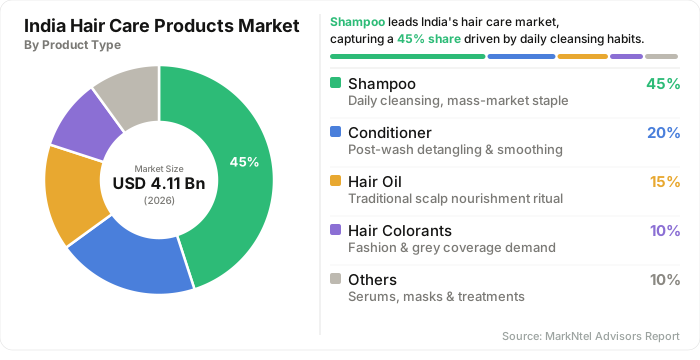
Marketing campaigns by major brands like L’Oréal, Dove, and Himalaya, emphasizing scientific formulations, natural extracts, and professional care, have reinforced consumer trust. The surge in e-commerce platforms has further expanded accessibility, allowing consumers in Tier-2 and Tier-3 cities to purchase premium and specialty shampoos. The segment’s consistent innovation in fragrance, herbal ingredients, and scalp-targeted solutions contributes to its sustained leadership in the hair care market.
Based on Ingredient Type:
- Natural / Herbal
- Conventional / Synthetic
The conventional or synthetic ingredient segment accounts for a commanding 78% of the hair care market in India. Despite the growing interest in herbal and natural products, synthetic formulations remain preferred due to their cost-effectiveness, ease of production, and targeted performance benefits. Ingredients such as silicones, parabens, and chemical surfactants deliver consistent results like long-lasting shine, frizz control, and color protection, which are difficult to achieve with purely natural components. Mass-market brands leverage synthetic formulations to offer products at competitive prices, making them accessible to a broad consumer base. Additionally, synthetic products often have enhanced shelf life, stability, and compatibility with various hair types, which strengthens their adoption. Urban consumers seeking fast and reliable solutions for daily hair care continue to drive the preference for conventional formulations, ensuring this segment maintains dominance in the overall market landscape.
India Hair Care Products Market (2026-32): Regional Projection
The Indian hair care products market is dominated by Tier-1 urban regions, particularly Mumbai, Delhi-NCR, Bengaluru, Chennai, and Hyderabad. These cities lead due to higher disposable incomes, growing awareness of personal grooming, and increased exposure to lifestyle and pollution-induced hair concerns. Consumers in these areas are more likely to adopt premium, herbal, and functional hair care products, driving market demand. Retail infrastructure, including supermarkets, specialty beauty stores, and online platforms like Nykaa and Amazon India, is concentrated in these regions, ensuring easy product availability. Brands such as L’Oreal, Marico, Dabur, and Wella focus marketing and distribution efforts here to capture urban millennials and working professionals, who are highly brand-conscious. Additionally, the prevalence of salons and professional hair care services in these cities further supports product trials and repeat purchases, reinforcing market dominance in Tier-1 urban areas.
India Hair Care Products Market Competitive Landscape
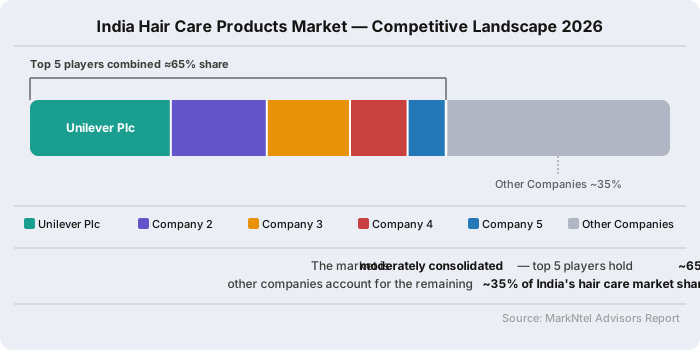
The market is moderately consolidated, with the top five players accounting for approximately 65% of the total market share. Leading companies include Unilever Plc, Procter & Gamble, L'Oréal SA, Marico Ltd., and Dabur India Ltd.
Key Players in Hair Care Products Industry
- Unilever Plc
- Procter & Gamble
- L'Oreal SA
- Marico Ltd.
- Dabur India Ltd.
- Johnson & Johnson Services Inc.
- Henkel AG & Co. KGaA
- Godrej Consumer Products Ltd.
- Himalaya Wellness Co.
- Bajaj Consumer Care Ltd.
- Emami Ltd.
- Patanjali Ayurved Ltd.
- Wella Professionals
- Amway Corp
- Others
Gain a Competitive Edge with Our India Hair Care Products Market Report:
- India Hair Care Products Market Report by MarkNtel Advisors provides a detailed & thorough analysis of market size & share, growth rate, competitive landscape, and key players. This comprehensive analysis helps businesses gain a holistic understanding of the market dynamics & make informed decisions.
- This report also highlights current market trends & future projections, allowing businesses to identify emerging opportunities & potential challenges. By understanding market forecasts, companies can align their strategies & stay ahead of the competition.
- India Hair Care Products Market Report aids in assessing & mitigating risks associated with entering or operating in the market. By understanding market dynamics, regulatory frameworks, and potential challenges, businesses can develop strategies to minimize risks & optimize their operations.
*Reports Delivery Format - Market research studies from MarkNtel Advisors are offered in PDF, Excel and PowerPoint formats. Within 24 hours of the payment being successfully received, the report will be sent to your email address.
Frequently Asked Questions
- Market Segmentation
- Introduction
- Product Definition
- Research Process
- Assumptions
- Executive Summary
- India Hair Care Products Market Policies, Regulations, and Product Standards
- India Hair Care Products Market Supply Chain Analysis
- India Hair Care Products Market Trends & Developments
- India Hair Care Products Market Dynamics
- Growth Drivers
- Challenges
- India Hair Care Products Market Hotspot & Opportunities
- India Hair Care Products Market Outlook, 2022-2032
- Market Size & Outlook
- By Revenues (USD Million)
- Market Share & Outlook
- By Product Type- Market Size & Forecast 2022-2032F, USD Million
- Shampoo
- Conditioner
- Hair Oil
- Hair Colorants
- Hair Styling Products
- Hair Treatment Products
- Others
- By Ingredient Type- Market Size & Forecast 2022-2032F, USD Million
- Natural / Herbal
- Conventional / Synthetic
- By Price Range- Market Size & Forecast 2022-2032F, USD Million
- Premium
- Mid-range
- Economy
- By Formulation- Market Size & Forecast 2022-2032F, USD Million
- Liquid
- Cream
- Gel
- Powder
- Oil-Based
- By Distribution Channel- Market Size & Forecast 2022-2032F, USD Million
- Supermarkets & Hypermarkets
- Convenience Stores
- Specialty Beauty Stores
- Pharmacies / Drug Stores
- Online Retail
- By End User- Market Size & Forecast 2022-2032F, USD Million
- Men
- Women
- Children
- By Region
- North
- Uttar Pradesh
- Punjab
- Haryana
- Delhi NCR
- Uttarakhand
- Himachal Pradesh
- Others
- East
- West Bengal
- Bihar
- Jharkhand
- Odisha
- North Eastern States
- Others
- West
- Rajasthan
- Gujarat
- Maharashtra
- Goa
- Others
- South
- Tamil Nadu
- Karnataka
- Kerala
- Andhra
- Telangana
- Others
- North
- By Company
- Company Revenue Shares
- Competitor Characteristics
- By Product Type- Market Size & Forecast 2022-2032F, USD Million
- Market Size & Outlook
- India Shampoo Products Market Outlook, 2022-2032
- Market Size & Analysis
- Market Share & Analysis
- By Ingredient Type- Market Size & Forecast 2022-2032, USD Million
- By Price Range- Market Size & Forecast 2022-2032, USD Million
- By Formulation- Market Size & Forecast 2022-2032, USD Million
- By Distribution Channel- Market Size & Forecast 2022-2032, USD Million
- By End User- Market Size & Forecast 2022-2032, USD Million
- India Conditioner Products Market Outlook, 2022-2032
- Market Size & Analysis
- Market Revenues (USD Million)
- Market Share & Analysis
- By Ingredient Type- Market Size & Forecast 2022-2032, USD Million
- By Price Range- Market Size & Forecast 2022-2032, USD Million
- By Formulation- Market Size & Forecast 2022-2032, USD Million
- By Distribution Channel- Market Size & Forecast 2022-2032, USD Million
- By End User- Market Size & Forecast 2022-2032, USD Million
- Market Size & Analysis
- India Hair Oil Products Market Outlook, 2022-2032
- Market Size & Analysis
- Market Revenues (USD Million)
- Market Share & Analysis
- By Ingredient Type- Market Size & Forecast 2022-2032, USD Million
- By Price Range- Market Size & Forecast 2022-2032, USD Million
- By Formulation- Market Size & Forecast 2022-2032, USD Million
- By Distribution Channel- Market Size & Forecast 2022-2032, USD Million
- By End User- Market Size & Forecast 2022-2032, USD Million
- Market Size & Analysis
- India Hair Colorants Products Market Outlook, 2022-2032
- Market Size & Analysis
- Market Revenues (USD Million)
- Market Share & Analysis
- By Ingredient Type- Market Size & Forecast 2022-2032, USD Million
- By Price Range- Market Size & Forecast 2022-2032, USD Million
- By Formulation- Market Size & Forecast 2022-2032, USD Million
- By Distribution Channel- Market Size & Forecast 2022-2032, USD Million
- By End User- Market Size & Forecast 2022-2032, USD Million
- Market Size & Analysis
- India Hair Styling Products Market Outlook, 2022-2032
- Market Size & Analysis
- Market Revenues (USD Million)
- Market Share & Analysis
- By Ingredient Type- Market Size & Forecast 2022-2032, USD Million
- By Price Range- Market Size & Forecast 2022-2032, USD Million
- By Formulation- Market Size & Forecast 2022-2032, USD Million
- By Distribution Channel- Market Size & Forecast 2022-2032, USD Million
- By End User- Market Size & Forecast 2022-2032, USD Million
- Market Size & Analysis
- India Hair Treatment Products Market Outlook, 2022-2032
- Market Size & Analysis
- Market Revenues (USD Million)
- Market Share & Analysis
- By Ingredient Type- Market Size & Forecast 2022-2032, USD Million
- By Price Range- Market Size & Forecast 2022-2032, USD Million
- By Formulation- Market Size & Forecast 2022-2032, USD Million
- By Distribution Channel- Market Size & Forecast 2022-2032, USD Million
- By End User- Market Size & Forecast 2022-2032, USD Million
- Market Size & Analysis
- India Hair Care Products Market Key Strategic Imperatives for Success & Growth
- Competition Outlook
- Company Profiles
- Unilever Plc
- Business Description
- Product Portfolio
- Strategic Alliances or Partnerships
- Recent Developments
- Financial Details
- Others
- Procter & Gamble
- Business Description
- Product Portfolio
- Strategic Alliances or Partnerships
- Recent Developments
- Financial Details
- Others
- L'Oreal SA
- Business Description
- Product Portfolio
- Strategic Alliances or Partnerships
- Recent Developments
- Financial Details
- Others
- Marico Ltd.
- Business Description
- Product Portfolio
- Strategic Alliances or Partnerships
- Recent Developments
- Financial Details
- Others
- Dabur India Ltd.
- Business Description
- Product Portfolio
- Strategic Alliances or Partnerships
- Recent Developments
- Financial Details
- Others
- Johnson & Johnson Services Inc.
- Business Description
- Product Portfolio
- Strategic Alliances or Partnerships
- Recent Developments
- Financial Details
- Others
- Henkel AG & Co. KGaA
- Business Description
- Product Portfolio
- Strategic Alliances or Partnerships
- Recent Developments
- Financial Details
- Others
- Godrej Consumer Products Ltd.
- Business Description
- Product Portfolio
- Strategic Alliances or Partnerships
- Recent Developments
- Financial Details
- Others
- Himalaya Wellness Co.
- Business Description
- Product Portfolio
- Strategic Alliances or Partnerships
- Recent Developments
- Financial Details
- Others
- Bajaj Consumer Care Ltd.
- Business Description
- Product Portfolio
- Strategic Alliances or Partnerships
- Recent Developments
- Financial Details
- Others
- Emami Ltd.
- Business Description
- Product Portfolio
- Strategic Alliances or Partnerships
- Recent Developments
- Financial Details
- Others
- Patanjali Ayurved Ltd.
- Business Description
- Product Portfolio
- Strategic Alliances or Partnerships
- Recent Developments
- Financial Details
- Others
- Wella Professionals
- Business Description
- Product Portfolio
- Strategic Alliances or Partnerships
- Recent Developments
- Financial Details
- Others
- Amway Corp
- Business Description
- Product Portfolio
- Strategic Alliances or Partnerships
- Recent Developments
- Financial Details
- Others
- Others
- Unilever Plc
- Company Profiles
- Disclaimer
MarkNtel Advisors follows a robust and iterative research methodology designed to ensure maximum accuracy and minimize deviation in market estimates and forecasts. Our approach combines both bottom-up and top-down techniques to effectively segment and quantify various aspects of the market. A consistent feature across all our research reports is data triangulation, which examines the market from three distinct perspectives to validate findings. Key components of our research process include:
1. Scope & Research Design At the outset, MarkNtel Advisors define the research objectives and formulate pertinent questions. This phase involves determining the type of research—qualitative or quantitative—and designing a methodology that outlines data collection methods, target demographics, and analytical tools. They also establish timelines and budgets to ensure the research aligns with client goals.
2. Sample Selection and Data Collection In this stage, the firm identifies the target audience and determines the appropriate sample size to ensure representativeness. They employ various sampling methods, such as random or stratified sampling, based on the research objectives. Data collection is carried out using tools like surveys, interviews, and observations, ensuring the gathered data is reliable and relevant.
3. Data Analysis and Validation Once data is collected, MarkNtel Advisors undertake a rigorous analysis process. This includes cleaning the data to remove inconsistencies, employing statistical software for quantitative analysis, and thematic analysis for qualitative data. Validation steps are taken to ensure the accuracy and reliability of the findings, minimizing biases and errors.

4. Data Forecast and FinalizationThe final phase involves forecasting future market trends based on the analyzed data. MarkNtel Advisors utilize predictive modeling and time series analysis to anticipate market behaviors. The insights are then compiled into comprehensive reports, featuring visual aids like charts and graphs, and include strategic recommendations to inform client decision-making
We offer flexible licensing options to cater to varying organizational needs. Choose the pricing pack that best suits your requirements:
Buy Now Inquire Before Buying
 Request Customization
 Talk to our Consultant







