

By Compressor Type (Air Compressors, Gas Compressors), By Technology (Reciprocating Compressors, Rotary Screw Compressors, Rotary Scroll Compressors, Centrifugal Compressors), By P......ortability (Stationary, Portable), By Lubrication (Oil-Lubricated, Oil-Free), By End User (Oil & Gas, Chemicals & Petrochemicals, Construction, Manufacturing, Power & Utilities, Mining, Food & Beverage, Pharmaceuticals, Textiles, Others), By Pressure Rating (Low (Upto 20 bar), Medium (21 to 100 bar), High (101 to 300 bar), Ultra-High (Above 300 bar)), and others Read more
- Energy
- Jul 2026
- 140
- PDF, Excel, PPT
US Compressor Market Key Takeaways
- The United States compressor market was valued at approximately USD 13.69 billion in 2025 and is projected to grow from USD 14.48 billion in 2026 to USD 20.31 billion by 2032.
- The industry is projected to witness steady growth at a CAGR of 5.8% during 2026–2032.
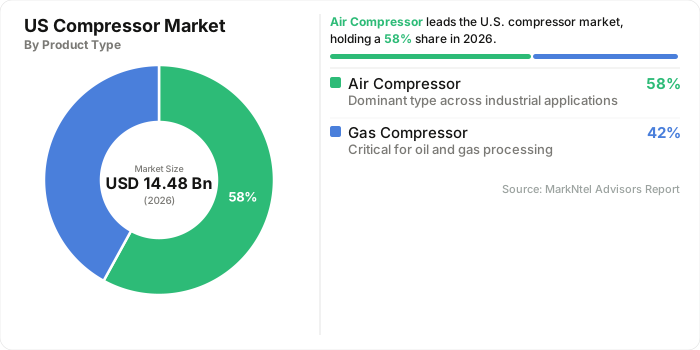
- By compressor type, air compressors represent the dominant segment, accounting for 58% share in 2026.
- By end user, manufacturing remains the leading application segment, accounting for nearly 46% share in 2026.
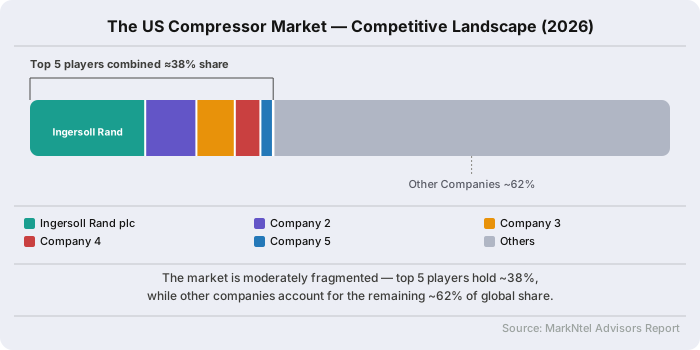
- The industry is moderately consolidated, with the top five companies accounting for approximately 38% market share in 2026.
US Compressor Market Size & Outlook
The compressor market in the United States was valued at approximately USD 13.69 billion in 2025 and is projected to grow from USD 14.48 billion in 2026 to USD 20.31 billion by 2032, registering a CAGR of 5.8% during the forecast period.
Market growth is primarily driven by increasing demand for industrial automation, replacement of aging compressor infrastructure, expansion of process industries, and rising adoption of energy-efficient compression technologies across manufacturing, healthcare, food processing, chemicals, and power generation sectors.
The industry is further supported by demand from chemicals and petrochemicals, manufacturing, and power & utilities industries, where compressors are critical for process operations, pneumatic systems, and utility management. According to the American Chemistry Council (ACC), U.S. chemical industry capital investment reached approximately USD 62 billion in 2024, reflecting continued expansion and modernization of chemical production facilities.
These investments are increasing the deployment of centrifugal, reciprocating, and rotary screw compressors for process gas handling, plant automation, and continuous manufacturing operations. Additionally, growth in power generation and industrial infrastructure is supporting demand for reliable compression systems across utility-scale applications.
The market outlook is further strengthened by the expansion of critical industrial sectors requiring reliable compression solutions. According to the U.S. Energy Information Administration (EIA), the United States operated more than 1,500 natural gas storage facilities and infrastructure assets in 2024, supporting continued demand for gas compression equipment used in transportation, processing, and distribution networks. Similarly, growth in chemical processing, refining, and industrial utilities continues to support demand for high-capacity centrifugal and reciprocating compressor systems.
Over the forecast period, the US compressor market is expected to benefit from increasing adoption of intelligent compressor solutions, remote monitoring platforms, and energy recovery technologies. Industrial users are increasingly prioritizing equipment with lower operating costs, improved reliability, and enhanced sustainability performance. The combination of industrial modernization, infrastructure upgrades, and technology-driven efficiency improvements is expected to create stable growth opportunities for compressor manufacturers and service providers through 2032.
US Compressor Market Key Indicators
- According to the U.S. Energy Information Administration (EIA), U.S. natural gas production reached approximately 37.8 trillion cubic feet in 2024, reinforcing the country's extensive upstream, midstream, and LNG infrastructure. The sustained growth in natural gas production is driving demand for centrifugal, reciprocating, and high-pressure gas compressors used in gas gathering, processing, pipeline transmission, storage, and liquefied natural gas (LNG) export operations.
- As per the U.S. Census Bureau, the total value of construction put in place reached approximately USD 2.20 trillion in 2024. Sustained investment across manufacturing plants, energy facilities, commercial buildings, and infrastructure projects is supporting procurement of portable compressors, construction air compressors, and heavy-duty compressed air equipment used throughout project execution.
- The U.S. Department of Commerce, the CHIPS for America program has announced over USD 39 billion in direct funding and up to USD 75 billion in loans for domestic semiconductor manufacturing projects as of August 2025. The rapid construction of advanced semiconductor fabrication facilities is significantly increasing demand for oil-free compressors, cleanroom compressed air systems, and precision industrial compressor technologies required for contamination-free manufacturing environments.
- According to the U.S. Census Bureau and the U.S. Department of Housing and Urban Development (HUD), the United States recorded approximately 1.36 million housing starts in 2025. Continued residential construction is driving demand for compressor systems across new homes, particularly for residential HVAC installations, heat pumps, and refrigeration appliances. The expanding housing pipeline supports sustained procurement of air compressors, HVAC compressors, and energy-efficient compressor technologies throughout the residential construction sector.
US Compressor Market Scope
| Category | Segments |
|---|---|
| By Compressor Type | Air Compressors, Gas Compressors |
| By Technology | Reciprocating Compressors, Rotary Screw Compressors, Rotary Scroll Compressors, Centrifugal Compressors |
| By Portability | Stationary, Portable |
| By Lubrication | Oil-Lubricated, Oil-Free |
| By End User | Oil & Gas, Chemicals & Petrochemicals, Construction, Manufacturing, Power & Utilities, Mining, Food & Beverage, Pharmaceuticals, Textiles, Others |
| By Pressure Rating | Low (Upto 20 bar), Medium (21 to 100 bar), High (101 to 300 bar), Ultra-High (Above 300 bar |
US Compressor Market Growth Driver
Manufacturing Investments Propel Compressor Demand
The resurgence of domestic manufacturing continues to strengthen demand for advanced industrial compressor systems across the United States. According to the Federal Reserve, U.S. manufacturing capacity utilization averaged 76.3% in 2024, reflecting sustained production activity across machinery, fabricated metals, chemicals, and transportation equipment. Higher factory utilization, coupled with increasing automation and process optimization, is accelerating investments in compressed air equipment and high-efficiency rotary screw and centrifugal compressors that support continuous industrial operations.
The rapid expansion of digital infrastructure is creating new growth opportunities for the compressor industry. According to the U.S. Census Bureau, construction spending on data centers reached USD 41 billion in 2025, increasing 32% from the previous year and more than 344% above 2020 levels, with data centers now tracked separately from general office construction. This unprecedented investment is accelerating demand for mission-critical compressors and advanced data center infrastructure cooling systems that ensure reliable thermal management and continuous operation of high-performance computing facilities.
Recent Trend
Rising Adoption of Smart and Energy-Efficient Compressor Technologies
The U.S. compressor industry is witnessing a rapid transition toward smart compressor systems as manufacturers and industrial operators prioritize energy optimization and predictive maintenance. According to the U.S. Department of Energy (DOE), the Industrial Assessment Centers (IAC) Implementation Grant Program continues supporting small and medium-sized manufacturers in deploying energy-efficiency projects during 2024–2025, including compressed air system optimization. This policy-driven modernization is accelerating the adoption of variable speed compressors, intelligent controls, and real-time monitoring technologies that improve operational reliability while reducing lifecycle energy costs.
Technology providers are simultaneously introducing digitally connected compressor platforms to meet evolving industrial requirements. In March 2025, Atlas Copco expanded its SMARTLINK remote monitoring capabilities across industrial compressor portfolios, enabling continuous performance diagnostics, predictive maintenance, and energy consumption analysis for manufacturing facilities. The integration of Industrial IoT, cloud-based analytics, and AI-driven maintenance solutions is transforming conventional compressor equipment into intelligent assets, making connected compressor solutions and predictive maintenance technologies a defining trend shaping the future of the U.S. compressor market.
US Compressor Market Opportunities and Challenges
Energy Efficiency Challenges Create Demand for Next-Generation Compressor Optimization Solutions
Compressed air systems remain a significant energy-consuming utility across U.S. industrial facilities, creating continuous pressure to improve operational efficiency and reduce lifecycle costs. According to the U.S. Department of Energy, compressed air systems can represent 10–30% of electricity consumption in manufacturing facilities, while inefficient system design, leaks, and outdated equipment contribute to unnecessary energy losses. These efficiency gaps are encouraging industries to modernize aging infrastructure through high-efficiency compressor systems, variable-speed technologies, and advanced compressed air management solutions.
The increasing focus on industrial energy optimization is creating opportunities for intelligent compressor technologies and heat recovery solutions. In 2025, Atlas Copco expanded its GA VSDS compressor portfolio in North America with integrated Energy Recovery Systems (ERS), enabling recovery of up to 94% of electrical input energy as usable heat for industrial applications. The adoption of compressor energy recovery systems, digital monitoring platforms, and smart compressed air solutions is helping U.S. manufacturers improve energy productivity, reduce operating expenses, and support sustainability targets across process industries.
Segmentation Insights
Industrial Versatility Strengthens Air Compressor Market Leadership
The air compressor segment dominates the U.S. compressor market, accounting for approximately 58% of total revenue in 2026, driven by broad adoption across manufacturing, construction, healthcare, food processing, and commercial facilities. According to the U.S. Census Bureau, construction spending reached approximately USD 2.19 trillion in 2024, supporting demand for portable compressors, pneumatic tools, and compressed air equipment. The segment benefits from extensive application diversity and recurring replacement requirements across industrial operations.
The segment’s leadership is strengthened by rising adoption of advanced efficiency-focused technologies. According to the Compressed Air and Gas Institute (CAGI), standardized compressor performance verification enables industrial users to evaluate equipment efficiency and lifecycle operating costs. In 2025, manufacturers including Kaeser Compressors and Ingersoll Rand introduced upgraded rotary screw compressor solutions with intelligent controls, supporting adoption of variable speed compressors and digitally connected air systems across U.S. industries. Based on product type, the industry is segmented into:
- Air Compressor
- Gas Compressor
Manufacturing Intensity Shapes the U.S. Compressor Landscape
The manufacturing segment dominates the U.S. compressor industry, accounting for 46% of total revenue in 2026, driven by widespread compressor adoption across automotive, machinery, electronics, food processing, pharmaceuticals, and metal fabrication industries. According to the National Association of Manufacturers (NAM), U.S. manufacturing contributed approximately USD 2.3 trillion to the economy in 2024, highlighting its extensive industrial footprint. Continuous production and automation requirements are sustaining demand for advanced compressor systems.
The segment’s leadership is supported by increasing adoption of smart and energy-efficient production equipment. The U.S. Department of Commerce's advanced manufacturing investment continues to strengthen domestic production capabilities during 2024–2025. Manufacturers are increasingly deploying smart compressor systems, variable-speed technologies, and digitally monitored compressed air solutions to improve efficiency. The scale of industrial operations and continuous-duty requirements position manufacturing as the leading end-user segment. By end-user segment, the industry is segmented into:
- Oil & Gas
- Chemicals & Petrochemicals
- Construction
- Manufacturing
- Power & Utilities
- Mining
- Food & Beverage
- Pharmaceuticals
- Textiles
- Others
US Compressor Market Competitive Analysis
The U.S. Compressor Market remains moderately fragmented, with the top five companies accounting for approximately 38% of market revenue in 2026. Leading players are strengthening their positions through energy-efficient products, digital monitoring, and advanced industrial compressor technologies. The competitive landscape includes global OEMs and specialized manufacturers serving diverse industrial applications.
Top Companies Operating in the US Compressor Industry
- Ingersoll Rand Plc
- Atlas Copco
- Kaeser Kompressoren SE
- Sullair
- Hitachi Global Air Power
- ELGi Equipments Ltd.
- Gardner Denver
- FS-Elliott
- Quincy Compressor
- Chicago Pneumatic
- Kobelco Compressors
- BOGE Compressors
US Compressor Industry News and Recent Developments
October 2025: Hitachi Global Air Power Launches High-Efficiency Oil-Free Scroll Compressor Series
Hitachi Global Air Power introduced its new G Series Oil-Free Scroll Air Compressor in October 2025, expanding its portfolio of clean compressed air solutions for industrial applications. The newly launched series improves operational efficiency, supports stable performance in high-temperature environments up to 45°C, and integrates digitalized equipment capabilities aligned with Hitachi’s industrial automation strategy. The product targets industries requiring contamination-free compressed air, including electronics, healthcare, and precision manufacturing applications.
Impact Analysis: The launch strengthens demand for oil-free compressor technologies across U.S. advanced manufacturing sectors where air purity, reliability, and energy efficiency are critical requirements. The introduction of digitally connected compressor systems supports the industry's transition toward smart compressed air solutions, enabling manufacturers to improve productivity, reduce maintenance requirements, and optimize lifecycle operating costs.
- Market Segmentation
- Introduction
- Product Definition
- Research Process
- Assumptions
- Executive Summary
- US Compressor Supply Chain Analysis
- US Compressor Import-Export Analysis
- US Compressor Market Trends & Developments
- US Compressor Market Dynamics
- Growth Drivers
- Challenges
- US Compressor Market Hotspot & Opportunities
- US Compressor Market Porter’s Five Forces Analysis, 2026
- US Compressor Market Policies & Regulations
- US Compressor Market Outlook, 2022-32F
- Market Size & Analysis
- By Revenues (USD Million)
- By Unit Sold (Thousand Units)
- Market Segmentation & Analysis
- By Compressor Type- Market Size & Forecast 2022-2032, USD Million & Thousand Units
- Air Compressors
- Gas Compressors
- By Technology- Market Size & Forecast 2022-2032, USD Million & Thousand Units
- Reciprocating Compressors
- Rotary Screw Compressors
- Rotary Scroll Compressors
- Centrifugal Compressors
- By Portability- Market Size & Forecast 2022-2032, USD Million & Thousand Units
- Stationary
- Portable
- By Lubrication- Market Size & Forecast 2022-2032, USD Million & Thousand Units
- Oil-Lubricated
- Oil-Free
- By End User- Market Size & Forecast 2022-2032, USD Million & Thousand Units
- Oil & Gas
- Chemicals & Petrochemicals
- Construction
- Manufacturing
- Power & Utilities
- Mining
- Food & Beverage
- Pharmaceuticals
- Textiles
- Others
- By Pressure Rating- Market Size & Forecast 2022-2032, USD Million & Thousand Units
- Low (Upto 20 bar)
- Medium (21 to 100 bar)
- High (101 to 300 bar)
- Ultra-High (Above 300 bar)
- By Region
- Northeast
- South
- Mid-West
- West
- By Competition
- Competition Characteristics
- Air Compressors
- Market Share of Top Companies
- Gas Compressors
- Market Share of Top Companies
- Air Compressors
- Competition Characteristics
- By Compressor Type- Market Size & Forecast 2022-2032, USD Million & Thousand Units
- Market Size & Analysis
- US Air Compressor Market Outlook, 2022-32F
- Market Size & Analysis
- By Revenues (USD Million)
- By Unit Sold (Thousand)
- Market Segmentation & Analysis
- By Technology- Market Size & Forecast 2022-2032, USD Million & Thousand Units
- By Portability- Market Size & Forecast 2022-2032, USD Million & Thousand Units
- By Lubrication- Market Size & Forecast 2022-2032, USD Million & Thousand Units
- By End User- Market Size & Forecast 2022-2032, USD Million & Thousand Units
- By Pressure Rating- Market Size & Forecast 2022-2032, USD Million & Thousand Units
- By Region
- Market Size & Analysis
- US Gas Compressor Market Outlook, 2022-32F
- Market Size & Analysis
- By Revenues (USD Million)
- By Unit Sold (Thousand)
- Market Segmentation & Analysis
- By Technology- Market Size & Forecast 2022-2032, USD Million & Thousand Units
- By Portability- Market Size & Forecast 2022-2032, USD Million & Thousand Units
- By Lubrication- Market Size & Forecast 2022-2032, USD Million & Thousand Units
- By End User- Market Size & Forecast 2022-2032, USD Million & Thousand Units
- By Pressure Rating- Market Size & Forecast 2022-2032, USD Million & Thousand Units
- By Region
- Market Size & Analysis
- US Compressor Market Key Strategic Imperatives for Success & Growth
- Competitive Outlook
- Company Profiles
- Ingersoll Rand Plc
- Business Description
- Product Portfolio
- Strategic Alliances or Partnerships
- Recent Developments
- Financial Details
- Others
- Atlas Copco
- Business Description
- Product Portfolio
- Strategic Alliances or Partnerships
- Recent Developments
- Financial Details
- Others
- Kaeser Kompressoren SE
- Business Description
- Product Portfolio
- Strategic Alliances or Partnerships
- Recent Developments
- Financial Details
- Others
- Sullair
- Business Description
- Product Portfolio
- Strategic Alliances or Partnerships
- Recent Developments
- Financial Details
- Others
- Hitachi Global Air Power
- Business Description
- Product Portfolio
- Strategic Alliances or Partnerships
- Recent Developments
- Financial Details
- Others
- ELGi Equipments Ltd.
- Business Description
- Product Portfolio
- Strategic Alliances or Partnerships
- Recent Developments
- Financial Details
- Others
- Gardner Denver
- Business Description
- Product Portfolio
- Strategic Alliances or Partnerships
- Recent Developments
- Financial Details
- Others
- FS-Elliott
- Business Description
- Product Portfolio
- Strategic Alliances or Partnerships
- Recent Developments
- Financial Details
- Others
- Quincy Compressor
- Business Description
- Product Portfolio
- Strategic Alliances or Partnerships
- Recent Developments
- Financial Details
- Others
- Chicago Pneumatic
- Business Description
- Product Portfolio
- Strategic Alliances or Partnerships
- Recent Developments
- Financial Details
- Others
- Kobelco Compressors
- Business Description
- Product Portfolio
- Strategic Alliances or Partnerships
- Recent Developments
- Financial Details
- Others
- BOGE Compressors
- Business Description
- Product Portfolio
- Strategic Alliances or Partnerships
- Recent Developments
- Financial Details
- Others
- Others
- Ingersoll Rand Plc
- Company Profiles
- Disclaimer

MarkNtel Advisors follows a robust and iterative research methodology designed to ensure maximum accuracy and minimize deviation in market estimates and forecasts. Our approach combines both bottom-up and top-down techniques to effectively segment and quantify various aspects of the market. A consistent feature across all our research reports is data triangulation, which examines the market from three distinct perspectives to validate findings. Key components of our research process include:
1. Scope & Research Design At the outset, MarkNtel Advisors define the research objectives and formulate pertinent questions. This phase involves determining the type of research—qualitative or quantitative—and designing a methodology that outlines data collection methods, target demographics, and analytical tools. They also establish timelines and budgets to ensure the research aligns with client goals.
2. Sample Selection and Data Collection In this stage, the firm identifies the target audience and determines the appropriate sample size to ensure representativeness. They employ various sampling methods, such as random or stratified sampling, based on the research objectives. Data collection is carried out using tools like surveys, interviews, and observations, ensuring the gathered data is reliable and relevant.
3. Data Analysis and Validation Once data is collected, MarkNtel Advisors undertake a rigorous analysis process. This includes cleaning the data to remove inconsistencies, employing statistical software for quantitative analysis, and thematic analysis for qualitative data. Validation steps are taken to ensure the accuracy and reliability of the findings, minimizing biases and errors.

4. Data Forecast and FinalizationThe final phase involves forecasting future market trends based on the analyzed data. MarkNtel Advisors utilize predictive modeling and time series analysis to anticipate market behaviors. The insights are then compiled into comprehensive reports, featuring visual aids like charts and graphs, and include strategic recommendations to inform client decision-making
FILL THE FORM TO GET THE FREE SAMPLE PAGES
We offer flexible licensing options to cater to varying organizational needs. Choose the pricing pack that best suits your requirements:
Buy Now Inquire Before Buying
 Talk to our Consultant
 Request Customization