Global Metal Fabrication Market Research Report: Forecast (2026-2032)
By Metal Type (Steel, Aluminum, Titanium, Copper, Nickel), By Services (Cutting, Welding, Forming, Machining, Assembly), By End-User (Automotive, Construction, Aerospace, Energy, M ... edical, Others), and others Read more
- Energy
- Jun 2026
- Pages 340
- Report Format: PDF, Excel, PPT
Global Metal Fabrication Market
Projected 5.31% CAGR from 2026 to 2032
Study Period
2026-2032
Market Size (2026)
USD 46.15 Billion
Market Size (2032)
USD 62.56 Billion
Largest Region
North America
Projected CAGR
5.31%
Leading Segments
By Services: Cutting
Metal Fabrication Market Key Takeaways
- The Metal Fabrication Market was valued at USD 43.56 billion in 2025 and is projected to grow from USD 46.15 billion in 2026 to USD 62.56 billion by 2032.
- The industry is projected to witness steady growth at a CAGR of 5.31% during the forecast period.
- North America is the leading regional market, accounting for an estimated 45% share in 2026.
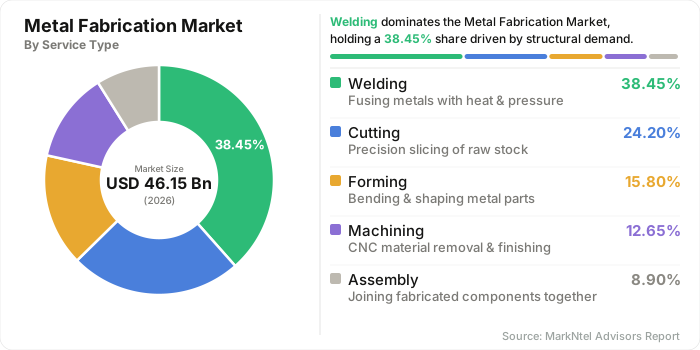
- By service type, welding held the largest market share of approximately 38.45% in 2026.
- By end-use industry, construction & infrastructure accounted for a significant share of around 32.10% in 2026.
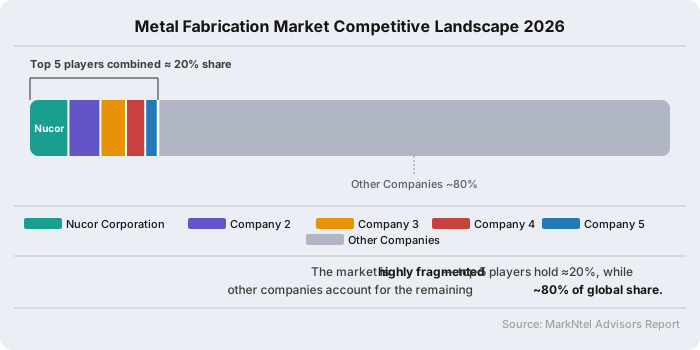
- The market remains highly fragmented, with the top five players collectively accounting for an estimated 20% market share in 2026.
Metal Fabrication Market Size and Outlook
The market was valued at USD 43.56 billion in 2025 and is projected to increase from USD 46.15 billion in 2026 to USD 62.56 billion by 2032, registering a CAGR of 5.31% during the forecast period of 2026–2032.
Metal fabrication remains an essential part of the global industrial ecosystem, providing the cutting, forming, machining, welding, and assembly services required to manufacture structural frameworks, industrial machinery, transportation equipment, and engineered metal components. Demand is closely linked to activity across construction, manufacturing, energy, infrastructure, and heavy industrial sectors, making the industry a key enabler of economic and industrial development.
Growth prospects remain supported by substantial investments in infrastructure and industrial renewal projects across major economies. Public expenditure on transportation corridors, water systems, utility networks, industrial facilities, and renewable energy installations continues to create a steady requirement for fabricated steel structures and precision-engineered components.
According to the OECD, the Inflation Reduction Act (IRA) and Bipartisan Infrastructure Law (BIL) together commit more than USD 1.57 trillion in federal funding over ten years, supporting long-term demand for fabricated steel structures, industrial assemblies, transportation infrastructure, and utility projects across the United States. Similar investment initiatives across Asia-Pacific, Europe, and the Middle East are further reinforcing long-term demand for fabricated metal products.
At the same time, the industry is evolving through the adoption of advanced manufacturing technologies and digitally integrated production systems. Fabricators are increasingly utilizing automated cutting equipment, precision machining technologies, advanced welding solutions, and digital sheet metal forming processes to improve productivity, reduce lead times, and enhance manufacturing flexibility. For example, in 2026, Bystronic’s acquisition of Coherent Corp.’s Tools for Materials Processing business strengthened its capabilities in laser processing, automation, and digital manufacturing solutions, reflecting the industry's shift toward smarter and more efficient fabrication operations. Growing emphasis on supply-chain resilience, emissions transparency, and sustainable production practices is also influencing investment decisions across the sector.
Metal Fabrication Market Key Indicators
- According to World Steel Association, global crude steel production reached 1,882.6 million tonnes in 2024, highlighting the scale of primary metal availability that underpins fabricated metal output across structural, plate, and welded applications in global manufacturing and construction ecosystems.
- The International Federation of Robotics reported 4.6 million industrial robots in operational stock in 2024, indicating a mature automation environment where robotic welding, cutting, material handling, and inspection systems are increasingly embedded as baseline productivity and competitiveness tools in fabrication facilities.
- According to the International Organization of Motor Vehicle Manufacturers (OICA), global vehicle production exceeded 92 million units in 2024. Automotive manufacturing remains one of the largest consumers of fabricated metal components, including chassis structures, body panels, brackets, frames, and precision-engineered assemblies.
- The World Bank stated that private participation in infrastructure investment reached USD 100.7 billion in 2024, marking a post-pandemic recovery threshold that sustains long-duration capital flows into transport, energy, and utility projects requiring fabricated structural and engineered metal components.
- According to the International Energy Agency (IEA), global installed power generation capacity exceeded 8,900 GW in 2024, with renewable energy additions contributing more than 560 GW of new capacity, directly supporting demand for fabricated metal structures such as wind turbine towers, solar mounting systems, transmission pylons, and industrial-grade steel frameworks.
- According to the Stockholm International Research Institute (SIPRI), global military expenditure reached USD 2,887 billion in 2025, increasing by 2.9% year-on-year, marking the 11th consecutive year of growth in defense spending, which directly strengthens demand for high-precision fabricated metal components used in defense platforms such as armored vehicles, naval vessels, aircraft structures, missile systems, and military infrastructure modernization programs across major economies.
Metal Fabrication Market Scope
| Category | Segments |
|---|---|
| By Metal Type | Steel, Aluminum, Titanium, Copper, Nickel |
| By Services | Cutting, Welding, Forming, Machining, Assembly |
| By End-User | Automotive, Construction, Aerospace, Energy, Medical, Others |
Metal Fabrication Market Growth Driver
Infrastructure-Led Capital Formation Driving Fabrication Demand
Infrastructure deployment remains the clearest demand engine for the metal fabrication market. According to the Global Infrastructure Hub (GI Hub), the world will require approximately USD 94 trillion in infrastructure investment by 2040, reflecting the scale of long-term capital needs across both developed and emerging economies, reinforcing sustained capital allocation toward bridges, transit systems, ports, and utility modernization requiring extensive fabricated metal components.
The impact is increasingly visible in procurement and contracting structures across public infrastructure programs. Governments are bundling larger civil works into integrated packages, encouraging contractors to adopt prefabricated structural steel systems, modular subassemblies, and accelerated installation methodologies. This shift benefits fabricators with certified welding processes, tight dimensional tolerances, and advanced project logistics capabilities, while reducing the advantage of pure commodity suppliers lacking engineering integration and execution reliability.
Recent Trends
Tool-Free and Automated Manufacturing Transformation
The metal fabrication industry is shifting toward tool-free, digitally driven manufacturing systems that eliminate reliance on conventional tooling such as stamping presses, molds, and custom dies. According to the International Federation of Robotics (IFR), global industrial robot density reached 177 robots per 10,000 manufacturing employees in 2024, reflecting the broader move toward automation-enabled production environments where programmable systems and digital controls reduce manual setup dependency and improve process consistency. This transition is enabling faster changeovers, higher flexibility, and improved production responsiveness across fabrication workflows.
A clear example of this transition is Evology Manufacturing Corporation, which in May 2024 adopted Desktop Metal’s Figur G15 system, a Digital Sheet Forming (DSF) platform capable of producing complex metal parts with cycle times under one hour. The system supports fabrication of materials such as cold-rolled steel and 6061 aluminum, enabling faster prototyping and flexible production runs. This adoption highlights how manufacturers are moving toward tool-free, digitally driven workflows that enhance speed, customization capability, and manufacturing efficiency across advanced fabrication applications.
Metal Fabrication Market Opportunities and Challenges
Skilled Labour Scarcity Driving Automation-Led Fabrication Models
Limited availability of skilled fabrication labour across the metal fabrication industry remains a major operational constraint for manufacturers. The shortage of welders and CNC machinists is driven by an aging workforce and insufficient inflow of trained technical talent into vocational and engineering pathways. 90% of manufacturers experienced production disruptions due to labour shortages, while the U.S. Bureau of Labour Statistics projects only 2% employment growth for welders, cutters, solderers, and brazers from 2024 to 2034, highlighting both immediate operational disruptions and long-term constraints in workforce replenishment.
The labour gap is creating significant opportunities for automation-led fabrication models, including robotic welding systems, CNC automation, and digitally controlled production lines. Manufacturers are increasingly adopting machine-led workflows to reduce dependence on scarce skilled workers, stabilize output quality, and maintain production continuity.
In 2024 alone, around 542,000 new industrial robots were installed globally, marking the fourth consecutive year above the 500,000-unit threshold, driven by strong demand for automated production lines in automotive, metal fabrication, electronics, and heavy engineering sectors. Companies such as Bystronic are expanding automation-integrated laser cutting systems, enabling firms to stabilize output, improve consistency, and build scalable, labour-efficient manufacturing operations.
Metal Fabrication Market Segmentation
Welding Segment Dominates, Driven by Structural Demand and Automation Growth
Welding represents the largest process segment in the metal fabrication market, accounting for an estimated 38.45% share. The segment dominates because welded joints remain the preferred method for assembling structural steel frameworks, industrial machinery, transportation equipment, pressure vessels, and energy infrastructure. Its ability to deliver high-strength, permanent connections makes welding indispensable across fabrication-intensive industries. As a result, most large-scale construction, manufacturing, and engineering projects rely extensively on welding throughout the production and assembly cycle.
The segment’s leadership is further reinforced by growing automation adoption in fabrication facilities, reflecting significant deployment of robotic welding systems. Increasing use of automated welding improves production speed, consistency, and quality while reducing dependence on manual labour. These advantages strengthen welding’s position as the most widely utilized fabrication process, particularly in high-volume and precision-driven manufacturing environments. Based on services, the market is segmented into:
- Cutting
- Welding
- Forming
- Machining
- Assembly
Construction & Infrastructure Dominates End-Use Demand Through Large-Scale Capital Projects
Construction and infrastructure account for the largest share of the metal fabrication market, estimated at 32.10%. The segment's leadership is supported by extensive consumption of fabricated steel structures, beams, frames, platforms, and engineered assemblies across commercial buildings, industrial facilities, transportation networks, bridges, and utility infrastructure. The World Bank’s Private Participation in Infrastructure (PPI) database tracks more than 10,000 infrastructure projects across 137 countries, highlighting the substantial project pipeline supporting long-term demand for fabricated metal products.
The segment further benefits from the long lifecycle of infrastructure development projects, which typically extend across planning, financing, permitting, procurement, and construction phases. Unlike many manufacturing sectors exposed to short-term economic fluctuations, infrastructure investments generate sustained procurement requirements over multiple years. This creates stable order visibility for fabricators with capabilities in certified welding, large-scale structural fabrication, heavy-material handling, and project execution, enabling them to secure higher-value contracts across complex infrastructure developments. By end user, the industry scope is segmented into:
- Automotive
- Construction
- Aerospace
- Energy
- Medical
- Others
Metal Fabrication Market Regional Outlook
North America accounts for an estimated 45% share of the metal fabrication market, making it the largest regional market. The region's leadership is supported by its robust manufacturing ecosystem and strong demand from automotive, construction, and industrial sectors. According to World Bank data, U.S. manufacturing value added reached approximately USD 2.91 trillion in 2024, highlighting the scale of industrial activity requiring fabricated metal products. Growing production of lightweight vehicles and advanced industrial equipment continues to support demand for precision-engineered metal components and assemblies.
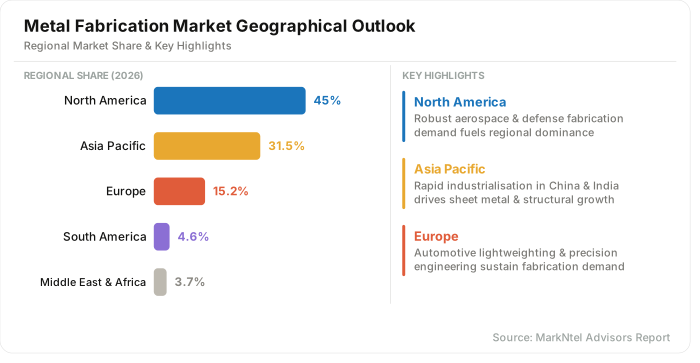
The aerospace and defense sectors further reinforce North America's market dominance. The region hosts some of the world's largest aerospace manufacturers and defense contractors, creating sustained demand for high-strength alloys, precision-machined parts, and complex fabricated structures. The U.S. Department of Defense remains a major purchaser of fabricated metal-intensive systems, supporting military aircraft and defense modernization programs. Combined with ongoing infrastructure investments and industrial reshoring initiatives, these factors continue to strengthen the region's long-term fabrication demand outlook.
Metal Fabrication Competitive Analysis
The metal fabrication market is highly fragmented, with the top five players collectively accounting for an estimated 20% market share, indicating low market concentration. Key participants include Nucor, Reliance, Inc., Kloeckner & Co, Ryerson, and Worthington Steel. Competition is driven by fabrication expertise, automation adoption, engineering capabilities, and value-added services rather than market share dominance, allowing numerous regional and specialized fabricators to maintain a significant presence across end-use industries.
Top Leading Companies in the Metal Fabrication Industry
- Mayville Engineering Company
- BTD Manufacturing Inc.
- Matcor Matsu Group
- Watson Engineering
- Iron Form Corporation
- PA International
- Kapco Metal Stamping
- Komaspec
- United States Steel Corporation
- Nippon Steel Corporation
- Aperam
- Standard Iron and Wire Works
- AK Steel Holding Corporation
- Allegheny Ludlum
- Mueller Industries
- Others
Metal Fabrication Industry News and Recent Developments
February 2026: Bystronic Completes Acquisition of Coherent’s Materials Processing Business
Bystronic completed the acquisition of Coherent Corp.’s Tools for Materials Processing business, expanding its portfolio of laser cutting, automation, and digital manufacturing technologies. The acquisition strengthens Bystronic’s capabilities across advanced material processing solutions and enhances its ability to provide integrated fabrication systems combining software, automation, and precision metalworking technologies for industrial customers worldwide.
Impact Analysis: The acquisition reflects the growing importance of automation and digitalization within the metal fabrication industry. By expanding access to advanced laser processing and automated production technologies, the transaction is expected to accelerate productivity improvements, reduce labor dependency, and improve manufacturing precision across fabrication facilities. The development also reinforces the industry's transition toward smart manufacturing environments where software-driven workflows and automated equipment increasingly define competitive advantage.
Frequently Asked Questions
- Market Segmentation
- Introduction
2.1. Market Definition
2.2. Research Process
2.3. Assumptions
- Executive Summary
- Global Metal Fabrication Market Trends & Developments
- Global Metal Fabrication Market Dynamics
5.1. Drivers
5.2. Challenges
- Global Metal Fabrication Market Regulations, Policies & Standards
- Global Metal Fabrication Market Hotspot & Opportunities
- Global Metal Fabrication Market Outlook, 2022-2032
8.1. Market Size & Analysis
8.1.1. By Revenues (USD Billion)
8.2. Market Share & Analysis
8.2.1. By Metal Type- Market Size & Forecast 2022-2032, USD Billion
8.2.1.1. Steel
8.2.1.2. Aluminum
8.2.1.3. Titanium
8.2.1.4. Copper
8.2.1.5. Nickel
8.2.2. By Services- Market Size & Forecast 2022-2032, USD Billion
8.2.2.1. Cutting
8.2.2.2. Welding
8.2.2.3. Forming
8.2.2.4. Machining
8.2.2.5. Assembly
8.2.3. By End-User- Market Size & Forecast 2022-2032, USD Billion
8.2.3.1. Automotive
8.2.3.2. Construction
8.2.3.3. Aerospace
8.2.3.4. Energy
8.2.3.5. Medical
8.2.3.6. Others
8.2.4. By Region
8.2.4.1. North America
8.2.4.2. South America
8.2.4.3. Europe
8.2.4.4. Middle East & Africa
8.2.4.5. Asia-Pacific
8.2.5. By Company
8.2.5.1. Competition Characteristics
8.2.5.2. Revenue Shares
- North America Metal Fabrication Market Outlook, 2022-2032
9.1. Market Size & Analysis
9.1.1. By Revenues (USD Billion)
9.2. Market Share & Analysis
9.2.1. By Metal Type- Market Size & Forecast 2022-2032, USD Billion
9.2.2. By Services- Market Size & Forecast 2022-2032, USD Billion
9.2.3. By End-User- Market Size & Forecast 2022-2032, USD Billion
9.2.4. By Country
9.2.4.1. United States
9.2.4.2. Canada
9.2.4.3. Mexico
9.3. United States Metal Fabrication Market Outlook, 2022-2032
9.3.1. Market Size & Analysis
9.3.1.1. By Revenues (USD Billion)
9.3.2. Market Share & Analysis
9.3.2.1. By Metal Type- Market Size & Forecast 2022-2032, USD Billion
9.3.2.2. By Services- Market Size & Forecast 2022-2032, USD Billion
9.3.2.3. By End-User- Market Size & Forecast 2022-2032, USD Billion
9.4. Canada Metal Fabrication Market Outlook, 2022-2032
9.4.1. Market Size & Analysis
9.4.1.1. By Revenues (USD Billion)
9.4.2. Market Share & Analysis
9.4.2.1. By Metal Type- Market Size & Forecast 2022-2032, USD Billion
9.4.2.2. By Services- Market Size & Forecast 2022-2032, USD Billion
9.4.2.3. By End-User- Market Size & Forecast 2022-2032, USD Billion
9.5. Mexico Metal Fabrication Market Outlook, 2022-2032
9.5.1. Market Size & Analysis
9.5.1.1. By Revenues (USD Billion)
9.5.2. Market Share & Analysis
9.5.2.1. By Metal Type- Market Size & Forecast 2022-2032, USD Billion
9.5.2.2. By Services- Market Size & Forecast 2022-2032, USD Billion
9.5.2.3. By End-User- Market Size & Forecast 2022-2032, USD Billion
- South America Metal Fabrication Market Outlook, 2022-2032
10.1. Market Size & Analysis
10.1.1. By Revenues (USD Billion)
10.2. Market Share & Analysis
10.2.1. By Metal Type- Market Size & Forecast 2022-2032, USD Billion
10.2.2. By Services- Market Size & Forecast 2022-2032, USD Billion
10.2.3. By End-User- Market Size & Forecast 2022-2032, USD Billion
10.2.4. By Country
10.2.4.1. Brazil
10.2.4.2. Argentina
10.2.4.3. Rest of South America
10.3. Brazil Metal Fabrication Market Outlook, 2022-2032
10.3.1. Market Size & Analysis
10.3.1.1. By Revenues (USD Billion)
10.3.2. Market Share & Analysis
10.3.2.1. By Metal Type- Market Size & Forecast 2022-2032, USD Billion
10.3.2.2. By Services- Market Size & Forecast 2022-2032, USD Billion
10.3.2.3. By End-User- Market Size & Forecast 2022-2032, USD Billion
10.4. Argentina Metal Fabrication Market Outlook, 2022-2032
10.4.1. Market Size & Analysis
10.4.1.1. By Revenues (USD Billion)
10.4.2. Market Share & Analysis
10.4.2.1. By Metal Type- Market Size & Forecast 2022-2032, USD Billion
10.4.2.2. By Services- Market Size & Forecast 2022-2032, USD Billion
10.4.2.3. By End-User- Market Size & Forecast 2022-2032, USD Billion
- Europe Metal Fabrication Market Outlook, 2022-2032
11.1. Market Size & Analysis
11.1.1. By Revenues (USD Billion)
11.2. Market Share & Analysis
11.2.1. By Metal Type- Market Size & Forecast 2022-2032, USD Billion
11.2.2. By Services- Market Size & Forecast 2022-2032, USD Billion
11.2.3. By End-User- Market Size & Forecast 2022-2032, USD Billion
11.2.4. By Country
11.2.4.1. Germany
11.2.4.2. United Kingdom
11.2.4.3. France
11.2.4.4. Italy
11.2.4.5. Spain
11.2.4.6. Rest of Europe
11.3. Germany Metal Fabrication Market Outlook, 2022-2032
11.3.1. Market Size & Analysis
11.3.1.1. By Revenues (USD Billion)
11.3.2. Market Share & Analysis
11.3.2.1. By Metal Type- Market Size & Forecast 2022-2032, USD Billion
11.3.2.2. By Services- Market Size & Forecast 2022-2032, USD Billion
11.3.2.3. By End-User- Market Size & Forecast 2022-2032, USD Billion
11.4. United Kingdom Metal Fabrication Market Outlook, 2022-2032
11.4.1. Market Size & Analysis
11.4.1.1. By Revenues (USD Billion)
11.4.2. Market Share & Analysis
11.4.2.1. By Metal Type- Market Size & Forecast 2022-2032, USD Billion
11.4.2.2. By Services- Market Size & Forecast 2022-2032, USD Billion
11.4.2.3. By End-User- Market Size & Forecast 2022-2032, USD Billion
11.5. France Metal Fabrication Market Outlook, 2022-2032
11.5.1. Market Size & Analysis
11.5.1.1. By Revenues (USD Billion)
11.5.2. Market Share & Analysis
11.5.2.1. By Metal Type- Market Size & Forecast 2022-2032, USD Billion
11.5.2.2. By Services- Market Size & Forecast 2022-2032, USD Billion
11.5.2.3. By End-User- Market Size & Forecast 2022-2032, USD Billion
11.6. Italy Metal Fabrication Market Outlook, 2022-2032
11.6.1. Market Size & Analysis
11.6.1.1. By Revenues (USD Billion)
11.6.2. Market Share & Analysis
11.6.2.1. By Metal Type- Market Size & Forecast 2022-2032, USD Billion
11.6.2.2. By Services- Market Size & Forecast 2022-2032, USD Billion
11.6.2.3. By End-User- Market Size & Forecast 2022-2032, USD Billion
11.7. Spain Metal Fabrication Market Outlook, 2022-2032
11.7.1. Market Size & Analysis
11.7.1.1. By Revenues (USD Billion)
11.7.2. Market Share & Analysis
11.7.2.1. By Metal Type- Market Size & Forecast 2022-2032, USD Billion
11.7.2.2. By Services- Market Size & Forecast 2022-2032, USD Billion
11.7.2.3. By End-User- Market Size & Forecast 2022-2032, USD Billion
- Middle East & Africa Metal Fabrication Market Outlook, 2022-2032
12.1. Market Size & Analysis
12.1.1. By Revenues (USD Billion)
12.2. Market Share & Analysis
12.2.1. By Metal Type- Market Size & Forecast 2022-2032, USD Billion
12.2.2. By Services- Market Size & Forecast 2022-2032, USD Billion
12.2.3. By End-User- Market Size & Forecast 2022-2032, USD Billion
12.2.4. By Country
12.2.4.1. Saudi Arabia
12.2.4.2. United Arab Emirates
12.2.4.3. South Africa
12.2.4.4. Rest of Middle East & Africa
12.3. Saudi Arabia Metal Fabrication Market Outlook, 2022-2032
12.3.1. Market Size & Analysis
12.3.1.1. By Revenues (USD Billion)
12.3.2. Market Share & Analysis
12.3.2.1. By Metal Type- Market Size & Forecast 2022-2032, USD Billion
12.3.2.2. By Services- Market Size & Forecast 2022-2032, USD Billion
12.3.2.3. By End-User- Market Size & Forecast 2022-2032, USD Billion
12.4. United Arab Emirates Metal Fabrication Market Outlook, 2022-2032
12.4.1. Market Size & Analysis
12.4.1.1. By Revenues (USD Billion)
12.4.2. Market Share & Analysis
12.4.2.1. By Metal Type- Market Size & Forecast 2022-2032, USD Billion
12.4.2.2. By Services- Market Size & Forecast 2022-2032, USD Billion
12.4.2.3. By End-User- Market Size & Forecast 2022-2032, USD Billion
12.5. South Africa Metal Fabrication Market Outlook, 2022-2032
12.5.1. Market Size & Analysis
12.5.1.1. By Revenues (USD Billion)
12.5.2. Market Share & Analysis
12.5.2.1. By Metal Type- Market Size & Forecast 2022-2032, USD Billion
12.5.2.2. By Services- Market Size & Forecast 2022-2032, USD Billion
12.5.2.3. By End-User- Market Size & Forecast 2022-2032, USD Billion
- Asia-Pacific Metal Fabrication Market Outlook, 2022-2032
13.1. Market Size & Analysis
13.1.1. By Revenues (USD Billion)
13.2. Market Share & Analysis
13.2.1. By Metal Type- Market Size & Forecast 2022-2032, USD Billion
13.2.2. By Services- Market Size & Forecast 2022-2032, USD Billion
13.2.3. By End-User- Market Size & Forecast 2022-2032, USD Billion
13.2.4. By Country
13.2.4.1. China
13.2.4.2. Japan
13.2.4.3. India
13.2.4.4. South Korea
13.2.4.5. Australia
13.2.4.6. Rest of Asia-Pacific
13.3. China Metal Fabrication Market Outlook, 2022-2032
13.3.1. Market Size & Analysis
13.3.1.1. By Revenues (USD Billion)
13.3.2. Market Share & Analysis
13.3.2.1. By Metal Type- Market Size & Forecast 2022-2032, USD Billion
13.3.2.2. By Services- Market Size & Forecast 2022-2032, USD Billion
13.3.2.3. By End-User- Market Size & Forecast 2022-2032, USD Billion
13.4. Japan Metal Fabrication Market Outlook, 2022-2032
13.4.1. Market Size & Analysis
13.4.1.1. By Revenues (USD Billion)
13.4.2. Market Share & Analysis
13.4.2.1. By Metal Type- Market Size & Forecast 2022-2032, USD Billion
13.4.2.2. By Services- Market Size & Forecast 2022-2032, USD Billion
13.4.2.3. By End-User- Market Size & Forecast 2022-2032, USD Billion
13.5. India Metal Fabrication Market Outlook, 2022-2032
13.5.1. Market Size & Analysis
13.5.1.1. By Revenues (USD Billion)
13.5.2. Market Share & Analysis
13.5.2.1. By Metal Type- Market Size & Forecast 2022-2032, USD Billion
13.5.2.2. By Services- Market Size & Forecast 2022-2032, USD Billion
13.5.2.3. By End-User- Market Size & Forecast 2022-2032, USD Billion
13.6. South Korea Metal Fabrication Market Outlook, 2022-2032
13.6.1. Market Size & Analysis
13.6.1.1. By Revenues (USD Billion)
13.6.2. Market Share & Analysis
13.6.2.1. By Metal Type- Market Size & Forecast 2022-2032, USD Billion
13.6.2.2. By Services- Market Size & Forecast 2022-2032, USD Billion
13.6.2.3. By End-User- Market Size & Forecast 2022-2032, USD Billion
13.7. Australia Metal Fabrication Market Outlook, 2022-2032
13.7.1. Market Size & Analysis
13.7.1.1. By Revenues (USD Billion)
13.7.2. Market Share & Analysis
13.7.2.1. By Metal Type- Market Size & Forecast 2022-2032, USD Billion
13.7.2.2. By Services- Market Size & Forecast 2022-2032, USD Billion
13.7.2.3. By End-User- Market Size & Forecast 2022-2032, USD Billion
- Global Metal Fabrication Market Key Strategic Imperatives for Success & Growth
- Competition Outlook
15.1. Company Profile
15.1.1. Mayville Engineering Company
15.1.1.1. Business Description
15.1.1.2. Product Portfolio
15.1.1.3. Strategic Alliances or Partnerships
15.1.1.4. Recent Developments
15.1.1.5. Financial Details
15.1.1.6. Others
15.1.2. BTD Manufacturing Inc.
15.1.2.1. Business Description
15.1.2.2. Product Portfolio
15.1.2.3. Strategic Alliances or Partnerships
15.1.2.4. Recent Developments
15.1.2.5. Financial Details
15.1.2.6. Others
15.1.3. Matcor Matsu Group
15.1.3.1. Business Description
15.1.3.2. Product Portfolio
15.1.3.3. Strategic Alliances or Partnerships
15.1.3.4. Recent Developments
15.1.3.5. Financial Details
15.1.3.6. Others
15.1.4. Watson Engineering
15.1.4.1. Business Description
15.1.4.2. Product Portfolio
15.1.4.3. Strategic Alliances or Partnerships
15.1.4.4. Recent Developments
15.1.4.5. Financial Details
15.1.4.6. Others
15.1.5. Iron Form Corporation
15.1.5.1. Business Description
15.1.5.2. Product Portfolio
15.1.5.3. Strategic Alliances or Partnerships
15.1.5.4. Recent Developments
15.1.5.5. Financial Details
15.1.5.6. Others
15.1.6. PA International
15.1.6.1. Business Description
15.1.6.2. Product Portfolio
15.1.6.3. Strategic Alliances or Partnerships
15.1.6.4. Recent Developments
15.1.6.5. Financial Details
15.1.6.6. Others
15.1.7. Kapco Metal Stamping
15.1.7.1. Business Description
15.1.7.2. Product Portfolio
15.1.7.3. Strategic Alliances or Partnerships
15.1.7.4. Recent Developments
15.1.7.5. Financial Details
15.1.7.6. Others
15.1.8. Komaspec
15.1.8.1. Business Description
15.1.8.2. Product Portfolio
15.1.8.3. Strategic Alliances or Partnerships
15.1.8.4. Recent Developments
15.1.8.5. Financial Details
15.1.8.6. Others
15.1.9. United States Steel Corporation
15.1.9.1. Business Description
15.1.9.2. Product Portfolio
15.1.9.3. Strategic Alliances or Partnerships
15.1.9.4. Recent Developments
15.1.9.5. Financial Details
15.1.9.6. Others
15.1.10. Nippon Steel Corporation
15.1.10.1. Business Description
15.1.10.2. Product Portfolio
15.1.10.3. Strategic Alliances or Partnerships
15.1.10.4. Recent Developments
15.1.10.5. Financial Details
15.1.10.6. Others
15.1.11. Aperam
15.1.11.1. Business Description
15.1.11.2. Product Portfolio
15.1.11.3. Strategic Alliances or Partnerships
15.1.11.4. Recent Developments
15.1.11.5. Financial Details
15.1.11.6. Others
15.1.12. Standard Iron and Wire Works
15.1.12.1. Business Description
15.1.12.2. Product Portfolio
15.1.12.3. Strategic Alliances or Partnerships
15.1.12.4. Recent Developments
15.1.12.5. Financial Details
15.1.12.6. Others
15.1.13. AK Steel Holding Corporation
15.1.13.1. Business Description
15.1.13.2. Product Portfolio
15.1.13.3. Strategic Alliances or Partnerships
15.1.13.4. Recent Developments
15.1.13.5. Financial Details
15.1.13.6. Others
15.1.14. Allegheny Ludlum
15.1.14.1. Business Description
15.1.14.2. Product Portfolio
15.1.14.3. Strategic Alliances or Partnerships
15.1.14.4. Recent Developments
15.1.14.5. Financial Details
15.1.14.6. Others
15.1.15. Mueller Industries
15.1.15.1. Business Description
15.1.15.2. Product Portfolio
15.1.15.3. Strategic Alliances or Partnerships
15.1.15.4. Recent Developments
15.1.15.5. Financial Details
15.1.15.6. Others
15.1.16. Others
- Disclaimer
MarkNtel Advisors follows a robust and iterative research methodology designed to ensure maximum accuracy and minimize deviation in market estimates and forecasts. Our approach combines both bottom-up and top-down techniques to effectively segment and quantify various aspects of the market. A consistent feature across all our research reports is data triangulation, which examines the market from three distinct perspectives to validate findings. Key components of our research process include:
1. Scope & Research Design At the outset, MarkNtel Advisors define the research objectives and formulate pertinent questions. This phase involves determining the type of research—qualitative or quantitative—and designing a methodology that outlines data collection methods, target demographics, and analytical tools. They also establish timelines and budgets to ensure the research aligns with client goals.
2. Sample Selection and Data Collection In this stage, the firm identifies the target audience and determines the appropriate sample size to ensure representativeness. They employ various sampling methods, such as random or stratified sampling, based on the research objectives. Data collection is carried out using tools like surveys, interviews, and observations, ensuring the gathered data is reliable and relevant.
3. Data Analysis and Validation Once data is collected, MarkNtel Advisors undertake a rigorous analysis process. This includes cleaning the data to remove inconsistencies, employing statistical software for quantitative analysis, and thematic analysis for qualitative data. Validation steps are taken to ensure the accuracy and reliability of the findings, minimizing biases and errors.

4. Data Forecast and FinalizationThe final phase involves forecasting future market trends based on the analyzed data. MarkNtel Advisors utilize predictive modeling and time series analysis to anticipate market behaviors. The insights are then compiled into comprehensive reports, featuring visual aids like charts and graphs, and include strategic recommendations to inform client decision-making
We offer flexible licensing options to cater to varying organizational needs. Choose the pricing pack that best suits your requirements:
Buy Now Inquire Before Buying
 Request Customization
 Talk to our Consultant