

By Product Type (Skin Care, Hair Care, Color Cosmetics, Fragrances & Perfumes, Oral Care, Bath & Shower Products, Mens Grooming Products, Others), By Distribution Channel (Supermar......kets & Hypermarkets, Convenience Stores, Pharmacies & Drug Stores, Specialty Beauty Stores, E-commerce Platforms, Traditional Retail Stores), By Gender (Men, Women, Unisex), By Price Category (Mass, Mid-Range, Premium), By End User (Adults, Teenagers, Children), and others Read more
- FMCG
- Jul 2026
- 240
- PDF, Excel, PPT
Middle East & Africa Beauty & Personal Care Market Key Takeaways
- The Middle East & Africa beauty & personal care market was valued at USD 26.29 billion in 2025, will reach USD 27.39 billion in 2026, and will reach USD 34.59 billion by 2032, growing at a 3.97% CAGR during 2026–2032.
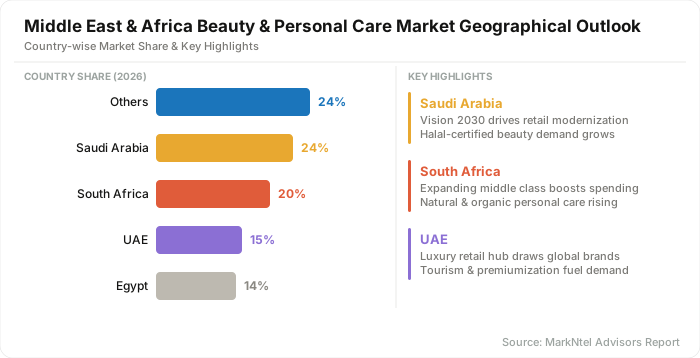
- Saudi Arabia leads the regional landscape, accounting for approximately 24% of total industry demand.
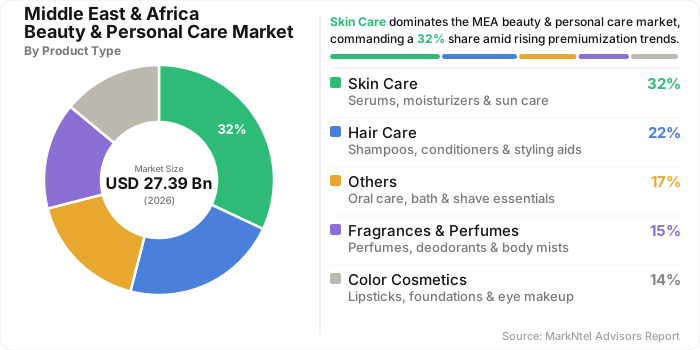
- Skin care dominates the product type segment with approximately 32% share.
- Adults represent the leading end-user segment, capturing approximately 73% share in 2026.
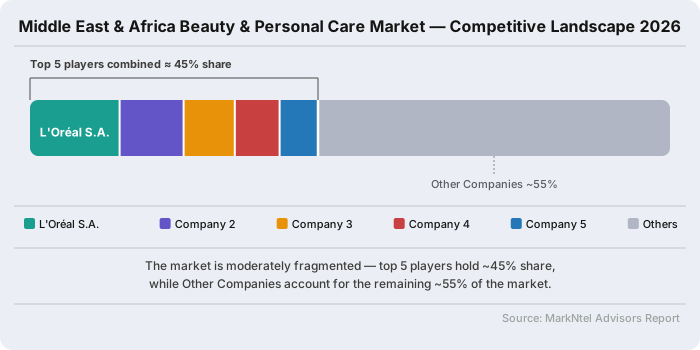
- The industry remains moderately fragmented, with the top five players collectively accounting for nearly 45% share through diversified portfolios, extensive distribution networks, and continuous product innovation.
Middle East & Africa Beauty & Personal Care Market Size and Outlook
The Middle East & Africa beauty & personal care market size was valued at USD 26.29 billion in 2025 and is projected to grow from USD 27.39 billion in 2026 to USD 34.59 billion by 2032. Along with this, the industry is estimated to expand at a CAGR of around 3.97% during 2026–2032. Future growth will be supported by expanding digital retail infrastructure, online shopping, and rising adoption of AI-powered personalization, reinforcing long-term demand for premium beauty products.
Consumer demand is expected to strengthen further as workforce participation continues to improve across major Gulf economies. The General Authority for Statistics reported Saudi female employment reaching 31% in the fourth quarter of 2025, up 4.2 percentage points over the preceding five years. This structural increase is expanding the professional-grooming consumer base, driving higher spending on workplace-appropriate skincare and personal care products through retail stores and digital channels while supporting broader consumer wellness preferences.
Institutional initiatives promoting halal manufacturing are also expected to influence future industry development. Saudi Arabia's Public Investment Fund operates the Halal Products Development Company, whose mandate explicitly names cosmetics alongside foods and pharmaceuticals as a core halal-industry focus, aiming to localize knowledge, technology and innovation while promoting the Kingdom as a global halal hub. This strategy is encouraging manufacturers to strengthen halal beauty capabilities through Shariah-compliant formulations, ingredient sourcing, and transparent product labeling.
Population dynamics are expected to create additional opportunities throughout the forecast period. World Bank figures record Saudi Arabia's net migration at 119,738 people in 2025, reflecting continued expatriate inflows tied to Vision 2030 project activity. The expanding expatriate population is increasing demand for internationally branded skincare, fragrance, and hair care products across Riyadh, Jeddah, and the Eastern Province, supporting the long-term expansion of the Middle East & Africa beauty & personal care industry.
Middle East & Africa Beauty & Personal Care Market Key Indicators
- The Middle East recorded 3% growth in international tourist arrivals in 2025, standing 39% above pre-pandemic levels, with Egypt posting 20% growth. This tourism surge translates directly into duty-free and airport-retail spending on fragrances and travel-size skincare, categories dependent on visitor footfall through Gulf and North African transit hubs.
- World Bank data place Saudi Arabia's GDP per capita at USD 34,536.7 in 2025, among the highest levels recorded across the region. Rising per-capita income underpins consumers' growing willingness to trade up from mass-market staples toward dermatologically validated, prestige-positioned skincare and fragrance lines sold through online beauty retail platforms.
- The World Bank stated that Africa’s working-age population, aged 20 to 64, will rise from 450 million in 2035. This expanding base broadens the addressable consumer pool for mass-market personal care staples as urban formal employment grows, supporting rising consumer wellness spending.
Middle East & Africa Beauty & Personal Care Market Scope
| Category | Segments |
|---|---|
| By Product Type | Skin Care, Hair Care, Color Cosmetics, Fragrances & Perfumes, Oral Care, Bath & Shower Products, Mens Grooming Products, Others |
| By Distribution Channel | Supermarkets & Hypermarkets, Convenience Stores, Pharmacies & Drug Stores, Specialty Beauty Stores, E-commerce Platforms, Traditional Retail Stores |
| By Gender | Men, Women, Unisex |
| By Price Category | Mass, Mid-Range, Premium |
| By End User | Adults, Teenagers, Children |
Middle East & Africa Beauty & Personal Care Market Growth Drivers
Expanding Digital Retail Infrastructure and Online Shopping
Digital retail infrastructure is becoming a major catalyst for the Middle East & Africa beauty & personal care industry by improving accessibility and convenience for consumers. Rising internet connectivity, expanding digital payment ecosystems, and AI-enabled shopping experiences are encouraging greater online purchases of personal care products. These developments are enabling brands to reach broader customer segments while strengthening consumer engagement through seamless and personalized purchasing journeys.
Digital retail infrastructure is expanding rapidly across Saudi Arabia, directly widening the addressable market for beauty and personal care purchases. Internet penetration in the Kingdom reached 99% in 2024, according to the Communications, Space and Technology Commission, with 93.1% of online purchases completed through local Saudi websites rather than international platforms. This localization of digital commerce is pulling personal care spending directly onto domestic e-commerce platforms instead of overseas retailers.
The continued expansion of localized digital ecosystems is expected to reinforce long-term growth across the Middle East & Africa beauty & personal care sector. As domestic online channels mature, companies can strengthen customer retention, improve product discoverability, and enhance shopping experiences through beauty e-commerce capabilities. Collectively, expanding digital infrastructure and AI-enabled retail solutions are creating a scalable foundation for sustained industry expansion across the region.
Recent Trends
Rising Adoption of AI-Powered Personalization in Beauty Retail
Artificial intelligence is transforming customer engagement, making personalized shopping experiences an increasingly important characteristic of the Middle East & Africa beauty & personal care demand. Retailers are integrating conversational AI into beauty retail strategies to improve product discovery, customer interaction, and purchase decisions. As digital expectations evolve, localized AI capabilities are becoming essential for delivering seamless experiences that reflect regional language preferences and consumer shopping behaviors.
Beauty retailers across the Gulf are embedding conversational AI directly into the shopping journey rather than treating it as an add-on feature. Chalhoub Group's Layla AI shopping assistant has lifted conversion rates to 2.5 times those of non-AI sessions, with users spending an average of 7.4 minutes longer per browsing session and exploring 27% more products than shoppers using standard search. Some 79% of Layla AI interactions occur in Arabic, while 85% of users originate from Saudi Arabia.
The trend extends beyond a single retailer as Chalhoub plans to expand the assistant into its physical store network during 2026, positioning beauty advisors alongside AI recommendations rather than replacing them and describing the tool as the first in a series of conversational-commerce investments. Consequently, the Middle East & Africa beauty & personal care industry is witnessing stronger adoption of social commerce, while brands lacking Arabic-first conversational capabilities risk losing discovery-stage visibility among younger, digitally native consumers.
Middle East & Africa Beauty & Personal Care Market Opportunities and Challenges
Tightening SFDA Ingredient Restrictions Driving Demand for Compliance-Ready and Reformulated Beauty Brands
Regulatory tightening is increasing compliance requirements across the Middle East & Africa beauty & personal care market, compelling manufacturers to reassess formulations, documentation, and product registrations. The Saudi Food and Drug Authority issued a circular, adding three substances to its restricted cosmetic ingredients list and introducing new concentration limits. It further expanded the prohibited substances list, adding 21 additional ingredients, including dibutyltin maleate, dibutyltin oxide, and 4-nitrosomorpholine. These measures strengthen product safety but raise compliance complexity for manufacturers using cosmetic manufacturing processes.
At the same time, the evolving regulatory framework is creating commercial opportunities for businesses capable of rapid compliance. SGS, an SFDA-approved Conformity Assessment Body, now provides ingredient screening and reformulation guidance specifically designed for manufacturers navigating the 2025 restricted-substances updates. This positions the company ahead of competitors lacking equivalent in-market regulatory accreditation while supporting manufacturers seeking uninterrupted regulatory approvals.
Brands that complete reformulation before the January 2026 enforcement date can retain uninterrupted GHAD registration status, avoiding the compliance challenges expected as the 2028 grace period concludes. Collectively, these regulatory changes are encouraging greater investment in product safety standards, proactive reformulation strategies, and compliance-focused innovation, enabling prepared manufacturers to strengthen relationships with SFDA-conscious retailers and pharmacy-channel distributors across Saudi Arabia and the wider Gulf.
Segmentation Insights
Skin Care Leads the Demand Due to Year-Round Climate-Driven Consumer Demand
The Middle East & Africa beauty & personal care industry is led by the Skin Care segment, which commands approximately 32% of overall product-type demand. Its leadership reflects persistent consumer requirements for products that protect and restore skin under harsh environmental conditions. Growing preference for skincare products formulated for hydration, barrier repair, and sun protection continues to strengthen the segment as consumers increasingly prioritize daily skin health.
The segment's dominance stems from extreme regional climate conditions that necessitate year-round moisturizing, barrier-repair, and sun-protection formulations rather than seasonal purchasing behavior. Saudi Arabia's National Center for Meteorology recorded a temperature of 51.3°C in Al-Ahsa in July 2024, among the highest readings in the Kingdom's recent climate history. These conditions consistently increase exposure to intense heat and ultraviolet radiation, reinforcing demand for protective skincare solutions.
Manufacturers are responding by expanding portfolios that include hydrating skincare products, SPF-formulated moisturizers, and after-sun repair items tailored to regional environmental conditions. Continuous product development focused on natural skincare formulations and climate-specific performance is further supporting long-term consumer adoption across Gulf and North African countries. Collectively, these factors continue to reinforce the Skin Care segment's leadership. Based on product type, the scope has been divided into:
- Skin Care
- Hair Care
- Color Cosmetics
- Fragrances & Perfumes
- Oral Care
- Bath & Shower Products
- Men's Grooming Products
- Others
Adults Lead the Demand Due to Strong Purchasing Power and Adult-Weighted Demographics
Adults represent the largest end-user segment in the Middle East & Africa beauty & personal care market, accounting for approximately 73% of total demand. The segment's leadership is supported by higher disposable incomes, independent purchasing decisions, and consistent spending on premium skincare and grooming essentials. Growing awareness of personal appearance and wellness further encourages regular consumption of beauty and personal care products across the region.
This dominance reflects the region's adult-weighted population structure and independent purchasing power across its largest markets. Egypt's median age stood at 25.4 years in 2025, while South Africa's median age reached 29.6 years, placing both among the region's more adult-skewed demographic profiles relative to younger Sub-Saharan African markets. These demographic characteristics create a broad consumer base with sustained purchasing capacity for beauty and grooming products.
Manufacturers continue expanding portfolios to address evolving adult preferences through innovative formulations, multifunctional products, and targeted solutions. Rising demand for beauty consumer trends centered on self-care, premium product quality, and lifestyle-oriented purchasing is further reinforcing the segment's long-term leadership. Collectively, these demographic and behavioral factors are expected to sustain adult consumers as the dominant end-user category. The market assessment covers the following major end-user groups:
- Adults
- Teenagers
- Children
Middle East & Africa Beauty & Personal Care Market Geographical Outlook
Saudi Arabia holds the leading country position in the Middle East & Africa beauty & personal care industry accounting for approximately 24% of overall demand. The Kingdom's leadership is supported by its position as the GCC's largest consumer base alongside sustained public investment that continues strengthening luxury beauty consumption. Expanding retail destinations and growing tourism activity are further reinforcing demand for premium beauty and personal care offerings.
This dominance rests on the Kingdom's scale as the GCC's most populous consumer base combined with sustained government-directed investment in retail and tourism infrastructure. Passenger traffic through Saudi airports reached 140.9 million in 2025, according to the General Authority for Statistics, a volume that continues to feed duty-free and airport-retail demand for fragrances and travel-size skincare ahead of comparable Gulf hubs.
Growing visitor arrivals and modern retail infrastructure continue creating favorable conditions for international and domestic beauty brands to expand their presence across Saudi Arabia. Rising demand through airport retail, shopping destinations, and tourism-linked channels is strengthening premium fragrances sales while supporting broader product availability. These structural advantages are expected to sustain the Kingdom's regional leadership throughout the forecast period.
Middle East & Africa Beauty & Personal Care Market Competitive Analysis
The Middle East & Africa beauty & personal care industry is moderately fragmented, with the top five companies collectively accounting for an estimated 45% of total industry revenue. L'Oréal S.A., Unilever PLC, The Procter & Gamble Company, Beiersdorf AG, and The Estée Lauder Companies Inc. maintain leadership through diversified product portfolios, extensive distribution networks, continuous product innovation, and premium brand positioning. Competition is further intensified by regional manufacturers, halal-focused brands, and private-label offerings, encouraging investments in digital retail, localized product development, sustainability initiatives, and strategic partnerships to strengthen consumer engagement and expand regional presence.
Leading Companies in Middle East & Africa Beauty & Personal Care Market
- L'Oréal S.A.
- Unilever PLC
- The Procter & Gamble Company
- Beiersdorf AG
- The Estée Lauder Companies Inc.
- Colgate-Palmolive Company
- Shiseido Company, Limited
- Coty Inc.
- LVMH Moët Hennessy Louis Vuitton SE
- Kao Corporation
- Henkel AG & Co. KGaA
- Godrej Consumer Products Limited
- Others
Middle East & Africa Beauty & Personal Care Industry News and Recent Developments
May 2026: L'Oréal Opens New Office in Jeddah to Accelerate Saudi Arabia Expansion
L'Oréal Middle East inaugurated a new office in Jeddah during the second L'Oréal for the Future Summit, reinforcing Saudi Arabia's role as a strategic regional growth hub. The company plans to double its workforce in the Kingdom by the end of 2026 while expanding sustainability initiatives, professional training, and refillable beauty programs. L'Oréal also launched its fifth professional hairdressing academy at the new site to strengthen local talent development.
Impact Analysis: The expansion strengthens L'Oréal's competitive position in the Middle East by enhancing local operations, accelerating workforce development, and supporting Saudi Vision 2030 objectives. According to an independent Asterès study, L'Oréal's value chain generates USD 853 million for the Saudi economy and supports 8,765 jobs. The investment is expected to improve distribution efficiency, strengthen premium beauty offerings, promote sustainable consumption through refill initiatives, and reinforce Saudi Arabia's position as the region's leading beauty industry growth engine.
January 2026: Sesderma Expands African Footprint with Nigeria Launch
Spanish dermatological skincare company Sesderma expanded into Nigeria, introducing products targeting pigmentation management, skin hydration, anti-aging, and overall skin health. The company’s entry forms part of its broader African growth strategy and increases the availability of clinically oriented skincare products tailored to local consumer needs.
Impact Analysis: Sesderma’s market entry underscores growing international confidence in Nigeria’s evolving skincare landscape. The expansion enhances competition within premium and dermatological skincare categories while broadening consumer access to specialized formulations. Increased participation from global brands is expected to encourage higher product standards, greater consumer awareness, and further investment in efficacy-driven skincare solutions.
Impact Analysis: This innovation expands sustainable Nigeria Beauty & Personal Care into the wine segment.
March 2025: Urban Skin Rx Enters Nigerian Skincare Market
Urban Skin Rx expanded into Nigeria with a portfolio focused on hyperpigmentation management, uneven skin tone correction, and skincare solutions formulated for melanin-rich skin. The brand’s entry broadens the availability of targeted skincare products and reflects increasing international interest in Nigeria’s evolving beauty and Beauty & Personal Care landscape.
Impact Analysis: The expansion strengthens the availability of specialized skincare products and supports the gradual premiumization of the market. By focusing on common skin concerns among African consumers, Urban Skin Rx enhances product diversity and raises competitive standards within the skincare category. The move also signals growing recognition of Nigeria as a strategically important destination for international beauty brands seeking access to a large and increasingly skincare-conscious consumer base.
- Market Segmentation
- Introduction
- Product Definition
- Research Process
- Assumptions
- Executive Summary
- Middle East & Africa Beauty & Personal Care Market Pricing Analysis
- Middle East & Africa Beauty & Personal Care Production Trend 2022-2032
- Middle East & Africa Beauty & Personal Care Trend by Type of Product Type
- Skin Care
- Hair Care
- Color Cosmetics
- Fragrances & Perfumes
- Oral Care
- Bath & Shower Products
- Men's Grooming Products
- Others
- Company Wise Production Plants and Statistics
- Installed Production Capacity
- Actual Production
- Planned Production Target
- Middle East & Africa Beauty & Personal Care Trend by Type of Product Type
- Middle East & Africa Beauty & Personal Care Pricing Analysis 2022-2032
- Middle East & Africa Beauty & Personal Care Pricing Trend 2022-2032
- Middle East & Africa Beauty & Personal Care Pricing Trend by Product Type 2022-2032
- Skin Care
- Hair Care
- Color Cosmetics
- Fragrances & Perfumes
- Oral Care
- Bath & Shower Products
- Men's Grooming Products
- Others
- Middle East & Africa Beauty & Personal Care Market Dynamics
- Growth Drivers
- Challenges
- Middle East & Africa Beauty & Personal Care Market Hotspots & Opportunities
- Middle East & Africa Beauty & Personal Care Market Regulations & Policies
- Middle East & Africa Beauty & Personal Care Market Supply Chain Analysis
- Middle East & Africa Beauty & Personal Care Market Import & Export Analysis
- Middle East & Africa Beauty & Personal Care Market Outlook, 2022-2032F
- Market Size & Analysis
- Revenues (USD Million)
- Market Segmentation & Outlook
- By Product Type- Market Size & Forecast 2022-2032, USD Million
- Skin Care
- Facial Cleansers
- Moisturizers & Face Creams
- Facial Serums
- Sunscreen & Sun Care
- Sheet Face Masks
- Others (Scrubs, Toners, etc.)
- Hair Care
- Shampoo
- Conditioner
- Hair Oils
- Hair Serums
- Hair Masks & Peels
- Others
- Color Cosmetics
- Face Color Cosmetics
- Foundation
- Concealer
- Blush
- Bronzer
- Powder
- Highlighter
- Lip Color Cosmetics
- Lipstick
- Lip Liner
- Lip Gloss
- Lip Tint
- Eye Color Cosmetics
- Eye Shadow
- Eye Liner
- Mascara
- False Eyelashes
- Nail Color Cosmetics
- Face Color Cosmetics
- Fragrances & Perfumes
- Oral Care
- Rinses and Mouthwash
- Toothpaste
- Toothbrushes
- Others
- Bath & Shower Products
- Men's Grooming Products
- Others
- Skin Care
- By Distribution Channel- Market Size & Forecast 2022-2032, USD Million
- Supermarkets & Hypermarkets
- Convenience Stores
- Pharmacies & Drug Stores
- Specialty Beauty Stores
- E-commerce Platforms
- Traditional Retail Stores
- By Gender- Market Size & Forecast 2022-2032, USD Million
- Men
- Women
- Unisex
- By Price Category- Market Size & Forecast 2022-2032, USD Million
- Mass
- Mid-Range
- Premium
- By End User- Market Size & Forecast 2022-2032, USD Million
- Adults
- Teenagers
- Children
- By Country
- Saudi Arabia
- The UAE
- Egypt
- Qatar
- Kuwait
- Oman
- South Africa
- Nigeria
- By Company
- Competition Characteristics
- Market Share & Analysis
- By Product Type- Market Size & Forecast 2022-2032, USD Million
- Market Size & Analysis
- Saudi Arabia Beauty & Personal Care Market Outlook, 2022-2032F
- Market Size & Analysis
- Revenues (USD Million)
- Market Segmentation & Outlook
- By Product Type- Market Size & Forecast 2022-2032, USD Million
- By Distribution Channel- Market Size & Forecast 2022-2032, USD Million
- By Gender- Market Size & Forecast 2022-2032, USD Million
- By Price Category- Market Size & Forecast 2022-2032, USD Million
- By End User- Market Size & Forecast 2022-2032, USD Million
- Market Size & Analysis
- The UAE Beauty & Personal Care Market Outlook, 2022-2032F
- Market Size & Analysis
- Revenues (USD Million)
- Market Segmentation & Outlook
- By Product Type- Market Size & Forecast 2022-2032, USD Million
- By Distribution Channel- Market Size & Forecast 2022-2032, USD Million
- By Gender- Market Size & Forecast 2022-2032, USD Million
- By Price Category- Market Size & Forecast 2022-2032, USD Million
- By End User- Market Size & Forecast 2022-2032, USD Million
- Market Size & Analysis
- Egypt Beauty & Personal Care Market Outlook, 2022-2032F
- Market Size & Analysis
- Revenues (USD Million)
- Market Segmentation & Outlook
- By Product Type- Market Size & Forecast 2022-2032, USD Million
- By Distribution Channel- Market Size & Forecast 2022-2032, USD Million
- By Gender- Market Size & Forecast 2022-2032, USD Million
- By Price Category- Market Size & Forecast 2022-2032, USD Million
- By End User- Market Size & Forecast 2022-2032, USD Million
- Market Size & Analysis
- Qatar Beauty & Personal Care Market Outlook, 2022-2032F
- Market Size & Analysis
- Revenues (USD Million)
- Market Segmentation & Outlook
- By Product Type- Market Size & Forecast 2022-2032, USD Million
- By Distribution Channel- Market Size & Forecast 2022-2032, USD Million
- By Gender- Market Size & Forecast 2022-2032, USD Million
- By Price Category- Market Size & Forecast 2022-2032, USD Million
- By End User- Market Size & Forecast 2022-2032, USD Million
- Market Size & Analysis
- Kuwait Beauty & Personal Care Market Outlook, 2022-2032F
- Market Size & Analysis
- Revenues (USD Million)
- Market Segmentation & Outlook
- By Product Type- Market Size & Forecast 2022-2032, USD Million
- By Distribution Channel- Market Size & Forecast 2022-2032, USD Million
- By Gender- Market Size & Forecast 2022-2032, USD Million
- By Price Category- Market Size & Forecast 2022-2032, USD Million
- By End User- Market Size & Forecast 2022-2032, USD Million
- Market Size & Analysis
- Oman Beauty & Personal Care Market Outlook, 2022-2032F
- Market Size & Analysis
- Revenues (USD Million)
- Market Segmentation & Outlook
- By Product Type- Market Size & Forecast 2022-2032, USD Million
- By Distribution Channel- Market Size & Forecast 2022-2032, USD Million
- By Gender- Market Size & Forecast 2022-2032, USD Million
- By Price Category- Market Size & Forecast 2022-2032, USD Million
- By End User- Market Size & Forecast 2022-2032, USD Million
- Market Size & Analysis
- South Africa Beauty & Personal Care Market Outlook, 2022-2032F
- Market Size & Analysis
- Revenues (USD Million)
- Market Segmentation & Outlook
- By Product Type- Market Size & Forecast 2022-2032, USD Million
- By Distribution Channel- Market Size & Forecast 2022-2032, USD Million
- By Gender- Market Size & Forecast 2022-2032, USD Million
- By Price Category- Market Size & Forecast 2022-2032, USD Million
- By End User- Market Size & Forecast 2022-2032, USD Million
- Market Size & Analysis
- Nigeria Beauty & Personal Care Market Outlook, 2022-2032F
- Market Size & Analysis
- Revenues (USD Million)
- Market Segmentation & Outlook
- By Product Type- Market Size & Forecast 2022-2032, USD Million
- By Distribution Channel- Market Size & Forecast 2022-2032, USD Million
- By Gender- Market Size & Forecast 2022-2032, USD Million
- By Price Category- Market Size & Forecast 2022-2032, USD Million
- By End User- Market Size & Forecast 2022-2032, USD Million
- Market Size & Analysis
- Middle East & Africa Beauty & Personal Care Market Key Strategic Imperatives for Success & Growth
- Competition Outlook
- Company Profiles
- L'Oréal S.A.
- Business Description
- Product Portfolio
- Strategic Alliances or Partnerships
- Recent Developments
- Financial Details
- Others
- Unilever PLC
- Business Description
- Product Portfolio
- Strategic Alliances or Partnerships
- Recent Developments
- Financial Details
- Others
- The Procter & Gamble Company
- Business Description
- Product Portfolio
- Strategic Alliances or Partnerships
- Recent Developments
- Financial Details
- Others
- Beiersdorf AG
- Business Description
- Product Portfolio
- Strategic Alliances or Partnerships
- Recent Developments
- Financial Details
- Others
- The Estée Lauder Companies Inc.
- Business Description
- Product Portfolio
- Strategic Alliances or Partnerships
- Recent Developments
- Financial Details
- Others
- Colgate-Palmolive Company
- Business Description
- Product Portfolio
- Strategic Alliances or Partnerships
- Recent Developments
- Financial Details
- Others
- Shiseido Company, Limited
- Business Description
- Product Portfolio
- Strategic Alliances or Partnerships
- Recent Developments
- Financial Details
- Others
- Coty Inc.
- Business Description
- Product Portfolio
- Strategic Alliances or Partnerships
- Recent Developments
- Financial Details
- Others
- LVMH Moët Hennessy Louis Vuitton SE
- Business Description
- Product Portfolio
- Strategic Alliances or Partnerships
- Recent Developments
- Financial Details
- Others
- Kao Corporation
- Business Description
- Product Portfolio
- Strategic Alliances or Partnerships
- Recent Developments
- Financial Details
- Others
- Henkel AG & Co. KGaA
- Business Description
- Product Portfolio
- Strategic Alliances or Partnerships
- Recent Developments
- Financial Details
- Others
- Godrej Consumer Products Limited
- Business Description
- Product Portfolio
- Strategic Alliances or Partnerships
- Recent Developments
- Financial Details
- Others
- Others
- L'Oréal S.A.
- Company Profiles
- Disclaimer

MarkNtel Advisors follows a robust and iterative research methodology designed to ensure maximum accuracy and minimize deviation in market estimates and forecasts. Our approach combines both bottom-up and top-down techniques to effectively segment and quantify various aspects of the market. A consistent feature across all our research reports is data triangulation, which examines the market from three distinct perspectives to validate findings. Key components of our research process include:
1. Scope & Research Design At the outset, MarkNtel Advisors define the research objectives and formulate pertinent questions. This phase involves determining the type of research—qualitative or quantitative—and designing a methodology that outlines data collection methods, target demographics, and analytical tools. They also establish timelines and budgets to ensure the research aligns with client goals.
2. Sample Selection and Data Collection In this stage, the firm identifies the target audience and determines the appropriate sample size to ensure representativeness. They employ various sampling methods, such as random or stratified sampling, based on the research objectives. Data collection is carried out using tools like surveys, interviews, and observations, ensuring the gathered data is reliable and relevant.
3. Data Analysis and Validation Once data is collected, MarkNtel Advisors undertake a rigorous analysis process. This includes cleaning the data to remove inconsistencies, employing statistical software for quantitative analysis, and thematic analysis for qualitative data. Validation steps are taken to ensure the accuracy and reliability of the findings, minimizing biases and errors.

4. Data Forecast and FinalizationThe final phase involves forecasting future market trends based on the analyzed data. MarkNtel Advisors utilize predictive modeling and time series analysis to anticipate market behaviors. The insights are then compiled into comprehensive reports, featuring visual aids like charts and graphs, and include strategic recommendations to inform client decision-making
FILL THE FORM TO GET THE FREE SAMPLE PAGES
We offer flexible licensing options to cater to varying organizational needs. Choose the pricing pack that best suits your requirements:
Buy Now Inquire Before Buying
 Talk to our Consultant
 Request Customization