

Saudi Arabia E-Commerce Market Research Report: Forecast (2026-2032)
By Business Model (Business-to-Consumer (B2C), Business-to-Business (B2B), Consumer-to-Consumer (C2C)), By Product Category (Electronics & Appliances, Fashion & Apparel, Food & Gro ... cery, Beauty & Personal Care, Home & Furniture, Books, Toys & Hobby, Automotive & Accessories, Healthcare & Pharmaceuticals, Others), By Platform Type (Web-based, Mobile-based), By Payment Mode (Digital Wallets, Bank Transfers, Credit/Debit Cards, Cash on Delivery (COD)), By End User (Individual Consumers, Enterprises / Businesses), and others Read more
- ICT & Electronics
- Jul 2026
- Pages 140
- Report Format: PDF, Excel, PPT
Saudi Arabia E-Commerce Market
Projected 5.48% CAGR from 2026 to 2032
Study Period
2026-2032
Market Size (2026)
USD 21.29 Billion
Market Size (2032)
USD 29.32 Billion
Base Year
2025
Projected CAGR
5.48%
Leading Segments
By Business Model: Business-to-Consumer (B2C)
Saudi Arabia E-Commerce Market Key Takeaways
- The Saudi Arabia e-commerce market size was valued at USD 19.29 billion in 2025 and is projected to grow from USD 21.29 billion in 2026 to USD 29.32 billion by 2032.
- The industry is projected to reflect sustained growth at a steady CAGR of 5.48% during 2026-2032.
- Riyadh holds the largest share of about 31% in 2026.
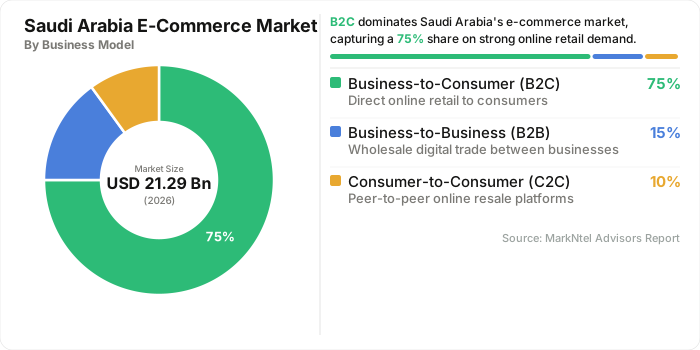
- By business model, business-to-consumer (B2C) holds a significant share of about 75% in 2026.
- By payment method, credit/debit cards seized a significant share of about 45% in 2026.
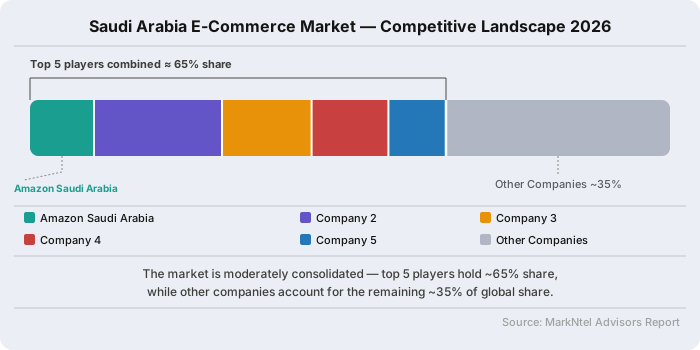
- The industry is moderately consolidated. However, the top five players collectively account for nearly 65% share.
Saudi Arabia E-Commerce Market Size and Outlook
The E-Commerce market size in Saudi Arabia was valued at USD 19.29 billion in 2025 and is projected to grow from USD 21.29 billion in 2026 to USD 29.32 billion by 2032. Along with this, the market is estimated to grow at a CAGR of around 5.48% during the forecast period, i.e., 2026-32, supported by rapid digital transformation, rising consumer confidence, and national-level infrastructure development under Vision 2030. One of the strongest enablers is digital payment adoption. According to the Saudi Central Bank (SAMA), electronic payments accounted for 79% of total retail payments in 2024, up from 70% in 2023. Non-cash transactions also increased to 12.6 billion in 2024, compared to 10.8 billion in 2023. Within this shift, e-commerce spending through Mada cards reached USD 52.6 billion in 2024, highlighting how secure national payment systems are directly driving online retail growth and strengthening consumer trust in digital transactions.
At the same time, expanding internet access and mobile-first behavior continue to accelerate market penetration. Saudi Arabia achieved 99% internet penetration in 2024, with most users accessing services via smartphones, enabling seamless participation in digital commerce platforms such as Amazon.sa, Noon, and Jahez.
Another key driver is user base expansion. The U.S. Commercial Service reports that Saudi Arabia reached 34.5 million e-commerce users by 2025, reflecting strong growth in digital adoption, improved logistics networks, and increasing consumer trust in online shopping. The country’s young population structure and high smartphone usage further strengthen demand for mobile commerce and app-based retail ecosystems.
Overall, the Saudi e-commerce market is expected to maintain strong upward momentum as digital payments, connectivity, and user adoption continue to deepen. The integration of secure financial systems, advanced logistics infrastructure, and expanding platform ecosystems is creating a highly scalable digital retail environment. This combination is positioning Saudi Arabia as one of the fastest-growing e-commerce markets in the Middle East, with sustained long-term growth potential under Vision 2030.
Saudi Arabia E-Commerce Market Key Indicators
- According to the U.S. Department of Commerce, e-commerce accounts for approximately 10% of total retail sales in Saudi Arabia (2025) and is projected to exceed 25% by 2035. This indicates strong long-term growth potential as digital adoption expands. The increase is driven by mobile commerce, digital payments, and logistics improvements under Vision 2030, positioning e-commerce as a major pillar of the retail economy.
- GASTAT's E-commerce Sales Index rose 13.6% year-on-year in Q1 2026, outpacing the broader wholesale and retail trade sector, whose overall revenue index grew 7.3% over the same period. Within traditional retail, revenue excluding motor vehicles climbed 18.4% year-on-year. This gap between e-commerce and offline retail growth is the clearest official signal that online shopping is structurally gaining share of total consumer spending in the Kingdom, rather than simply growing in line with the broader economy.
- According to the General Authority for Statistics (GASTAT), the total labor force participation rate reached 67.4% in Q4 2025, increasing by 1 percentage point year-on-year. Saudi labor market engagement is also strengthening, with improved employment indicators across both genders. Notably, female labor market integration continues to expand, with the female employment rate rising by 4.2 percentage points over the past five years to 31%, reflecting sustained structural transformation in workforce participation.
Saudi Arabia E-Commerce Market Scope
| Category | Segments |
|---|---|
| By Business Model | Business-to-Consumer (B2C), Business-to-Business (B2B), Consumer-to-Consumer (C2C |
| By Product Category | Electronics & Appliances, Fashion & Apparel, Food & Grocery, Beauty & Personal Care, Home & Furniture, Books, Toys & Hobby, Automotive & Accessories, Healthcare & Pharmaceuticals, Others |
| By Platform Type | Web-based, Mobile-based |
| By Payment Mode | Digital Wallets, Bank Transfers, Credit/Debit Cards, Cash on Delivery (COD |
| By End User | Individual Consumers, Enterprises / Businesses |
Saudi Arabia E-Commerce Market Growth Drivers
High Internet and Smartphone Penetration Accelerating Digital Commerce Adoption
Saudi Arabia's exceptionally high internet and smartphone adoption has become a fundamental driver of its e-commerce market by enabling consumers to access digital marketplaces anytime and anywhere. According to the Communications, Space and Technology Commission (CST), internet penetration reached 99% in 2024, while 99.4% of internet users accessed the internet via mobile phones, highlighting the country's strong mobile-first digital ecosystem. The report also found that 93.1% of online purchases were made through local websites, reflecting growing consumer confidence in domestic e-commerce platforms.
Additionally, average monthly mobile data consumption reached 48 GB per user, nearly three times the global average, demonstrating intensive digital engagement that supports frequent online shopping. Saudi Arabia also ranked among the top five G20 countries in mobile internet speed during 2024, enabling seamless browsing, digital payments, and high-quality shopping experiences.
Looking ahead, Vision 2030 will continue to strengthen Saudi Arabia's digital ecosystem through sustained investments in telecommunications and digital infrastructure. In 2024, the government announced that the value of new government approximately USD 10.1 billion, representing an 18.75% increase compared to 2023. These investments are directed toward expanding digital infrastructure, accelerating cloud adoption, modernizing government platforms, and supporting AI-enabled public services.
Continued public-sector spending on advanced digital technologies is expected to improve nationwide connectivity, enhance digital service delivery, and create a more robust environment for online retail and digital transactions beyond 2025, further supporting the expansion of the e-commerce industry.
As internet accessibility and smartphone usage continue to deepen, online shopping will become increasingly integrated into consumers' daily lives. Enhanced digital infrastructure, faster mobile connectivity, and expanding digital services will continue to increase online purchasing frequency, customer reach, and transaction volumes, significantly accelerating the growth of e-commerce market in KSA.
Recent Trends
Expansion of Quick Commerce and Ultra-Fast Delivery in Saudi Arabia
Quick commerce is becoming a defining trend in Saudi Arabia’s e-commerce market as consumer demand shifts toward the delivery of groceries and essentials within minutes. A major real-world example is the entry of China’s Meituan-owned Keeta in Riyadh in 2024, marking a significant expansion of ultra-fast delivery services in the Kingdom. According to the Saudi Press Agency (SPA) and Arab News, Keeta announced an investment of around SAR 1 billion (USD 266.6 million) to expand operations, strengthen logistics infrastructure, and build its delivery network across Saudi Arabia, highlighting strong investor confidence in rapid-delivery models.
In 2025, Keeta launched Keemart, a grocery-focused quick commerce service delivering essentials in as little as 15 minutes in selected Riyadh districts such as Al Yasmin and Granada, demonstrating the shift from traditional same-day delivery to near-instant fulfillment. This model relies on dark stores, hyperlocal fulfillment hubs, and AI-driven dispatch systems to minimize delivery time and improve efficiency.
Looking ahead, Saudi Arabia’s National Transport and Logistics Strategy (Vision 2030) will further accelerate this trend by expanding smart logistics infrastructure, urban warehouses, and integrated digital supply chains. These developments will significantly reduce delivery times and enable nationwide scalability of quick commerce beyond major cities.
Overall, the rise of ultra-fast delivery is reshaping consumer expectations toward instant access, increasing purchase frequency, and strengthening the long-term growth of Saudi Arabia’s e-commerce ecosystem.
Saudi Arabia E-Commerce Market Opportunities and Challenges
Last-Mile Delivery Complexity Drives Advanced Logistics Solutions and E-Commerce Expansion
High last-mile delivery complexity remains one of the key challenges affecting the efficiency and scalability of Saudi Arabia e-commerce market. Although online retail continues to expand, providing fast and reliable deliveries across the Kingdom remains operationally challenging due to its vast geographical area of approximately 2.15 million km². Reaching dispersed customer locations requires extensive transportation networks, fulfillment infrastructure, and delivery capabilities, increasing operational requirements for e-commerce providers. These challenges are particularly significant for SMEs, which often face limitations in developing large-scale logistics networks compared with established players.
At the same time, these delivery challenges are encouraging investments in advanced logistics solutions aimed at improving efficiency, reducing delivery time, and expanding service coverage. Under the National Transport and Logistics Strategy (NTLS), Saudi Arabia is investing in logistics infrastructure, digital logistics platforms, and technology-enabled transportation solutions to strengthen the Kingdom’s logistics ecosystem. As an example of this technological shift, Saudi Post (SPL) conducted Saudi Arabia’s first drone-based parcel delivery in 2025, demonstrating the adoption of innovative delivery models that can support faster fulfillment and improve accessibility, particularly for locations where conventional delivery methods may face operational constraints.
As logistics infrastructure and smart delivery technologies continue to advance under Vision 2030, e-commerce companies will benefit from improved delivery efficiency, broader geographic coverage, and enhanced customer experience. These developments will help overcome last-mile challenges and support the sustainable expansion of Saudi Arabia’s e-commerce industry.
Segmentation Insights
Business-to-Consumer (B2C) Accounts for Approximately 75% Share, Emerging as the Leading Business Model
The Business-to-Consumer segment dominates Saudi Arabia’s e-commerce market, accounting for approximately 75% of total market revenue, making it the largest and most influential business model in the digital retail ecosystem. This dominance is driven by strong consumer preference for online shopping, rapid smartphone adoption, and widespread availability of secure digital payment systems such as Mada and credit cards. According to SAMA, electronic payments accounted for 79% of total retail transactions in 2024, which directly supports the growth of B2C platforms by enabling fast, secure, and cashless purchases.
The expansion of major platforms such as Amazon.sa, Noon, and Jarir Online has further strengthened B2C penetration by offering wide product categories, competitive pricing, and fast delivery services. Additionally, high internet penetration of 99% (CST 2024) ensures almost universal access to digital marketplaces, further accelerating consumer participation.
Overall, the B2C segment’s leadership reflects strong consumer trust, advanced logistics infrastructure, and a highly connected population, positioning it as the core driver of Saudi Arabia’s e-commerce industry growth. Based on the business model, the scope has been segmented into
- Business-to-Consumer (B2C)
- Business-to-Business (B2B)
- Consumer-to-Consumer (C2C)
Credit or Debit Cards Lead the Payment Mode Segmentation with Approximately 45% Share
Credit or debit cards account for approximately 45% share of Saudi Arabia’s e-commerce payment segment, making them the leading payment method in online transactions. This dominance is primarily driven by strong banking infrastructure, high card penetration, and secure digital payment systems supported by the Saudi Central Bank (SAMA) and the national payment network Mada. The widespread acceptance of card payments across major e-commerce platforms, such as Amazon.SA, Noon, and Jarir Online have significantly boosted consumer confidence in cashless transactions
The growth of contactless and online card payments is further supported by Saudi Arabia’s shift toward a cashless economy under Vision 2030, where digital financial inclusion is a key priority. Enhanced fraud protection, OTP verification systems, and seamless integration with mobile banking apps have also increased user trust in card-based payments.
Overall, the strong position of credit and debit cards reflects Saudi Arabia’s advanced financial infrastructure and the rapid transition toward secure, convenient, and fully digital e-commerce payment ecosystems. Based on the payment mode, the scope has been segmented into
- Digital Wallets
- Bank Transfers
- Credit/Debit Cards
- Cash on Delivery (COD)
Saudi Arabia E-Commerce Market Competitive Analysis
Top Five Companies Account for Approximately 65% of the Organized E-Commerce Ecosystem
The Saudi Arabia e-commerce market is moderately consolidated, with a mix of global platforms, regional leaders, and local players operating across marketplace, quick commerce, fashion, and electronics segments. The top five companies Amazon Saudi Arabia, Noon E Commerce Solutions FZ-LLC, Jahez International Company for Information System Technology, HungerStation Company Ltd., and United Electronics Company (eXtra) collectively account for approximately 65% of the organized e-commerce market share, driven by strong logistics capabilities, high consumer trust, aggressive pricing strategies, and continuous investments in digital infrastructure under Vision 2030.
Major Players in Saudi Arabia E-Commerce Market
- Amazon Saudi Arabia
- Noon E Commerce Solutions FZ-LLC
- Jahez International Company for Information System Technology
- HungerStation Company Ltd.
- United Electronics Company
- Jarir Bookstore Company
- Namshi General Trading LLC
- Salla Platform Company for Information Technology
- Trendyol Group
- Alibaba Group Holding Limited
- Others
Saudi Arabia E-Commerce Industry News and Recent Developments
2025: Amazon Saudi Arabia Expands Grocery and Essentials Delivery Network
Amazon Saudi Arabia strengthened its presence in the online grocery segment by expanding delivery services for groceries and daily essentials through partnerships with local retailers. This development improved same-day delivery capabilities in major cities such as Riyadh and Jeddah, enhancing convenience, expanding product availability, and reinforcing Amazon’s position in Saudi Arabia’s fast-growing e-grocery and quick retail delivery ecosystem
Impact Analysis: Amazon’s expansion into groceries and daily essentials strengthens its position in Saudi Arabia’s fast-growing e-grocery segment by improving same-day delivery coverage in major cities like Riyadh and Jeddah. It increases consumer convenience, boosts online purchase frequency, and enhances trust in digital grocery shopping. This move also intensifies competition in quick retail, encouraging local retailers to upgrade logistics and accelerate digital transformation across the food and FMCG e-commerce ecosystem.
-
JD Logistics Launches “JoyExpress” Express Delivery Service in Saudi Arabia
JD Logistics introduced its JoyExpress service in Saudi Arabia as its first international self-operated express delivery expansion. The service enables same-day and next-day deliveries across major regions, supported by an integrated warehousing and courier network, strengthening cross-border e-commerce logistics and improving fulfillment speed in the Kingdom’s rapidly growing online retail market.
Impact Analysis: JD Logistics’ launch of JoyExpress significantly enhances Saudi Arabia’s cross-border and domestic e-commerce logistics capacity by introducing integrated warehousing and fast delivery infrastructure. It reduces fulfillment times through same-day and next-day delivery services, improving customer satisfaction and platform competitiveness. This development also strengthens supply chain efficiency, attracts further foreign logistics investment, and accelerates the modernization of Saudi Arabia’s last-mile delivery ecosystem under Vision 2030.
Frequently Asked Questions
- Market Segmentation
- Introduction
- Product Definition
- Research Process
- Assumptions
- Executive Summary
- Saudi Arabia E-Commerce Market Funding and Investments Analysis
- Entrepreneurial Activity
- Year-on-Year Funding Received
- Funding Received by Top Companies
- Key Investors Active in the Market
- Series Wise Funding Received
- Seed Funding
- Angel Investing
- Venture Capitalists (VC) Funding
- Others
- Saudi Arabia E-Commerce Market Policies, Regulations, and Product Standards
- Saudi Arabia E-Commerce Market Trends & Developments
- Saudi Arabia E-Commerce Market Dynamics
- Growth Factors
- Challenges
- Saudi Arabia E-Commerce Market Hotspot & Opportunities
- Saudi Arabia E-Commerce Market Supply Chain Analysis
- Saudi Arabia E-Commerce Market PESTLE Analysis
- Saudi Arabia E-Commerce Market Outlook, 2022-2032
- Market Size & Outlook
- By Revenues (USD Million)
- Market Segmentation & Outlook
- By Business Model - Market Size & Forecast 2022-2032, USD Million
- Business-to-Consumer (B2C)
- Business-to-Business (B2B)
- Consumer-to-Consumer (C2C)
- By Product Category - Market Size & Forecast 2022-2032, USD Million
- Electronics & Appliances
- Smartphones
- Cooking Appliances
- Washing Machines
- Refrigerators
- Ovens
- Vacuum Cleaners
- Television
- Others
- Fashion & Apparel
- Kids wear
- Mens Wear
- Women Wear
- Food & Grocery
- Fresh Fruits
- Snacks & Processed Food
- Cereals
- Others
- Beauty & Personal Care
- Skincare
- Color Cosmetics
- Haircare
- Suncare
- Others
- Home & Furniture
- Kitchen Furniture
- Living Room Furniture
- Bedroom Furniture
- Home Cleaners
- Others
- Books, Toys & Hobby
- Books
- Traditional Toys
- Electronic Toys & Games
- Others
- Automotive & Accessories
- Car Interiors
- Tires
- Infotainment Systems
- Others
- Healthcare & Pharmaceuticals
- OTC Medicines
- Medical Consumables
- Others
- Others
- Others
- Electronics & Appliances
- By Platform Type - Market Size & Forecast 2022-2032, USD Million
- Web-based
- Mobile-based
- By Payment Mode - Market Size & Forecast 2022-2032, USD Million
- Digital Wallets
- Bank Transfers
- Credit/Debit Cards
- Cash on Delivery (COD)
- By End User - Market Size & Forecast 2022-2032, USD Million
- Individual Consumers
- Enterprises / Businesses
- By Region- Market Size & Forecast 2022-2032, USD Million
- Central Saudi Arabia
- Northern Saudi Arabia
- Western Saudi Arabia
- Southern Saudi Arabia
- Eastern Saudi Arabia
- By Company
- Competition Characteristics
- Market Share & Analysis
- By Business Model - Market Size & Forecast 2022-2032, USD Million
- Market Size & Outlook
- Saudi Arabia Electronics & Appliances E-Commerce Market Outlook, 2022-2032
- Market Size & Outlook
- By Revenues (USD Million)
- Market Segmentation & Outlook
- By Product Category - Market Size & Forecast 2022-2032, USD Million
- By Platform Type - Market Size & Forecast 2022-2032, USD Million
- By Payment Mode - Market Size & Forecast 2022-2032, USD Million
- By End User - Market Size & Forecast 2022-2032, USD Million
- By Region- Market Size & Forecast 2022-2032, USD Million
- Market Size & Outlook
- Saudi Arabia Fashion & Apparel E-Commerce Market Outlook, 2022-2032
- Market Size & Outlook
- By Revenues (USD Million)
- Market Segmentation & Outlook
- By Product Category - Market Size & Forecast 2022-2032, USD Million
- By Platform Type - Market Size & Forecast 2022-2032, USD Million
- By Payment Mode - Market Size & Forecast 2022-2032, USD Million
- By End User - Market Size & Forecast 2022-2032, USD Million
- By Region- Market Size & Forecast 2022-2032, USD Million
- Market Size & Outlook
- Saudi Arabia Food & Grocery E-Commerce Market Outlook, 2022-2032
- Market Size & Outlook
- By Revenues (USD Million)
- Market Segmentation & Outlook
- By Product Category - Market Size & Forecast 2022-2032, USD Million
- By Platform Type - Market Size & Forecast 2022-2032, USD Million
- By Payment Mode - Market Size & Forecast 2022-2032, USD Million
- By End User - Market Size & Forecast 2022-2032, USD Million
- By Region- Market Size & Forecast 2022-2032, USD Million
- Market Size & Outlook
- Saudi Arabia Beauty & Personal Care E-Commerce Market Outlook, 2022-2032
- Market Size & Outlook
- By Revenues (USD Million)
- Market Segmentation & Outlook
- By Product Category - Market Size & Forecast 2022-2032, USD Million
- By Platform Type - Market Size & Forecast 2022-2032, USD Million
- By Payment Mode - Market Size & Forecast 2022-2032, USD Million
- By End User - Market Size & Forecast 2022-2032, USD Million
- By Region- Market Size & Forecast 2022-2032, USD Million
- Market Size & Outlook
- Saudi Arabia Home & Furniture E-Commerce Market Outlook, 2022-2032
- Market Size & Outlook
- By Revenues (USD Million)
- Market Segmentation & Outlook
- By Product Category - Market Size & Forecast 2022-2032, USD Million
- By Platform Type - Market Size & Forecast 2022-2032, USD Million
- By Payment Mode - Market Size & Forecast 2022-2032, USD Million
- By End User - Market Size & Forecast 2022-2032, USD Million
- By Region- Market Size & Forecast 2022-2032, USD Million
- Market Size & Outlook
- Saudi Arabia Books, Toys & Hobby E-Commerce Market Outlook, 2022-2032
- Market Size & Outlook
- By Revenues (USD Million)
- Market Segmentation & Outlook
- By Product Category - Market Size & Forecast 2022-2032, USD Million
- By Platform Type - Market Size & Forecast 2022-2032, USD Million
- By Payment Mode - Market Size & Forecast 2022-2032, USD Million
- By End User - Market Size & Forecast 2022-2032, USD Million
- By Region- Market Size & Forecast 2022-2032, USD Million
- Market Size & Outlook
- Saudi Arabia Automotive & Accessories E-Commerce Market Outlook, 2022-2032
- Market Size & Outlook
- By Revenues (USD Million)
- Market Segmentation & Outlook
- By Product Category - Market Size & Forecast 2022-2032, USD Million
- By Platform Type - Market Size & Forecast 2022-2032, USD Million
- By Payment Mode - Market Size & Forecast 2022-2032, USD Million
- By End User - Market Size & Forecast 2022-2032, USD Million
- By Region- Market Size & Forecast 2022-2032, USD Million
- Market Size & Outlook
- Saudi Arabia Healthcare & Pharmaceuticals E-Commerce Market Outlook, 2022-2032
- Market Size & Outlook
- By Revenues (USD Million)
- Market Segmentation & Outlook
- By Product Category - Market Size & Forecast 2022-2032, USD Million
- By Platform Type - Market Size & Forecast 2022-2032, USD Million
- By Payment Mode - Market Size & Forecast 2022-2032, USD Million
- By End User - Market Size & Forecast 2022-2032, USD Million
- By Region- Market Size & Forecast 2022-2032, USD Million
- Market Size & Outlook
- Saudi Arabia E-Commerce Market Key Strategic Imperatives for Success & Growth
- Competitive Outlook
- Company Profiles
- Amazon Saudi Arabia
- Business Description
- Product Portfolio
- Collaborations & Alliances
- Recent Developments
- Financial Details
- Others
- Noon E Commerce Solutions FZ-LLC
- Business Description
- Product Portfolio
- Collaborations & Alliances
- Recent Developments
- Financial Details
- Others
- Jahez International Company for Information System Technology
- Business Description
- Product Portfolio
- Collaborations & Alliances
- Recent Developments
- Financial Details
- Others
- HungerStation Company Ltd.
- Business Description
- Product Portfolio
- Collaborations & Alliances
- Recent Developments
- Financial Details
- Others
- United Electronics Company
- Business Description
- Product Portfolio
- Collaborations & Alliances
- Recent Developments
- Financial Details
- Others
- Jarir Bookstore Company
- Business Description
- Product Portfolio
- Collaborations & Alliances
- Recent Developments
- Financial Details
- Others
- Namshi General Trading LLC
- Business Description
- Product Portfolio
- Collaborations & Alliances
- Recent Developments
- Financial Details
- Others
- Salla Platform Company for Information Technology
- Business Description
- Product Portfolio
- Collaborations & Alliances
- Recent Developments
- Financial Details
- Others
- Trendyol Group
- Business Description
- Product Portfolio
- Collaborations & Alliances
- Recent Developments
- Financial Details
- Others
- Alibaba Group Holding Limited
- Business Description
- Product Portfolio
- Collaborations & Alliances
- Recent Developments
- Financial Details
- Others
- Others
- Amazon Saudi Arabia
- Company Profiles
- Disclaimer
MarkNtel Advisors follows a robust and iterative research methodology designed to ensure maximum accuracy and minimize deviation in market estimates and forecasts. Our approach combines both bottom-up and top-down techniques to effectively segment and quantify various aspects of the market. A consistent feature across all our research reports is data triangulation, which examines the market from three distinct perspectives to validate findings. Key components of our research process include:
1. Scope & Research Design At the outset, MarkNtel Advisors define the research objectives and formulate pertinent questions. This phase involves determining the type of research—qualitative or quantitative—and designing a methodology that outlines data collection methods, target demographics, and analytical tools. They also establish timelines and budgets to ensure the research aligns with client goals.
2. Sample Selection and Data Collection In this stage, the firm identifies the target audience and determines the appropriate sample size to ensure representativeness. They employ various sampling methods, such as random or stratified sampling, based on the research objectives. Data collection is carried out using tools like surveys, interviews, and observations, ensuring the gathered data is reliable and relevant.
3. Data Analysis and Validation Once data is collected, MarkNtel Advisors undertake a rigorous analysis process. This includes cleaning the data to remove inconsistencies, employing statistical software for quantitative analysis, and thematic analysis for qualitative data. Validation steps are taken to ensure the accuracy and reliability of the findings, minimizing biases and errors.

4. Data Forecast and FinalizationThe final phase involves forecasting future market trends based on the analyzed data. MarkNtel Advisors utilize predictive modeling and time series analysis to anticipate market behaviors. The insights are then compiled into comprehensive reports, featuring visual aids like charts and graphs, and include strategic recommendations to inform client decision-making
We offer flexible licensing options to cater to varying organizational needs. Choose the pricing pack that best suits your requirements:
Buy Now Inquire Before Buying
 Request Customization
 Talk to our Consultant







