

By Offering (Solutions (Building Management Systems (BMS/BAS), Energy Management Systems (EMS), Security & Access Control Systems, Fire & Life Safety Systems, Lighting & HVAC Autom......ation Systems), Services (Consulting & Design, System Integration & Deployment, Maintenance & Managed Services)), By Application (Energy Optimization, Facility & Asset Management, Security & Surveillance, Life Safety Management, Space & Occupancy Management, Predictive Maintenance, Indoor Environmental Quality Monitoring, Others), By Building Type (Commercial, Residential, Industrial, Institutional), By Deployment Mode (On-Premise, Cloud-Based, Hybrid), By Deployment Type (New Construction, Retrofit & Renovation), and others Read more
- Buildings, Construction, Metals & Mining
- Jun 2026
- 220
- PDF, Excel, PPT
Asia Pacific Intelligent Building Automation Technologies Market Key Takeaways
- Asia Pacific intelligent building automation technologies market was valued at USD 1.17 billion in 2025 and is projected to reach USD 1.52 billion by 2032 from USD 1.21 billion in 2026.
- The industry is projected to witness steady growth at a CAGR of 3.87% during the forecast period I.e., 2026-32.
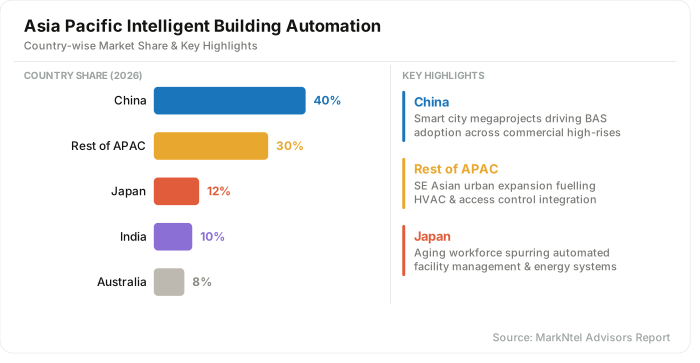
- China dominates the regional landscape, accounting for approximately 40% of the total market share.
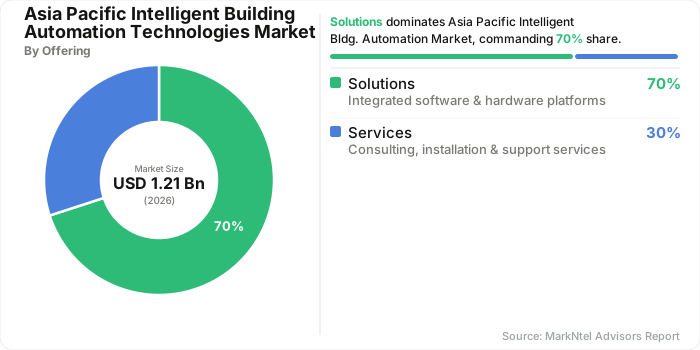
- Solutions lead the offering segment, contributing nearly 70% of total revenue in 2026.
- Energy optimization remains the leading application, capturing about a 27% share in 2026.
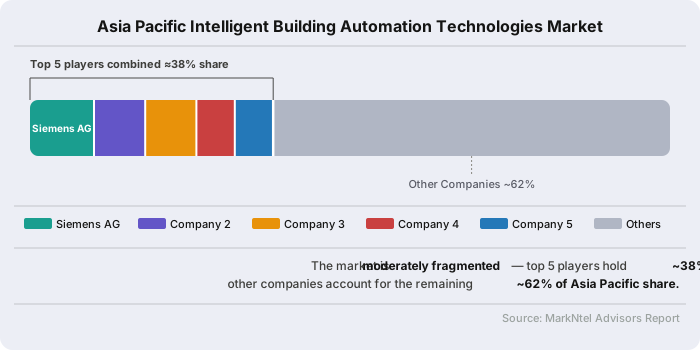
- The market structure is moderately fragmented, with the top five players collectively holding around 38% share, reflecting balanced competition between global leaders and regional firms.
Asia Pacific Intelligent Building Automation Technologies Market Size and Outlook
The Asia Pacific intelligent building automation technologies market size is projected to grow from USD 1.21 billion in 2026 to USD 1.52 billion by 2032, registering a CAGR of 3.87%. Growth is being driven by regulatory mandates and digital transformation across infrastructure sectors, accelerating adoption of smart building solutions and IoT building systems. Governments are increasingly enforcing performance-based efficiency standards, compelling building owners to integrate automation platforms that enable real-time monitoring, optimized energy usage, and enhanced operational transparency.
China remains the dominant growth engine, supported by the Building Energy Conservation and Green Building Development Plan (2021–2025), which mandates green compliance for all new urban buildings while targeting an additional 200 million square meters of energy-saving retrofits. These measures are significantly increasing deployment of building control systems, particularly across commercial complexes and data centers, where strict efficiency requirements are driving demand for intelligent automation capable of ensuring compliance and optimizing large-scale energy consumption.
Singapore and India are reinforcing regional momentum through regulatory and structural demand drivers. Singapore’s stricter audit requirements for energy-intensive buildings are accelerating retrofit cycles, creating sustained demand for connected buildings and automated efficiency upgrades. In parallel, India’s Energy Conservation and Sustainable Building Code 2024 is raising commercial building performance standards, while the vast construction pipeline, where 86% of 2070 building stock remains unbuilt, further strengthens long-term adoption potential.
A key trend shaping the outlook is the integration of automation with energy infrastructure, enabling dynamic and responsive operations. Rising cooling demand, with air-conditioning penetration projected to increase from 8% to 65% by 2050 and 80% by 2070, is creating a strong opportunity for smart HVAC systems. Collectively, these factors are positioning the Asia Pacific intelligent building automation technologies industry for sustained growth, driven by regulatory enforcement, infrastructure expansion, and technology-led efficiency transformation.
Asia Pacific Intelligent Building Automation Technologies Market Key Indicators
- Singapore’s Green Building Masterplan continues to set a regional benchmark, with nearly 66% of buildings greened by December 2025 under its 80-80-80 targets. This progress is significantly accelerating the adoption of smart HVAC systems, which are critical for achieving Super Low Energy standards. As compliance thresholds tighten, automated climate optimization is becoming central to both retrofit and new construction strategies.
- The International Energy Agency highlights a structural shift in Southeast Asia’s energy profile, where cooling demand is projected to rise from 16% to approximately 30% by 2035. This escalation is reinforcing investments in occupancy sensors, enabling buildings to dynamically align cooling output with real-time usage patterns, thereby improving efficiency while managing increasing electricity consumption across dense urban environments.
- Japan’s ZEB program reflects a policy-driven transformation, targeting full compliance for new public buildings by 2030 while expanding subsidies through 2025–2026. This initiative is accelerating the deployment of energy monitoring systems, allowing continuous tracking of consumption patterns. Such systems are essential for ensuring adherence to zero-energy targets and enhancing transparency in building performance across public and private sectors.
- China’s 14th Five-Year Plan emphasizes smart cities and green infrastructure, mandating integration of advanced automation across large-scale buildings. This policy direction is driving widespread implementation of building control systems, enabling centralized oversight and optimized operations. As digital infrastructure expands, intelligent control layers are becoming fundamental to achieving national efficiency and sustainability objectives.
- India’s Smart Cities Mission has achieved over 93% completion across more than 8,000 projects, alongside full deployment of Integrated Command and Control Centres. The introduction of IMAF 2.0 is further strengthening evaluation frameworks. This ecosystem is boosting demand for facility management systems, which support integrated governance, real-time monitoring, and scalable automation across complex urban infrastructure networks.
Asia Pacific Intelligent Building Automation Technologies Market Scope
| Category | Segments |
|---|---|
| By Offering | Solutions (Building Management Systems (BMS/BAS), Energy Management Systems (EMS), Security & Access Control Systems, Fire & Life Safety Systems, Lighting & HVAC Automation Systems), Services (Consulting & Design, System Integration & Deployment, Maintenance & Managed Services |
| By Application | Energy Optimization, Facility & Asset Management, Security & Surveillance, Life Safety Management, Space & Occupancy Management, Predictive Maintenance, Indoor Environmental Quality Monitoring, Others), |
| By Building Type | (Commercial, Residential, Industrial, Institutional |
| By Deployment Mode | On-Premise, Cloud-Based, Hybrid |
| By Deployment Type | New Construction, Retrofit & Renovation |
| By Country | China, India, Japan, Singapore, Thailand, Australia, New Zealand, Rest of Asia-Pacific |
Asia Pacific Intelligent Building Automation Technologies Market Growth Drivers
Mandatory Energy Regulations Reshaping Smart Building Investments
Regulatory enforcement across Asia Pacific is accelerating adoption of intelligent infrastructure, positioning compliance as a primary growth catalyst for the intelligent building automation technologies industry. Governments are mandating measurable efficiency outcomes, driving demand for smart building solutions and energy monitoring systems to ensure transparency, reporting accuracy, and continuous performance optimization.
Singapore exemplifies this transition through stringent policy frameworks that compel modernization of existing building stock. The Building and Construction Authority’s Mandatory Energy Improvement regime requires facilities exceeding 5,000 square meters to conduct audits and implement upgrades, with penalties reaching approximately USD 110,000 for non-compliance. Such policies reinforce the deployment of building management systems and smart sensors to meet mandated performance benchmarks.
Across the broader region, governments are strengthening decarbonization targets alongside infrastructure modernization strategies. Rising electricity demand, particularly from cooling-intensive commercial assets, is accelerating the regulatory push toward automated control adoption. This dynamic is increasing reliance on automation hardware and facility management systems that support real-time monitoring, predictive optimization, and integrated operational efficiency.
These regulatory frameworks are transforming compliance into a strategic investment driver within the Asia Pacific intelligent building automation technologies industry. As enforcement intensifies and penalties become more stringent, enterprises are prioritizing automation-led upgrades, ensuring sustained technology adoption while aligning with operational efficiency.
Recent Trends
Integration of Building Automation with Smart Grids
The convergence of building automation with energy infrastructure is redefining operational dynamics across the Asia Pacific intelligent building automation technologies market. Increasing integration with smart grid buildings is enabling real-time coordination between building systems and electricity networks. This evolution allows automated adjustments in energy consumption based on grid conditions, enhancing efficiency while supporting stability in increasingly decentralized and renewable-driven power ecosystems.
A key aspect of this trend lies in the adoption of demand response systems, where buildings actively modulate energy usage in response to pricing signals and supply fluctuations. Advanced platforms now enable synchronized control of HVAC, lighting, and storage assets, ensuring optimized load distribution. This capability is becoming critical as utilities seek flexible demand-side resources to balance intermittent renewable energy generation across urban clusters.
Singapore’s Energy Market Authority has reinforced this transition through its Demand-Side Flexibility Roadmap launched in October 2025. The initiative promotes automated consumption adjustments across commercial buildings and EV infrastructure, accelerating adoption of grid-interactive buildings. Such frameworks are positioning buildings as active participants within the electricity ecosystem, contributing to reliability while enabling cost-efficient operations.
Collectively, this integration trend is transforming the Asia Pacific intelligent building automation technologies industry, shifting buildings from passive energy consumers to dynamic grid assets capable of delivering resilience, efficiency, and long-term sustainability in rapidly evolving power systems.
Asia Pacific Intelligent Building Automation Technologies Market Opportunities and Challenges
Rising Cybersecurity Risks Creating Demand for Secure-by-Design Automation
The convergence of operational and information technologies is significantly expanding the cyber-risk exposure of connected buildings, creating a key restraint for the Asia Pacific intelligent building automation technologies landscape. Increasing reliance on interconnected systems is heightening smart building cybersecurity concerns, particularly in critical infrastructure environments. This vulnerability is slowing adoption among risk-sensitive operators, as potential disruptions to HVAC, access control, and energy systems pose serious operational and safety risks.
Singapore’s Cybersecurity (Amendment) Act, implemented in October 2025, reinforces this challenge by extending regulatory oversight to third-party-managed infrastructure and broader digital assets. The framework increases compliance obligations and liability for building owners, necessitating robust building cybersecurity strategies. As regulatory scrutiny intensifies, organizations must adopt continuous monitoring, incident response mechanisms, and stricter governance to ensure resilience and adherence to evolving legal requirements.
At the same time, rising threat levels are unlocking new commercial opportunities for vendors offering integrated security capabilities. In 2026, Rockwell Automation established a regional facility delivering 24/7 monitoring and response services, reflecting growing demand for secure building systems. Such developments highlight a shift toward embedded cybersecurity within automation platforms, enabling proactive risk mitigation and improved system reliability.
Collectively, the interplay between escalating cyber threats and expanding regulatory frameworks is reshaping the Asia Pacific intelligent building automation technologies industry, driving adoption of security-centric solutions while positioning cybersecurity as a decisive factor in long-term technology investment and competitive differentiation.
Segmentation Insights
Solutions Segment Leads Market Growth Amid Rising Automation Adoption
Solutions account for nearly 70% of total revenue in the Asia Pacific intelligent building automation technologies market, driven by their critical role in enabling integrated automation. Core systems such as building management systems and energy management systems provide centralized control, real-time monitoring, and performance optimization. Their ability to unify diverse building operations into a single platform is making them indispensable for large-scale commercial, institutional, and mixed-use developments.
Within the solutions segment, demand is expanding toward integrated platforms combining security, fire safety, and environmental controls. Systems such as access control, life safety, and HVAC automation are increasingly deployed within connected buildings, enabling seamless data exchange and coordinated operations. This integration enhances efficiency, supports regulatory compliance, and enables intelligent decision-making, particularly in complex infrastructure environments requiring continuous monitoring and control.
Services, while smaller in share, are gaining importance as system complexity increases across projects. Offerings including consulting, integration, and maintenance are essential for successful implementation and long-term optimization. The rising need for automation services reflects growing demand for technical expertise, system upgrades, and lifecycle management, particularly in retrofit projects and multi-location portfolios requiring scalable and adaptive automation solutions. The market is segmented based on offering into the following categories:
- Solutions
- Services
Energy Optimization Leading in Building Automation
Energy optimization represents the largest application segment, accounting for approximately 27% of total revenue due to its direct impact on operational cost reduction and sustainability targets. The increasing deployment of energy management systems enables real-time monitoring, load balancing, and consumption optimization. As energy costs rise across Asia Pacific, organizations are prioritizing intelligent solutions that deliver measurable efficiency gains while aligning with regulatory and environmental performance standards.
Beyond energy optimization, applications such as facility and asset management, security, and life safety are gaining traction as part of integrated building ecosystems. These systems are increasingly supported by IoT building systems, enabling continuous data collection and centralized control. This integration enhances operational visibility, improves asset utilization, and ensures proactive response mechanisms, particularly in large-scale commercial buildings and critical infrastructure environments.
Additionally, emerging applications including predictive maintenance, space management, and indoor environmental monitoring are expanding the functional scope of automation platforms. The adoption of smart sensors enables real-time tracking of occupancy, air quality, and equipment performance. This evolution is allowing building operators to shift toward data-driven decision-making, improving occupant comfort while reducing maintenance costs and enhancing long-term operational efficiency. The study covers the following key application areas:
- Energy Optimization
- Facility & Asset Management
- Security & Surveillance
- Life Safety Management
- Space & Occupancy Management
- Predictive Maintenance
- Indoor Environmental Quality Monitoring
- Others
Asia Pacific Intelligent Building Automation Technologies Market Geographical Outlook
China accounts for approximately 40% of the total demand within the Asia Pacific intelligent building automation technologies demand, driven by large-scale infrastructure expansion and strong government-backed digitalization initiatives. The country’s rapid growth in commercial buildings and hyperscale data centers is accelerating the adoption of advanced automation solutions, particularly those focused on efficiency, monitoring, and integrated system control across high-energy-consuming facilities.
A key regulatory driver is the mandate issued by China’s Ministry of Industry and Information Technology, requiring ultra-large and large data centers to achieve Power Usage Effectiveness (PUE) below 1.3 by 2025. Additionally, the East-to-West Computing program sets even stricter thresholds of below 1.2 in western regions. These requirements are significantly boosting demand for energy monitoring systems that enable precise tracking and optimization of power consumption.
As data center density and digital infrastructure investments continue to rise, operators are increasingly deploying cooling demand in Asia optimization strategies and intelligent automation platforms. These systems support real-time performance adjustments, improve thermal efficiency, and reduce operational costs, ensuring compliance with stringent energy targets while enhancing overall system reliability.
Collectively, China’s regulatory environment and large-scale infrastructure programs are reinforcing its leadership position, driving sustained investment in automation technologies and positioning the region as a critical growth engine within the Asia Pacific intelligent building automation technologies industry.
Asia Pacific Intelligent Building Automation Technologies Market Competitive Analysis
The competitive landscape of the Asia Pacific intelligent building automation technologies market is characterized by the presence of leading players such as Siemens AG, Honeywell International Inc., Schneider Electric SE, Johnson Controls International plc, and ABB Ltd., which collectively account for approximately 38% of the total market share. The market remains moderately fragmented, with strong competition from regional and specialized players offering cost-effective and customized solutions. Competitive positioning is driven by technological innovation, integrated platform capabilities, and the ability to execute large-scale projects, while increasing demand for energy-efficient and digital solutions.
Leading Companies in Asia Pacific Intelligent Building Automation Technologies Industry
- Siemens AG
- Honeywell International Inc.
- Schneider Electric SE
- Johnson Controls International plc
- ABB Ltd.
- Mitsubishi Electric Corporation
- Hitachi, Ltd.
- Daikin Industries, Ltd.
- Huawei Technologies Co., Ltd.
- Delta Electronics, Inc.
- Azbil Corporation
- Legrand SA
- Others
Asia Pacific Intelligent Building Automation Technologies Industry News and Recent Developments
May 2026: Daikin Launches New IoT-Enabled Rooftop Air Conditioning Units for Overseas Markets
Daikin Industries, Ltd. announced the launch of a new series of inverter-equipped rooftop air-conditioning units for overseas markets. The systems incorporate inverter technology to improve energy efficiency and feature IoT connectivity that enables remote monitoring, centralized control, and integration with building management systems (BMS). The product line is designed for commercial facilities such as retail buildings, offices, educational institutions, and industrial sites, supporting more intelligent and energy-efficient building operations.
Impact Analysis: The launch reinforces the growing convergence between HVAC equipment and intelligent building automation platforms across Asia Pacific. As building owners increasingly prioritize energy optimization and real-time operational visibility, demand is shifting toward connected HVAC systems capable of communicating with centralized management platforms. Daikin's integration of IoT functionality and advanced controls supports predictive maintenance, energy monitoring, and occupancy-based optimization strategies, strengthening the adoption of smart building technologies.
October 2025: Johnson Controls Launches Liquid Cooling Solution for Asia-Pacific Data Centres
Johnson Controls introduced its Silent-Aire Coolant Distribution Unit (CDU) platform specifically for Asia-Pacific high-density data centres. The solution offers scalable cooling capacities ranging from 500 kW to 10 MW and is designed for dense urban markets such as Singapore. Johnson Controls stated that its thermal management portfolio can reduce non-IT energy consumption by up to 50% in data-centre environments.
Impact Analysis: The launch highlights the increasing convergence of data-centre infrastructure and intelligent building technologies across Asia Pacific. As AI workloads drive higher rack densities and cooling requirements, operators are adopting advanced thermal automation, monitoring, and energy-management solutions. The development strengthens the role of intelligent controls in mission-critical facilities and creates new growth opportunities for building automation vendors serving the region's rapidly expanding data-centre sector.
March 2025: Siemens Expands Building X Adoption Across ASEAN
Siemens highlighted the expansion of its Building X platform across ASEAN markets. The cloud-based platform centralizes building data, energy management, and operational systems into a single interface, enabling building operators to improve efficiency and sustainability. Siemens indicated that Building X can potentially deliver up to 30% energy savings, supporting the region's growing focus on smart and sustainable buildings.
Impact Analysis: The deployment demonstrates growing adoption of cloud-native building management platforms in Southeast Asia. By integrating energy, occupancy, and operational data, Building X supports predictive maintenance, energy optimization, and centralized facility management. The initiative aligns with increasing smart-city investments and green-building mandates across ASEAN, accelerating demand for intelligent building automation systems and reinforcing the shift toward data-driven building operations.
- Market Segmentation
- Introduction
- Product Definition
- Research Process
- Assumptions
- Executive Summary
- Asia Pacific Intelligent Building Automation Technologies Market Policies, Regulations, and Product Standards
- Asia Pacific Intelligent Building Automation Technologies Market Trends & Developments
- Asia Pacific Intelligent Building Automation Technologies Market Dynamics
- Growth Factors
- Challenges
- Asia Pacific Intelligent Building Automation Technologies Market Hotspot & Opportunities
- Asia Pacific Intelligent Building Automation Technologies Market Outlook, 2022-2032F
- Market Size & Outlook
- By Revenues (USD Million)
- Market Segmentation & Outlook
- By Offering - Market Size & Forecast 2022-2032, USD Million
- Solutions
- Building Management Systems (BMS/BAS)
- Energy Management Systems (EMS)
- Security & Access Control Systems
- Fire & Life Safety Systems
- Lighting & HVAC Automation Systems
- Services
- Consulting & Design
- System Integration & Deployment
- Maintenance & Managed Services
- Solutions
- By Application - Market Size & Forecast 2022-2032, USD Million
- Energy Optimization
- Facility & Asset Management
- Security & Surveillance
- Life Safety Management
- Space & Occupancy Management
- Predictive Maintenance
- Indoor Environmental Quality Monitoring
- Others
- By Building Type - Market Size & Forecast 2022-2032, USD Million
- Commercial
- Residential
- Industrial
- Institutional
- By Deployment Mode- Market Size & Forecast 2022-2032, USD Million
- On-Premise
- Cloud-Based
- Hybrid
- By Deployment Type - Market Size & Forecast 2022-2032, USD Million
- New Construction
- Retrofit & Renovation
- By Country
- China
- India
- Japan
- Singapore
- Thailand
- Australia
- New Zealand
- Rest of Asia-Pacific
- By Company
- Competition Characteristics
- Market Segmentation & Outlook
- By Offering - Market Size & Forecast 2022-2032, USD Million
- Market Size & Outlook
- China Intelligent Building Automation Technologies Market Outlook, 2022-2032F
- Market Size & Outlook
- By Revenues (USD Million)
- Market Segmentation & Outlook
- By Offering - Market Size & Forecast 2022-2032, USD Million
- By Application - Market Size & Forecast 2022-2032, USD Million
- By Building Type - Market Size & Forecast 2022-2032, USD Million
- By Deployment Mode- Market Size & Forecast 2022-2032, USD Million
- By Deployment Type - Market Size & Forecast 2022-2032, USD Million
- Market Size & Outlook
- India Intelligent Building Automation Technologies Market Outlook, 2022-2032F
- Market Size & Outlook
- By Revenues (USD Million)
- Market Segmentation & Outlook
- By Offering - Market Size & Forecast 2022-2032, USD Million
- By Application - Market Size & Forecast 2022-2032, USD Million
- By Building Type - Market Size & Forecast 2022-2032, USD Million
- By Deployment Mode- Market Size & Forecast 2022-2032, USD Million
- By Deployment Type - Market Size & Forecast 2022-2032, USD Million
- Market Size & Outlook
- Japan Intelligent Building Automation Technologies Market Outlook, 2022-2032F
- Market Size & Outlook
- By Revenues (USD Million)
- Market Segmentation & Outlook
- By Offering - Market Size & Forecast 2022-2032, USD Million
- By Application - Market Size & Forecast 2022-2032, USD Million
- By Building Type - Market Size & Forecast 2022-2032, USD Million
- By Deployment Mode- Market Size & Forecast 2022-2032, USD Million
- By Deployment Type - Market Size & Forecast 2022-2032, USD Million
- Market Size & Outlook
- Singapore Intelligent Building Automation Technologies Market Outlook, 2022-2032F
- Market Size & Outlook
- By Revenues (USD Million)
- Market Segmentation & Outlook
- By Offering - Market Size & Forecast 2022-2032, USD Million
- By Application - Market Size & Forecast 2022-2032, USD Million
- By Building Type - Market Size & Forecast 2022-2032, USD Million
- By Deployment Mode- Market Size & Forecast 2022-2032, USD Million
- By Deployment Type - Market Size & Forecast 2022-2032, USD Million
- Market Size & Outlook
- Thailand Intelligent Building Automation Technologies Market Outlook, 2022-2032F
- Market Size & Outlook
- By Revenues (USD Million)
- Market Segmentation & Outlook
- By Offering - Market Size & Forecast 2022-2032, USD Million
- By Application - Market Size & Forecast 2022-2032, USD Million
- By Building Type - Market Size & Forecast 2022-2032, USD Million
- By Deployment Mode- Market Size & Forecast 2022-2032, USD Million
- By Deployment Type - Market Size & Forecast 2022-2032, USD Million
- Market Size & Outlook
- Australia Intelligent Building Automation Technologies Market Outlook, 2022-2032F
- Market Size & Outlook
- By Revenues (USD Million)
- Market Segmentation & Outlook
- By Offering - Market Size & Forecast 2022-2032, USD Million
- By Application - Market Size & Forecast 2022-2032, USD Million
- By Building Type - Market Size & Forecast 2022-2032, USD Million
- By Deployment Mode- Market Size & Forecast 2022-2032, USD Million
- By Deployment Type - Market Size & Forecast 2022-2032, USD Million
- Market Size & Outlook
- New Zealand Intelligent Building Automation Technologies Market Outlook, 2022-2032F
- Market Size & Outlook
- By Revenues (USD Million)
- Market Segmentation & Outlook
- By Offering - Market Size & Forecast 2022-2032, USD Million
- By Application - Market Size & Forecast 2022-2032, USD Million
- By Building Type - Market Size & Forecast 2022-2032, USD Million
- By Deployment Mode- Market Size & Forecast 2022-2032, USD Million
- By Deployment Type - Market Size & Forecast 2022-2032, USD Million
- Market Size & Outlook
- Asia Pacific Intelligent Building Automation Technologies Market Key Strategic Imperatives for Success & Growth
- Competitive Outlook
- Company Profiles
- Siemens AG
- Business Description
- Product Portfolio
- Collaborations & Alliances
- Recent Developments
- Financial Details
- Others
- Honeywell International Inc.
- Business Description
- Product Portfolio
- Collaborations & Alliances
- Recent Developments
- Financial Details
- Others
- Schneider Electric SE
- Business Description
- Product Portfolio
- Collaborations & Alliances
- Recent Developments
- Financial Details
- Others
- Johnson Controls International plc
- Business Description
- Product Portfolio
- Collaborations & Alliances
- Recent Developments
- Financial Details
- Others
- ABB Ltd.
- Business Description
- Product Portfolio
- Collaborations & Alliances
- Recent Developments
- Financial Details
- Others
- Mitsubishi Electric Corporation
- Business Description
- Product Portfolio
- Collaborations & Alliances
- Recent Developments
- Financial Details
- Others
- Hitachi, Ltd.
- Business Description
- Product Portfolio
- Collaborations & Alliances
- Recent Developments
- Financial Details
- Others
- Daikin Industries, Ltd.
- Business Description
- Product Portfolio
- Collaborations & Alliances
- Recent Developments
- Financial Details
- Others
- Huawei Technologies Co., Ltd.
- Business Description
- Product Portfolio
- Collaborations & Alliances
- Recent Developments
- Financial Details
- Others
- Delta Electronics, Inc.
- Business Description
- Product Portfolio
- Collaborations & Alliances
- Recent Developments
- Financial Details
- Others
- Azbil Corporation
- Business Description
- Product Portfolio
- Collaborations & Alliances
- Recent Developments
- Financial Details
- Others
- Legrand SA
- Business Description
- Product Portfolio
- Collaborations & Alliances
- Recent Developments
- Financial Details
- Others
- Others
- Siemens AG
- Company Profiles
- Disclaimer

MarkNtel Advisors follows a robust and iterative research methodology designed to ensure maximum accuracy and minimize deviation in market estimates and forecasts. Our approach combines both bottom-up and top-down techniques to effectively segment and quantify various aspects of the market. A consistent feature across all our research reports is data triangulation, which examines the market from three distinct perspectives to validate findings. Key components of our research process include:
1. Scope & Research Design At the outset, MarkNtel Advisors define the research objectives and formulate pertinent questions. This phase involves determining the type of research—qualitative or quantitative—and designing a methodology that outlines data collection methods, target demographics, and analytical tools. They also establish timelines and budgets to ensure the research aligns with client goals.
2. Sample Selection and Data Collection In this stage, the firm identifies the target audience and determines the appropriate sample size to ensure representativeness. They employ various sampling methods, such as random or stratified sampling, based on the research objectives. Data collection is carried out using tools like surveys, interviews, and observations, ensuring the gathered data is reliable and relevant.
3. Data Analysis and Validation Once data is collected, MarkNtel Advisors undertake a rigorous analysis process. This includes cleaning the data to remove inconsistencies, employing statistical software for quantitative analysis, and thematic analysis for qualitative data. Validation steps are taken to ensure the accuracy and reliability of the findings, minimizing biases and errors.

4. Data Forecast and FinalizationThe final phase involves forecasting future market trends based on the analyzed data. MarkNtel Advisors utilize predictive modeling and time series analysis to anticipate market behaviors. The insights are then compiled into comprehensive reports, featuring visual aids like charts and graphs, and include strategic recommendations to inform client decision-making
FILL THE FORM TO GET THE FREE SAMPLE PAGES
We offer flexible licensing options to cater to varying organizational needs. Choose the pricing pack that best suits your requirements:
Buy Now Inquire Before Buying
 Talk to our Consultant
 Request Customization