

India Data Center Market Research Report: Forecast (2026-2032)
By Type (Enterprise Data Centers, Colocation Data Centers, Edge Data Centers, Hyperscale Data Centers), By Component (Hardware, Software, Services), By Size (Small Data Centers, Mi ... d-Size Data Centers, Large Data Centers), By Tier (Tier 1 and 2, Tier 3, Tier 4), By End User (BSFI, Government, IT & Telecom, Media & Entertainment, Manufacturing, Others), and others Read more
- ICT & Electronics
- Jul 2026
- Pages 145
- Report Format: PDF, Excel, PPT
India Data Center Market
Projected 10.73% CAGR from 2026 to 2032
Study Period
2026-2032
Market Size (2026)
USD 4.30 Billion
Market Size (2032)
USD 7.92 Billion
Base Year
2025
Projected CAGR
10.73%
Leading Segments
By Type: Enterprise Data Centers
India Data Center Market Key Takeaways
- The India data center market is estimated to rise from USD 3.88 billion in 2025 to USD 4.30 billion in 2026 and USD 7.92 billion by 2032.
- The industry is projected to witness steady growth at a 10.73% CAGR during 2026-32.
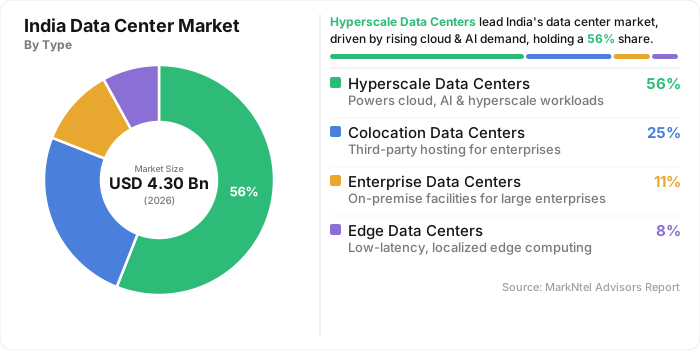
- Hyperscale data centers account for an estimated 56% of 2026 market value, leading the market by type.
- By component, hardware dominates the market with an estimated 67% share in 2026.
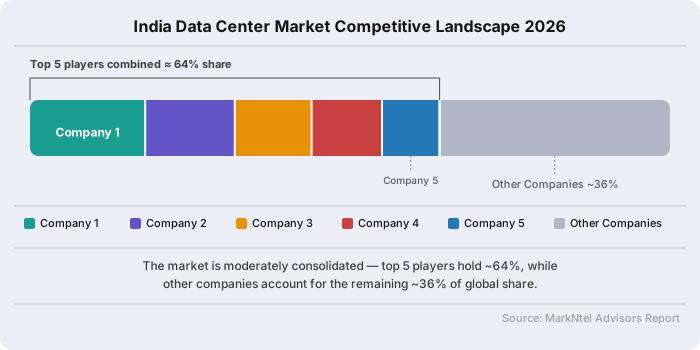
- The market is moderately consolidated with the top five companies together accounting for an estimated 64% of 2026 market revenue.
India Data Center Market Size and Outlook
The data center market in India was valued at an estimated USD 3.88 billion in 2025, is expected to reach USD 4.30 billion in 2026, and is projected at approximately USD 7.92 billion by 2032, representing a CAGR of 10.73% during 2026–2032.
Market growth is supported by India’s expanding digital-user base, increasing cloud adoption, rising data consumption, and the growing compute requirements of artificial intelligence and other data-intensive applications. Enterprises, hyperscale cloud providers, digital platforms, financial institutions, telecom operators, and government organizations are consequently requiring greater access to scalable, secure, and low-latency computing infrastructure.
This demand is translating into substantial capacity expansion. India’s operational IT-load inventory is estimated at 1,123 MW as of H1 2025, and its third-party data-center capacity is expected to double from around 1,250 MW in March 2025 to approximately 2,500 MW by March 2028. The growing installed base is expected to generate revenue not only from new infrastructure and facility commissioning but also from colocation, managed services, maintenance, software, connectivity, and equipment replacement.
However, the pace at which announced capacity becomes commercially operational will depend on power availability, grid-connection timelines, suitable land, financing, and project execution. Commissioned capacity is expected to grow materially; hardware intensity is expected to remain elevated as operators construct AI-ready facilities, while increasing supply and competition are likely to moderate pricing gains. Together, these conditions support sustained double-digit growth for the data center market in India through 2032.
India Data Center Market Key Indicators
- The Telecom Regulatory Authority of India (TRAI) recorded approximately 1.03 billion internet subscribers as of December 2025, while 5G data usage reached 29,094 petabytes during the corresponding quarter. The expanding volume and intensity of digital consumption are increasing requirements for cloud infrastructure, content delivery, data storage and low-latency processing.
- India’s cellular machine-to-machine connections increased from 103.48 million in November 2025 to 109.19 million in December 2025, as per Ministry of Communications data. The rapid expansion of connected devices across manufacturing, transportation, utilities and other industries is generating higher volumes of continuously processed data, supporting demand for distributed and edge data-center capacity.
- Investment Information and Credit Rating Agency (ICRA) estimated that approximately USD 10.5 billion of investment would be required to reach the expected 2,500 MW third-party data-center capacity by March 2028. The capital intensity indicates substantial demand for land, electrical infrastructure, cooling systems, servers, networking equipment and construction services, while also highlighting the financing and execution requirements associated with bringing new capacity online.
India Data Center Market Scope
| Category | Segments |
|---|---|
| By Type | Enterprise Data Centers, Colocation Data Centers, Edge Data Centers, Hyperscale Data Centers |
| By Component | Hardware, Software, Services |
| By Size | Small Data Centers, Mid-Size Data Centers, Large Data Centers |
| By Tier | Tier 1 and 2, Tier 3, Tier 4 |
| By End User | BSFI, Government, IT & Telecom, Media & Entertainment, Manufacturing, Others |
India Data Center Market Growth Drivers
Expanding Cloud Adoption and Advanced Workloads Driving Data Center Demand
The increasing adoption of cloud computing, artificial intelligence, digital platforms and data-intensive enterprise applications is driving the expansion of the India data center market. Enterprises across BFSI, manufacturing, telecommunications, retail, government and IT services are moving critical workloads from captive infrastructure to scalable cloud and colocation environments. Simultaneously, AI training and inference require substantially greater computing density, high-speed networking, data storage, power availability and advanced cooling compared with conventional enterprise workloads. These requirements increase both the volume of data-center capacity demanded and the infrastructure value associated with each commissioned megawatt.
This demand is translating into large-scale deployment of technically advanced facilities. In February 2025, Yotta Data Services committed more than 9,216 advanced GPUs to the IndiaAI Mission through its Shakti Cloud platform, including 8,192 NVIDIA H100 and 1,024 NVIDIA L40S GPUs. The capacity is hosted at Yotta’s operational NM1 campus in Navi Mumbai and is intended to provide on-demand computing access to enterprises, startups, researchers and public-sector users. Such deployments generate demand for high-density servers, liquid cooling, electrical distribution, storage and network infrastructure while expanding consumption-based AI-cloud and managed-service revenue. Consequently, enterprise cloud migration and production-scale AI adoption are expected to support sustained growth across hyperscale, colocation and data-center infrastructure services through 2032.
Recent Trends
AI-Ready Infrastructure and Advanced Cooling Technologies Gaining Traction
The India data center industry is witnessing a shift from conventional enterprise infrastructure toward facilities designed for high-density artificial-intelligence and high-performance-computing workloads. GPU-based systems generate substantially more heat and consume considerably more power per rack than traditional servers, increasing the requirement for liquid cooling, high-capacity power distribution, reinforced floor designs, and intelligent infrastructure monitoring. Consequently, operators are incorporating AI readiness into new facilities rather than treating it solely as a future retrofit requirement.
This transition is reflected in Equinix’s CN1 data center in Chennai, which became operational in September 2025. Developed with an initial investment of USD 69 million, the facility opened with 800 cabinets and is designed to accommodate approximately 4,250 cabinets at full build-out. CN1 is purpose-built to support advanced liquid-cooling solutions and high-density computing workloads while providing software-defined interconnection services. This demonstrates that AI-ready design is progressing from announced intent to commercially operational infrastructure. As compute density increases, a greater proportion of market value is expected to migrate toward specialized cooling, power-management systems, high-speed networking and premium colocation services.
India Data Center Market Opportunities and Challenges
Rising Power and Water Requirements Create Infrastructure Constraints While Driving Sustainable Data Center Opportunities
India’s expanding data-center industry faces structural constraints arising from its intensive and continuous requirements for electricity, water and suitable urban land. According to the Council on Energy, Environment and Water, data centers accounted for approximately 0.5% of India’s electricity consumption and around 150 billion liters of annual water use in 2025, with both expected to more than double by 2030. Large facilities also require redundant grid connections and backup systems, which can increase development costs and delay commissioning in capacity-constrained locations.
At the same time, these constraints are creating opportunities for renewable-power procurement, energy storage, high-efficiency cooling and intelligent resource management. In July 2025, Nxtra by Airtel signed a power-wheeling agreement with AMPIN Energy Transition for 125.65 MW of solar-wind hybrid capacity, increasing the The arrangement demonstrates how operators are securing dedicated clean-energy supply to reduce grid dependence and support expanding data-center loads. Providers that combine long-term renewable contracts with liquid cooling, closed-loop water systems and workload-based energy management can improve operating economics, reduce resource intensity and differentiate their facilities among hyperscale and enterprise customers.
Segmentation Insights
Hyperscale Data Centers Dominated with an Estimated 56% Share by Value in 2026
Hyperscale data centers lead the market because cloud providers, large digital platforms and AI-service companies require multi-megawatt capacity, high-density computing environments, scalable power infrastructure and direct access to multiple network and cloud ecosystems. Compared with enterprise and edge facilities, hyperscale campuses involve considerably higher expenditure on servers, storage, networking, electrical systems and cooling infrastructure, alongside recurring revenue from colocation, interconnection and facility-management services.
The scale of third-party infrastructure being developed for such workloads supports the segment’s dominance. STT GDC India’s AI-ready Kolkata facility, launched in March 2025, expanded the company’s national footprint to 30 data centers across 10 cities, with approximately 400 MW of total IT-load capacity. Its location in New Town provides enterprises, hyperscale cloud providers and government organizations with access to scalable capacity outside India’s largest established hubs. At the same time, edge data centers are expected to grow faster through 2032 as 5G, industrial IoT and latency-sensitive applications increase demand for processing closer to end users, although their smaller facility size limits their current revenue contribution. Based on type, the market is segmented into:
- Enterprise Data Centers
- Colocation Data Centers
- Edge Data Centers
- Hyperscale Data Centers
Hardware Emerged as the Largest Segment with an Estimated 67% Share in 2026
Hardware dominates the market because each new facility or capacity expansion requires substantial upfront expenditure on servers, storage systems, networking equipment, racks, uninterruptible power supplies, switchgear, generators, cooling systems and physical-security infrastructure. The increasing deployment of AI and high-performance-computing workloads further raises hardware intensity through GPU servers, high-speed network fabrics, liquid-cooling equipment and higher-capacity electrical distribution systems. Consequently, hardware captures a larger share of revenue during India’s current infrastructure-development phase than software or recurring services.
STT GDC India’s Chennai expansion illustrates this capital-intensive build cycle. In February 2026, the company made the first 7.2 MW phase of its 45 MW AI-ready Siruseri facility operational, while its combined development potential in Chennai reached approximately 130 MW. Bringing such capacity online requires integrated investment across computing, power, cooling, monitoring and connectivity infrastructure. At the same time, services represent the second-largest component and are expected to increase their contribution as the installed base expands, generating recurring revenue from colocation, operations, maintenance, migration and managed infrastructure. Based on component, the market is segmented into:
- Hardware
- Software
- Services
India Data Center Industry Competitive Analysis
The India data center market is moderately concentrated, with the top five operators, STT GDC India, NTT Global Data Centers India, CtrlS Datacenters, Nxtra Data Ltd., and Sify Technologies Ltd., accounting for an estimated 64% of market revenue in 2026.
Key Companies in the India Data Center Market
- STT GDC India
- NTT Global Data Centers India
- CtrlS Datacenters Ltd.
- Nxtra Data Ltd.
- Sify Technologies Ltd.
- Yotta Data Services
- Pi Datacenters Pvt. Ltd.
- Princeton Digital Group
- CapitaLand Data Centre
- Equinix India
- Others
India Data Center Industry News and Recent Developments
-
June 2026 | CtrlS Secured an ~USD 730 million Investment Commitment from CPP Investments
CPP Investments committed up to USD 730 million to support CtrlS Datacenters’ expansion in India. The transaction comprises approximately USD 420 million for an 8.2% equity stake and approximately USD 310 million intended to establish a hyperscale data-center joint venture.
Impact analysis: The commitment strengthens CtrlS’s ability to finance capital-intensive hyperscale and AI-ready campuses, potentially accelerating capacity development and intensifying competition for large cloud and enterprise customers, suitable land, power and technical talent.
-
April 2026 | Equinix Opened its MB3 International Business Exchange Data Center in Mumbai
Equinix launched MB3 in Chandivali as its fourth International Business Exchange data center in Mumbai. Developed with an initial investment exceeding USD 95 million, the facility opened with approximately 1,370 cabinets and is designed to accommodate around 5,475 cabinets at full build-out.
Impact analysis: MB3 expands Equinix’s interconnected Mumbai campus and increases commercially available capacity in India’s largest data-center hub. Its integration with Equinix’s cloud, network and enterprise ecosystem strengthens the company’s position in hybrid-multicloud, interconnection and high-performance-computing deployments.
-
March 2026 | Airtel Announced a USD 1 Billion Investment in Nxtra Data
Bharti Airtel announced a USD 1 billion investment in Nxtra, led by Alpha Wave Global, Carlyle and Anchorage Capital, with Airtel continuing to retain a controlling stake. The transaction remained subject to regulatory approvals at the time of announcement.
Impact analysis: The funding provides Nxtra with additional capital to expand its national data-center platform. Moreover, Nxtra’s integration with Airtel’s fiber and connectivity infrastructure could strengthen competition for cloud, content and enterprise workloads.
Frequently Asked Questions
- Market Segmentation
- Introduction
- Product Definition
- Research Process
- Assumptions
- Executive Summary
- India Data Center Installed Capacity & Demand-Supply Analysis
- India Data Center Project Pipeline Analysis
- India Data Center Power & Energy Analysis
- India Data Center Market Policies, Regulations, and Product Standards
- India Data Center Market Trends & Developments
- India Data Center Market Dynamics
- Growth Factors
- Challenges
- India Data Center Market Hotspot & Opportunities
- India Data Center Market Outlook, 2022-2032
- Market Size & Outlook
- By Revenues (USD Million)
- Market Segmentation & Outlook
- By Type- Market Size & Forecast 2022-2032, USD Million
- Enterprise Data Centers
- Colocation Data Centers
- Edge Data Centers
- Hyperscale Data Centers
- By Component- Market Size & Forecast 2022-2032, USD Million
- Hardware
- Software
- Services
- By Size- Market Size & Forecast 2022-2032, USD Million
- Small Data Centers
- Mid-Size Data Centers
- Large Data Centers
- By Tier- Market Size & Forecast 2022-2032, USD Million
- Tier 1 and 2
- Tier 3
- Tier 4
- By End User- Market Size & Forecast 2022-2032, USD Million
- BSFI
- Government
- IT & Telecom
- Media & Entertainment
- Manufacturing
- Others
- By City- Market Size & Forecast 2022-2032, USD Million
- Bangalore
- Chennai
- Hyderabad
- Mumbai
- NCR
- Pune
- Rest of India
- By Company
- Competition Characteristics
- Market Share & Analysis
- By Type- Market Size & Forecast 2022-2032, USD Million
- Market Size & Outlook
- India Enterprise Data Center Market Outlook, 2022-2032
- Market Size & Outlook
- By Revenues (USD Million)
- Market Share & Outlook
- By Component- Market Size & Forecast 2022-2032, USD Million
- By Size- Market Size & Forecast 2022-2032, USD Million
- By Tier- Market Size & Forecast 2022-2032, USD Million
- By End User- Market Size & Forecast 2022-2032, USD Million
- By City- Market Size & Forecast 2022-2032, USD Million
- Market Size & Outlook
- India Colocation Data Center Market Outlook, 2022-2032
- Market Size & Outlook
- By Revenues (USD Million)
- Market Share & Outlook
- By Component- Market Size & Forecast 2022-2032, USD Million
- By Size- Market Size & Forecast 2022-2032, USD Million
- By Tier- Market Size & Forecast 2022-2032, USD Million
- By End User- Market Size & Forecast 2022-2032, USD Million
- By City- Market Size & Forecast 2022-2032, USD Million
- Market Size & Outlook
- India Edge Data Center Market Outlook, 2022-2032
- Market Size & Outlook
- By Revenues (USD Million)
- Market Share & Outlook
- By Component- Market Size & Forecast 2022-2032, USD Million
- By Size- Market Size & Forecast 2022-2032, USD Million
- By Tier- Market Size & Forecast 2022-2032, USD Million
- By End User- Market Size & Forecast 2022-2032, USD Million
- By City- Market Size & Forecast 2022-2032, USD Million
- Market Size & Outlook
- India Hyperscale Data Center Market Outlook, 2022-2032
- Market Size & Outlook
- By Revenues (USD Million)
- Market Share & Outlook
- By Component- Market Size & Forecast 2022-2032, USD Million
- By Size- Market Size & Forecast 2022-2032, USD Million
- By Tier- Market Size & Forecast 2022-2032, USD Million
- By End User- Market Size & Forecast 2022-2032, USD Million
- By City- Market Size & Forecast 2022-2032, USD Million
- Market Size & Outlook
- India Data Center Market Key Strategic Imperatives for Success & Growth
- Competitive Outlook
- Company Profiles
- STT GDC India
- Business Description
- Product Portfolio
- Collaborations & Alliances
- Recent Developments
- Financial Details
- Others
- NTT Global Data Centers India
- Business Description
- Product Portfolio
- Collaborations & Alliances
- Recent Developments
- Financial Details
- Others
- CtrlS Datacenters Ltd.
- Business Description
- Product Portfolio
- Collaborations & Alliances
- Recent Developments
- Financial Details
- Others
- Nxtra Data Ltd.
- Business Description
- Product Portfolio
- Collaborations & Alliances
- Recent Developments
- Financial Details
- Others
- Sify Technologies Ltd.
- Business Description
- Product Portfolio
- Collaborations & Alliances
- Recent Developments
- Financial Details
- Others
- Yotta Data Services
- Business Description
- Product Portfolio
- Collaborations & Alliances
- Recent Developments
- Financial Details
- Others
- Pi Datacenters Pvt. Ltd.
- Business Description
- Product Portfolio
- Collaborations & Alliances
- Recent Developments
- Financial Details
- Others
- Princeton Digital Group
- Business Description
- Product Portfolio
- Collaborations & Alliances
- Recent Developments
- Financial Details
- Others
- CapitaLand Data Centre
- Business Description
- Product Portfolio
- Collaborations & Alliances
- Recent Developments
- Financial Details
- Others
- Equinix India
- Business Description
- Product Portfolio
- Collaborations & Alliances
- Recent Developments
- Financial Details
- Others
- Others
- STT GDC India
- Company Profiles
- Disclaimer
MarkNtel Advisors follows a robust and iterative research methodology designed to ensure maximum accuracy and minimize deviation in market estimates and forecasts. Our approach combines both bottom-up and top-down techniques to effectively segment and quantify various aspects of the market. A consistent feature across all our research reports is data triangulation, which examines the market from three distinct perspectives to validate findings. Key components of our research process include:
1. Scope & Research Design At the outset, MarkNtel Advisors define the research objectives and formulate pertinent questions. This phase involves determining the type of research—qualitative or quantitative—and designing a methodology that outlines data collection methods, target demographics, and analytical tools. They also establish timelines and budgets to ensure the research aligns with client goals.
2. Sample Selection and Data Collection In this stage, the firm identifies the target audience and determines the appropriate sample size to ensure representativeness. They employ various sampling methods, such as random or stratified sampling, based on the research objectives. Data collection is carried out using tools like surveys, interviews, and observations, ensuring the gathered data is reliable and relevant.
3. Data Analysis and Validation Once data is collected, MarkNtel Advisors undertake a rigorous analysis process. This includes cleaning the data to remove inconsistencies, employing statistical software for quantitative analysis, and thematic analysis for qualitative data. Validation steps are taken to ensure the accuracy and reliability of the findings, minimizing biases and errors.

4. Data Forecast and FinalizationThe final phase involves forecasting future market trends based on the analyzed data. MarkNtel Advisors utilize predictive modeling and time series analysis to anticipate market behaviors. The insights are then compiled into comprehensive reports, featuring visual aids like charts and graphs, and include strategic recommendations to inform client decision-making
We offer flexible licensing options to cater to varying organizational needs. Choose the pricing pack that best suits your requirements:
Buy Now Inquire Before Buying
 Request Customization
 Talk to our Consultant







