

By Product Type (Energy Drinks, Sports Drinks, Fortified Juice, Dairy and Dairy Alternative Beverages, Functional/Fortified Water, Other Functional Beverages), By Functionality (Energy and Alertness,... ... ergy and Alertness, Sports Performance and Recovery, Hydration and Electrolyte Replenishment, Digestive and Gut Health, Immunity Support, Protein, Satiety and Weight Management, Cognitive Performance and Focus, Relaxation, Sleep and Stress Management, Heart and Metabolic Health, Bone and Joint Health, Beauty, Skin and Healthy Aging, General Wellness and Multibenefit, Other Functionalities), By Distribution Channel (On-Trade, Off-Trade), By Packaging Type (Bottles (PET and Other Plastic Bottles, Glass Bottles), Cans, Cartons and Aseptic Packs, Pouches and Flexible Packs, Other Packaging Formats), By Sugar Content (Regular, Reduced/Low-Sugar, Sugar-Free/Zero-Sugar), and others Read more
- Food & Beverages
- Aug 2026
- 125
- PDF, Excel, PPT
Saudi Arabia Functional Beverage Market Key Takeaways
- Saudi Arabia functional beverage market size was valued at USD 47 billion in 2025 and is projected to grow from USD 51 billion in 2026 to USD 63 billion by 2032.
- The industry is projected to reflect sustained growth at a steady CAGR of 3.58% during 2026-2032.
- By product type, energy drinks hold a significant share of about 50% in 2026.
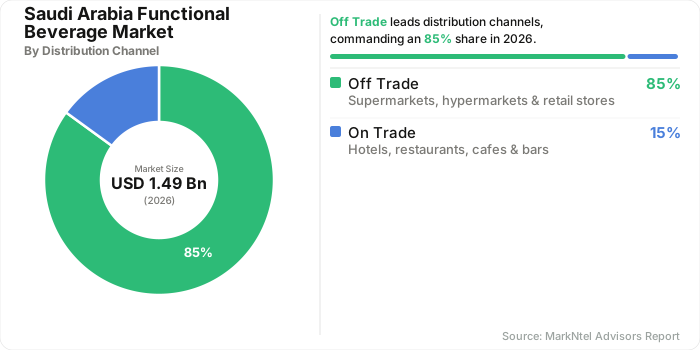
- By distribution channel, off-trade seized a significant share of about 85% in 2026.
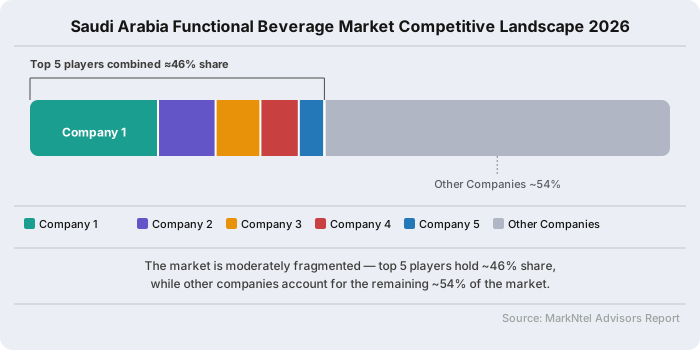
- The industry is moderately fragmented. However, the top five players collectively account for nearly 46% share.
Saudi Arabia Functional Beverage Market Size and Outlook
The functional beverage market size in Saudi Arabia was valued at USD 47 billion in 2025 and is projected to grow from USD 51 billion in 2026 to USD 63 billion by 2032. Along with this, the market is estimated to grow at a CAGR of around 3.58% during the forecast period, i.e., 2026-32.
The market is expected to maintain strong growth over the coming years, supported by rising health awareness, government-led nutrition policies, and increasing participation in fitness and recreational activities under Vision 2030. Consumers are steadily shifting from conventional sugary soft drinks toward beverages offering hydration, energy, immunity, digestive health, and protein benefits. This transition is encouraging manufacturers to expand portfolios with low-sugar, electrolyte-enriched, probiotic, and vitamin-fortified drinks that address evolving wellness preferences.
A major catalyst for future market expansion is Saudi Arabia’s regulatory focus on healthier consumption. Effective from 1 January 2026, the Zakat, Tax and Customs Authority (ZATCA) introduced a tiered excise tax on sweetened beverages based on sugar content, replacing the previous flat 50% tax. The policy incentivizes manufacturers to reformulate products with lower sugar levels while encouraging consumers to choose healthier beverage options. In parallel, the Saudi Food and Drug Authority (SFDA) implemented new nutrition regulations from July 2025, including mandatory caffeine-content disclosure and enhanced nutritional labeling, further improving consumer transparency and supporting demand for functional beverages.
The market outlook is also reinforced by Saudi Arabia's expanding sports ecosystem. According to government announcements, national sports participation increased from 13% to 48% under Vision 2030 initiatives, creating greater demand for sports drinks, electrolyte beverages, and protein-based recovery products among both professional athletes and recreational consumers. Growing investments in gyms, sporting events, and active lifestyles are expected to broaden the consumer base for performance-focused beverages. Combined with product innovation, premiumization, and wider retail and e-commerce availability, these structural trends position Saudi Arabia's functional beverage market for sustained long-term growth.
Saudi Arabia Functional Beverage Market Key Indicators
- Saudi Arabia's growing burden of lifestyle diseases is accelerating demand for functional beverages. According to the General Authority for Statistics (GASTAT), 23.1% of adults (15+) were obese, and 45.1% were overweight in 2024, while only 10.2% consumed the recommended five daily servings of fruits and vegetables. In response, the Ministry of Health actively promotes reducing sugary drink consumption and adopting healthier diets. These health concerns are encouraging consumers to shift from conventional soft drinks to functional beverages enriched with vitamins, probiotics, protein, electrolytes, and botanical ingredients, prompting manufacturers to expand wellness-focused product portfolios and driving sustained market growth.
- Saudi Arabia’s prolonged hot climate creates a structural need for hydration-focused functional beverages. According to the National Center for Meteorology (NCM), historical records show that Jeddah recorded the Kingdom’s highest maximum temperature of 52°C in June 2010, while Al-Ahsa reached 51.3°C in July 2024. NCM also forecasts above-normal summer temperatures across several regions, with increases of up to 1.5°C–1.6°C above average during 2026. These extreme heat conditions increase fluid and electrolyte loss among consumers, supporting demand for electrolyte drinks, functional waters, and sports hydration beverages beyond seasonal consumption patterns.
- Saudi Arabia's Zakat, Tax and Customs Authority currently applies a 50% excise tax on soft drinks and 100% on energy drinks, and from January 1, 2026, taxation shifts to a graduated, sugar-content-based system replacing the flat 50% rate. Higher, more complex tax tiers raise retail prices and compliance costs across nearly every functional beverage sub-category, directly compressing volumes and squeezing margins for both multinational and local manufacturers operating in the space.
Saudi Arabia Functional Beverage Market Scope
| Category | Segments |
|---|---|
| By Product Type | Energy Drinks, Sports Drinks, Fortified Juice, Dairy and Dairy Alternative Beverages, Functional/Fortified Water, Other Functional Beverages |
| By Functionality | Energy and Alertness, Sports Performance and Recovery, Hydration and Electrolyte Replenishment, Digestive and Gut Health, Immunity Support, Protein, Satiety and Weight Management, Cognitive Performance and Focus, Relaxation, Sleep and Stress Management, Heart and Metabolic Health, Bone and Joint Health, Beauty, Skin and Healthy Aging, General Wellness and Multibenefit, Other Functionalities |
| By Distribution Channel | On-Trade, Off-Trade |
| By Packaging Type | Bottles (PET and Other Plastic Bottles, Glass Bottles), Cans, Cartons and Aseptic Packs, Pouches and Flexible Packs, Other Packaging Formats |
| By Sugar Content | Regular, Reduced/Low-Sugar, Sugar-Free/Zero-Sugar |
Saudi Arabia Functional Beverage Market Growth Drivers
Expanding Fitness and Sports Culture Driving Functional Beverage Demand
The rapid expansion of fitness and sports culture is becoming a key driver of the Saudi Arabia functional beverage industry by creating greater demand for beverages that support hydration, endurance, energy, and post-workout recovery. According to the Sports for All Federation (SFA) Annual Report 2024, Sports for All Domes attracted more than 110,000 participants during 2024, reflecting growing engagement in community sports and physical activity across Saudi Arabia. Furthermore, the Saudi Press Agency (SPA) reported that the 2025 Riyadh Marathon attracted a record 40,494 runners from 131 countries, demonstrating the Kingdom's expanding participation in recreational and endurance sports.
Consumer consumption patterns already reflect this opportunity. A national study based on the 2021 Sharik Diet and Health National Survey, published in 2023, analyzed 3,928 Saudi adults and found that 30% consumed energy drinks at least once a week, including 17.0% consuming them 1–2 times weekly, 8.7% consuming them 3–4 times weekly, and 4.4% consuming them five or more times per week. The study also reported higher consumption among younger adults and males, indicating a strong consumer base for performance-focused beverages.
Reflecting this growing demand, iPRO Hydrate entered the Saudi market in 2025 through a partnership with Al Rabie Saudi Foods Company, expanding distribution to more than 21,000 retail outlets across the Kingdom. The company identified Saudi Arabia's expanding sports participation and Vision 2030 initiatives as key factors supporting its market entry. Looking beyond 2025, continued investments in sports infrastructure, community fitness programs, and preparations for the 2034 FIFA World Cup are expected to further increase participation in physical activity and stimulate demand for functional beverages.
The expansion of Saudi Arabia's fitness ecosystem is increasing consumption occasions for energy, hydration, and recovery beverages. As sports participation continues to grow under Vision 2030, demand for functional beverages is expected to strengthen, creating sustained opportunities for product innovation and market expansion.
Recent Trends
Rising Demand for Health-Oriented Beverages Amid Changing Consumer Preferences
Rising health and wellness awareness is reshaping the Saudi Arabia functional beverage market as consumers increasingly seek beverages that offer benefits beyond basic hydration, including immunity support, digestive health, energy, and nutritional enhancement. This shift is supported by Saudi Arabia’s Health Sector Transformation Program under Vision 2030, which focuses on preventive healthcare, healthier lifestyles, and improving population well-being through awareness programs and lifestyle interventions.
Government policies are further accelerating the shift toward healthier beverage consumption. According to KPMG Saudi Arabia, the Kingdom will implement a four-tier excise tax system on sweetened beverages from 1 January 2026, replacing the previous 50% excise tax on retail selling prices. Under the revised system, sugar-free beverages and products containing less than 5 grams of sugar per 100 ml will incur USD 0 per litre tax, while beverages containing 5–7.99 grams of sugar per 100 ml will face approximately USD 0.21 per litre, and those with 8 grams or more per 100 ml will be taxed at approximately USD 0.29 per litre. This framework encourages manufacturers to reformulate products and expand healthier functional beverage offerings.
The growing emphasis on preventive health and healthier consumption patterns is accelerating the shift from conventional soft drinks toward functional beverages. As government initiatives and taxation policies encourage healthier formulations, functional beverage adoption is expected to strengthen across Saudi Arabia.
Saudi Arabia Functional Beverage Market Opportunities and Challenges
Stringent Sugar Reduction Regulations Creating Opportunities for Low-Sugar Functional Beverage Innovation
Saudi Arabia's tightening sugar reduction regulations are emerging as a significant challenge for the functional beverage industry, requiring manufacturers to reformulate products while maintaining taste, functionality, and affordability. The Saudi government has approved amendments to the Excise Tax Law that will introduce a four-tier sugar-content-based excise tax from 1 January 2026, replacing the previous 50% flat excise tax on sweetened beverages.
Under the revised framework, sugar-free beverages and drinks containing less than 5 g of sugar per 100 ml will incur no excise tax, while beverages containing 5–7.99 g of sugar per 100 ml will be taxed at SAR 0.79 (USD 0.21) per litre, and those with 8 g or more per 100 ml will be taxed at SAR 1.09 (USD 0.29) per litre. These stricter thresholds increase compliance and reformulation costs, compelling manufacturers to reduce sugar content, invest in product innovation, and redesign formulations to remain price competitive in the Saudi market.
However, these regulations are creating opportunities for innovation in low-sugar and naturally sweetened functional beverages. Manufacturers are increasingly investing in healthier formulations using natural ingredients to comply with evolving regulations and meet consumer demand. A notable example is the December 2024 launch of Milaf Cola by Thurath Al-Madinah, a subsidiary of Saudi Arabia's Public Investment Fund (PIF). Marketed as the world's first date-based cola with no added sugar, the beverage uses locally sourced dates as a natural sweetener, supporting Vision 2030's goals of healthier food innovation and domestic manufacturing.
Such product innovation is expected to accelerate the development and adoption of clean-label, naturally sweetened functional beverages, strengthening long-term market growth in Saudi Arabia. As regulatory standards and health-conscious consumption continue to evolve, this challenge is likely to become a key catalyst for sustainable growth in the Saudi Arabian functional beverage market.
Segmentation Insights
Energy Drinks Account for Around 50% of Functional Beverage Sales in Saudi Arabia
Energy drinks are estimated to account for nearly 50% of Saudi Arabia's functional beverage market revenue in 2026, making them the largest product segment. The category benefits from the Kingdom's predominantly young population, rising disposable incomes, and increasing demand for convenient energy-boosting beverages among students, office workers, fitness enthusiasts, and esports participants. Strong retail penetration across supermarkets, convenience stores, petrol stations, and e-commerce platforms has further expanded accessibility. Leading brands such as Red Bull, Monster Energy, and Code Red continue to strengthen their presence through premium offerings and sugar-free variants.
In response to Saudi Arabia's sugar-content-based excise tax introduced in January 2026, manufacturers have accelerated the launch of low- and zero-sugar energy drinks, helping sustain consumer demand while complying with health regulations. Growing participation in sports and fitness activities under Vision 2030 further supports consumption, reinforcing energy drinks' dominant position within the Saudi functional beverage market. Based on product type, the scope has been segmented into
- Energy Drinks
- Sports Drinks
- Fortified Juice
- Dairy and Dairy Alternative Beverages
- Functional/Fortified Water
- Other Functional Beverages
Off-Trade Accounts for Approximately 85% of Saudi Arabia Functional Beverage Sales
Off-trade holds the dominant position in the Saudi Arabia functional beverage market, accounting for an estimated 85% of total revenue in 2026. The segment is supported by the country's well-developed modern retail infrastructure, including supermarket and hypermarket chains such as Panda Retail, Carrefour Saudi Arabia, Lulu Hypermarket, Danube, and Tamimi Markets, which offer extensive product assortments, promotional pricing, and nationwide accessibility. Convenience stores and petrol station outlets further strengthen sales by driving impulse purchases of energy and sports drinks.
In addition, Saudi Arabia's rapidly expanding e-commerce sector has increased online availability of functional beverages through platforms such as Jahez, Nana, and supermarket delivery apps. Consumers also prefer purchasing beverages in bulk for home, workplace, and fitness consumption, benefiting from discounts and wider brand choices available through retail channels. These factors collectively reinforce off-trade as the primary sales channel for functional beverages across the Kingdom. Based on distribution channel, the market is categorized into
- On-Trade
- Off-Trade
Saudi Arabia Functional Beverage Market Competitive Analysis
The Saudi Arabia functional beverage market is moderately fragmented. The top five players collectively account for approximately 46% of the market, led by PepsiCo, Inc., The Coca-Cola Company, Red Bull GmbH, Monster Beverage Corporation, and Suntory Beverage & Food Ltd.
Major Companies in Saudi Arabia Functional Beverage Industry
- PepsiCo, Inc.
- The Coca-Cola Company
- Red Bull GmbH
- Monster Beverage Corporation
- Suntory Beverage & Food Ltd.
- Nestlé S.A.
- Danone S.A.
- Otsuka Holdings Co., Ltd.
- HELL Energy
- Saudi Food & Fine Chemicals Co.
- Others
Saudi Arabia Functional Beverage Industry News and Recent Developments:
2026: Posca Hydrate Makes GCC Functional Hydration Debut at Gulfood
Posca Hydrate introduced its functional hydration beverage to the GCC market at Gulfood 2026, targeting consumers seeking hydration, gut health, and clean-label nutrition. The beverage is formulated with electrolytes, prebiotics, and halal-certified grape vinegar and is positioned as a zero-sugar functional drink. The GCC launch creates availability opportunities for markets such as Saudi Arabia, where demand for hydration and wellness beverages is expanding.
Impact Analysis: The launch of Posca Hydrate strengthens the functional hydration segment in the GCC by introducing a beverage combining electrolytes, prebiotics, and clean-label positioning. Its entry highlights increasing category diversification beyond traditional energy drinks toward specialized hydration and gut-health solutions. For Saudi Arabia, the launch can encourage wider consumer adoption of zero-sugar functional beverages and stimulate competition among brands targeting wellness-focused consumers.
2025: Kold Kombucha Introduces Fermented Functional Beverage Concept in Saudi Arabia
Kold Kombucha opened in Alkhobar in June 2025, introducing locally brewed kombucha as a functional fermented beverage category in Saudi Arabia. The brand produces kombucha through an 11-day fermentation process and offers flavors priced around USD 6–7 per bottle, reflecting growing interest in gut-health-oriented beverages
Impact Analysis: Kold Kombucha’s launch supports the emergence of fermented functional beverages in Saudi Arabia, introducing consumers to probiotic-focused drinks associated with digestive wellness. The locally produced kombucha expands the market beyond conventional energy and hydration categories while encouraging innovation in gut-health beverages. Its presence may drive greater acceptance of niche functional beverage formats and encourage local manufacturers to explore fermented and wellness-oriented product categories.
- Market Segmentation
- Introduction
- Product Definition
- Research Process
- Assumptions
- Executive Summary
- Saudi Arabia Functional Beverage Market Policies, Regulations, and Product Standards
- Saudi Arabia Functional Beverage Market Production Trend 2022-2032
- Saudi Arabia Functional Beverage Market Production Trend By Type of Product
- Energy Drinks
- Sports Drinks
- Fortified Juice
- Dairy and Dairy Alternative Beverages
- Functional/Fortified Water
- Other Functional Beverages
- Company-Wise Production Plants and Statistics
- Installed Production Capacity
- Actual Production
- Planned Production Target
- Saudi Arabia Functional Beverage Market Production Trend By Type of Product
- Saudi Arabia Functional Beverage Market Pricing Analysis 2022-2032
- Saudi Arabia Functional Beverage Market Pricing Trend (USD/Liters) 2022-2032
- Saudi Arabia Functional Beverage Market Pricing Trend (USD/Liters) By Regions 2022-2032
- Central
- Western
- Eastern
- Southern
- Northern
- Saudi Arabia Functional Beverages Market Pricing Trend (USD/Liters) By Product Type 2022-2032
- Energy Drinks
- Sports Drinks
- Fortified Juice
- Dairy and Dairy Alternative Beverages
- Functional/Fortified Water
- Other Functional Beverages
- Saudi Arabia Functional Beverage Market Trends & Developments
- Saudi Arabia Functional Beverage Market Dynamics
- Growth Factors
- Challenges
- Saudi Arabia Functional Beverage Market Hotspot & Opportunities
- Saudi Arabia Functional Beverage Market Outlook, 2022-2032F
- Market Size & Outlook
- By Revenues (USD Million)
- By Quantity Sold (Thousand Liters)
- Market Segmentation & Outlook
- By Product Type- Market Size & Forecast 2022-2032, USD Million & Thousand Liters
- Energy Drinks
- Sports Drinks
- Fortified Juice
- Dairy and Dairy Alternative Beverages
- Functional/Fortified Water
- Other Functional Beverages
- By Functionality- Market Size & Forecast 2022-2032, USD Million & Thousand Liters
- Energy and Alertness
- Sports Performance and Recovery
- Hydration and Electrolyte Replenishment
- Digestive and Gut Health
- Immunity Support
- Protein, Satiety and Weight Management
- Cognitive Performance and Focus
- Relaxation, Sleep and Stress Management
- Heart and Metabolic Health
- Bone and Joint Health
- Beauty, Skin and Healthy Aging
- General Wellness and Multibenefit
- Other Functionalities
- By Distribution Channel- Market Size & Forecast 2022-2032, USD Million & Thousand Liters
- On-Trade
- Off-Trade
- By Packaging Type- Market Size & Forecast 2022-2032, USD Million & Thousand Liters
- Bottles
- PET and Other Plastic Bottles
- Glass Bottles
- Cans
- Cartons and Aseptic Packs
- Pouches and Flexible Packs
- Other Packaging Formats
- Bottles
- By Sugar Content- Market Size & Forecast 2022-2032, USD Million & Thousand Liters
- Regular
- Reduced/Low-Sugar
- Sugar-Free/Zero-Sugar
- By Region- Market Size & Forecast 2022-2032, USD Million & Thousand Liters
- Central
- Western
- Eastern
- Southern
- Northern
- By Company
- Competition Characteristics
- Market Share & Analysis
- By Product Type- Market Size & Forecast 2022-2032, USD Million & Thousand Liters
- Market Size & Outlook
- Saudi Arabia Energy Drinks Market Outlook, 2022-2032
- Market Size & Outlook
- By Revenues (USD Million)
- By Quantity Sold (Thousand Liters)
- Market Segmentation & Outlook
- By Function- Market Size & Forecast 2022-2032, USD Million & Thousand Liters
- By Distribution Channel- Market Size & Forecast 2022-2032, USD Million & Thousand Liters
- By Packaging Type- Market Size & Forecast 2022-2032, USD Million & Thousand Liters
- By Region- Market Size & Forecast 2022-2032, USD Million & Thousand Liters
- Market Size & Outlook
- Saudi Arabia Sports Drinks Market Outlook, 2022-2032
- Market Size & Outlook
- By Revenues (USD Million)
- By Quantity Sold (Thousand Liters)
- Market Segmentation & Outlook
- By Function- Market Size & Forecast 2022-2032, USD Million & Thousand Liters
- By Distribution Channel- Market Size & Forecast 2022-2032, USD Million & Thousand Liters
- By Packaging Type- Market Size & Forecast 2022-2032, USD Million & Thousand Liters
- By Region- Market Size & Forecast 2022-2032, USD Million & Thousand Liters
- Market Size & Outlook
- Saudi Arabia Fortified Juice Market Outlook, 2022-2032
- Market Size & Outlook
- By Revenues (USD Million)
- By Quantity Sold (Thousand Liters)
- Market Segmentation & Outlook
- By Function- Market Size & Forecast 2022-2032, USD Million & Thousand Liters
- By Distribution Channel- Market Size & Forecast 2022-2032, USD Million & Thousand Liters
- By Packaging Type- Market Size & Forecast 2022-2032, USD Million & Thousand Liters
- By Region- Market Size & Forecast 2022-2032, USD Million & Thousand Liters
- Market Size & Outlook
- Saudi Arabia Dairy and Dairy Alternative Beverages Market Outlook, 2022-2032
- Market Size & Outlook
- By Revenues (USD Million)
- By Quantity Sold (Thousand Liters)
- Market Segmentation & Outlook
- By Function- Market Size & Forecast 2022-2032, USD Million & Thousand Liters
- By Distribution Channel- Market Size & Forecast 2022-2032, USD Million & Thousand Liters
- By Packaging Type- Market Size & Forecast 2022-2032, USD Million & Thousand Liters
- By Region- Market Size & Forecast 2022-2032, USD Million & Thousand Liters
- Market Size & Outlook
- Saudi Arabia Functional/Fortified Water Market Outlook, 2022-2032
- Market Size & Outlook
- By Revenues (USD Million)
- By Quantity Sold (Thousand Liters)
- Market Segmentation & Outlook
- By Function- Market Size & Forecast 2022-2032, USD Million & Thousand Liters
- By Distribution Channel- Market Size & Forecast 2022-2032, USD Million & Thousand Liters
- By Packaging Type- Market Size & Forecast 2022-2032, USD Million & Thousand Liters
- By Region- Market Size & Forecast 2022-2032, USD Million & Thousand Liters
- Market Size & Outlook
- Saudi Arabia Functional Beverage Market Key Strategic Imperatives for Success & Growth
- Competitive Outlook
- Company Profiles
- PepsiCo, Inc.
- Business Description
- Product Portfolio
- Collaborations & Alliances
- Recent Developments
- Financial Details
- Others
- The Coca-Cola Company
- Business Description
- Product Portfolio
- Collaborations & Alliances
- Recent Developments
- Financial Details
- Others
- Red Bull GmbH
- Business Description
- Product Portfolio
- Collaborations & Alliances
- Recent Developments
- Financial Details
- Others
- Monster Beverage Corporation
- Business Description
- Product Portfolio
- Collaborations & Alliances
- Recent Developments
- Financial Details
- Others
- Suntory Beverage & Food Ltd.
- Business Description
- Product Portfolio
- Collaborations & Alliances
- Recent Developments
- Financial Details
- Others
- Nestlé S.A.
- Business Description
- Product Portfolio
- Collaborations & Alliances
- Recent Developments
- Financial Details
- Others
- Danone S.A.
- Business Description
- Product Portfolio
- Collaborations & Alliances
- Recent Developments
- Financial Details
- Others
- Otsuka Holdings Co., Ltd.
- Business Description
- Product Portfolio
- Collaborations & Alliances
- Recent Developments
- Financial Details
- Others
- HELL Energy
- Business Description
- Product Portfolio
- Collaborations & Alliances
- Recent Developments
- Financial Details
- Others
- Saudi Food & Fine Chemicals Co.
- Business Description
- Product Portfolio
- Collaborations & Alliances
- Recent Developments
- Financial Details
- Others
- Others
- PepsiCo, Inc.
- Company Profiles
- Disclaimer

MarkNtel Advisors follows a robust and iterative research methodology designed to ensure maximum accuracy and minimize deviation in market estimates and forecasts. Our approach combines both bottom-up and top-down techniques to effectively segment and quantify various aspects of the market. A consistent feature across all our research reports is data triangulation, which examines the market from three distinct perspectives to validate findings. Key components of our research process include:
1. Scope & Research Design At the outset, MarkNtel Advisors define the research objectives and formulate pertinent questions. This phase involves determining the type of research—qualitative or quantitative—and designing a methodology that outlines data collection methods, target demographics, and analytical tools. They also establish timelines and budgets to ensure the research aligns with client goals.
2. Sample Selection and Data Collection In this stage, the firm identifies the target audience and determines the appropriate sample size to ensure representativeness. They employ various sampling methods, such as random or stratified sampling, based on the research objectives. Data collection is carried out using tools like surveys, interviews, and observations, ensuring the gathered data is reliable and relevant.
3. Data Analysis and Validation Once data is collected, MarkNtel Advisors undertake a rigorous analysis process. This includes cleaning the data to remove inconsistencies, employing statistical software for quantitative analysis, and thematic analysis for qualitative data. Validation steps are taken to ensure the accuracy and reliability of the findings, minimizing biases and errors.

4. Data Forecast and FinalizationThe final phase involves forecasting future market trends based on the analyzed data. MarkNtel Advisors utilize predictive modeling and time series analysis to anticipate market behaviors. The insights are then compiled into comprehensive reports, featuring visual aids like charts and graphs, and include strategic recommendations to inform client decision-making
We’d love to understand what matters most to you.