

South Africa Meat Substitutes Market Research Report: Growth Drivers & Forecast (2026-2032)
By Source (Soy, Pea, Wheat, Mycoprotein, Other Plant Sources), By Product Type (Tofu, Tempeh, Seitan, Textured Plant Protein Products (TVP-based), Other Meat Substitute Products), ... By Form (Frozen, Refrigerated, Shelf-Stable), By Distribution Channel (Supermarkets & Hypermarkets, Convenience Stores, Specialty Stores, Online Retail, Foodservice, Other Retail Channels) Read more
- Food & Beverages
- Aug 2026
- Pages 160
- Report Format: PDF, Excel, PPT
South Africa Meat Substitutes Market
Projected 13.45% CAGR from 2026 to 2032
Study Period
2026-2032
Market Size (2026)
USD 18.45 Million
Market Size (2032)
USD 39.34 Million
Base Year
2025
Projected CAGR
13.45%
Leading Segments
By Source: Soy
South Africa Meat Substitutes Market Key Takeaways
- The South Africa meat substitutes market stood at around USD 16.26 million in 2025 and is anticipated to expand from USD 18.45 million in 2026 to USD 39.34 million by 2032, reflecting a CAGR of 13.45% over the forecast period.
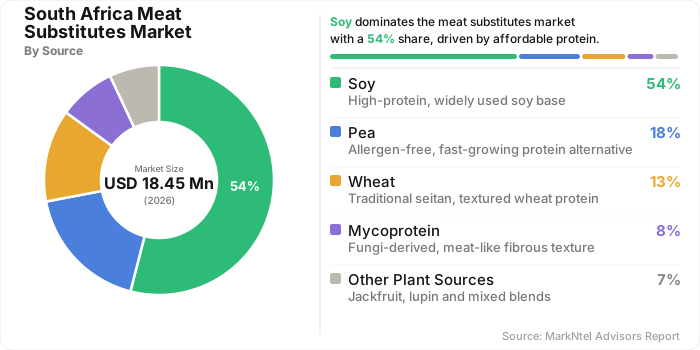
- Soy held nearly 54% share of the source segment in 2026, supported by South Africa's large domestic soybean supply base.
- Frozen products accounted for approximately 61% share of the market by form in 2026.
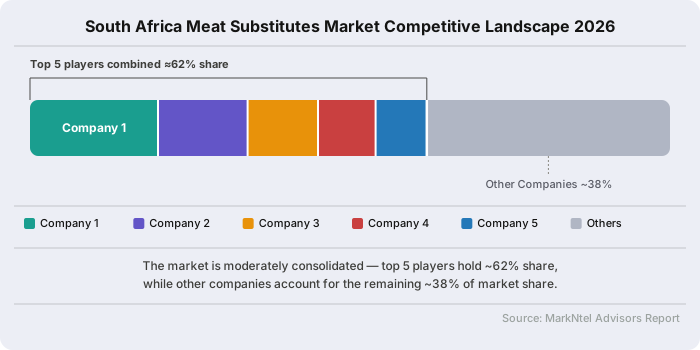
- The industry is moderately consolidated, with the top five leading players accounting for approximately 62% of the total market share.
South Africa Meat Substitutes Market Size and Outlook
The meat substitutes market in South Africa was valued at USD 16.26 million in 2025 and is anticipated to expand from USD 18.45 million in 2026 to USD 39.34 million by 2032, registering a CAGR of 13.45% during the forecast period (2026–2032).
The market is witnessing steady growth, driven by changing dietary preferences, rising health awareness, and increasing demand for sustainable protein alternatives. The growing prevalence of non-communicable diseases (NCDs) has encouraged consumers to adopt healthier eating habits and reduce their dependence on conventional meat products. According to Statistics South Africa, deaths from major non-communicable diseases, including cardiovascular disease, cancer, diabetes, and chronic respiratory disease, increased by 58.7% over two decades, rising from 103,428 in 1997 to 164,205 in 2018. This growing health burden has accelerated consumer interest in plant-based diets and functional food products that support long-term wellness.
The market is also benefiting from the rising adoption of flexitarian lifestyles, where consumers are reducing meat consumption without completely eliminating animal products from their diets. As a result, meat substitutes are transitioning from a niche vegan offering to a mainstream food category, supported by expanding retail availability, continuous innovation in taste and texture, and increasing product variety across supermarkets and foodservice channels.
Furthermore, the implementation of formal plant-based meat product regulations from July 2026 is expected to improve product standardization, labeling clarity, and consumer confidence, creating a more structured and transparent marketplace. Combined with increasing retail penetration, ongoing product innovation, and growing consumer acceptance of alternative proteins, these factors are expected to support the long-term expansion of the South Africa meat substitutes market throughout the forecast period.
South Africa Meat Substitutes Market Key Indicators
- South Africa's soybean harvest topped 2.7 million tonnes in 2024/25, making the country self-sufficient in soybean meal (DALRRD). This reliable, cost-competitive local feedstock gives manufacturers an input-cost edge over imported pea, wheat, or mycoprotein, reinforcing soy's lead.
- World Bank data puts South Africa's urban population at 69.3% of the total in 2024. Urban households have greater, more consistent access to supermarkets and hypermarkets where meat substitutes are mainly sold, concentrating category growth around metro retail networks.
South Africa Meat Substitutes Market Scope
| Category | Segments |
|---|---|
| By Source | Soy, Pea, Wheat, Mycoprotein, Other Plant Sources |
| By Product Type | Tofu, Tempeh, Seitan, Textured Plant Protein Products (TVP-based), Other Meat Substitute Products |
| By Form | Frozen, Refrigerated, Shelf-Stable |
| By Distribution Channel | Supermarkets & Hypermarkets, Convenience Stores, Specialty Stores, Online Retail, Foodservice, Other Retail Channels |
South Africa Meat Substitutes Market Growth Drivers
Rising Consumer Health-Consciousness Toward Reduced Meat Consumption
South Africa's high burden of diet-related illnesses is increasingly becoming a personal concern rather than an abstract public health issue, extending well beyond older or already diagnosed patients. The National Strategic Plan for the prevention and control of non-communicable diseases, published by the National Department of Health, reports that 31.3% of South African females aged 15–19 are overweight or obese, compared with 9.6% of males in the same age group, highlighting that lifestyle-related health risks are emerging from adolescence onward. As these health challenges become more visible across households and generations, consumers are proactively modifying their everyday diets, including reducing conventional meat consumption in favor of healthier protein alternatives.
This shift in dietary behavior is translating into higher demand for meat substitutes, as consumers seek plant-based protein options that align with healthier eating habits without requiring a complete lifestyle change. Because this motivation is rooted in ongoing personal health management rather than a one-off ethical stance, it encourages repeat rather than trial-only purchasing. Rising consumer health-consciousness is therefore not just expanding the buyer base but embedding meat substitutes as a recurring, habitual part of everyday South African diets.
Recent Trends
Growing Adoption of Flexitarian-Targeted Product Lines
Meat substitutes in South Africa have traditionally been marketed primarily to vegan and vegetarian consumers, with product positioning centered on ethical, environmental, and animal welfare considerations. This positioning is now evolving as manufacturers increasingly develop product lines designed for meat-eaters who want to reduce meat consumption gradually rather than eliminate it altogether. By repositioning alternative protein as a practical and mainstream dietary choice, companies are expanding the category's appeal to the country's growing flexitarian consumer base.
This strategic shift is becoming increasingly evident through new product launches tailored specifically to flexitarian consumers. In August 2025, Fry's Family Foods introduced its "Flexi Range", featuring products such as Pea Protein Mince, Homestyle No-Chick'n Burgers, and Southern Fried Strips, specifically developed for flexitarians and launched through Checkers and Pick n Pay stores in KwaZulu-Natal and the Western Cape. As more manufacturers adopt similar flexitarian-focused product strategies, plant-based meat products are becoming increasingly integrated into everyday dietary choices, expanding category penetration, broadening the consumer base, and supporting sustained long-term market growth.
South Africa Meat Substitutes Market Opportunities and Challenges
Stricter Meat Analogue Regulations Leading to Expanded Access Across Institutional, Foodservice, and Retail Channels
South Africa's meat substitute manufacturers now face a formal compliance deadline governing product composition as well as labeling. Government Notice R6436 of 2025, gazetted by the Department of Agriculture, Land Reform and Rural Development on 18 July 2025 and effective from July 2026, requires products marketed using terms such as "meat substitute," "meat replacer," or "meat alternative" to comply with standardized compositional requirements, including a minimum protein content of 9%. Manufacturers whose existing formulations do not meet these standards must reformulate within the 12-month implementation window or risk fines under the Foodstuffs, Cosmetics and Disinfectants Act, and losing the right to use standardized product descriptions altogether.
While these requirements introduce real compliance costs, they also establish a nationally recognized framework for meat analogue products, improving consistency in product composition, identity, and labeling across the category. Standardized requirements enable retailers, foodservice operators, and institutional buyers to evaluate products against a common benchmark, reducing the uncertainty previously associated with unregulated product claims. As manufacturers align their formulations with these standards and invest in compliant plant-based protein products, they are better positioned for broader commercial distribution, turning the compliance burden into a foundation for expanded presence across organized retail, foodservice, and institutional procurement channels.
Segmentation Insights
Soy Holds 54% Share of the Source Segment, Anchored by South Africa's Domestic Supply Advantage
Soy's dominance in South Africa's meat substitutes market is underpinned by a structural advantage in raw material availability and production economics rather than simply being an established ingredient. South Africa is one of Africa's leading soybean producers and is largely self-sufficient in soybean meal, providing manufacturers with a reliable domestic supply of soy protein that imported alternatives such as pea protein, wheat protein, and mycoprotein cannot consistently match. This reliable supply not only reduces raw material costs and import dependency but also enables manufacturers to maintain stable production while meeting the growing demand for meat analogue products across both retail and foodservice channels.
Beyond its supply advantage, soy also offers well-established functional properties that make it particularly suitable for large-scale commercial production. Textured soy protein remains one of the most widely used ingredients in meat analogues because it delivers a fibrous meat-like texture, strong water-binding capacity, and consistent processing performance at a competitive cost. While pea protein is gradually gaining traction through premium and flexitarian-focused product launches, soy continues to retain its leadership by combining domestic availability, cost efficiency, and proven functionality, allowing manufacturers to scale production while maintaining competitive pricing. Based on source, the market has been segmented into:
- Soy
- Pea
- Wheat
- Mycoprotein
- Other Plant Sources
Frozen Holds 61% Share of the Form Segment, supported by Extended Shelf Life and Centralized Nationwide Distribution
Frozen products dominate South Africa's meat substitutes market because they provide the shelf life and distribution flexibility required to support nationwide commercial operations. Most manufacturers operate centralized production facilities that distribute products across multiple provinces, making product stability during transportation and storage an essential requirement rather than a logistical preference. Frozen products, typically stored at −18°C to −25°C, can be preserved for several months while maintaining product quality, enabling manufacturers and retailers to optimize inventory management, reduce spoilage, and improve supply chain efficiency.
These advantages become increasingly important as manufacturers continue expanding their distribution networks beyond major metropolitan areas. Unlike refrigerated products, which generally require continuous storage at 0°C to 5°C and have a considerably shorter shelf life, frozen products provide greater flexibility for long-distance transportation and extended retail storage. This makes the frozen format particularly well suited to centralized manufacturing models, where products are distributed nationwide before reaching consumers. As organized retail networks continue to expand and distribution footprints widen, frozen products remain the preferred format for preserving product quality, supporting efficient inventory management, and ensuring reliable product availability across the country. Based on form, the market is categorized into:
- Frozen
- Refrigerated
- Shelf-Stable
South Africa Meat Substitutes Market Competitive Analysis
A moderately consolidated competitive landscape characterizes the South Africa meat substitutes market, with companies competing through local manufacturing scale, retail distribution breadth, product reformulation to meet new compositional standards, and strategic retail partnerships. The top five players Fry's Family Food Co. (Pty) Ltd., Woolworths Holdings Limited, Quorn Foods Limited, Beyond Meat, Inc., and Vivera B.V. collectively account for an estimated 62% of the market.
Key Players of Meat Substitutes in South Africa
- The Fry Family Food Co. (Pty) Ltd.
- Quorn Foods Limited
- Beyond Meat, Inc.
- Impossible Foods Inc.
- Vivera B.V. (incl. The Vegetarian Butcher)
- VBites Foods Limited
- Nature's Choice (Pty) Ltd.
- Herbivorous (Pty) Ltd.
- Woolworths Holdings Limited
- On The Greenside
- Others
South Africa Meat Substitutes Industry News and Recent Developments
September 2025: Vivera Completes Acquisition of The Vegetarian Butcher from Unilever
Vivera, the Netherlands-based plant-based meat company owned by JBS, completed its acquisition of The Vegetarian Butcher from Unilever on 1 September 2025. The acquisition combines Vivera's retail and private-label manufacturing capabilities with The Vegetarian Butcher's strong foodservice presence across more than 55 markets, strengthening its global plant-based meat portfolio.
Impact Analysis: The acquisition enhances Vivera's product development and manufacturing capabilities while strengthening its presence across retail and foodservice channels. For South Africa, the combined expertise is expected to accelerate the introduction of innovative plant-based meat products and intensify competition among leading market participants.
Frequently Asked Questions
- Market Segmentation
- Introduction
- Product Definition
- Research Process
- Assumptions
- Executive Summary
- South Africa Meat Substitutes Market Policies, Regulations, and Product Standards
- South Africa Meat Substitutes Market Trends & Developments
- South Africa Meat Substitutes Market Dynamics
- Growth Factors
- Challenges
- South Africa Meat Substitutes Market Hotspot & Opportunities
- South Africa Meat Substitutes Market Outlook, 2022-2032F
- Market Size & Outlook
- By Revenues (USD Million)
- By Volume (Thousand Tons)
- Market Segmentation & Outlook
- By Source- Market Size & Forecast 2022-2032, USD Million & Thousand Tons
- Soy
- Pea
- Wheat
- Mycoprotein
- Other Plant Sources
- By Product Type- Market Size & Forecast 2022-2032, USD Million & Thousand Tons
- Tofu
- Tempeh
- Seitan
- Textured Plant Protein Products (TVP-based)
- Other Meat Substitute Products
- By Form- Market Size & Forecast 2022-2032, USD Million & Thousand Tons
- Frozen
- Refrigerated
- Shelf-Stable
- By Distribution Channel- Market Size & Forecast 2022-2032, USD Million & Thousand Tons
- Supermarkets & Hypermarkets
- Convenience Stores
- Specialty Stores
- Online Retail
- Foodservice
- Other Retail Channels
- By Company
- Competition Characteristics
- Market Share & Analysis
- By Source- Market Size & Forecast 2022-2032, USD Million & Thousand Tons
- Market Size & Outlook
- South Africa Tofu Meat Substitute Market Outlook, 2022-2032
- Market Size & Outlook
- By Revenues (USD Million)
- By Volume (Thousand Tons)
- Market Segmentation & Outlook
- By Product Type- Market Size & Forecast 2022-2032, USD Million & Thousand Tons
- By Form- Market Size & Forecast 2022-2032, USD Million & Thousand Tons
- By Distribution Channel- Market Size & Forecast 2022-2032, USD Million & Thousand Tons
- Market Size & Outlook
- South Africa Tempeh Meat Substitute Market Outlook, 2022-2032
- Market Size & Outlook
- By Revenues (USD Million)
- By Volume (Thousand Tons)
- Market Segmentation & Outlook
- By Product Type- Market Size & Forecast 2022-2032, USD Million & Thousand Tons
- By Form- Market Size & Forecast 2022-2032, USD Million & Thousand Tons
- By Distribution Channel- Market Size & Forecast 2022-2032, USD Million & Thousand Tons
- Market Size & Outlook
- South Africa Seitan Meat Substitute Market Outlook, 2022-2032
- Market Size & Outlook
- By Revenues (USD Million)
- By Volume (Thousand Tons)
- Market Segmentation & Outlook
- By Product Type- Market Size & Forecast 2022-2032, USD Million & Thousand Tons
- By Form- Market Size & Forecast 2022-2032, USD Million & Thousand Tons
- By Distribution Channel- Market Size & Forecast 2022-2032, USD Million & Thousand Tons
- Market Size & Outlook
- South Africa Textured Plant Protein Products (TVP-based) Meat Substitute Market Outlook, 2022-2032
- Market Size & Outlook
- By Revenues (USD Million)
- By Volume (Thousand Tons)
- Market Segmentation & Outlook
- By Product Type- Market Size & Forecast 2022-2032, USD Million & Thousand Tons
- By Form- Market Size & Forecast 2022-2032, USD Million & Thousand Tons
- By Distribution Channel- Market Size & Forecast 2022-2032, USD Million & Thousand Tons
- Market Size & Outlook
- South Africa Meat Substitutes Market Key Strategic Imperatives for Success & Growth
- Competitive Outlook
- Company Profiles
- The Fry Family Food Co. (Pty) Ltd.
- Business Description
- Product Portfolio
- Collaborations & Alliances
- Recent Developments
- Financial Details
- Others
- Quorn Foods Limited
- Business Description
- Product Portfolio
- Collaborations & Alliances
- Recent Developments
- Financial Details
- Others
- Beyond Meat, Inc.
- Business Description
- Product Portfolio
- Collaborations & Alliances
- Recent Developments
- Financial Details
- Others
- Impossible Foods Inc.
- Business Description
- Product Portfolio
- Collaborations & Alliances
- Recent Developments
- Financial Details
- Others
- Vivera B.V. (including The Vegetarian Butcher)
- Business Description
- Product Portfolio
- Collaborations & Alliances
- Recent Developments
- Financial Details
- Others
- VBites Foods Limited
- Business Description
- Product Portfolio
- Collaborations & Alliances
- Recent Developments
- Financial Details
- Others
- Nature's Choice (Pty) Ltd.
- Business Description
- Product Portfolio
- Collaborations & Alliances
- Recent Developments
- Financial Details
- Others
- Herbivorous (Pty) Ltd.
- Business Description
- Product Portfolio
- Collaborations & Alliances
- Recent Developments
- Financial Details
- Others
- Woolworths Holdings Limited
- Business Description
- Product Portfolio
- Collaborations & Alliances
- Recent Developments
- Financial Details
- Others
- On The Greenside
- Business Description
- Product Portfolio
- Collaborations & Alliances
- Recent Developments
- Financial Details
- Others
- The Fry Family Food Co. (Pty) Ltd.
- Company Profiles
- Disclaimer
MarkNtel Advisors follows a robust and iterative research methodology designed to ensure maximum accuracy and minimize deviation in market estimates and forecasts. Our approach combines both bottom-up and top-down techniques to effectively segment and quantify various aspects of the market. A consistent feature across all our research reports is data triangulation, which examines the market from three distinct perspectives to validate findings. Key components of our research process include:
1. Scope & Research Design At the outset, MarkNtel Advisors define the research objectives and formulate pertinent questions. This phase involves determining the type of research—qualitative or quantitative—and designing a methodology that outlines data collection methods, target demographics, and analytical tools. They also establish timelines and budgets to ensure the research aligns with client goals.
2. Sample Selection and Data Collection In this stage, the firm identifies the target audience and determines the appropriate sample size to ensure representativeness. They employ various sampling methods, such as random or stratified sampling, based on the research objectives. Data collection is carried out using tools like surveys, interviews, and observations, ensuring the gathered data is reliable and relevant.
3. Data Analysis and Validation Once data is collected, MarkNtel Advisors undertake a rigorous analysis process. This includes cleaning the data to remove inconsistencies, employing statistical software for quantitative analysis, and thematic analysis for qualitative data. Validation steps are taken to ensure the accuracy and reliability of the findings, minimizing biases and errors.

4. Data Forecast and FinalizationThe final phase involves forecasting future market trends based on the analyzed data. MarkNtel Advisors utilize predictive modeling and time series analysis to anticipate market behaviors. The insights are then compiled into comprehensive reports, featuring visual aids like charts and graphs, and include strategic recommendations to inform client decision-making
We offer flexible licensing options to cater to varying organizational needs. Choose the pricing pack that best suits your requirements:
Buy Now Inquire Before Buying
 Request Customization
 Talk to our Consultant







