

By Engine Type (Internal Combustion Engine (ICE), Electric Engine, Alternative Fuel Engine), By Fuel Type (Gasoline, Diesel, Hybrid, Alternative Fuels), By Vehicle Type (Passenger......Cars, Light Commercial Vehicles (LCVs), Heavy Commercial Vehicles (HCVs)), By Engine Capacity (Below 1.0L, 1.0L–2.0L, 2.0L–3.0L, Above 3.0L), By Engine Configuration (In-line Engine, V-type Engine, Opposed Engine), By Sales Channel (OEM, Aftermarket),and others Read more
- FMCG
- May 2026
- 150
- PDF, Excel, PPT
South Korea Sun Care Products Market Key Takeaways
- The South Korea sun care products market size was valued at USD 747 million in 2025, growing from USD 805 million in 2026 to USD 995 million by 2032.
- The industry is projected to register sustainable growth at a CAGR of 3.59% during the forecast period, i.e., 2026-32.
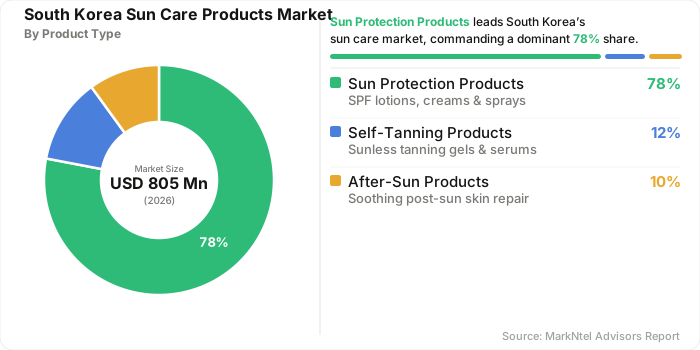
- By product type, sun protection products account for approximately 78% of the total market share.
- In terms of form, lotions and creams hold around 48% share in 2026.
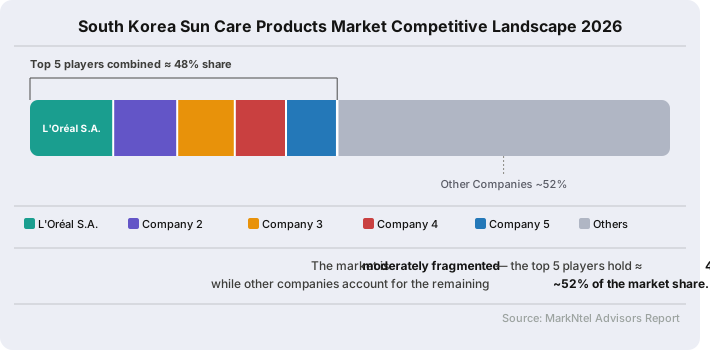
- The competitive landscape is moderately fragmented, with the top five players collectively holding nearly 48% share, indicating a balanced mix of global leaders and domestic competitors.
South Korea Sun Care Products Market Size and Outlook
The South Korea sun care products market is expected to witness a steady CAGR of 3.59% during 2026-32, supported by consistent demand fundamentals. Additionally, the growth is primarily driven by increasing skin cancer awareness and preventive skincare adoption, as consumers increasingly prioritize daily protection against ultraviolet exposure, positioning sunscreen as an essential component within evolving skincare routines across urban and younger consumer groups.
Regulatory activity continues to reflect strong innovation momentum within the category. According to the Ministry of Food and Drug Safety and the National Institute of Food and Drug Safety Evaluation, 572 functional cosmetic cases were evaluated in H1 2024, with UV-filter products accounting for 169 cases , highlighting commercialization activity in dermatologist-tested sunscreen categories requiring pre-market validation and compliance approvals before launch across domestic and international markets, strengthening regulatory-led product quality standards significantly worldwide.
Simultaneously, evolving regulatory pressures on chemical UV filters are accelerating demand for safer alternatives and formulation advancements. For instance, Dear, Klairs introduced “All-day Airy Mineral Sunscreen,” a zinc oxide-based SPF50+ PA++++ product, reflecting the adoption of mineral sunscreen zinc oxide solutions aligned with clean-label, low-irritation, and environmentally conscious consumer preferences , further strengthening premium positioning and differentiation across competitive skincare segments globally with rising export demand consistently across major markets worldwide.
Furthermore, expanding production capabilities and rising global demand are strengthening long-term growth potential across the South Korea sun care products industry, which is projected to grow from USD 805 million in 2026 to USD 995 million by 2032. In 2026, Kolmar Korea announced a smart factory expansion following reshoring certification to enhance high-value sunscreen manufacturing and exports, while its collaboration exceeded 100 million cumulative units, highlighting global scalability. Similarly, the WHO launched upgraded SunSmart UV tools to enhance global awareness and preventive sun protection behavior, supporting sustained expansion and innovation within the industry.
South Korea Sun Care Products Market Key Indicators
- South Korea’s cosmetics sector continues to strengthen its global footprint, with exports reaching USD 10.2 billion in 2024, marking a 20.3% increase from USD 8.46 billion in 2023, as reported by the Ministry of Food and Drug Safety. This export momentum is supported by the expansion of e-commerce skincare, enabling wider cross-border accessibility and sustained category penetration.
- A significant demographic transition is shaping consumption dynamics, as South Korea officially entered a super-aged phase in 2025, with over 10,514,000 individuals aged 65 and above, representing nearly 20.3% of the population. This aging trend is accelerating the demand for sun care products, particularly driven by awareness of premature aging due to UV exposure and preventive skincare adoption.
- Tourism recovery is playing a pivotal role in boosting retail consumption, with 16.37 million international visitors recorded in 2024, a 48.4% increase year-over-year, as highlighted by the Korea Tourism Organization. This rising tourist exposure aligns with growing outdoor lifestyle trends, encouraging higher on-the-go sunscreen purchases and travel-friendly product formats.
- Urban concentration remains a defining structural factor, with approximately 81% of South Korea’s population residing in urban areas in 2024, based on data from the World Bank. Such dense urban living environments are reinforcing the sun care products demand, as urbanization continues to rise, driven by pollution exposure, lifestyle awareness, and easier access to premium dermatological solutions.
- South Korea’s digital ecosystem is significantly influencing beauty purchasing behavior, with 93.4% social media penetration in 2025 and influencer marketing spend projected at USD 489 million. Additionally, 86% of women browse social platforms before purchases, strengthening urban skincare demand through digitally driven product awareness, trend adoption, and informed consumer decision-making across skincare categories.
South Korea Sun Care Products Market Scope
| Category | Segments |
|---|---|
| By Engine Type | Internal Combustion Engine (ICE), Electric Engine, Alternative Fuel Engine |
| By Fuel Type | Gasoline, Diesel, Hybrid, Alternative Fuels |
| By Vehicle Type | Passenger Cars, Light Commercial Vehicles (LCVs), Heavy Commercial Vehicles (HCVs |
| By Engine Capacity | Below 1.0L, 1.0L–2.0L, 2.0L–3.0L, Above 3.0L |
| By Engine Configuration | In-line Engine, V-type Engine, Opposed Engine |
| By Sales Channel | OEM, Aftermarket |
South Korea Sun Care Products Market Growth Drivers
High UV Risk and Preventive Skincare Awareness
Elevated ultraviolet exposure levels are emerging as a structural growth driver for the South Korea sun care products market. According to global UV classification standards, Seoul recorded UV Index levels between 10 and 12, categorized as “Very High” to “Extreme,” necessitating consistent SPF protection and accelerating rising UV radiation levels across urban populations .
Alongside environmental exposure, the rising burden of UV-linked health conditions is significantly influencing consumer behavior. Data from the Korea Central Cancer Registry indicates a sharp increase in skin cancer incidence from 1,255 to 8,778 cases, strengthening increasing skin cancer awareness and encouraging preventive skincare adoption for regular sunscreen usage habits.
Moreover, clinical guidance is playing an important role in shaping product preferences and daily skincare routines. The growing influence of dermatology recommendations for sunscreen is reinforcing consumer trust in scientifically validated formulations, particularly those offering broad-spectrum protection, anti-photoaging benefits, and long-lasting efficacy suited for prolonged UV exposure conditions.
Collectively, the convergence of environmental intensity, medical awareness, and expert endorsement is transforming sunscreen into a daily essential across demographics. This shift is further supported by men’s grooming sun care, ensuring sustained expansion of the South Korea sun care products landscape through diversified demand and increasing adoption among broader consumer segments.
Recent Trends
Personalized Skincare and Hybrid Formulations
Customization in sun care is emerging as a defining trend in the South Korea sun care products market, driven by demand for targeted solutions addressing sensitivity, acne, dryness, and barrier damage. Brands are prioritizing sunscreen for sensitive skin, incorporating calming ingredients and lightweight textures to ensure compatibility with reactive skin types.
In 2024, product innovation accelerated as companies introduced dermatology-aligned formulations tailored to specific skin concerns. For instance, Dongwha Pharmaceutical launched a zinc-based sunscreen designed for trouble-prone skin, reflecting the growing adoption of dermatologist-tested sunscreen solutions with anti-inflammatory and sebum-regulating properties for enhanced daily usability for South Korea consumers.
Simultaneously, multifunctionality is becoming central to product development, with brands offering multifunctional SPF moisturizer products combining hydration, UV protection, and barrier repair. The integration of ingredients such as ceramides, centella asiatica, and probiotics enhances tolerability, supporting daily application and aligning with evolving skincare routines focused on simplicity and effectiveness.
The convergence of personalization, ingredient innovation, and clinical validation is reshaping consumer expectations. This shift, further supported by hybrid sunscreen formulations, is driving premiumization and sustained evolution within the South Korea sun care products industry as brands continue advancing targeted, high-performance sun care solutions.
South Korea Sun Care Products Market Opportunities and Challenges
Regulatory Pressure on Chemical Filters, Unlocking Hybrid Formulation Advancements
A key constraint affecting the South Korea sun care products market is the intensifying regulatory challenges, as cosmetics are linked to global scrutiny of conventional UV filters. In 2025, European authorities raised safety concerns around benzophenone-based ingredients, increasing compliance burdens for exporters and requiring reformulation, additional testing, and extended approval timelines across international markets globally.
The evolving consumer preferences are amplifying formulation complexities across the industry landscape. Rising chemical vs mineral sunscreen concerns are influencing purchasing behavior, as consumers increasingly prefer safer alternatives. This shift is further complicated by SPF misconceptions among consumers, necessitating stronger education strategies and transparent communication to support informed decision-making.
These regulatory pressures are unlocking innovation-driven opportunities within the competitive market landscape. For instance, Kolmar Korea introduced its “UV-DUO PLUS” technology, representing advanced hybrid sunscreen formulations that combine organic and inorganic filters to enhance spreadability, reduce white cast, and improve long-wave UVA protection performance across premium product categories globally.
These regulatory constraints and innovation capabilities are reshaping competitive dynamics, further supported by premium dermatology brands expanding through global platforms such as KCON LA and overseas retail channels, ensuring sustained advancement of the South Korea sun care products industry through continuous product innovation and international market penetration strategies.
Segmentation Insights
Sun Protection Products Lead with Strong Daily Usage Demand
Sun protection products dominate the South Korea sun care products market, accounting for approximately 78% of total revenue, reflecting their essential role in daily skincare and preventive health practices. This dominance is driven by strong demand for sun protection products, supported by rising UV awareness and consistent daily usage across urban consumers.
In comparison, after-sun products and self-tanning products maintain relatively limited market penetration due to their narrower functional applications. After-sun products are primarily used for recovery, while self-tanning products remain niche due to cultural preferences, highlighting how preventive skincare outweighs corrective or aesthetic needs in shaping consumer purchasing behavior patterns.
Furthermore, leadership is reinforced by rising demand for SPF 50 sunscreen and advanced formats such as sunscreen lotion, offering convenience and higher efficacy. For instance, DearCloud expanded FDA-certified body sunscreen offerings through Ulta Beauty, reflecting increasing international commercialization and premium positioning of Korean sun care innovations globally .
The functional necessity, continuous innovation, and expanding global presence of sunscreen products ensure sustained dominance, reinforcing long-term growth stability across the South Korea sun care products industry through consistent demand, evolving formulations, and increasing adoption across diverse consumer segments and international markets. By product type, the market is categorized into:
- Sun Protection Products
- After-Sun Products
- Self-Tanning Products
Lotions & Creams Drive South Korea Sun Care Demand
Lotions & creams account for approximately 48% of the South Korea sun care products market, driven by their adaptability across diverse skin types and environmental conditions. Their dominance is reinforced by widespread preference for cream-based formats offering balanced hydration and protection, making them suitable for daily use within evolving skincare routines across urban populations.
Other formats and niche variants cater to specific usage scenarios but remain comparatively limited in mass adoption. Sprays support convenient reapplication, while sunscreen gel formulations appeal to oily skin users seeking lightweight textures. However, these formats lack the comprehensive skincare integration delivered by creams, restricting broader adoption across the general consumer.
Innovation within this segment continues to strengthen its leadership through advanced formulations and dermatology-driven product development. For instance, AESTURA introduced “Derma UV365 Barrier Hydro Mineral Sunscreen,” a moisture-rich cream incorporating ceramides and hyaluronic acid, aligning with rising demand for high SPF sunscreen solutions and barrier-repair formulations suited for sensitive skin.
Collectively, the combination of multifunctionality, skin compatibility, and evolving formulation science ensures the sustained dominance of lotions and creams, reinforcing long-term growth stability across the South Korea sun care products industry through consistent consumer preference and continuous innovation in skincare-integrated sun protection products. The key forms analyzed in the study include:
- Lotions & Creams
- Sprays
- Gels
- Sticks
- Others
South Korea Sun Care Products Market Competitive Analysis
The South Korea sun care products industry is led by key players including Amorepacific Corporation, LG Household & Health Care Co., Ltd., L'Oréal S.A., Kolmar Korea Co., Ltd., and Cosmax Co., Ltd., which collectively account for approximately 48% of the total market share. The market remains moderately fragmented, with a mix of multinational corporations and domestic K-beauty brands competing across price tiers and product innovations. Leading firms dominate premium and export-oriented segments through strong R&D and distribution capabilities, while smaller players and ODMs drive formulation innovation and niche positioning.
Leading Companies in the South Korea Sun Care Products Market
- Amorepacific Corporation
- LG Household & Health Care Co., Ltd.
- Gowoonsesang Cosmetics
- L'Oréal S.A.
- The Estée Lauder Companies Inc.
- Shiseido Company, Limited
- CJ Olive Young
- Chanel Korea Co
- Kolmar Korea Co., Ltd.
- Cosmax Co., Ltd.
- ABLE C&C Co., Ltd.
- Aekyung Industrial Co., Ltd.
- Others
South Korea Sun Care Products Industry News and Recent Developments
May 2025: Samjin Pharmaceutical Launches Simple Log Pink Light Capsule Sun Serum SPF 50+ PA++++
Samjin Pharmaceutical launched the Pink Light Capsule Sun Serum SPF 50+ PA++++ under its vegan skincare brand Simple Log, targeting the summer season. The product contains over 70% moisture content, retaining over 90% hydration after 10 hours, and incorporates a patented marine plant stem cell extract alongside MFDS-notified whitening ingredients. It demonstrated a pigmentation improvement rate of 10.51% and scored a 0.0 irritation index in primary skin irritation tests on sensitive skin, confirming zero-irritation suitability for daily use.
Impact Analysis: Samjin Pharmaceutical's entry into daily sun care through the Simple Log vegan brand, deploying patented marine plant stem cell extract and MFDS-notified whitening actives within an SPF 50+ PA++++ serum, reflects South Korea's pharmaceutical sector's accelerating convergence with functional sun care products development. The product's clinically certified zero-irritation score, 10-hour moisture retention data, and vegan positioning collectively raise the evidence standard for multi-claim sun serums.
September 2025: Jeroncellevain Launches Cellvane PDRN Daily Sunscreen
Jeroncellevain launched the Cellvane PDRN Daily Sunscreen, formulated using its proprietary Prism Technology (Prism-T). The product contains PDRN (polydeoxyribonucleotide), a core bio-material already validated in South Korea's medical and aesthetic fields — alongside 17 types of amino acids and Hyalagen, a proprietary hybrid material combining hyaluronic acid and collagen developed by the company.
Impact Analysis: Jeroncellevain's entry into sun care with a PDRN-based formulation, a biotechnology proven in South Korea's medical aesthetics sector, accelerates the convergence of prescription-grade ingredient science with functional sun care products development, raising the clinical credibility benchmark for premium SPF products. The 70% plastic reduction through FSC-certified paper packaging simultaneously introduces sustainability compliance.
March 2025: Hugel Launches WELLAGE Real Hyaluronic Blue Sunscreen
Hugel launched the WELLAGE Real Hyaluronic Blue Sunscreen under its clinical derma-cosmetics brand WELLAGE, delivering SPF 50+ and PA++++ protection. The product incorporates the same high-purity hyaluronic acid as the brand's flagship Real Hyaluronic Blue 100 Ampoule serum and features HA-AMINOSOME, a patented 12-layer encapsulated moisturising delivery agent.
Impact Analysis: Hugel's extension of its WELLAGE clinical derma-cosmetic brand into sun care, deploying the same high-purity hyaluronic acid platform validated in its ampoule serum, signals that pharmaceutical and aesthetic biotechnology companies are actively converting clinical ingredient credentials. The HA-AMINOSOME patented delivery system and the quantified cooling efficacy of 4.3°C within one minute set a measurable clinical evidence benchmark for multifunctional SPF products, raising competitive pressure on brands advancing formulation claims.
- Market Segmentation
- Introduction
- Product Definition
- Research Process
- Assumptions
- Executive Summary
- Asia Automotive Engines Market Policies, Regulations, and Product Standards
- Asia Automotive Engines Market Trends & Developments
- Asia Automotive Engines Market Dynamics
- Growth Factors
- Challenges
- Asia Automotive Engines Market Hotspot & Opportunities
- Asia Automotive Engines Market Outlook, 2022-2032F
- Market Size & Outlook
- By Revenues (USD Million)
- Market Share & Analysis
- By Engine Type- Market Size & Forecast 2022-2032, USD Million
- Internal Combustion Engine (ICE)
- Electric Engine
- Alternative Fuel Engine
- By Fuel Type- Market Size & Forecast 2022-2032, USD Million
- Gasoline
- Diesel
- Hybrid
- Alternative Fuels
- By Vehicle Type- Market Size & Forecast 2022-2032, USD Million
- Passenger Cars
- Light Commercial Vehicles (LCVs)
- Heavy Commercial Vehicles (HCVs)
- By Engine Capacity- Market Size & Forecast 2022-2032, USD Million
- Below 1.0L
- 1.0L–2.0L
- 2.0L–3.0L
- Above 3.0L
- By Engine Configuration- Market Size & Forecast 2022-2032, USD Million
- In-line Engine
- V-type Engine
- Opposed Engine
- By Sales Channel- Market Size & Forecast 2022-2032, USD Million
- OEM
- Aftermarket
- By Country
- China
- Japan
- South Korea
- India
- Bangladesh
- Indonesia
- Thailand
- Vietnam
- Malaysia
- Saudi Arabia
- Turkey
- By Company
- Competition Characteristics
- Market Share & Analysis
- By Engine Type- Market Size & Forecast 2022-2032, USD Million
- Market Size & Outlook
- China Automotive Engines Market Outlook, 2022-2032F
- Market Size & Outlook
- By Revenues (USD Million)
- Market Share & Analysis
- By Engine Type- Market Size & Forecast 2022-2032, USD Million
- By Fuel Type- Market Size & Forecast 2022-2032, USD Million
- By Vehicle Type- Market Size & Forecast 2022-2032, USD Million
- By Engine Capacity- Market Size & Forecast 2022-2032, USD Million
- By Engine Configuration- Market Size & Forecast 2022-2032, USD Million
- By Sales Channel- Market Size & Forecast 2022-2032, USD Million
- Market Size & Outlook
- Japan Automotive Engines Market Outlook, 2022-2032F
- Market Size & Outlook
- By Revenues (USD Million)
- Market Share & Analysis
- By Engine Type- Market Size & Forecast 2022-2032, USD Million
- By Fuel Type- Market Size & Forecast 2022-2032, USD Million
- By Vehicle Type- Market Size & Forecast 2022-2032, USD Million
- By Engine Capacity- Market Size & Forecast 2022-2032, USD Million
- By Engine Configuration- Market Size & Forecast 2022-2032, USD Million
- By Sales Channel- Market Size & Forecast 2022-2032, USD Million
- Market Size & Outlook
- South Korea Automotive Engines Market Outlook, 2022-2032F
- Market Size & Outlook
- By Revenues (USD Million)
- Market Share & Analysis
- By Engine Type- Market Size & Forecast 2022-2032, USD Million
- By Fuel Type- Market Size & Forecast 2022-2032, USD Million
- By Vehicle Type- Market Size & Forecast 2022-2032, USD Million
- By Engine Capacity- Market Size & Forecast 2022-2032, USD Million
- By Engine Configuration- Market Size & Forecast 2022-2032, USD Million
- By Sales Channel- Market Size & Forecast 2022-2032, USD Million
- Market Size & Outlook
- India Automotive Engines Market Outlook, 2022-2032F
- Market Size & Outlook
- By Revenues (USD Million)
- Market Share & Analysis
- By Engine Type- Market Size & Forecast 2022-2032, USD Million
- By Fuel Type- Market Size & Forecast 2022-2032, USD Million
- By Vehicle Type- Market Size & Forecast 2022-2032, USD Million
- By Engine Capacity- Market Size & Forecast 2022-2032, USD Million
- By Engine Configuration- Market Size & Forecast 2022-2032, USD Million
- By Sales Channel- Market Size & Forecast 2022-2032, USD Million
- Market Size & Outlook
- Bangladesh Automotive Engines Market Outlook, 2022-2032F
- Market Size & Outlook
- By Revenues (USD Million)
- Market Share & Analysis
- By Engine Type- Market Size & Forecast 2022-2032, USD Million
- By Fuel Type- Market Size & Forecast 2022-2032, USD Million
- By Vehicle Type- Market Size & Forecast 2022-2032, USD Million
- By Engine Capacity- Market Size & Forecast 2022-2032, USD Million
- By Engine Configuration- Market Size & Forecast 2022-2032, USD Million
- By Sales Channel- Market Size & Forecast 2022-2032, USD Million
- Market Size & Outlook
- Indonesia Automotive Engines Market Outlook, 2022-2032F
- Market Size & Outlook
- By Revenues (USD Million)
- Market Share & Analysis
- By Engine Type- Market Size & Forecast 2022-2032, USD Million
- By Fuel Type- Market Size & Forecast 2022-2032, USD Million
- By Vehicle Type- Market Size & Forecast 2022-2032, USD Million
- By Engine Capacity- Market Size & Forecast 2022-2032, USD Million
- By Engine Configuration- Market Size & Forecast 2022-2032, USD Million
- By Sales Channel- Market Size & Forecast 2022-2032, USD Million
- Market Size & Outlook
- Thailand Automotive Engines Market Outlook, 2022-2032F
- Market Size & Outlook
- By Revenues (USD Million)
- Market Share & Analysis
- By Engine Type- Market Size & Forecast 2022-2032, USD Million
- By Fuel Type- Market Size & Forecast 2022-2032, USD Million
- By Vehicle Type- Market Size & Forecast 2022-2032, USD Million
- By Engine Capacity- Market Size & Forecast 2022-2032, USD Million
- By Engine Configuration- Market Size & Forecast 2022-2032, USD Million
- By Sales Channel- Market Size & Forecast 2022-2032, USD Million
- Market Size & Outlook
- Vietnam Automotive Engines Market Outlook, 2022-2032F
- Market Size & Outlook
- By Revenues (USD Million)
- Market Share & Analysis
- By Engine Type- Market Size & Forecast 2022-2032, USD Million
- By Fuel Type- Market Size & Forecast 2022-2032, USD Million
- By Vehicle Type- Market Size & Forecast 2022-2032, USD Million
- By Engine Capacity- Market Size & Forecast 2022-2032, USD Million
- By Engine Configuration- Market Size & Forecast 2022-2032, USD Million
- By Sales Channel- Market Size & Forecast 2022-2032, USD Million
- Market Size & Outlook
- Malaysia Automotive Engines Market Outlook, 2022-2032F
- Market Size & Outlook
- By Revenues (USD Million)
- Market Share & Analysis
- By Engine Type- Market Size & Forecast 2022-2032, USD Million
- By Fuel Type- Market Size & Forecast 2022-2032, USD Million
- By Vehicle Type- Market Size & Forecast 2022-2032, USD Million
- By Engine Capacity- Market Size & Forecast 2022-2032, USD Million
- By Engine Configuration- Market Size & Forecast 2022-2032, USD Million
- By Sales Channel- Market Size & Forecast 2022-2032, USD Million
- Market Size & Outlook
- Saudi Arabia Automotive Engines Market Outlook, 2022-2032F
- Market Size & Outlook
- By Revenues (USD Million)
- Market Share & Analysis
- By Engine Type- Market Size & Forecast 2022-2032, USD Million
- By Fuel Type- Market Size & Forecast 2022-2032, USD Million
- By Vehicle Type- Market Size & Forecast 2022-2032, USD Million
- By Engine Capacity- Market Size & Forecast 2022-2032, USD Million
- By Engine Configuration- Market Size & Forecast 2022-2032, USD Million
- By Sales Channel- Market Size & Forecast 2022-2032, USD Million
- Market Size & Outlook
- Turkey Automotive Engines Market Outlook, 2022-2032F
- Market Size & Outlook
- By Revenues (USD Million)
- Market Share & Analysis
- By Engine Type- Market Size & Forecast 2022-2032, USD Million
- By Fuel Type- Market Size & Forecast 2022-2032, USD Million
- By Vehicle Type- Market Size & Forecast 2022-2032, USD Million
- By Engine Capacity- Market Size & Forecast 2022-2032, USD Million
- By Engine Configuration- Market Size & Forecast 2022-2032, USD Million
- By Sales Channel- Market Size & Forecast 2022-2032, USD Million
- Market Size & Outlook
- Asia Automotive Engines Market Key Strategic Imperatives for Success & Growth
- Competitive Outlook
- Company Profiles
- Toyota Motor Corporation
- Business Description
- Product Portfolio
- Collaborations & Alliances
- Recent Developments
- Financial Details
- Others
- Volkswagen AG
- Business Description
- Product Portfolio
- Collaborations & Alliances
- Recent Developments
- Financial Details
- Others
- Bayerische Motoren Werke AG
- Business Description
- Product Portfolio
- Collaborations & Alliances
- Recent Developments
- Financial Details
- Others
- General Motors Company
- Business Description
- Product Portfolio
- Collaborations & Alliances
- Recent Developments
- Financial Details
- Others
- Stellantis N.V.
- Business Description
- Product Portfolio
- Collaborations & Alliances
- Recent Developments
- Financial Details
- Others
- Cummins Inc
- Business Description
- Product Portfolio
- Collaborations & Alliances
- Recent Developments
- Financial Details
- Others
- Honda Motor Company, Ltd
- Business Description
- Product Portfolio
- Collaborations & Alliances
- Recent Developments
- Financial Details
- Others
- Mazda Motor Corporation
- Business Description
- Product Portfolio
- Collaborations & Alliances
- Recent Developments
- Financial Details
- Others
- Hyundai Motor Company
- Business Description
- Product Portfolio
- Collaborations & Alliances
- Recent Developments
- Financial Details
- Others
- Ford Motor Company
- Business Description
- Product Portfolio
- Collaborations & Alliances
- Recent Developments
- Financial Details
- Others
- Nissan Motor Co., Ltd.
- Business Description
- Product Portfolio
- Collaborations & Alliances
- Recent Developments
- Financial Details
- Others
- Groupe Renault
- Business Description
- Product Portfolio
- Collaborations & Alliances
- Recent Developments
- Financial Details
- Others
- Greaves Cotton
- Business Description
- Product Portfolio
- Collaborations & Alliances
- Recent Developments
- Financial Details
- Others
- Force Motors
- Business Description
- Product Portfolio
- Collaborations & Alliances
- Recent Developments
- Financial Details
- Others
- Weichai Power
- Business Description
- Product Portfolio
- Collaborations & Alliances
- Recent Developments
- Financial Details
- Others
- Yuchai International
- Business Description
- Product Portfolio
- Collaborations & Alliances
- Recent Developments
- Financial Details
- Others
- Anhui Quanchai Engine
- Business Description
- Product Portfolio
- Collaborations & Alliances
- Recent Developments
- Financial Details
- Others
- Toyota Motor Corporation
- Company Profiles
- Disclaimer

MarkNtel Advisors follows a robust and iterative research methodology designed to ensure maximum accuracy and minimize deviation in market estimates and forecasts. Our approach combines both bottom-up and top-down techniques to effectively segment and quantify various aspects of the market. A consistent feature across all our research reports is data triangulation, which examines the market from three distinct perspectives to validate findings. Key components of our research process include:
1. Scope & Research Design At the outset, MarkNtel Advisors define the research objectives and formulate pertinent questions. This phase involves determining the type of research—qualitative or quantitative—and designing a methodology that outlines data collection methods, target demographics, and analytical tools. They also establish timelines and budgets to ensure the research aligns with client goals.
2. Sample Selection and Data Collection In this stage, the firm identifies the target audience and determines the appropriate sample size to ensure representativeness. They employ various sampling methods, such as random or stratified sampling, based on the research objectives. Data collection is carried out using tools like surveys, interviews, and observations, ensuring the gathered data is reliable and relevant.
3. Data Analysis and Validation Once data is collected, MarkNtel Advisors undertake a rigorous analysis process. This includes cleaning the data to remove inconsistencies, employing statistical software for quantitative analysis, and thematic analysis for qualitative data. Validation steps are taken to ensure the accuracy and reliability of the findings, minimizing biases and errors.

4. Data Forecast and FinalizationThe final phase involves forecasting future market trends based on the analyzed data. MarkNtel Advisors utilize predictive modeling and time series analysis to anticipate market behaviors. The insights are then compiled into comprehensive reports, featuring visual aids like charts and graphs, and include strategic recommendations to inform client decision-making
FILL THE FORM TO INQUIRE BEFORE BUYING THIS REPORT
We offer flexible licensing options to cater to varying organizational needs. Choose the pricing pack that best suits your requirements:
Buy Now Talk to our Consultant
 Request Customization