

The US Skin Toner Market Research Report: Growth Drivers & Forecast (2026-2032)
By Product Type (Hydrating Toners, Exfoliating Toners, Treatment Toners, Astringent Toners, Skin Fresheners/Bracers), By Format (Liquid Toners, Mist Toners, Gel Toners, Toner Pads) ... , By Ingredient Type (Natural -Based, Synthetic/Chemical-Based, Hybrid (Natural + Active Ingredients)), By Skin Type (Oily Skin, Dry Skin, Combination Skin, Sensitive Skin, Normal Skin), By Gender (Men, Women, Unisex), By Price Range (Mass, Mid-Range, Premium), By Application (Hydration, Cleansing & Residue Removal, Skin Preparation, Oil Control, Brightening, Anti-Aging Care, Skin Soothing/Calming), By Distribution Channel (Offline (Supermarkets/Hypermarkets, Specialty Stores, Pharmacies/Drug Stores, Department Stores), Online (E-commerce Marketplaces, Brand Websites (DTC))), By Packaging Type (Bottles, Spray Containers, Pump Dispensers, Sachets Packs, Jars/Pad Containers), By End User (Consumers, /Institutional (Salons & Spas, Beauty Clinics, Dermatology Centers, Makeup Artists)), and others Read more
- FMCG
- Jun 2026
- Pages 130
- Report Format: PDF, Excel, PPT
The US Skin Toner Market
Projected 6.81% CAGR from 2026 to 2032
Study Period
2026-2032
Market Size (2026)
USD 1.3 Billion
Market Size (2032)
USD 1.93 Billion
Base Year
2025
Projected CAGR
6.81%
Leading Segments
By Product Type: Hydrating Toners
The US Skin Toner Market Key Takeaways
- The US skin toner market was valued at USD 1.19 billion in 2025, projected to reach USD 1.3 billion in 2026 and USD 1.93 billion by 2032, at 6.81% CAGR during 2026-32.
- Hydrating toners lead the product segment, contributing approximately 35% of total revenue in 2026.
- The women segment dominates the skin toner demand, accounting for nearly 70% share in 2026.
- The market remains moderately fragmented, with the top five players collectively holding around 58% share, reflecting strong competition from emerging and niche skincare brands.
The US Skin Toner Market Size and Outlook
The US skin toner market is projected to register a CAGR of approximately 6.81% during the forecast period. This steady expansion is being supported by the rapid penetration of online skincare channels and increasing consumer reliance on digitally enabled purchasing ecosystems, which are enhancing accessibility, assortment visibility, and convenience in the United States.
Evolving consumer preference toward clinical beauty products is expected to remain a core growth catalyst. The American Academy of Dermatology reports that acne affects up to 50 million Americans annually, sustaining demand for treatment-oriented and dermatologist-recommended toner formulations . Furthermore, clinical skincare and functional beauty categories dominated online sales across major U.S. retailers such as Sephora and Ulta Beauty during 2025, indicating a pronounced shift toward evidence-based, performance-driven product selection.
Additionally, the U.S. market continues to benefit from strong global integration and premium product inflows, particularly within the layered skincare routine segment. As per the South Korea’s Ministry of Trade, Industry, and Energy, the United States accounted for USD 1.405 billion in Korean cosmetics imports in 2024, representing 22.2% of total imports . This reflects a structurally higher consumer inclination toward multi-step skincare regimens, where toners function as foundational products for hydration and skin preparation.
In conclusion, the US skin toner industry is positioned for sustained expansion, supported by the convergence of digital retail acceleration, increasing adoption of clinically validated formulations, and strong consumer inclination toward structured skincare regimens. With the market estimated at USD 1.3 billion in 2026 and projected to reach USD 1.93 billion by 2032, the continued evolution of layered skincare routine practices, combined with rising demand for performance-driven products, is expected to drive innovation, strengthen premium segment penetration, and enhance long-term consumer engagement across both online and offline distribution channels in the United States.
The US Skin Toner Market Key Indicators
- According to the American Academy of Dermatology, acne affects nearly 85% of adolescents in the United States, with cases increasingly persisting into adulthood as per updated 2024 clinical guidelines . This sustained prevalence is reinforcing demand for targeted skincare solutions, particularly acne toner formulations designed to manage oil production, unclog pores, and reduce inflammation across multiple age groups.
- Data from the U.S. Bureau of Labor Statistics highlights that U.S. households allocated 1.2% of their USD 78,535 annual expenditure toward personal care in 2024 . This steady financial commitment reflects resilient consumer prioritization of skincare routines, supporting consistent purchasing of products such as hydrating toner across mass and premium categories, even amid broader economic fluctuations.
- The U.S. Census Bureau reported that the U.S. median age exceeded 39 years for the first time in 2024, with 85% of 387 metropolitan areas. This sustained demographic shift is significantly expanding demand for anti-aging skincare, particularly hyaluronic acid toner formulations enriched with peptides and niacinamide that address dehydration, elasticity loss, and age-related skin concerns.
- Environmental exposure is emerging as a critical skincare driver, with approximately 131 million Americans experiencing unhealthy air quality levels annually, as reported by The Guardian . This widespread pollution exposure is accelerating demand for barrier repair toner products formulated to protect against environmental stressors, reduce oxidative damage, and support long-term skin health in urban populations.
- According to the U.S. Census Bureau, individuals aged 65 and older reached 61.2 million in 2024, representing 18% of the total population . This expanding demographic is driving increased demand for gentle toner solutions tailored to sensitive, mature skin, focusing on hydration, soothing properties, and improved skin resilience among older consumers.
The US Skin Toner Market Scope
| Category | Segments |
|---|---|
| By Product Type | Hydrating Toners, Exfoliating Toners, Treatment Toners, Astringent Toners, Skin Fresheners/Bracers |
| By Format | Liquid Toners, Mist Toners, Gel Toners, Toner Pads |
| By Ingredient Type | Natural -Based, Synthetic/Chemical-Based, Hybrid (Natural + Active Ingredients |
| By Skin Type | Oily Skin, Dry Skin, Combination Skin, Sensitive Skin, Normal Skin |
| By Gender | Men, Women, Unisex |
| By Price Range | Mass, Mid-Range, Premium |
| By Application | Hydration, Cleansing & Residue Removal, Skin Preparation, Oil Control, Brightening, Anti-Aging Care, Skin Soothing/Calming |
| By Distribution Channel | Offline (Supermarkets/Hypermarkets, Specialty Stores, Pharmacies/Drug Stores, Department Stores), Online (E-commerce Marketplaces, Brand Websites (DTC |
| By Packaging Type | Bottles, Spray Containers, Pump Dispensers, Sachets Packs, Jars/Pad Containers |
| By End User | Consumers, /Institutional (Salons & Spas, Beauty Clinics, Dermatology Centers, Makeup Artists |
The US Skin Toner Market Growth Drivers
Rising E-commerce and Livestream Ecosystems
The US skin toner industry is witnessing accelerated growth driven by the rapid expansion of digital commerce channels and evolving online purchasing behaviour. Increasing adoption of e-commerce platforms is enhancing accessibility to skincare products across diverse consumer segments, enabling brands to reach wider audiences beyond traditional retail environments with improved product visibility and targeted marketing strategies.
As per the U.S. Census Bureau, retail e-commerce sales reached USD 326.7 billion in Q1 2026, growing 9.8% year-over-year and accounting for 16.9% of total retail sales. This sustained growth in online beauty sales is reinforcing consumer reliance on digital channels for skincare purchases, particularly for categories such as facial toners where product comparison and ingredient transparency influence buying decisions.
Simultaneously, the integration of livestream shopping and influencer-driven commerce is transforming engagement models within the US skin toner market. Platforms such as TikTok Shop are enabling real-time product demonstrations by generating 100 million sales, while creator-led campaigns are improving trust and conversion rates, strengthening social commerce adoption across the beauty sector .
Furthermore, rising dependence on influencer skincare recommendations is accelerating product discovery and purchase decisions among younger demographics. These digital ecosystems are expected to sustain long-term growth by improving accessibility, engagement, and conversion efficiency across the skincare industry.
Recent Trends
Rise of Herbal Actives and Bioactive Toner Formulations
The US skin toner industry is undergoing a significant transformation driven by the rising adoption of fermented botanical ingredients and bioactive skincare formulations. Consumers are increasingly shifting toward products that combine traditional herbal extracts with advanced scientific processing, reflecting a growing preference for efficacy-driven natural skincare solutions within premium toner and essence categories.
In May 2025, HANYUL launched in the United States through Sephora, introducing toner and toner-pad formulations featuring ingredients such as Artemisia and Yuja. These products highlight the rising popularity of fermented toner formulations that enhance absorption, improve hydration, and support skin barrier function.
This trend is further supported by increasing consumer interest in probiotic skincare, which emphasizes microbiome balance and long-term skin health. At the same time, the integration of herbal actives is enabling brands to differentiate products through traditional botanical ingredients combined with modern formulation science.
The convergence of fermented toner innovation, microbiome-focused probiotic skincare, and the integration of herbal actives is redefining formulation standards. These advancements are enabling brands to deliver multifunctional benefits including hydration, barrier repair, and long-term skin health, positioning toner products as essential components of premium skincare routines and driving continued innovation within the category.
The US Skin Toner Market Opportunities and Challenges
Evolving Regulatory Framework Amid Expanding Male Premium Skincare Potential
The implementation of the Modernization of Cosmetics Regulation Act of 2022 (MoCRA) is introducing significant compliance challenges within the US skin toner market, particularly for emerging and independent skincare brands. Under the updated FDA framework, manufacturers must register facilities, submit product listings, and comply with ongoing regulatory requirements, increasing operational complexity and reinforcing the importance of MoCRA compliance.
These regulatory requirements, including biennial registration renewals and continuous product listing updates, are raising administrative costs and extending commercialization timelines. As a result, smaller companies face higher entry barriers, while established brands with existing regulatory infrastructure are better positioned to compete within the US skin toner industry.
Despite these constraints, the evolving landscape is also creating opportunities, particularly through expanding men’s skincare growth. In February 2025, NIVEA MEN launched its Age Defense line in the United States, targeting key signs of aging and highlighting increasing demand for advanced male grooming solutions.
Additionally, rising consumer preference for high-quality formulations is driving demand for premium toner products that combine hydration, anti-aging benefits, and dermatological efficacy. Collectively, regulatory pressures and innovation trends are reshaping competitive dynamics while supporting long-term market development.
Segmentation Insights
Rising Preference for Hydrating Toner Solutions
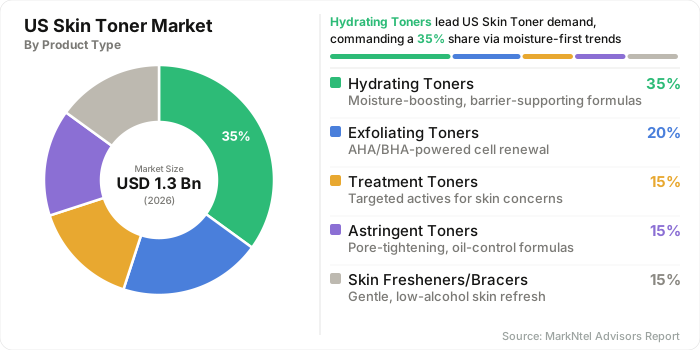
Hydrating toners represent the dominant segment within the US skin toner industry, contributing approximately 35% of total revenue due to their broad applicability across skin types and concerns. These formulations are widely adopted for their ability to restore moisture balance, enhance product absorption, and support daily skincare routines, particularly among consumers prioritizing hydration skincare and barrier maintenance in evolving beauty regimens.
The growing demand for ceramide toner and hyaluronic acid toner products is reinforcing this dominance, as consumers increasingly seek formulations that address dryness, sensitivity, and early signs of aging. Hydrating toners are also gaining traction due to their compatibility with layered skincare routines, enabling seamless integration with serums and moisturizers while improving overall skin texture and resilience.
Product innovation continues to strengthen this segment’s leadership, as , e.l.f. Skin introduced the Thirst Burst Pore-fecting Toner in 2025, combining 2% BHA with a Hydrating Hibiscus Complex to deliver both exfoliation and hydration benefits . This reflects the rising popularity of multi-use toner formulations that simplify routines while offering enhanced functional performance.
Collectively, the dominance of hydrating toners is expected to strengthen further as demand for ceramide toner and hyaluronic acid toner formulations continues to rise across diverse consumer segments. The increasing adoption of multi-use toner solutions is also reinforcing segment expansion, positioning hydrating toners as essential products within simplified, performance-driven skincare routines. By product type, the market is categorized into:
- Hydrating Toners
- Exfoliating Toners
- Treatment Toners
- Astringent Toners
- Skin Fresheners/Bracers
Higher Skincare Engagement Among Women Boosting Toner Demand
The women segment dominates the US skin toner market, accounting for approximately 70% of total revenue due to higher product adoption rates and established skincare routines. Female consumers demonstrate stronger engagement with daily skincare practices, including cleansing, toning, and moisturizing, which significantly drives demand for toner products across both mass and premium categories within the US Skin Toner Industry.
Demographic data further supports this dominance, as women represent approximately 50.5% of the total U.S. population, according to the U.S. Census Bureau. Despite near-equal population distribution, women contribute disproportionately higher spending on skincare, driven by greater awareness of product benefits, ingredient efficacy, and long-term skin health outcomes, reinforcing demand for hydration skincare solutions.
Additionally, the increasing preference for targeted skincare solutions such as anti-aging toner and sensitive skin toner products is strengthening segment growth. Female consumers are more likely to adopt multifunctional formulations that address concerns such as dryness, fine lines, and skin sensitivity, contributing to sustained demand across diverse product categories.
Collectively, the continued dominance of the women segment is expected to persist, supported by evolving beauty standards, higher product usage frequency, and increasing demand for specialized skincare solutions that align with personalized and results-driven routines. The study classifies the market across the following gender segments:
- Men
- Women
- Unisex
The US Skin Toner Market Competitive Analysis
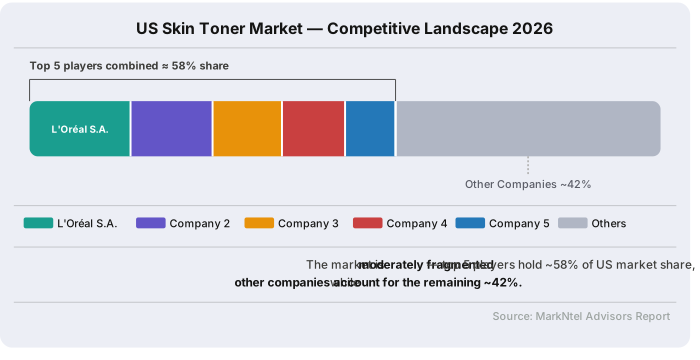
The top five players operating in the U.S. skin toner market include L'Oréal S.A., The Estée Lauder Companies Inc., Procter & Gamble, Unilever PLC, and Shiseido Company Limited. Collectively, these companies are estimated to account for approximately 58% of the total market share, driven by strong brand portfolios, extensive distribution networks, and continuous product innovation. Despite this concentration, the market remains moderately fragmented, supported by the presence of emerging brands such as e.l.f. Beauty Inc. and COSRX Inc. that are gaining traction through digital channels and niche formulations.
Key Players in The US Skin Toner Market
- L'Oréal S.A.
- The Estée Lauder Companies Inc.
- Procter & Gamble
- Unilever PLC
- Shiseido Company Limited
- Johnson & Johnson
- Beiersdorf AG
- Amorepacific Corporation
- e.l.f. Beauty Inc.
- COSRX Inc.
- Others
The US Skin Toner Industry News and Recent Developments:
April 2026: Thayers Expands Milky Franchise with Hydrating Milky Mist
U.S.-based skincare brand Thayers launched the Hydrating Milky Mist, expanding its viral Milky skincare franchise. The product was co-created with beauty creators Nina Pool and Shelby Ann Bell and features alcohol-free, barrier-supporting ingredients including oat milk and 7% glycerin. The launch reflects growing consumer preference for hydrating toner-mist hybrids and social-media-driven skincare innovation.
Impact Analysis: The launch strengthens the transition from traditional astringents toward multifunctional hydration-focused formulations. The integration of creator-led product development highlights the increasing role of TikTok and influencer ecosystems in accelerating skincare innovation cycles. Additionally, the popularity of milky toner textures supports rising consumer demand for skin-barrier repair, sensitive-skin compatibility, and lightweight mist applications. The development is also expected to intensify competition within premium facial mist and alcohol-free toner segments across mass and prestige skincare channels.
June 2025: Bubble Skincare Launches Cosmic Silk Hydrating Milky Toner
U.S.-based Bubble Skincare introduced the Cosmic Silk Hydrating Milky Toner in 2025, expanding its hydration-focused skincare portfolio. The formulation includes ceramides, peptides, and moisture-supporting ingredients designed to strengthen the skin barrier while delivering lightweight hydration. The launch reflects rising consumer preference for milky toner textures and multifunctional skincare products that combine soothing, hydration, and barrier-repair benefits within simplified beauty routines.
Impact Analysis: The launch highlights the accelerating transition of toward hydration-centric and barrier-support formulations. Increasing adoption of milky toner products demonstrates changing consumer preference for gentler, essence-inspired skincare formats over traditional alcohol-based toners. Additionally, Bubble Skincare’s positioning toward younger demographics reinforces the growing influence of Gen Z skincare consumption patterns, where ingredient transparency, multifunctionality, and skin barrier health are becoming key purchasing priorities.
January 2025: EUCERIN Launches Radiant Tone Collection for Dark Spot Reduction
Dermatological skincare brand Eucerin introduced the Radiant Tone Collection in January 2025 to address uneven skin tone and persistent dark spots. The collection incorporates Thiamidol-based formulations alongside exfoliating and hydrating ingredients designed to improve skin radiance across multiple skin tones. The launch followed a U.S. consumer study identifying strong demand for pigmentation-correction skincare products.
Impact Analysis: The launch reinforces the growing importance of science-backed brightening and pigmentation-management products within the broader U.S. facial skincare ecosystem, influencing toner demand. Increasing consumer focus on hyperpigmentation, post-acne marks, and tone-evening routines is encouraging brands to integrate exfoliating acids, hydration support, and active ingredients into complementary skincare regimens.
Frequently Asked Questions
- Market Segmentation
- Introduction
- Product Definition
- Research Process
- Assumptions
- Executive Summary
- The US Skin Toner Market Policies, Regulations, and Product Standards
- The US Skin Toner Production Trend 2022-2032
- The US Skin Toner Trend by Type of Product Type
- Hydrating Toners
- Exfoliating Toners
- Treatment Toners
- Astringent Toners
- Skin Fresheners/Bracers
- Company Wise Production Plants and Statistics
- Installed Production Capacity
- Actual Production
- Planned Production Target
- The US Skin Toner Trend by Type of Product Type
- The US Skin Toner Pricing Analysis 2022-2032
- The US Skin Toner Pricing Trend 2022-2032
- The US Skin Toner Pricing Trend by Product Type 2022-2032
- Hydrating Toners
- Exfoliating Toners
- Treatment Toners
- Astringent Toners
- Skin Fresheners/Bracers
- The US Skin Toner Market Dynamics
- Growth Factors
- Challenges
- The US Skin Toner Market Hotspot & Opportunities
- The US Skin Toner Market Outlook, 2022-2032F
- Market Size & Outlook
- By Revenues (USD Million)
- Market Share & Outlook
- By Product Type- Market Size & Forecast 2022-2032, USD Million
- Hydrating Toners
- Exfoliating Toners
- Treatment Toners
- Astringent Toners
- Skin Fresheners/Bracers
- By Format- Market Size & Forecast 2022-2032, USD Million
- Liquid Toners
- Mist Toners
- Gel Toners
- Toner Pads
- By Ingredient Type- Market Size & Forecast 2022-2032, USD Million
- Natural -Based
- Synthetic/Chemical-Based
- Hybrid (Natural + Active Ingredients)
- By Skin Type- Market Size & Forecast 2022-2032, USD Million
- Oily Skin
- Dry Skin
- Combination Skin
- Sensitive Skin
- Normal Skin
- By Gender- Market Size & Forecast 2022-2032, USD Million
- Men
- Women
- Unisex
- By Price Range- Market Size & Forecast 2022-2032, USD Million
- Mass
- Mid-Range
- Premium
- By Application- Market Size & Forecast 2022-2032, USD Million
- Hydration
- Cleansing & Residue Removal
- Skin Preparation
- Oil Control
- Brightening
- Anti-Aging Care
- Skin Soothing/Calming
- By Distribution Channel- Market Size & Forecast 2022-2032, USD Million
- Offline
- Supermarkets/Hypermarkets
- Specialty Stores
- Pharmacies/Drug Stores
- Department Stores
- Online
- E-commerce Marketplaces
- Brand Websites (DTC)
- Offline
- By Packaging Type- Market Size & Forecast 2022-2032, USD Million
- Bottles
- Spray Containers
- Pump Dispensers
- Sachets Packs
- Jars/Pad Containers
- By End User- Market Size & Forecast 2022-2032, USD Million
- Individual Consumers
- Professional /Institutional
- Salons & Spas
- Beauty Clinics
- Dermatology Centers
- Makeup Artists
- By Region - Market Size & Forecast 2022-2032, USD Million
- Northeast
- Midwest
- South
- West
- By Company
- Competition Characteristics
- Market Share & Analysis
- By Product Type- Market Size & Forecast 2022-2032, USD Million
- Market Size & Outlook
- The US Hydrating Toners Market Outlook, 2022-2032
- Market Size & Outlook
- By Revenues (USD Million)
- Market Share & Outlook
- By Format- Market Size & Forecast 2022-2032, USD Million
- By Ingredient Type- Market Size & Forecast 2022-2032, USD Million
- By Skin Type- Market Size & Forecast 2022-2032, USD Million
- By Gender- Market Size & Forecast 2022-2032, USD Million
- By Price Range- Market Size & Forecast 2022-2032, USD Million
- By Application- Market Size & Forecast 2022-2032, USD Million
- By Distribution Channel- Market Size & Forecast 2022-2032, USD Million
- By Packaging Type- Market Size & Forecast 2022-2032, USD Million
- By End User- Market Size & Forecast 2022-2032, USD Million
- By Region - Market Size & Forecast 2022-2032, USD Million
- Market Size & Outlook
- The US Exfoliating Toners Market Outlook, 2022-2032
- Market Size & Outlook
- By Revenues (USD Million)
- Market Share & Outlook
- By Format- Market Size & Forecast 2022-2032, USD Million
- By Ingredient Type- Market Size & Forecast 2022-2032, USD Million
- By Skin Type- Market Size & Forecast 2022-2032, USD Million
- By Gender- Market Size & Forecast 2022-2032, USD Million
- By Price Range- Market Size & Forecast 2022-2032, USD Million
- By Application- Market Size & Forecast 2022-2032, USD Million
- By Distribution Channel- Market Size & Forecast 2022-2032, USD Million
- By Packaging Type- Market Size & Forecast 2022-2032, USD Million
- By End User- Market Size & Forecast 2022-2032, USD Million
- By Region - Market Size & Forecast 2022-2032, USD Million
- Market Size & Outlook
- The US Treatment Toners Market Outlook, 2022-2032
- Market Size & Outlook
- By Revenues (USD Million)
- Market Share & Outlook
- By Format- Market Size & Forecast 2022-2032, USD Million
- By Ingredient Type- Market Size & Forecast 2022-2032, USD Million
- By Skin Type- Market Size & Forecast 2022-2032, USD Million
- By Gender- Market Size & Forecast 2022-2032, USD Million
- By Price Range- Market Size & Forecast 2022-2032, USD Million
- By Application- Market Size & Forecast 2022-2032, USD Million
- By Distribution Channel- Market Size & Forecast 2022-2032, USD Million
- By Packaging Type- Market Size & Forecast 2022-2032, USD Million
- By End User- Market Size & Forecast 2022-2032, USD Million
- By Region - Market Size & Forecast 2022-2032, USD Million
- Market Size & Outlook
- The US Astringent Toners Market Outlook, 2022-2032
- Market Size & Outlook
- By Revenues (USD Million)
- Market Share & Outlook
- By Format- Market Size & Forecast 2022-2032, USD Million
- By Ingredient Type- Market Size & Forecast 2022-2032, USD Million
- By Skin Type- Market Size & Forecast 2022-2032, USD Million
- By Gender- Market Size & Forecast 2022-2032, USD Million
- By Price Range- Market Size & Forecast 2022-2032, USD Million
- By Application- Market Size & Forecast 2022-2032, USD Million
- By Distribution Channel- Market Size & Forecast 2022-2032, USD Million
- By Packaging Type- Market Size & Forecast 2022-2032, USD Million
- By End User- Market Size & Forecast 2022-2032, USD Million
- By Region - Market Size & Forecast 2022-2032, USD Million
- Market Size & Outlook
- The US Skin Fresheners/Bracers Market Outlook, 2022-2032
- Market Size & Outlook
- By Revenues (USD Million)
- Market Share & Outlook
- By Format- Market Size & Forecast 2022-2032, USD Million
- By Ingredient Type- Market Size & Forecast 2022-2032, USD Million
- By Skin Type- Market Size & Forecast 2022-2032, USD Million
- By Gender- Market Size & Forecast 2022-2032, USD Million
- By Price Range- Market Size & Forecast 2022-2032, USD Million
- By Application- Market Size & Forecast 2022-2032, USD Million
- By Distribution Channel- Market Size & Forecast 2022-2032, USD Million
- By Packaging Type- Market Size & Forecast 2022-2032, USD Million
- By End User- Market Size & Forecast 2022-2032, USD Million
- By Region - Market Size & Forecast 2022-2032, USD Million
- Market Size & Outlook
- The US Skin Toner Market Key Strategic Imperatives for Success & Growth
- Competitive Outlook
- Company Profiles
- L'Oréal S.A.
- Business Description
- Product Portfolio
- Collaborations & Alliances
- Recent Developments
- Financial Details
- Others
- The Estée Lauder Companies Inc.
- Business Description
- Product Portfolio
- Collaborations & Alliances
- Recent Developments
- Financial Details
- Others
- Procter & Gamble
- Business Description
- Product Portfolio
- Collaborations & Alliances
- Recent Developments
- Financial Details
- Others
- Unilever PLC
- Business Description
- Product Portfolio
- Collaborations & Alliances
- Recent Developments
- Financial Details
- Others
- Shiseido Company Limited
- Business Description
- Product Portfolio
- Collaborations & Alliances
- Recent Developments
- Financial Details
- Others
- Johnson & Johnson
- Business Description
- Product Portfolio
- Collaborations & Alliances
- Recent Developments
- Financial Details
- Others
- Beiersdorf AG
- Business Description
- Product Portfolio
- Collaborations & Alliances
- Recent Developments
- Financial Details
- Others
- Amorepacific Corporation
- Business Description
- Product Portfolio
- Collaborations & Alliances
- Recent Developments
- Financial Details
- Others
- e.l.f. Beauty Inc.
- Business Description
- Product Portfolio
- Collaborations & Alliances
- Recent Developments
- Financial Details
- Others
- COSRX Inc.
- Business Description
- Product Portfolio
- Collaborations & Alliances
- Recent Developments
- Financial Details
- Others
- Others
- L'Oréal S.A.
- Company Profiles
- Disclaimer
MarkNtel Advisors follows a robust and iterative research methodology designed to ensure maximum accuracy and minimize deviation in market estimates and forecasts. Our approach combines both bottom-up and top-down techniques to effectively segment and quantify various aspects of the market. A consistent feature across all our research reports is data triangulation, which examines the market from three distinct perspectives to validate findings. Key components of our research process include:
1. Scope & Research Design At the outset, MarkNtel Advisors define the research objectives and formulate pertinent questions. This phase involves determining the type of research—qualitative or quantitative—and designing a methodology that outlines data collection methods, target demographics, and analytical tools. They also establish timelines and budgets to ensure the research aligns with client goals.
2. Sample Selection and Data Collection In this stage, the firm identifies the target audience and determines the appropriate sample size to ensure representativeness. They employ various sampling methods, such as random or stratified sampling, based on the research objectives. Data collection is carried out using tools like surveys, interviews, and observations, ensuring the gathered data is reliable and relevant.
3. Data Analysis and Validation Once data is collected, MarkNtel Advisors undertake a rigorous analysis process. This includes cleaning the data to remove inconsistencies, employing statistical software for quantitative analysis, and thematic analysis for qualitative data. Validation steps are taken to ensure the accuracy and reliability of the findings, minimizing biases and errors.

4. Data Forecast and FinalizationThe final phase involves forecasting future market trends based on the analyzed data. MarkNtel Advisors utilize predictive modeling and time series analysis to anticipate market behaviors. The insights are then compiled into comprehensive reports, featuring visual aids like charts and graphs, and include strategic recommendations to inform client decision-making
We offer flexible licensing options to cater to varying organizational needs. Choose the pricing pack that best suits your requirements:
Buy Now Inquire Before Buying
 Request Customization
 Talk to our Consultant







