

US Ice Cream Market Research Report: Forecast (2026-2032)
By Type (Impulse Ice Cream (Single Portion Dairy Ice Cream, Single Portion Water Ice Cream), Unpackaged Ice Cream, Take-Home Ice Cream (Bulk Dairy Ice Cream, Ice Cream Desserts)), ... By Flavor (Chocolate, Mango, Vanilla, Strawberry, Butterscotch, Others), By Format (Cup, Stick, Cone, Brick, Others (Sandwich, Tub, etc.)), By Composition (Dairy Ice Cream, Plant-based Ice Cream), By Positioning (Mass Market Ice Cream, Artisanal Ice Cream), By Sales Channel (Grocery Retailers, Hypermarkets/Supermarkets, Brand Owned Outlets, Ice Cream Carts, Online, Convenience Stores, Others), and others Read more
- Food & Beverages
- Jun 2026
- Pages 138
- Report Format: PDF, Excel, PPT
US Ice Cream Market
Projected 4.05% CAGR from 2026 to 2032
Study Period
2026-2032
Market Size (2026)
USD 22.37 Billion
Market Size (2032)
USD 28.39 Billion
Base Year
2025
Projected CAGR
4.05%
Leading Segments
By Type: Impulse Ice Cream
The US Ice Cream Market Key Takeaways
- The US ice cream market size was valued at USD 21.11 billion in 2025 and is projected to grow from USD 22.37 billion in 2026 to USD 28.39 billion by 2032.
- The industry is projected to reflect sustained growth at a steady CAGR of 4.05% during 2026-2032.
- Western US holds the largest share of about 31% in 2026.
- By type, impulse ice cream holds a significant share of about 42% in 2026.
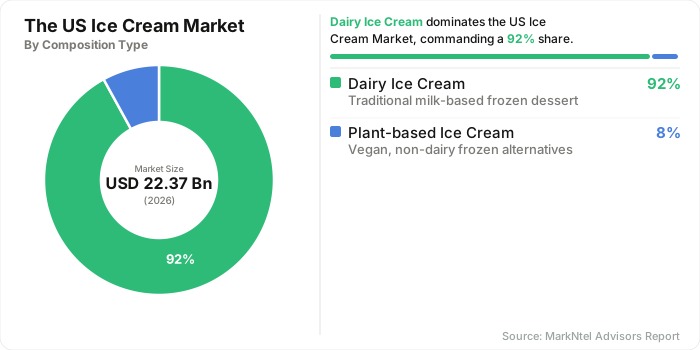
- By composition, dairy ice cream seized a significant share of about 92% in 2026.
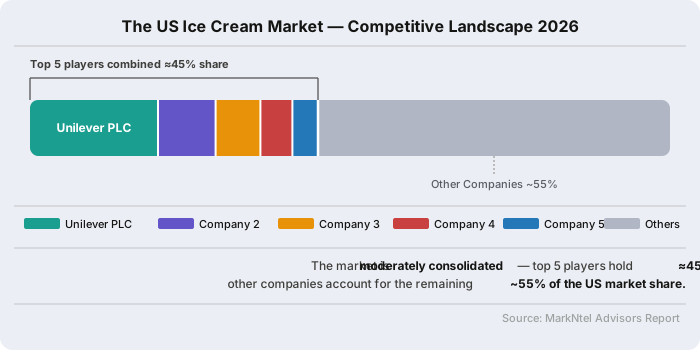
- The industry is moderately consolidated. However, the top five players collectively account for nearly 45% share.
The US Ice Cream Market Size and Outlook
The US ice cream market size was valued at USD 21.11 billion in 2025 and is projected to grow from USD 22.37 billion in 2026 to USD 28.39 billion by 2032. Along with this, the market is estimated to grow at a CAGR of around 4.05% during the forecast period, i.e., 2026-32.
The U.S. ice cream market continues to benefit from steady consumer demand, premium product innovation, and a robust dairy manufacturing ecosystem. According to the U.S. Department of Agriculture, regular hard ice cream production reached 51.6 million gallons in November 2024, representing a 6.4% increase compared with November 2023, indicating resilient demand for traditional ice cream despite evolving dietary trends. Furthermore, the USDA’s latest annual summary reported that 845 million gallons of regular ice cream were produced in 2025, underscoring the category’s continued importance within the U.S. frozen dairy industry.
According to the U.S. Census Bureau, the Ice Cream and Frozen Dessert Manufacturing industry comprises 442 business establishments employing 22,767 workers, underscoring its important role in the U.S. food manufacturing sector. Looking ahead, growth prospects are reinforced by large-scale investments across the dairy industry.
The International Dairy Foods Association has reported that dairy processors have announced more than USD 11 billion in new processing investments across 19 states through early 2028. These projects are expected to expand manufacturing capacity, modernize production facilities, and strengthen supply chain resilience for dairy products, including ice cream and frozen desserts, thereby supporting future market growth and innovation.
Innovation remains a defining characteristic of the market, with manufacturers introducing high-protein formulations, premium inclusions, and products made with natural ingredients to meet changing consumer expectations. At the same time, expanding retail distribution, e-commerce penetration, and convenience-driven purchasing continue to improve market accessibility. Although inflationary pressures and fluctuations in disposable income may influence short-term consumer spending, the combination of strong domestic dairy production, ongoing processing investments, and increasing demand for premium and health-oriented frozen desserts is expected to support the long-term expansion of the U.S. ice cream market.
The US Ice Cream Market Key Indicators
- According to the U.S. Bureau of Economic Analysis, DPI increased by USD 219.9 billion (0.9%) in January 2026 and by USD 142.5 billion (0.6%) in March 2026, reflecting resilient consumer purchasing power. However, April 2026 recorded a slight decline of USD 19.9 billion (0.1%), while the personal saving rate fell to 2.6%, indicating moderation in household finances. Overall, positive income growth continues to support spending on premium, artisanal, and functional ice cream despite short-term fluctuations.
- According to the International Dairy Foods Association, Americans consume approximately 18 pounds (around 4 gallons) of ice cream per person each year. The association also reported that the U.S. ice cream industry produced approximately 1.31 billion gallons in 2024, generating an estimated USD 11.6 billion in economic impact while supporting 26,704 direct jobs and USD 1.9 billion in direct wages. Consistently high consumption underpins continued investment in premium flavors, plant-based products, and high-protein innovations.
- According to recent USDA forecasts, U.S. milk production is expected to reach 234.3 billion pounds in 2026, approximately 1.4% higher than 2025 levels. Production data also show continued strength in ice cream manufacturing, with regular ice cream output reaching 67.0 million gallons in April 2026, representing a 5.5% year-over-year increase. Stable agricultural output ensures sufficient raw material supply and supports future capacity expansion across the ice cream industry.
The US Ice Cream Market Scope
| Category | Segments |
|---|---|
| By Type | Impulse Ice Cream (Single Portion Dairy Ice Cream, Single Portion Water Ice Cream), Unpackaged Ice Cream, Take-Home Ice Cream (Bulk Dairy Ice Cream, Ice Cream Desserts |
| By Flavor | Chocolate, Mango, Vanilla, Strawberry, Butterscotch, Others |
| By Format | Cup, Stick, Cone, Brick, Others (Sandwich, Tub, etc. |
| By Composition | Dairy Ice Cream, Plant-based Ice Cream |
| By Positioning | Mass Market Ice Cream, Artisanal Ice Cream |
| By Sales Channel | Grocery Retailers, Hypermarkets/Supermarkets, Brand Owned Outlets, Ice Cream Carts, Online, Convenience Stores, Others |
The US Ice Cream Market Growth Drivers
Growing Demand for Premium and Full-Fat Ice Cream Drives Market Expansion
Premiumization continues to drive the U.S. ice cream market as consumers increasingly prefer rich, full-fat, and high-quality frozen desserts with unique flavors and premium ingredients. According to the U.S. Department of Agriculture (USDA), U.S. production of ice cream and other frozen dairy products reached 1.386 billion gallons in 2024. Despite the availability of healthier alternatives, regular ice cream consistently accounted for about 60–65% of total frozen dairy production, highlighting the enduring consumer preference for indulgent products.
The USDA also noted that production of regular ice cream regained share as lower-fat varieties softened after earlier gains, underscoring resilient demand for premium offerings. Beyond 2025, manufacturers are expected to expand investments in artisanal recipes, high-butterfat formulations, gourmet inclusions, clean-label ingredients, and limited-edition flavors to differentiate products and command higher price points. These innovations are likely to increase average spending per purchase while strengthening brand loyalty among consumers seeking elevated dessert experiences.
As premium products continue to attract demand and manufacturers invest in value-added innovation, premiumization is expected to boost revenue growth, reinforce repeat purchases, and remain a key catalyst for long-term expansion of the U.S. ice cream market.
Recent Trends
High-Protein Ice Cream Innovation Gains Momentum in the US Market
High-protein ice cream is emerging as a prominent trend in the U.S. ice cream market as consumers seek products that combine indulgence with nutritional benefits. The growing emphasis on higher protein intake in American diets has encouraged manufacturers to reformulate frozen desserts with whey protein, milk protein concentrates, and ultrafiltered dairy ingredients while reducing added sugar and fat.
Reflecting this shift, Blue Bell Creameries announced the launch of its “Blue Bell PRO” line in 2026, offering 34 grams of protein per pint, zero added sugar, high fiber, and five classic flavors, signaling that mainstream ice cream brands are investing in functional products rather than treating them as niche offerings.
Health experts also note that many high-protein ice creams now provide 17–24 grams of protein per pint, targeting consumers interested in fitness, satiety, and balanced snacking. Looking ahead, manufacturers are expected to expand investments in protein-enriched formulations, clean-label ingredients, and low-sugar recipes as demand for functional foods continues to grow. The convergence of nutrition and indulgence is also encouraging innovation in premium frozen desserts that appeal to younger and health-conscious consumers.
Overall, high-protein innovation is broadening the consumer base for ice cream and increasing product differentiation. Continued investment in functional formulations is expected to stimulate premium sales, encourage repeat purchases, and support long-term growth of the U.S. ice cream market.
The US Ice Cream Market Opportunities and Challenges
Consumer Distrust of Artificial Additives Fuels Clean-Label Reformulation
The increasing consumer shift toward clean-label foods is posing a significant challenge to the U.S. ice cream industry. Shoppers are becoming more cautious about artificial flavors, colors, and synthetic additives, prompting manufacturers to reformulate products and invest in alternative ingredients. This transition requires additional spending on research and development, ingredient sourcing, and manufacturing adjustments. In July 2025, the International Dairy Foods Association (IDFA) announced that more than 40 ice cream companies representing over 90% of U.S. ice cream sales volume voluntarily committed to eliminating certified artificial colors from ice cream and frozen dairy desserts by the end of 2027, demonstrating the scale of industry-wide reformulation efforts.
Despite these challenges, the clean-label movement is creating substantial growth opportunities. Premium brands such as Jeni’s Splendid Ice Creams have strengthened their market positioning by emphasizing real fruits, fair-trade vanilla, and the absence of synthetic flavorings,
Furthermore, the U.S. Food and Drug Administration (FDA) approved several new natural color additives in 2025, including gardenia blue, supporting the industry's transition toward naturally derived ingredients. Looking ahead, continued investment in natural flavors, plant-based colorants, and transparent labeling is expected to accelerate premium product innovation and enhance consumer trust.
As clean-label preferences become mainstream, manufacturers that successfully adopt natural ingredients are likely to improve brand loyalty, command premium pricing, and unlock new growth opportunities in the U.S. ice cream market.
Segmentation Insights
Impulse Ice Cream Leads the US Ice Cream Market by Type
Impulse ice cream holds nearly 42% share of the U.S. ice cream industry revenue due to its strong appeal as a convenient, on-the-go treat and its extensive availability across supermarkets, convenience stores, gas stations, vending locations, and foodservice outlets. Single-serve formats such as cones, cups, sticks, and bars align well with impulse purchasing behavior and require minimal preparation, making them popular among consumers of all age groups.
The segment also benefits from continuous product innovation, including premium coatings, novel flavors, and high-protein or low-sugar variants that encourage repeat purchases. Seasonal demand during warmer months, widespread retail distribution, and marketing campaigns further support sales. Additionally, manufacturers continue to expand frozen novelty portfolios to capture evolving consumer preferences, reinforcing the segment’s leading position and sustaining. Based on type, the scope has been segmented into
- Impulse Ice Cream
- Unpackaged Ice Cream
- Take-Home Ice Cream
Dairy Ice Cream Dominates the US Market by Composition
Dairy Ice Cream holds the dominant position in the U.S. ice cream market, accounting for an estimated 92% of total sales, owing to its widespread consumer acceptance, established manufacturing base, and extensive retail availability. According to the U.S. Department of Agriculture (USDA), manufacturers produced approximately 886 million gallons of regular ice cream in 2024, significantly exceeding the production of alternative frozen dessert categories. The segment benefits from the United States’ robust dairy industry, with national milk production forecast to reach 234.3 billion pounds in 2026, ensuring a reliable supply of key raw materials.
Dairy ice cream also enjoys strong brand recognition through leading manufacturers and premium offerings, while continued innovation in flavors, textures, and high-protein formulations sustains consumer interest. Moreover, supermarkets, convenience stores, and foodservice outlets predominantly stock dairy-based products, reinforcing their market leadership. Although plant-based ice cream is expanding rapidly due to rising vegan and lactose-free preferences, dairy ice cream continues to dominate because of its taste, affordability, and long-established consumer loyalty. Based on composition, the market is categorized into
- Dairy Ice Cream
- Plant-based Ice Cream
The US Ice Cream Market Geographical Outlook
The Western US accounts for approximately 31% of total ice cream demand, making it the largest regional market in the country. This leadership is driven by a combination of favorable climate conditions, a large population base, high consumer spending power, and strong demand for premium and innovative frozen desserts. States such as California, Washington, and Oregon play a significant role in regional consumption, with California serving as the primary growth engine due to its year-round warm weather and diverse consumer preferences.
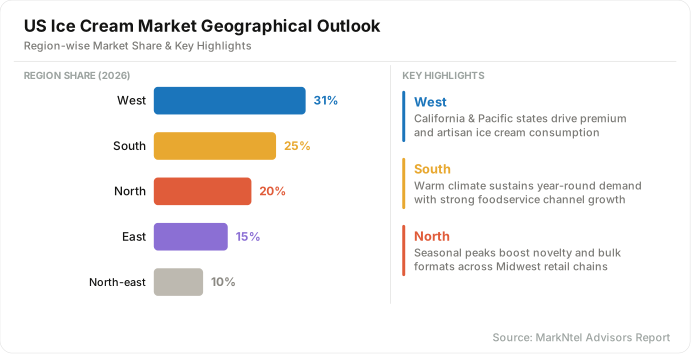
The region is also at the forefront of emerging trends, including plant-based, organic, low-sugar, and artisanal ice cream products, reflecting the health-conscious lifestyle of many consumers. Major metropolitan areas such as Los Angeles, San Francisco, and Seattle support strong sales through a dense network of specialty ice cream parlors, supermarkets, and foodservice outlets. For instance, California is recognized as one of the largest ice cream-consuming states in the U.S. and hosts thousands of ice cream shops, highlighting the region’s strong consumer demand and mature retail infrastructure
The US Ice Cream Market Competitive Analysis
The U.S. ice cream market is moderately consolidated, with the top five manufacturers collectively accounting for an estimated 45% of the organized market share. Key participants include Unilever PLC, Wells Enterprises, Inc., Blue Bell Creameries, L.P., Dreyer’s Grand Ice Cream, Inc., and Tillamook County Creamery Association.
Major Companies in the US Ice Cream Industry
- Unilever PLC
- Wells Enterprises, Inc.
- Blue Bell Creameries, L.P.
- Tillamook County Creamery Association
- Turkey Hill Dairy, LLC
- Dreyer's Grand Ice Cream, Inc.
- Van Leeuwen Ice Cream LLC
- Jeni's Splendid Ice Creams, LLC
- Graeter's Manufacturing Co.
- Alden's Organic
- Others
The US Ice Cream Industry News and Recent Developments
March 2026: Blue Bell Releases Brookie À La Mode Ice Cream
Blue Bell launched Brookie À La Mode Ice Cream, blending brownie pieces and chocolate chip cookie chunks in a brown sugar-flavored ice cream base. The product capitalizes on the popularity of hybrid desserts and premium mix-ins, offering consumers a rich, indulgent flavor profile while expanding the company’s seasonal innovation pipeline.
Impact Analysis: The launch of Brookie À La Mode reinforces Blue Bell’s strategy of driving consumer engagement through limited-edition, indulgent flavors inspired by popular desserts. By combining brownies and chocolate chip cookies in a single product, the company strengthens its premium portfolio and encourages repeat purchases. The introduction also intensifies competition in the value-added ice cream segment, prompting other manufacturers to invest in innovative mix-ins and experiential flavor development to maintain market relevance.
May 2025: Jeni’s Splendid Ice Creams Debuts J-Bars for National Retail
Jeni’s Splendid Ice Creams expanded into the frozen novelty category with the launch of J-Bars, a premium ice cream bar collection featuring flavors such as Vanilla Caramel Sundae, Dark Chocolate Bombe, Passion Fruit Dreamsicle, and Chocolate Churros & Cream. The rollout broadened the brand’s retail footprint and strengthened its presence in the premium grab-and-go segment.
Impact Analysis: The introduction of J-Bars enabled Jeni’s to diversify beyond traditional pint offerings and capture demand in the fast-growing grab-and-go frozen novelty category. The national retail rollout enhances brand visibility, expands consumer access, and creates additional revenue streams. The launch also highlights increasing competition in premium handheld desserts, encouraging manufacturers to develop differentiated formats and innovative flavor combinations to strengthen their position in the U.S. ice cream market.
Frequently Asked Questions
- Market Segmentation
- Introduction
- Product Definition
- Research Process
- Assumptions
- Executive Summary
- The US Ice Cream Market Policies, Regulations, and Product Standards
- The US Ice Cream Market Production Trend 2022-2032
- US Ice Cream Market Production Trend by Type of Product
- Impulse Ice Cream
- Single Portion Dairy Ice Cream
- Single Portion Water Ice Cream
- Unpackaged Ice Cream
- Take-Home Ice Cream
- Bulk Dairy Ice Cream
- Ice Cream Desserts
- Impulse Ice Cream
- Company Wise Production Plants and Statistics
- Installed Production Capacity
- Actual Production
- Planned Production Target
- US Ice Cream Market Production Trend by Type of Product
- US Ice Cream Market Pricing Analysis 2022-2032
- US Ice Cream Market Pricing Trend (USD/Liters) 2022-2032
- US Ice Cream Market Pricing Trend (USD/Liters) By Product Type 2022-2032
- Impulse Ice Cream
- Single Portion Dairy Ice Cream
- Single Portion Water Ice Cream
- Unpackaged Ice Cream
- Take-Home Ice Cream
- Bulk Dairy Ice Cream
- Ice Cream Desserts
- Impulse Ice Cream
- The US Ice Cream Market Trends & Developments
- The US Ice Cream Market Dynamics
- Growth Factors
- Challenges
- The US Ice Cream Market Hotspot & Opportunities
- The US Ice Cream Market Outlook, 2022-2032F
- Market Size & Outlook
- By Revenues (USD Million)
- By Quantity Sold (Thousand Liters)
- Market Segmentation & Outlook
- By Type- Market Size & Forecast 2022-2032, USD Million & Thousand Liters
- Impulse Ice Cream
- Single Portion Dairy Ice Cream
- Single Portion Water Ice Cream
- Unpackaged Ice Cream
- Take-Home Ice Cream
- Bulk Dairy Ice Cream
- Ice Cream Desserts
- Impulse Ice Cream
- By Flavor- Market Size & Forecast 2022-2032, USD Million & Thousand Liters
- Chocolate
- Mango
- Vanilla
- Strawberry
- Butterscotch
- Others
- By Format- Market Size & Forecast 2022-2032, USD Million & Thousand Liters
- Cup
- Stick
- Cone
- Brick
- Others (Sandwich, Tub, etc.)
- By Composition- Market Size & Forecast 2022-2032, USD Million & Thousand Liters
- Dairy Ice Cream
- Plant-based Ice Cream
- By Positioning- Market Size & Forecast 2022-2032, USD Million & Thousand Liters
- Mass Market Ice Cream
- Artisanal Ice Cream
- By Sales Channel- Market Size & Forecast 2022-2032, USD Million & Thousand Liters
- Grocery Retailers
- Hypermarkets/Supermarkets
- Brand Owned Outlets
- Ice Cream Carts
- Online
- Convenience Stores
- Others
- By Region- Market Size & Forecast 2022-2032, USD Million & Thousand Liters
- North
- South
- West
- East
- North-East
- By Company
- Competition Characteristics
- Market Share & Analysis
- By Type- Market Size & Forecast 2022-2032, USD Million & Thousand Liters
- Market Size & Outlook
- The US Impulse Ice Cream Market Outlook, 2022-2032
- Market Size & Outlook
- By Revenues (USD Million)
- By Quantity Sold (Thousand Liters)
- Market Segmentation & Outlook
- By Flavor- Market Size & Forecast 2022-2032, USD Million & Thousand Liters
- By Format- Market Size & Forecast 2022-2032, USD Million & Thousand Liters
- By Composition- Market Size & Forecast 2022-2032, USD Million & Thousand Liters
- By Positioning- Market Size & Forecast 2022-2032, USD Million & Thousand Liters
- By Sales Channel- Market Size & Forecast 2022-2032, USD Million & Thousand Liters
- By Region- Market Size & Forecast 2022-2032, USD Million & Thousand Liters
- Market Size & Outlook
- The US Unpackaged Ice Cream Market Outlook, 2022-2032
- Market Size & Outlook
- By Revenues (USD Million)
- By Quantity Sold (Thousand Liters)
- Market Segmentation & Outlook
- By Flavor- Market Size & Forecast 2022-2032, USD Million & Thousand Liters
- By Format- Market Size & Forecast 2022-2032, USD Million & Thousand Liters
- By Composition- Market Size & Forecast 2022-2032, USD Million & Thousand Liters
- By Positioning- Market Size & Forecast 2022-2032, USD Million & Thousand Liters
- By Sales Channel- Market Size & Forecast 2022-2032, USD Million & Thousand Liters
- By Region- Market Size & Forecast 2022-2032, USD Million & Thousand Liters
- Market Size & Outlook
- The US Take-Home Ice Cream Market Outlook, 2022-2032
- Market Size & Outlook
- By Revenues (USD Million)
- By Quantity Sold (Thousand Liters)
- Market Segmentation & Outlook
- By Flavor- Market Size & Forecast 2022-2032, USD Million & Thousand Liters
- By Format- Market Size & Forecast 2022-2032, USD Million & Thousand Liters
- By Composition- Market Size & Forecast 2022-2032, USD Million & Thousand Liters
- By Positioning- Market Size & Forecast 2022-2032, USD Million & Thousand Liters
- By Sales Channel- Market Size & Forecast 2022-2032, USD Million & Thousand Liters
- By Region- Market Size & Forecast 2022-2032, USD Million & Thousand Liters
- Market Size & Outlook
- The US Ice Cream Market Key Strategic Imperatives for Success & Growth
- Competitive Outlook
- Company Profiles
- Unilever PLC
- Business Description
- Product Portfolio
- Collaborations & Alliances
- Recent Developments
- Financial Details
- Others
- Wells Enterprises, Inc.
- Business Description
- Product Portfolio
- Collaborations & Alliances
- Recent Developments
- Financial Details
- Others
- Blue Bell Creameries, L.P.
- Business Description
- Product Portfolio
- Collaborations & Alliances
- Recent Developments
- Financial Details
- Others
- Tillamook County Creamery Association
- Business Description
- Product Portfolio
- Collaborations & Alliances
- Recent Developments
- Financial Details
- Others
- Turkey Hill Dairy, LLC
- Business Description
- Product Portfolio
- Collaborations & Alliances
- Recent Developments
- Financial Details
- Others
- Dreyer's Grand Ice Cream, Inc.
- Business Description
- Product Portfolio
- Collaborations & Alliances
- Recent Developments
- Financial Details
- Others
- Van Leeuwen Ice Cream LLC
- Business Description
- Product Portfolio
- Collaborations & Alliances
- Recent Developments
- Financial Details
- Others
- Jeni's Splendid Ice Creams, LLC
- Business Description
- Product Portfolio
- Collaborations & Alliances
- Recent Developments
- Financial Details
- Others
- Graeter's Manufacturing Co.
- Business Description
- Product Portfolio
- Collaborations & Alliances
- Recent Developments
- Financial Details
- Others
- Alden's Organic
- Business Description
- Product Portfolio
- Collaborations & Alliances
- Recent Developments
- Financial Details
- Others
- Unilever PLC
- Company Profiles
- Disclaimer
MarkNtel Advisors follows a robust and iterative research methodology designed to ensure maximum accuracy and minimize deviation in market estimates and forecasts. Our approach combines both bottom-up and top-down techniques to effectively segment and quantify various aspects of the market. A consistent feature across all our research reports is data triangulation, which examines the market from three distinct perspectives to validate findings. Key components of our research process include:
1. Scope & Research Design At the outset, MarkNtel Advisors define the research objectives and formulate pertinent questions. This phase involves determining the type of research—qualitative or quantitative—and designing a methodology that outlines data collection methods, target demographics, and analytical tools. They also establish timelines and budgets to ensure the research aligns with client goals.
2. Sample Selection and Data Collection In this stage, the firm identifies the target audience and determines the appropriate sample size to ensure representativeness. They employ various sampling methods, such as random or stratified sampling, based on the research objectives. Data collection is carried out using tools like surveys, interviews, and observations, ensuring the gathered data is reliable and relevant.
3. Data Analysis and Validation Once data is collected, MarkNtel Advisors undertake a rigorous analysis process. This includes cleaning the data to remove inconsistencies, employing statistical software for quantitative analysis, and thematic analysis for qualitative data. Validation steps are taken to ensure the accuracy and reliability of the findings, minimizing biases and errors.

4. Data Forecast and FinalizationThe final phase involves forecasting future market trends based on the analyzed data. MarkNtel Advisors utilize predictive modeling and time series analysis to anticipate market behaviors. The insights are then compiled into comprehensive reports, featuring visual aids like charts and graphs, and include strategic recommendations to inform client decision-making
We offer flexible licensing options to cater to varying organizational needs. Choose the pricing pack that best suits your requirements:
Buy Now Inquire Before Buying
 Request Customization
 Talk to our Consultant







