

Thailand Tire Market Research Report Forecast: (2026-2032)
By Type of Vehicle (Passenger Car, Light Commercial Vehicle, Medium and Heavy Commercial Vehicles, Two Wheelers, Three Wheeler, Off the Road (OTR)), By Demand Category (OEM, Afterm ... arket), By Type of Tire (Radial, Bias), By Sales Channel (Direct Sales, Exclusive Outlets & Multi-brand Stores, Online), By Season (All season, Summer, Winter), By Price Category (Budget, Economy, Premium), By Tire Size (Tire Size 1, Tire Size 2, Tire Size 3, Tire Size 4, Tire Size 5), and others Read more
- Tire
- Jun 2026
- Pages 127
- Report Format: PDF, Excel, PPT
Thailand Tire Market
Projected 5.52% CAGR from 2026 to 2032
Study Period
2026-2032
Market Size (2026)
USD 4.02 Billion
Market Size (2032)
USD 5.55 Billion
Base Year
2025
Projected CAGR
5.52%
Leading Segments
By Type Vehicle: Passenger Cars
Thailand Tire Market Key Takeaways
- Thailand Tire Market size was valued at USD 3.76 billion in 2025 and is projected to grow from USD 4.02 billion in 2026 to USD 5.55 billion by 2032.
- The industry is projected to witness sustained growth at a CAGR of 5.52% during 2026-2032.
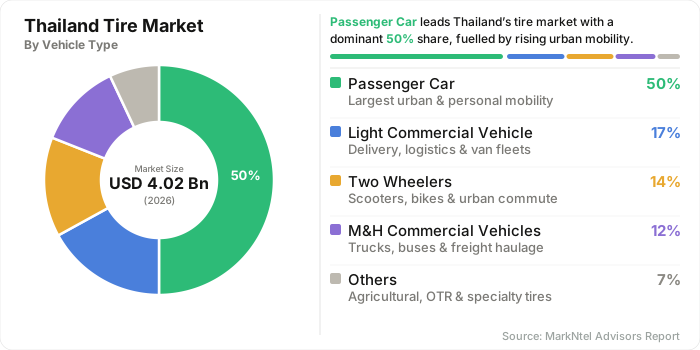
- By type of vehicle, the passenger cars hold a significant share of about 50% in 2026.
- By type of tire, the radial segment seized a significant share of about 84% in 2026.
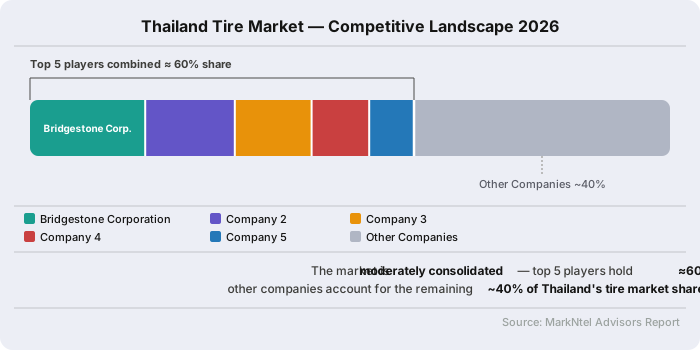
- The industry is moderately consolidated. However, the top five players collectively account for nearly 55% share.
Thailand Tire Market Size and Outlook
The Thailand Tire Market size was valued at USD 3.76 billion in 2025 and is projected to grow from USD 4.02 billion in 2026 to USD 5.55 billion by 2032. Along with this, the market is estimated to grow at a CAGR of around 5.52% during the forecast period, i.e., 2026-32.
The market is projected to expand steadily over the forecast period, supported by rising vehicle ownership, expanding replacement tire demand, and continuous investments in automotive manufacturing and electrified mobility infrastructure. Thailand remains one of Southeast Asia leading automotive production hubs, benefiting from strong export capabilities, integrated supply chains, and supportive industrial policies. Growth in passenger vehicle production, logistics transportation, and EV adoption is expected to strengthen demand for radial passenger tires, commercial vehicle tires, and advanced EV tire technology across OEM and aftermarket channels.
Despite short-term fluctuations in vehicle production and export activity, Thailand continues attracting substantial foreign automotive investments that support long-term tire demand expansion. In February 2025, Mazda announced a USD 150 million investment to expand EV production capacity in Thailand, targeting annual manufacturing of nearly 100,000 electric SUVs. The development is expected to increase demand for premium OEM tires, EV-compatible tire technologies, and localized automotive supply chain integration, particularly across Central and Eastern Thailand’s industrial manufacturing corridors.
Eventually, the market is further strengthened by major capacity expansion initiatives from global tire manufacturers. Continental AG expanded its Rayong manufacturing facility through a USD 325 million investment, adding annual capacity for nearly 3 million passenger and light truck tires while introducing radial motorcycle tire production. In addition, Thailand Board of Investment approved a separate USD 400 million Continental expansion project aimed at increasing local tire output to approximately 7.8 million units annually using locally sourced natural rubber. These investments reinforce Thailand position as a regional tire manufacturing hub while supporting ASEAN supply chain localization, EV ecosystem growth, and long-term aftermarket demand expansion.
Thailand Tire Market Key Indicators
- The automobile production across the country has increased by 2.7% year-on-year in March 2025, supported by improving domestic vehicle sales and recovering export demand. Rising passenger vehicle manufacturing and stronger automotive output are expected to positively influence OEM tire demand, replacement tire consumption, and overall production activity across Thailand’s automotive and tire manufacturing ecosystem.
- Thailand natural rubber industry is undergoing transformation through AI integration, sustainable processing technologies, and strategic industrial partnerships. Innovation in rubber cultivation and processing is expected to strengthen raw material availability for tire manufacturers while improving supply chain efficiency, production quality, and long-term competitiveness within Thailand’s expanding automotive and tire manufacturing sector.
- Thailand accounted for 26.3% of Europe truck tyre imports, surpassing China and emerging as the leading supplier to the EU and UK markets. Strong manufacturing investments, expanding export capacity, and the presence of major global tire producers continue to strengthen Thailand position as a key international tire production and export hub.
Thailand Tire Market Scope
| Category | Segments |
|---|---|
| By Type of Vehicle | Passenger Car, Light Commercial Vehicle, Medium and Heavy Commercial Vehicles, Two Wheelers, Three Wheeler, Off the Road (OTR |
| By Demand Category | OEM, Aftermarket |
| By Type of Tire | Radial, Bias |
| By Sales Channel | Direct Sales, Exclusive Outlets & Multi-brand Stores, Online |
| By Season | All season, Summer, Winter |
| By Price Category | Budget, Economy, Premium |
| By Tire Size | Tire Size 1, Tire Size 2, Tire Size 3, Tire Size 4, Tire Size 5 |
Thailand Tire Market Growth Drivers
Growing Automotive Production
Thailand automotive production remains a core growth engine for the tire market, supported by stable manufacturing output and strong export orientation. For example, Thailand produced 1.84 million vehicles in 2023, with production levels in 2024 showing resilience despite cyclical demand fluctuations, averaging consistent monthly output driven by passenger and commercial vehicle assembly activities. This sustained production base ensures continuous OEM tire demand, particularly from major manufacturers such as Toyota, Isuzu, and Honda operating large-scale plants in the country.
In 2024, monthly production trends indicate periodic volatility influenced by domestic credit tightening and slower retail vehicle sales, yet export-oriented manufacturing has helped stabilize overall output levels. Thailand continues to serve as a key global production and export hub for pickup trucks and small passenger vehicles, which represent a significant share of tire consumption across both OEM fitment and replacement cycles. The presence of integrated supply chains and regional export networks further strengthens long-term tire demand visibility.
Thailand sustained automotive production base and export-driven manufacturing ecosystem are ensuring steady OEM tire consumption. This structural production strength is expected to continue supporting tire demand growth across passenger and commercial vehicle segments in the coming years.
Recent Trends
Growing Adoption of EV-Specific Tire Technologies
Thailand tire market is witnessing a clear shift toward EV-specific OE tire integration, where sustainability and energy efficiency are embedded directly into vehicle design. A key example is Bridgestone’s announcement that the TURANZA 6 with ENLITEN technology has been selected as OE for the new MG S5 EV in Thailand, highlighting its role in reducing rolling resistance, improving energy efficiency, and extending driving range for electric vehicles. This reflects a broader industry move where tire performance is increasingly aligned with EV powertrain requirements rather than traditional combustion efficiency metrics.
The Turanza 6 integration also demonstrates how OEMs are prioritizing tires that enhance ride comfort, reduce noise, and optimize energy consumption in EV platforms. With Thailand emerging as a growing EV production hub under government-backed electrification initiatives, such OE-level adoption of advanced tire technologies is accelerating across passenger EV segments. This trend is strengthening collaboration between automakers and tire manufacturers to co-develop EV-optimized solutions at the design stage rather than aftermarket adaptation.
Furthermore, the rising integration of low rolling resistance, EV-optimized tires at the OEM level is structurally reshaping Thailand’s tire market. This trend is expected to significantly expand demand for advanced sustainable tire technologies and deepen long-term OEM partnerships.
Thailand Tire Market Opportunities and Challenges
Environmental and Regulatory Pressure Driving Eco-Tire Innovation & OE Integration Expansion
Thailand’s tightening environmental framework is increasing compliance burdens across the tire manufacturing ecosystem, particularly through stricter emission norms, carbon control requirements, and sustainability-linked production standards. Manufacturers are facing higher costs due to mandatory upgrades in pollution-control systems, more complex material compliance checks, and tighter oversight on industrial waste handling. These regulations are also extending approval timelines for new tire compounds and production lines, reducing operational flexibility and increasing pressure on smaller and mid-sized producers that lack advanced clean-manufacturing infrastructure.
At the same time, the regulatory shift is accelerating demand for low-emission and energy-efficient tire solutions integrated directly at the OEM level. For example, the OE deployment of Bridgestone ECOPIA EP150 in Nissan KICKS e-POWER, where low rolling resistance technology is aligned with vehicle efficiency targets and carbon reduction goals. This trend is enabling tire manufacturers to strengthen OEM partnerships, expand EV-optimized product lines, and accelerate adoption of advanced materials that support reduced energy loss and improved vehicle efficiency across Thailand’s evolving mobility ecosystem.
Segmentation Insights
Passenger Cars is a Leading Segment
The passenger car segment accounts for nearly 50% of Thailand tire industry, supported by the country large passenger vehicle production base and rising private mobility demand. Thailand remains a major manufacturing hub for Japanese and Chinese automakers, with strong domestic sales and export-oriented assembly of sedans, SUVs, and compact vehicles. Higher urbanization, improving road infrastructure, and growing middle-income consumer spending continue to strengthen passenger vehicle ownership, directly increasing OEM tire installation and replacement demand across the country.
The segment is also benefiting from Thailand accelerating electric passenger vehicle ecosystem, where EV-focused tire requirements such as low rolling resistance, noise reduction, and enhanced durability are expanding premium tire adoption. Passenger cars experience shorter replacement cycles due to frequent urban driving conditions and high annual mileage in metropolitan regions, further supporting aftermarket tire sales. In addition, rising demand for comfort-oriented and fuel-efficient vehicles is encouraging automakers to integrate advanced radial and EV-compatible tire technologies at the OEM level.
Overall, strong passenger vehicle production, increasing vehicle ownership, and rapid EV penetration are reinforcing the dominance of the passenger car segment in Thailand’s tire market, ensuring sustained OEM and replacement tire demand. Based on type of vehicle, the scope has been segmented into
- Passenger Car
- Light Commercial Vehicle
- Medium and Heavy Commercial Vehicles
- Two Wheelers
- Three Wheeler
- Off the Road (OTR)
Radial Segment Dominates the Market
Radial tires account for nearly 84% of Thailand tire market, driven by their superior durability, fuel efficiency, heat resistance, and driving comfort compared to conventional bias tires. The dominance of radial technology is strongly linked to Thailand’s export-oriented automotive manufacturing structure, where global OEMs require internationally standardized tire performance for passenger cars and commercial vehicles. Radial tires also provide better road grip and lower rolling resistance, making them highly suitable for modern highway infrastructure and long-distance transportation networks across Thailand.
The segment is further benefiting from increasing electric and hybrid vehicle production, as EV platforms require tires capable of handling higher torque, battery weight, and enhanced energy-efficiency standards. Commercial fleet operators also prefer radial tires because of their extended tread life and lower operating costs, particularly in logistics and freight transportation. Continuous investments by leading tire manufacturers in advanced radial production technologies and localized manufacturing facilities are strengthening product availability and accelerating replacement demand throughout Thailand’s OEM and aftermarket ecosystem.
Eventually, higher operational efficiency, strong OEM preference, and growing EV compatibility are reinforcing radial tires as the dominant tire category in Thailand, ensuring sustained market expansion across vehicle segments. The key type of tire mapped in the study involve
- Radial
- Bias
Thailand Tire Industry Competitive Analysis
The Thailand Tire Market is moderately consolidated, with a mix of global tire manufacturers and a strong domestic player base operating across OEM and replacement segments. The top five companies, including Bridgestone Corporation, Michelin Group, Continental AG, Goodyear Tire & Rubber Company, and Yokohama Rubber Company Limited, collectively account for approximately 55% of the total market share, reflecting a structure dominated by integrated manufacturing capabilities, strong OEM partnerships, and well-established distribution networks across Thailand automotive ecosystem.
Key Tire Companies in Thailand
- Continental AG
- Bridgestone Corporation
- Yokohama Rubber Company Limited
- Hankook Tire Co., Ltd.
- Goodyear Tire & Rubber Company
- Michelin Group
- Pirelli & C. S.p.A.
- Sumitomo Rubber Industries Limited
- Toyo Tire Corporation
- Deestone Corporation Company Limited
- Others
Thailand Tire Industry News and Recent Developments
February 2025: Yanggu Huatai Begins Construction of New Thailand Tire Manufacturing Facility
Yanggu Huatai started construction of a new manufacturing facility in Thailand’s Eastern Economic Corridor. The project will add annual production capacity of approximately 6 million passenger-car tires and is scheduled to begin operations in 2026. The investment strengthens Thailand’s role as a regional automotive and tire manufacturing hub amid rising export and replacement tire demand across ASEAN markets.
Impact Analysis: The development is expected to intensify competition within Thailand’s passenger tire industry by increasing regional production capacity and supporting supply chain localization. The facility will strengthen Thailand’s export-oriented tire ecosystem, attract upstream rubber and automotive investments, and improve ASEAN tire supply efficiency. It also reflects the ongoing shift of global tire manufacturing capacity toward Southeast Asia due to cost advantages, strong automotive production infrastructure, and favorable industrial policies.
October 2025: Bridgestone Launches POTENZA Adrenalin RE005 Premium Sports Tire
Bridgestone Sales (Thailand) Co., Ltd. launched the new “BRIDGESTONE POTENZA Adrenalin RE005” premium sports tire in Thailand. The tire integrates ENLITEN technology to improve handling, wet-road grip, fuel efficiency, and durability for sports cars, premium passenger vehicles, and EVs. The product is available in 41 sizes ranging from 15–20 inches, with prices starting from nearly USD 92.
Impact Analysis: The launch strengthens Bridgestone’s position in Thailand’s premium and high-performance tire segment amid rising demand for EV-compatible and fuel-efficient tires. The RE005 supports growing consumer preference for advanced radial tires with enhanced sustainability and driving performance. The development also intensifies competition among premium tire manufacturers including Michelin, Continental, and Yokohama in Thailand’s expanding passenger vehicle and replacement tire market.
Frequently Asked Questions
- Market Segmentation
- Introduction
- Product Definition
- Research Process
- Assumptions
- Executive Summary
- Thailand Tire Market Supply Chain Analysis
- Thailand Tire Market Trends & Developments
- Thailand Tire Market Production (Thousand Units) Trend 2022-2032
- Thailand Tire Market Production (Thousand Units) Trend by Type of tire
- Radial
- Bias
- Company Wise Production Plants and Statistics
- Installed Production Capacity
- Actual Production
- Planned Production Target
- Thailand Tire Market Production (Thousand Units) Trend by Type of tire
- Thailand Tire Market Dynamics
- Growth Drivers
- Challenges
- Thailand Tire Market Pricing Analysis
- Thailand Tire Market Import Export Statistics
- Thailand Tire Market Regulations, Policies and Product Standards
- Thailand Tire Market Outlook 2022-2032F
- Market Size & Analysis
- By Revenue (USD Million)
- By Units Sold (Thousand Units)
- Market Share & Analysis
- By Type of Vehicle- (Thousand Units)
- Passenger Car
- Light Commercial Vehicle
- Medium and Heavy Commercial Vehicles
- Two Wheelers
- Three Wheeler
- Off the Road (OTR)
- By Demand Category- (Thousand Units)
- OEM
- Aftermarket
- By Type of Tire- (Thousand Units)
- Radial
- Bias
- By Sales Channel- (Thousand Units)
- Direct Sales
- Exclusive Outlets & Multi-brand Stores
- Online
- By Season- (Thousand Units)
- All season
- Summer
- Winter
- By Price Category- (Thousand Units)
- Budget
- Economy
- Premium
- By Tire Size- (Thousand Units)
- Tire Size 1
- Tire Size 2
- Tire Size 3
- Tire Size 4
- Tire Size 5
- By Region
- Midwest
- Northeast
- South
- West
- By Company
- Competition Characteristics
- Volume Shares
- By Type of Vehicle- (Thousand Units)
- Market Size & Analysis
- Canada Passenger Car Tire Market Outlook, 2022-2032F
- Market Size & Analysis
- Market Revenue (USD Million)
- By Units Sold (Thousand Units)
- Market Share & Analysis
- By Type of Vehicle- (Thousand Units)
- Hatchback
- Sedan
- SUV
- By Demand Category- (Thousand Units)
- By Type of Tire- (Thousand Units)
- By Sales Channel- (Thousand Units)
- By Price Category- (Thousand Units)
- By Tire Size- (Thousand Units)
- By Company
- By Type of Vehicle- (Thousand Units)
- Market Size & Analysis
- Canada Light Commercial Vehicle Tire Market Outlook, 2022-2032F
- Market Size & Analysis
- Market Revenue (USD Million)
- By Units Sold (Thousand Units)
- Market Share & Analysis
- By Type of Vehicle- (Thousand Units)
- Light Trucks
- Light Buses
- Pick-up Trucks and Vans
- By Demand Category- (Thousand Units)
- By Type of Tire- (Thousand Units)
- By Sales Channel- (Thousand Units)
- By Price Category- (Thousand Units)
- By Tire Size- (Thousand Units)
- By Company
- By Type of Vehicle- (Thousand Units)
- Market Size & Analysis
- Canada Medium and Heavy Commercial Vehicle Tire Market Outlook, 2022-2032F
- Market Size & Analysis
- Market Revenue (USD Million)
- By Units Sold (Thousand Units)
- Market Share & Analysis
- By Type of Vehicle- (Thousand Units)
- Buses
- Trucks
- By Demand Category- (Thousand Units)
- By Type of Tire- (Thousand Units)
- By Sales Channel- (Thousand Units)
- By Price Category- (Thousand Units)
- By Tire Size- (Thousand Units)
- By Company
- By Type of Vehicle- (Thousand Units)
- Market Size & Analysis
- Canada Two-Wheeler Tire Market Outlook, 2022-2032F
- Market Size & Analysis
- Market Revenue (USD Million)
- By Units Sold (Thousand Units)
- Market Share & Analysis
- By Type of Vehicle- (Thousand Units)
- Scooters and Mopeds
- Motorcycles
- By Demand Category- (Thousand Units)
- By Type of Tire- (Thousand Units)
- By Sales Channel- (Thousand Units)
- By Price Category- (Thousand Units)
- By Tire Size- (Thousand Units)
- By Company
- By Type of Vehicle- (Thousand Units)
- Market Size & Analysis
- Canada Three Wheeler Tire Market Outlook, 2022-2032F
- Market Size & Analysis
- Market Revenue (USD Million)
- By Units Sold (Thousand Units)
- Market Share & Analysis
- By Type of Vehicle- (Thousand Units)
- Earthmoving Equipment
- Agricultural Vehicles
- Material Handling Vehicles
- By Demand Category- (Thousand Units)
- By Type of Tire- (Thousand Units)
- By Sales Channel- (Thousand Units)
- By Price Category- (Thousand Units)
- By Tire Size- (Thousand Units)
- By Company
- By Type of Vehicle- (Thousand Units)
- Market Size & Analysis
- Canada OTR Vehicle Tire Market Outlook, 2022-2032F
- Market Size & Analysis
- Market Revenue (USD Million)
- By Units Sold (Thousand Units)
- Market Share & Analysis
- By Type of Vehicle- (Thousand Units)
- Earthmoving Equipment
- Agricultural Vehicles
- Material Handling Vehicles
- By Demand Category- (Thousand Units)
- By Type of Tire- (Thousand Units)
- By Sales Channel- (Thousand Units)
- By Price Category- (Thousand Units)
- By Tire Size- (Thousand Units)
- By Company
- By Type of Vehicle- (Thousand Units)
- Market Size & Analysis
- Thailand Tire Market Key Strategic Imperatives for Success & Growth
- Competition Outlook
- Company Profiles
- Continental AG
- Business Description
- Type Portfolio
- Strategic Alliances or Partnerships
- Recent Developments
- Financial Details
- Others
- Bridgestone Corporation
- Business Description
- Type Portfolio
- Strategic Alliances or Partnerships
- Recent Developments
- Financial Details
- Others
- Yokohama Rubber Company Limited
- Business Description
- Type Portfolio
- Strategic Alliances or Partnerships
- Recent Developments
- Financial Details
- Others
- Hankook Tire Co., Ltd.
- Business Description
- Type Portfolio
- Strategic Alliances or Partnerships
- Recent Developments
- Financial Details
- Others
- Goodyear Tire & Rubber Company
- Business Description
- Type Portfolio
- Strategic Alliances or Partnerships
- Recent Developments
- Financial Details
- Others
- Michelin Group
- Business Description
- Type Portfolio
- Strategic Alliances or Partnerships
- Recent Developments
- Financial Details
- Others
- Pirelli & C. S.p.A.
- Business Description
- Type Portfolio
- Strategic Alliances or Partnerships
- Recent Developments
- Financial Details
- Others
- Sumitomo Rubber Industries Limited
- Business Description
- Type Portfolio
- Strategic Alliances or Partnerships
- Recent Developments
- Financial Details
- Others
- Toyo Tire and Rubber Company
- Business Description
- Type Portfolio
- Strategic Alliances or Partnerships
- Recent Developments
- Financial Details
- Others
- Deestone
- Business Description
- Type Portfolio
- Strategic Alliances or Partnerships
- Recent Developments
- Financial Details
- Others
- Others
- Continental AG
- Company Profiles
- Disclaimer
MarkNtel Advisors follows a robust and iterative research methodology designed to ensure maximum accuracy and minimize deviation in market estimates and forecasts. Our approach combines both bottom-up and top-down techniques to effectively segment and quantify various aspects of the market. A consistent feature across all our research reports is data triangulation, which examines the market from three distinct perspectives to validate findings. Key components of our research process include:
1. Scope & Research Design At the outset, MarkNtel Advisors define the research objectives and formulate pertinent questions. This phase involves determining the type of research—qualitative or quantitative—and designing a methodology that outlines data collection methods, target demographics, and analytical tools. They also establish timelines and budgets to ensure the research aligns with client goals.
2. Sample Selection and Data Collection In this stage, the firm identifies the target audience and determines the appropriate sample size to ensure representativeness. They employ various sampling methods, such as random or stratified sampling, based on the research objectives. Data collection is carried out using tools like surveys, interviews, and observations, ensuring the gathered data is reliable and relevant.
3. Data Analysis and Validation Once data is collected, MarkNtel Advisors undertake a rigorous analysis process. This includes cleaning the data to remove inconsistencies, employing statistical software for quantitative analysis, and thematic analysis for qualitative data. Validation steps are taken to ensure the accuracy and reliability of the findings, minimizing biases and errors.

4. Data Forecast and FinalizationThe final phase involves forecasting future market trends based on the analyzed data. MarkNtel Advisors utilize predictive modeling and time series analysis to anticipate market behaviors. The insights are then compiled into comprehensive reports, featuring visual aids like charts and graphs, and include strategic recommendations to inform client decision-making
We offer flexible licensing options to cater to varying organizational needs. Choose the pricing pack that best suits your requirements:
Buy Now Inquire Before Buying
 Request Customization
 Talk to our Consultant







