

US Retread Tire Market Research Report: Trends & Forecast (2026-2032)
By Type of Vehicle (Passenger Cars, Light Commercial Vehicles, Medium Commercial Vehicles, Heavy & Ultra Heavy Commercial Vehicles, Off-the-Road Tire), By Tire Type (Radial, Bias), ... By Retreading Process (Mold Cure, Pre-Cure), By Sales Channel (OEM, Independent Retreaders), By Tire Size (Tire Size 1, Tire Size 2, Tire Size 3, Tire Size 4, Tire Size 5, Tire Size 6, Tire Size 7, Tire Size 8, Tire Size 9), By End-User (Transportation & Logistics, Construction & Mining, Agriculture, Industrial / Manufacturing, Aviation), and others Read more
- Tire
- Apr 2026
- Pages 155
- Report Format: PDF, Excel, PPT
US Retread Tire Market
Projected 9.60% CAGR from 2026 to 2032
Study Period
2026-2032
Market Size (2025)
USD 3.56 Billion
Market Size (2032)
USD 6.17 Billion
Base Year
2025
Projected CAGR
9.60%
Leading Segments
By Type of Vehicle: Medium Commercial Vehicles
US Retread Tire Market Report Key Takeaways:
- The US Retread Tire market size was valued at USD 2.97 billion in 2025 and is projected to grow from USD 3.56 billion in 2026 to USD 6.17 billion by 2032, exhibiting a CAGR of 9.60% during the forecast period.
- By Type of Vehicle, the Medium Commercial Vehicles segment represented a significant share of about 39% in the US Retread Tire Market in 2026.
- By tire type, the Radial Tires segment represented a significant share of about 60% in the US Retread Tire Market in 2026.
Market Insights & Analysis: US Retread Tire Market (2026-32):
The US Retread Tire Market size was valued at approximately USD 2.97 billion in 2025 and is projected to grow from USD 3.56 billion in 2026 to USD 6.17 billion by 2032. Along with this, the market is estimated to grow at a CAGR of around 9.60% during the forecast period, i.e., 2026-32.
The U.S. retread tire market is poised for significant growth, driven primarily by cost efficiency for commercial fleets. Retreaded tires provide a substantial economic advantage, costing 30–50% less than comparable new tires while maintaining performance and extending tire life. For example, an 18‑wheeler outfitted with retreaded tires across its 14 drive and trailer positions can save approximately USD 3,500 per retread cycle compared to new tires. By reusing quality casings 2–3 times, the total lifetime savings per truck can reach USD 7,000–10,500, underscoring the strong financial incentives for fleets to adopt retreading programs .
Technological advancements are further transforming the market. The adoption of digital and automated processes, including AI, robotics, and analytics, is improving inspection, manufacturing, and quality control. Michelin’s TreadVision® and TreadEye® platforms exemplify this shift, offering automated tread assessment, precise measurement, and real-time performance tracking. These platforms enable fleets to optimize pull points, reduce downtime, and standardize retread operations, making data-driven fleet management a reality. This trend not only improves operational efficiency but also reinforces the cost-saving benefits that make retreads attractive to fleet operators.
The market’s growth is also supported by government incentives and policy measures. The Retreaded Tire Jobs, Supply Chain Security, and Sustainability Act (H.R. 3401), reintroduced in the U.S. Congress in 2025, proposes federal tax credits of up to 30% of the purchase price (capped at USD 30 per tire) for domestically retreaded commercial tires placed in service between 2026 and 2028. The legislation further encourages federal fleet procurement of retreads when suitable alternatives are available . These incentives are expected to reduce operating costs for fleets, increase demand for U.S.-made retreads, and strengthen domestic manufacturing and supply chain resilience.
Looking ahead, the combination of economic advantages, technological advancements, and supportive policy measures positions the U.S. retread tire market for sustained expansion. As fleets increasingly seek cost-effective, environmentally responsible solutions, and as automation and digital platforms improve quality and reliability, retreading is set to become a core component of commercial fleet tire programs.
US Retread Tire Market Recent Developments:
- 2025: Continental Tire the Americas introduced the ContiTread HTR, a next‑generation retread optimized for regional and long‑haul trailer service, offering enhanced durability and casing protection to reduce wear and improve life under high‑scrub conditions in demanding fleet operations .
- 2025: Bridgestone Americas launched the Bandag BDR‑AS3 retread for package and last‑mile delivery, offering 18% improved wear, enhanced traction with 3D siping, and winter performance certification. The USD 60 million Abilene, Texas, plant upgrade boosts production capacity and service coverage, strengthening Bridgestone’s U.S. retread tire market presence .
US Retread Tire Market Scope:
| Category | Segments |
|---|---|
| By Type of Vehicle | (Passenger Cars, Light Commercial Vehicles, Medium Commercial Vehicles, Heavy & Ultra Heavy Commercial Vehicles, Off-the-Road Tire), |
| By Tire Type | (Radial, Bias), |
| By Retreading Process | (Mold Cure, Pre-Cure), |
| By Sales Channel | (OEM, Independent Retreaders), |
| By Tire Size | (Tire Size 1, Tire Size 2, Tire Size 3, Tire Size 4, Tire Size 5, Tire Size 6, Tire Size 7, Tire Size 8, Tire Size 9), |
| By End-User | (Transportation & Logistics, Construction & Mining, Agriculture, Industrial / Manufacturing, Aviation), |
US Retread Tire Market Driver:
Need for Cost Efficiency of Fleets
In the U.S. retread tire market, cost efficiency is the primary growth driver, as it directly reduces operating expenses for commercial fleets. Retreaded tires cost 30–50% less than comparable new tires, allowing fleet operators to lower upfront expenditures without compromising performance, provided proper tire management practices are followed. This significant cost advantage encourages fleets to adopt retreading as a routine part of their tire programs .
According to the 2024 USTMA Retread Report Addendum, commercial truck and bus fleets retread each tire an average of 2–3 times, effectively extending casing life and reducing the per-mile cost compared to purchasing only new tires. By reusing casings multiple times, fleets not only maximize the value of the original tire but also achieve substantial financial savings. Nationwide, retread usage generates nearly USD 3 billion in annual savings for U.S. fleets, highlighting the economic impact of retreads in controlling one of the highest fleet operating costs, second only to fuel and labor .
This cost efficiency is particularly crucial for fleets with high-mileage vehicles and heavy freight operations, where tire replacement frequency significantly affects total operating costs. As logistics demand continues to grow, and federal initiatives such as incentives for domestic retreading gain traction, fleets are expected to increasingly leverage retreads to optimize budgets while maintaining performance standards.
Overall, by substantially reducing tire expenses and extending tire life, retreading provides a clear economic incentive for fleet operators, making cost efficiency a fundamental driver that will continue to fuel growth in the U.S. retread tire market.
US Retread Tire Market Trend:
Shift Towards Digital & Automated Processes
A major trend reshaping the U.S. retread tire market is the integration of digital technologies and automation into retread inspection and manufacturing. Traditional retread procedures have often relied on manual, labor‑intensive evaluation. Today’s digital systems, combining artificial intelligence, robotics, and advanced data analytics, are rapidly standardizing and enhancing quality control across retread networks.
For example, Michelin’s TreadVision® platform, introduced in 2026, which applies AI and automated handling to the retread process. This system improves consistency, reduces human variability, and accelerates throughput while maintaining product quality . The platform also ties into fleet analytics, enabling operators to track performance trends, optimize pull points, and improve operational efficiency and uptime.
Complementing TreadVision, TreadEye® technology has been fully deployed across Michelin’s U.S. retread network, capturing 1,200 tread measurement points per tire with high precision, helping fleets maximize tire investment and avoid premature removal or downtime .
These digital advancements signify a shift toward data‑driven tire management, enabling fleets to plan retread cycles more effectively and reduce unplanned failures. By embedding automation into inspection, measurement, and process control, the market is moving toward standardized, high‑quality retread outputs that align with modern fleet performance and cost‑optimization goals.
US Retread Tire Market Opportunity:
Sustainable Fleet Programs Offering Ample Growth Opportunities
A significant opportunity for the U.S. retread tire market lies in expanding sustainable fleet programs that leverage government‑verified initiatives to reduce emissions, resource use, and environmental impact. The U.S. Environmental Protection Agency’s SmartWay® program includes Low Rolling Resistance (LRR) tires and retread technologies on its Verified Technologies list, encouraging fleets to adopt solutions that cut fuel consumption and lower greenhouse gas emissions. Retread technologies that meet SmartWay criteria help fleets improve efficiency while supporting federally recognized sustainability goals.
Retreading itself delivers measurable environmental benefits. It conserves energy and raw materials, requiring only 7 gallons of oil per retread compared to 22 gallons to manufacture a new tire, and significantly reduces landfill waste and material extraction. These reductions contribute to lower overall CO₂ emissions and a reduced ecological footprint when used widely across commercial fleets.
Federal partnerships through SmartWay and other EPA programs also provide fleets with frameworks to benchmark and improve environmental performance, creating a compelling case for retread adoption as part of broader sustainability initiatives. By integrating EPA‑verified retreads into sustainable fleet plans, operators can meet both economic and environmental compliance targets, making retread purchases not just cost‑efficient but aligned with U.S. regulatory priorities to lower emissions and promote sustainable transportation.
US Retread Tire Market Challenge:
Perception & Safety Concerns
A significant challenge confronting the U.S. retread tire market is the persistent perception that retreaded tires are inherently less safe than new tires, which continues to influence purchasing decisions among fleet operators. Despite substantial technological advancements and stringent quality standards, concerns regarding tread separation, handling, and durability remain prevalent. Many stakeholders attribute tire-related incidents on highways to retreads; however, federal analyses indicate that the majority of tire failures, whether new or retreaded, result from improper inflation, overloading, or worn tread, rather than deficiencies in the retreading process.
The National Highway Traffic Safety Administration (NHTSA) has clarified that while tread debris incidents sometimes involve retreaded tires, their occurrence is proportionate to usage and is primarily linked to maintenance lapses rather than retread quality.
Moreover, commercial retreads are not explicitly covered under certain Federal Motor Vehicle Safety Standards (FMVSS) for passenger tires, which can create ambiguity regarding regulatory compliance and safety certification. The mandatory use of Tire Identification Numbers (TINs) for tracking recalls mitigates some risk, yet confusion persists among fleet managers and operators .
Overcoming these perceptions requires continued investment in fleet education, rigorous quality control, and proactive maintenance programs. Addressing these concerns is critical to fostering broader market acceptance, enhancing confidence in retread reliability, and enabling sustained growth in the U.S. commercial tire sector.
US Retread Tire Market (2026-32) Segmentation Analysis:
The US Retread Tire Market study of MarkNtel Advisors evaluates & highlights the major trends and influencing factors in each segment. It includes predictions for the period 2026–32 at the country level. Based on the analysis, the market has been further classified as;
Based on Type of Vehicle:
- Passenger Cars
- Light Commercial Vehicles
- Medium Commercial Vehicles
- Heavy & Ultra Heavy Commercial Vehicles
- Off the Road Tire
Medium commercial vehicles account for around 39% of the U.S. retread tire market, making them the largest vehicle segment in terms of retread demand. These vehicles, commonly used for regional freight, urban distribution, and delivery operations, operate on predictable routes and accumulate significant mileage, which increases tire wear and replacement frequency. Retread tires provide a practical solution for fleet managers seeking to control operating costs while maintaining reliable vehicle performance.

Medium-duty trucks often run multiple tire positions, and retreading allows operators to reuse casings several times, significantly lowering the cost per mile compared with purchasing entirely new tires. Their operating patterns—frequent stop-and-go driving combined with regional highway travel—make them well-suited for retread programs, as tires can be removed at optimal wear stages and retreaded efficiently.
In addition, the growth of e-commerce, last-mile logistics, and regional distribution networks in the United States has expanded the deployment of medium commercial vehicles. This increase in vehicle usage directly boosts tire demand and replacement cycles, strengthening the adoption of retread solutions. As a result, the medium commercial vehicle segment continues to hold the largest share in the U.S. retread tire market.
Based on Tire Type:
- Radial
- Bias
Radial tires account for approximately 60% of the U.S. retread tire market, making them the dominant tire type. Their leadership is largely due to the structural advantages of radial construction, where steel belts run perpendicular to the direction of travel. This design improves tread stability, reduces rolling resistance, and enhances fuel efficiency compared with bias tires. For commercial fleets operating long distances, these performance benefits translate into lower fuel consumption, improved mileage, and longer casing durability, which are critical factors in retread programs.
Another important reason for radial dominance is their superior casing strength, allowing them to be retreaded multiple times while maintaining safety and reliability. Retread facilities prefer radial casings because they retain structural integrity even after extensive road usage, which increases their economic value for fleets. In addition, most modern commercial vehicles in the United States are originally equipped with radial tires, creating a large and consistent supply of radial casings for the retread industry.
These operational and economic advantages make radial tires the preferred option for fleet operators seeking cost efficiency and performance, ensuring that this segment continues to lead the U.S. retread tire market.
US Retread Tire Market (2026-32): Regional Projection
The U.S. retread tire market is predominantly led by the Midwest region, including states such as Ohio, Illinois, Michigan, and Indiana. This region’s dominance is driven by its strategic central location, dense network of interstate highways, and concentration of distribution and manufacturing centers, which support large-scale freight and logistics operations. The high volume of commercial trucks operating on long-haul and regional routes creates a substantial need for cost-efficient tire solutions, making retreads an attractive choice for fleet operators.
Midwestern fleets benefit from extended tire life and reduced replacement costs, with retreaded casings reused multiple times, offering savings of thousands of dollars per truck over its operational lifetime. The presence of numerous regional retread facilities ensures faster turnaround, reliable supply, and reduced logistical expenses, further encouraging adoption.
Additionally, fleets in the Midwest increasingly implement sustainability initiatives and proactive maintenance programs, which align with the environmental and economic advantages of retread tires. These operational efficiencies, combined with favorable infrastructure and cost considerations, position the Midwest as the leading region in the U.S. retread tire market.
US Retread Tire Market Competitive Landscape
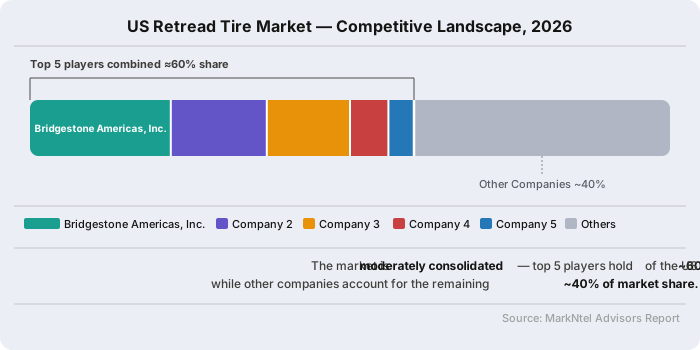
The market is moderately consolidated, with the top five players accounting for approximately 60% of the total market share. Leading companies include Bridgestone Americas, Inc., The Goodyear Tire & Rubber Company, Michelin North America, Inc., Continental Tire the Americas, LLC, and Pomp's Tire Service, Inc..
Key Retread Tire Manufacturers in United States
- Bridgestone Americas, Inc.
- The Goodyear Tire & Rubber Company
- Michelin North America, Inc.
- Continental Tire the Americas, LLC
- Pomp's Tire Service, Inc.
- McCarthy Tire Service Co., Inc.
- Purcell Tire & Rubber Company
- Best-One Tire & Service, Inc.
- Tredroc Tire Services, Inc.
- Others
Gain a Competitive Edge with Our US Retread Tire Market Report:
- The US Retread Tire Market Report by MarkNtel Advisors provides a detailed & thorough analysis of market size & share, growth rate, competitive landscape, and key players. This comprehensive analysis helps businesses gain a holistic understanding of the market dynamics & make informed decisions.
- This report also highlights current market trends & future projections, allowing businesses to identify emerging opportunities & potential challenges. By understanding market forecasts, companies can align their strategies & stay ahead of the competition.
- The US Retread Tire Market Report aids in assessing & mitigating risks associated with entering or operating in the market. By understanding market dynamics, regulatory frameworks, and potential challenges, businesses can develop strategies to minimize risks & optimize their operations.
*Reports Delivery Format - Market research studies from MarkNtel Advisors are offered in PDF, Excel and PowerPoint formats. Within 24 hours of the payment being successfully received, the report will be sent to your email address.
Frequently Asked Questions
- Market Segmentation
- Introduction
- Product Definition
- Research Process
- Assumptions
- Executive Summary
- US Retread Tire Market Policies, Regulations, and Product Standards
- US Retread Tire Market Trends & Developments
- US Retread Tire Market Dynamics
- Growth Factors
- Challenges
- US Retread Tire Market Hotspot & Opportunities
- US Retread Tire Market Outlook, 2022-2032F
- Market Size & Outlook
- By Revenues (USD Million)
- By Units Sold (Thousand Units)
- Market Share & Outlook
- By Type of Vehicle- Market Size & Forecast 2022-2032, USD Million & Thousand Units
- Passenger Cars
- Light Commercial Vehicles
- Medium Commercial Vehicles
- Heavy & Ultra Heavy Commercial Vehicles
- Off-the-Road Tire
- By Tire Type- Market Size & Forecast 2022-2032, USD Million & Thousand Units
- Radial
- Bias
- By Retreading Process- Market Size & Forecast 2022-2032, USD Million & Thousand Units
- Mold Cure
- Pre-Cure
- By Sales Channel- Market Size & Forecast 2022-2032, USD Million & Thousand Units
- OEM
- Independent Retreaders
- By Tire Size- Market Size & Forecast 2022-2032, USD Million & Thousand Units
- Tire Size 1
- Tire Size 2
- Tire Size 3
- Tire Size 4
- Tire Size 5
- Tire Size 6
- Tire Size 7
- Tire Size 8
- Tire Size 9
- By End-User- Market Size & Forecast 2022-2032, USD Million & Thousand Units
- Transportation & Logistics
- Construction & Mining
- Agriculture
- Industrial / Manufacturing
- Aviation
- By Region- Market Size & Forecast 2022-2032, USD Million & Thousand Units
- Northeast
- Midwest
- South
- West
- By Company
- Competition Characteristics
- Market Share & Analysis
- By Type of Vehicle- Market Size & Forecast 2022-2032, USD Million & Thousand Units
- Market Size & Outlook
- US Radial Retread Tire Market Outlook, 2022-2032
- Market Size & Outlook
- By Revenues (USD Million)
- By Units Sold (Thousand Units)
- Market Share & Outlook
- By Tire Type- Market Size & Forecast 2022-2032, USD Million & Thousand Units
- By Retreading Process- Market Size & Forecast 2022-2032, USD Million & Thousand Units
- By Sales Channel- Market Size & Forecast 2022-2032, USD Million & Thousand Units
- By Tire Size- Market Size & Forecast 2022-2032, USD Million & Thousand Units
- By End-User- Market Size & Forecast 2022-2032, USD Million & Thousand Units
- By Region- Market Size & Forecast 2022-2032, USD Million & Thousand Units
- Market Size & Outlook
- US Bias Retread Tire Market Outlook, 2022-2032
- Market Size & Outlook
- By Revenues (USD Million)
- By Units Sold (Thousand Units)
- Market Share & Outlook
- By Tire Type- Market Size & Forecast 2022-2032, USD Million & Thousand Units
- By Retreading Process- Market Size & Forecast 2022-2032, USD Million & Thousand Units
- By Sales Channel- Market Size & Forecast 2022-2032, USD Million & Thousand Units
- By Tire Size- Market Size & Forecast 2022-2032, USD Million & Thousand Units
- By End-User- Market Size & Forecast 2022-2032, USD Million & Thousand Units
- By Region- Market Size & Forecast 2022-2032, USD Million & Thousand Units
- Market Size & Outlook
- US Retread Tire Market Key Strategic Imperatives for Success & Growth
- Competitive Outlook
- Company Profiles
- Bridgestone Americas, Inc.
- Business Description
- Product Portfolio
- Collaborations & Alliances
- Recent Developments
- Financial Details
- Others
- The Goodyear Tire & Rubber Company
- Business Description
- Product Portfolio
- Collaborations & Alliances
- Recent Developments
- Financial Details
- Others
- Michelin North America, Inc.
- Business Description
- Product Portfolio
- Collaborations & Alliances
- Recent Developments
- Financial Details
- Others
- Continental Tire the Americas, LLC
- Business Description
- Product Portfolio
- Collaborations & Alliances
- Recent Developments
- Financial Details
- Others
- Pomp's Tire Service, Inc.
- Business Description
- Product Portfolio
- Collaborations & Alliances
- Recent Developments
- Financial Details
- Others
- McCarthy Tire Service Co., Inc.
- Business Description
- Product Portfolio
- Collaborations & Alliances
- Recent Developments
- Financial Details
- Others
- Purcell Tire & Rubber Company
- Business Description
- Product Portfolio
- Collaborations & Alliances
- Recent Developments
- Financial Details
- Others
- Best-One Tire & Service, Inc.
- Business Description
- Product Portfolio
- Collaborations & Alliances
- Recent Developments
- Financial Details
- Others
- Tredroc Tire Services, Inc.
- Business Description
- Product Portfolio
- Collaborations & Alliances
- Recent Developments
- Financial Details
- Others
- Others
- Business Description
- Product Portfolio
- Collaborations & Alliances
- Recent Developments
- Financial Details
- Others
- Bridgestone Americas, Inc.
- Company Profiles
- Disclaimer
MarkNtel Advisors follows a robust and iterative research methodology designed to ensure maximum accuracy and minimize deviation in market estimates and forecasts. Our approach combines both bottom-up and top-down techniques to effectively segment and quantify various aspects of the market. A consistent feature across all our research reports is data triangulation, which examines the market from three distinct perspectives to validate findings. Key components of our research process include:
1. Scope & Research Design At the outset, MarkNtel Advisors define the research objectives and formulate pertinent questions. This phase involves determining the type of research—qualitative or quantitative—and designing a methodology that outlines data collection methods, target demographics, and analytical tools. They also establish timelines and budgets to ensure the research aligns with client goals.
2. Sample Selection and Data Collection In this stage, the firm identifies the target audience and determines the appropriate sample size to ensure representativeness. They employ various sampling methods, such as random or stratified sampling, based on the research objectives. Data collection is carried out using tools like surveys, interviews, and observations, ensuring the gathered data is reliable and relevant.
3. Data Analysis and Validation Once data is collected, MarkNtel Advisors undertake a rigorous analysis process. This includes cleaning the data to remove inconsistencies, employing statistical software for quantitative analysis, and thematic analysis for qualitative data. Validation steps are taken to ensure the accuracy and reliability of the findings, minimizing biases and errors.

4. Data Forecast and FinalizationThe final phase involves forecasting future market trends based on the analyzed data. MarkNtel Advisors utilize predictive modeling and time series analysis to anticipate market behaviors. The insights are then compiled into comprehensive reports, featuring visual aids like charts and graphs, and include strategic recommendations to inform client decision-making
We offer flexible licensing options to cater to varying organizational needs. Choose the pricing pack that best suits your requirements:
Buy Now Inquire Before Buying
 Request Customization
 Talk to our Consultant







