Saudi Arabia Sportswear Market Research Report: Size, Share, Trends & Forecast (2026-2032)
By Product Type (Apparel, Footwear, Accessories, Wearable Sports Equipment), By Category (Performance Sportswear, Athleisure Wear, Outdoor Sportswear), By Sports Activity (Running, ... Fitness & Gym, Team Sports, Racquet Sports, Outdoor & Adventure Sports, Water Sports, Winter Sports, Golf, Others), By Price Range (Economy, Mid-Range, Premium, Luxury), By Distribution Channel (Offline, Online), By End User (Men, Women, Children, Unisex / Gender-Neutral), and others Read more
- FMCG
- Jun 2026
- Pages 145
- Report Format: PDF, Excel, PPT
Saudi Arabia Sportswear Market
Projected 9.34% CAGR from 2026 to 2032
Study Period
2026-2032
Market Size (2026)
USD 1.68 Billion
Market Size (2032)
USD 2.87 Billion
Base Year
2025
Projected CAGR
9.34%
Leading Segments
By Product Type: Apparel
Saudi Arabia Sportswear Market Key Takeaways
- The Saudi Arabia sportswear market size was valued at USD 1.57 billion in 2025, projected to reach USD 1.68 billion in 2026, and USD 2.87 billion by 2032.
- The industry is projected to witness steady growth at a CAGR of 9.34% during the forecast period.
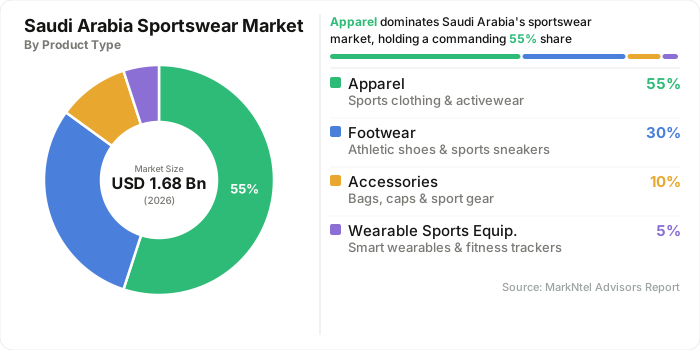
- In 2026, apparel leads the product landscape, capturing approximately a 55% share.
- Men dominate the end-user segment, accounting for about a 52% share in 2026.
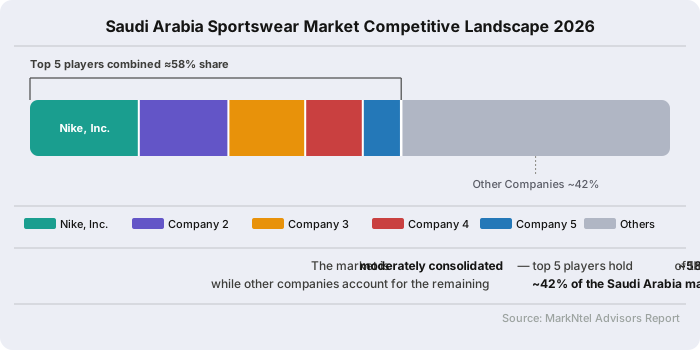
- The industry remains moderately consolidated, with the top five players collectively holding nearly 58% share, reflecting strong global brand presence alongside competitive activity from smaller and niche participants.
Saudi Arabia Sportswear Market Size and Outlook
The Saudi Arabia sportswear market is positioned for steady expansion, supported by structural policy initiatives and evolving consumer lifestyles. The market was valued at USD 1.57 billion in 2025 and is projected to grow to USD 1.68 billion in 2026 and further reach USD 2.87 billion by 2032, reflecting a CAGR of 9.34% during 2026–2032. This growth aligns with national transformation goals, where fitness awareness and lifestyle upgrades are becoming embedded within everyday consumption patterns across urban and emerging population clusters.
A key pillar of this expansion is the institutional push toward physical activity under the Quality of Life Program. According to official data, 58.5% of adults engaged in at least 150 minutes of weekly physical activity in 2024, reflecting a significant expansion of the active consumer base. This behavioral shift is accelerating demand for performance apparel, gym wear, and athleisure products. Additionally, rising household incomes and increased exposure to global fitness trends are strengthening spending on functional and lifestyle-oriented apparel categories.
Another critical accelerator is the rapid development of the Kingdom’s professional sports ecosystem, supported by large-scale investments and international positioning. Saudi Arabia has invested over USD 6 billion in sports and secured hosting rights for the 2034 FIFA World Cup, significantly boosting global visibility. The commercialization of domestic leagues, particularly football, is driving demand for licensed merchandise and team-based apparel. Furthermore, expanding brand presence and retail distribution are enhancing accessibility and reinforcing brand-led consumption across major cities and organized retail environments.
The outlook remains strongly positive as ecosystem expansion continues to support long-term demand fundamentals. The broader sports sector is projected to reach USD 22.4 billion by 2030, highlighting sustained institutional backing and private investment participation . Strengthening retail infrastructure, growing digital commerce penetration, and product diversification are expected to further deepen market reach. In conclusion, the Saudi Arabia sportswear industry is entering a structurally resilient phase, where policy alignment, consumer engagement, and commercial investments collectively ensure sustained and balanced growth momentum.
Saudi Arabia Sportswear Market Key Indicators
- A youthful demographic base underpins demand, as Saudi Arabia's population reached 35.3 million in 2024, with 69.4% of Saudis under the age of 35 and a median age of 23.5 years. This concentration of young, brand-conscious consumers sustains long-run demand for athletic footwear, athleisure, and lifestyle sportswear across the Kingdom.
- Women's sport is a fast-emerging demand pillar, as per the Saudi Women's Statistics Report, which states that 44.6% of Saudi women aged 18 and above engaged in at least 150 minutes of weekly physical activity, and Saudi women earned 1,956 local and international sports awards during the year, per GASTAT. This widening participation directly expands the women's sportswear segment.
- The Communications, Space and Technology Commission (CST) Saudi Internet Report 2024 recorded internet penetration of 99% and mobile-based usage of 99.4%, per CST . Near-universal connectivity and mobile-first shopping enable online sportswear purchasing, lowering distribution barriers for international and value brands alike.
- The sports economy is generating durable employment and infrastructure pull. Saudi Arabia's sports sector is projected to create over 100,000 jobs within the decade and attract USD 2.7 billion in facilities investment by 2028, per SURJ Sports Investments . Expanding venues and a professionalizing workforce widen the institutional and consumer base for sportswear.
- Children's participation signals a long-horizon segment, as GASTAT found that 18.7% of children and adolescents aged 5 to 17 met the recommended 60 minutes of daily activity in 2024, per its Physical Activity Bulletin . School and youth sports expansion under national policy steadily builds demand in the children's sportswear category.
Saudi Arabia Sportswear Market Scope
| Category | Segments |
|---|---|
| By Product Type | (Apparel, Footwear, Accessories, Wearable Sports Equipment), |
| By Category | (Performance Sportswear, Athleisure Wear, Outdoor Sportswear), |
| By Sports Activity | (Running, Fitness & Gym, Team Sports, Racquet Sports, Outdoor & Adventure Sports, Water Sports, Winter Sports, Golf, Others), |
| By Price Range | (Economy, Mid-Range, Premium, Luxury), |
| By Distribution Channel | (Offline, Online), |
| By End User | (Men, Women, Children, Unisex / Gender-Neutral), |
Saudi Arabia Sportswear Market Growth Drivers
Rapid Expansion of Gym and Fitness Infrastructure
The most significant growth catalyst for the Saudi Arabia sportswear industry is the rapid expansion of fitness infrastructure, translating rising participation into consistent demand for apparel and footwear. As of 2024, the Kingdom had 2,423 licensed gyms and sports centers, alongside 737 academies and 285 private clubs . Streamlined licensing via the NAFES platform continues to accelerate facility additions, ensuring that increasing physical activity levels directly convert into sustained consumption across structured fitness environments nationwide.
This infrastructure build-out is highly functional, embedding exercise into daily routines and increasing workout frequency. Greater accessibility encourages repeat purchasing cycles, particularly as consumers transition toward structured training regimes. Demand is increasingly shifting toward performance apparel, reflecting preference for durability, comfort, and technical features. This behavioral reinforcement ensures that infrastructure investments translate into predictable, recurring consumption, strengthening long-term demand visibility across both organized chains and independent fitness operators.
Operator-level expansion further amplifies this momentum, particularly through organized chains such as Leejam Sports Company, which operated 234 branches by Q3 2025 while expanding Fitness Time and women-focused formats across major cities. The rise of women-only facilities highlights untapped potential in women’s activewear. Brands aligning product strategies and retail presence with this evolving fitness landscape are best positioned to capture incremental, habitual demand across the Kingdom.
Recent Trends
Premiumization and Brand Consciousness
Premiumization and rising brand consciousness are reshaping the Saudi Arabia sportswear industry, driven by higher disposable incomes and evolving preferences toward quality and performance. Data from the General Authority for Statistics indicate increasing household expenditure on apparel and footwear, reflecting a shift toward value-added purchases. Consumers are prioritizing branded, high-performance products over low-cost alternatives, signaling a structural rise in sportswear demand anchored in durability, functionality, and long-term usage benefits.
This shift is reinforced by changing brand dynamics, where global sportswear leaders are gaining stronger traction compared to traditional luxury and fast-fashion labels. Purchasing behavior is moving from logo-driven consumption toward utility-focused decision-making, supported by growing fitness participation under Vision 2030. Younger and urban consumers are increasingly integrating premium activewear into both workout routines and daily lifestyles, strengthening the overlap between performance wear and casual fashion across the Kingdom.
A key validation of this trend is the 2024 Riyadh runway launch by adidas in collaboration with Kaf by Kaf, unveiling the SS25 collection blending Saudi cultural elements with high-performance design and a global rollout in 2025. This highlights the strategic shift toward localized premium offerings. The rising consumer aspiration and brand-driven consumption will continue to elevate pricing power, deepen segmentation, and accelerate the long-term value growth of the Saudi Arabia sportswear industry.
Saudi Arabia Sportswear Market Opportunities and Challenges
Heavy Reliance on Imported Apparel Driving Demand for Domestic Sportswear Manufacturing
A central structural challenge for the Saudi Arabia sportswear market is its heavy reliance on imported products, limiting supply chain agility and domestic value capture. Around 56% of fashion consumption is fulfilled through imports, exposing the market to currency volatility, extended lead times, and slower responsiveness to shifting consumer preferences, particularly in fast-evolving activewear categories.
This dependence also constrains margins and operational flexibility for brands operating in the Kingdom. With domestic manufacturing still at a developing stage, companies rely heavily on overseas sourcing hubs. This results in delayed replenishment cycles and reduced ability to align inventory with real-time demand shifts, especially amid rising athleisure demand requiring faster product innovation and assortment refresh.
However, this structural gap presents a strong opportunity for localized production. Vision 2030 localization efforts, Saudi 100 Brands, investment-attraction programs, and a projected USD 42 billion fashion market create favorable conditions for scaling domestic sportswear manufacturing and footwear production capabilities across the Kingdom.
Brands investing early in localized production can capture import substitution while enhancing supply chain resilience and responsiveness. Aligning manufacturing with domestic demand enables faster turnaround, improved margin control, and stronger positioning. In conclusion, localization is set to transform import dependence into a long-term competitive advantage for the Saudi Arabia sportswear industry.
Segmentation Insights
Functional Versatility and Modest-Wear Compatibility Drive Apparel Dominance
Apparel dominates the Saudi Arabia sportswear industry, accounting for approximately 55% of total revenue, driven by its versatility across training, team sports, and lifestyle applications. Unlike footwear or accessories, apparel caters to a broader range of activities while aligning with evolving consumer preferences for comfort and functionality. Its compatibility with modest dressing norms further strengthens adoption, particularly as consumers increasingly seek products that balance performance with cultural appropriateness.
The segment’s leadership is reinforced by rising participation in fitness and organized sports, which has increased demand for adaptable clothing suited for multiple use cases. Categories such as t-shirts, track pants, and modest activewear are witnessing sustained uptake due to their integration into daily wear beyond sports settings. This overlap between fitness and casual usage is accelerating athleisure adoption, positioning apparel as a core consumption category within both structured workouts and everyday routines.
Additionally, expanding retail availability and product innovation are supporting segment growth. Brands are introducing climate-suitable, breathable fabrics tailored to regional conditions, enhancing product appeal. The growing focus on modest activewear and improved fabric innovation is further strengthening differentiation. In conclusion, apparel’s multifunctional utility and cultural alignment ensure its continued dominance, supported by evolving lifestyle patterns and sustained demand diversification. Based on product type, the scope has been divided into:
- Apparel
- Footwear
- Accessories
- Wearable Sports Equipment
Higher Engagement in Sports and Training Sustains Men's Consumer Leadership
Men represent the largest end-user segment in the Saudi Arabia sportswear market, accounting for approximately 52% of total demand, supported by consistently higher participation in physical activities. According to data from the General Authority for Statistics (GASTAT), 23.2% of men met recommended physical activity levels in 2024, compared to 14% of women . This participation gap underpins a well-established male consumer base with sustained demand across fitness and sports categories.
The dominance is further reinforced by strong engagement in football, running, and gym training, which are among the most widely practiced activities in the Kingdom. These activities drive continuous consumption of performance-oriented products, particularly in categories such as footwear and training apparel. The prevalence of structured fitness routines and club participation also supports repeat purchasing behavior, strengthening male consumer demand across both organized sports and individual fitness regimes.
Additionally, evolving lifestyle patterns and increasing access to fitness infrastructure continue to support segment growth. Product innovation tailored toward durability and comfort enhances adoption among male users engaged in frequent physical activity. The rising emphasis on performance footwear and training gear further consolidates segment leadership. The following end-user groups represent the core demand base analyzed in the report:
- Men
- Women
- Children
- Unisex / Gender-Neutral
Saudi Arabia Sportswear Market Competitive Analysis
The competitive landscape of the Saudi Arabia sportswear market is moderately consolidated, led by global brands such as Nike, Inc., adidas AG, PUMA SE, Under Armour, Inc., and Skechers U.S.A., Inc., which collectively account for an estimated 58% of total market share. Their dominance is driven by strong brand equity, extensive retail networks, and continuous product innovation. However, the presence of regional distributors and emerging niche brands introduces elements of fragmentation. Overall, the market reflects a hybrid structure where leading players command premium segments while smaller brands compete in price-sensitive and specialized categories.
Key Players in the Saudi Arabia Sportswear Market
- Nike, Inc.
- adidas AG
- PUMA SE
- Under Armour, Inc.
- New Balance Athletics, Inc.
- ASICS Corporation
- Skechers U.S.A., Inc.
- Reebok International Limited
- Decathlon S.A.
- Lululemon Athletica Inc.
- Others
Saudi Arabia Sportswear Industry News and Recent Developments
August 2025: Adidas Unveils Al-Nassr 2025/26 Away Kit
Adidas launched Al-Nassr FC's 2025/26 away kit, promoted through a global campaign featuring Cristiano Ronaldo, Sadio Mané, and João Félix. The kit combined modern performance technology with a premium visual identity, leveraging Al-Nassr's expanding international fan base and the club's growing commercial influence. The launch generated significant visibility across international football and sportswear channels.
Impact Analysis: The launch demonstrates how Saudi football clubs are becoming powerful merchandising platforms for global sportswear brands. By utilizing globally recognized athletes, adidas strengthened brand visibility while elevating the commercial value of club-linked apparel. The development supports premiumization trends within the Saudi sportswear sector and reinforces the Kingdom's position as a strategic growth.
July 2025: PUMA Launches Al-Hilal 2025/26 Home and Away Kits
PUMA introduced Al-Hilal FC's official 2025/26 home and away kits under the "Rooted in Glory" campaign. The collection incorporated design elements inspired by Saudi heritage and Najd architecture while utilizing performance-focused materials. The launch aligned with Al-Hilal's domestic and international ambitions and expanded PUMA's presence within one of the Middle East's most successful football clubs.
Impact Analysis: The collection reflects the growing convergence of cultural storytelling and premium sportswear. The initiative supports the broader trend of localized product development, where global brands tailor merchandise specifically for Saudi consumers. As football fandom continues to expand under Vision 2030's sports agenda, culturally relevant club apparel is expected to become an increasingly important revenue driver for both sports organizations and sportswear manufacturers.
June 2025: Al-Hilal and PUMA Release 2025/26 Away Kit Collection
Ahead of the 2025/26 season, Al-Hilal and PUMA launched a new away kit designed around the club's ambition and global profile. The jersey featured distinctive visual elements and advanced fabric technology aimed at improving athlete comfort and performance. The release formed part of a broader merchandising strategy targeting both domestic supporters and international audiences.
Impact Analysis: This launch highlights the increasing sophistication of Saudi sportswear merchandising, where performance innovation and brand positioning are becoming equally important. The focus on technical fabrics and premium design supports higher-value product segments and encourages repeat purchases among loyal supporters. Furthermore, Al-Hilal's expanding international visibility enhances export potential for Saudi-linked sportswear products.
Frequently Asked Questions
- Market Segmentation
- Introduction
- Product Definition
- Research Process
- Assumptions
- Executive Summary
- Saudi Arabia Sportswear Market Policies, Regulations, and Product Standards
- Saudi Arabia Sportswear Market Production Trend 2022-2032
- Saudi Arabia Sportswear Market Trend by Type of Product Type
- Apparel
- Footwear
- Accessories
- Wearable Sports Equipment
- Company Wise Production Plants and Statistics
- Installed Production Capacity
- Actual Production
- Planned Production Target
- Saudi Arabia Sportswear Market Trend by Type of Product Type
- Saudi Arabia Sportswear Market Pricing Analysis 2022-2032
- Saudi Arabia Sportswear Market Pricing Trend 2022-2032
- Saudi Arabia Sportswear Market Pricing Trend by Product Type 2022-2032
- Apparel
- Footwear
- Accessories
- Wearable Sports Equipment
- Saudi Arabia Sportswear Market Dynamics
- Growth Factors
- Challenges
- Saudi Arabia Sportswear Market Value Chain & Supply Chain Analysis
- Saudi Arabia Sportswear Market Startup Ecosystem
- Saudi Arabia Sportswear Market Import & Export Analysis
- Saudi Arabia Sportswear Market Hotspot & Opportunities
- Saudi Arabia Sportswear Market Outlook, 2022-2032F
- Market Size & Outlook
- By Revenues (USD Million)
- Market Share & Outlook
- By Product Type - Market Size & Forecast 2022-2032, USD Million
- Apparel
- Topwear
- Bottomwear
- Innerwear
- Outerwear
- Sport-Specific Apparel
- Footwear
- Running Shoes
- Training & Gym Shoes
- Walking Shoes
- Hiking & Outdoor Shoes
- Sports-Specific Footwear
- Accessories
- Bags & Backpacks
- Caps & Hats
- Socks
- Gloves
- Headbands & Wristbands
- Protective Gear
- Wearable Sports Equipment
- Fitness Trackers
- Smartwatches
- Heart Rate Monitors
- GPS Devices
- Apparel
- By Category - Market Size & Forecast 2022-2032, USD Million
- Performance Sportswear
- Athleisure Wear
- Outdoor Sportswear
- By Sports Activity- Market Size & Forecast 2022-2032, USD Million
- Running
- Fitness & Gym
- Team Sports
- Racquet Sports
- Outdoor & Adventure Sports
- Water Sports
- Winter Sports
- Golf
- Others
- By Price Range- Market Size & Forecast 2022-2032, USD Million
- Economy
- Mid-Range
- Premium
- Luxury
- By Distribution Channel- Market Size & Forecast 2022-2032, USD Million
- Offline
- Specialty Sports Stores
- Exclusive Brand Outlets (EBOs)
- Multi-Brand Stores
- Department Stores
- Hypermarkets & Supermarkets
- Online
- Brand-Owned Websites (DTC)
- E-commerce Marketplaces
- App-Based Commerce
- Offline
- By End User - Market Size & Forecast 2022-2032, USD Million
- Men
- Women
- Children
- Unisex / Gender-Neutral
- By Region - Market Size & Forecast 2022-2032, USD Million
- Riyadh
- Jeddah
- Damam
- Mecca & Madinah
- Others
- By Company
- Competition Characteristics
- Market Share & Analysis
- By Product Type - Market Size & Forecast 2022-2032, USD Million
- Market Size & Outlook
- Saudi Arabia Sportswear Apparel Market Outlook, 2022-2032
- Market Size & Outlook
- By Revenues (USD Million)
- Market Segmentation & Outlook
- By Category - Market Size & Forecast 2022-2032, USD Million
- By Sports Activity- Market Size & Forecast 2022-2032, USD Million
- By Price Range- Market Size & Forecast 2022-2032, USD Million
- By Distribution Channel- Market Size & Forecast 2022-2032, USD Million
- By End User - Market Size & Forecast 2022-2032, USD Million
- By Region - Market Size & Forecast 2022-2032, USD Million
- Market Size & Outlook
- Saudi Arabia Sportswear Footwear Market Outlook, 2022-2032
- Market Size & Outlook
- By Revenues (USD Million)
- Market Segmentation & Outlook
- By Category - Market Size & Forecast 2022-2032, USD Million
- By Sports Activity- Market Size & Forecast 2022-2032, USD Million
- By Price Range- Market Size & Forecast 2022-2032, USD Million
- By Distribution Channel- Market Size & Forecast 2022-2032, USD Million
- By End User - Market Size & Forecast 2022-2032, USD Million
- By Region - Market Size & Forecast 2022-2032, USD Million
- Market Size & Outlook
- Saudi Arabia Sportswear Accessories Market Outlook, 2022-2032
- Market Size & Outlook
- By Revenues (USD Million)
- Market Segmentation & Outlook
- By Category - Market Size & Forecast 2022-2032, USD Million
- By Sports Activity- Market Size & Forecast 2022-2032, USD Million
- By Price Range- Market Size & Forecast 2022-2032, USD Million
- By Distribution Channel- Market Size & Forecast 2022-2032, USD Million
- By End User - Market Size & Forecast 2022-2032, USD Million
- By Region - Market Size & Forecast 2022-2032, USD Million
- Market Size & Outlook
- Saudi Arabia Sportswear Wearable Sports Equipment Market Outlook, 2022-2032
- Market Size & Outlook
- By Revenues (USD Million)
- Market Segmentation & Outlook
- By Category - Market Size & Forecast 2022-2032, USD Million
- By Sports Activity- Market Size & Forecast 2022-2032, USD Million
- By Price Range- Market Size & Forecast 2022-2032, USD Million
- By Distribution Channel- Market Size & Forecast 2022-2032, USD Million
- By End User - Market Size & Forecast 2022-2032, USD Million
- By Region - Market Size & Forecast 2022-2032, USD Million
- Market Size & Outlook
- Saudi Arabia Sportswear Market Key Strategic Imperatives for Success & Growth
- Competitive Outlook
- Company Profiles
- Nike, Inc.
- Business Description
- Product Portfolio
- Collaborations & Alliances
- Recent Developments
- Financial Details
- Others
- adidas AG
- Business Description
- Product Portfolio
- Collaborations & Alliances
- Recent Developments
- Financial Details
- Others
- PUMA SE
- Business Description
- Product Portfolio
- Collaborations & Alliances
- Recent Developments
- Financial Details
- Others
- Under Armour, Inc.
- Business Description
- Product Portfolio
- Collaborations & Alliances
- Recent Developments
- Financial Details
- Others
- New Balance Athletics, Inc.
- Business Description
- Product Portfolio
- Collaborations & Alliances
- Recent Developments
- Financial Details
- Others
- ASICS Corporation
- Business Description
- Product Portfolio
- Collaborations & Alliances
- Recent Developments
- Financial Details
- Others
- Skechers U.S.A., Inc.
- Business Description
- Product Portfolio
- Collaborations & Alliances
- Recent Developments
- Financial Details
- Others
- Reebok International Limited
- Business Description
- Product Portfolio
- Collaborations & Alliances
- Recent Developments
- Financial Details
- Others
- Decathlon S.A.
- Business Description
- Product Portfolio
- Collaborations & Alliances
- Recent Developments
- Financial Details
- Others
- Lululemon Athletica Inc.
- Business Description
- Product Portfolio
- Collaborations & Alliances
- Recent Developments
- Financial Details
- Others
- Others
- Nike, Inc.
- Company Profiles
- Disclaimer
MarkNtel Advisors follows a robust and iterative research methodology designed to ensure maximum accuracy and minimize deviation in market estimates and forecasts. Our approach combines both bottom-up and top-down techniques to effectively segment and quantify various aspects of the market. A consistent feature across all our research reports is data triangulation, which examines the market from three distinct perspectives to validate findings. Key components of our research process include:
1. Scope & Research Design At the outset, MarkNtel Advisors define the research objectives and formulate pertinent questions. This phase involves determining the type of research—qualitative or quantitative—and designing a methodology that outlines data collection methods, target demographics, and analytical tools. They also establish timelines and budgets to ensure the research aligns with client goals.
2. Sample Selection and Data Collection In this stage, the firm identifies the target audience and determines the appropriate sample size to ensure representativeness. They employ various sampling methods, such as random or stratified sampling, based on the research objectives. Data collection is carried out using tools like surveys, interviews, and observations, ensuring the gathered data is reliable and relevant.
3. Data Analysis and Validation Once data is collected, MarkNtel Advisors undertake a rigorous analysis process. This includes cleaning the data to remove inconsistencies, employing statistical software for quantitative analysis, and thematic analysis for qualitative data. Validation steps are taken to ensure the accuracy and reliability of the findings, minimizing biases and errors.

4. Data Forecast and FinalizationThe final phase involves forecasting future market trends based on the analyzed data. MarkNtel Advisors utilize predictive modeling and time series analysis to anticipate market behaviors. The insights are then compiled into comprehensive reports, featuring visual aids like charts and graphs, and include strategic recommendations to inform client decision-making
We offer flexible licensing options to cater to varying organizational needs. Choose the pricing pack that best suits your requirements:
Buy Now Inquire Before Buying
 Request Customization
 Talk to our Consultant